


Overview

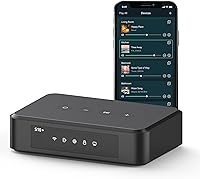
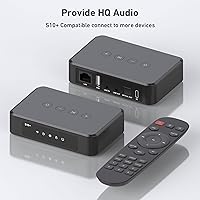
The Arylic S10+ is a compact wireless audio receiver that arrived in late 2024 with a clear purpose: give aging hi-fi gear a modern streaming life. Built by Rakoit Technology — a brand gaining real traction in the DIY audio space — this streaming adapter supports WiFi, Bluetooth 5.0, AirPlay, and DLNA, covering virtually every protocol a home listener could need. What genuinely stands out at its price tier is the inclusion of an optical SPDIF output, something you typically only find on much pricier streaming nodes from Bluesound or Sonos. For anyone sitting on a solid amplifier with no way to stream, it is a well-specified and practical answer.

Features & Benefits

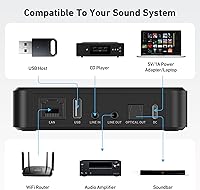
Connectivity is where this audio receiver earns its keep. It handles Spotify Connect, Tidal, Qobuz, Amazon Music, and more natively — once set up, your phone can leave the room entirely. The 4STREAM app lets you group zones for synchronized playback — think kitchen and living room playing in sync — or run each room independently. You can also control it through any web browser by entering the device IP address, which is handy for home automation setups. There is an analog line-in and out, optical digital output, and a USB port for local files, though that input caps at 1,000 songs. Worth flagging: while the unit decodes up to 24-bit/192kHz, audio output is fixed at CD-quality 44.1kHz/16-bit.

Best For

This streaming adapter makes the most sense for a few specific types of buyers. If you have a vintage stereo amplifier or a pair of passive bookshelf speakers with nowhere to stream, it offers one of the cleanest paths to multiroom audio at this price. Tidal and Qobuz subscribers will appreciate the native app integrations — no workaround dongles needed. It is also a natural fit for anyone building out an Arylic or 4STREAM multi-zone system, since adding another room costs far less than with competing ecosystems. Just keep in mind this supports AirPlay 1, not AirPlay 2, which matters if your home runs heavy on Apple devices.

User Feedback

Across roughly 168 ratings, the S10+ holds a 4.3 out of 5 average, which reflects genuine satisfaction tempered by some recurring software complaints. The optical output quality draws consistent praise from users running it into an external DAC, and WiFi stability earns high marks. The 4STREAM app is the most common sticking point — it works, but some users find it sluggish or slow to refresh library content. The USB playback limit of 1,000 songs is another frustration for anyone with a large local collection. A few buyers also noted surprise at the CD-quality output ceiling, having expected hi-res passthrough. Setup ease and multiroom reliability, however, remain the most consistently praised aspects.

Pros

  • Optical SPDIF output is a rare inclusion at this price, making it ideal for feeding a standalone DAC.
  • Native support for Spotify, Tidal, Qobuz, and Amazon Music without needing a phone as a relay.
  • WiFi connection stability earns consistent long-term praise from real-world users.
  • Multiroom zone setup via the 4STREAM app is quick and works reliably once configured.
  • Broad streaming protocol support — AirPlay, DLNA, Spotify Connect, UPnP — covers almost every use case.
  • Web browser control via IP address is a genuinely useful fallback for smart home integrations.
  • Built-in EQ with treble, midrange, bass, and L/R balance controls adds meaningful flexibility.
  • Wired Ethernet port lets you bypass WiFi entirely for maximum streaming stability.
  • Compact form factor fits discreetly behind or beside existing amplifiers without dominating a shelf.
  • Strong value relative to Bluesound and WiiM alternatives with overlapping feature sets.

Cons

  • Audio output is capped at CD-quality 44.1kHz/16-bit despite the 24-bit/192kHz decoding spec.
  • AirPlay 1 only — no AirPlay 2 support means no native Apple multi-room grouping.
  • The 4STREAM app is functional but frequently described as slow to refresh and visually dated.
  • USB local playback hits a hard 1,000-song limit with no workaround for larger libraries.
  • No aptX or LDAC Bluetooth codec support limits wireless audio quality from Android devices.
  • Firmware updates have occasionally been reported to reset custom EQ settings without warning.
  • Operates on 2.4GHz WiFi only, which can be a setup hurdle on 5GHz-only network configurations.
  • Long-term software support is uncertain compared to more established streaming hardware brands.

Ratings

The Arylic S10+ has been scored across 13 performance categories by our AI system, which analyzed verified global buyer reviews while actively filtering out incentivized, bot-generated, and duplicate feedback. Scores reflect both the genuine strengths users repeatedly highlighted and the friction points that surfaced consistently enough to matter. Nothing has been smoothed over — where real buyers found frustration, the ratings show it.

Streaming Protocol Coverage
94%
Few devices at this price cover as much ground: WiFi, Bluetooth 5.0, AirPlay, Spotify Connect, DLNA, UPnP, and Qplay are all present. Users report being able to stream from virtually any source without adapters or workarounds, which is exactly what you want when connecting legacy hi-fi gear to modern services.
AirPlay support is version 1 only, not AirPlay 2, which means Apple household users miss out on multi-room sync through the Apple ecosystem specifically. For anyone relying on Home app integration or AirPlay 2 speaker grouping, this is a real limitation worth knowing upfront.
Audio Output Quality
78%
22%
The optical SPDIF output consistently earns praise from buyers who feed it into an external DAC or AV receiver, with many noting clean, artifact-free signal even during long listening sessions. THD+N of 0.03% and an SNR of 91dB are respectable figures for a device at this price point.
The device decodes up to 24-bit/192kHz but the actual output is locked at CD-quality 44.1kHz/16-bit — a gap that catches a surprising number of buyers off guard. If you are a Tidal Masters or Qobuz hi-res subscriber expecting bit-perfect passthrough, the hardware will quietly downsample everything before it leaves the unit.
Multiroom Setup & Reliability
86%
Buyers who set up multiple zones — say, a living room and kitchen playing in sync — consistently describe the grouping process as straightforward, especially for those already in the 4STREAM ecosystem. WiFi connection stability over weeks and months of use is one of the most frequently praised aspects across the review base.
The multiroom experience depends heavily on the 4STREAM app, and when the app misbehaves — slow refresh, occasional zone desync — the whole setup suffers. Users on larger networks or with 5GHz-only routers should also note this device operates exclusively on the 2.4GHz band.
App Experience (4STREAM)
61%
39%
The 4STREAM app is genuinely functional: it handles zone grouping, EQ adjustment, service switching, firmware updates, and preset management all in one place. For most day-to-day tasks — changing source, tweaking bass, setting a morning playlist — it gets the job done without needing to touch the device.
The app is probably the most polarizing aspect of owning this streaming adapter. Users frequently describe it as slow to load, occasionally unresponsive after waking from sleep, and visually dated compared to competitors. It works, but it rarely feels polished, and that friction accumulates if you interact with it daily.
Value for Money
89%
For what it delivers — multiroom streaming, optical output, native Tidal and Qobuz support, and broad protocol coverage — the price sits well below comparable Bluesound or WiiM alternatives. Buyers modernizing a vintage stereo amplifier repeatedly cite the cost-to-capability ratio as the primary reason they chose this over pricier nodes.
A handful of users feel the value equation weakens slightly if you factor in the app frustrations and the CD-quality output ceiling. If you were expecting hi-res audio output and a premium software experience at this price tier, managing those expectations is part of the deal.
Build Quality & Form Factor
74%
26%
The unit is compact and unobtrusive — easy to tuck behind an amplifier or mount near a speaker without dominating a shelf. At 13.4 oz it feels solid rather than cheap, and the black finish blends into most existing setups without drawing attention.
Some buyers expected a more premium feel given the feature set, noting the plastic chassis lacks the reassurance of metal-bodied competitors. The touch buttons on the unit itself are functional but not particularly tactile, and the included remote feels lightweight for the overall package.
Connectivity Options
88%
The physical I/O coverage is notably thorough: analog line-in and line-out via 3.5mm, optical digital output, a wired Ethernet port, and USB host for flash drives. Having both wired and wireless options means you can prioritize stability with a LAN cable when WiFi congestion is a concern.
The USB Type-C power input, while modern, means you need to source your own 5V/1A adapter if one is not included — a minor inconvenience some buyers noted. The 3.5mm analog connectors are also functional rather than audiophile-grade, which limits their appeal for purists running unbalanced analog chains.
Local Playback (USB)
53%
47%
The USB host port does allow playback of local files from a flash drive, and it handles a solid range of formats including FLAC, ALAC, APE, and WAV. For casual use — a playlist of favorites loaded onto a thumb drive — it works without any setup fuss.
The 1,000-song hard limit on USB playback is a genuine dealbreaker for users with large local libraries, and it receives some of the sharpest criticism in the review base. There is no workaround: if your USB drive has 1,500 tracks, the device simply will not see the overflow, which feels like an arbitrary constraint on otherwise capable hardware.
Music Service Compatibility
91%
Native support for Spotify, Amazon Music, Tidal, Qobuz, TuneIn, iHeartRadio, and Napster covers the vast majority of popular streaming services without relying on Bluetooth passthrough or casting from a phone. Spotify Connect in particular works reliably and lets users control playback directly from the Spotify app.
A few niche services are absent, and users outside English-speaking markets may find regional catalog integrations inconsistent. There is no native Apple Music integration either, which pushes iPhone-heavy households back toward AirPlay for that specific service.
EQ & Sound Customization
77%
23%
The built-in EQ lets you adjust treble, midrange, and bass crossover points along with L/R balance and a virtual bass enhancement — more flexibility than most competing receivers at this tier. Users pairing the unit with budget bookshelf speakers appreciated being able to tame harsh highs or add warmth without an external processor.
The EQ is app-only, which means adjustments require opening the 4STREAM app — and when the app is sluggish, tweaking sound on the fly becomes annoying. Advanced users who want professional-grade parametric control will need to look at the paid ACP Workbench software, which adds cost and complexity.
Setup & Initial Configuration
83%
The initial WiFi setup through the 4STREAM app is widely described as quick and painless, with most users reporting they were streaming within minutes of unboxing. Web browser control via IP address adds a useful backup for users who prefer a desktop interface or are integrating the unit into a smart home setup.
Users on 5GHz-only or dual-band routers that do not broadcast a separate 2.4GHz SSID occasionally hit a wall during setup. The onboarding process could also be smoother for less technically confident buyers, as the app does not always surface helpful diagnostics when something goes wrong.
Bluetooth Performance
72%
28%
Bluetooth 5.0 with SBC and AAC codec support gives a reliable short-range connection for quick playback from phones or tablets. The rated 15-meter range holds up well in open rooms, and pairing is fast without repeated dropout complaints in the review base.
Bluetooth is clearly a secondary mode here — there is no aptX or LDAC support, which limits the ceiling for wireless audio quality from Android devices. Users expecting hi-res Bluetooth streaming will want to use WiFi-based protocols instead, where the device performs significantly better.
Firmware & Long-Term Support
69%
31%
Arylic pushes firmware updates over the air via the app, and the device shipped with a relatively recent build (version 4.6.415145.35). A few buyers noted that updates have resolved early stability issues, suggesting the company is actively maintaining the product post-launch.
Arylic is not a household brand, and some buyers express uncertainty about how long software support will continue compared to established players like Bluesound or WiiM. A couple of users also reported that firmware updates occasionally reset custom EQ settings, which is a minor but irritating quality-of-life issue.

Suitable for:

The Arylic S10+ was built for a very specific kind of buyer, and it delivers best when matched to that person. If you have a vintage stereo amplifier, a pair of quality passive speakers, or an existing hi-fi setup that lacks any streaming capability, this audio receiver offers one of the most cost-effective and feature-complete ways to modernize it. Tidal Masters and Qobuz subscribers who want native app integration — rather than casting from a phone — will find the direct service support genuinely useful, even if the output resolution tops out at CD quality. It also makes strong sense for anyone already using the 4STREAM ecosystem and looking to add another room affordably: kitchen and living room in sync, or bedroom as an independent zone, both work reliably over WiFi. Home theater enthusiasts who want a clean optical signal into an existing DAC or AV receiver will find the SPDIF output punches well above what the price typically allows.

Not suitable for:

There are some clear scenarios where the Arylic S10+ is the wrong tool for the job, and knowing them upfront saves frustration. If you live in a heavily Apple-integrated household and depend on AirPlay 2 for multi-room grouping through the Home app, this streaming adapter only supports AirPlay 1 — a real functional gap, not just a spec footnote. Audiophiles specifically chasing bit-perfect hi-res audio output should also look elsewhere: while the unit decodes up to 24-bit/192kHz, everything comes out at 44.1kHz/16-bit, which will disappoint anyone expecting lossless passthrough to a DAC. Users with large local music libraries stored on USB drives will hit a hard 1,000-song ceiling that has no workaround. And if a polished, responsive companion app is important to your daily experience, the 4STREAM app's occasional sluggishness and dated interface may wear on you over time — there are competing devices with meaningfully better software at a similar price point.

Specifications

  • Dimensions: The unit measures 7.8 x 6.89 x 2.4 inches, keeping it compact enough to sit discreetly behind or beside most amplifiers.
  • Weight: It weighs 0.38 kg (13.4 oz), light enough to mount or position without any structural concerns.
  • WiFi: Wireless connectivity runs on IEEE 802.11 b/g/n at 2.4GHz only — there is no 5GHz band support.
  • Bluetooth: Bluetooth 5.0 with SBC and AAC codec support provides a rated range of up to 15 meters in receiver mode.
  • Ethernet: A single 10/100M RJ45 port allows wired network connection for users who prefer stable, interference-free streaming.
  • Audio Decoding: The onboard decoder handles up to 24-bit/192kHz input from supported sources and file formats.
  • Audio Output: All analog and digital outputs are fixed at 44.1kHz/16-bit (CD quality), regardless of the source resolution.
  • Analog I/O: One 3.5mm line-in and one 3.5mm line-out are provided, both rated at 2 Vrms signal level.
  • Digital Output: One optical (SPDIF/TOSLINK) output carries the digital audio signal to external DACs or AV receivers.
  • USB Host: A USB 2.0 host port supports flash drive playback with a hard limit of 1,000 songs per connected drive.
  • Power Input: The device is powered via a USB Type-C port at 5V/1A — a standard adapter is required but may not be included.
  • Streaming Protocols: Supported streaming protocols include AirPlay (version 1), Spotify Connect, DLNA, UPnP, and Qplay.
  • Music Services: Built-in service integration covers Spotify, Amazon Music, Tidal, Qobuz, TuneIn, iHeartRadio, Napster, QQ Music, and QQ FM.
  • File Formats: Local and USB playback supports FLAC, MP3, AAC, AAC+, ALAC, APE, and WAV audio file formats.
  • THD+N: Total harmonic distortion plus noise is rated at 0.03%, indicating a clean signal path for a device in this category.
  • SNR: Signal-to-noise ratio is specified at 91dB, which is adequate for most home listening environments.
  • Frequency Response: The stated frequency response covers 20Hz to 20kHz, spanning the full range of human hearing.
  • App Control: The free 4STREAM app (iOS and Android) provides full device control including EQ, zone grouping, source switching, and firmware updates.
  • Web Control: The device can also be controlled through any web browser by entering its local IP address, with no app installation required.
  • Firmware: Over-the-air firmware updates are delivered through the 4STREAM app; the shipping firmware version is 4.6.415145.35.

Related Reviews
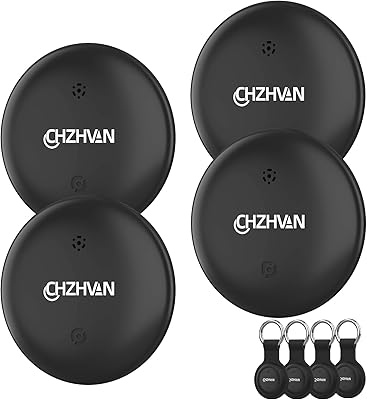
CHZHVAN S10 Android Bluetooth Tracker 4-Pack
76%
88%
Value for Money
83%
Android & Find Hub Compatibility
61%
Bluetooth Range (Real-World)
74%
Ring Volume & Audio Alert
82%
Battery Life
More
BOAVISION S10-4G 4G Solar Security Camera

75%
88%
Ease of Installation
83%
4G Cellular Connectivity
71%
Solar Charging Performance
76%
Night Vision Quality
79%
Motion Detection Accuracy
More
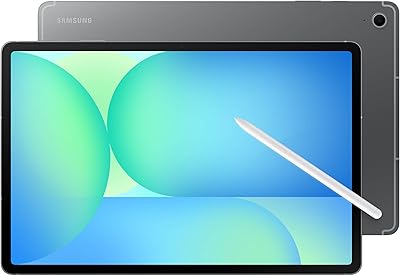
SAMSUNG Galaxy Tab S10 FE+ 256GB
84%
91%
Display Quality
87%
Performance (Gaming & Multitasking)
89%
Build Quality & Durability
92%
Battery Life
83%
Ease of Use (UI/UX)
More
Atheewon S10 Military Smart Watch for Men
85%
94%
Battery Life
91%
Build Quality & Durability
88%
Health & Fitness Tracking
85%
Display Quality
92%
Water Resistance
More
Celestron Labs Stereo Microscope S10-60
83%
88%
Build Quality
91%
Image Clarity
85%
Ease of Use
87%
Magnification Range
83%
Lighting Adjustability
More
Tehclife S10 4-Channel Dash Cam
82%
88%
Video Quality
91%
Ease of Installation
85%
App & Connectivity
78%
Night Vision Performance
82%
Parking Mode Reliability
More
Samsung Galaxy Tab S10 FE 128GB
78%
88%
Display Quality
91%
S Pen Experience
89%
Battery Life
74%
Performance & Processing
86%
Value for Money
More
SAMSUNG Galaxy Tab S10+ 12.4” 512GB
86%
94%
Display Quality
91%
Battery Life
88%
Performance
85%
Build Quality
90%
S Pen Functionality
More
LXU S10 15.6″ Laptop Screen Extender
86%
88%
Display Quality
91%
Portability & Design
93%
Ease of Setup
85%
Rotating Screen Flexibility
82%
Build Quality & Durability
More
Samsung Galaxy Tab S10+ 12.4-inch 256GB
85%
94%
Display Quality
88%
Battery Life
91%
Performance
85%
S Pen Precision
90%
Build Quality & Durability
More

FAQ

Yes, that is actually the primary use case this device was designed for. You connect the analog line-out (3.5mm) to a spare aux or CD input on your amplifier, run through the 4STREAM app setup once, and your old stereo becomes a fully capable streaming system. If your amp has an optical input, you can use the SPDIF output instead for a cleaner digital signal path.

It supports AirPlay 1 only, not AirPlay 2. In practice that means you can stream from an iPhone or Mac directly to this audio receiver, but you cannot group it with AirPlay 2 speakers through the Apple Home app or use the multi-room sync that AirPlay 2 enables. If your home runs heavily on Apple devices and you rely on that ecosystem for whole-home audio, this is a genuine limitation worth factoring into your decision.

Yes. Once you log into those services through the 4STREAM app and set up the device, it connects to Tidal and Qobuz directly over your WiFi network. Your phone only needs to be involved to start or change playback — it does not need to stay on or stay nearby to keep music playing.

This is an important distinction. The Arylic S10+ can decode hi-res source files internally, but the actual audio output — whether through the analog 3.5mm or the optical SPDIF — is fixed at 44.1kHz/16-bit, which is standard CD quality. So if you are a Tidal HiFi or Qobuz Studio subscriber hoping for bit-perfect hi-res passthrough to your DAC, that is not what happens here. The sound is still clean and accurate, but it is not delivering the full hi-res signal downstream.

No hub needed. Each S10+ (or compatible Arylic device) connects independently to your WiFi network, and the 4STREAM app ties them together. From the app, you can group multiple rooms to play the same audio in sync, or set each zone to play something different entirely. It is straightforward to set up — most users have it running within a few minutes — though the app itself can feel a bit slow to respond at times.

There are a couple of alternatives. The device has touch buttons on the unit itself for basic functions, and it comes with an IR remote for source switching and volume. You can also control it through any web browser on your computer or tablet by typing the device's local IP address into the address bar — no app installation required. For home automation users, this browser-based interface is particularly useful for integration with other tools.

Unfortunately, no. There is a hard limit of 1,000 songs for USB playback, and there is no current workaround. If your drive contains more than that, the device will simply not index anything beyond the first thousand tracks it finds. For smaller or curated USB libraries it works fine, but for anyone with a large local collection, this is a real frustration — streaming from a NAS over the network via DLNA or UPnP is a better option if you have that setup available.

Not directly. This streaming adapter operates on the 2.4GHz WiFi band only and does not support 5GHz connections. If your router is set to broadcast only on 5GHz, you will need to enable a separate 2.4GHz SSID to complete the setup. Most modern dual-band routers can do this, but it is worth checking your router settings before purchasing if you are unsure.

For most setups, yes. The optical output bypasses the device's internal analog conversion entirely and hands off a clean digital signal to your DAC or AV receiver to decode on its own terms. Users who have compared both outputs consistently report that the optical path sounds noticeably cleaner, particularly with higher-quality downstream equipment. If your DAC or amp has a TOSLINK input, it is worth using.

It is solid for the price without being exceptional. The chassis is plastic rather than metal, which keeps the weight down but does give it a slightly less premium feel than some competing devices. The internal components and WiFi reliability hold up well according to long-term owners, and Arylic has been pushing firmware updates since launch, which is a positive sign for continued support. It is built to sit in a fixed spot and stream reliably, not to be handled daily — kept in a rack or on a shelf, it should hold up well.