Overview

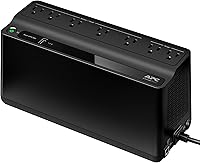
The APC BE600M1 600VA UPS has held the top spot in its Amazon category for good reason — it comes from a brand that has been building power protection gear for decades, and this unit delivers exactly what most home and small-office users actually need. It does two things well: it keeps your devices running through brief outages and blocks surges before they reach sensitive equipment. The chassis is compact enough to sit on a desk without dominating it, and it can even mount on a wall if floor or desk space is tight. That bestseller status isn't marketing spin — it reflects real, sustained demand from buyers who want reliable protection without overcomplicating things.
Features & Benefits

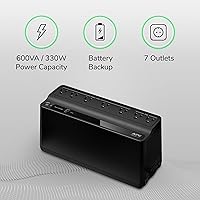
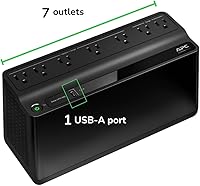
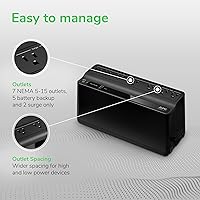
At 600VA and 330 watts, this battery backup unit can realistically keep a home router, modem, and network switch running for 20 to 30 minutes during a power cut — enough time to finish a call or save your work. The seven-outlet layout is well thought out: five outlets draw from the battery, while two handle surge protection only, which is handy for a printer or lamp that doesn't need backup power. There's also a USB-A port built in, useful for overnight phone charging, though at 1.5 amps it won't fast-charge anything modern. The right-angle plug is a small but appreciated detail for fitting this behind furniture. And when the internal battery eventually wears out, the replaceable SLA battery means you can extend the unit's life without buying a whole new device.

Best For

This UPS is most at home protecting network hardware. If your work-from-home setup depends on a router and modem staying online, this is the kind of device that quietly earns its place — you don't think about it until the power blinks, and then you're glad it's there. It's also a solid choice for anyone running a NAS drive, a smart home hub, or a small media server that should never lose power mid-write. Small desktop users can benefit too, though be realistic: it buys you enough time for a clean shutdown, not an extended work session. Renters and apartment dwellers will appreciate the compact footprint, and anyone who wants a reputable brand without paying for features they'll never use will find it hits a sweet spot.

User Feedback

Owners consistently highlight two things: the unit kicks in fast when the power drops, and it runs quietly under normal conditions. Setup gets mentioned often too — plug it in, charge it, done. Where feedback gets mixed is runtime for desktop computers. Some buyers were surprised to find that a mid-tower PC only gets a few minutes of battery time, which is worth knowing upfront. The audible alarm during outages also draws complaints — in a quiet home office or at night, it can feel jarring. The USB port works fine for phones but charges slowly enough that several users found it barely useful for tablets. Long-term owners are largely positive, especially those who've swapped the replacement battery themselves and kept the unit running well past its first few years.

Pros

  • Switches to battery almost instantly, keeping routers and modems online through typical neighborhood power blips.
  • The replaceable internal battery means this UPS can last many years with a single low-cost swap.
  • Seven outlets cover a full home office or network shelf without needing a separate power strip.
  • Runs silently under normal conditions — no fan noise, no transformer hum, nothing.
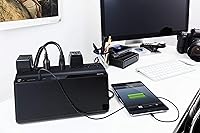
  • Compact enough to sit on a desk or mount on a wall in a tight utility space.
  • The right-angle plug keeps cable management cleaner behind desks and entertainment units.
  • PowerChute software enables automated graceful PC shutdown on Windows 10 and 11.
  • Five battery-backed outlets plus two surge-only outlets gives smart flexibility for mixed device setups.
  • APC has decades of support infrastructure behind it, including readily available replacement batteries.
  • Setup requires no configuration — charge it, plug in your devices, and it protects silently from day one.

Cons

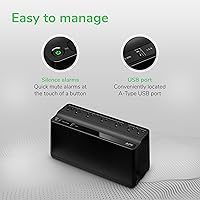
  • The outage alarm is loud with no volume control or mute option, which is disruptive at night or in quiet spaces.
  • Desktop PC users may get only a few minutes of runtime — barely enough for a safe shutdown.
  • The 1.5A USB-A port charges modern smartphones slowly and is nearly ineffective for tablets.
  • No display means you cannot check remaining runtime or current load without third-party software.
  • No automatic voltage regulation, leaving devices exposed to brownouts and sustained undervoltage.
  • USB-C is absent entirely, which increasingly limits the port's usefulness as device ecosystems evolve.
  • Some units arrive with batteries that underperform from day one, suggesting variable pre-sale storage conditions.
  • Wall mounting requires proper anchoring into a stud due to the unit's weight — drywall alone is not sufficient.
  • The PowerChute data port connection can be fiddly to set up, and many users never complete the process.
  • No real-time load monitoring means buyers must manually calculate whether their connected devices exceed safe capacity.

Ratings

The APC BE600M1 600VA UPS consistently ranks among the most purchased battery backup units in its class, and our AI-driven scoring reflects a deep analysis of verified global buyer reviews — with spam, incentivized posts, and bot activity actively filtered out. Scores for this battery backup unit span everything from outage response time to long-term ownership costs, giving you an honest picture of where it excels and where it falls short.
Outage Response Speed
93%
One of the most consistently praised aspects across thousands of reviews is how instantly this UPS switches to battery power when the lights go out. Home office users working over VoIP or video calls report that their connections held without so much as a flicker, which is exactly the kind of real-world reliability that earns long-term loyalty.
A small number of users noted a very brief but perceptible click when the unit transfers to battery, which can be mildly startling in a quiet room. This is a characteristic of line-interactive topology rather than a flaw, but buyers expecting true online-double-conversion smoothness may notice it.
Runtime for Network Gear
88%
For the core use case — keeping a router, modem, and perhaps a small network switch running — this UPS delivers comfortably. Most home setups drawing under 50 to 60 watts can expect 30 minutes or more of battery runtime, which is more than enough to outlast a typical neighborhood power blip or wait for a generator to kick in.
Runtime estimates assume light loads. Users who also connect a desktop PC or external hard drive array to the battery outlets report the window shrinking considerably, sometimes to under ten minutes. Managing load expectations is something buyers need to do themselves, as there is no display to show real-time runtime remaining.
Surge Protection
86%
The surge-only outlets are a practical addition that lets users protect peripherals like printers or desk lamps without tapping the battery capacity. Long-term owners who have had the unit through storms report no surge-related equipment damage, which builds quiet confidence in the protection circuitry over time.
APC does not publish the joule rating for this model as prominently as some competitors do, which leaves some technically-minded buyers uncertain about how it stacks up against dedicated surge strips. For catastrophic lightning strikes, no consumer-grade UPS is a guaranteed safeguard, and a few users learned that the hard way.
Battery Longevity & Replacement
91%
The ability to swap the internal battery without replacing the entire unit is genuinely valuable, and owners who have done it describe the process as straightforward — no tools, no technician. Replacement batteries are widely available and reasonably priced, which means this UPS can realistically serve a household for five to eight years with proper maintenance.
The stock battery typically shows degraded capacity after three to four years of regular cycling, which is normal for sealed lead-acid chemistry but still means an added cost down the line. A few users were caught off guard by the battery warning beep sequence and did not realize replacements were available, leading them to discard a unit that was otherwise fully functional.
Audible Alarm
54%
46%
The alarm does its job — it reliably signals when the unit is running on battery and again when the battery is low, which prevents the worst-case scenario of a device dying silently during a long outage. For users who want an audible heads-up, especially in basements or utility closets, it works exactly as intended.
The alarm is genuinely loud, and in a home office, bedroom, or open-plan living space it can be disruptive — particularly during nighttime outages when the household is asleep. There is no built-in volume control or mute button on the unit itself, which is a recurring frustration in user reviews and the single most common complaint across the board.
USB Charging Port Utility
61%
39%
Having a USB-A port built into the UPS means one fewer adapter occupying a protected outlet, and for overnight phone charging it works perfectly fine. Users who keep this unit on a desk find it a convenient spot to top up a handset without running a separate cable to the wall.
At 1.5 amps, the port charges modern smartphones slowly and is largely ineffective for tablets, which typically need at least 2 amps to charge at a useful rate. The absence of USB-C is also increasingly noticeable as device ecosystems shift, and users with newer laptops or phones find the port less useful than they hoped.
Build Quality & Physical Design
82%
18%
The unit feels solid and well-constructed for its price tier — not plasticky or hollow when handled. The right-angle plug is a thoughtful design choice that makes installation behind desks or entertainment units much cleaner, and the wall-mount capability adds genuine versatility that competitors at this price often skip.
The glossy black casing shows dust and fingerprints readily, which is a minor but recurring aesthetic complaint. A handful of users also noted that the outlet spacing, while adequate, can make it tricky to fit larger wall-wart adapters on adjacent battery-backed outlets simultaneously.
Setup & Ease of Use
94%
Out-of-the-box setup is as close to foolproof as it gets: plug in, let it charge for several hours, connect your devices. There is no configuration required for basic operation, which is exactly what most buyers want from a safety device they hope to rarely think about.
The initial charge period before first use is sometimes not emphasized clearly enough in the included documentation, and a small number of users powered up devices immediately and then wondered why their runtime seemed short. PowerChute software setup is an extra step that not everyone completes, meaning graceful shutdown features go unused.
PowerChute Software Integration
72%
28%
For Windows 10 and 11 users, the PowerChute software adds legitimate value — particularly the automatic graceful shutdown feature, which can save work and prevent filesystem corruption during extended outages when no one is at the desk. IT-minded home users and small business owners tend to appreciate this layer of control.
Mac users are directed to use the native Energy Saver settings rather than PowerChute, which offers less granularity. The software itself can feel dated compared to modern UPS management tools, and setup requires a dedicated data cable connection that some users find fiddly given the port's placement on the unit.
Noise During Normal Operation
89%
Under everyday conditions with no active battery transfer, this UPS runs silently. There is no fan, no hum, and no audible transformer buzz that users of older or cheaper units sometimes tolerate. For a bedroom workstation or a living-room media shelf, the day-to-day silence is a genuine comfort.
While silent at rest, the cooling and internal components can produce a faint mechanical noise during the first few minutes of battery discharge under heavier loads. This is infrequent enough that most users never encounter it, but those who have run stress tests or endured longer outages have occasionally noted it.
Footprint & Space Efficiency
83%
The compact dimensions make this one of the easier UPS units to place in a home setting without rearranging an entire desk. The wall-mount option is legitimately useful for network closets or tight utility spaces where floor and desk real estate is precious.
At 7.5 pounds, it is heavier than it looks, which makes wall mounting a slightly more involved project than the term implies — proper anchoring into a stud or using appropriate wall anchors is necessary. A few users who mounted it on drywall alone reported it eventually pulled loose.
Value for Money
87%
For what it costs, this battery backup unit covers the fundamentals extremely well — reliable brand, solid outage protection, flexible outlet layout, and a replaceable battery that extends the investment over years. Buyers who have priced competing units from lesser-known brands find APC's combination of reliability and long-term support hard to beat at this tier.
Buyers who later discover their needs have grown — more runtime, automatic voltage regulation, or an LCD display — often find themselves shopping for a step-up model relatively quickly. The value proposition is strongest when you buy it knowing exactly what it is, and weakest when expectations are set by more capable (and more expensive) units.
Load Capacity for Desktop PCs
58%
42%
For users running a compact or energy-efficient desktop alongside peripherals, this UPS can provide a meaningful shutdown window of around five to eight minutes, which is enough to save work and power down safely. Paired with PowerChute, that window becomes automated and reliable.
Mid-tower desktops with dedicated GPUs will eat through the battery in under five minutes, and gaming rigs or workstations can draw enough wattage to overload the unit entirely. This is not the right tool for power-hungry setups, and buyers who try to use it that way tend to leave the most frustrated reviews.
Long-Term Reliability
84%
APC has a strong track record, and this unit reflects that in owner feedback from buyers who have had it for three, four, and even five-plus years. With one battery swap, many units are still performing their original function without any degradation in surge protection or transfer speed.
A subset of units have been reported to arrive with batteries that hold less charge than expected, suggesting some inventory may sit in warehouses longer than ideal before shipping. APC customer support experiences vary, and a few buyers who received underperforming units found the warranty process slower than they hoped.

Suitable for:

The APC BE600M1 600VA UPS is purpose-built for anyone whose primary concern is keeping home network gear alive through short, unpredictable power interruptions. If you work from home and a dropped VoIP call or a reset router costs you real productivity, this unit is one of the most practical investments you can make for your setup. It also suits people running NAS drives, smart home hubs, or media servers — devices that handle data continuously and can suffer real damage from sudden, uncontrolled shutdowns. Apartment dwellers and renters will appreciate that it requires no installation, takes up minimal space, and can even mount on a wall in a network closet. Budget-conscious buyers who want the peace of mind that comes with a reputable brand, without paying for advanced features like automatic voltage regulation or an LCD display, will find this UPS hits a genuinely useful middle ground.
Not suitable for:

The APC BE600M1 600VA UPS is not the right choice if your goal is to keep a full desktop workstation running through an extended outage. A mid-tower PC with a discrete GPU can drain this battery in under five minutes, which is barely enough for a graceful shutdown and nothing close to continued work. Gamers, video editors, or anyone running power-hungry hardware should look at higher-capacity units in the 1000VA-and-above range instead. This UPS also lacks automatic voltage regulation, meaning it will not correct for the brownouts and voltage sags that can be just as damaging as full outages — households in areas with chronically unstable utility power need a step-up model with AVR. Finally, buyers who need USB-C charging, fast-charge compatibility, or a real-time display showing remaining battery runtime will find this battery backup unit does not address those needs.
Specifications

  • Brand & Model: Manufactured by APC under model number BE600M1, part of the Back-UPS product line designed for home and small-office use.
  • Capacity: Rated at 600VA and 330 watts, suitable for powering light loads such as routers, modems, NAS drives, and energy-efficient desktops.
  • Battery Type: Uses an internal sealed lead-acid (SLA) battery that is user-replaceable without tools, extending the unit's serviceable lifespan significantly.
  • Replacement Battery: Compatible replacement battery is the APC APCRBC154, sold separately, and widely available through APC directly and major retailers.
  • Outlets: Provides 7 total NEMA 5-15R outlets: 5 with both battery backup and surge protection, and 2 with surge protection only.
  • USB Charging: Includes one USB-A charging port rated at 1.5 amps, intended for low-draw devices such as smartphones during overnight charging.
  • Input Plug: Uses a NEMA 5-15P right-angle plug on a 5-foot power cord, reducing wall-outlet footprint and fitting cleanly behind furniture.
  • Input Voltage: Operates on 120V AC standard North American household current with no step-down or voltage conversion capability.
  • Dimensions: Physical dimensions are 10.79″ wide, 4.13″ deep, and 5.47″ tall, making it compact enough for desktop or wall placement.
  • Weight: Unit weighs 7.5 pounds, which includes the internal sealed lead-acid battery — factor this in for wall-mount installation planning.
  • Wall Mountable: Designed to be mounted on a wall using the integrated keyhole slots, suitable for network closets or tight utility spaces.
  • Management Software: Supports APC PowerChute personal edition via a dedicated data port, enabling automated graceful PC shutdown on Windows 10 and Windows 11.
  • Mac Compatibility: Mac users are directed to use the operating system's native Energy Saver settings rather than PowerChute for shutdown management.
  • Audible Alarm: Built-in audible alarm activates during power transfer to battery and again when battery charge falls to a critically low level.
  • Color & Finish: Available in black with a glossy finish that is consistent with standard home office and network equipment aesthetics.
  • Manufacturer Date: First made available in June 2016 and remains in active production with no discontinuation announced by APC as of the latest data.
  • Warranty: APC typically provides a 3-year limited warranty on this unit along with a connected equipment protection policy, subject to registration terms.
  • Topology: Operates as a line-interactive UPS, meaning it passes utility power directly under normal conditions and switches to battery only when needed.

Related Reviews
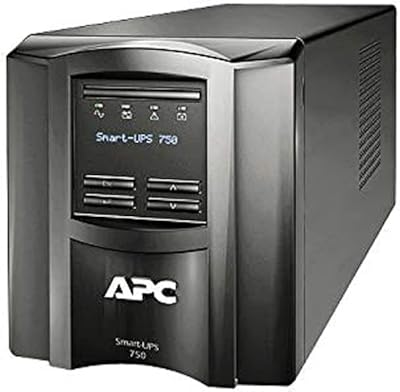
APC Smart-UPS 750VA UPS Battery Backup
85%
91%
Value for Money
93%
Power Protection Performance
89%
Ease of Setup
85%
Battery Life
87%
Build Quality
More
APC Smart-UPS SRT 3000VA Rack-Mount UPS
86%
94%
Power Backup Performance
92%
Reliability
88%
Ease of Use
90%
Energy Efficiency
89%
LCD Display Interface
More
APC Smart-UPS 500VA Lithium Ion UPS SCL500RM1UC
85%
88%
Performance
91%
Build Quality
85%
Usability
76%
Battery Life
94%
Remote Monitoring Features
More
APC Smart-UPS 1000VA UPS Battery Backup (SMT1000)
87%
88%
Performance
91%
Value for Money
85%
Battery Life
92%
Build Quality
89%
Noise Level
More
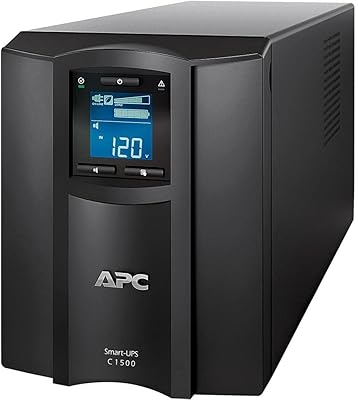
APC Smart-UPS SMC1500C 1500VA Sinewave UPS Battery Backup
85%
91%
Power Protection Reliability
87%
Ease of Setup & Installation
92%
Remote Monitoring Functionality
85%
Build Quality & Durability
70%
Weight & Portability
More
APC Back-UPS Pro 1000VA UPS Battery Backup BX1000M
83%
92%
Reliability during Power Outages
88%
Ease of Setup
85%
Build Quality
90%
Surge Protection
80%
Energy Efficiency
More
APC Back-UPS Pro BX1500M 1500VA
79%
83%
Battery Runtime
91%
Voltage Regulation (AVR)
78%
Build Quality & Durability
88%
Ease of Setup
86%
LCD Display & Monitoring
More
APC Smart-UPS Sine Wave 1500VA Rackmount UPS with Extended Run Option
84%
90%
Performance
88%
Build Quality & Durability
85%
Ease of Installation
86%
Battery Runtime
82%
Value for Money
More
APC Back-UPS 1200VA BVK1200M2
85%
94%
Performance during Power Outages
88%
Ease of Setup
90%
USB Charging Ports
85%
Build Quality
80%
Battery Runtime at Load
More
APC Back-UPS 650 BVN650M1
88%
94%
Backup Reliability
91%
Surge Protection Effectiveness
88%
Battery Life
90%
Setup & Installation
87%
Ease of Use
More

FAQ

For a typical home setup with a router and modem drawing around 30 to 50 watts combined, you can realistically expect 30 to 45 minutes of runtime. The lighter the load on the battery outlets, the longer everything stays on. If you add more devices, that window shrinks accordingly.

You can, but manage your expectations carefully. A standard mid-tower desktop — especially one with a dedicated graphics card — can draw enough power to reduce battery runtime to under five minutes. This UPS is better thought of as a safe-shutdown device for PCs rather than a way to keep working through a long outage.

The unit will start beeping in a distinct pattern to signal low battery health, separate from the outage alarm. Most users find the battery lasts three to four years under regular use before capacity noticeably degrades. When it is time, the replacement battery (APCRBC154) is easy to find and swap in without any tools.

Yes, the alarm is genuinely loud — it is designed to get your attention even from another room. There is no volume control or physical mute button on the unit itself. Some users manage it through the PowerChute software on Windows, but if you use it purely for network gear with no PC attached, the alarm is what it is.

It does, but not through the PowerChute software. Mac users need to configure automated shutdown behavior through the built-in Energy Saver settings in macOS. It is less feature-rich than PowerChute, but it covers the basics of graceful shutdown during an extended outage.

The two surge-only outlets are best for devices that do not need to stay on during an outage — think a printer, a desk lamp, or a phone charger. Save the five battery-backed outlets for the gear that actually matters: your router, modem, NAS, or any device you need running during a power cut.

It is designed for wall mounting using built-in keyhole slots. That said, at 7.5 pounds the unit needs to be anchored into a wall stud or with appropriate heavy-duty anchors — mounting into plain drywall alone is not reliable and a few owners have had it pull loose over time. A little extra care during installation goes a long way.

For overnight phone charging, it works fine. You will wake up to a full battery. Where it falls short is fast-charging — modern smartphones want at least 18 watts and this port cannot deliver that. For tablets, 1.5 amps is barely enough to maintain charge while in use, let alone top up quickly. Treat it as a convenience port, not a primary charger.

APC recommends allowing the battery to charge for at least 16 hours before putting the unit into active use. Skipping this step is one of the more common reasons new owners report shorter-than-expected runtime — the battery simply was not fully charged when they first tested it.

This is an important limitation to understand. This battery backup unit uses line-interactive topology without automatic voltage regulation (AVR), so it does not actively correct for sustained undervoltage or brownout conditions. It will switch to battery if voltage drops severely, but it does not smooth out minor fluctuations the way AVR-equipped models do. If you live somewhere with chronically unstable power, a step-up model with AVR is worth considering.