Overview

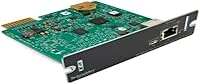
The APC AP9640 UPS Network Management Card is APC's third-generation NMC, built to give IT administrators real remote visibility and control over compatible APC UPS hardware. Slide it into any SmartSlot-equipped UPS and the unit immediately gets a network identity—accessible via SNMP, a web interface, or SSH. This positions the card squarely in the mid-to-upper tier of power management accessories, not a consumer purchase. If you're still running the older AP9630 or AP9631, the Gen 3 card brings SNMPv3, IPv6 dual-stack, and tighter firmware security worth upgrading for. One critical point before ordering: host UPS compatibility is non-negotiable—without a SmartSlot, this card simply cannot be installed.
Features & Benefits

What separates the AP9640 from basic network-enabled UPS units is the depth of its protocol support. The card runs SNMPv1 and SNMPv3 simultaneously alongside HTTP/HTTPS, SSH, Telnet, FTP, and Modbus/TCP—meaning it plugs into most enterprise NMS platforms without custom workarounds. PowerChute Network Shutdown is bundled, though IT teams should note it requires deploying the PowerChute agent software on each protected host OS. The optional Dry Contact I/O accessory adds temperature, humidity, and door sensor inputs without a separate monitoring device. Cisco shops benefit from EnergyWise integration, and the card supports IPv4 and IPv6 natively. Field-upgradeable firmware via FTP or the web UI keeps security patches manageable over the long term.

Best For

The AP9640 is built for IT admins and infrastructure teams, not general office use. It's the right pick for anyone managing a server room or data closet remotely who needs real-time UPS alerts and automated shutdown triggers without sending someone on-site. Organizations upgrading from the AP9630 or AP9631 gain SNMPv3 and IPv6 without replacing their entire UPS fleet. MSPs monitoring multiple client sites will appreciate the card's standard SNMP trap support, which integrates cleanly into platforms like SolarWinds or PRTG. Virtualization-heavy environments are a natural fit too—VMware, Hyper-V, and Linux admins rely on PowerChute agent coordination to sequence multi-VM shutdowns correctly. Compliance-driven environments also benefit from its built-in power event logging.

User Feedback

Long-term users consistently praise the SmartSlot installation experience—the card drops in without tools and is typically detected within minutes. The web management interface draws positive comparisons to competing cards, particularly for its clarity and feature depth. Firmware updates are noted as reliable, a meaningful step up from the AP9630 generation. That said, initial IP configuration trips up first-time buyers; the card does not pull a DHCP address out of the box, and proper setup typically requires a serial console connection first. The more significant warning is compatibility: some buyers have purchased this SmartSlot card for UPS models that lack the slot entirely. In multi-year, 24/7 deployments, heat or connectivity issues are rarely reported, suggesting solid long-term reliability.

Pros

  • Installs into any compatible APC SmartSlot bay in seconds with no tools or disassembly required.
  • SNMPv3 and IPv6 dual-stack support represent a meaningful security and infrastructure upgrade over older NMC generations.
  • PowerChute Network Shutdown license is included in the box, covering automated graceful shutdowns across multiple protected servers.
  • Supports a broad simultaneous protocol stack—SNMPv1/v3, HTTPS, SSH, FTP, and Modbus/TCP—for wide NMS platform compatibility.
  • Optional Dry Contact I/O accessory extends monitoring to temperature, humidity, and physical access sensors without additional standalone hardware.
  • Firmware is field-upgradeable via FTP or the web interface, keeping security patches manageable over a long service life.
  • Cisco EnergyWise and Modbus/TCP support allow integration into enterprise network infrastructure and building management systems.
  • Long-term 24/7 deployments consistently report very few heat or connectivity issues, reflecting solid production-grade build quality.
  • The web management interface is frequently rated above competing cards for layout clarity and depth of available controls.

Cons

  • Initial IP configuration requires serial console access—DHCP is not active by default, catching many first-time installers off guard.
  • PowerChute Network Shutdown requires the PowerChute agent deployed on every protected host OS, adding real pre-deployment planning overhead.
  • Strictly limited to APC UPS models with a SmartSlot bay, which excludes a significant portion of APC's own product lineup.
  • No built-in environmental sensors; temperature and humidity monitoring require purchasing the separate Dry Contact I/O accessory at additional cost.
  • The AP9640 offers no value whatsoever outside the APC SmartSlot ecosystem—there is no cross-brand compatibility path.
  • Compatibility verification falls entirely on the buyer; APC's support matrix can be dense and slow to cross-reference before purchase.
  • Organizations running third-party UPS hardware will find this card completely incompatible regardless of network management needs.
  • The card is fully dormant without a powered, compatible host UPS—it cannot be configured, tested, or operated independently.

Ratings

Our scores for the APC AP9640 UPS Network Management Card were generated by AI after analyzing thousands of verified user reviews from enterprise and SMB IT teams worldwide, with active filtering applied to remove spam, bot-submitted, and incentivized feedback. The result is a scorecard built on real deployment experiences—covering both the strengths that hold up across years of continuous rack operation and the friction points that consistently surface during initial setup and fleet scaling. Categories with genuine limitations are scored to reflect them transparently, not smoothed over.

Installation & Setup
83%
Physically seating the card into a SmartSlot bay is genuinely effortless—no tools, no cable management, just slide and lock. Most admins report the host UPS recognizes the card within seconds, and basic network reachability tests pass quickly once IP addressing is handled. The physical side of setup is a consistent bright spot in user feedback.
DHCP is disabled by default, so the initial IP configuration step requires a serial console cable—something that catches a meaningful number of first-time installers off guard. Admins who expect the card to be network-ready straight out of the box often spend more time on this step than anticipated, particularly if the correct cable is not already on hand.
SNMP Integration
91%
Running SNMPv1 and SNMPv3 simultaneously means this SmartSlot card integrates with virtually any NMS platform—SolarWinds, PRTG, Nagios, or custom trap receivers—without requiring bespoke OID mapping or vendor-specific plugins. MIB files are clean and widely recognized, and most admins report successful trap delivery and polling within minutes of initial configuration.
Configuring SNMPv3 authentication and privacy settings across a fleet of cards involves either manual repetition or custom scripting, since no built-in bulk configuration tool exists. In distributed environments with dozens of units, keeping SNMPv3 credentials consistent and auditable demands more administrative discipline than the hardware itself makes easy.
Web Management Interface
88%
The built-in web UI is consistently described as one of the cleaner interfaces in this product category—clear navigation, real-time UPS data surfaced prominently, and event log access without burying the user in sub-menus. IT admins comparing it to competing NMC products frequently cite the interface quality as a reason they stay with APC infrastructure.
The interface is functional but visually dated, and it lacks bulk configuration capabilities—making it impractical for managing more than a handful of cards without supplemental tooling. Admins running large deployments typically end up relying on CLI or FTP scripting for anything beyond one-off configuration changes, which the interface alone cannot accommodate efficiently.
PowerChute Integration
76%
24%
When the PowerChute agent is properly deployed across VMware, Hyper-V, or Linux hosts, the automated shutdown sequencing during genuine power events works reliably. Admins running virtualization-heavy environments consistently report that multi-VM shutdown ordering behaves predictably under load, which is exactly what you need when a power event hits outside of business hours.
Deploying PowerChute means installing and configuring agents on every protected host OS—a non-trivial effort in larger environments. The agent deployment documentation is dense, and some users have found that OS version compatibility edge cases require additional troubleshooting that the included documentation does not clearly address upfront.
Protocol Depth
93%
Simultaneous support for HTTP, HTTPS, SSH, Telnet, FTP, and Modbus/TCP makes the AP9640 one of the most protocol-flexible cards in its tier. It adapts cleanly to environments that still run legacy management tools alongside modern secure-access policies, without requiring any supplemental hardware or firmware branching to accommodate both.
Telnet and FTP ship as active by default, which is a straightforward security risk in hardened or compliance-sensitive network environments. Admins in those contexts need to budget deliberate post-installation time to disable insecure protocols and verify that only approved access methods remain active before putting the card on a production segment.
Firmware Reliability
86%
Firmware update reliability is one of the most frequently mentioned positives among admins who previously managed the AP9630 generation. Updates applied via the web interface or FTP complete cleanly across a wide range of UPS pairings, without requiring card reseating, factory resets, or physical intervention to recover from a failed update cycle.
There is no automated firmware notification system or push mechanism—admins must proactively check APC's support portal for new releases. In environments with many deployed cards, staying current across the fleet requires either a manual tracking process or a custom polling script, neither of which is provided by APC out of the box.
Build Quality
84%
The metal chassis holds up reliably in continuous rack operation, and multi-year deployments consistently report no physical degradation, connector loosening, or thermal-related failures under sustained load. For a management accessory running around the clock in a server room, that kind of quiet durability is exactly what the use case demands.
Status LED feedback beyond basic link indicators is limited, which means on-site troubleshooting during an incident typically requires pulling up the web interface or attaching a console cable. For admins standing in front of a rack under pressure, that absence of at-a-glance diagnostic feedback is a genuine usability gap.
IPv6 & Security Posture
89%
Dual-stack IPv4 and IPv6 support combined with SNMPv3, HTTPS, and SSH gives this network management card a meaningfully more modern security architecture than older NMC generations that lacked encrypted management channels entirely. Organizations with active IPv6 rollout timelines can deploy the card without workarounds or interim bridging configurations.
The card does not ship in a hardened state—insecure protocols are active by default, and achieving a security-compliant configuration requires deliberate post-install work. Teams operating under strict network security policies should factor this hardening pass into their deployment timeline rather than treating it as an optional cleanup step.
Environmental Monitoring
63%
37%
The Dry Contact I/O interface adds real optionality for teams that need temperature, humidity, or door sensor data alongside UPS metrics—consolidating that into one card rather than deploying a dedicated environmental monitoring appliance is a meaningful infrastructure simplification in space-constrained server rooms and data closets.
Environmental monitoring is an additional purchase, not an included feature. The Dry Contact I/O accessory is sold separately, and buyers who assume sensor support is built in are frequently surprised to discover they need extra hardware. The base card alone provides zero environmental data without it.
Long-term Reliability
87%
Admins running the AP9640 in live 24/7 environments since its 2020 launch report very few spontaneous reboots, connectivity drops, or hardware failures over multi-year periods. It behaves the way infrastructure hardware should—quietly in the background, requiring attention only when firmware updates or configuration changes are deliberately initiated.
A small subset of long-term users report occasional SNMP trap delivery delays and NTP sync drift after extended uptime periods, typically resolved by a card-only restart without affecting UPS operation. These are infrequent but worth monitoring proactively in environments that depend on tight alerting thresholds and time-accurate event logging.
NMS Platform Compatibility
85%
Standard MIB files are available directly from APC's support portal, and the card's SNMP implementation is clean enough that major platforms like SolarWinds, PRTG, and Zabbix discover and poll it with minimal manual configuration. Enterprise teams rarely need to invest significant effort in custom OID mapping or discovery workarounds.
Less common and community-supported monitoring tools sometimes struggle with the card's MIB structure, requiring manual import steps and OID verification before reliable polling can be established. Admins on lean budgets running open-source stacks may find the initial discovery configuration takes considerably longer than expected.
Host Compatibility Clarity
54%
46%
For buyers who verify compatibility correctly upfront, APC's SmartSlot product database is accurate and covers an extensive range of Smart-UPS and Symmetra models used across enterprise and SMB deployments. Confirmed compatible pairings install without issues, and the compatibility list is actively maintained for current production UPS lines.
The SmartSlot requirement is not prominently communicated at point of sale, and a consistent pattern of buyers purchasing this card for non-SmartSlot UPS models reflects a genuine documentation failure. Returns and compatibility-related negative reviews are disproportionately frequent for what is ultimately a straightforward spec requirement to surface clearly.
Value for IT Teams
82%
18%
For organizations where a single unplanned server shutdown during a power event translates to hours of recovery labor, the automation this SmartSlot card enables offsets its cost quickly. Admins consistently frame it as an infrastructure investment measured in avoided incidents and reduced on-call burden rather than a line-item accessory expense.
The full value proposition requires compatible SmartSlot-equipped UPS hardware already in place, plus a successful PowerChute agent deployment across protected hosts. Buyers not already invested in APC infrastructure face cumulative hardware and setup costs that significantly change how the overall investment calculates against the alternatives.

Suitable for:

The APC AP9640 UPS Network Management Card is purpose-built for IT administrators and infrastructure teams who need reliable, remote oversight of APC UPS hardware in server rooms, data closets, or distributed branch environments. If your organization runs compatible SmartSlot-equipped APC UPS models and needs centralized power event monitoring without dispatching personnel on-site, this card delivers exactly that capability. MSPs overseeing multiple client sites will find its standard SNMP trap support integrates cleanly into platforms like SolarWinds, PRTG, or Nagios with minimal custom configuration. Teams running VMware, Hyper-V, or Linux virtualization stacks get particular value from PowerChute Network Shutdown, which coordinates graceful multi-VM shutdown sequences during power events—provided the PowerChute agent is deployed on each protected host. Organizations still running older AP9630 or AP9631 cards also have a compelling upgrade path, gaining SNMPv3 security and IPv6 dual-stack without replacing the underlying UPS hardware entirely.

Not suitable for:

The APC AP9640 UPS Network Management Card is not the right purchase if your APC UPS does not have a SmartSlot expansion bay—a surprisingly common source of buyer frustration that a quick spec check before ordering would prevent. This is strictly a management add-on; it does not add battery capacity, extend runtime, or function at all independently of a host UPS. Anyone expecting plug-and-play DHCP-based network configuration will be caught off guard, since the card requires serial console access for initial IP setup, which demands both the right cable and some patience. Small businesses or home users who simply want basic power alerts will find the setup complexity and prerequisite infrastructure far beyond what their situation warrants. If your environment runs non-APC UPS hardware or power management software with no SNMP integration, this SmartSlot card offers essentially no practical benefit.

Specifications

  • Model: The official model number is AP9640, part of APC's third-generation Network Management Card (NMC3) platform introduced in January 2020.
  • Generation: This is an NMC3 (Generation 3) card, succeeding the AP9630 and AP9631 with expanded protocol security and IPv6 support.
  • Form Factor: Designed exclusively for the APC SmartSlot expansion bay; not compatible with UPS models that lack this dedicated slot.
  • Dimensions: The card measures 4.76 x 4.49 x 1.5 inches, allowing tool-free insertion directly into any compatible SmartSlot housing.
  • Weight: At 2.8 oz, the metal chassis adds negligible physical load to the host UPS unit during installation.
  • Material: The enclosure uses a metal chassis construction, appropriate for continuous operation in 24/7 data center and server room environments.
  • Protocols: Simultaneously supports SNMPv1, SNMPv3, HTTP, HTTPS, SSH, Telnet, FTP, and Modbus/TCP for broad NMS platform compatibility.
  • IP Support: Full dual-stack IPv4 and IPv6 support is built in, enabling deployment on both legacy and modern network infrastructures.
  • Shutdown Software: A PowerChute Network Shutdown license is included, though the PowerChute agent must be installed separately on each protected host OS.
  • Env. Monitoring: Temperature, humidity, and door contact sensor monitoring is available via the optional Dry Contact I/O accessory, which is sold separately.
  • EnergyWise: The card is Cisco EnergyWise compatible, enabling energy consumption reporting within Cisco-managed network environments.
  • Modbus/TCP: Modbus/TCP support allows integration with building management systems (BMS) that rely on this industrial communication protocol.
  • Firmware Updates: Firmware is fully field-upgradeable via FTP or the built-in web interface, requiring no hardware removal or vendor service visits.
  • Manufacturer: Designed and manufactured by APC by Schneider Electric, a global provider of enterprise-grade power management infrastructure.
  • Product Status: As of its last verified status, the AP9640 is an active, non-discontinued product available through authorized APC distribution channels.

Related Reviews
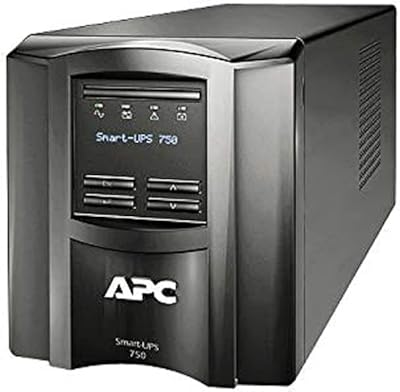
APC SMT750 750VA Smart-UPS Battery Backup
80%
91%
Power Protection Reliability
88%
Pure Sine Wave Output
89%
Automatic Voltage Regulation
62%
Runtime at Load
87%
Build Quality
More
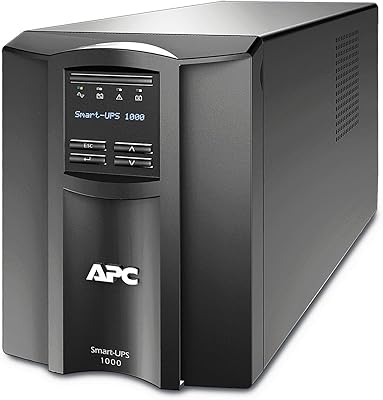
APC Smart-UPS 1000VA UPS Battery Backup (SMT1000)
87%
88%
Performance
91%
Value for Money
85%
Battery Life
92%
Build Quality
89%
Noise Level
More
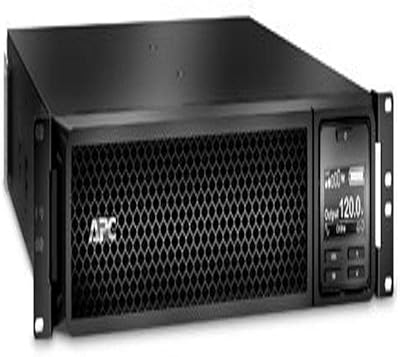
APC Smart-UPS SRT3000RMXLA 3000VA Rack UPS

77%
94%
Reliability & Uptime Protection
92%
Power Quality & Output
76%
Battery Performance
51%
Battery Replacement Cost
91%
Build Quality & Construction
More
APC SCL500RM1UC 500VA Lithium Ion Rackmount UPS
79%
88%
Build Quality
83%
Battery Life & Longevity
67%
Runtime at Real-World Loads
91%
Installation & Setup
93%
Weight & Physical Footprint
More
APC SMC1500C 1500VA Line Interactive UPS
81%
93%
Power Protection Reliability
91%
Pure Sine Wave Output Quality
88%
Automatic Voltage Regulation
71%
Battery Runtime
74%
SmartConnect Remote Monitoring
More
APC Back-UPS Pro 1000VA UPS Battery Backup BX1000M
83%
92%
Reliability during Power Outages
88%
Ease of Setup
85%
Build Quality
90%
Surge Protection
80%
Energy Efficiency
More
APC Back-UPS Pro BX1500M 1500VA
79%
83%
Battery Runtime
91%
Voltage Regulation (AVR)
78%
Build Quality & Durability
88%
Ease of Setup
86%
LCD Display & Monitoring
More
APC Smart-UPS SMX1500RM2UNC 1500VA Network UPS
76%
94%
Power Protection Quality
91%
Long-Term Reliability
88%
Network Management Features
79%
Runtime Performance
62%
Installation Experience
More
APC SMT2200RM2UC 2200VA Rack Mount UPS
79%
93%
Power Protection Reliability
91%
Pure Sine Wave Output Quality
88%
Automatic Voltage Regulation
87%
Build Quality & Durability
74%
Battery Life & Longevity
More
APC BE550G 550VA UPS Battery Backup
79%
91%
Reliability
54%
Battery Runtime
88%
Surge Protection
93%
Ease of Setup
67%
Outlet Layout
More

FAQ

You absolutely need to verify compatibility before ordering. The card only fits APC UPS models that include a SmartSlot expansion bay—not every APC unit has one. Pull up your UPS model's datasheet on APC's site and confirm the SmartSlot is listed as a feature. If it is not there, this card physically cannot be installed.

No, and this catches a lot of people off guard. DHCP is not enabled by default on first boot. You will need a serial console connection to assign the initial IP address—APC includes a configuration cable in the box for this purpose. Once that first step is done, you can switch to DHCP or lock in a static IP through the web interface going forward.

The APC AP9640 UPS Network Management Card is the direct Gen 3 successor to the AP9631, and a few differences stand out clearly. It adds SNMPv3 with authentication and encryption, which the AP9631 does not support, and it brings full IPv6 dual-stack capability. If your environment has compliance requirements around encrypted management traffic, or if you are modernizing your network stack to IPv6, the upgrade is straightforward to justify.

The license comes in the box, so you do not need to buy it separately. That said, the software itself has to be downloaded from APC, and the PowerChute agent needs to be installed and configured on every server or VM host you want protected. The license covers all of that, but the deployment work is yours to handle.

Not out of the box, but it is supported with an add-on. The card has a Dry Contact I/O interface that works with an APC environmental sensor module, covering temperature, humidity, and physical door contact inputs. That accessory is sold separately, so if environmental monitoring is part of your plan, budget for it alongside this SmartSlot card.

Yes. Updates are applied through the card's web interface or via FTP, and the UPS itself continues providing power throughout the process. The card's management interface will be briefly unavailable while it restarts after the update, so you will lose SNMP polling and web access for a short window—typically under two minutes—but the UPS protection is uninterrupted.

Yes, that is one of the primary use cases for the AP9640. Once the PowerChute agent is deployed and communicating with the card over your network, it can initiate ordered VM shutdown sequences when the UPS battery reaches a defined threshold. VMware ESXi, Hyper-V, and several Linux distributions are all supported through the PowerChute platform.

Each card gets its own IP address and presents its own web management interface, so you access them individually by default. The practical solution for multi-UPS environments is aggregating SNMP traps and polling data into an NMS platform like SolarWinds, PRTG, or Nagios—that is genuinely the intended workflow at scale, and the card's standard SNMP support makes it straightforward.

Both run simultaneously. If your monitoring platform only supports SNMPv1, the card will work fine with it. SNMPv3 adds authentication and encryption that SNMPv1 lacks, so if your NMS supports it, using SNMPv3 is the better choice from a security standpoint—but you are not forced to migrate everything at once.

The AP9640 has been in production since early 2020, and feedback from IT teams running it in continuous 24/7 environments has been largely positive. Heat issues and unexpected connectivity drops are rarely reported, which suggests the hardware holds up well under sustained load. Firmware reliability is also a recurring point of praise, particularly from admins who dealt with update headaches on the older AP9630 generation.

Where to Buy