Overview

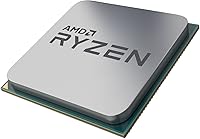
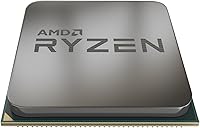
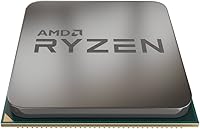
The AMD Ryzen 5 2400G Processor occupies a genuinely useful niche in the PC building world — it bundles a capable CPU and integrated graphics into a single chip, which means you can get a functional desktop running without spending extra on a dedicated graphics card. Launched in early 2018, this Ryzen APU has aged well, largely because AMD's AM4 platform stayed supported for years, making it a smart foundation even on today's budget. The included Wraith Stealth cooler is a thoughtful bonus; most chips at this tier ship bare. Just go in with clear expectations: the integrated graphics are respectable, not a discrete GPU substitute.
Features & Benefits

The 2400G packs 4 cores and 8 threads, which means smooth multitasking across browser tabs, office apps, and background processes without noticeable slowdown. The Radeon RX Vega 11 integrated graphics handles 1080p gaming in older and less demanding titles — think Rocket League, CS:GO, or Minecraft — at playable frame rates on low-to-medium settings. One tip many buyers miss: always populate your RAM slots in dual-channel mode. The integrated GPU shares system memory, and single-channel RAM cuts its performance significantly. The chip also carries an unlocked multiplier for overclocking via AMD Ryzen Master, and its modest 65W TDP keeps thermals manageable even in tighter cases.

Best For

This integrated graphics processor suits a specific kind of builder, and knowing if you fit that profile matters. It is an excellent choice for anyone assembling their first budget PC who wants a working system now with the option to add a discrete GPU down the road. It also shines in compact builds where a full-length graphics card physically will not fit. Living room HTPCs, quiet office workstations, and light productivity rigs all get solid mileage from it. Retro gamers revisiting older titles will find the performance genuinely comfortable. Just do not expect it to handle modern AAA releases at playable settings — that is not what it was built for.

User Feedback

Buyers have responded warmly to the 2400G overall, with most appreciating how much the chip delivers straight out of the box. The bundled cooler draws consistent praise for running quietly and handling stock speeds without complaint. The most common criticism, though, is less about the chip itself and more about setup: buyers who installed RAM as a single stick rather than a matched pair reported weaker graphics performance and sometimes blamed the processor unfairly. A smaller number flagged BIOS compatibility snags on older AM4 motherboards, where a firmware update was needed before the system would even post. Both are fixable issues, but worth knowing before you buy.

Pros

  • No discrete GPU needed out of the box, making it a genuinely budget-friendly starting point for a first build.
  • The 2400G handles everyday multitasking — browsers, office apps, video calls — without any noticeable drag.
  • Integrated Radeon RX Vega 11 graphics deliver playable performance in older and lighter games at 1080p.
  • The included Wraith Stealth cooler runs quietly and handles stock speeds without needing an aftermarket replacement.
  • An unlocked multiplier gives enthusiast builders room to squeeze out extra performance via AMD Ryzen Master.
  • The 65W TDP keeps power consumption low, which matters in compact builds with limited airflow.
  • AM4 socket compatibility means a clear, well-supported upgrade path to stronger Ryzen chips down the road.
  • FreeSync support via Radeon Software is a useful bonus for buyers pairing it with a compatible monitor.
  • Years of mature driver support mean fewer quirks and a more stable day-to-day experience than at launch.
  • Installing RAM in dual-channel mode unlocks meaningfully better integrated graphics performance at no extra cost.

Cons

  • Modern AAA games are largely unplayable on integrated Vega 11 graphics, even at the lowest settings.
  • Integrated GPU performance drops sharply if RAM is installed as a single stick rather than a matched pair.
  • Older AM4 motherboards may require a BIOS update first, which can block first-time builders who lack a spare compatible CPU.
  • The chip shows its age in CPU-heavy workloads like video encoding or 3D rendering, where newer architectures are considerably faster.
  • Buying used or refurbished units carries some risk, as the chip has been on the market since 2018 and may have seen heavy use.
  • Thermal headroom is limited when overclocking; the bundled cooler is adequate at stock speeds but not for sustained boosts.
  • Dual-channel RAM compatibility requires a motherboard with at least two memory slots, which not all budget mini boards provide.
  • The integrated graphics share system RAM bandwidth, which can create bottlenecks in memory-intensive tasks alongside GPU workloads.

Ratings

Our AI rating engine analyzed thousands of verified global purchases of the AMD Ryzen 5 2400G Processor, actively filtering out incentivized reviews, bot submissions, and outlier feedback to surface what real builders actually experienced. The scores below reflect both the genuine strengths that made this chip a budget favorite and the recurring frustrations that tripped up less-prepared buyers. Nothing is glossed over — the highs and the pain points are weighted equally.

Value for Money
91%
Buyers consistently cite this as one of the most cost-efficient ways to build a functional PC without a separate graphics card. Getting a capable CPU and integrated GPU in one package removes a significant line item from the build budget, which first-time builders especially appreciate when every dollar counts.
A handful of users felt the value proposition weakened when they discovered they needed faster dual-channel RAM to unlock real graphics performance — an additional cost not always factored into initial budget planning. On the used market, pricing inconsistency can also erode the value advantage if buyers are not careful.
Integrated Graphics Performance
74%
26%
For a chip without a discrete GPU, the Radeon Vega 11 genuinely surprised buyers who used it for casual gaming, retro titles, and 1080p media playback. Games like CS:GO and Rocket League ran at comfortable frame rates on medium settings, which exceeded many users' expectations given the all-in-one nature of the chip.
The moment buyers pushed into modern AAA titles, performance dropped hard — and some users reported disappointment when comparing their results to online benchmarks, not realizing those benchmarks used fast dual-channel RAM. Single-channel memory configurations were a recurring culprit behind underperforming units in user reports.
CPU Multitasking
83%
The 4-core, 8-thread configuration handles real-world multitasking well — users running video calls alongside spreadsheets, browser sessions, and background downloads rarely reported slowdowns. For office productivity and everyday computing, the threading headroom makes a noticeable difference compared to basic dual-core chips.
CPU-intensive workloads like video encoding, compiling code, or rendering 3D scenes push the chip to its limits fairly quickly. Users who started out using this Ryzen APU for light tasks and later expanded into content creation found themselves needing to upgrade sooner than expected.
Out-of-Box Experience
88%
Most buyers were pleasantly surprised by how ready-to-run the package felt — the included Wraith Stealth cooler meant no extra purchase before the first boot, and AMD's drivers installed cleanly on both Windows 10 and 11. First-time builders particularly appreciated not having to research cooler compatibility on top of everything else.
Users pairing the chip with older AM4 motherboards sometimes hit a wall immediately, requiring a BIOS update that itself needed a different compatible CPU to execute. This created a frustrating chicken-and-egg situation for builders who had not anticipated the extra step.
Thermal Performance
81%
19%
At stock speeds, the 65W TDP keeps temperatures well within a comfortable range even in tighter mini-ITX cases with modest airflow. Users building compact home theater PCs and small office machines consistently praised how cool and quiet the system ran during typical workloads.
Once overclocking enters the picture, the bundled Wraith Stealth cooler runs out of headroom relatively quickly. Enthusiasts who pushed CPU and GPU frequencies simultaneously reported thermal throttling under sustained loads, making an aftermarket cooler a near-necessity for any serious tuning.
Overclocking Headroom
62%
38%
Having an unlocked multiplier on a budget chip is a genuine bonus, and buyers who explored AMD Ryzen Master found the interface approachable even for beginners. Modest frequency bumps on both the CPU and Vega 11 GPU cores yielded measurable gaming improvements when paired with fast RAM.
The actual ceiling for overclocking is fairly low — the Zen+ architecture does not scale dramatically beyond stock clocks, and most users found gains of only a few hundred MHz before stability issues or thermal limits appeared. Buyers chasing big performance jumps through overclocking were largely left underwhelmed.
RAM Compatibility & Sensitivity
58%
42%
When paired correctly — two matched sticks of DDR4-3000 or faster in dual-channel mode — the integrated graphics performance noticeably improved, and buyers who did their homework reported results well above their expectations for an integrated solution.
This is the single most polarizing aspect of the chip in user reviews. Buyers who installed a single RAM stick, used slow DDR4-2133, or mixed mismatched modules saw significantly degraded graphics output and often blamed the processor rather than their memory configuration. The chip's dependency on memory setup is steep and not well-communicated at the point of sale.
Motherboard Compatibility
67%
33%
AM4 platform compatibility is broad, and buyers using B450 or X470 boards reported a consistently smooth experience with no surprises. The wide selection of compatible motherboards at varying price points gives builders meaningful flexibility in how they allocate their remaining budget.
Older 300-series boards introduced real friction — a BIOS flash was often required before the chip was even recognized, and completing that update without a compatible CPU already on hand was a genuine obstacle. A minority of users reported board-specific instability quirks that required manual BIOS tuning to resolve.
Noise Level
84%
The Wraith Stealth cooler is genuinely quiet under normal loads, and buyers using this integrated graphics processor in living room HTPC builds particularly praised the near-silent operation during movie playback and light use. The low TDP means the fan rarely needs to spin up aggressively.
Under sustained CPU-heavy workloads or during extended gaming sessions, the cooler fan spins noticeably faster and generates a mid-pitched hum that some users in quiet environments found distracting. It is not loud by any measure, but it is audible if your case is on a desk nearby.
Driver & Software Stability
86%
Years on the market have translated into a polished software experience — AMD's Radeon drivers for the Vega 11 graphics are mature and stable, with most buyers reporting clean installations and no post-update regressions. The Ryzen Master utility is similarly well-regarded for its straightforward interface.
A small segment of users, particularly those on older Windows versions or niche configurations, reported occasional driver conflicts after major Radeon Software updates. While not widespread, these edge cases required manual rollbacks and were frustrating for less technically confident builders.
Upgrade Path Flexibility
89%
The AM4 socket's longevity is a genuine long-term asset — buyers who started with the 2400G could drop in a Ryzen 5000-series chip on a compatible board without replacing anything else. Several reviewers described this chip as a deliberate placeholder that served its purpose well before a planned GPU or CPU upgrade.
The upgrade path is constrained by chipset — older A320 boards limit CPU headroom, and not every AM4 board supports the full range of Ryzen generations. Buyers who did not research chipset compatibility upfront sometimes found their upgrade options narrower than they had assumed.
1080p Media Playback
93%
For HTPC and media center builds, the Vega 11 handles 1080p and even 4K video playback flawlessly, with hardware decode support keeping CPU load low and playback smooth. Buyers using it for streaming services and Blu-ray rips consistently reported a clean, stutter-free experience with no configuration needed.
A small number of users encountered HDCP handshake issues with certain displays when playing protected content, which required toggling display settings or updating firmware. This was an edge case, but it caused enough frustration in home theater setups to be worth noting.
Build & Physical Quality
79%
21%
The processor arrived well-packaged in AMD's retail box, and buyers appreciated the inclusion of the cooler and thermal paste pre-applied to the heatsink. The chip itself seated cleanly into AM4 sockets without the bent-pin anxiety that plagues Intel LGA installations.
A very small number of buyers received units with physically damaged pins from shipping or handling, which is difficult to verify as a manufacturing defect versus a fulfillment issue. AMD's standard retail packaging is functional but not premium, and the cooler's plastic build feels noticeably budget-grade up close.

Suitable for:

The AMD Ryzen 5 2400G Processor is built for a very specific kind of buyer, and if you fall into that group, it delivers real value. First-time builders working with a tight budget will appreciate that it removes the immediate need for a discrete graphics card, cutting hundreds off the initial build cost. It is equally at home in a living room media PC, where you need smooth 4K video playback and a tidy, low-profile setup rather than gaming horsepower. Office workers and students who spend their days in spreadsheets, browsers, and video calls will find the 4-core, 8-thread configuration handles those workloads without breaking a sweat. Casual gamers revisiting older titles or playing lighter competitive games like CS:GO or Rocket League will get genuinely playable performance. Anyone building in a compact or mini-ITX case, where fitting a large GPU is physically complicated, will also find this Ryzen APU a practical and tidy solution.
Not suitable for:

The AMD Ryzen 5 2400G Processor is not the right chip if your primary goal is running modern, graphically demanding games at smooth frame rates. Titles released in the last few years — open-world games, AAA shooters, anything with high-fidelity rendering — will struggle or outright refuse to run acceptably on integrated Vega 11 graphics, regardless of settings. Video editors, 3D artists, or anyone doing heavy rendering work will quickly hit the ceiling on both CPU and GPU throughput. This integrated graphics processor is also not ideal for buyers who already own a discrete GPU, since the integrated graphics become largely redundant and you are paying for a feature you will not use. If you are pairing it with an older AM4 motherboard, be prepared for a potential BIOS update requirement before the system will even boot — a frustrating hurdle for first-time builders who may not own a compatible older chip to perform that update.
Specifications

  • CPU Cores: The processor features 4 physical cores with Simultaneous Multithreading (SMT) enabled, delivering 8 logical threads for efficient parallel task handling.
  • Base Clock: The base operating frequency runs at 3.6 GHz, providing consistent performance across sustained workloads without relying on boost behavior.
  • Max Boost: Under light, single-threaded loads, the chip automatically boosts up to 3.9 GHz via AMD SenseMI precision boost technology.
  • Architecture: Built on AMD's Zen+ microarchitecture (Raven Ridge die), fabricated on a 14nm process node for a balance of efficiency and per-core throughput.
  • Integrated GPU: The onboard Radeon RX Vega 11 graphics engine includes 11 Compute Units and is capable of driving displays and handling casual 1080p gaming workloads.
  • CPU Socket: Designed for AMD's AM4 platform, it is physically and electrically compatible with a wide range of AM4 motherboards from 300-series through 500-series chipsets (BIOS update may be required).
  • Memory Support: Supports DDR4 SDRAM in dual-channel configuration, with officially rated speeds up to DDR4-2933 MHz depending on the motherboard.
  • Thermal Design: Rated at a 65W default TDP, keeping heat output low enough for small form factor cases and modest cooling solutions under typical usage.
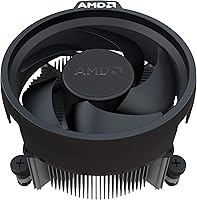
  • Cooler Included: Ships with an AMD Wraith Stealth cooler, which is sufficient for stable operation at stock speeds without requiring a separate aftermarket purchase.
  • Overclocking: The unlocked multiplier allows manual CPU and GPU frequency adjustments via the AMD Ryzen Master utility on supported motherboards.
  • FreeSync Support: The integrated Radeon graphics support AMD FreeSync adaptive sync technology when connected to a compatible FreeSync-enabled monitor.
  • Display Output: Display connectivity is handled through the motherboard's rear I/O ports, which typically include HDMI and DisplayPort depending on the board manufacturer.
  • PCIe Support: The processor supports PCIe 3.0 lanes, enabling compatibility with modern discrete GPUs and NVMe SSDs when added via the motherboard.
  • Memory Channels: Dual-channel memory configuration is strongly recommended, as the integrated GPU draws directly from system RAM bandwidth for graphics performance.
  • Launch Date: Originally released in February 2018, the chip has a mature and stable driver and firmware ecosystem across both AMD and third-party motherboard vendors.
  • Manufacturer: Designed and manufactured by AMD (Advanced Micro Devices), the processor is covered by AMD's standard limited warranty for retail boxed units.
  • Item Weight: The retail boxed unit weighs approximately 1 pound, inclusive of the processor, cooler, and packaging.
  • Dimensions: The processor die itself measures approximately 1.6 x 1.6 x 0.1 inches, conforming to the standard AM4 form factor for socket compatibility.

Related Reviews
AMD Ryzen 5 1400 Processor
82%
92%
Value for Money
85%
Gaming Performance
88%
Overclocking Potential
80%
Thermal Management
90%
Setup and Installation
More
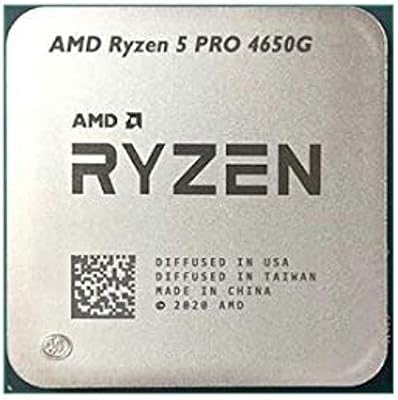
AMD Ryzen 5 PRO 4650G Desktop Processor
72%
74%
Integrated Graphics Performance
81%
CPU Multitasking
62%
Value for Money
88%
Platform Compatibility
58%
RAM Speed Sensitivity
More
AMD Ryzen 5 8500G
AMD Ryzen 5 8500G
77%
83%
CPU Performance
71%
Integrated Graphics
78%
Value for Money
67%
Gaming Capability
88%
Platform Longevity
More
AMD Ryzen 5 9600X
AMD Ryzen 5 9600X
84%
93%
Single-Core Performance
91%
Thermal Efficiency
94%
Energy Consumption
89%
Gaming Frame Rates
67%
Value for Money
More
AMD Ryzen 5 5600X Desktop Processor
82%
94%
Gaming Performance
88%
Multitasking & Everyday Use
91%
Value for Money
74%
Thermal Performance
78%
Overclocking Headroom
More
AMD Ryzen 5 1600 Processor
80%
93%
Value for Money
84%
Multi-Threaded Performance
76%
Gaming Performance
88%
Platform Longevity
79%
Included Cooler Quality
More
AMD Ryzen 5 1500X Processor with Wraith Spire Cooler
85%
88%
Gaming Performance
82%
Overclocking Potential
85%
Cooling Efficiency
91%
Price-to-Performance Ratio
75%
Multi-Threaded Performance
More
AMD Ryzen 5 3600
AMD Ryzen 5 3600
84%
94%
Value for Money
88%
Gaming Performance
86%
Multitasking Capability
82%
Thermal Efficiency
67%
Stock Cooler Quality
More
INLAND MSI B650-P Ryzen 5 7600X Bundle
75%
88%
Gaming Performance
83%
Value for Money
84%
Motherboard Build Quality
79%
Ease of Setup
62%
Thermal Management
More
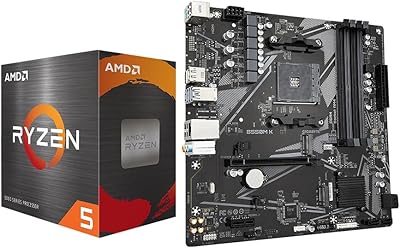
AMD Ryzen 5 5500 B550M K Bundle
78%
88%
Value for Money
79%
Gaming Performance at 1080p
91%
Ease of Installation
83%
Motherboard Feature Set
74%
CPU Thermal Performance
More

FAQ

Not right away. The 2400G has built-in Radeon Vega 11 graphics that are capable enough for everyday computing, media playback, and lighter games. If you are building a budget PC and plan to add a dedicated GPU later, this chip lets you get up and running immediately without that extra expense. Just know that demanding modern games will not run well on integrated graphics alone.

It matters more than most people realize. The integrated GPU shares your system RAM, so both the amount and configuration of your memory directly affect graphics performance. Always install RAM in two matched sticks to enable dual-channel mode — running a single stick cuts graphics throughput noticeably. Faster RAM, ideally DDR4-3000 or higher, also helps the Vega 11 graphics perform closer to its ceiling.

It should, but there is a catch with older boards. Motherboards using 300-series chipsets like the A320 or B350 often shipped with BIOS versions that predate this chip, and they need a firmware update before the processor is recognized. The tricky part is you may need a compatible older Ryzen CPU to perform that update first. If you are buying a newer 400 or 500-series board, this is generally not an issue.

Realistically, you are looking at older titles and less demanding competitive games. Games like Minecraft, CS:GO, League of Legends, Rocket League, and many titles from the early-to-mid 2010s run at playable frame rates on low-to-medium settings at 1080p. Modern open-world or AAA titles released in the last few years will struggle — either refusing to hit smooth frame rates or requiring settings so low the experience is not enjoyable.

The bundled Wraith Stealth cooler is perfectly adequate if you plan to run the chip at stock speeds. It runs quietly and keeps temperatures in a safe range under typical workloads. If you intend to overclock, you will want something with more thermal headroom, since the Wraith Stealth does not leave much margin when the chip is pushed beyond its rated frequencies.

Yes, the unlocked multiplier means you can adjust frequencies through AMD Ryzen Master or your motherboard BIOS. In practice, the gains on the CPU side are modest since Zen+ architecture does not have huge headroom above stock clocks. Overclocking the integrated GPU's frequency can yield more noticeable gaming improvements, though you will want faster RAM and a capable cooler to get the most out of it.

It depends entirely on your use case and budget. For a low-cost productivity machine, an HTPC, or a starter build, the 2400G still makes a lot of sense — especially on the used market. The platform is mature, driver support is solid, and the AM4 socket gives you an upgrade path. For gaming or performance-focused builds, newer options in a similar price range will give you better value in 2024.

Absolutely, and this is actually one of the more compelling reasons to start with this chip. When you add a discrete GPU, it plugs into the PCIe slot on your motherboard and takes over all graphics duties. The integrated Vega 11 essentially goes idle. You get a clean upgrade path without needing to replace the processor itself, which stretches your initial investment further.

The B450 chipset is widely considered the sweet spot for this chip — it offers overclocking support, good feature sets, and typically comes at a reasonable price. The X470 chipset works well too if you find a good deal. Budget A320 boards are compatible but lock out overclocking. Avoid pairing it with older 300-series boards if you can, given the BIOS update hassle mentioned earlier.

It handles typical remote work very comfortably. Eight threads spread across four cores means you can have a video call running, a browser with a dozen tabs open, and a document editor or spreadsheet active simultaneously without things grinding to a halt. It is not a powerhouse, but for the workload most office users actually put on a machine daily, it is more than competent.

Where to Buy