Overview

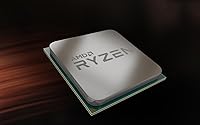
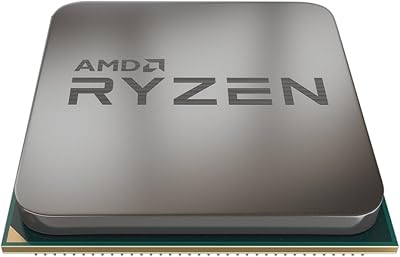
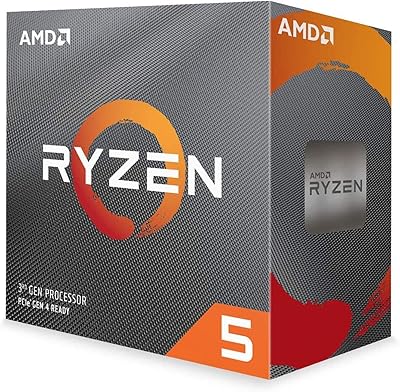
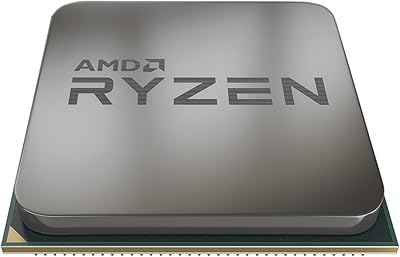
The AMD Ryzen 5 1600 Processor launched back in 2017 and quietly became one of the most recommended budget chips AMD ever released. Years later, it still makes a compelling case for builders who want six cores and twelve threads without stretching their budget to the limit. Built on the AM4 platform, it sits in an ecosystem that supports later Ryzen generations, so early adopters were never locked into a dead end. The included Wraith Spire cooler is a genuine bonus — most chips at this price point ship with nothing. Just be clear-eyed: this is a mature platform, not a fresh architecture.
Features & Benefits

The 1600 runs a 3.2 GHz base clock that boosts up to 3.6 GHz under load via Precision Boost — in practice, that headroom matters most during short bursts of activity like opening apps or switching between tasks rather than in sustained workloads. The unlocked multiplier gives tinkerers room to push further, and moderate overclocks on decent AM4 boards are well within reach. A 16 MB L3 cache gave it a measurable edge over same-generation Intel competitors in multi-threaded scenarios. PCIe 3.0 x16 support keeps it compatible with mid-range GPUs without any bandwidth bottleneck worth worrying about.

Best For

This six-core AMD processor punches well above its weight for 1080p gaming on a budget. Titles that lean on CPU thread counts — think streaming while gaming, or running a game alongside a browser and Discord — handle noticeably better here than on quad-core alternatives. Students and home office users will find it more than adequate for spreadsheets, video calls, and light photo work. First-time builders also benefit from the AM4 upgrade path: drop in a Ryzen 5000-series chip later without swapping the whole board. Occasional light video editors will manage fine, though anyone exporting footage daily should look at something more current.

User Feedback

With over 4,400 ratings and a 4.7-star average, the reception for this Ryzen 5 chip is hard to argue with. Buyers consistently highlight how painless installation is and how the stock cooler holds up well enough to skip a third-party upgrade, at least at stock speeds. Platform longevity also gets mentioned often — people appreciated having room to upgrade later without rebuilding from scratch. On the downside, heavy rendering and 3D workloads surface as real pain points for users who pushed it hard. Sustained overclocking drew occasional thermal complaints, though moderate OC results were generally reported as stable and worthwhile.

Pros

  • Six cores and twelve threads at a budget price point is genuinely rare and makes a real difference in multitasking.
  • The included Wraith Spire cooler is good enough for stock use, saving you money right out of the box.
  • AM4 socket compatibility means you can upgrade to a Ryzen 5000-series chip later without changing your motherboard.
  • The unlocked multiplier gives enthusiast builders meaningful overclocking headroom on a decent AM4 board.
  • Runs reliably cool and quiet at stock speeds, with a 65W TDP that keeps thermals predictable.
  • DDR4 memory support and PCIe 3.0 x16 keep it compatible with a wide range of modern GPUs and RAM kits.
  • Over 4,400 user ratings with a 4.7-star average reflects a consistently positive ownership experience across a large sample.
  • Installation is straightforward even for first-time builders, with no reported compatibility headaches on compatible AM4 boards.

Cons

  • Single-core performance lags noticeably behind current-generation budget CPUs from both AMD and Intel.
  • Not well-suited to sustained heavy workloads like 3D rendering or large video exports, where it runs out of steam.
  • High-refresh-rate gaming above 1080p can expose the 1600 as a frame rate bottleneck before your GPU is fully used.
  • The architecture is aging, so long-term driver and software optimization support will diminish over time.
  • Sustained overclocking can push thermals to uncomfortable levels without an upgraded cooler replacing the stock one.
  • Buyers on current-gen AM4 boards may face BIOS update requirements before the chip is recognized, adding a setup hurdle.
  • Competing newer-gen chips at similar prices now offer meaningfully better instructions-per-clock performance.
  • Not ideal for anyone running multiple virtual machines or containerized development environments simultaneously.

Ratings

Our AI rating system analyzed thousands of verified global reviews for the AMD Ryzen 5 1600 Processor, actively filtering out incentivized submissions and bot activity to surface what real buyers actually experienced. The scores below reflect both the genuine strengths that made this chip a fan favorite and the honest limitations that matter depending on your use case. Every category is scored transparently, so you can weigh what matters most for your specific build.

Value for Money
93%
Buyers consistently praised getting six cores and twelve threads at a price that undercut comparable Intel options by a meaningful margin. For budget builders assembling a capable everyday PC or entry-level gaming rig, the cost-to-performance ratio felt almost unfair in a good way.
A small segment of reviewers who purchased later in the product lifecycle felt the value had eroded as newer budget CPUs from both AMD and Intel entered the market at similar prices with noticeably better single-core performance.
Multi-Threaded Performance
84%
Users doing light video editing, simultaneous streaming and gaming, or running several applications at once found the 12-thread setup made a tangible difference in how smooth and responsive the system felt. Streamers in particular appreciated that OBS could run alongside a game without the system grinding down.
Heavy sustained workloads like long 3D renders or complex video exports pushed the chip to its limits noticeably. Reviewers coming from workstation backgrounds found it underwhelming for batch processing tasks that demanded consistent all-core throughput over extended periods.
Gaming Performance
76%
24%
At 1080p with a competent mid-range GPU, most buyers reported a solid and enjoyable gaming experience across popular titles. The thread count helped in open-world games with busy CPU simulations, and frame rates felt consistent enough for casual and recreational play.
Competitive gamers targeting high refresh rates at 1080p or stepping up to 1440p frequently noted the CPU becoming a bottleneck before their GPU was fully utilized. Single-core speed limitations became apparent in older game engines that do not distribute work across many threads effectively.
Platform Longevity
88%
One of the most frequently cited positives in long-term ownership reviews was the AM4 socket's upgrade flexibility. Buyers who started with this chip and later swapped in a Ryzen 5000-series processor appreciated that their motherboard investment remained relevant across multiple CPU generations.
Some users with 500-series motherboards encountered BIOS compatibility hurdles that required a working CPU to update firmware first, which caught a few first-time builders off guard and added friction to what should have been a straightforward setup.
Included Cooler Quality
79%
21%
The bundled Wraith Spire cooler drew consistent praise for actually being worth using, unlike the thin thermal solutions that ship with many budget processors. At stock speeds it kept temperatures in a comfortable range, and buyers appreciated not having to budget for a separate cooler right away.
Under sustained heavy load or when attempting moderate overclocking, the Wraith Spire fans audibly ramped up and some users found the noise level distracting in a quiet room. Those pushing higher voltages for overclocking found it reached its thermal limits quickly enough to justify an aftermarket replacement.
Overclocking Headroom
71%
29%
The unlocked multiplier gave enthusiast builders something to work with, and many reported stable all-core overclocks in the 3.7 to 3.85 GHz range with modest voltage adjustments. For a chip at this price tier, having overclocking access at all was seen as a genuine bonus rather than a given.
Results were inconsistent across the reviewer base, with some chips showing strong headroom and others plateauing early. Pushing beyond 3.9 GHz reliably required voltage increases that generated noticeably more heat, which the stock cooler handled poorly and which raised concerns about long-term silicon stability.
Installation Experience
91%
First-time builders repeatedly called out installation as one of the least stressful parts of their build experience. The AM4 ZIF socket design is forgiving and intuitive, and the Wraith Spire's mounting bracket system was described as clear and well-documented even without additional guidance.
A small number of users ran into issues specific to certain older B350 motherboards where initial POST failed before a BIOS update, which was a confusing experience for those who did not have a spare CPU on hand to perform the update first.
Thermal Management
77%
23%
At stock operation with the included cooler, temperatures stayed well within AMD's 95 degrees Celsius maximum across typical workloads like web browsing, office productivity, and light gaming sessions. The 65W TDP made thermal management predictable and easy to plan around for case airflow decisions.
Under prolonged all-core stress — long game sessions in demanding titles or back-to-back rendering jobs — temperatures climbed higher than some users expected, particularly in compact cases with limited airflow. A few reviewers noted occasional thermal throttling during extended summer use in warm rooms without air conditioning.
Everyday Productivity
86%
Home office users and students praised how smooth and snappy general computing felt — juggling browser tabs, video calls, document editing, and background downloads without any sense of the system straining. The multi-threaded architecture made context-switching between heavy applications feel natural.
Running highly single-threaded professional applications like certain older CAD tools or legacy business software occasionally showed the chip's per-core speed limitations, with load times and response rates that newer alternatives handled more briskly.
Memory Compatibility
72%
28%
Buyers who paired the chip with DDR4-3000 or DDR4-3200 kits in dual-channel configuration reported noticeably better performance than those running slower single-stick setups. The sensitivity to memory speed meant that spending a little more on RAM paid dividends across both gaming and productivity tasks.
First-generation Ryzen's finicky relationship with high-speed memory kits was a recurring frustration. Several users reported instability or failure to POST at advertised XMP speeds above DDR4-3200, requiring manual tuning or stepping timings down, which was a poor experience for less experienced builders.
Single-Core Speed
62%
38%
For everyday single-threaded tasks like web browsing and document work, the Precision Boost behavior means the chip pulls ahead of its base clock rating when only one or two cores are active, which kept general responsiveness feeling acceptable for most casual users.
Reviewers who compared it directly to same-era Intel Core i5 processors noted a clear gap in single-core throughput, which translated into longer load times in single-threaded games and slower response in applications that do not distribute work across multiple cores. This remains the chip's most consistently cited technical limitation.
Build & Packaging
83%
The retail box presentation was well-regarded, with the cooler and CPU arriving in protective packaging that kept components secure during shipping. Buyers felt the unboxing experience communicated quality, particularly given the price point, and the inclusion of AMD thermal paste pre-applied to the Wraith Spire was appreciated.
A small portion of buyers reported cosmetic damage to the cooler's fan housing on arrival, likely from shipping handling rather than manufacturing defects. Documentation in the box was minimal, which was not a concern for experienced builders but left some first-timers wishing for a more detailed quick-start guide.
Power Efficiency
68%
32%
The 65W TDP rating kept power draw reasonable for a six-core processor, and users building home theater PCs or always-on workstations appreciated that electricity costs remained modest compared to higher-TDP alternatives from the same generation.
Under overclocked conditions, power consumption climbed disproportionately relative to the performance gains achieved, which disappointed efficiency-focused builders. Compared to newer Zen 3 and Zen 4 chips, the performance-per-watt ratio reflects the older 14nm process node and is noticeably behind current-generation standards.
Long-Term Reliability
87%
Given how many years this chip has been in circulation, the reliability track record across the reviewer base is strong. Users running the 1600 at stock clocks for several years reported no degradation in stability, and the volume of long-term ownership reviews suggests the silicon holds up well under normal use.
The aging 14nm process and the maturing AM4 ecosystem mean software and driver optimization from AMD will naturally prioritize newer architectures going forward. Buyers planning to keep a system running for five or more years may find diminishing software support to be a practical concern down the line.

Suitable for:

The AMD Ryzen 5 1600 Processor is a strong fit for budget-conscious builders who want real multi-threaded muscle without paying a premium for it. Students putting together a first PC for coursework, media consumption, and light creative work will find it more than capable day-to-day. Casual gamers targeting 1080p resolutions can pair it with a mid-range GPU and get solid, consistent frame rates in most titles without the CPU becoming a bottleneck. Streamers who want to game and broadcast simultaneously will also appreciate the 12 available threads, which give the system enough headroom to handle both tasks at once. Perhaps most practically, buyers who invest in an AM4 motherboard can treat this chip as a starting point rather than a ceiling, with a clear path to upgrade to a later Ryzen generation without rebuilding the entire platform from scratch.
Not suitable for:

The AMD Ryzen 5 1600 Processor is not the right call for anyone building a workstation intended for heavy, sustained creative workloads like 3D rendering, complex video production, or large-scale data processing. This six-core AMD processor was competitive at launch in 2017, but the CPU landscape has moved on considerably, and newer budget options from both AMD and Intel now offer better performance-per-core at similar price points. Competitive gamers chasing high refresh rates at 1440p or 4K will likely find the 1600 becomes a limiting factor before their GPU does. Professionals who rely on fast compile times or run virtualization-heavy workloads should also look elsewhere. If longevity beyond three to four more years of useful life matters to you, investing in a current-generation platform from the start is the smarter move.
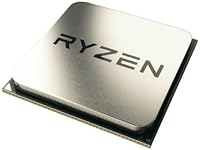
Specifications

  • Core Count: The processor features 6 physical cores, enabling genuine parallel processing across demanding workloads.
  • Thread Count: Simultaneous Multi-Threading (SMT) delivers 12 threads, allowing the CPU to handle more tasks concurrently than its core count alone suggests.
  • Base Clock: The guaranteed operating frequency under full load is 3.2 GHz, providing consistent baseline performance across all cores.
  • Boost Clock: Precision Boost technology dynamically raises clock speeds up to 3.6 GHz on active cores when thermal and power headroom allows.
  • L2 Cache: 3 MB of L2 cache sits close to the cores and helps reduce latency for frequently accessed instruction sets.
  • L3 Cache: A 16 MB L3 cache pool is shared across all cores, improving performance in cache-sensitive workloads like gaming and data lookups.
  • CPU Socket: Uses the AM4 socket, which is compatible with a wide range of AMD 300-, 400-, and select 500-series motherboards.
  • Memory Support: Officially supports DDR4 RAM, with dual-channel configurations recommended for optimal memory bandwidth.
  • PCIe Version: Provides PCIe 3.0 x16 connectivity, suitable for pairing with any current or previous-generation discrete GPU without bandwidth constraints.
  • TDP: Rated at a 65W Thermal Design Power, indicating the cooling solution needs to dissipate up to 65 watts under sustained load.
  • Max Temperature: AMD specifies a maximum safe operating junction temperature of 95 degrees Celsius before thermal throttling begins.
  • Multiplier: The CPU ships with an unlocked multiplier, allowing overclocking adjustments directly through compatible AM4 motherboard BIOS settings.
  • Included Cooler: The Wraith Spire air cooler is included in the box, offering adequate thermal performance for stock operation and mild overclocking scenarios.
  • Model Number: The official AMD part number is YD1600BBAEBOX, which designates the retail boxed version with the cooler included.
  • Manufacturer: Designed and manufactured by AMD (Advanced Micro Devices), using their first-generation Zen microarchitecture built on a 14nm process node.
  • Platform: Built for desktop PC systems running on Windows or Linux operating systems with a compatible AM4 motherboard.
  • Memory Type: Compatible with DDR4 SDRAM modules; DDR3 memory is not supported on this platform.
  • Architecture: Based on AMD's original Zen architecture, the first generation that brought AMD back to competitive multi-threaded performance parity with Intel.

Related Reviews
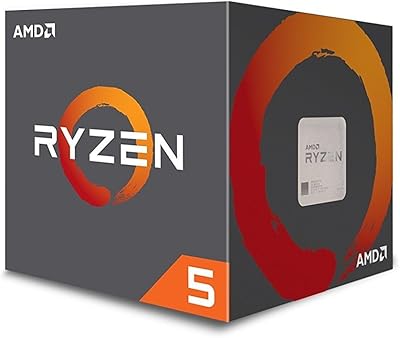
AMD Ryzen 5 1400 Processor
82%
92%
Value for Money
85%
Gaming Performance
88%
Overclocking Potential
80%
Thermal Management
90%
Setup and Installation
More
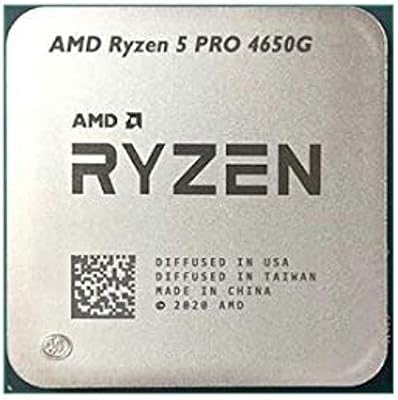
AMD Ryzen 5 PRO 4650G Desktop Processor
72%
74%
Integrated Graphics Performance
81%
CPU Multitasking
62%
Value for Money
88%
Platform Compatibility
58%
RAM Speed Sensitivity
More
AMD Ryzen 5 8500G
AMD Ryzen 5 8500G
77%
83%
CPU Performance
71%
Integrated Graphics
78%
Value for Money
67%
Gaming Capability
88%
Platform Longevity
More
AMD Ryzen 5 5600X Desktop Processor
82%
94%
Gaming Performance
88%
Multitasking & Everyday Use
91%
Value for Money
74%
Thermal Performance
78%
Overclocking Headroom
More
AMD Ryzen 5 9600X
AMD Ryzen 5 9600X
84%
93%
Single-Core Performance
91%
Thermal Efficiency
94%
Energy Consumption
89%
Gaming Frame Rates
67%
Value for Money
More
AMD Ryzen 5 1500X Processor with Wraith Spire Cooler
85%
88%
Gaming Performance
82%
Overclocking Potential
85%
Cooling Efficiency
91%
Price-to-Performance Ratio
75%
Multi-Threaded Performance
More
AMD Ryzen 5 3600
AMD Ryzen 5 3600
84%
94%
Value for Money
88%
Gaming Performance
86%
Multitasking Capability
82%
Thermal Efficiency
67%
Stock Cooler Quality
More
AMD Ryzen 5 2400G Processor
80%
91%
Value for Money
74%
Integrated Graphics Performance
83%
CPU Multitasking
88%
Out-of-Box Experience
81%
Thermal Performance
More
AMD Ryzen 5 5500 B550M K Bundle
78%
88%
Value for Money
79%
Gaming Performance at 1080p
91%
Ease of Installation
83%
Motherboard Feature Set
74%
CPU Thermal Performance
More
INLAND MSI B650-P Ryzen 5 7600X Bundle
75%
88%
Gaming Performance
83%
Value for Money
84%
Motherboard Build Quality
79%
Ease of Setup
62%
Thermal Management
More

FAQ

It comes with the Wraith Spire cooler included in the box, which is a decent mid-sized air cooler. For stock speeds it works just fine, and it will handle light overclocking too. If you plan to push a serious overclock, a third-party cooler would be a worthwhile upgrade.

Any AM4 motherboard should work, including 300-series (like the B350 or X370), 400-series (B450, X470), and many 500-series boards. Keep in mind that some 500-series boards may require a BIOS update before they recognize it, so check with your board manufacturer first if you are pairing it with a newer motherboard.

Yes, that is one of the real advantages of the AM4 platform. Most B450 and X470 boards, and many B550 and X570 boards, support Ryzen 5000-series chips with a BIOS update. This means you can start with the 1600 and upgrade the CPU later without rebuilding from scratch.

For 1080p gaming with a mid-range GPU, it still holds up reasonably well in most titles. You may notice it struggling in CPU-heavy games or at higher frame rate targets above 60fps, but for casual gaming it is not a frustrating experience. If competitive gaming at high refresh rates is your priority, a more current CPU would serve you better.

It is genuinely one of the easier CPUs to install. The AM4 socket uses a ZIF (zero insertion force) design, meaning you just align the chip, drop it in, and lock the lever. The Wraith Spire cooler also mounts with a straightforward bracket system, so most first-timers get it done without issues.

Yes, the multiplier is unlocked, so you can overclock it through your motherboard BIOS. Realistically, most users land somewhere between 3.7 GHz and 3.9 GHz all-core with adequate cooling. Pushing much further tends to require significant voltage increases, which raises heat output considerably, so moderate overclocking is the sweet spot for most people.

AMD's Zen architecture responds well to faster memory, so DDR4-3000 or DDR4-3200 is a solid target. Running in dual-channel configuration, meaning two sticks rather than one, also makes a noticeable difference in both productivity and gaming performance. Avoid going too extreme on memory overclocking though, as first-gen Ryzen chips can be finicky with very high RAM speeds.

Light video editing and casual streaming are within its comfort zone. The 12 threads mean it can run OBS for streaming alongside a game without completely falling apart, and editing shorter clips in software like DaVinci Resolve or Premiere is workable. If you are exporting long 4K footage regularly or doing heavy effects work, you will notice it taking its time.

At stock speeds it is relatively quiet — noticeable but not intrusive. Under sustained heavy load the fan ramps up and becomes more audible, though most people find it acceptable for a budget build. If near-silent operation matters to you, swapping in an aftermarket cooler is a low-cost improvement that also gives you better thermal headroom.

When it launched, the 1600 offered better multi-threaded performance than most similarly priced Intel Core i5 options of the time, which were quad-core without hyperthreading. Intel held an edge in single-core speed and gaming at high frame rates, but AMD offered noticeably more threads for the money. For buyers choosing between used or older systems today, the Ryzen platform also wins on upgrade flexibility thanks to AM4 longevity.

Where to Buy

PayMore Vernon Hills
In stock $49.99
PayMore Buford
In stock $52.99