



Overview

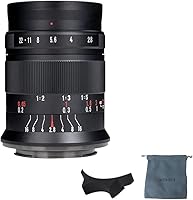
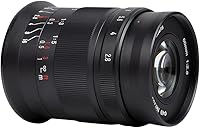
The 7artisans 60mm F2.8 Mark II Macro Lens is a genuinely compelling option for Fujifilm X-mount photographers who want dedicated close-up capability without spending serious money. Compared to the original, the Mark II brings noticeably better wide-open sharpness and a slightly more refined build — real improvements, not just a rebadge. It is manual focus only, which sets the tone for everything: this is a lens for photographers who shoot deliberately, not those chasing fast-moving subjects. On APS-C, the 60mm focal length behaves like roughly 90mm on full frame, giving it a dual personality — capable macro optic and a surprisingly flattering portrait lens when you step back a bit.

Features & Benefits

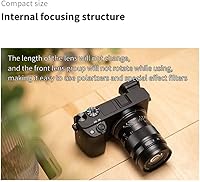
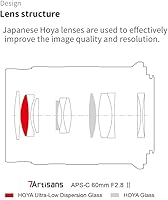
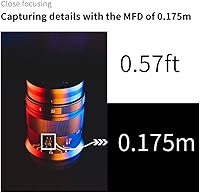
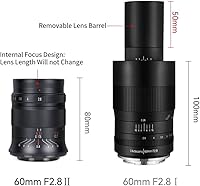
The internal focus design is one of this manual macro lens's most practical traits — the barrel does not extend as you turn the focus ring, which helps keep dust and moisture out during outdoor shoots. The nine rounded aperture blades produce genuinely smooth bokeh, the kind that melts a cluttered background into soft color whether you are photographing a watch face or a wildflower up close. You can get within about 17.5 centimeters of your subject, close enough for serious small-subject work. The Mark II optical formula was visibly improved at F2.8, where the original tended to go soft toward the edges. It is also notably compact for a dedicated macro lens, easy to carry alongside a second body lens.

Best For

This Fujifilm-mount macro optic is built for a fairly specific type of shooter, and that is not a criticism. If you enjoy tabletop or still-life work — jewelry on velvet, food styling, product flats — and you shoot on a Fujifilm X-mount body, this lens fits the workflow naturally. It also appeals to portrait photographers who want a short telephoto with a bit of character rather than a clinical rendering. Hobbyists moving beyond kit lenses into dedicated macro will find the learning curve of manual focus rewarding rather than frustrating, provided they are patient. Where it falls short: photographers who need to lock focus quickly on unpredictable subjects should look elsewhere entirely.

User Feedback

Sitting at 4.4 stars across a solid number of ratings, the 7artisans 60mm Mark II earns its score honestly. Most owners highlight sharpness and build quality as standouts, especially impressive at this price tier. The bokeh at mid-apertures gets consistent praise, with several users noting how well it renders portrait backgrounds. The focus ring is generally described as smooth and well-damped, and the aperture clicks feel positive without being stiff. Criticism clusters around one point: manual focus demands patience, particularly for beginners accustomed to autofocus lenses. A handful of original-version owners confirmed the Mark II represents a genuine optical upgrade, not just cosmetic changes — which is the most reassuring thing a Mark II label can deliver.

Pros

  • Wide-open sharpness is a clear step up from the original version — a meaningful improvement, not just a marketing claim.
  • The nine-blade aperture produces genuinely pleasing, rounded bokeh that flatters both macro subjects and portrait backgrounds.
  • An internal focus design means the barrel stays the same length throughout the focus range, which helps keep dust out.
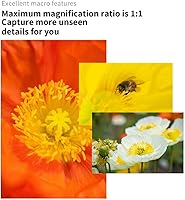
  • The minimum focus distance of around 17.5 centimeters lets you fill the frame with very small subjects — coins, flower stamens, circuit board details.
  • All-metal construction feels solid and purposeful in hand, well above what the price tag might suggest.
  • On APS-C, the focal length behaves like roughly 90mm on full frame, making it a versatile dual-use option for macro and portraiture.
  • The manual aperture ring has well-defined click stops that make exposure adjustments easy and repeatable without looking at the lens.
  • Noticeably lighter and more compact than OEM macro lenses at similar focal lengths, easy to pack alongside other gear.
  • Focus ring action is smooth and well-damped — precise enough for critical close-up work without being stiff or unpredictable.
  • Strong value proposition for hobbyists who want a dedicated macro optic without committing to flagship-level pricing.

Cons

  • No autofocus whatsoever — if manual focus is not already part of your shooting style, expect a real adjustment period.
  • Third-party lens with no official Fujifilm support, so firmware compatibility with future camera bodies is never guaranteed.
  • At very close focus distances, depth of field becomes razor thin, making precise manual focus more difficult and time-consuming.
  • No optical image stabilization, which matters when shooting handheld at the minimum focus distance in lower light conditions.
  • The aperture ring is not electronically coupled, so aperture data may not always be recorded accurately in EXIF metadata.
  • Build quality, while solid, does not match Fujinon XF lenses in terms of weather sealing or long-term durability assurance.
  • The working distance at closest focus is quite short, which can cast a shadow from the camera body onto the subject.
  • Buyers upgrading from the original 60mm version may find the optical improvements incremental rather than dramatic in everyday use.
  • Resale value for third-party manual lenses tends to be lower than native autofocus alternatives, worth considering if you rotate gear.

Ratings

Our AI scoring system analyzed verified global buyer reviews for the 7artisans 60mm F2.8 Mark II Macro Lens, actively filtering out incentivized, bot-generated, and duplicate submissions to surface what real photographers actually experience. Scores reflect both the genuine strengths this Fujifilm-mount macro optic delivers at its price tier and the friction points that matter to everyday shooters. Nothing has been softened — the highs and the limitations are represented equally.

Optical Sharpness
84%
Photographers shooting product flats and flower close-ups consistently report that the Mark II renders fine detail with impressive clarity across the center of the frame, even at F2.8. Stopping down to F5.6 or F8 produces images that routinely surprise people given the price point — the kind of crispness you would expect from a lens costing considerably more.
Edge and corner sharpness at wide-open apertures still lags behind what native Fujinon XF macro lenses deliver, which becomes noticeable when shooting flat subjects that extend to the frame edges. Users photographing circuit boards or postage stamps at full magnification sometimes find themselves stopping down further than they would prefer just to get the corners acceptably sharp.
Bokeh Quality
88%
The nine-blade aperture is the standout spec here, and it shows in practice — background blur is consistently smooth and rounded, with none of the harsh hexagonal shapes that plague lenses with fewer blades. Portrait shooters in particular praise how naturally busy backgrounds melt away, making this Fujifilm-mount macro optic a legitimate dual-use option beyond just close-up work.
At the very edges of the bokeh transition zone, some users notice a slight swirling quality that can look distracting in certain compositions. It is not a widespread complaint, but photographers with very particular aesthetic preferences for clinical, uniform blur may occasionally find the rendering a touch characterful rather than neutral.
Build Quality
81%
19%
The all-metal barrel construction earns consistent praise from buyers who handle OEM plastic-bodied kit lenses daily — picking up this manual macro lens feels like a noticeable step up in solidity. The aperture ring has confident, well-spaced click stops that make adjustments feel deliberate and precise rather than accidental.
Despite the solid feel, there is no weather sealing of any kind, which becomes a real concern for outdoor macro shooters caught in light drizzle or dusty fields. A small number of users also noted that the fit of the lens cap is slightly loose, and a few reported minor inconsistencies in the aperture ring tension between individual units.
Value for Money
91%
This is where the 7artisans 60mm Mark II earns its strongest endorsements — photographers repeatedly express genuine surprise that a lens at this price tier can produce macro images they are proud to share or sell. For hobbyists and enthusiasts who cannot justify the cost of a native Fujinon macro lens, the value equation is difficult to argue against.
Value perception drops sharply for buyers who were expecting autofocus or electronic communication with the camera body, which some purchased without fully understanding the manual-only nature of the lens. Additionally, resale value for third-party manual lenses tends to be considerably weaker than for native OEM options, so the long-term cost calculation shifts if you rotate gear frequently.
Focus Ring Feel
79%
21%
Most users describe the focus ring as smooth and well-weighted, offering enough resistance to hold position between shots without requiring significant force to turn. For tabletop work — adjusting focus millimeter by millimeter on a watch dial or a ring stone — the damping feels purposeful and controlled rather than vague.
A small but consistent segment of reviewers reports variations in ring resistance between units, suggesting some quality control inconsistency in the manufacturing process. There is also no distance scale or depth-of-field markings on the barrel, which makes hyperfocal or zone focusing impractical and forces shooters to rely entirely on live view magnification.
Close-Focus Performance
86%
Getting within 17.5 centimeters of a subject and filling the frame with a single flower stamen or the face of a coin is exactly what buyers want from a dedicated macro, and this lens delivers that capability reliably. Still-life and product photographers report that the working distance, while tight, is entirely manageable in a controlled studio or tabletop setup.
At the minimum focus distance, the lens-to-subject gap is short enough that the camera and barrel frequently cast a shadow over the subject, requiring deliberate lighting setup to compensate. Depth of field also becomes razor thin at this distance, meaning even minor camera movement between shots can throw the critical focus point completely off.
Compatibility & Fit
77%
23%
The lens mounts cleanly and securely on all Fujifilm X-mount bodies users have tested it with, including newer models not listed on the original product page. There is no wobble or play in the mount connection, and the physical fit on cameras like the X-T4 and X-S10 is as solid as on the older X-T2 it was originally designed around.
Because there are no electronic contacts, aperture data does not transfer to the camera, meaning EXIF metadata is incomplete — a frustration for professional shooters who need accurate records for client archives or licensing. Some users also note that in-body image stabilization systems may not function optimally without focal length data being communicated electronically.
Portability
83%
At under 1.4 pounds and with a compact barrel that does not extend during focusing, this manual macro lens travels and packs far more easily than comparably specified OEM macro lenses. Photographers who carry a small mirrorless kit for day hikes or travel appreciate that it does not unbalance lighter X-mount bodies the way heavier glass does.
While compact by macro standards, it is still noticeably larger and heavier than a standard prime of equivalent focal length, so users expecting a near-kit-lens form factor may find it bulkier than anticipated. The metal construction, while reassuring in terms of durability, does add weight compared to the few plastic-bodied alternatives in this segment.
Mark II Upgrade Value
74%
26%
Buyers who owned the original 60mm version and upgraded to the Mark II consistently confirm that wide-open sharpness is genuinely better — not marginally, but in a way that is visible when comparing files side by side at full magnification. For users who were frustrated by soft corners on the first version during flat-lay product work, this improvement alone justifies the switch.
Photographers who never owned the original sometimes feel the Mark II branding sets an expectation of a more sweeping generational leap than what is delivered — the improvements are real but targeted, not a ground-up redesign. Those upgrading purely for bokeh or color rendering may find the differences less impactful than the sharpness-focused improvements suggest.
Aperture Control
76%
24%
The manual aperture ring with tactile half-stop clicks gives photographers a direct, physical connection to exposure control that many find preferable to menu-driven adjustments, especially in studio environments where settings change deliberately between shots. The ring itself turns smoothly without being loose, and the click detents are distinct enough to change aperture by feel without looking at the lens.
Because aperture is set entirely on the lens rather than through the camera body, switching between aperture-priority and manual exposure modes on the body requires a mental workflow adjustment that some users — particularly those coming from native lenses — find disruptive. There is also no de-clicked option for video shooters who need smooth, clickless aperture transitions during recording.
Portrait Rendering
80%
20%
Used as a short telephoto portrait lens, the 90mm full-frame equivalent focal length produces flattering facial compression and a comfortable shooting distance that photographers appreciate for relaxed, natural portrait sessions. Skin tones render with warmth rather than clinical harshness, and the out-of-focus transition from subject to background is gentle enough for flattering headshots.
Manual focus during portrait sessions — particularly with subjects who move or shift naturally between frames — leads to a meaningful miss rate that frustrates photographers accustomed to eye-detection autofocus. It is a capable portrait lens in the hands of a patient, experienced shooter, but casual portrait photographers will likely find the workflow more demanding than expected.
Dust & Moisture Resistance
58%
42%
The internal focus design is a genuine practical advantage over extending-barrel lenses in outdoor conditions — because the barrel length stays constant, it does not act like a bellows pumping air and dust into the lens with every focus adjustment. Several nature macro photographers noted this as a meaningful difference over their previous lenses when shooting in grassy or dusty outdoor environments.
There is no formal weather sealing, gaskets, or moisture resistance rating of any kind, and 7artisans does not claim otherwise. Shooting in rain, near water spray, or in humid tropical conditions carries real risk, and at least a handful of user reports mention moisture-related issues developing after extended outdoor use in wet conditions.
Video Usability
47%
53%
For fully controlled tabletop video — product showcases, food videography, or close-up nature footage shot from a fixed position — the smooth focus ring action and internal focus design make basic focus adjustments manageable. A few users have produced clean close-up video content with it in situations where the subject is stationary and the focus point barely changes.
Without electronic contacts, aperture changes during filming produce visible exposure shifts that are practically unusable in any professional context, and there is no clickless aperture mode to work around this. The manual focus ring, while smooth, lacks the fine gearing and consistent drag that dedicated cine lenses or even Sony or Canon native video lenses offer, making smooth, cinematic pulls difficult to execute reliably.

Suitable for:

The 7artisans 60mm F2.8 Mark II Macro Lens is a strong fit for Fujifilm X-mount photographers who shoot at their own pace and value optical quality over convenience. Still-life and tabletop shooters — think product photographers arranging jewelry, food stylists capturing texture, or hobbyists photographing coins and stamps — will find the close focus distance and smooth bokeh genuinely useful in controlled environments. Portrait photographers looking for a compact short telephoto with flattering compression and soft backgrounds can also get real mileage from this lens, especially on a walk-around body. Beginners stepping into dedicated macro photography for the first time will appreciate the accessible price point and the tactile, hands-on feel that manual focus encourages. If you already enjoy shooting architecture, landscapes, or still subjects with a deliberate, measured approach, this Fujifilm-mount macro optic will slot naturally into your kit.

Not suitable for:

The 7artisans 60mm F2.8 Mark II Macro Lens is the wrong choice for photographers who rely on speed or spontaneity. Shooting a child's birthday party, a sporting event, or street photography where subjects move unpredictably will expose the hard limits of manual-only focus fast — missed moments are a real risk, not a theoretical one. Wildlife photographers hoping to capture insects mid-flight or birds at distance will find the combination of manual focus and a relatively short working distance genuinely frustrating. Videographers who need smooth, repeatable focus pulls for run-and-gun scenarios should also look elsewhere; this manual macro lens is not built for that workflow. Photographers already invested in the Fujinon ecosystem who want the assurance of native autofocus, weather sealing, and manufacturer support will find third-party compromises harder to accept at any price.

Specifications

  • Focal Length: Fixed 60mm focal length, equivalent to approximately 90mm on a full-frame camera when used on an APS-C sensor body.
  • Maximum Aperture: Opens to F2.8, providing enough light-gathering capability for indoor macro work and shallow depth-of-field rendering.
  • Minimum Aperture: Stops down to F16, useful for maximizing depth of field when photographing flat subjects or detailed textures.
  • Aperture Blades: Nine rounded aperture blades produce smooth, circular bokeh at mid-range apertures rather than the polygonal shapes common in lenses with fewer blades.
  • Closest Focus: Minimum focus distance of 0.175m (approximately 6.9 inches) from the focal plane, enabling close-up detail work on small subjects.
  • Lens Mount: Designed exclusively for the Fujifilm X-mount system, compatible with all current and legacy APS-C mirrorless bodies in the X lineup.
  • Sensor Coverage: Engineered for APS-C format sensors and will not cover a full-frame sensor without vignetting.
  • Focus System: Fully manual focus only, with no electronic autofocus motor or focus-by-wire mechanism of any kind.
  • Focus Design: Internal focusing keeps the physical barrel length constant throughout the entire focus range, which supports better dust resistance compared to extending-barrel designs.
  • Dimensions: Measures 2.36 x 2.36 x 3.39 inches (approximately 60 x 60 x 86mm), making it compact relative to OEM macro lenses at a similar focal length.
  • Weight: Weighs 1.39 pounds (approximately 631g), which is moderate for a dedicated macro lens but manageable for handheld use on lighter mirrorless bodies.
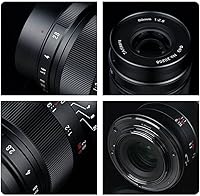
  • Construction: All-metal barrel and aperture ring construction, with a tactile manual aperture ring featuring defined click stops at each full stop.
  • Generation: This is the Mark II revision of the original 60mm F2.8, featuring an updated optical formula that improves edge-to-edge sharpness at wider apertures.
  • Lens Type: Purpose-built macro lens optimized for close-focus reproduction of small subjects, with secondary utility as a short telephoto for portraiture.
  • Compatible Bodies: Confirmed compatible with Fujifilm X-T1, X-T2, X-T10, X-Pro1, X-E1, X-E2, X-A1, X-A2, and X-M1, among other X-mount mirrorless cameras.
  • Aperture Control: Aperture is set manually via the dedicated ring on the lens barrel and is not electronically controlled or communicated to the camera body.
  • Manufacturer: Produced by 7artisans, a Chinese third-party lens manufacturer known for affordable manual focus primes targeting mirrorless camera systems.
  • EXIF Data: Because the lens has no electronic contacts, aperture and focal length data are generally not recorded automatically in the image EXIF metadata.

Related Reviews
7artisans 7.5mm f2.8 Mark II Fisheye Lens for Canon RF
85%
88%
Image Quality
92%
Build Quality
65%
Ease of Use (Manual Focus)
90%
Portability
85%
Low-Light Performance
More
OM System OM-1 Mark II with M.Zuiko 12-40mm f/2.8 PRO II
81%
93%
Autofocus Performance
91%
Weather Sealing & Durability
84%
Image Quality
71%
Autofocus in Low Light
92%
Lens Quality (M.Zuiko 12-40mm f/2.8 PRO II)
More
Olympus M.Zuiko 60mm F2.8 Macro Lens
84%
93%
Optical Sharpness
71%
Autofocus Performance
89%
Build Quality & Weather Sealing
91%
Macro Magnification & Working Distance
86%
Bokeh & Background Rendering
More
Canon RF 100mm F2.8 L Macro Lens
84%
96%
Image Sharpness
93%
Macro Magnification
89%
Bokeh & Rendering
88%
Image Stabilization
71%
Autofocus Performance
More
7artisans 18mm F6.3 Mark II MFT Lens
83%
88%
Image Quality
71%
Manual Focus Usability
83%
Build Quality
92%
Portability
90%
Value for Money
More
7Artisans 4mm F2.8 Fisheye Lens for Sony E-Mount
82%
88%
Image Quality
93%
Portability
75%
Manual Focus Control
82%
Build Quality
70%
Low-Light Performance
More
7Artisans 4mm F2.8 Fisheye Lens for Fujifilm X-Mount Cameras
84%
88%
Image Quality
92%
Build Quality
65%
Manual Focus Ease
94%
Portability & Size
79%
Close-Up Performance
More
Sigma 105mm F2.8 EX DG OS HSM Macro Lens for Canon
85%
88%
Autofocus Performance
92%
Sharpness and Image Quality
89%
Optical Stabilization (OS)
87%
Build Quality
85%
Ease of Use
More
Viltrox AF 85mm F1.8 Mark II Lens
81%
86%
Autofocus Speed
91%
Autofocus Noise
88%
Center Sharpness
63%
Edge & Corner Sharpness
79%
Bokeh Quality
More
Sigma 24-70mm F2.8 DG DN II Lens
82%
93%
Optical Sharpness
84%
Autofocus Performance
88%
Build Quality
86%
Weather Sealing
71%
Value for Money
More

FAQ

No, the 7artisans 60mm F2.8 Mark II Macro Lens is entirely manual focus — there is no autofocus motor and no electronic communication with the camera body. You turn the focus ring yourself to set focus. It is worth knowing upfront: this is a deliberate design, not a missing feature. Shooters who enjoy precise control over their focus point tend to appreciate it, but it is genuinely not suited for fast-moving or unpredictable subjects.

The lens gets close to a 1:1 reproduction ratio at its minimum focus distance of around 17.5 centimeters from the focal plane. In practical terms, a small object roughly 24mm wide can nearly fill the APS-C frame, which is more than enough for photographing insects, coins, jewelry stones, or flower details. It is a true macro lens in real-world use, not just a lens that happens to focus a bit closer than average.

Yes, any camera with a Fujifilm X-mount bayonet will physically accept this lens. That includes newer bodies like the X-T30, X-S10, and X-T4, not just the older models listed on the product page. Since there are no electronic contacts, you will lose autofocus and EXIF data recording, but exposure metering should still work in aperture-priority or manual mode on most X-mount bodies.

The main improvement is optical. The original version had a noticeable softness toward the edges of the frame when shot wide open at F2.8, which frustrated users who wanted sharpness across the entire image for flat-lay or product work. The Mark II addresses this with a revised internal formula. Most photographers who have used both versions agree it is a genuine upgrade, not just cosmetic. If you still own the first version, it is worth the switch if corner sharpness matters to your work.

It works surprisingly well for portraits. On an APS-C sensor, 60mm behaves like roughly 90mm on full frame, which is a classic portrait focal length — flattering compression, comfortable working distance from your subject, and enough background separation when shot near wide open. The nine-blade aperture helps here, keeping out-of-focus areas smooth and round. A few users actually picked up this Fujifilm-mount macro optic specifically as a portrait lens and treat the macro capability as a welcome bonus.

The all-metal construction feels solid and holds up well to everyday outdoor use. The internal focus design also helps keep dust from being drawn into the barrel as you focus, which is a practical advantage over extending-barrel designs. That said, it has no official weather sealing, so shooting in rain or very dusty conditions carries some risk. It is not a Fujinon XF lens in terms of environmental protection, and you should treat it accordingly.

Generally no. Because this manual macro lens has no electronic contacts connecting it to the camera, the aperture value you set on the lens ring is not automatically written into the EXIF data of your images. Some Fujifilm bodies let you manually enter a focal length for image stabilization purposes, but aperture recording is typically absent. If keeping accurate EXIF logs matters for your workflow — for client work or archiving — that is a real practical limitation worth factoring in.

At the minimum focus distance of about 17.5 centimeters, the front of the lens ends up quite close to your subject — close enough that the camera body and lens can cast a shadow on what you are photographing, especially in natural or directional light. This is a common challenge with any macro lens at high magnification. Using a ring flash, adding an off-camera light source, or shooting in diffuse natural light helps a lot. It is something to plan around rather than a defect.

The focus ring action is well-regarded — it is smooth and has a decent amount of resistance without being stiff. For slow, deliberate focus pulls in video that is mostly static or controlled, it is usable. However, there is no focus scale printed on the barrel, and the manual ring is not designed with the fine gearing that dedicated cine lenses use for precise, repeatable pulls. For serious video work, it is a workable option in a pinch, but dedicated video shooters will notice its limitations quickly.

Typically the package includes the lens itself, front and rear lens caps, and a lens hood. Some listings also include a basic soft pouch, though this can vary by seller. There is no printed manual, and 7artisans does not bundle any accessories beyond the basics. It is a straightforward box — everything you need to mount it and start shooting is there, just do not expect extras.

Where to Buy