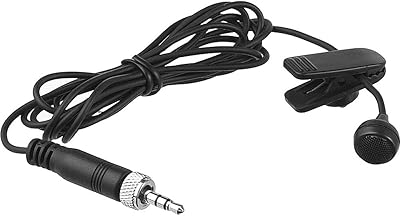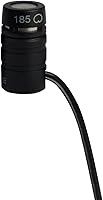

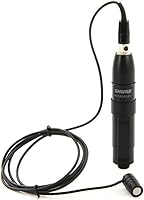
Overview

The Shure MX185 Cardioid Lavalier Microphone has quietly earned its place in professional audio kits since its introduction in 2003 — a run that speaks to genuine reliability rather than marketing momentum. Designed specifically for Shure wireless bodypack transmitters, this lavalier mic connects via a TQG (TA4F) connector, slotting into most Shure wireless systems without adapters or workarounds. Its cardioid polar pattern focuses pickup on the speaker while pushing away ambient room noise — critical in live or broadcast settings where background clutter can ruin an otherwise clean recording. Like all condenser designs, it requires phantom power to operate.

Features & Benefits

What sets the MX185 apart from budget clip-ons is how its hardware details translate into practical advantages on a real job. The rotatable tie-clip pivots in 90-degree increments, so you can mount it cleanly whether the talent is in a suit jacket, an open collar, or a costume with no obvious attachment point. The snap-fit foam windscreen stays put through movement — no fumbling mid-show. A balanced, transformerless output keeps the signal clean even over long cable runs in crowded AV racks. Add a 72 dB signal-to-noise ratio and 35 dB sensitivity, and you get audio that holds up under scrutiny on a final mix.

Best For

This clip-on condenser is squarely aimed at professionals who already operate within the Shure wireless ecosystem. Presenters and educators who need a mic that disappears into their clothing will appreciate how discreetly it sits once clipped. Sound engineers running live theater or broadcast rigs will find the cardioid pattern and low-noise floor genuinely useful under pressure. Houses of worship and corporate AV installers — environments where reliability over hundreds of uses matters more than novelty — are a natural fit. It also makes sense as an upgrade path for anyone with a compatible Shure bodypack transmitter who wants a better capsule than what it shipped with.

User Feedback

The review pool for this lavalier mic is relatively small — 27 ratings — so it is worth weighing buyer feedback carefully rather than treating it as broad consensus. That said, the 4.4-star average reflects consistent satisfaction among people who clearly knew what they were buying. Build quality and durability come up repeatedly, with users noting the mic holds together through repeated rigging and derigging that wears cheaper hardware out fast. Sound clarity earns genuine praise. The sticking point for some is the TQG connector: if you do not own a compatible Shure transmitter, compatibility is something worth confirming before committing to a purchase.

Pros

  • Clean, natural vocal reproduction holds up well in broadcast and live sound environments.
  • The cardioid pattern does a solid job rejecting ambient room noise during presentations and performances.
  • Rotatable tie-clip makes placement flexible across a wide range of clothing types.
  • Snap-fit foam windscreen stays attached reliably — no mid-show fumbling required.
  • Balanced, transformerless output keeps the signal clean over long cable runs in complex AV setups.
  • Build quality is consistently praised by buyers who use it through heavy, repeated live use.
  • Dual tie-clip accessory supports redundant or two-mic configurations without extra purchases.
  • 72 dB signal-to-noise ratio delivers professional-grade audio clarity in demanding environments.
  • Slots directly into most Shure wireless bodypacks without adapters or additional hardware.
  • Has a proven track record spanning over two decades in professional audio applications.

Cons

  • TQG connector locks you into the Shure ecosystem — incompatible with most other wireless transmitter brands.
  • With only 27 ratings on Amazon, there is limited real-world feedback to draw broader conclusions from.
  • Requires phantom power, which adds a hardware dependency for anyone using it in a mobile or standalone setup.
  • Priced at a professional tier that is hard to justify for infrequent or casual use cases.
  • No built-in pop filter beyond the supplied foam windscreen, which may not be enough in high-breath-pressure situations.
  • Capsule replacement or repair outside of Shure-authorized service can be difficult to source independently.
  • Not a standalone solution — requires a compatible wireless transmitter system to function at all.
  • The included accessories, while useful, do not include a hard case for long-term storage and transport protection.

Ratings

Our AI rating system analyzed verified buyer reviews for the Shure MX185 Cardioid Lavalier Microphone from audio professionals, AV installers, and broadcast crews worldwide, actively filtering out incentivized and bot-generated feedback to surface genuine patterns. The scores below reflect both where this clip-on condenser consistently earns its reputation and where real buyers have run into legitimate frustrations — nothing softened, nothing inflated.

Audio Clarity
93%
Buyers working in broadcast and live theater repeatedly describe the vocal reproduction as natural and transparent — the kind of result where a presenter sounds like themselves rather than like they are being amplified. The 72 dB signal-to-noise ratio means background noise stays where it belongs: out of the mix.
A small number of users in very reverberant spaces note that the cardioid pattern, while effective, does not completely eliminate room ambience at distance. Placement and environment still matter, and this mic will not mask poor room acoustics on its own.
Build Quality
91%
Durability comes up consistently across buyers who put this lavalier through weekly rigging and derigging cycles in houses of worship and theater environments. The hardware holds together without the connector loosening or the cable jacket cracking prematurely — a common failure point on cheaper lavs.
The mic cable, like most lavalier designs, is not easily field-replaceable, so physical damage to the wire means sending it in for service or replacing the whole unit. A few users felt the cable could be slightly more robust at the strain relief point near the connector.
Ecosystem Compatibility
58%
42%
For buyers already running Shure wireless systems — BLX, GLX-D, ULXD, and similar — the TQG connector slots in without any adapters or workarounds, making this a clean, zero-friction upgrade to an existing rig.
Outside the Shure ecosystem, this mic is essentially unusable without third-party adapters, and even then results vary. Users with mixed-brand wireless systems frequently cite this as a dealbreaker, and it is the single most common source of frustration in negative reviews.
Placement Flexibility
88%
The rotatable tie-clip that pivots in 90-degree increments is genuinely appreciated by sound engineers who deal with a rotating cast of presenters in different clothing. Whether it is a suit lapel, an open collar, or a costume piece, the clip adapts rather than forcing a compromise.
The clip mechanism, while flexible, is still limited to fabric-friendly surfaces. Users mounting on slick or unconventional materials — certain synthetic fabrics or costume pieces — report the clip can shift during active movement if not secured with additional tape.
Windscreen Performance
82%
18%
The snap-fit foam windscreen earns consistent praise for staying securely on the capsule during high-activity use — a real problem with slip-on windscreens that pop off mid-performance. Breath noise control is effective for standard close-mic vocal applications at typical speaking distances.
In high-humidity or outdoor environments, the foam windscreen can become less effective over time and may need replacement more frequently than users expect. Shure sells replacements, but the additional cost is worth factoring in for installations with heavy use.
Noise Rejection
86%
The balanced, transformerless output visibly benefits users running long cable runs in complex AV setups — conference halls, theater rigs, and broadcast trucks where electromagnetic interference from lighting and power equipment is a real concern. The signal stays clean where cheaper mics introduce hum.
As a cardioid rather than a supercardioid or hypercardioid design, the off-axis rejection is good but not exceptional in environments with very high ambient noise levels. Users in loud concert environments may need to manage gain structure carefully to keep bleed under control.
Value for Money
67%
33%
For a professional who needs a reliable capsule upgrade for an existing Shure wireless bodypack and wants something that will last through hundreds of events, the price-to-performance ratio is defensible. The long production history and available replacement parts support the long-term investment case.
Casual users or those new to professional audio who do not already own a compatible Shure transmitter will find the total system cost hard to justify for occasional use. Several reviewers noted the price point sets expectations that require a professional workflow to fully realize.
Setup & Integration
84%
For anyone already familiar with Shure wireless systems, the setup is about as straightforward as it gets — connect, clip, check gain, and go. The included RK100PK preamplifier and accessory kit mean you are not hunting for missing pieces out of the box.
The phantom power requirement and TQG connector mean there is a genuine learning curve for anyone coming from consumer-grade audio gear. New users unfamiliar with Shure wireless architecture sometimes underestimate what is needed to get the mic operational.
Discreetness on Camera
89%
Lavalier mics are purpose-built for visual discretion, and this one delivers — properly placed at a shirt collar or lapel edge, it virtually disappears on video. Broadcast and video production buyers specifically call out how clean it looks in frame compared to headset or handheld alternatives.
The cable routing from the mic to the bodypack transmitter requires some thought and usually relies on clothing to conceal it. In close-up or unscripted shooting scenarios, cable management takes more effort than users initially anticipate.
Handling Noise
87%
The cardioid capsule and clip mounting do a solid job minimizing handling and movement noise, which is critical for presenters who gesture frequently or move around a stage. Sound engineers running live panels appreciate not having to ride the gain every time a speaker shifts position.
Fabric rustle from clothing contact is an inherent limitation of lavalier placement and is not unique to this mic, but buyers who do not account for it during placement will notice it in recordings. Proper positioning and a small strip of tape can mitigate this significantly.
Durability Over Time
90%
The production history since 2003 and the consistent praise from long-term users in houses of worship and touring theater rigs strongly suggest this is a mic built to last under professional conditions. Buyers report using the same unit through years of regular deployment without performance degradation.
Long-term durability is harder to assess from a limited review pool of 27 ratings, and very few buyers report on multi-year experiences in detail. Cable wear near the connector remains the most commonly cited long-term vulnerability in condensers of this form factor.
Accessory Completeness
79%
21%
The included kit — dual tie-clip, snap-fit windscreen, standard foam windscreen, RK100PK preamplifier, and zipper pouch — covers the practical bases for most professional installations without requiring immediate additional purchases.
The zipper pouch is functional but not structured, meaning the mic and accessories are not particularly well-protected during transport. Users who travel frequently with their kit often invest in a separate hard case, which adds to the overall cost of ownership.
Frequency Response
88%
The frequency response starting at 50 Hz captures enough low-end warmth to make voices sound full and natural rather than thin — a meaningful difference when monitoring a presenter's voice through a PA system or reviewing broadcast audio on headphones.
The high-end roll-off behavior is not specified in granular detail by the manufacturer, which leaves some technically minded buyers wanting more transparency around the upper frequency ceiling. In practice, most vocal applications are not affected, but recording engineers working in nuanced post-production may want to verify.

Suitable for:

The Shure MX185 Cardioid Lavalier Microphone is built for professionals who live inside the Shure wireless ecosystem and need a clip-on mic that can handle the demands of repeated, real-world use. Sound engineers running live theater productions or corporate AV setups will find it particularly well-matched — the cardioid pickup pattern and low-noise floor hold up where cheaper lavs fall apart under stage lighting heat and ambient crowd noise. Educators and public speakers who present regularly will appreciate how discreetly it clips and how little it demands in terms of adjustments once it is properly placed. Broadcast and video production crews needing reliable, clean audio without handling noise will get consistent results across long shooting days. Houses of worship and permanent installation teams — environments where a mic might be rigged and derigged hundreds of times — are an especially strong fit given the build quality and long production history of this model.

Not suitable for:

If you do not already own a compatible Shure wireless bodypack transmitter with a TQG input, the Shure MX185 Cardioid Lavalier Microphone is a difficult recommendation — the connector is Shure-specific, and working around it typically means adapters that introduce their own problems. Casual users looking for a plug-and-play USB or 3.5mm lavalier for occasional video calls or YouTube content will find this mic over-engineered for their needs and priced accordingly. Anyone shopping across multiple wireless brands or planning to use a non-Shure transmitter system should look elsewhere, since cross-brand compatibility is genuinely limited here. The phantom power requirement also means this is not a grab-and-go option for mobile recording without additional hardware in the signal chain. Budget-conscious buyers who are newer to audio production may find the investment hard to justify without a Shure wireless system already in hand.

Specifications

  • Brand: Manufactured by Shure, a professional audio company with decades of experience in microphone engineering.
  • Model Number: The model number for this microphone is MX185, part of Shure's Microflex series.
  • Form Factor: Lavalier (clip-on) condenser microphone designed for discreet, hands-free placement on clothing or lapels.
  • Polar Pattern: Cardioid (unidirectional) pickup pattern focuses audio capture on the sound source directly in front while rejecting off-axis noise.
  • Connector Type: Uses a TQG (TA4F) 4-pin mini connector, designed for use with compatible Shure wireless bodypack transmitters.
  • Frequency Response: Captures audio from 50 Hz and above, covering the full range needed for clear, natural vocal reproduction.
  • Signal-to-Noise Ratio: Rated at 72 dB, delivering a clean audio signal with minimal background noise in professional recording environments.
  • Sensitivity: Audio sensitivity is rated at 35 dB, providing responsive pickup suited to close-mic vocal applications.
  • Impedance: Output impedance is 150 Ohm, compatible with standard professional audio equipment and mixing consoles.
  • Output Type: Balanced, transformerless output design reduces susceptibility to electromagnetic interference over extended cable runs.
  • Power Source: Requires phantom power to operate, as is standard for condenser microphone capsule designs.
  • Item Weight: The microphone weighs 3.2 oz, making it lightweight enough for all-day wear without discomfort.
  • Packaged Dimensions: Packaged dimensions measure 9.9 x 4.8 x 3.3 inches, reflecting the full kit including accessories and zipper pouch.
  • Included Accessories: Comes with tie clips, a snap-fit foam windscreen, an RK100PK preamplifier, an additional foam windscreen, and a zipper storage pouch.
  • Compatible Devices: Works with audio mixers, audio interfaces, cameras, amplifiers, and other phantom-powered or transmitter-connected professional audio equipment.
  • Dual Mic Support: Includes a dual tie-clip accessory that allows two microphones to be mounted simultaneously for redundant or stereo miking setups.
  • Windscreen: Snap-fit foam windscreen is designed to control breath noise and remain securely in place during active use.
  • Availability: First made available in June 2003 and has not been discontinued, reflecting a long and active production run.
  • UPC: The product UPC is 042406051651, with a Global Trade Identification Number of 00042406051651.
  • Connectivity: Wired connection from microphone capsule to transmitter via TQG connector; the wireless transmission is handled by the paired bodypack system.

Related Reviews
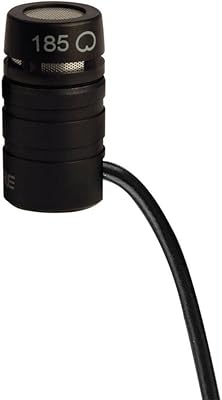
Shure WL185 Cardioid Condenser Lavalier Microphone
80%
91%
Audio Clarity
88%
Feedback Rejection
86%
Wearability & Comfort
61%
Compatibility & Setup
85%
Clip & Attachment
More
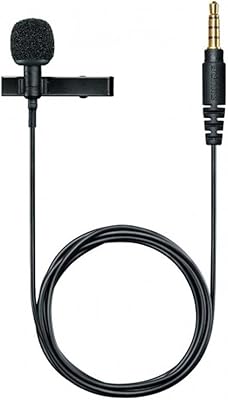
Shure SM11 Dynamic Lavalier Microphone
77%
84%
Audio Clarity
89%
Build Quality
76%
Clothing Noise Rejection
49%
Compatibility
71%
Value for Money
More
Shure MVL Lavalier Microphone
80%
83%
Audio Clarity
88%
Build Quality
91%
Plug-and-Play Simplicity
79%
RF & Interference Rejection
71%
Omnidirectional Performance
More
Shure KSM32 Cardioid Condenser Microphone
83%
93%
Vocal Clarity
91%
Transient Accuracy
94%
Build Quality
72%
Value for Money
89%
Noise Floor Performance
More
Shure WL93 (4-Foot Cable)
88%
92%
Vocal Clarity
96%
Concealability
84%
Cable Durability
78%
Background Noise Rejection
89%
Mounting Versatility
More
Shure SM137
Shure SM137
84%
91%
Sound Transparency
88%
Build Quality
89%
Low-Noise Performance
87%
Handling of High SPL Sources
93%
Acoustic Guitar Capture
More
Sennheiser ME 4-N Lavalier Microphone

80%
91%
Voice Clarity
62%
System Compatibility
88%
Build Quality
79%
Ambient Noise Rejection
93%
Comfort & Wearability
More
Shure SM81-LC
Shure SM81-LC
88%
97%
Acoustic Accuracy
94%
Build Durability
92%
Transient Response
88%
Off-Axis Rejection
91%
Low-Frequency Control
More
Shure 545SD-LC
Shure 545SD-LC
87%
96%
Build Durability
93%
Instrument Recording
89%
Switch Reliability
88%
Feedback Rejection
97%
Vintage Aesthetic
More
Shure SM57-X2U Dynamic Instrument Microphone
79%
93%
Instrument Recording Quality
91%
Build Quality & Durability
88%
Ease of Setup
84%
Value for Money
67%
USB Adapter Performance
More

FAQ

Most likely not without an adapter. The TQG (TA4F) connector is a Shure-specific 4-pin mini design and is not directly compatible with standard 3.5mm or other proprietary connectors from other brands. If you are not already in the Shure wireless ecosystem, it is worth verifying connector compatibility before purchasing.

Yes. The Shure MX185 Cardioid Lavalier Microphone is not a standalone device — it connects to a compatible Shure wireless bodypack transmitter, which then sends the signal wirelessly to a receiver. You will also need a receiver connected to your audio mixer, interface, or camera. All condenser mics also require phantom power, which is supplied through the transmitter in a wireless setup.

This lavalier mic is designed to work with Shure wireless bodypack transmitters that use the TQG (TA4F) connector, which includes systems from the BLX, GLX-D, ULXD, and QLXD series, among others. Always check your specific transmitter model's connector type before ordering to confirm compatibility.

The included rotatable tie-clip is the main attachment method, and it pivots in 90-degree increments so you can orient it correctly for different clothing types. For formal wear like a jacket lapel or a shirt placket, it clips cleanly and stays put. The snap-fit foam windscreen also helps keep the capsule stable once positioned.

The cable on lavalier mics like this one is typically not user-replaceable in the field, and damage to the cable often means the mic needs to be serviced or replaced. Shure does offer replacement parts for some Microflex models, so it is worth contacting Shure support directly to check availability for the MX185 specifically.

For the capsule end, use a dry or very lightly dampened soft cloth — avoid any liquids near the mic element itself. The foam windscreen can be gently hand-washed with mild soap and water and left to dry fully before reuse. Never use alcohol wipes or harsh solvents directly on the mic body or connector.

This lavalier mic is optimized for close-mic vocal applications like speech and singing, and its wide dynamic range handles a broad range of input levels well. That said, it is not typically chosen for high-SPL instrument miking — its strengths are really in the voice reproduction use case.

Lavalier mics by design are meant to be small and unobtrusive, and this one is no exception. Placed correctly under clothing or at the edge of a shirt collar, it can be nearly invisible on camera. The cable routing to the bodypack transmitter (typically clipped to a belt or hidden in a pocket) is the part that usually requires the most thought in video setups.

Shure sells replacement windscreens for the Microflex series separately, so losing one is not a crisis. The mic does ship with both a standard foam windscreen and a snap-fit version, so you have a backup from day one. Running without any windscreen in a live or broadcast setting is not recommended, as breath noise becomes audible quickly.

It is genuinely well-suited for that environment. The build quality is a consistent point of praise from buyers who use it regularly, and the long production history of this mic suggests Shure has refined it well for durability. Houses of worship that already run Shure wireless systems will find the MX185 a natural, low-friction fit for their existing infrastructure.

Where to Buy