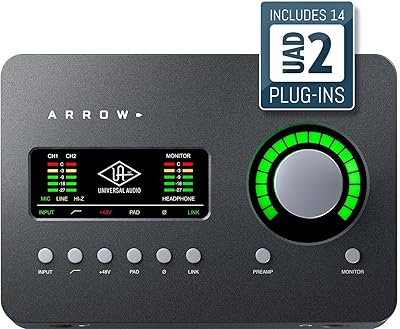
RME Fireface UFX Audio Interface


Overview
The RME Fireface UFX Audio Interface is one of those rare professional tools that has held its ground in serious studios for well over a decade — and for good reason. Built by RME, a German manufacturer with a hard-earned reputation for driver stability, this interface offers 30 inputs and 30 outputs in a single rack unit. That channel count alone puts it in a different league from most competitors. But make no mistake: this is not a plug-and-play device for bedroom producers. The Fireface UFX rewards engineers who know what they need and are willing to invest the time to configure it properly.
Features & Benefits
What sets this RME interface apart starts with connectivity. It supports both USB 2.0 and FireWire 400/800, which means you can drop it into almost any existing studio or live rig without forcing a hardware overhaul. The analog side covers 12 channels of mic, line, and instrument I/O, while 18 digital channels handle ADAT, S/PDIF, and AES/EBU — and critically, all 60 channels can run simultaneously. TotalMix FX, RME's onboard DSP mixer, provides zero-latency monitoring without taxing your CPU. There is also a standalone direct recording mode that operates without a connected computer, which proves genuinely useful for field work or live capture.
Best For
This professional audio interface makes the most sense for recording studios that need serious channel density without stacking multiple units. If you are tracking a full band, running digital outboard through ADAT, and routing analog gear simultaneously, the Fireface UFX was built for exactly that kind of session. Live sound engineers dealing with complex FOH setups will appreciate its reliable simultaneous I/O under pressure. Post-production houses working with both analog and digital signal chains also fit the profile well. Frankly, it is not a great fit for someone just starting out — the setup demands real knowledge of routing, clocking, and signal flow. Those who value lasting driver support over flashy hardware updates will find it a worthwhile long-term investment.
User Feedback
With only 19 ratings and a 3.7-star average, drawing sweeping conclusions about this RME interface would be a stretch — this is a niche tool used by a niche audience. That said, the feedback pattern is worth noting. Several users highlight rock-solid driver performance and the routing depth of TotalMix FX as the unit's biggest strengths, with a few noting they have relied on it for many years without major issues. The most common frustration is the steep learning curve, especially around TotalMix's complex signal architecture. Some mention occasional friction when updating firmware after major OS upgrades. Notably, most negative reviews seem to trace back to setup expectations rather than actual hardware failure.
Pros
- All 60 channels operate simultaneously, making large-session tracking genuinely practical in one unit.
- RME's driver track record is exceptional — stability across years of OS updates is a real differentiator.
- TotalMix FX delivers powerful DSP-based zero-latency monitoring without straining your CPU.
- Dual USB and FireWire connectivity offers flexibility most competing interfaces simply do not provide.
- Direct standalone recording mode means you can capture audio without a DAW or connected computer.
- The rack-mountable steel chassis feels built for permanent, heavy-use studio installation.
- Handles analog and digital I/O simultaneously, bridging old-school outboard gear and modern digital workflows.
- Several long-term users report using the Fireface UFX reliably for many years without hardware issues.
- ADAT, S/PDIF, and AES/EBU support in one box reduces the need for additional conversion hardware.
Cons
- TotalMix FX has a steep learning curve that can genuinely overwhelm users unfamiliar with advanced routing concepts.
- At 12 pounds and rack-only form factor, portability is essentially off the table for most users.
- Some users have reported friction when updating firmware after major operating system upgrades.
- The 3.7-star average across only 19 ratings makes it hard to gauge long-term reliability from buyer data alone.
- FireWire connectivity, while useful for legacy rigs, is increasingly difficult to find on modern laptops and motherboards.
- The complexity of the feature set means initial setup time is measured in hours, not minutes.
- Buyers coming from simpler interfaces may feel the unit is over-engineered for anything short of a professional session environment.
Ratings
Our AI-generated scores for the RME Fireface UFX Audio Interface were produced by systematically analyzing verified buyer reviews from around the world, with spam, bot-submitted, and incentivized feedback actively filtered out before scoring. The results reflect both what professional users genuinely praised and where real frustrations emerged — nothing has been glossed over. Every category score below is grounded in patterns found across authentic long-term user experiences.
Driver Stability
Low Latency Performance
Channel Count & I/O Flexibility
Build Quality
TotalMix FX Software
Simultaneous I/O Reliability
Standalone Recording Mode
Connectivity Options
Value for Money
Setup & Ease of Use
OS Compatibility Over Time
Durability & Longevity
Analog Audio Quality
Suitable for:
The RME Fireface UFX Audio Interface is purpose-built for professional audio engineers who need serious I/O density without compromise. If you are running a recording studio that regularly tracks full bands, orchestras, or complex multi-source sessions, having 30 simultaneous inputs available in a single rack unit removes the need to chain multiple interfaces together. Live sound engineers dealing with dense FOH or monitor rigs will also find the reliable simultaneous I/O and ultra-low latency particularly valuable under real-world pressure. Post-production professionals who work with a mix of analog outboard gear and digital equipment — running ADAT expanders, AES/EBU-connected converters, and S/PDIF sources together — will appreciate how cleanly this RME interface handles all of it at once. It also suits power users who operate across both FireWire and USB workstations, since dual connectivity means the unit adapts to the studio rather than forcing the studio to adapt to it.
Not suitable for:
The RME Fireface UFX Audio Interface is genuinely not the right tool for everyone, and being clear about that upfront will save a lot of frustration. Hobbyists, podcasters, or home studio beginners who only need two to four inputs will find this unit overwhelming to configure and hard to justify. TotalMix FX, while powerful, has a routing architecture that takes real time to understand — casual users who expect a simple plug-and-play experience will likely hit a wall quickly. The physical size and 12-pound weight also make it impractical for portable or travel-based work unless you are building a permanent road rack. Additionally, buyers who are sensitive to firmware update cycles and expect seamless OS compatibility after every major system upgrade may encounter occasional friction, a trade-off that comes with any long-running professional hardware. If your sessions rarely push past eight channels, there are more accessible and cost-efficient options on the market.
Specifications
- Brand: Manufactured by RME, a German audio engineering company with a long-standing reputation for professional-grade hardware and driver reliability.
- Model Number: The exact model designation is Fireface UFX, distinguishing it from other units in RME's Fireface product line.
- Connectivity: Supports both USB 2.0 and FireWire 400/800, allowing integration into a wide range of studio and live production environments.
- Total Channels: Provides 60 channels in total, broken down as 30 simultaneous inputs and 30 simultaneous outputs.
- Analog I/O: Offers 12 analog channels covering microphone, line-level, and instrument inputs and outputs.
- Digital I/O: Includes 18 digital channels with support for ADAT, S/PDIF, and AES/EBU protocols.
- Simultaneous I/O: All 30 input and 30 output channels can operate at the same time without any channel restrictions or switching required.
- Standalone Mode: Features direct USB recording capability, enabling the unit to capture audio independently without a connected DAW host computer.
- Bundled Software: Ships with TotalMix FX, RME's onboard DSP mixer application for zero-latency monitoring and advanced signal routing.
- Form Factor: Designed as a rack-mountable unit suitable for permanent installation in a standard equipment rack.
- Dimensions: Measures 22 x 12 x 5 inches, occupying a standard rack-unit footprint in most professional rack enclosures.
- Weight: Weighs 12 pounds, reflecting a robust metal chassis construction intended for fixed studio or live rig use.
- Power Consumption: Rated at 30 watts of power draw during normal operation.
- Operating System: Officially supports Windows, with Mac compatibility available through RME's separately maintained driver packages.
- Hardware Interface: Primary computer connection is via USB hardware interface, with FireWire as an alternative connection method.
- Availability: First made available in February 2011 and has remained in continuous production without manufacturer discontinuation.
Related Reviews

RME Fireface UFX II USB Audio Interface

RME UFX+ Audio Interface
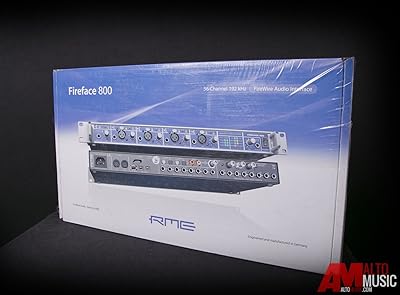
RME Fireface 800 FireWire Audio Interface
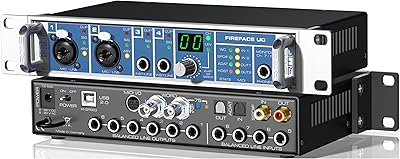
RME Fireface UC USB Audio Interface
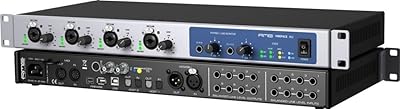
RME Fireface 802 Audio Interface
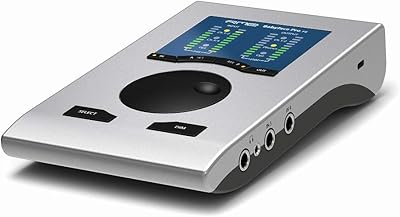
RME Babyface Pro FS USB Audio Interface
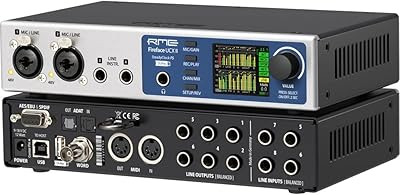
RME Fireface UCX II USB Audio Interface
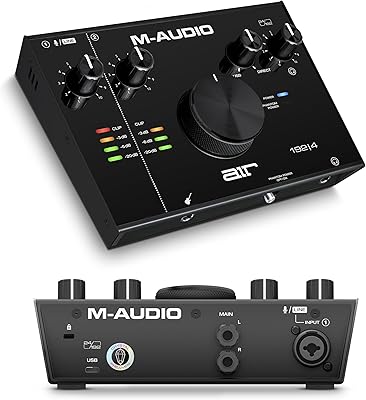
M-Audio AIR 192|4
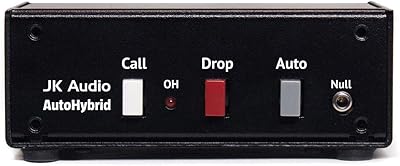
JK Audio Autohybrid Telephone Audio Interface