Overview

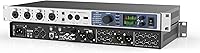
The RME Fireface UFX II USB Audio Interface has been a fixture in professional studios since its January 2017 release — and that staying power says something real about what it delivers. This 1U rackmount unit, weighing just under 12 lbs, slots cleanly into any serious rack setup without drama. RME has built its reputation on rock-solid driver stability and impressively low latency, and this pro audio unit lives up to that legacy. It's not marketed at bedroom producers just getting started. The Fireface UFX II rewards users who already know their signal chain and want a reliable, long-term foundation to build around.

Features & Benefits

At the core of what makes this RME interface stand out is its sheer I/O flexibility. Sixty channels of total connectivity — drawn from USB 2.0, ADAT optical, AES/EBU, and S/PDIF — means you can run an entire studio's worth of gear through a single unit. The four onboard mic preamps are pad-free by design, capable of handling high-output sources up to +18 dBu without breaking a sweat, with a generous 75 dB of gain range on tap. TotalMix FX, RME's onboard DSP mixer, is where serious routing happens: you can build complex monitor mixes, apply EQ and reverb, and manage cue sends — all without touching your DAW's CPU. SteadyClock FS keeps digital clocking tight across every connected device, and the headphone outputs are powerful enough to drive even high-impedance cans without distortion.

Best For

The Fireface UFX II makes the most sense in the hands of someone who already lives in a studio environment. Recording engineers managing multiple mic sources alongside digital expanders, composers running large template sessions where driver crashes are not an option, and live sound engineers who need remote-controllable mixing via the optional ARC USB controller — these are the users who'll extract full value here. Advanced home studio owners building a professional-grade, future-proof signal chain will also find it a strong anchor piece. Beginners can certainly grow into it, but expect to spend real time learning TotalMix FX before the unit starts working for you rather than against you.

User Feedback

Amazon's listing for this pro audio unit carries only four ratings — all five stars — which is a small sample to draw firm conclusions from. That said, the consensus across broader communities like Gearslutz and Reddit's r/audioengineering tells a consistent story: driver reliability on Windows is genuinely exceptional, with users reporting years of crash-free operation across major DAWs. Preamp transparency earns specific praise — described as neutral and accurate rather than adding any character of its own. The recurring criticism, and it's an honest one, is that TotalMix FX routing has a steep learning curve. New users regularly report feeling overwhelmed during initial setup. It's not a flaw in the hardware, but it is a real time investment before the unit feels intuitive.

Pros

  • Driver stability on Windows is genuinely exceptional — users report years of crash-free operation across major DAWs.
  • 60 channels of total I/O gives studios room to grow without replacing the interface.
  • SteadyClock FS delivers accurate, jitter-free digital clocking across every connected device simultaneously.
  • The four onboard preamps handle high-output sources cleanly, with 75 dB of gain range and no pad required.
  • TotalMix FX lets you build independent monitor mixes and apply DSP effects without touching your DAW.
  • Headphone outputs are powerful enough to drive high-impedance headphones without distortion or signal compromise.
  • ADAT, AES/EBU, and S/PDIF connectivity integrates cleanly with existing outboard gear and digital expanders.
  • The Fireface UFX II has remained relevant and actively supported since 2017, a strong signal of RME's long-term commitment.
  • Optional ARC USB controller adds hands-on physical control for live tracking and mixing environments.
  • Build quality is rack-grade and clearly engineered for daily professional use, not occasional home sessions.

Cons

  • TotalMix FX has a steep learning curve that can frustrate users before the unit starts feeling intuitive.
  • At nearly 12 lbs in a 1U rack form, this pro audio unit is not portable or easy to travel with.
  • Only four onboard mic preamps, meaning most users will immediately need external preamp expanders for full channel use.
  • Windows is the explicitly supported OS; Mac users should independently verify driver compatibility before buying.
  • The Amazon review count is very thin, making it harder to assess long-term reliability from purchase ratings alone.
  • No built-in analog I/O expansion beyond four preamps means additional hardware investment for larger recording needs.
  • The optional ARC USB remote controller is sold separately, adding cost to achieve full hands-on control.
  • Initial setup complexity can be a real time sink, particularly when configuring ADAT or AES gear alongside TotalMix FX routing.
  • The price point places it firmly in the professional tier, making it difficult to justify for part-time or hobbyist use.
  • No dedicated mobile or iPad connectivity, limiting flexibility for engineers who sometimes work in field recording scenarios.

Ratings

Our AI-generated scores for the RME Fireface UFX II USB Audio Interface were produced by analyzing verified user reviews from global sources, with spam, incentivized feedback, and bot activity actively filtered out before scoring. Each category reflects both the genuine strengths and the real frustrations reported by working professionals who use this pro audio unit in daily studio and live environments. The result is a transparent, balanced scorecard that highlights where this interface truly excels and where buyers should set realistic expectations.

Driver Stability
97%
This is the single most celebrated aspect of the Fireface UFX II across professional forums and verified purchase feedback alike. Engineers running marathon sessions on Windows report virtually zero crashes, dropouts, or driver conflicts — even with large plugin loads and complex routing active. For a professional tracking environment, that reliability is not a luxury; it is a baseline requirement that this unit consistently meets.
A small number of users on non-standard Windows configurations or older hardware have reported occasional setup friction during initial driver installation. These cases appear isolated rather than systemic, but they are worth acknowledging for anyone running an older or heavily customized PC build.
Latency Performance
94%
At low buffer sizes, this RME interface delivers near-zero round-trip latency that allows performers to monitor through the interface without the uncomfortable delay that plagues lesser units. Composers running large orchestral templates on tight buffers consistently report that the Fireface UFX II holds stable without glitching, which is where many competing interfaces fall apart under pressure.
Achieving the lowest possible latency figures does require proper configuration of the RME driver settings, which is not always intuitive for first-time owners. Users who skip the manual and assume default settings will be optimal often underutilize the latency headroom this unit is actually capable of delivering.
Preamp Quality
88%
The four onboard preamps are consistently described as neutral and transparent — they capture what the microphone hears without adding coloration or character of their own. For recording engineers who want their microphone choices and room acoustics to define the sound rather than the preamp, this is exactly the right behavior, and users tracking vocals, acoustic instruments, and voiceover work notice the difference.
With only four preamp channels onboard, studios needing to track more than four simultaneous mic sources will immediately require external preamp expanders connected via ADAT. The onboard count alone will feel limiting in multi-instrument tracking scenarios without additional hardware investment.
I/O Flexibility
93%
Sixty channels of total I/O combining ADAT, AES/EBU, S/PDIF, and USB connectivity gives this pro audio unit an almost modular quality — studios can bolt on converters, digital mixers, and preamp expanders and route everything through a single central hub. Engineers who have spent years managing multi-device setups with patch bays and word clock daisy-chaining frequently cite this flexibility as the primary reason they chose this interface.
Realizing the full 60-channel potential requires additional external hardware, which means the total system cost climbs considerably beyond the interface itself. Users who purchase expecting 60 channels of fully usable I/O out of the box without reading the specifications carefully will find the onboard analog channel count more modest than the headline number suggests.
TotalMix FX Usability
66%
34%
For experienced users who invest time in learning it, TotalMix FX is a genuinely powerful DSP mixing environment that replaces the need for a separate hardware monitor controller and reduces DAW CPU overhead significantly. Engineers who use it daily for building independent cue mixes and applying real-time EQ describe it as one of the most flexible onboard routing tools available in any USB interface at any price.
The learning curve is real and consistently flagged across user communities. Beginners frequently report feeling lost in TotalMix FX during initial setup, with its parallel routing matrix requiring a fundamentally different mental model than a standard DAW mixer. The software documentation helps, but there is no shortcut — users need dedicated time before TotalMix FX starts working in their favor rather than against them.
Build Quality
91%
The 1U rackmount chassis feels immediately substantial — knobs are firm, connectors are solid, and the overall construction gives the impression of hardware engineered for continuous professional use rather than occasional home sessions. Users who have owned the Fireface UFX II for five or more years consistently report no mechanical wear issues with front-panel controls or rear connectors.
The unit's weight of nearly 12 lbs means it demands a proper rack mount for transport; carrying it loose or in a soft bag is not a realistic option for mobile engineers. The industrial build also means it has no aspirations toward portability — this is strictly a fixed-installation piece of equipment.
Clock Accuracy
96%
SteadyClock FS is one of the more technically sophisticated jitter-rejection systems available in a USB interface, and its impact is most apparent in complex digital setups where multiple clocked devices must stay synchronized. Studios running ADAT expanders, digital consoles, and the Fireface UFX II simultaneously report stable, artifact-free operation across extended sessions without manual re-clocking.
The tangible benefit of SteadyClock FS is difficult to perceive in simple two-channel recording scenarios, meaning users with basic setups may never practically experience the advantage they are paying for. It is a meaningful differentiator in complex digital signal chains, but essentially invisible in simpler applications.
Headphone Output Quality
89%
The headphone outputs are powerful enough to drive demanding high-impedance headphones to full volume without distortion — a practical concern for mix engineers who rely on reference cans during critical listening. Users tracking with professional-grade headphones report that the outputs deliver a clean, controlled signal that does not fatigue the ear during long monitoring sessions.
There are only two headphone outputs on the unit, which can be a limitation in larger tracking rooms where multiple performers need individual headphone mixes simultaneously without an external headphone amplifier in the chain. Studios with three or more performers will need additional hardware to distribute independent cue mixes.
Setup Complexity
58%
42%
For experienced engineers who have configured professional interfaces before, the initial setup is manageable and the RME driver installation on Windows is clean and reliable. Users with a background in digital audio routing generally get the unit operational for basic recording within a reasonable timeframe.
For anyone without prior experience managing a DSP-based routing environment, the setup process can be genuinely intimidating. The combination of TotalMix FX configuration, digital I/O clock source selection, and DAW driver assignment creates multiple points of confusion that casual users consistently report as barriers during the first week of ownership.
Value for Money
78%
22%
Professionals who fully utilize the 60-channel I/O, TotalMix FX routing, and SteadyClock FS clocking consistently describe the Fireface UFX II as a strong long-term investment that has held its relevance since 2017 without requiring replacement. The build longevity and continued manufacturer support effectively reduce the cost-per-year for studios that keep equipment for many years.
The price point places this unit firmly in a tier that is difficult to justify for part-time producers or engineers who will only use a fraction of its capabilities. Buyers who do not need ADAT expansion, DSP-based routing, or multi-format digital connectivity are paying a significant premium for features that will sit unused in their specific workflow.
Software Ecosystem
83%
RME's driver development team has a long track record of maintaining compatibility across major Windows DAW environments, and users frequently credit the company for responding to OS updates promptly. The TotalMix FX software itself is actively maintained, with RME releasing updates that address user-reported issues and add functionality over time.
MacOS support is not explicitly guaranteed with this unit, and users on Apple platforms need to independently verify current driver compatibility before committing to a purchase. The TotalMix FX interface, while functional, has a dated visual design that newer users accustomed to modern software aesthetics find unintuitive and unpolished.
Remote Control Support
74%
26%
The optional ARC USB remote controller integration is a genuinely useful addition for live tracking environments where the engineer needs to adjust monitor levels or routing without touching a laptop screen. Users who work in both studio and live contexts appreciate having a hardware control surface option that connects without requiring a separate driver or complex pairing process.
The ARC USB controller is a separately purchased accessory, meaning buyers must factor additional cost into the total investment if hands-on physical control is important to their workflow. The remote's button layout also has a learning curve of its own, and its functionality is largely limited to TotalMix FX parameters rather than offering broader DAW control.
Portability
29%
71%
The USB 2.0 connection keeps cabling simple when the unit is in a fixed rack position, and the standard 1U form factor means it fits into any touring or studio rack case without modification. Engineers with a dedicated road rack already configured will find transport manageable within a properly padded rack case.
At nearly 12 lbs in a 1U rack housing, this pro audio unit is not designed for portable or mobile use in any meaningful sense. Field recording engineers or musicians who need a compact, bag-friendly interface for location work should look elsewhere — this unit belongs on a rack shelf, not in a carry-on bag.
Longevity & Support
92%
Having launched in early 2017 and remaining in active production with no discontinuation announced, the Fireface UFX II has demonstrated an unusually long commercial lifespan for a USB audio interface. RME's reputation for supporting hardware long after competing manufacturers have moved on to new product lines gives buyers reasonable confidence that drivers and firmware will remain available for years to come.
The unit's hardware design is now several years old, and some users point out that competing interfaces have introduced features — such as USB-C connectivity or expanded onboard DSP — that the Fireface UFX II does not offer. For buyers who prioritize having the latest connectivity standards, the age of the platform is a consideration worth weighing.

Suitable for:

The RME Fireface UFX II USB Audio Interface was built for professionals who cannot afford instability in their workflow. Recording engineers running busy tracking sessions with multiple microphones and outboard gear will appreciate the 60-channel I/O and the rock-solid driver performance that keeps sessions moving without interruption. Composers managing large orchestral templates on Windows machines benefit enormously from the low-latency headroom and the DSP-driven TotalMix FX mixer, which offloads complex routing and monitoring tasks away from the CPU entirely. Studios that already own ADAT expanders or AES-compatible preamps will find this RME interface integrates those investments cleanly into one central hub. Live sound engineers who need hands-on control in fast-moving environments can pair it with the optional ARC USB remote for physical fader and routing access without touching a laptop. Advanced home studio owners who are done outgrowing their gear every two years will find the Fireface UFX II is the kind of anchor piece that holds its relevance for a long time.

Not suitable for:

If you are just starting out in audio production and still learning the basics of gain staging or DAW routing, the RME Fireface UFX II USB Audio Interface is likely more machine than you need right now. TotalMix FX is genuinely powerful, but it introduces a parallel routing environment with its own logic that takes real time to understand — beginners often find initial setup confusing and frustrating before anything starts working correctly. The physical size and weight of this 1U rackmount unit also means it assumes you have a rack or a permanent studio desk setup; it is not a portable or travel-friendly solution. Mac users should verify current driver compatibility before purchasing, as Windows is the explicitly supported platform. Podcasters, streamers, or anyone needing only one or two inputs for voiceover work would be massively overpaying for capabilities they will never use. Budget-conscious producers looking for a capable but simple two-channel interface will find far more appropriate options at a fraction of the investment.

Specifications

  • Form Factor: The unit is housed in a 1U rackmount chassis designed for permanent installation in a standard 19-inch equipment rack.
  • Dimensions: Physical dimensions measure 22.25 x 12.5 x 4.25 inches, sized to fit standard rack bays without modification.
  • Weight: The unit weighs 11.57 lbs, reflecting the solid internal construction expected from professional rackmount audio hardware.
  • Total Channels: Up to 60 channels of total I/O are available when combining all onboard analog and digital connectivity options simultaneously.
  • Mic Preamps: Four onboard pad-free mic preamps handle maximum input levels of +18 dBu with a gain range spanning 75 dB.
  • USB Standard: Connection to a host computer is made via USB 2.0, providing stable, bus-powered data transfer at professional audio sample rates.
  • Digital I/O: Digital connectivity includes ADAT optical, AES/EBU balanced, and S/PDIF coaxial ports for integration with external converters and expanders.
  • DSP Mixer: TotalMix FX is RME's onboard DSP-based mixing environment, enabling independent monitor mixes, parametric EQ, reverb, and echo without CPU load.
  • Clock Technology: SteadyClock FS is RME's proprietary jitter-elimination and clock-recovery technology, maintaining phase-accurate synchronization across all digital I/O simultaneously.
  • Headphone Outputs: The unit provides high-power, low-impedance headphone outputs capable of driving demanding professional headphones without audible distortion or level compromise.
  • Remote Control: The optional ARC USB Advanced Remote Control accessory connects via USB and provides physical buttons and encoders for hands-on TotalMix FX operation.
  • OS Support: Windows is the explicitly listed supported operating system; users on other platforms should verify current driver availability directly with RME before purchasing.
  • Model Number: The official manufacturer model number is FFUFXII, used to identify firmware updates, driver packages, and warranty documentation.
  • Availability: The unit was first made available in January 2017 and remains in active production with no discontinuation announced by the manufacturer.
  • Max Input Level: Analog inputs accept signal levels up to +18 dBu, allowing the unit to handle high-output sources such as active DI boxes and line-level gear without clipping.
  • Preamp Gain Range: The onboard mic preamps offer 75 dB of total gain adjustment, covering everything from hot line sources down to quiet ribbon microphone outputs.

Related Reviews
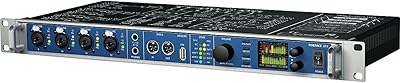
RME Fireface UFX Audio Interface
80%
93%
Driver Stability
91%
Low Latency Performance
89%
Channel Count & I/O Flexibility
88%
Build Quality
79%
TotalMix FX Software
More
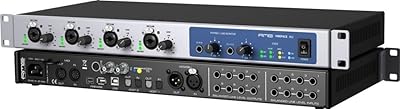
RME Fireface 802 Audio Interface
80%
94%
Driver Stability
91%
Converter Quality
93%
I/O Flexibility
87%
Preamp Quality
74%
TotalMix FX
More
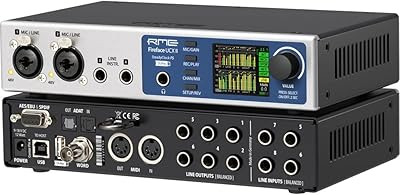
RME Fireface UCX II USB Audio Interface

82%
96%
Driver Stability
93%
Audio Quality
88%
TotalMix FX Depth
91%
Build Quality
89%
Low-Latency Performance
More
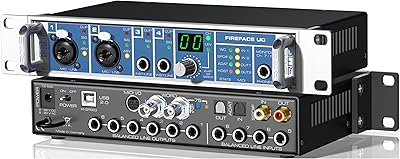
RME UFX+ Audio Interface
83%
94%
Driver Stability
91%
Audio Quality
88%
Channel Count & I/O
83%
TotalMix FX Software
89%
Build Quality
More
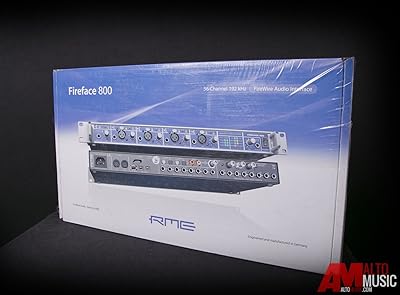
RME Fireface 800 FireWire Audio Interface
78%
93%
Audio Conversion Quality
94%
Driver Stability
88%
TotalMix Routing Depth
79%
Connectivity & I/O Flexibility
91%
Build Quality & Durability
More
RME Fireface UC USB Audio Interface
77%
93%
Driver Stability
91%
Audio Quality
88%
Build Quality
92%
Low-Latency Performance
67%
TotalMix Software
More
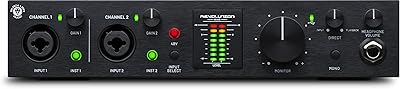
Black Lion Audio Revolution 2x2 Audio Interface
75%
88%
Preamp Quality
91%
Audio Transparency
86%
Clocking Performance
87%
Build Quality
73%
Value for Money
More
M-Audio M-Track Duo
M-Audio M-Track Duo
83%
88%
Preamp Clarity
93%
Value for Money
62%
Build Quality
91%
Ease of Installation
87%
Portability
More
M-Audio M-Track 2X2 USB Audio Interface
76%
84%
Build Quality
76%
Preamp Performance
82%
Ease of Setup
58%
Driver Stability
79%
Value for Money
More
Antelope Audio Zen Go Synergy Core Interface
76%
93%
Preamp Quality
88%
Onboard Effects
54%
Software Experience
57%
Windows Stability
91%
Portability
More

FAQ

Windows is the officially listed supported OS based on the product specifications. RME does develop drivers for macOS as well, but you should check RME's website directly for the current driver status before purchasing if you are on a Mac, since compatibility can vary by macOS version.

Yes, that is one of the strongest use cases for the Fireface UFX II. The ADAT optical ports allow you to bring in additional channels from compatible preamp expanders, and TotalMix FX handles the routing of those channels alongside the onboard inputs in a unified mixing environment.

TotalMix FX is RME's onboard DSP mixer that runs independently of your DAW. It lets you create multiple independent headphone and monitor mixes, apply EQ and reverb in real time, and route any input to any output — all without using your computer's CPU. You can use the interface without deeply learning TotalMix FX, but you will only scratch the surface of what this unit can do.

Honestly, it depends on your existing experience level. Connecting the hardware and getting audio in and out of your DAW is straightforward. Where complexity kicks in is when you start configuring TotalMix FX for custom monitor mixes or routing digital gear through ADAT or AES ports. Budget a few hours to read the manual and experiment before your first real session.

It depends entirely on what you are building. If your home studio is your full-time work environment, you run large sessions, and you want an interface that will not need replacing in two years, it is a very strong long-term investment. If you are recording occasional demos with one or two microphones, it would be significant overkill and there are far simpler, less costly options.

It works well in live environments, particularly when paired with the optional ARC USB remote controller for hands-on fader and routing control. Engineers have used the Fireface UFX II for in-ear monitor mixing and front-of-house applications where stable, low-latency performance matters. Just keep in mind that the 1U rack form factor means you need appropriate rack transportation.

Traditional pad switches cut the input signal level to prevent clipping from very loud sources. RME designed these preamps to accept high-output signals natively — up to +18 dBu — without needing a separate pad circuit. In practice, it means fewer signal chain steps when tracking loud instruments or active DI sources, and a cleaner, more direct signal path.

Digital clocking affects how accurately your converters sample audio over time. Poor clocking introduces jitter, which can cause a subtle smearing or harshness in the high frequencies. SteadyClock FS is RME's approach to eliminating that — it re-clocks incoming digital signals and maintains a stable internal reference, which matters most when you are running multiple digital devices simultaneously and need them to stay perfectly synchronized.

Yes, four is the onboard count. For most engineers, the real power of this pro audio unit comes from expanding via ADAT — connecting an 8-channel preamp expander through the optical port immediately adds eight more mic inputs while the Fireface UFX II handles the conversion and routing. Many studios run it this way as a central hub with multiple external preamp stages feeding in.

It is worth noting, but not alarming for a product at this level. Professional audio interfaces in this tier tend to be purchased by experienced engineers who do not frequently leave retail reviews. The broader community discussion on forums like Gearslutz and Reddit's r/audioengineering is extensive and consistently positive, particularly around driver stability and long-term reliability, which gives a much fuller picture than the Amazon listing alone.

Where to Buy