Overview
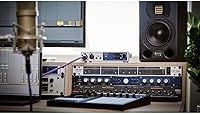
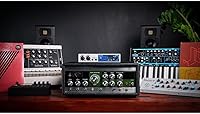
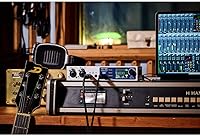
The RME Fireface UCX II USB Audio Interface sits in a rare category: compact enough for a desktop, capable enough to anchor a professional studio. This RME interface has built its reputation on two things working engineers care about most — rock-solid drivers and honest, accurate audio. Its 40-channel count sounds imposing, but those channels span a combination of analog, APDIF, and MADI I/O, not 40 discrete mic preamps. Beyond recording duties, it works as a standalone DSP mixer without a computer in the chain at all. That dual capability draws in home studio producers, live sound engineers, and modular synthesizer users — a surprisingly broad audience for one compact box.
Features & Benefits
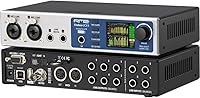
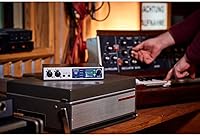
What separates the UCX II from most competitors is the depth packed inside a half-rack chassis. The TotalMix FX engine handles up to 40 channels of latency-free monitoring with per-channel EQ, compression, and reverb — all running on the onboard DSP so your CPU stays free. The DC-coupled line outputs are a genuine rarity: they carry CV and Gate voltage signals, letting modular synthesizer users route control voltage directly out of the interface without extra hardware. SteadyClock FS keeps digital clocking tight, the front-panel OLED and rotary encoder give hands-on access to routing without touching a mouse, and the DURec hardware recorder captures audio straight to USB storage with no computer required.
Best For
The Fireface UCX II makes the most sense for people who have outgrown entry-level interfaces and want something built to last. Home studio producers who want to skip a dedicated hardware mixer will find that TotalMix FX routing handles complex monitor mixes entirely outside the DAW. Modular synthesizer users have very few interface options with true DC-coupled outputs, and this RME interface is among the most dependable. Broadcast and live professionals will appreciate the standalone recorder for capturing audio without a laptop in the signal chain. It is also a strong choice for anyone who places a premium on long-term OS driver support — RME has a well-documented track record of not abandoning hardware after a year or two.
User Feedback
Across a relatively modest number of owner reviews, the UCX II holds a 4.6-star average — a consistent signal, though not yet a broad one. Early owners frequently point to build quality and driver reliability as the standout strengths, with several noting that RME keeps drivers current through OS updates that leave other manufacturers' hardware stranded. The DURec recorder and DC-coupled outputs come up repeatedly as features that genuinely exceeded expectations. The main friction is TotalMix FX: its routing capabilities are deep, but the learning curve is real, and buyers expecting plug-and-play simplicity will need to invest time in the documentation. Those who do tend to frame the purchase as a long-term commitment rather than a straightforward upgrade.
Pros
- TotalMix FX handles latency-free monitoring with EQ, compression, and reverb across all channels without touching the host CPU.
- DC-coupled line outputs support CV and Gate voltage — a rare and genuinely useful feature for modular synthesizer integration.
- RME has a well-documented history of releasing driver updates that keep hardware working through major OS changes for years.
- The DURec hardware recorder captures audio directly to USB storage with no computer required, a practical bonus for live and broadcast use.
- SteadyClock FS delivers rock-solid digital clocking that holds up well in complex signal chains and multi-device setups.
- Build quality is consistently described by early owners as premium and substantial — this does not feel like a box you will outgrow or replace quickly.
- The front-panel OLED display and rotary encoder make hands-on adjustments possible without constantly reaching for a mouse.
- The UCX II effectively replaces an external hardware mixer for users who need independent monitor mixes, saving both rack space and cost.
- Low-latency driver performance on both Windows and macOS is a recurring highlight, particularly for users running demanding real-time sessions.
Cons
- TotalMix FX has a steep learning curve that can take days or weeks to fully understand — documentation reading is not optional.
- The 40-channel count combines analog and digital I/O; users expecting 40 mic preamp inputs will be disappointed.
- The review pool remains small, so buyer consensus is still limited compared to more widely adopted interfaces.
- USB 2.0 connectivity is functional but feels dated alongside competitors that have moved to USB-C or Thunderbolt.
- No iOS or iPad connectivity, which rules it out for mobile or tablet-based recording workflows.
- The half-rack form factor requires a proper desk or rack space; it is not truly portable for on-the-go use.
- TotalMix FX is a desktop application with a dense interface — users who prefer streamlined software mixer experiences will find it intimidating.
- Replacement or repair outside of warranty can be costly given the premium build and specialized components involved.
Ratings
The scores below reflect an AI-assisted analysis of verified owner reviews for the RME Fireface UCX II USB Audio Interface, gathered from buyers worldwide, with spam, bot activity, and incentivized feedback actively filtered out before scoring. Each category is weighted against real usage patterns — from daily studio sessions to live broadcast setups — so both the genuine strengths and the honest friction points are represented. Where owners consistently agreed, scores trend high; where experiences diverged or frustration surfaced repeatedly, that is reflected too.
Driver Stability
Audio Quality
TotalMix FX Depth
Build Quality
Low-Latency Performance
CV/Gate Integration
DURec Standalone Recorder
Front Panel Usability
Software Ecosystem
Connectivity Range
Value for Money
Setup & Onboarding
Portability
Suitable for:
The RME Fireface UCX II USB Audio Interface is built for serious users who have moved past the hobbyist stage and need an interface that can grow with their workflow rather than hold it back. Home studio producers running complex session templates will particularly benefit from TotalMix FX, which handles monitor mixing, headphone feeds, and effects routing entirely outside the DAW — freeing up CPU and eliminating the need for a separate hardware mixer. Modular synthesizer users are among the most targeted buyers here, since the DC-coupled line outputs carry genuine CV and Gate voltage signals, a capability that is genuinely hard to find in any interface at this size. Live engineers and broadcast professionals who occasionally need to capture audio without a laptop will find the DURec standalone recorder a practical, reliable safety net. Anyone who has been burned by an interface that stopped receiving driver updates after an OS upgrade will recognize RME's track record of sustained long-term support as a meaningful reason to invest in this ecosystem.
Not suitable for:
The RME Fireface UCX II USB Audio Interface is a poor fit for anyone expecting a straightforward, plug-and-play experience straight out of the box. TotalMix FX is genuinely powerful, but its routing logic is unlike anything found in simpler interfaces, and new users who do not commit to learning it will feel like they are getting a fraction of what they paid for. Podcasters, streamers, or home recordists who only need two or three inputs and a clean headphone output are paying for a level of complexity and capability they will never use. Buyers on a tight timeline — say, someone who needs a working setup tomorrow for a critical session — should think carefully before committing, since the initial learning investment is real. It is also worth noting that the 40-channel figure refers to a combined total of analog and digital I/O paths, not 40 mic preamps, so anyone who needs a large analog input count for live recording will want to look elsewhere.
Specifications
- Model Number: The unit carries the official model designation FF UCX II and was first made available in November 2021.
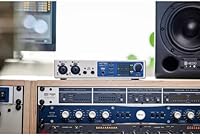
- Form Factor: The UCX II is a half-rack desktop unit measuring 14 x 4 x 8 inches and weighing approximately 2 pounds.
- Total Channels: It supports 40 channels in total, combining analog, ADAT, SPDIF, and AES/EBU digital I/O paths — not 40 discrete analog inputs.
- Analog Inputs: Eight combo XLR/TRS inputs accept both mic-level and line-level signals with switchable preamp gain.
- Analog Outputs: Eight balanced line-level outputs are DC-coupled, enabling them to carry CV and Gate voltage signals for modular synthesizer control.
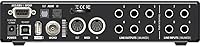
- Digital I/O: Digital connectivity includes ADAT optical, SPDIF coaxial, and AES/EBU, allowing integration with a wide range of outboard digital gear.
- USB Connectivity: The interface connects to a host computer via USB 2.0, which is fully backward and forward compatible with USB 3.0 and USB-C ports using an appropriate cable or adapter.
- Clock Technology: RME's SteadyClock FS technology provides hardware-level jitter reduction, maintaining stable digital clocking even in demanding multi-device setups.
- Onboard DSP: TotalMix FX runs entirely on dedicated onboard DSP hardware, delivering latency-free monitoring with per-channel EQ, dynamics, and reverb across all 40 channels without loading the host CPU.
- Standalone Recorder: The integrated DURec function allows direct multitrack recording to a connected USB storage device with no computer required.
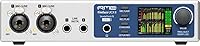
- Front Panel: A high-contrast OLED display paired with a large rotary encoder provides direct hands-on control of routing, levels, and mixing parameters from the unit itself.
- Operating Systems: Drivers are officially supported on Windows and macOS, with RME maintaining a consistent record of releasing updates to maintain compatibility through major OS revisions.
- CV/Gate Support: The DC-coupled analog outputs pass control voltage and gate signals in the 0–10V range, making the unit compatible with Eurorack and other modular synthesizer formats.
- Headphone Outputs: Two independent headphone outputs on the front panel each have their own volume control and can carry entirely separate monitor mixes via TotalMix FX.
- MIDI I/O: One MIDI input and one MIDI output are included, supporting standard DIN-5 MIDI connections for hardware synthesizers, controllers, and MIDI clock sync.
- Word Clock I/O: Dedicated BNC word clock input and output allow the UCX II to act as a clock master or slave in a professional studio environment with multiple digital devices.
- Bus Power: The unit requires an external power supply and is not bus-powered over USB, which is standard for interfaces at this channel count and DSP capability level.
Related Reviews

RME Fireface UFX II USB Audio Interface
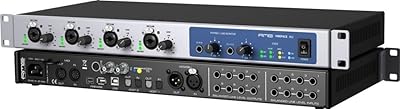
RME Fireface 802 Audio Interface
RME Fireface 800 FireWire Audio Interface
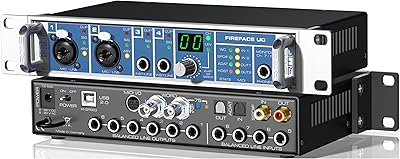
RME Fireface UC USB Audio Interface
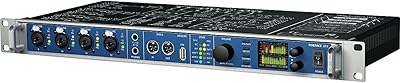
RME Fireface UFX Audio Interface
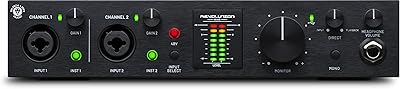
Black Lion Audio Revolution 2x2 Audio Interface
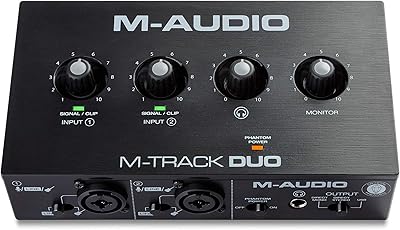
M-Audio M-Track Duo
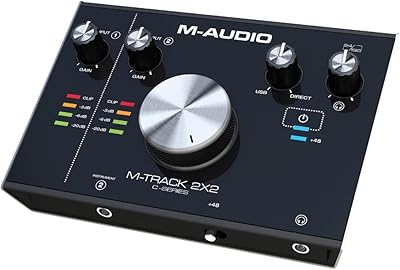
M-Audio M-Track 2X2 USB Audio Interface
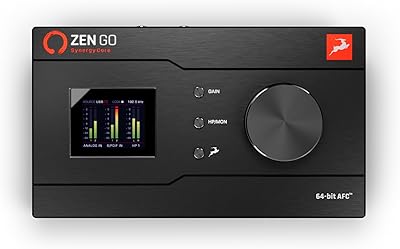
Antelope Audio Zen Go Synergy Core Interface
