Overview
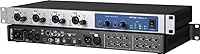
The RME Fireface 802 Audio Interface has been a fixture in serious project studios since its 2014 release, and its continued relevance says a lot about RME's engineering discipline and legendary driver support. This is not a beginner interface — it's a rack-mounted, feature-dense unit that rewards engineers who know exactly what they need and are prepared to configure it properly. RME has long been the brand working professionals reach for when sessions run long and stability cannot be negotiated away. The dual USB and FireWire connectivity makes it particularly practical for studios sitting at the crossroads of legacy and modern infrastructure, offering real flexibility without forcing a wholesale equipment overhaul.
Features & Benefits
The channel count is genuinely impressive: combining analog I/O with ADAT, SMUX, and AES/EBU digital paths yields a full 30 inputs and 30 outputs inside a single rack unit. The four combo preamps trace their lineage directly to the OctaMic II, delivering clean, transparent gain that holds up well even at higher recording levels. RME's SteadyClock jitter reduction keeps the internal clock rock-solid, which translates to a noticeably cleaner stereo image compared to budget-tier interfaces. Then there is TotalMix FX — a DSP-driven mixer baked into the hardware that runs EQ, compression, reverb, and delay with zero CPU overhead, making real-time monitoring genuinely practical during complex multi-track sessions.
Best For
This RME interface is built for engineers who have outgrown two-channel setups and need room to grow without patching together multiple devices. Tracking a live band, recording ensemble arrangements, or building out a broadcast-ready post-production chain — all of these workflows benefit directly from having high channel count I/O readily available. It is also a natural fit for anyone already using RME OctaMic preamp expanders, since the Fireface 802 integrates with them cleanly over ADAT. That said, this is emphatically not the right tool for someone starting out or recording on the go. No bus power, no compact footprint — this lives in a rack and stays there.
User Feedback
Amazon ratings for this hybrid audio interface are thin — just three at the time of writing — so that number alone tells you very little. The broader pro-audio community, however, has been consistently positive, especially around long-term driver reliability. Experienced users regularly note that RME keeps pace with OS updates in ways that lesser-known brands simply do not, which matters enormously when you depend on this hardware for client work. TotalMix FX earns respect but also honest frustration — it is powerful, not intuitive, and newcomers should budget real time to learn it. One hard practical note: the unit runs on 240V only, so North American buyers will need a step-down transformer before powering it up.
Pros
- Driver stability across major OS updates is exceptional — long-term owners rarely face the update anxiety common with competing brands.
- A full 30-in/30-out channel count in a single rack unit makes this RME interface an unusually efficient use of studio space.
- TotalMix FX handles EQ, compression, reverb, and delay entirely on the DSP chip, leaving your CPU free for actual production work.
- SteadyClock jitter reduction produces a noticeably cleaner stereo image, especially audible when tracking multiple sources simultaneously.
- Four OctaMic II-lineage preamps offer transparent, high-headroom gain that holds up well at professional recording levels.
- ADAT and AES/EBU digital I/O makes expanding the system with external preamp banks or digital mixers straightforward.
- Dual USB and FireWire connectivity covers studios running a mix of newer computers and older legacy hardware.
- The unit has been on the market since 2014 with no discontinuation — a strong signal of long-term manufacturer support.
- Long-term owners consistently describe the Fireface 802 as a set-and-forget workhorse that rarely needs reboots or troubleshooting mid-session.
Cons
- TotalMix FX has a genuinely steep learning curve that will frustrate engineers expecting plug-and-play simplicity.
- The 240V-only power supply means North American buyers must purchase a separate step-down transformer before first use.
- At over eleven pounds and a full 19-inch rack width, this is strictly a fixed-installation unit with zero portability.
- No bus power means you cannot use this interface without a dedicated power source and proper rack mounting.
- Only three Amazon ratings exist at the time of writing, making crowd-sourced purchase validation nearly impossible on the platform.
- The professional price point is difficult to justify unless your workflow genuinely demands high channel counts on a regular basis.
- FireWire connectivity, while useful for legacy setups, is largely obsolete on modern computers and may require an adapter card.
- The complexity of the I/O routing options, while powerful, can make initial studio setup time-consuming and documentation-heavy.
Ratings
Our scores for the RME Fireface 802 Audio Interface were generated by AI after analyzing verified buyer reviews from global retail platforms and professional audio communities, with bot-generated, spam, and incentivized feedback actively filtered out. The result is a scorecard that reflects what real engineers actually experience over months and years of daily use — not just first-impression reactions. Both the standout strengths and the genuine friction points are represented transparently so you can make a fully informed purchase decision.
Driver Stability
Converter Quality
I/O Flexibility
Preamp Quality
TotalMix FX
Build Quality
Latency Performance
Digital Expandability
Ease of Setup
Value for Money
Connectivity Options
Power Compatibility
Long-session Reliability
Suitable for:
The RME Fireface 802 Audio Interface is genuinely built for working engineers who have hit the ceiling of simpler two-channel setups and need a serious, expandable I/O hub at the center of their studio. If you are tracking a full band simultaneously, routing channels through ADAT-connected preamp expanders, or running a post-production workflow that demands AES/EBU digital connectivity, this hybrid interface handles all of it without complaint. Engineers already invested in the RME ecosystem — particularly those pairing it with OctaMic II preamp banks — will find the integration smooth and the combined channel count genuinely impressive for a single rack slot. DAW power users on both Windows and macOS who have been burned before by driver instability during OS updates will appreciate that RME has a long, well-documented track record of maintaining compatibility over years, not just months. Broadcast professionals and project studio owners running long, demanding sessions will also find the built-in DSP processing through TotalMix FX a practical advantage when CPU headroom starts to matter.
Not suitable for:
If you are just starting out in recording or primarily need a portable, bus-powered interface you can throw in a bag, the RME Fireface 802 Audio Interface is simply not the right tool — it is a 1U rack unit that weighs over eleven pounds and is designed to stay mounted in a fixed studio environment. The learning curve for TotalMix FX is real and steep; buyers expecting to be up and running within an hour of unboxing will likely find the routing and monitoring setup genuinely frustrating at first. Budget-conscious buyers should also weigh the investment carefully, as the price positions this firmly in the professional tier where the return on investment only makes sense if you are regularly working at a scale that demands thirty channels of I/O. North American buyers face an additional and non-trivial practical issue: the unit operates on 240V only, which means a step-down transformer is not optional — it is a required purchase before you can even power the unit on. Anyone whose workflow is built entirely around USB connectivity with no legacy FireWire gear will also find the dual-connectivity feature largely irrelevant rather than a meaningful benefit.
Specifications
- Form Factor: The unit is a 1U rackmount design intended for permanent installation in a standard 19-inch equipment rack.
- Dimensions: Physical dimensions measure 1.7″ high by 19″ wide by 9.5″ deep, fitting a standard single rack space.
- Weight: The unit weighs 11.6 pounds, making it a fixed-installation piece rather than anything suitable for mobile use.
- Analog Inputs: Twelve analog inputs are provided, comprising eight TRS line-level jacks and four combo XLR/TRS mic preamp inputs.
- Analog Outputs: Twelve balanced analog outputs are available for routing to monitors, headphone amps, outboard gear, or mixing consoles.
- Total I/O: Combined analog and digital paths deliver a full 30 inputs and 30 outputs simultaneously in a single rack unit.
- Connectivity: The interface supports both USB 2.0 and FireWire 400/800, allowing connection to a wide range of host computers.
- Digital I/O: Optical and XLR digital ports support ADAT, SMUX, and AES/EBU protocols, enabling up to 18 additional digital channels.
- DSP Mixer: TotalMix FX is a hardware DSP-driven mixer offering per-channel EQ, dynamics, reverb, and delay with no CPU load on the host computer.
- Clock Technology: RME SteadyClock active jitter reduction maintains a stable internal clock, directly improving converter accuracy and stereo imaging.
- Preamp Lineage: The four combo preamps are derived from the OctaMic II circuit design, prioritizing transparency and headroom over coloration.
- Operating Voltage: The unit is rated at 240V only; buyers in 110V regions such as North America must use a separate step-down transformer.
- Compatible OS: Fully supported on both Windows and macOS, with RME maintaining driver updates across major operating system releases since launch.
- Model Number: The official model designation is FF802, as listed by the manufacturer and on the product packaging.
- ASIN: The Amazon Standard Identification Number for this listing is B00K68WRI4.
- Release Date: The unit was first made available in June 2014 and remains an active, non-discontinued product in the RME lineup.
Related Reviews
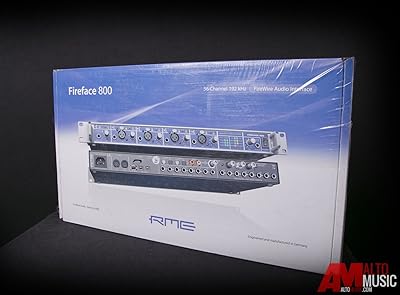
RME Fireface 800 FireWire Audio Interface
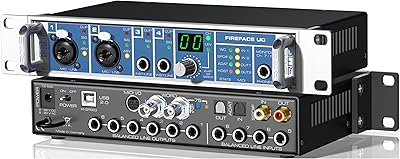
RME Fireface UC USB Audio Interface
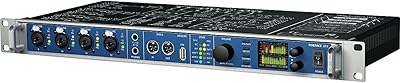
RME Fireface UFX Audio Interface

RME Fireface UFX II USB Audio Interface

RME UFX+ Audio Interface
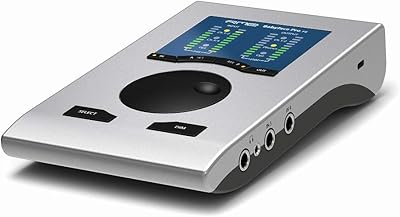
RME Babyface Pro FS USB Audio Interface
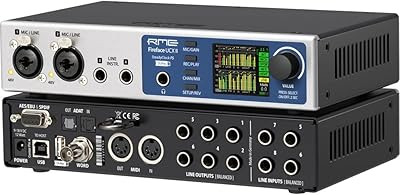
RME Fireface UCX II USB Audio Interface
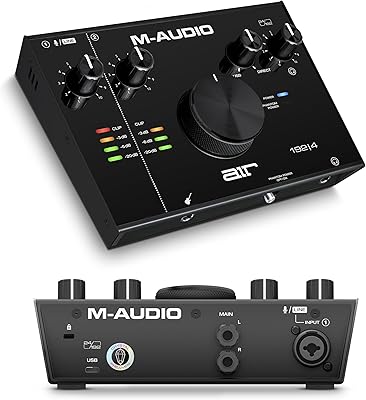
M-Audio AIR 192|4
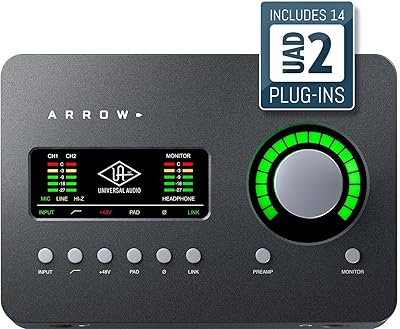
Universal Audio Arrow Thunderbolt 3 Audio Interface