Overview

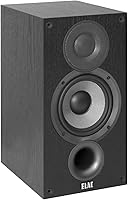
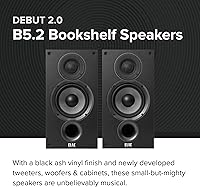
The ELAC Debut 2.0 B5.2 Bookshelf Speakers represent the second generation of Andrew Jones's respected Debut line — a meaningful refinement rather than just a cosmetic refresh. Jones's track record of extracting high-end sound at accessible prices lends this speaker pair real credibility. Up close, the black ash vinyl finish looks clean and understated, and the MDF cabinet feels noticeably solid for its compact size. The 2-way, bass-reflex design is a proven approach: a single woofer handles the mids and low frequencies while the tweeter manages the highs — straightforward, well-executed, and suited to stereo listening or modest home theater setups in small-to-medium rooms.
Features & Benefits

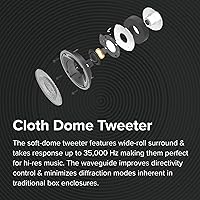
The aramid fiber woofer is one of this speaker pair's most meaningful engineering choices. Unlike polypropylene cones, aramid handles resonance better and returns tighter, more articulate bass — you can hear the difference on acoustic bass lines and kick drums. The 1-inch soft-dome tweeter, guided by a waveguide, spreads high frequencies evenly across the listening area without harshness, making extended sessions at moderate volume feel effortless. The front-firing bass reflex port is a practical advantage: push the B5.2 close to a wall and bass stays controlled rather than muddy. One detail buyers often miss — at 6 ohms, these speakers genuinely benefit from a capable amplifier with solid current delivery, not just rated wattage on paper.

Best For

These ELAC bookshelf speakers hit their stride in small-to-medium rooms where imaging and tonal balance can shine without being overwhelmed by the space. Vinyl listeners and hi-res streaming fans will appreciate the tweeter's extended reach — acoustic instruments and vocals come through with texture and presence. The B5.2 also anchors a home theater setup well as the front left and right pair, especially when a subwoofer handles the deepest bass. First-time upgraders stepping up from a soundbar or budget bookshelf model will likely find the jump in clarity and instrument separation immediately obvious. Desktop and near-field listeners benefit from the port design's flexibility in tighter spaces.

User Feedback

Owners of this speaker pair consistently highlight soundstage depth and treble smoothness as the standout qualities — the kind of feedback that suggests the drivers are genuinely well-tuned, not just well-marketed. Low-end performance impresses most buyers given the cabinet size, though listeners chasing room-filling bass regularly note the need for a subwoofer below 46Hz. The most common critique involves amplifier matching: underpowered receivers produce audible compression at higher volumes, which frustrates buyers who overlook that pairing step. Placement flexibility near walls earns consistently positive comments. Dedicated music listeners report the highest overall satisfaction, while home theater users tend to add a subwoofer from the start and find the combination works very well.

Pros

  • Vocal and midrange clarity is outstanding — acoustic instruments and voices sound natural and textured.
  • The aramid fiber woofer delivers tighter, more articulate bass than polypropylene cones at a similar price.
  • Hi-res audio certification means the B5.2 genuinely resolves detail that cheaper tweeters simply cannot.
  • Front-firing port design allows more flexible placement without the bass bloat common in rear-ported alternatives.
  • Soundstage width and instrument separation impress most listeners, even in modest listening rooms.
  • Solid, internally braced MDF cabinet keeps resonance low, which pays off in cleaner midrange reproduction.
  • Long listening sessions feel comfortable — the soft-dome tweeter avoids the harshness that causes ear fatigue.
  • Strong engineering pedigree from designer Andrew Jones adds confidence in the value-to-performance ratio.
  • Works effectively as front stereo channels in a home theater system when paired with a subwoofer.
  • Consistent build quality across units means both speakers in the pair typically match closely out of the box.

Cons

  • Requires a capable amplifier with solid current delivery — underpowered receivers noticeably limit performance.
  • Deep bass below 46Hz is absent without a subwoofer, which surprises buyers expecting full-range output.
  • Total system cost climbs fast once you factor in a quality receiver and potentially a subwoofer.
  • The sound can lean slightly bright in acoustically live rooms, occasionally causing fatigue on long sessions.
  • Sensitivity is modest, meaning louder listening in bigger spaces demands more amplifier headroom than expected.
  • No setup documentation for passive speaker newcomers — amplifier dependency is not clearly communicated in the box.
  • Black ash vinyl finish shows fingerprints and minor scuffs more readily than a painted or wood-veneer surface.
  • Grille attachment feels less refined than the cabinet quality would suggest, and it shows at this price point.

Ratings

The ELAC Debut 2.0 B5.2 Bookshelf Speakers earn consistently strong marks across thousands of verified global reviews, and the scores below reflect that real-world consensus — assembled by AI after filtering out incentivized, bot-generated, and unverified feedback. Both the genuine strengths and the recurring frustrations are represented here without softening, so you can make a fully informed decision before buying.
Sound Quality
93%
Buyers repeatedly describe an open, natural presentation that punches well above expectations for the cabinet size. Midrange clarity is a frequent highlight — vocals and acoustic instruments come through with texture and presence that many listeners say they did not expect at this price tier.
A small but consistent group of reviewers notes that the sound signature leans slightly bright, which can feel fatiguing on poorly recorded material or with certain solid-state amplifiers. At very high volumes, some listeners detect a subtle compression in the upper midrange.
Bass Performance
71%
29%
For a compact 5.25-inch woofer, the B5.2 delivers surprisingly controlled and articulate low end — bass guitar lines and kick drums come through with real definition rather than the bloated, one-note response common in cheaper bookshelf designs. Jazz and acoustic music listeners are particularly satisfied.
Deep bass extension below 46Hz simply is not there without a subwoofer, which regularly surprises buyers expecting full-range performance from the box alone. Electronic music, hip-hop, and cinematic soundtracks expose this limitation quickly, and adding a sub becomes less optional than many initially hoped.
Treble Clarity
89%
The soft-dome tweeter draws consistent praise for avoiding the sharp, piercing character that plagues cheaper tweeters in this category. Hi-res streaming listeners and vinyl enthusiasts frequently single out the smooth, extended high-frequency reproduction as a reason they chose the B5.2 over competing options.
A minority of reviewers with especially treble-sensitive hearing, or those pairing the speakers with bright-sounding amplifiers, report a slight edge on cymbal transients and sibilant vocal passages. Room acoustics with lots of hard surfaces can amplify this tendency noticeably.
Soundstage & Imaging
88%
The waveguide on the tweeter does meaningful work here — most listeners describe a wider, more three-dimensional stereo image than the cabinet size suggests is possible. Instrument placement feels specific and stable, which makes longer listening sessions more engaging and less tiring.
Optimal imaging requires careful speaker positioning and some distance from side walls and the listening position. Buyers who drop them on a shelf or against a wall without any toe-in adjustments often report a flatter, less impressive presentation that does not reflect the speakers' actual capability.
Build Quality
84%
The thick MDF cabinet feels noticeably solid when you knock on it — there is none of the hollow resonance common in budget bookshelf enclosures. The black ash vinyl finish is tidy and clean-looking in person, and the driver fit-and-finish is consistent across units based on widespread owner reports.
The vinyl wrap does show fingerprints and minor scuffs more readily than a painted finish would, and a few buyers note that the grille attachment feels less premium than the rest of the cabinet. At this price tier it is acceptable, but not exceptional compared to some competitors.
Amplifier Compatibility
67%
33%
With a capable receiver or integrated amplifier that handles 6-ohm loads comfortably, the B5.2 scales impressively — experienced buyers pairing them with quality separates or mid-range receivers consistently report significantly better dynamics and control than entry-level pairings deliver.
This is the single most recurring complaint across buyer reviews: underpowered or 8-ohm-optimized receivers produce audible compression and dynamics compression at moderate-to-high volumes. Many first-time buyers underestimate this dependency and end up disappointed until they upgrade their amplification.
Placement Flexibility
82%
18%
The front-firing port is a genuine practical advantage — buyers in apartments and small rooms who need to position speakers relatively close to rear walls report that bass stays controlled and does not become boomy, unlike rear-ported designs that demand more breathing room behind the cabinet.
Despite the port advantage, the speakers still benefit from being pulled a few inches from the wall for best imaging performance, which can be a constraint on smaller shelves or entertainment units. Near-ceiling placement tends to negatively affect the tweeter dispersion pattern.
Value for Money
91%
Among buyers who auditioned competitors before purchasing, the B5.2 consistently comes out ahead in perceived performance-per-dollar. The combination of the aramid fiber woofer, the refined tweeter, and the braced cabinet would typically cost more from a different brand with equivalent engineering pedigree.
The value equation shifts when you factor in the amplifier requirement — buyers who also need to purchase or upgrade a receiver find that total system cost climbs meaningfully. Budget-conscious buyers shopping for an all-in solution may find the true cost of ownership higher than the speaker price alone suggests.
Midrange Accuracy
87%
Vocals are where these speakers attract some of the most enthusiastic feedback. Both male and female voices are rendered with natural body and presence — podcast listeners, classical music fans, and anyone who prioritizes voice reproduction over bass weight tend to be among the most satisfied owners.
A handful of critical listeners note a slight coloration in the upper midrange around the 2–3kHz region, particularly apparent on dense orchestral passages or recordings with multiple layered vocal harmonies. It is subtle enough that most casual listeners will not notice, but trained ears sometimes do.
Hi-Res Audio Performance
86%
Buyers streaming high-resolution FLAC or playing vinyl through a quality phono stage consistently report that the B5.2 resolves fine musical detail that cheaper speakers obscure entirely. The extended frequency response to 35kHz means hi-res content actually benefits from these speakers rather than being bottlenecked by the drivers.
Realizing the full hi-res benefit requires a quality source and amplifier chain — buyers feeding the speakers from a basic USB DAC or entry-level streaming device often find the improvement over standard resolution less audible than they expected. The speakers reveal the weaknesses of upstream components honestly.
Home Theater Integration
78%
22%
As front left and right channels in a 2.1 or 5.1 home theater setup, the B5.2 handles dialogue clarity and stereo soundtrack material very well. Buyers who pair them with a matched center channel and a capable subwoofer report a coherent, cinematic presentation that competes with much pricier systems.
Without a subwoofer, action movie bass and low-frequency sound design are noticeably absent, and the limitation becomes obvious quickly. Matching a center channel speaker for timbre consistency also requires some care — mismatched tonal balance between the front channels and center is a complaint raised by some home theater builders.
Sensitivity & Dynamics
74%
26%
At moderate listening volumes in smaller rooms, the B5.2 handles dynamic swings in music with good composure — the jump from quiet passages to loud ones feels natural rather than constrained, which is important for classical and jazz listeners who value dynamic honesty.
Sensitivity is rated at a modest level, meaning these speakers need more power to reach satisfying volume levels compared to higher-sensitivity alternatives. In larger rooms or for listeners who prefer high-volume listening, this sensitivity figure reinforces how critical proper amplifier matching really is.
Setup & Out-of-Box Experience
79%
21%
Packaging is solid and the speakers arrive well-protected. Most buyers report a straightforward unboxing and setup process — binding posts accept bare wire, banana plugs, and spade connectors without issue, and the build consistency means both units in a pair match closely right out of the box.
There is no quick-start guide for first-time passive speaker buyers, and the amplifier dependency is not clearly communicated in the box. Several reviewers mention confusion about why the speakers did not perform well initially, only later realizing their receiver was the limiting factor.
Long-Term Listening Fatigue
85%
A recurring theme across long-term owner reviews is that the B5.2 remains enjoyable over multi-hour listening sessions. The soft-dome tweeter avoids the harshness that causes ear fatigue in metal-dome designs, and the overall tonal balance rewards attentive listening without demanding it.
In acoustically live rooms with lots of hard surfaces, the treble can become tiring over time — a few buyers in open-plan spaces with wooden floors and minimal soft furnishings report needing to dial back the treble on their amplifier to stay comfortable for extended sessions.

Suitable for:

The ELAC Debut 2.0 B5.2 Bookshelf Speakers are an excellent fit for music-first listeners who want a meaningful step up from budget or entry-level gear without committing to a full high-end system. Vinyl enthusiasts and hi-res streaming fans in particular will get a lot out of the extended treble response and the woofer's articulate low-end character — these are speakers that reward good source material. They also work well as front left and right channels in a compact home theater setup, especially when paired with a matched subwoofer to cover the deep bass the cabinet cannot reach on its own. Buyers in apartments or smaller rooms will appreciate both the compact footprint and the front-firing port, which keeps bass reasonably controlled even when wall placement is unavoidable. Anyone stepping up from a soundbar, a budget Bluetooth speaker, or a decades-old bookshelf pair will likely find the jump in clarity and imaging immediately noticeable and genuinely satisfying.
Not suitable for:

The ELAC Debut 2.0 B5.2 Bookshelf Speakers are not the right choice for buyers who expect full-range, room-filling bass from the speakers alone — low-frequency extension has a real floor around 46Hz, and bass-heavy genres like electronic, hip-hop, or cinematic scores will feel noticeably lean without a subwoofer in the chain. Listeners planning to drive them with a basic entry-level receiver or a low-current amplifier should also reconsider, because the 6-ohm impedance demands more from an amplifier than many budget receivers comfortably deliver, and the resulting sound at higher volumes can be underwhelming and compressed. Large living rooms or open-plan spaces present a similar challenge — the B5.2 is engineered for smaller environments, and trying to fill a large room with this speaker pair often exposes sensitivity and dynamic limitations. Finally, buyers looking for an all-in-one, plug-and-play audio solution should know that passive speakers require a separate amplifier or receiver, which adds both cost and setup complexity that not everyone anticipates.

Specifications

  • Speaker Type: 2-way passive bookshelf speaker with a bass-reflex enclosure design.
  • Tweeter: 1-inch soft-dome tweeter with wide-roll surround and integrated waveguide for improved dispersion.
  • Woofer: 5.25-inch aramid fiber cone woofer engineered for high stiffness, low coloration, and extended low-frequency control.
  • Frequency Response: Rated from 46Hz to 35kHz, covering standard audio range through hi-res territory.
  • Impedance: Nominal impedance of 6 ohms, requiring an amplifier or receiver comfortable driving loads below 8 ohms.
  • Power Handling: Maximum power handling rated at 120 watts per speaker.
  • Enclosure: Front-firing bass reflex port built into a thick, internally braced MDF cabinet to minimize resonance and allow flexible placement.
  • Dimensions: Each cabinet measures 9.3″ deep, 7.1″ wide, and 13.5″ tall.
  • Weight: The pair weighs approximately 13 pounds total in standard packaging.
  • Finish: Black ash vinyl wrap applied over MDF for a clean, understated appearance.
  • Connectivity: Passive wired connection via binding posts compatible with bare wire, banana plugs, and spade connectors.
  • Audio Channels: Configured for 2.0 stereo output; not a self-powered or wireless unit.
  • Special Feature: Certified for hi-res audio playback, supporting content beyond standard 20kHz high-frequency limits.
  • Included Items: Package includes two bookshelf speaker cabinets with removable grilles.
  • Warranty: Covered by a limited manufacturer warranty from ELAC Americas Inc.
  • Cabinet Material: Medium-density fiberboard (MDF) construction with internal bracing to reduce panel vibration.
  • Model Number: Official model designation is DB52-BK, representing the black finish variant of the B5.2.
  • Mounting Type: Designed for shelf or stand mounting; not intended for in-wall or ceiling installation.

Related Reviews
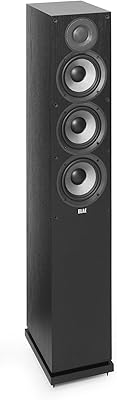
ELAC Debut 2.0 F5.2 Floorstanding Speaker
87%
95%
Sound Quality
92%
Bass Performance
88%
Build Quality
85%
Ease of Setup
91%
Value for Money
More
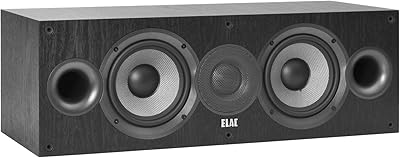
ELAC Debut 2.0 C5.2 Center Channel Speaker
84%
89%
Sound Quality
91%
Dialogue Clarity
75%
Bass Performance
85%
Build Quality
88%
Ease of Integration
More
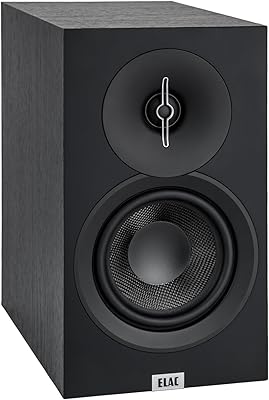
ELAC Debut 3.0 DB53-BK Bookshelf Speakers
82%
91%
Sound Clarity & Detail
88%
Soundstage & Imaging
89%
Midrange Performance
67%
Bass Response
84%
Amplifier Compatibility
More
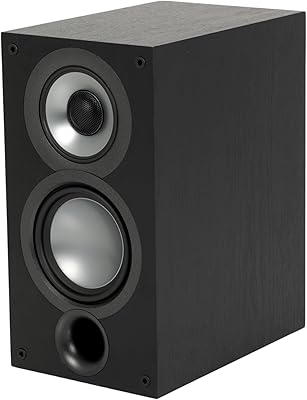
ELAC Uni-Fi 2.0 UB52 Bookshelf Speakers
81%
93%
Soundstage & Imaging
91%
Midrange Clarity
88%
Treble Performance
72%
Bass Response
74%
Amplifier Compatibility
More
ELAC Debut 2.0 S10.2 10″ Powered Subwoofer
86%
92%
Bass Performance
89%
Sound Clarity
85%
Ease of Setup
88%
Build Quality
90%
Size & Portability
More
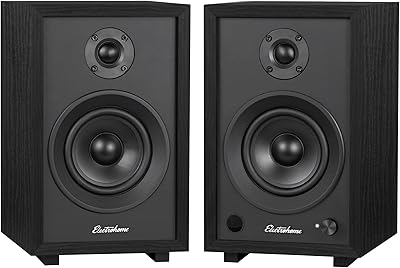
Electrohome Berkeley EB20
81%
83%
Sound Quality
61%
Bass Performance
84%
Build Quality
87%
Bluetooth Connectivity
88%
Value for Money
More
ELAC Uni-Fi 2.0 UC52 Center Speaker
85%
88%
Sound Quality
80%
Bass Performance
90%
Dialogue Clarity
85%
Build Quality
84%
Ease of Setup
More
Electrohome McKinley EB30B
75%
78%
Sound Quality
74%
Build Quality
81%
Value for Money
83%
Connectivity & Inputs
71%
Bluetooth Performance
More
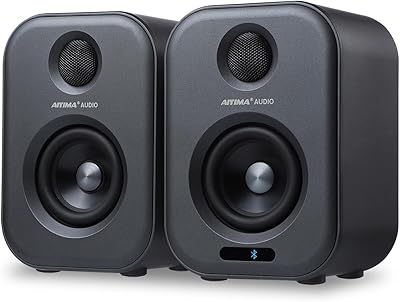
AIYIMA S400 Bookshelf Speakers
74%
72%
Sound Quality
54%
Bass Performance
67%
Treble & High-Frequency Response
88%
Connectivity & Input Options
79%
Bluetooth Performance
More
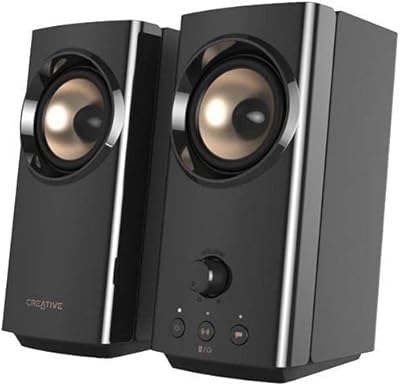
Creative T60
Creative T60
76%
83%
Sound Clarity
51%
Bass Response
91%
Connectivity & Port Variety
84%
Bluetooth Performance
79%
Volume & Power Output
More

FAQ

Yes — the B5.2 are passive speakers, meaning they have no built-in amplification and require an external amplifier or AV receiver to function. This is not an all-in-one system. Budget at least as much for your amplifier as you did for the speakers themselves to get the best results.

It may work, but with some caveats. The B5.2 is rated at 6 ohms, which draws more current than a typical 8-ohm speaker. Many modern AV receivers handle this fine, but older or budget receivers that are not rated for 6-ohm loads can run hot, clip at higher volumes, or simply sound flat and compressed. Check your receiver's spec sheet before assuming compatibility.

For music genres like jazz, classical, folk, and vocal pop, they hold up surprisingly well on their own. But if you listen to electronic music, hip-hop, cinematic soundtracks, or anything with meaningful low-end content below 46Hz, a subwoofer is not optional — it is necessary. The cabinet simply cannot move enough air to reproduce deep bass, and no amount of amplifier power changes that physical reality.

Closer than you could with rear-ported speakers, yes. The front-firing port means wall proximity does not cause the same bass buildup you get with ports firing backward. That said, pulling them even a few inches away from the rear wall still improves imaging noticeably, so give them a little breathing room if your shelving allows it.

The B6.2 uses a larger 6.5-inch woofer, which gives it meaningfully more bass extension and better low-frequency authority in larger rooms. If your room is on the bigger side or you listen to bass-heavy music without a subwoofer, the B6.2 is worth the extra outlay. For small-to-medium rooms, near-field listening, or setups where a sub handles the low end anyway, the B5.2 is the smarter buy.

They are a genuinely strong match for vinyl. The tweeter extension and the woofer's natural damping character complement the warmth and texture of analog playback well. You will need a phono preamp in your chain — either built into your turntable, your receiver, or as a standalone unit — but once that is sorted, the B5.2 rewards quality vinyl with real presence and detail.

The B5.2 performs best on dedicated bookshelf speaker stands positioned at ear level when seated — typically around 24 to 28 inches tall. Sand-fillable metal stands provide extra stability and reduce resonance. Avoid placing them on surfaces that vibrate easily, like thin shelves, as that can blur the imaging and muddy the bass the braced cabinet works hard to clean up.

Like most quality drivers with new surrounds, the B5.2 benefits from some run-in time. Most listeners find the sound loosens up and becomes more open after 20 to 40 hours of normal listening. You do not need to do anything special — just use them at moderate volume across varied musical content and they will settle in on their own.

You can, but it is not where they shine. The B5.2 is better suited as front left and right channels where stereo imaging and tonal accuracy matter most. For surround duties, a smaller, less expensive speaker usually suffices — and using two pairs of B5.2s for a full surround setup adds up quickly in cost. They will work, but it is not the most efficient use of the speaker.

For the cabinet, a slightly damp microfiber cloth is all you need — avoid abrasive cleaners or anything solvent-based, as these can dull or lift the vinyl wrap over time. The fabric grilles can be gently brushed with a soft clothing brush or lightly vacuumed with a brush attachment to remove dust. Let them dry fully before reattaching if they get damp.

Where to Buy