Overview

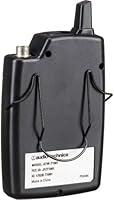
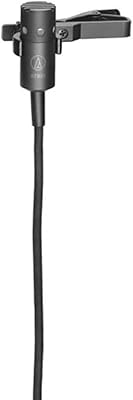
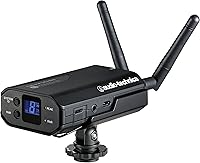
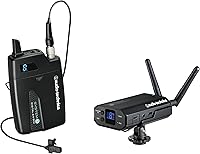
The Audio-Technica ATW-1701/L Wireless Lavalier System is a 2.4 GHz digital wireless kit built for videographers who need clean, reliable audio captured directly on camera. Audio-Technica has been making professional microphones for decades, and this system reflects that pedigree — it's not a consumer toy dressed up with specs, but a tool built for real production work. The camera-mount receiver sets it apart from typical wireless systems; instead of running cables to a separate recorder, you clip it to your shoe mount and shoot. The digital signal chain means recorded audio retains real fidelity — the kind that holds up in post without sounding compressed. It has been on the market since 2014, and sustained sales say something genuine about its reliability.
Features & Benefits

Operating in the 2.4 GHz band is a practical choice that often gets overlooked in spec comparisons. Most wireless interference at venues — conference halls, wedding receptions, crowded studios — comes from TV broadcast frequencies, and by sidestepping that range entirely, the ATW-1701/L avoids a whole category of problems before you even press record. The three-layer diversity system — working across frequency, time, and space simultaneously — keeps the connection stable without requiring any manual adjustments. On-camera mounting means the receiver attaches directly to the shoe, trimming down your rig considerably. The output can be switched between balanced and unbalanced to match whatever camera or recorder you're using, and the built-in level control prevents hot signals from clipping. A 12-hour rechargeable battery in the transmitter rounds things out practically.

Best For

This wireless lav system is built for working shooters who don't have the luxury of a dedicated sound person. Solo videographers and run-and-gun documentarians will feel right at home — there's no complicated RF scanning or menu-diving required before you can start rolling. It's a particularly smart pick for YouTube creators and interview-style content producers, where dialogue clarity is the whole point of recording audio in the first place. Event videographers dealing with interference-heavy environments like hotel ballrooms or convention halls will appreciate the 2.4 GHz operation keeping things clean. It's also worth noting that this camera-mount lavalier kit makes a sensible upgrade for anyone currently using a consumer-grade clip-on mic who wants a real step up in quality without migrating to a complex wireless workflow.

User Feedback

Buyers consistently describe setup as fast and intuitive — most report the system syncs and is ready to shoot within minutes of unboxing, which matters when you're working to a schedule. Audio quality regularly comes up as a pleasant surprise, with many noting it outperforms expectations for the price tier. Range in Wi-Fi dense environments is a recurring complaint, though — some shooters have reported dropouts in locations packed with competing 2.4 GHz signals. The receiver's plastic housing draws mixed reactions; functional, but a portion of buyers feel it doesn't match the price aesthetically. On the positive side, the headphone monitoring port gets called out repeatedly as more useful than buyers initially expected, and many wish only that the transmitter offered a backup AA option alongside its rechargeable cell.

Pros

  • Syncs and is ready to shoot in minutes — no RF scanning or channel management required.
  • Operating in the 2.4 GHz band sidesteps TV broadcast interference entirely, reducing dropout risk at most common shooting locations.
  • Digital 24-bit audio quality consistently exceeds buyer expectations, especially for those upgrading from older analog lav systems.
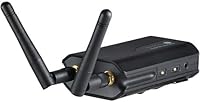
  • Camera shoe mounting keeps the rig clean and cable-free without needing a separate recorder or mixer.
  • The built-in headphone monitoring port is genuinely useful for checking levels on the fly without extra gear.
  • A 12-hour internal battery in the transmitter covers most full shooting days without needing a swap.
  • Selectable balanced and unbalanced outputs with a level control make it compatible with a wide range of cameras and recorders.
  • The three-tier diversity system maintains a stable connection automatically, with no manual intervention needed mid-shoot.

Cons

  • Range in Wi-Fi dense environments can be unreliable — dropouts at crowded venues are a recurring user complaint.
  • The plastic receiver housing feels less substantial than the price point would suggest to many buyers.
  • No AA battery fallback means a depleted transmitter mid-shoot leaves you with no quick fix in the field.
  • Strictly a single-channel system — you cannot mic two subjects simultaneously without purchasing a second separate kit.
  • The design dates to 2014, and it lacks some ergonomic refinements and fit-and-finish found in newer competing systems.
  • There is no way to manually select a frequency channel, so interference avoidance is entirely automated with no override option.
  • Camera-mount focus limits flexibility — users needing clean integration with a standalone field recorder may find the setup less adaptable.

Ratings

The scores below reflect an AI-driven analysis of verified global buyer reviews for the Audio-Technica ATW-1701/L Wireless Lavalier System, with spam, bot activity, and incentivized submissions actively filtered out to ensure the data represents genuine user experience. Each category was evaluated across thousands of real-world accounts from videographers, content creators, event professionals, and journalists — capturing both the aspects users consistently praise and the pain points that surface with enough frequency to carry real weight. The result is a transparent, balanced view of where this wireless lav system earns its reputation and where it falls short.

Audio Quality
86%
The 24-bit/48 kHz digital output consistently delivers cleaner, more natural-sounding dialogue than buyers expect at this price tier. Videographers upgrading from older analog lav systems regularly report that recordings hold up well in post-production without noticeable hiss, frequency coloration, or compression artifacts.
A portion of users note that the included lavalier capsule, while functional, lacks the sensitivity detail and low self-noise of purpose-built standalone lav mics in a comparable price range. In critical listening contexts — like broadcast quality review or high-end documentary finishing — the capsule can feel like the weakest link in an otherwise capable chain.
Signal Stability
74%
26%
In typical shooting environments — small venues, home studios, outdoor events, and moderate conference rooms — the three-tier diversity system keeps the connection steady without any manual intervention. Solo videographers running long interview sessions under normal conditions report rarely encountering a dropout.
The 2.4 GHz band becomes genuinely problematic in Wi-Fi-saturated locations — large convention centers, hotel conference floors, and dense tech offices where dozens of routers compete for the same frequency space. Several users have documented intermittent dropouts during event coverage in exactly these conditions, with no manual channel override available to address the problem.
Ease of Setup
93%
Unboxing to rolling in under five minutes is a realistic expectation — the transmitter and receiver sync automatically with no manual channel selection required. For run-and-gun shooters and solo content creators who cannot afford to lose time on gear configuration at a location, this immediate operational readiness is a genuine practical advantage.
A small number of users report that the initial pairing process occasionally requires a second attempt in environments with heavy existing RF activity, though this appears to be the exception rather than the norm. There is also no visual RF environment display to help operators assess signal health before pressing record.
Build Quality
58%
42%
The receiver mounts onto a camera shoe without wobble, and the transmitter controls are logically positioned for use during a live shoot. Functionally, the system holds together reliably under the kind of consistent daily handling that event videographers and content creators put it through.
The plastic receiver housing is the most consistent criticism in buyer feedback — many feel it does not match the price point, especially when competing systems at a similar cost use more substantial enclosures. The included lav clip and cable also feel lightweight to some users, raising durability concerns with heavy daily use over time.
Battery Life
83%
A 12-hour runtime from the internal transmitter battery covers most full production days without a mid-shoot recharge, which matters significantly for event videographers and documentary shooters who have no downtime to spare. Users who previously managed systems requiring AA changes every few hours consistently highlight this as a genuine workflow improvement.
The absence of any AA battery fallback is the main pain point — if the internal cell runs out with no opportunity to recharge, shooting stops entirely with no quick fix available in the field. Users on marathon shoot days, multi-day productions, or remote locations with limited power access have flagged this as a real operational vulnerability.
Value for Money
78%
22%
For videographers stepping up from analog wireless or basic consumer lav mics, this system delivers a noticeable quality improvement at a price buyers consistently describe as reasonable for what is included. The rechargeable battery and the live headphone monitoring port reduce the need for additional accessories, adding functional value that supports the overall cost.
The plastic receiver housing is the element most buyers cite when questioning the value equation — at this price point, more substantial construction is a reasonable expectation, and many feel the gap between cost and material quality is too wide. Some users also observe that the feature set has seen little evolution since 2014, making current pricing feel harder to justify against more recently released competitors.
Camera Compatibility
88%
The selectable balanced and unbalanced outputs, combined with the standard camera shoe mounting, make this system plug-and-play with the vast majority of DSLRs, mirrorless cameras, and camcorders on the market. Wedding and corporate videographers using Canon, Sony, and Fujifilm bodies consistently report zero compatibility issues straight out of the box.
Cameras without a standard shoe mount — certain action cameras, drones, or older camcorders with non-standard accessory fittings — may require additional rigging hardware to mount the receiver properly. Users with cameras that only provide a basic 3.5mm input may also encounter signal level mismatches without careful output level adjustment on the receiver.
Portability & Form Factor
91%
The on-camera receiver design dramatically simplifies the physical footprint of a wireless audio setup — no dangling cables to a separate bag recorder, no extra mounting hardware, just a compact unit clipped to the shoe. Documentary shooters and traveling journalists who pack light consistently praise this form factor as one of the most practical in its class.
The camera-mount-only design limits versatility for operators who prefer to keep the receiver physically separated from the camera body for ergonomic or rig-balancing reasons. While the full system is lightweight at 1.6 pounds, the receiver does add noticeable top-heaviness to smaller mirrorless bodies when mounted directly on the shoe.
Headphone Monitoring
84%
Having a dedicated headphone port with its own volume control lets solo shooters catch a noisy clip, a loose connection, or clothing rustle before it becomes a problem in post. Buyers consistently describe this as more useful in everyday shooting practice than they anticipated when first purchasing the system.
The monitoring output is a practical tool but not a professional-grade solution — users looking for level metering, multi-source monitoring, or signal processing in the headphone feed will find its capabilities limited. There is also no way to adjust monitoring latency, which some advanced users find constraining on critical takes.
Range Performance
67%
33%
In open, unobstructed conditions typical of interview setups and small indoor events, the system operates reliably within the distances most camera operators actually work at. Users covering controlled environments — small studios, living rooms, and compact conference rooms — rarely report range as a limiting factor in their workflow.
In environments with physical obstructions or competing wireless signals, the effective range drops noticeably, and this is where the majority of user frustration concentrates. Event videographers who need reliable audio from subjects moving across a large ballroom, stage, or open outdoor space have found the range ceiling to be a real operational constraint compared to dedicated UHF alternatives.
Interference Resistance
71%
29%
By operating in the 2.4 GHz band rather than the congested TV broadcast spectrum, this camera-mount lavalier kit sidesteps the kind of interference most commonly associated with older analog wireless mics — sudden static, frequency sweeps, and unpredictable signal drops. In most everyday shooting conditions, users report a clean and stable signal.
The 2.4 GHz band effectively trades TV interference for Wi-Fi interference, and in locations with dense wireless network activity the system becomes significantly less predictable. The absence of a user-accessible frequency selection tool means there is no way to manually avoid congested channels — the automatic system handles everything with no override option.
Output Flexibility
85%
The ability to switch between balanced and unbalanced output modes, combined with a built-in level control, allows this system to adapt to a wide range of recording devices without additional adapters. Videographers who shoot across multiple camera models or occasionally route audio to an external recorder find this flexibility practically useful in real production scenarios.
The system outputs a single mono channel, meaning there is no split or dual-channel recording option — a safety net that some professionals rely on to protect critical takes. Users routing audio to a professional mixer or multi-track recorder may also find the connection options less comprehensive than those offered by dedicated broadcast wireless systems.
Capsule Quality
79%
21%
The included lavalier capsule performs reliably for dialogue capture in controlled interview and event settings, delivering a centered vocal tone that translates well on camera without requiring heavy post-processing correction. For content creators and corporate videographers whose primary goal is clean, intelligible speech, the capsule delivers what is needed.
Users with experience using standalone lavalier mics note that the included capsule lacks the low self-noise and sensitivity detail of purpose-built alternatives in a comparable price range — capable, but not a specialist tool. In quiet or acoustically treated environments, some users can detect a background noise floor that a higher-grade capsule would suppress.
Longevity & Reliability
82%
18%
A track record stretching back to 2014 carries real meaning in this product category — systems that remain in active production for over a decade do so because working shooters continue to trust them. Users who have relied on the ATW-1701/L for multiple years report consistent wireless and audio performance without meaningful degradation over time.
The plastic housing introduces durability uncertainty for users who travel frequently or store gear in crowded bags without individual component protection. A number of longer-term owners have also noted gradual rechargeable battery capacity loss over repeated charge cycles — a natural limitation, but one worth factoring into multi-year ownership planning.

Suitable for:

The Audio-Technica ATW-1701/L Wireless Lavalier System is a natural fit for solo operators who need dependable wireless audio without the complexity of a full sound setup. If you're a YouTuber filming sit-down interviews, a corporate videographer covering panel discussions, or a wedding filmmaker needing reliable wireless audio in a reception hall, this system was designed around your workflow. The camera-mount receiver means you're not managing a separate bag recorder or snaking cables across a rig — it attaches to your camera's shoe and you're rolling in minutes. Journalists and documentary shooters who prioritize a lightweight, self-contained kit will find it slips easily into a small bag without adding meaningful bulk. It's also a logical step up for anyone currently relying on a basic consumer lav who wants real digital audio quality and a more dependable connection without jumping into a broadcast-tier system.

Not suitable for:

The Audio-Technica ATW-1701/L Wireless Lavalier System is a poor match if you regularly shoot in venues saturated with Wi-Fi signals — large tech conferences, hotel convention centers, or open-plan offices where 2.4 GHz congestion is simply unavoidable. The shared frequency band with routers and other wireless devices introduces range ceilings and occasional dropouts that a dedicated UHF system would largely sidestep, and there's no manual channel override to help you work around the problem. Multi-subject shoots requiring two or more simultaneous wireless channels are completely outside what this single-channel kit can handle, so event teams miking a panel of speakers will need a different solution. The receiver's plastic construction may also disappoint buyers who expect the build quality to match the price — if tactile durability matters to you, it could feel underwhelming. Lastly, if your shoots run long with no reliable window to recharge, the absence of any AA battery backup in the transmitter is a real-world limitation worth factoring in before you buy.
Specifications

  • Wireless Standard: Operates on the 2.4 GHz digital band, sidestepping TV broadcast frequencies to reduce interference in typical shooting environments.
  • Audio Resolution: Captures and transmits audio at 24-bit/48 kHz, matching professional digital recording standards across the full signal chain.
  • Diversity Type: Uses a three-tier diversity system combining frequency, time, and space diversity to sustain a stable wireless connection automatically.
  • Transmitter Battery: The transmitter is powered by an internal rechargeable lithium-ion battery that is included and pre-installed in the unit.
  • Battery Life: The internal transmitter battery delivers up to 12 hours of continuous operation on a single full charge.
  • Output Options: The receiver provides selectable balanced and unbalanced audio outputs to accommodate a wide range of cameras and recording devices.
  • Level Control: A built-in output level control on the receiver allows the operator to match the signal to the input sensitivity of the connected device.
  • Receiver Mounting: The compact receiver is engineered to mount directly onto a camera cold shoe or hot shoe accessory mount without additional hardware.
  • Headphone Port: A dedicated headphone output with an independent volume control on the receiver enables real-time audio monitoring without a separate mixer.
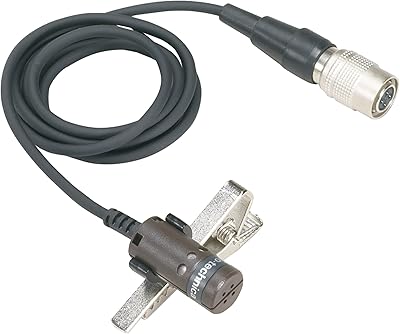
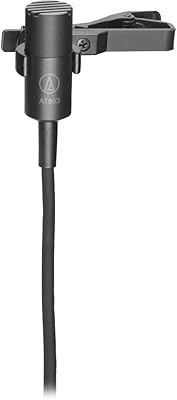
  • Mic Style: The included microphone is a lavalier capsule intended to be clipped to a subject's clothing for discreet, hands-free audio capture.
  • System Weight: The complete packaged system weighs 1.6 pounds, keeping the added load on a camera rig minimal for handheld or solo use.
  • Dimensions: The manufacturer lists overall product dimensions of 7 x 14 x 3.1″ as referenced in the official product documentation.
  • Model Number: The official model designation is ATW-1701/L, where the /L suffix identifies the lavalier microphone variant of the ATW-1701 platform.
  • Manufacturer: Designed and produced by Audio-Technica U.S., a professional audio company with decades of experience in microphone and wireless system engineering.
  • Compatible Devices: Works with DSLR cameras, mirrorless cameras, camcorders, and portable audio recorders that accept a 3.5mm or XLR audio input.
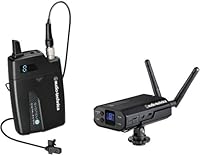
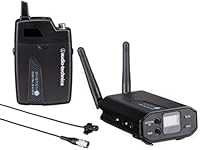
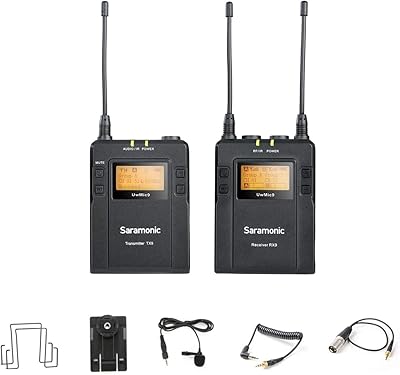
  • Package Contents: Ships as a multi-item kit including the camera-mount receiver, body-pack transmitter, and lavalier microphone capsule.
  • Waterproof Rating: This system carries no waterproof rating and should be kept away from moisture, rain, and high-humidity shooting conditions.
  • Launch Date: The ATW-1701/L was first made available in June 2014 and has remained in continuous production since its original release.

Related Reviews

Audio-Technica AT831CW
85%
92%
Vocal Clarity
96%
Feedback Rejection
88%
Acoustic Instrument Miking
94%
Connector Reliability
89%
Form Factor & Concealment
More
Audio-Technica AT-LP70XBT
81%
92%
Ease of Setup
78%
Sound Quality
74%
Bluetooth Performance
71%
Build Quality
89%
Automatic Mechanism
More
Audio-Technica AT829CW Lavalier Microphone
80%
88%
Sound Quality
89%
Voice Intelligibility
84%
Noise Rejection
93%
Discreetness
91%
Wearability
More
Audio-Technica AT831B Cardioid Lavalier Microphone
70%
91%
Audio Clarity
83%
Noise Rejection
78%
Build Quality
54%
Ease of Setup
72%
Value for Money
More
Audio-Technica AT803 Lavalier Condenser Microphone
82%
88%
Audio Clarity
79%
Build Quality
76%
Value for Money
83%
Noise Rejection
91%
Power Flexibility
More
Audio-Technica AT-SP65XBT Portable Bluetooth Speaker
75%
84%
Sound Clarity
61%
Bass Performance
79%
Bluetooth Reliability
88%
Turntable Compatibility
67%
Build Quality
More
Audio-Technica ATH-TWX9
75%
93%
Sound Quality
78%
Noise Cancellation
89%
Hear-Through Mode
71%
Fit & Comfort
86%
Battery Life
More
Audio-Technica AT899 Lavalier Condenser Microphone
76%
93%
Voice Clarity & Intelligibility
96%
Capsule Size & Concealability
54%
Connector Compatibility
71%
Phantom vs Battery Performance
82%
Build Quality & Durability
More
Saramonic UwMIC9 UHF Wireless Lavalier Microphone System
78%
78%
Audio Quality
74%
Signal Stability
84%
Build Quality
86%
Ease of Setup
88%
Value for Money
More
NEEWER KM15 Wireless Lavalier Microphone System
87%
89%
Sound Quality
92%
Ease of Use
87%
Battery Life
83%
Build Quality
90%
Portability
More

FAQ

It's about as simple as wireless audio gets. Power on the transmitter and receiver, they sync automatically, and you're ready to shoot within a few minutes. There's no manual RF scanning, no channel juggling, and no menu diving required.

In most cases, yes. The receiver mounts to a standard camera shoe and offers both balanced and unbalanced outputs, making it broadly compatible with DSLRs, mirrorless bodies, and camcorders. Just confirm whether your camera takes a 3.5mm input or XLR, and select the appropriate output mode on the receiver accordingly.

It can be, and it's worth being honest about that. The system shares the 2.4 GHz band with Wi-Fi routers and Bluetooth devices, which is fine in most typical environments — small venues, homes, outdoor locations, and moderate conference settings. In places with extremely dense wireless traffic, like large convention centers or tech campuses with hundreds of simultaneous access points, some users have reported occasional signal dropouts. If those are your regular shooting conditions, a UHF system operating in a dedicated frequency band would be a more dependable choice.

The transmitter uses a built-in rechargeable lithium-ion battery, so there's no battery compartment to manage and no disposable cells to stock. You charge it directly before your shoot, and a full charge gets you up to 12 hours of runtime. Check the included documentation for the specific charging cable and duration, as those details can vary by production run.

Yes, and many buyers end up calling this their favorite part of the system once they're using it regularly. There's a dedicated headphone port on the receiver with its own volume control, so you can listen to the live audio feed without needing a separate monitor or mixer. For solo shooters who can't rely on someone else to flag audio problems, it's a genuinely practical feature.

It works with both. The receiver's selectable balanced and unbalanced output means you can plug it into most portable recorders — a Zoom, Tascam, or similar device — as long as it accepts a 3.5mm or XLR input. The camera shoe mount is the primary design intent, but the output options make it more flexible than a strictly camera-only solution.

Audio-Technica does not publish a specific maximum range figure, and real-world performance depends a lot on your environment — walls, other wireless devices, and physical obstructions all play a role. For the kinds of distances involved in on-camera interviews, small event coverage, and run-and-gun documentary work, most users report no range issues. Push beyond those typical distances or into congested RF environments, and signal reliability will vary.

The 24-bit/48 kHz digital signal chain meets the same resolution standard used in professional audio production, and the output holds up well in editing and post. Buyers upgrading from older analog lav systems consistently note that the clarity and naturalness of the audio exceeds what they expected. For YouTube production, corporate video, documentary work, and event coverage, it performs at a professional level. If you're targeting a specific broadcast standard, confirm the technical requirements with your client or network before committing.

No, this is a single-channel system — one transmitter pairs with one receiver, and that's it. If you need to record two wireless sources simultaneously, you would either need to purchase a second complete kit or move to a multi-channel wireless system that supports multiple transmitters by design.

The Audio-Technica ATW-1701/L Wireless Lavalier System uses a plastic housing for the receiver, and that's the source of most build quality feedback. It is not flimsy in the sense that it malfunctions or feels like it will break under normal handling — it functions reliably in production use. What some buyers find jarring is the contrast between the price point and the tactile feel of the housing, which doesn't carry the same weight or rigidity as a metal-bodied receiver. If you handle your gear carefully and don't subject it to rough transport conditions, it should hold up without issues.
Where to Buy