Overview
The Audio-Technica AT2035 occupies a sweet spot for anyone moving past basic USB setups. Unlike entry-level gear that feels disposable, this studio microphone features an all-metal construction that feels substantial and ready for years of use. It represents a serious step up into professional-grade audio, offering a neutral sound profile that captures voices and instruments without adding artificial color. While some microphones try to flatter the user with hyped frequencies, this condenser focuses on providing a natural foundation. You will need to account for its XLR connection, which means investing in a proper audio interface and a quality cable to get any sound into your computer. It handles high-volume sources with surprising grace, making it a reliable workhorse for a variety of recording environments.
Features & Benefits
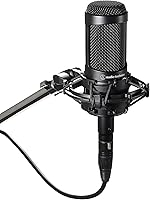
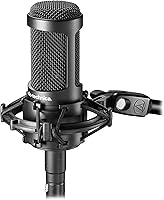
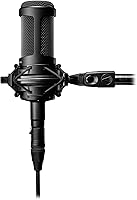
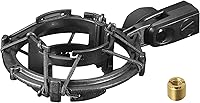
Recording with this condenser reveals the benefits of its large diaphragm, which captures a smooth, detailed signal while keeping self-noise to a minimum. The fixed cardioid pattern does a solid job of rejecting sound from the rear, focusing strictly on what is directly in front of the capsule. If your recording space has a persistent hum from a computer fan or air conditioner, the switchable 80 Hz filter is a lifesaver for cleaning up that low-end mud before it reaches your software. For those tracking loud guitar cabs or aggressive vocals, the 10 dB pad ensures you won't clip your interface. To top it off, the custom shock mount effectively isolates the capsule from desk bumps or floor vibrations that could otherwise ruin a perfect take.
Best For
This cardioid mic is a standout choice for home studio owners who need a single, versatile tool to handle everything from vocals to acoustic instruments. It is particularly effective for acoustic guitars, where its honest reproduction captures the resonance of the wood without sounding brittle. Streamers and podcasters looking to graduate to a professional XLR setup will find the consistency here far superior to most plug-and-play options. Content creators who demand reliable audio every time they hit record will appreciate the predictable performance across different sessions. While it is excellent for capturing detail, keep in mind that its sensitivity means it will pick up ambient room noise if your space isn't treated. It really shines when you want a transparent, lifelike representation of the source.
User Feedback
Long-term users frequently praise this studio microphone for its honest frequency response, often noting that it sounds much more expensive than its price tag suggests. Many buyers compare it to its sibling, the AT2020, and find that this cardioid mic offers significantly better value due to the lower noise floor and included accessories. However, keep in mind that you must provide 48V phantom power from your interface or the unit won't function at all. While the build quality is widely regarded as exceptional for the price, some note that the transparency can be unforgiving if your vocal technique is inconsistent. Despite that, the consensus remains that it is a dependable workhorse that delivers professional results without requiring a massive financial investment or complex setup.
Pros
- Delivers a signature neutral sound profile that captures the honest character of voices and instruments.
- The all-metal body provides a level of durability rarely seen in this price bracket.
- Features a 10 dB pad that allows you to record very loud sources without any digital clipping.
- The switchable high-pass filter is excellent for cutting out low-end rumble from air conditioners or traffic.
- Includes a high-quality custom shock mount that effectively isolates the capsule from desk vibrations.
- Remarkably low self-noise ensures your quietest recording takes remain clean and professional.
- Tight manufacturing tolerances mean the Audio-Technica AT2035 offers consistent performance from one unit to the next.
- Cardioid pickup pattern does a solid job of focusing on the sound source directly in front of the mic.
Cons
- Requires a separate investment in an XLR cable and an audio interface with phantom power.
- High sensitivity makes it prone to picking up background room noise in non-studio environments.
- The lack of an included pop filter means you will likely deal with harsh plosive sounds during vocal sessions.
- Small toggle switches for the filter and pad can be difficult to adjust with larger fingers.
- Transparency can be unforgiving, highlighting flaws in vocal technique or poor room acoustics.
- The weight of the metal chassis requires a sturdy, high-quality boom arm to prevent sagging.
- Elastic bands on the shock mount may lose their tension and require replacement after several years.
- Lacks the specialized sonic warmth that some users prefer for specific broadcast or vintage music styles.
Ratings
Our team used advanced AI to synthesize thousands of verified global reviews for the Audio-Technica AT2035, carefully filtering out suspicious or incentivized feedback to ensure a transparent look at its performance. These scores reflect the unfiltered reality of how this studio microphone holds up in real-world recording environments, highlighting both its professional strengths and common user frustrations.
Audio Transparency
Build Durability
Self-Noise Levels
High SPL Handling
Environmental Isolation
Shock Mount Quality
Vocal Detail
Value for Money
Low-End Management
Consistency
Suitable for:
The Audio-Technica AT2035 is an ideal choice for home studio owners who have outgrown their basic USB equipment and want a more professional XLR signal path. It is particularly well-suited for vocalists and acoustic musicians who value a neutral sound that doesn't artificially hype the high frequencies. Podcasters and streamers who record in relatively quiet environments will also benefit from its crisp detail and low self-noise. Because it includes a custom shock mount, it is a great starting point for creators building a reliable, long-term recording setup. Musicians who frequently track loud instruments like drums or electric guitar cabinets will find the built-in attenuation tools incredibly useful for preventing distortion.
Not suitable for:
This condenser is not a good fit for absolute beginners who want a simple plug-and-play experience, as the Audio-Technica AT2035 requires a separate audio interface, an XLR cable, and 48V phantom power to function. Mobile creators or those recording in noisy, untreated rooms should probably look toward a dynamic microphone instead, as this sensitive capsule will easily pick up distant traffic, computer fans, and echo. It is also not the best choice for those seeking a vintage, warm, or colored sound straight out of the box, as its honesty can sometimes feel clinical. Buyers on an extremely tight budget might find the total cost of the necessary accessories prohibitive compared to all-in-one USB alternatives.
Specifications
- Transducer Type: Fixed-charge back plate, permanently polarized condenser.
- Polar Pattern: Cardioid pattern effectively reduces sound pickup from the sides and rear.
- Frequency Response: The frequency range spans from 20 Hz to 20,000 Hz.
- Sensitivity: Open circuit sensitivity is rated at -33 dB (22.4 mV) re 1V at 1 Pa.
- Impedance: The nominal impedance of the output is 120 ohms.
- Maximum SPL: Handles up to 148 dB SPL, or 158 dB with the 10 dB pad engaged.
- Dynamic Range: Provides a wide dynamic range of 136 dB at 1 kHz at Max SPL.
- Signal-to-Noise Ratio: The signal-to-noise ratio is 70 dB at 1 kHz at 1 Pa.
- Phantom Power: Requires 11-52V DC phantom power to operate.
- Low Frequency Roll-Off: Includes a switchable 80 Hz, 12 dB/octave high-pass filter.
- Output Connector: Features an integral 3-pin XLRM-type connector.
- Weight: The microphone body weighs approximately 14.1 oz.
- Dimensions: Measures 6.69 inches in length with a maximum body diameter of 2.05 inches.
- Housing Material: Constructed with a rugged, all-metal housing for studio durability.
- Included Accessories: Comes with a custom AT8458 shock mount and a soft protective pouch.
Related Reviews
Audio-Technica AT-LP3XBT
Audio-Technica AT-LPW40WN
Audio-Technica AT-LP5X
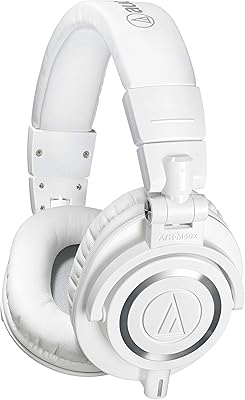
Audio-Technica ATH-M50xWH
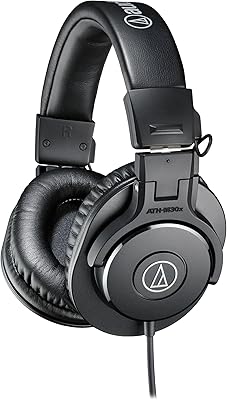
Audio-Technica ATH-M30x
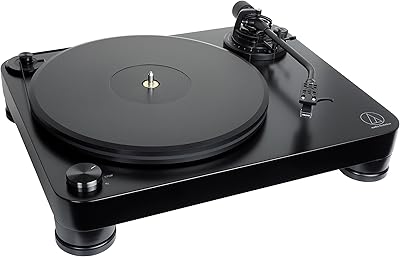
Audio-Technica AT-LP7 Turntable
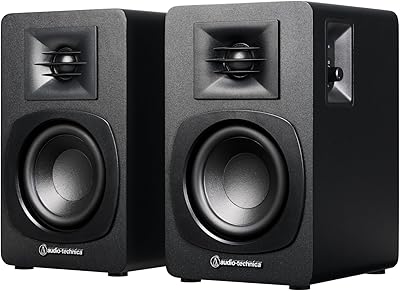
Audio-Technica AT-SP3X
Audio-Technica AT831B Cardioid Lavalier Microphone
Audio-Technica ATH-M20x