Overview

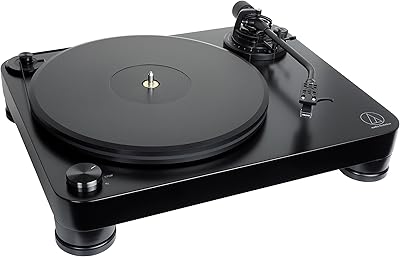
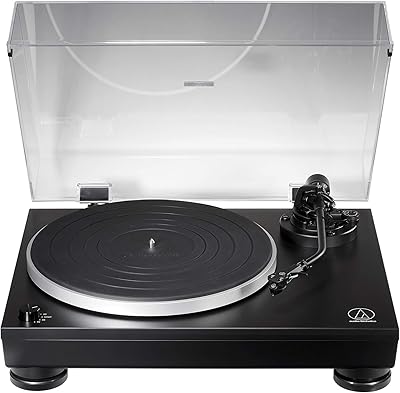
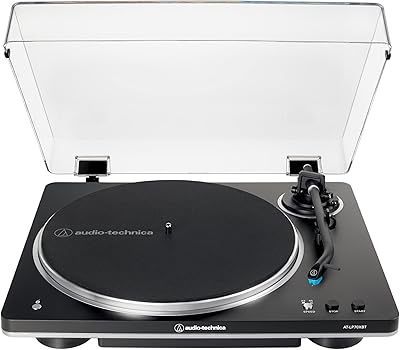
The Audio-Technica AT-LPW40WN sits in an interesting position — it's a fully manual belt-drive turntable built for listeners who've outgrown entry-level decks but aren't ready to chase exotic audiophile gear. The walnut finish immediately sets it apart; at this price point, most competitors offer plastic-heavy builds that feel disposable next to this one. That said, fully manual means exactly what it sounds like — you cue the needle yourself, every single time. No auto-return, no auto-start. Sound purists love this; people who just want to press play and walk away often don't. If you know which camp you're in, this Audio-Technica deck will either feel exactly right or completely wrong.
Features & Benefits

Where this belt-drive turntable earns its keep is in the hardware decisions. The carbon-fiber tonearm is the standout — it tracks grooves with less resonance than a standard aluminum arm, which translates to a cleaner, more detailed sound across the frequency range. The die-cast aluminum platter adds real mass to the equation, keeping rotation steady and resistant to vibration. A speed-sensor motor keeps the platter locked to the correct tempo; pitch drift is a common problem on cheaper decks, and it's audibly absent here. The adjustable anti-skate control protects both your stylus and your records over time — a detail often skipped on tables at lower price points. The included RCA cable and dust cover mean you're not immediately hunting for accessories.

Best For

This Audio-Technica deck is a natural fit for dedicated vinyl collectors who are stepping up from an entry-level table and want noticeably better sound without committing to a full audiophile rig. You'll need an external phono preamp or an amp with a built-in phono stage — this table has no preamp of its own, so that's a non-negotiable requirement. Aesthetically, the walnut finish genuinely looks at home in a living room setup rather than just stacked on a desk. But if you're the type who wants to drop a needle, hit a button, and have the arm return automatically when the side ends, look elsewhere. This is a deck that rewards engagement, not passive listening.

User Feedback

With over 900 ratings and a strong overall score, the pattern in feedback is pretty consistent. Most owners highlight the sound quality and build as punching above expectations — the warmth and detail, particularly on well-pressed records, comes up repeatedly. Setup is described as straightforward for anyone with a bit of hi-fi experience. The main friction point is the manual operation; a meaningful number of buyers admit they didn't fully grasp what that meant until the table arrived. A few mention that while the stock cartridge is genuinely capable, swapping it out unlocks even more of what this deck can do. Long-term reliability appears solid, though some mention belt replacement after extended use — expected for any belt-drive design.

Pros

  • The carbon-fiber tonearm tracks grooves with noticeably less resonance than standard aluminum arms at this price tier.
  • A speed-sensor motor keeps rotation locked and accurate, eliminating the pitch drift common on cheaper belt-drive decks.
  • The walnut finish looks genuinely premium and integrates naturally into living room setups without looking out of place.
  • Die-cast aluminum platter adds real mass, keeping records stable and vibration-free during playback.
  • Adjustable anti-skate control helps protect both your stylus and record grooves over years of regular use.
  • Comes with a functional RCA cable, 45 RPM adapter, and hinged dust cover — no immediate accessory purchases needed.
  • The stock cartridge performs well enough for everyday listening, with clear headroom for an upgrade when you are ready.
  • Build quality across the chassis and tonearm assembly feels cohesive and durable, not cost-cut.
  • Sits at a sweet spot in the Audio-Technica lineup — meaningful performance gains without crossing into esoteric territory.

Cons

  • No built-in phono preamp means additional cost and planning for buyers without an existing phono stage.
  • Fully manual operation with no auto-return will frustrate anyone accustomed to a more hands-off listening experience.
  • The dust cover hinge feels noticeably less substantial than the rest of the otherwise well-built unit.
  • Initial setup requires tonearm balancing and anti-skate calibration that can be confusing without prior experience.
  • Belt wear over extended use is expected, but many owners are caught off guard when performance eventually drifts.
  • The included RCA cable is functional but is one of the first things serious listeners tend to replace.
  • Available only in the walnut finish — buyers who prefer black or silver aesthetics have limited options in this specific model.
  • The platter takes a few seconds to reach full speed, so dropping the needle too quickly affects the first moments of playback.

Ratings

The scores below were generated by AI after systematically analyzing hundreds of verified buyer reviews for the Audio-Technica AT-LPW40WN, filtering out incentivized submissions and outlier feedback to surface what real owners consistently experience. This belt-drive turntable earns strong marks in several key areas, but a few genuine friction points emerged that prospective buyers should weigh carefully. Both the strengths and the shortcomings are reflected honestly here.

Sound Quality
91%
Owners consistently describe the audio reproduction as warm, detailed, and noticeably cleaner than what they experienced on entry-level tables. The carbon-fiber tonearm deserves much of the credit — it tracks grooves with minimal coloration, letting the record speak for itself rather than introducing listener fatigue over long sessions.
A small but vocal group of experienced audiophiles feels the stock cartridge holds the deck back from its full potential. The gap between what this table can do and what it actually delivers out of the box becomes more apparent once you've heard a cartridge upgrade.
Build Quality
88%
The walnut finish and die-cast aluminum platter give this deck a physical presence that feels genuinely premium, not cosmetically dressed-up. Most owners note that every component feels intentional — nothing rattles, flexes, or feels like it was value-engineered to hit a price point.
The dust cover hinge has drawn occasional criticism for feeling slightly less robust than the rest of the unit. It functions fine, but it's one of the few areas where the build quality doesn't quite match the rest of the table's character.
Tonearm Performance
89%
The carbon-fiber tonearm is a genuine highlight. Its low mass and rigidity mean it responds accurately to groove modulations without adding resonance, which translates directly into cleaner stereo separation and tighter bass. Listeners upgrading from plastic-arm budget tables notice the difference almost immediately.
Setup requires careful balancing and anti-skate adjustment, which can frustrate first-time users who aren't familiar with tonearm geometry. There is a learning curve, and getting it wrong initially can lead to mistracking that incorrectly gets blamed on the hardware.
Speed Accuracy & Stability
86%
The speed-sensor motor system keeps the platter rotating at the correct tempo with impressive consistency. Owners who previously dealt with pitch drift on cheaper decks are particularly appreciative — sustained piano notes and vocals hold steady rather than wavering in a way that pulls you out of the music.
A handful of users reported minor speed inconsistencies after extended ownership, typically traced back to belt wear rather than the motor itself. Belt replacement is routine maintenance for any belt-drive design, but it caught some buyers off guard who weren't aware this was part of long-term ownership.
Ease of Setup
74%
26%
For buyers with prior turntable experience, setup is described as logical and well-documented. The included accessories — RCA cable, 45 RPM adapter, rubber mat, and dust cover — mean you have everything you need to get running without an immediate trip to an audio shop.
Complete newcomers to vinyl regularly report confusion during the initial setup, particularly around counterweight balancing and anti-skate calibration. The manual covers the basics but assumes a baseline of familiarity that first-time turntable owners often don't have.
Manual Operation Experience
69%
31%
For the intended audience — serious vinyl listeners who want full control over cueing — the fully manual operation is a positive, not a compromise. There are no auto-mechanisms to introduce noise or mechanical failure points, and the act of manually placing the needle becomes part of the ritual many collectors actively enjoy.
This is the single most common source of buyer disappointment. A meaningful number of owners admit they did not fully understand what fully manual meant until the table arrived. No auto-return and no auto-stop means you have to be present at the end of every record side, which is a real inconvenience for casual background listening.
Platter & Rotation Smoothness
87%
The die-cast aluminum platter with rubber mat provides the kind of mass and vibration damping that cheaper pressed-steel platters simply cannot replicate. Records sit flat and stable, and the rotation feels smooth and consistent from the moment the platter reaches speed.
Some users noted the platter takes a few seconds to reach full speed after powering on, which means dropping the needle too quickly can result in a warped-sounding first few bars. It is a minor operational quirk but worth knowing about.
Anti-Skate Control
82%
18%
The adjustable dynamic anti-skate is one of the more appreciated technical inclusions at this tier. Owners who understand what it does — keeping the stylus centered in the groove to reduce inner groove distortion and stylus wear — rate it highly for protecting both records and the cartridge over time.
The adjustment mechanism is functional but not particularly tactile, making precise dialing-in a bit of a trial-and-error process. Users without a test record or alignment tool may set it incorrectly and not realize the impact until they notice audible distortion on dense passages.
Aesthetic & Design
93%
The walnut finish is genuinely attractive and looks far more expensive than it is. Owners frequently comment that it integrates naturally into living room shelving and hi-fi furniture without looking like audio equipment trying to be furniture. It photographs beautifully and gets compliments from guests.
The walnut finish is available in only one color variant, so buyers who prefer a black or silver aesthetic need to look elsewhere in the lineup. A small number of users also noted that the engineered wood base, while good-looking, is not solid walnut — a distinction that matters to some buyers at this price.
Stock Cartridge Quality
76%
24%
The included cartridge performs capably for day-to-day listening and is a step above the throwaway styli bundled with budget tables. Most casual-to-intermediate listeners will be satisfied with the out-of-box sound and may never feel compelled to upgrade.
Experienced listeners fairly consistently identify the cartridge as the limiting factor in the signal chain. Once the rest of the deck's capabilities are appreciated, the stock cartridge can start to feel like the ceiling. An aftermarket upgrade unlocks noticeably more resolution from the same hardware.
Value for Money
83%
Owners who approached this as a step-up from an entry-level deck almost universally feel the investment is justified. The combination of build quality, tonearm materials, and speed accuracy puts it ahead of several competitors in the same tier, and the walnut finish means you're not paying a premium purely for looks.
Buyers who discover they need an external phono preamp after purchase often feel the total cost of ownership was undersold. The table itself represents strong value, but the additional component cost for those without a phono stage can make the overall setup more expensive than anticipated.
Long-Term Durability
79%
21%
The majority of longer-term owners report no significant mechanical issues over years of regular use. The core components — tonearm, platter, and motor — are well-regarded for holding up without degradation in performance, which is reassuring for an item buyers expect to use for a decade or more.
Belt wear is the most commonly cited long-term maintenance item. It is a known characteristic of belt-drive designs in general and not a defect, but owners who weren't aware of this upfront sometimes interpret it as a reliability issue when performance starts to drift after extended use.
Phono Preamp Compatibility
66%
34%
The standard RCA output pairs well with a wide range of external phono preamps and integrated amplifiers that include a phono stage. Owners who already have a proper phono stage in their system report clean, noise-free signal transfer with no hum or grounding issues in most cases.
There is no built-in phono preamp, which is a hard stop for buyers who planned to plug directly into a powered speaker or a line-level input. This limitation is not prominently communicated in all purchase contexts, leading to frustration when the table arrives and produces no usable output through an existing setup.
Accessories & Out-of-Box Completeness
81%
19%
The included dual RCA cable is of decent quality and functional for immediate use. The 45 RPM adapter and hinged dust cover are both practical additions that many competitors bundle poorly or omit entirely. Most owners feel they can get running on day one without supplementary purchases.
The RCA cable, while adequate, is not something most serious listeners will keep long-term. It gets the job done initially, but an upgrade cable is a common early purchase. The dust cover, while included, also draws minor criticism for its hinge feel relative to the rest of the product.

Suitable for:

The Audio-Technica AT-LPW40WN is built for vinyl listeners who have moved past the beginner phase and want a table that rewards attention and intention. If you already own a phono preamp or an integrated amplifier with a phono stage, this deck slots naturally into a mid-tier hi-fi system without requiring you to rebuild everything around it. It suits collectors who treat record listening as an active hobby rather than ambient background noise — people who enjoy the ritual of placing the needle, flipping a side, and genuinely engaging with the music. The walnut finish makes it a natural fit for living rooms and dedicated listening spaces where aesthetics matter alongside audio performance. Those looking to upgrade from an entry-level plastic-platter table will hear an immediate and meaningful difference, particularly in soundstage clarity and tonal accuracy.
Not suitable for:

The Audio-Technica AT-LPW40WN is a poor match for anyone who wants a set-it-and-forget-it listening experience. If you typically put a record on and leave the room, the lack of auto-return means the stylus will sit in the run-out groove indefinitely, which is not great for your cartridge or your peace of mind. Complete beginners to vinyl may find the setup process — counterweight balancing, anti-skate adjustment, tonearm alignment — more involved than expected, and getting it wrong can lead to mistracking that unfairly reflects on the hardware. Buyers without an existing phono stage will need to factor in the cost of an external preamp, which can meaningfully change the total investment picture. Finally, anyone prioritizing wireless connectivity, built-in Bluetooth, or USB recording output should look elsewhere entirely — this deck is focused purely on analog playback.

Specifications

  • Drive Type: Belt-drive design isolates the platter from direct motor vibration, contributing to a quieter noise floor during playback.
  • Operation: Fully manual — the user is responsible for cueing the tonearm at the start and lifting it at the end of each record side; there is no auto-return or auto-stop mechanism.
  • Playback Speeds: Supports both 33-1/3 and 45 RPM, covering standard LPs and 7-inch singles respectively.
  • Motor System: Speed-sensor regulated motor actively monitors and corrects platter rotation to maintain accurate, consistent speed throughout playback.
  • Tonearm Material: Carbon-fiber construction provides a lightweight yet rigid signal path, reducing resonance compared to conventional aluminum arms.
  • Platter: Die-cast aluminum platter paired with a rubber mat, delivering added mass and vibration damping for stable, wobble-free record rotation.
  • Anti-Skate: Adjustable dynamic anti-skate control counteracts the inward force on the stylus, helping preserve groove integrity and reduce inner-groove distortion.
  • Output: Dual RCA stereo output; no built-in phono preamp, requiring an external phono stage or an amplifier with a dedicated phono input.
  • Dimensions: Unit measures 19 x 16 x 8 inches, providing a standard footprint suitable for most dedicated turntable shelves and hi-fi furniture.
  • Weight: Unit weighs 10.4 pounds, reflecting the solid aluminum platter and engineered wood chassis construction.
  • Finish & Material: Walnut-finish engineered wood base offers a natural wood aesthetic without the cost or variability of solid hardwood.
  • In the Box: Package includes the turntable, a dual RCA male-to-male stereo cable, a 45 RPM adapter, a rubber platter mat, and a removable hinged dust cover.
  • Compatibility: Connects to any device or system with a phono-level RCA input, including phono preamps, integrated amplifiers with phono stages, and compatible powered speaker systems.
  • User Rating: Holds a 4.6 out of 5 star rating based on over 919 verified user ratings as of the time of this review.
  • Market Rank: Ranked #258 in the Audio and Video Turntables category on Amazon, reflecting strong and sustained sales performance.
  • Availability: Originally released in January 2019 and remains an active, non-discontinued product in the Audio-Technica lineup.
  • Manufacturer: Designed and produced by Audio-Technica, a Japanese audio equipment manufacturer with decades of experience in phono cartridges and turntable hardware.

Related Reviews
Audio-Technica AT-LP3XBT

82%
88%
Sound Quality (Wired)
74%
Bluetooth Audio Quality
93%
Ease of Setup
91%
Fully Automatic Operation
67%
Build Quality
More
Audio-Technica ATH-M50xWH
87%
94%
Sound Quality
89%
Build Quality
82%
Comfort for Extended Use
91%
Noise Isolation
88%
Durability of Detachable Cable
More
Audio-Technica AT-LP7 Turntable
86%
94%
Sound Quality
92%
Build Quality
80%
Ease of Setup
88%
Manual Control Experience
90%
Tracking Accuracy
More
Audio-Technica AT-LP5X
84%
93%
Build Quality
91%
Sound Quality
94%
Motor & Speed Stability
88%
Cartridge & Stylus
89%
Tonearm Performance
More
Audio-Technica ATH-M30x
78%
83%
Sound Accuracy
88%
Mid-Range Clarity
61%
Bass Response
72%
Comfort & Fit
74%
Build Quality
More
Audio-Technica ATH-M60x
87%
93%
Audio Clarity
94%
Build Durability
88%
Portability
67%
Initial Comfort
79%
Passive Noise Isolation
More
Audio-Technica AT-PEQ30 Phono Equalizer
86%
91%
Sound Performance
88%
Build Quality
80%
Ease of Use
94%
Noise Reduction
87%
Input Versatility
More
Audio-Technica AT-SP3X
78%
83%
Sound Quality
88%
Bluetooth Performance
86%
Multipoint Pairing
84%
Wired Connectivity
91%
Ease of Setup
More
Audio-Technica AT-LP120XUSB-BK
82%
91%
Build Quality
93%
Speed Accuracy & Stability
84%
Sound Quality
88%
Ease of Setup
76%
Phono Preamp Quality
More
Audio-Technica AT875R
83%
93%
Sound Rejection
94%
Form Factor & Compactness
88%
Vocal Clarity
82%
Handling Noise Reduction
86%
Build Quality & Durability
More

FAQ

No, the Audio-Technica AT-LPW40WN does not include a built-in phono preamp. You will need either an external phono stage or an amplifier that has a dedicated phono input. Plugging the RCA output directly into a standard line-level input — like those on most powered speakers or receivers without a phono stage — will produce very low volume and thin sound.

It means you physically place the tonearm needle onto the record to start playback and lift it off when the side ends. There is no auto-return or auto-stop — if you forget to lift the arm, the stylus will sit in the run-out groove and keep spinning. For engaged listening sessions this is completely natural, but it is a real consideration if you like to put on a record and walk away.

Yes, belt replacement on this deck is a straightforward DIY job that most owners can handle without special tools. The belt is a standard turntable drive belt and is inexpensive to replace. Under regular use, most owners find the belt lasts several years before performance noticeably drifts, but this varies depending on how frequently the table is used.

The included cartridge is genuinely capable for everyday listening and well above what you would find bundled with an entry-level table. Most buyers will be satisfied with it out of the box. That said, experienced listeners often find that a cartridge upgrade — even a modest one — unlocks noticeably more detail and resolution from the deck, since the hardware itself can handle more than the stock cartridge delivers.

Setup is manageable if you have some prior experience with turntables. You will need to balance the tonearm counterweight, set the tracking force, and adjust the anti-skate control. The included documentation covers the process, but if this is your first turntable, it is worth watching a few setup guides online before you start — doing it correctly makes a real difference to both sound quality and long-term stylus and record health.

It depends on your speakers. If your powered speakers have a dedicated phono input, you can connect directly. If they only have line-level inputs — which is the case for most popular powered desktop speakers — you will need an external phono preamp between the turntable and the speakers. A quality standalone phono preamp is a relatively modest additional expense and makes a significant difference.

Most owners say yes — the finish holds up well in person and is one of the more frequently praised aspects of the deck. It integrates naturally into wood furniture and living room shelving rather than looking like audio equipment that does not belong. Keep in mind the base is engineered wood with a walnut veneer finish, not solid walnut, which is standard for this price tier.

Absolutely, and it is one of the better long-term investments you can make with this deck. The tonearm is compatible with a wide range of standard half-inch mount cartridges. Many owners stick with the stock cartridge for a while and then upgrade once they want to extract more performance — the hardware is capable of handling it.

It can be, but with some caveats. The fully manual operation and setup process assume a baseline of familiarity that total beginners often lack. If you are willing to invest a bit of time learning proper turntable setup and handling, this belt-drive turntable rewards that effort with genuinely good sound. If you want something plug-and-play with minimal setup, an entry-level auto-return table might be a better starting point.

No, this Audio-Technica deck supports only 33-1/3 and 45 RPM speeds. Playing 78 RPM shellac records requires both the correct speed and a specialized 78 RPM stylus, neither of which this table provides. If your collection includes shellac 78s, you will need a different turntable designed to support that format.