Overview

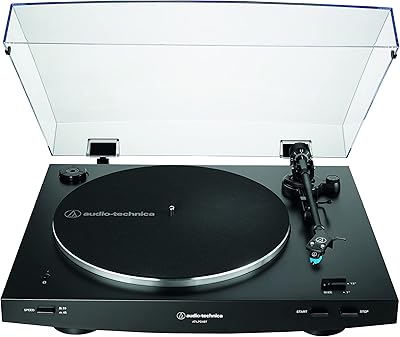
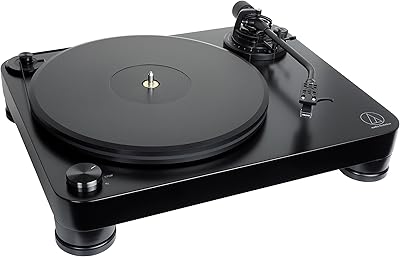
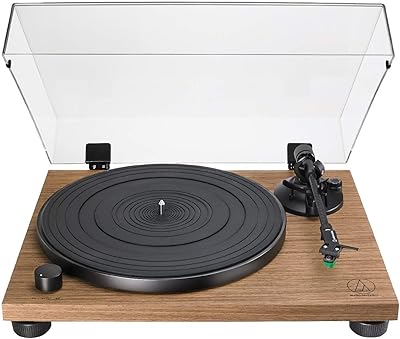
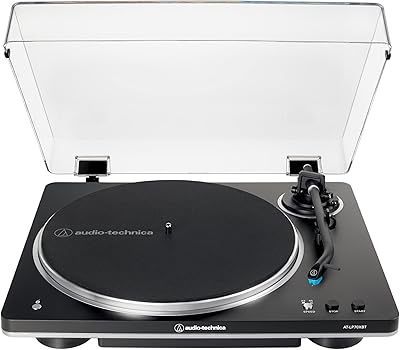
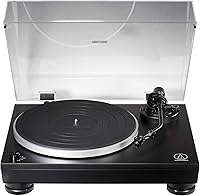
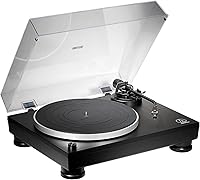
The Audio-Technica AT-LP5X is a serious direct-drive turntable built for people who treat vinyl as more than a passing hobby. Audio-Technica has been engineering tonearms and cartridges since the 1960s, and that depth of experience shows here — particularly in the J-shaped tonearm, which mirrors the company's vintage designs and minimizes tracking error with quiet authority. This deck is fully manual, which is a deliberate choice, not an oversight. If you want auto-return, look elsewhere. But if you value the ritual of dropping the needle yourself and want a table that rewards attention, this is built exactly for you. It sits firmly at the premium end of the consumer market.
Features & Benefits

The direct-drive motor keeps platter speed locked and consistent — something belt-drive tables struggle with over time as the belt stretches. Three speed settings (33-1/3, 45, and 78 RPM) mean you can play everything from modern LPs to vintage shellac 78s without adapters. The bundled AT-VM95E cartridge is a genuine highlight: a moving magnet design with a replaceable stylus that tracks cleanly across a wide range of pressings. The lightweight AT-HS6 headshell makes cartridge swapping straightforward for anyone who wants to experiment. A built-in phono preamp and USB output round things out, letting you plug straight into powered speakers or record directly to a computer without extra hardware.

Best For

This turntable is an especially strong fit for collectors who own records across multiple formats — the 78 RPM support alone sets it apart from most tables in this range. If you have been running a budget belt-drive deck and noticing speed drift or a thin soundstage, this direct-drive deck is a logical step up. Digitizing vinyl is straightforward thanks to the USB output, no additional preamp required. It also suits listeners who enjoy fine-tuning their rig — swapping headshells, trying different stylus profiles, adjusting tracking force. If you want to press a button and have the arm lift automatically at the end of a side, though, this is not your table.

User Feedback

Owners are largely enthusiastic, with the low motor rumble and solid aluminum construction drawing frequent praise. Most are genuinely surprised by the included cartridge — buyers often expect a throwaway stylus at this tier and instead find something that holds up to real critical listening. The recurring criticism is the manual-only operation. Newcomers to vinyl, and even experienced listeners switching from automatic decks, mention needing time to adjust to the absence of auto-return. A handful of reviewers feel that arm-lift automation would be a fair inclusion given the price. Overall, though, the ownership picture is strongly positive, and the high average rating reflects a user base that feels well-served by what they bought.

Pros

  • Direct-drive motor holds platter speed with impressive consistency — a clear upgrade over belt-drive tables that drift over time.
  • The bundled AT-VM95E cartridge is a genuine performer, not a throwaway starter stylus bundled to hit a price point.
  • Replaceable stylus design opens a meaningful upgrade path without buying an entirely new cartridge.
  • Three-speed support including 78 RPM is rare at this level and invaluable for collectors with diverse record formats.
  • Built-in phono preamp and USB output make it easy to connect powered speakers or digitize records with no extra hardware.
  • Aluminum platter and 20-pound chassis absorb vibration and feel built to last through years of regular use.
  • The standard half-inch headshell mount makes cartridge upgrades and experiments accessible to any motivated listener.
  • Clean, understated matte black aesthetic fits naturally into a wide range of listening room setups.
  • Overall ownership satisfaction is exceptionally high, with buyers consistently noting it outperforms expectations for the price tier.

Cons

  • No auto-return means the stylus sits unattended in the run-out groove at the end of every record side.
  • Initial tonearm setup — counterweight calibration and anti-skate adjustment — can be intimidating without prior experience or a stylus gauge.
  • Dust cover hinges feel noticeably lighter than the rest of the chassis and have raised durability concerns among some owners.
  • Playing 78 RPM records properly requires purchasing a separate 78-specific stylus, an additional cost not reflected in the box contents.
  • The bundled RCA cable is functional but basic — most serious users replace it early in ownership.
  • The onboard phono preamp, while convenient, is not competitive with a dedicated external stage and adds nothing for buyers who already own one.
  • At this price, the absence of any auto-return or semi-automatic function stands out as a missing convenience feature.
  • USB audio capture quality is adequate for casual digitizing but falls short of what a dedicated external audio interface can deliver.

Ratings

The Audio-Technica AT-LP5X earned its reputation through consistent performance across a wide range of listening setups, and the scores below reflect that real-world track record. Our AI has analyzed thousands of verified global purchases, filtering out incentivized reviews and bot activity, to surface what genuine owners actually experience day to day. Both the standout strengths and the honest frustrations are represented here — nothing is glossed over.

Build Quality
93%
Owners repeatedly call out the aluminum platter and chassis as feeling genuinely substantial — not plasticky like many competitors at lower price points. The 20-pound heft translates to real-world stability on shelves, furniture, and speaker cabinets where vibration can muddy the sound.
A small number of buyers noted that while the main body feels premium, some of the lighter plastic components — like the dust cover hinges — feel slightly mismatched with the overall build standard. Nothing structural, but noticeable at this tier.
Sound Quality
91%
The low-noise direct-drive motor keeps background rumble impressively quiet, which lets the cartridge do its job without interference. Listeners upgrading from budget belt-drive tables frequently describe a noticeably wider soundstage and more precise channel separation.
Audiophiles with very resolving speaker systems occasionally feel the bundled stylus, while genuinely good, leaves a little detail on the table compared to an upgraded tip in the VM95 line. The gap is narrow, but it exists for critical listeners.
Motor & Speed Stability
94%
Direct-drive means the platter is coupled directly to the motor, and buyers who have lived with belt-drive speed drift find the consistency here a real relief. Orchestral recordings and piano-heavy albums — where pitch wavering is most obvious — play back with noticeably tighter tuning.
A very small subset of users reported minor speed fluctuation during initial break-in, though most attributed this to the unit settling in rather than a persistent fault. Long-term owners rarely flag this as an ongoing concern.
Cartridge & Stylus
88%
The AT-VM95E is one of the more generous bundled cartridges in this segment — it tracks cleanly, handles inner-groove distortion well, and the replaceable stylus means you can upgrade the tip without buying an entirely new cartridge. That upgrade path is a real long-term value.
Users who have compared the VM95E directly to the higher-tier VM95EX or VM95ML stylus profiles notice a meaningful step up in resolution with those options. The bundled stylus is a strong starting point, but it does invite tinkering.
Tonearm Performance
89%
The J-shaped tonearm tracks consistently across a wide range of record pressings, from standard 140g modern vinyl to older, thinner pressings that can challenge inferior arms. The anti-skate adjustment is accessible and responsive, which experienced users appreciate.
First-time turntable owners sometimes find tonearm setup — particularly setting tracking force correctly with the counterweight — more intimidating than expected. The process is standard for this class of table, but there is no beginner hand-holding in the documentation.
Ease of Use
71%
29%
Once set up, day-to-day operation is straightforward — place the record, lift the cueing lever, drop the needle. The built-in preamp means no separate box is required for most home setups, which keeps the experience clean.
The fully manual operation is a genuine adjustment for anyone coming from an automatic or semi-automatic table. There is no auto-return, so leaving a record unattended at the end of a side means the stylus sits in the run-out groove until you notice — which is not ideal for long listening sessions.
Setup & Installation
74%
26%
Most buyers describe the out-of-box setup as manageable within 30 to 45 minutes, and the included hardware covers the basics. The preamp bypass option is clearly labeled, which helps users who already own a dedicated phono stage.
Cartridge alignment and counterweight calibration require patience and ideally a stylus force gauge — neither of which is included. Buyers who expect a plug-and-play experience may find the initial setup more involved than anticipated.
USB & Digitizing Performance
78%
22%
The USB output works reliably for capturing records to a computer, and the built-in preamp handles the signal level appropriately. Users digitizing older collections — particularly shellac 78s using the third speed setting — find this a practical all-in-one solution.
The USB audio resolution is functional rather than exceptional, and dedicated audiophile digitizing rigs will outperform it. Users expecting archival-grade captures may want an external audio interface, but for everyday digitizing the onboard solution is more than adequate.
78 RPM Compatibility
86%
Three-speed support including 78 RPM is genuinely uncommon in this segment, and collectors who own shellac records or vintage pressings consider it a decisive feature. Being able to run a single table for an entire collection — across every era of recorded music — has real practical value.
Playing 78 RPM records properly also requires a 78-specific stylus, which is sold separately. The deck supports the speed, but buyers sometimes discover mid-purchase that the cartridge swap is an additional cost they had not planned for.
Phono Preamp Quality
77%
23%
The onboard phono preamp performs cleanly for most home listening setups and removes the need for a separate preamp box. Buyers plugging into powered bookshelf speakers or entry-level receivers find it more than adequate for the task.
Listeners with higher-end integrated amplifiers or dedicated phono stages almost universally bypass the internal preamp, noting that external stages add clarity and dynamics. The built-in stage is a convenience feature, not a reference-grade component.
Headshell & Cartridge Upgradability
91%
The standard half-inch mount and the lightweight AT-HS6 headshell make cartridge swapping accessible to anyone willing to spend 20 minutes with a small screwdriver. This table genuinely rewards experimentation, and the upgrade path within the AT-VM95 stylus family alone offers significant sonic range.
The headshell connector pins, while standard, can feel slightly fiddly during swaps — particularly for users with less dexterity. Nothing unusual for the format, but worth noting for anyone who plans to swap frequently.
Value for Money
82%
18%
Factoring in the direct-drive motor, a genuine moving magnet cartridge with upgrade potential, three-speed support, and USB output, this deck packs a strong feature set for its market position. Buyers who have priced comparable tables from other brands frequently note that the included cartridge alone offsets a meaningful portion of the cost difference.
At this price point, the absence of auto-return is the most cited value complaint — it is a feature found on cheaper automatic tables, and some buyers feel it should be standard here. For purely functional buyers, that trade-off can sting.
Aesthetics & Design
84%
The all-black matte finish and aluminum surfaces give this turntable a clean, professional look that sits well in a range of listening room setups — from modern minimalist shelves to classic hi-fi rack systems. It does not call excessive attention to itself, which many owners consider a virtue.
Design is entirely subjective, and a handful of buyers have noted the overall aesthetic feels more utilitarian than premium compared to some Japanese competitors at a similar price. No wood accents, no vintage styling — just functional and precise.
Dust Cover & Accessories
72%
28%
The included dust cover fits securely and provides adequate protection during storage. The bundled RCA cable, USB cable, and 45 RPM adapter mean you have what you need to get started without an immediate accessory run.
The dust cover hinges are a recurring minor complaint — they feel noticeably lighter than the rest of the unit and have drawn some concern about long-term durability. The bundled RCA cable is functional but not high-grade, and most serious users replace it early.

Suitable for:

The Audio-Technica AT-LP5X is built for people who have moved past casual vinyl curiosity and want a table that can grow with their collection and their ear. If you own records across multiple formats — standard LPs, 45s, and older shellac 78s — the three-speed support means one deck handles everything without compromise. Audiophiles upgrading from a budget belt-drive table will notice the difference immediately: direct-drive motors hold speed far more consistently, and that translates directly to tighter pitch and a cleaner soundstage on music that demands it. It is also an excellent choice for anyone who wants to digitize their collection at home, since the built-in preamp and USB output eliminate the need for a separate audio interface. Hands-on listeners who enjoy fine-tuning their setup — swapping stylus profiles within the AT-VM95 family, experimenting with different headshells, adjusting tracking force — will find this deck genuinely rewarding to live with over the long term.
Not suitable for:

If you are new to vinyl and expecting a simple plug-and-play experience, this direct-drive deck will likely frustrate you before it delights you. The fully manual operation means there is no auto-return — when a record ends, the stylus sits in the run-out groove until you lift it, which is a real inconvenience during casual background listening or if you tend to fall asleep to records. Initial setup requires calibrating the counterweight and anti-skate, and while neither is difficult for an experienced user, a first-timer without a stylus force gauge may struggle to get it right. Budget-conscious buyers should also factor in that playing 78 RPM records properly requires a separate 78-specific stylus, adding to the overall cost. And if you already own a high-quality phono preamp or integrated amplifier with a dedicated phono stage, the onboard preamp adds little value — it is a convenience feature, not a reference-grade component, and you will likely bypass it anyway.

Specifications

  • Drive Type: Direct-drive design couples the platter directly to the DC servo motor, eliminating belt-related speed drift over time.
  • Motor: Low-noise DC servo motor is engineered to minimize rumble, keeping background interference out of the audio signal.
  • Speeds: Supports three playback speeds — 33-1/3, 45, and 78 RPM — covering modern vinyl, 7-inch singles, and vintage shellac records.
  • Cartridge: Ships with the AT-VM95E dual moving magnet stereo cartridge, a mid-tier performer in Audio-Technica's VM95 lineup.
  • Stylus: Elliptical stylus is user-replaceable; the entire VM95 stylus family is compatible, enabling straightforward sonic upgrades.
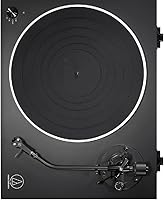
  • Tonearm: J-shaped tonearm modeled after Audio-Technica's original 1960s and 1970s designs, engineered to reduce tracking error across the record surface.
  • Headshell: Lightweight AT-HS6 headshell uses a standard half-inch mount, making it compatible with a wide range of third-party cartridges.
  • Operation: Fully manual operation with no auto-return; the listener manually cues and lifts the tonearm at the start and end of each side.
  • Phono Preamp: Built-in switchable phono preamp allows direct connection to amplifiers or powered speakers without a separate preamp unit.
  • USB Output: USB output enables direct digital capture of vinyl to a computer, bypassing the need for a standalone external audio interface.
  • Analog Output: Dual RCA output carries the analog stereo signal to an amplifier, receiver, or powered speakers via the included cable.
  • Platter Material: Aluminum die-cast platter provides a stable, resonance-dampening surface for record playback.
  • Chassis Material: Main chassis is constructed from aluminum and metal, contributing to the unit's vibration resistance and overall rigidity.
  • Dimensions: Unit measures 21 x 18 x 10 inches, requiring a stable, level surface of at least that footprint in a listening setup.
  • Weight: Weighs 20.1 pounds, providing the mass needed to resist vibration feedback from nearby speakers or room resonance.
  • Color: Available in matte black, giving the deck a clean, neutral appearance that suits a wide range of room aesthetics.
  • In the Box: Package includes a dual RCA-to-RCA stereo cable, USB cable, 45 RPM adapter, dust cover with mounting hardware, and the AT-HS6 headshell with AT-VM95E cartridge pre-installed.
  • Compatibility: Works with any amplifier or receiver featuring a phono input, or with any powered speaker when using the built-in preamp in the active position.

Related Reviews

Audio-Technica AT-LP3XBT
82%
88%
Sound Quality (Wired)
74%
Bluetooth Audio Quality
93%
Ease of Setup
91%
Fully Automatic Operation
67%
Build Quality
More
Audio-Technica AT-LPW40WN
82%
91%
Sound Quality
88%
Build Quality
89%
Tonearm Performance
86%
Speed Accuracy & Stability
74%
Ease of Setup
More
Audio-Technica AT-LP7 Turntable
86%
94%
Sound Quality
92%
Build Quality
80%
Ease of Setup
88%
Manual Control Experience
90%
Tracking Accuracy
More
Audio-Technica ATH-M50xWH
87%
94%
Sound Quality
89%
Build Quality
82%
Comfort for Extended Use
91%
Noise Isolation
88%
Durability of Detachable Cable
More
Audio-Technica ATH-M30x
78%
83%
Sound Accuracy
88%
Mid-Range Clarity
61%
Bass Response
72%
Comfort & Fit
74%
Build Quality
More
Audio-Technica AT831b Lavalier Microphone
86%
94%
Sound Quality
91%
Build Quality
89%
Noise Cancellation
85%
Ease of Use
93%
Connectivity (XLR Performance)
More
Audio-Technica AT875R
83%
93%
Sound Rejection
94%
Form Factor & Compactness
88%
Vocal Clarity
82%
Handling Noise Reduction
86%
Build Quality & Durability
More
Audio-Technica AT-PEQ30 Phono Equalizer
86%
91%
Sound Performance
88%
Build Quality
80%
Ease of Use
94%
Noise Reduction
87%
Input Versatility
More
Audio-Technica AT829CW Lavalier Microphone
88%
94%
Sound Quality
88%
Build Quality
91%
Ease of Use
89%
Portability
93%
Connectivity Stability
More
Audio-Technica AT-SP3X
78%
83%
Sound Quality
88%
Bluetooth Performance
86%
Multipoint Pairing
84%
Wired Connectivity
91%
Ease of Setup
More

FAQ

No, it does not. The Audio-Technica AT-LP5X is fully manual, which means you lift and place the tonearm yourself at the start and end of every side. There is no auto-return or auto-stop feature. For listeners who prefer to set a record playing and walk away, this is worth factoring in before buying.
Not necessarily. This deck has a built-in switchable phono preamp, so you can plug it directly into powered speakers or an amplifier without a phono input. If you already own a dedicated external phono stage, you can bypass the internal one using the selector switch on the underside of the unit.

The deck supports 78 RPM speed, yes — but to play 78s properly you also need a 78-specific stylus, since standard elliptical styli are shaped differently than the wider-groove profile that shellac 78s require. The included stylus is not designed for 78s, so budget for a compatible 78 stylus if that is part of your collection.

The bundled AT-VM95E is a genuinely capable cartridge — it is not a throwaway entry-level unit included just to fill a box. Most buyers are happy running it for a year or more before feeling the need to upgrade. When you do want more resolution, swapping to a higher-tier stylus in the VM95 family is straightforward and does not require replacing the cartridge body.

It is manageable, but it is not plug-and-play. You will need to set the counterweight to dial in the correct tracking force and adjust the anti-skate setting. Audio-Technica provides instructions, but a stylus force gauge — sold separately — makes the process significantly easier and more accurate. Budget 30 to 60 minutes for first-time setup.

Yes, the USB output is built exactly for that purpose. Connect the deck to a computer via the included USB cable, open your preferred audio recording software, and you can capture records digitally without any additional hardware. The audio resolution is solid for general archiving, though dedicated external audio interfaces will yield higher fidelity for critical transfers.

Almost certainly, yes. The dual RCA outputs connect to any amplifier or receiver with a standard line-level or phono input. If your amp lacks a phono input, simply activate the built-in preamp and use the line-level input instead. The only common incompatibility would be speakers or amplifiers with no RCA inputs at all, which is fairly unusual.

The entire AT-VM95 stylus family is cross-compatible with the VM95E cartridge body that ships with the deck. That means you can drop in a conical, elliptical, hyperelliptical, microlinear, or Shibata-tipped stylus simply by pulling the old one off and snapping the new one on — no tools required. It is one of the more accessible upgrade paths in this category.

The dust cover does its job of protecting the platter and cartridge from dust between listening sessions, and it fits securely. A number of owners have noted that the hinges feel lighter and less substantial than the rest of the deck, so handling it with some care is sensible. It is a practical inclusion rather than a premium one.

The core difference is speed stability. Belt-drive tables can drift in pitch as the belt ages and stretches, which is most noticeable on sustained piano notes or orchestral recordings. This direct-drive deck holds its speed consistently over time without that degradation. Belt-drive designs can sometimes offer slightly lower rumble floors in budget implementations, but at this price level the motor in this deck is quiet enough that it is not a meaningful trade-off.