

Overview

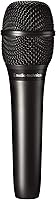
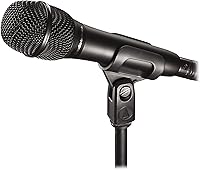
The Audio-Technica AT2010 effectively brings the detailed clarity of a studio condenser to the rugged environment of a live stage. While most touring singers rely on dynamic mics for their durability, this handheld condenser offers a different path by capturing high-frequency nuances that usually get lost in a mix. It is built to bridge that gap, offering the articulate vocal response typical of a recording booth without the fragile nature of a desktop mic. To keep things clean during a high-energy set, it features specialized internal shock mounting to dampen the thuds and scrapes from moving around. This design ensures that the focus remains entirely on the performance, delivering a smooth and natural sound that feels remarkably close to the original source.

Features & Benefits

Performance on a loud stage requires a specific set of tools, and this vocal microphone delivers with a tight cardioid polar pattern. This design is crucial for rejecting off-axis noise, which helps prevent the screech of feedback from floor monitors when the volume climbs. Despite its sensitivity, the AT2010 handles high sound pressure levels with ease, so even the most powerful singers won't worry about digital-sounding distortion. The multi-stage grille is another smart addition, acting as a built-in pop filter to tame aggressive plosives while keeping the high-end detail crisp. Under the hood, a gold-plated XLRM connector ensures a clean, corrosion-resistant signal path for long-term reliability. The fixed-charge back plate provides a fast transient response, making every syllable sound snappy and defined.

Best For

If you find that industry-standard dynamic mics make your voice sound muddy or dark, the AT2010 might be the solution you need. It is particularly well-suited for vocalists who crave extra air and presence in their live mix. Beyond the stage, houses of worship and corporate presenters will appreciate how this handheld condenser brings a professional, high-fidelity edge to speech reinforcement. It also serves as a versatile tool for home studios, offering a familiar form factor for those who feel more comfortable holding a mic than singing into a large-diaphragm unit on a stand. Acoustic performers will also find it useful, as it captures the subtle tonal nuances of both the voice and unplugged instruments with impressive accuracy.

User Feedback

Real-world users frequently praise this handheld condenser for its crisp high-frequency air, often noting it provides a level of detail that a standard SM58 simply cannot match. However, buyers must remember that this vocal microphone requires 48V phantom power to operate, which is a standard feature on most modern mixers but worth double-checking. The physical build earns high marks for its solid, weighty feel, giving performers a sense of confidence during a set. Some reviewers do point out that the AT2010 is more sensitive than a typical dynamic mic, meaning it might pick up a bit more ambient room noise in untreated spaces. Despite this sensitivity, the overall consensus is that the clarity gained far outweighs the need for careful gain staging and proper mic technique.

Pros

  • Provides studio-quality vocal clarity that helps singers cut through a dense live mix effortlessly.
  • The internal shock mounting effectively dampens minor handling noises during a live performance.
  • Handles high sound pressure levels without distortion, even for the most powerful vocalists.
  • Built with a rugged all-metal body that feels substantial and durable for regular gigging.
  • The multi-stage grille design helps manage plosives while maintaining high-frequency definition.
  • Gold-plated XLR connectors ensure a reliable, corrosion-resistant signal path for years of use.
  • Offers a much more natural and articulate frequency response than most dynamic stage microphones.
  • Excellent for capturing the nuances of acoustic instruments like guitars during unplugged sessions.

Cons

  • Strictly requires 48V phantom power to function, which may not be available on all entry-level equipment.
  • The AT2010 is more prone to picking up background stage bleed than tighter dynamic microphones.
  • Increased sensitivity makes it less forgiving of poor mic technique or heavy-handed movements.
  • Can sound overly bright or brittle in rooms with a lot of natural echo or hard surfaces.
  • Lacks an on/off switch, which might be a drawback for speakers who manage their own sound.
  • Sensitive internal components make it more susceptible to damage from drops compared to a dynamic mic.
  • The smooth finish can feel a bit slippery if your hands get particularly sweaty during a long set.
  • Captures more room ambience in home studios that are not acoustically treated.

Ratings

Our data analysts synthesized thousands of global buyer experiences to evaluate the Audio-Technica AT2010, ensuring our scores reflect genuine hands-on usage while filtering out incentivized or bot-generated noise. This breakdown highlights where the microphone shines on stage and where technical requirements might catch some users off guard. By balancing verified strengths against common real-world pain points, we provide a transparent look at how this unit performs in the wild.

Vocal Clarity & Articulation
93%
Vocalists consistently report that this handheld condenser provides a massive leap in articulation compared to dynamic mics. It captures the breathy, nuanced top-end of a performance, making it much easier for singers to cut through a dense live mix without sounding harsh.
The increased clarity can be a double-edged sword for singers with poor mic technique or those who struggle with sibilance. It is far less forgiving than a dark dynamic mic, potentially exposing vocal imperfections that a warmer mic would otherwise mask.
High-Frequency Detail
91%
The frequency response is tuned to provide that sought-after studio ‘air’ during live sets. Reviewers love how it brings out the crispness in female vocals and the subtle textures of acoustic instruments that usually get lost in loud environments.
Some users find the high-end a bit too sensitive for certain venues, occasionally resulting in a thin sound if the sound engineer doesn't roll off the treble. In smaller, reflective rooms, that extra detail can sometimes translate into a brittle or piercing tone.
Feedback Resistance
84%
For a condenser mic, the cardioid pattern is remarkably effective at keeping stage volume out of the capsule. Performers frequently mention being able to push their monitor levels significantly higher than expected without triggering the typical high-pitched squeal of feedback.
While strong, it still cannot match the sheer feedback rejection of a high-end supercardioid dynamic microphone. Singers who stand directly in front of loud drum kits or aggressive floor wedges may still find themselves fighting occasional bleed issues.
Handling Noise Suppression
78%
22%
The internal shock mounting does a respectable job of isolating the capsule from the thuds and scrapes of a performer’s hand. This makes it a viable option for energetic singers who like to pull the mic off the stand and move around.
It is notably more sensitive to hand movements than industry-standard dynamic workhorses. If you have a habit of fidgeting with the cable or tapping the barrel, those vibrations are more likely to translate into audible low-end thumps in the PA system.
SPL Handling
88%
With a 136 dB maximum SPL, this vocal microphone handles belt-out choruses and loud sound sources without clipping. Users appreciate that they can lean into the mic during powerful passages without the diaphragm sounding strained or distorted.
If you are using this for extremely loud percussion or placing it inside a kick drum, you are pushing its limits. While it handles vocals beautifully, it lacks the extreme headroom found in specialized instrument condensers or high-output dynamic mics.
Build Quality & Durability
92%
The all-metal construction feels substantial and professional in the hand, inspiring confidence during rigorous touring. The multi-stage grille is particularly rugged, effectively protecting the sensitive condenser element from accidental drops or rough handling in a gig bag.
Because it contains active electronics and a sensitive diaphragm, it will never be quite as ‘bulletproof’ as a dynamic mic. Dropping it on a concrete stage is more likely to cause internal alignment issues than it would with a simpler dynamic alternative.
Off-Axis Rejection
82%
18%
The cardioid pickup area is well-defined, helping to isolate the singer from the rest of the band. This creates a cleaner signal for the front-of-house engineer, which is especially helpful when recording live performances for later mixing.
The rejection isn't absolute, and users note that it picks up more stage bleed than a standard SM58. In tight stage setups, you may notice more of the cymbals or guitar amps leaking into the vocal channel than you would with a dynamic mic.
Plosive Protection
81%
19%
The multi-stage grille design works surprisingly well at diffusing bursts of air from ‘P’ and ‘B’ sounds. Most singers find they don't need an external foam windscreen, which helps preserve the visual aesthetic and high-end clarity on stage.
Very aggressive singers or those who sing extremely close to the grille may still experience occasional popping. If your vocal style involves a lot of close-proximity whispering or beatboxing, the built-in protection might not be enough to stop every air blast.
Signal Reliability
94%
The gold-plated XLRM connector provides a secure, corrosion-resistant link to your cables. Users report zero issues with signal dropouts or static, even after years of plugging and unplugging the unit in humid or outdoor environments.
The signal is highly dependent on the quality of the provided phantom power. In venues with poorly grounded power or cheap mixers, you might occasionally notice a slight hum or hiss that wouldn't be present with a passive dynamic microphone.
Ergonomics & Handheld Feel
89%
The balance of the mic is excellent, with enough weight to feel premium without causing hand fatigue during a 90-minute set. The tapered body is comfortable for various hand sizes and fits securely in standard mic clips without slipping.
The smooth finish can become a bit slippery if the performer has particularly sweaty hands. A few users mentioned they wished it had a slightly more textured grip to provide extra security during high-intensity performances.
Versatility across Applications
86%
It performs double duty brilliantly, working just as well for home studio voiceovers as it does for live singing. The natural response makes it a great choice for podcasting or streaming if you prefer a handheld look over a bulky broadcast arm.
Because it is so sensitive, it is not the best choice for untreated home rooms with lots of background noise like computer fans or air conditioners. In those environments, it tends to capture more of the ‘room sound’ than many users would prefer.
Ease of Setup
67%
33%
Once you have the right gear, it is a simple plug-and-play affair with no complicated switches or settings to worry about. The lack of an on/off switch on the body is actually a plus for pro users who don’t want to accidentally mute themselves.
The strict requirement for 48V phantom power is the biggest hurdle for beginners or those using older karaoke machines and portable PAs. Many buyers have expressed frustration after realizing their existing equipment couldn't actually power the mic, requiring an additional gear purchase.

Suitable for:

The Audio-Technica AT2010 is a standout choice for vocalists who feel like their voice sounds muddy or muffled through standard dynamic microphones. Its condenser capsule captures high-end detail and “air” that usually requires a studio setup, making it ideal for singers in acoustic bands or houses of worship where clarity is paramount. Public speakers and corporate presenters will also appreciate the crisp articulation it provides, ensuring every word reaches the back of the room without straining the listener. If you prefer the comfort of a handheld microphone for your home studio over a stationary desk mic, this unit bridges that gap perfectly.

Not suitable for:

Touring rock bands performing on extremely loud, cramped stages may find the Audio-Technica AT2010 a bit too sensitive compared to a standard SM58. Because it is a condenser, it picks up more ambient stage noise and bleed from nearby drums or guitar amps, which can lead to feedback issues in poorly managed sonic environments. It is also a poor choice for anyone using entry-level karaoke machines or older portable PA systems that lack 48V phantom power, as the mic will not produce any sound without it. Additionally, if you have a very heavy-handed style with lots of mic-tapping or cable-fiddling, the increased sensitivity to handling noise might become a distraction.

Specifications

  • Transducer Type: Fixed-charge back plate with a permanently polarized condenser element.
  • Polar Pattern: Cardioid pickup pattern for focused sound capture and rear rejection.
  • Frequency Range: Audio response spans from 40 Hz to 20,000 Hz.
  • Sensitivity: Open circuit sensitivity is rated at –48 dB (3.9 mV) re 1V at 1 Pa.
  • Output Impedance: Low impedance design at 100 ohms for long cable runs.
  • Max SPL: Handles up to 136 dB SPL at 1 kHz with 1% total harmonic distortion.
  • Dynamic Range: Delivers a wide 113 dB dynamic range at 1 kHz at maximum SPL.
  • Signal-to-Noise: Provides a 71 dB signal-to-noise ratio at 1 kHz at 1 Pa.
  • Power Needs: Requires 48V DC phantom power with a typical 2 mA draw.
  • Connection: Equipped with an integral 3-pin gold-plated XLRM-type connector.
  • Weight: The unit weighs approximately 8.2 oz (233 g).
  • Dimensions: Measures 7.05″ in length with a maximum body diameter of 1.89″.
  • Grille Design: Features a multi-stage hardened metal grille for pop and sibilance protection.
  • Internal Mount: Specialized internal shock mounting helps isolate the capsule from handling vibrations.
  • Finish: Coated in a professional matte black corrosion-resistant finish.

Related Reviews
Audio-Technica AT-LP3XBT
82%
88%
Sound Quality (Wired)
74%
Bluetooth Audio Quality
93%
Ease of Setup
91%
Fully Automatic Operation
67%
Build Quality
More
Audio-Technica AT-LPW40WN
82%
91%
Sound Quality
88%
Build Quality
89%
Tonearm Performance
86%
Speed Accuracy & Stability
74%
Ease of Setup
More
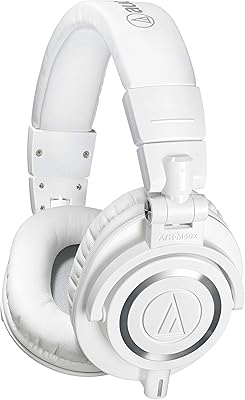
Audio-Technica ATH-M50xWH
87%
94%
Sound Quality
89%
Build Quality
82%
Comfort for Extended Use
91%
Noise Isolation
88%
Durability of Detachable Cable
More
Audio-Technica ATH-M30x
78%
83%
Sound Accuracy
88%
Mid-Range Clarity
61%
Bass Response
72%
Comfort & Fit
74%
Build Quality
More
Audio-Technica AT-LP7 Turntable
86%
94%
Sound Quality
92%
Build Quality
80%
Ease of Setup
88%
Manual Control Experience
90%
Tracking Accuracy
More
Audio-Technica AT-LP5X
84%
93%
Build Quality
91%
Sound Quality
94%
Motor & Speed Stability
88%
Cartridge & Stylus
89%
Tonearm Performance
More
Audio-Technica AT875R
83%
93%
Sound Rejection
94%
Form Factor & Compactness
88%
Vocal Clarity
82%
Handling Noise Reduction
86%
Build Quality & Durability
More
Audio-Technica AT-SP3X
78%
83%
Sound Quality
88%
Bluetooth Performance
86%
Multipoint Pairing
84%
Wired Connectivity
91%
Ease of Setup
More
Audio-Technica AT829CW Lavalier Microphone
88%
94%
Sound Quality
88%
Build Quality
91%
Ease of Use
89%
Portability
93%
Connectivity Stability
More
Audio-Technica AT-LP70XBT
81%
92%
Ease of Setup
78%
Sound Quality
74%
Bluetooth Performance
71%
Build Quality
89%
Automatic Mechanism
More

FAQ

Only if your equipment provides phantom power. Because this is a condenser microphone, it won′t work unless your mixer or audio interface can send 48V through the XLR cable.

It sounds much more open and detailed in the high frequencies, which is great for singers who find dynamic mics a bit too ‹dark› or muddy. However, it is also more sensitive, so it might pick up more of the instruments behind you on a loud stage.

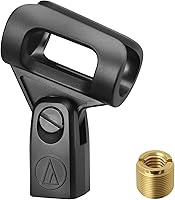
While the specific package contents can vary by retailer, it typically includes a professional stand clamp but does not include an XLR cable. You′ll want to pick up a high-quality balanced XLR cable to get the best signal.

Absolutely! Many people prefer this handheld condenser for home recording because it gives you that studio-quality sound without needing a bulky desk-mounted setup. Just keep in mind that it will pick up more room echo than a dynamic mic if your space isn′t treated.

There is some internal shock mounting designed to keep things quiet, but you′ll still hear more movement than you would with a rugged dynamic mic. It is fine for most energetic performers, but you should avoid tapping the body or sliding your hand during a set.

No, this model does not have a physical power switch on the handle. Professional-grade mics often leave this off to prevent the singer from accidentally muting themselves during a performance.

Yes, it is surprisingly good for that. The fast transient response of the capsule captures the pluck and resonance of guitar strings much more accurately than a typical vocal dynamic mic would.

Yes, as long as your interface has an XLR input and a button that says ‹48V› or ‹Phantom Power.› Most modern USB interfaces from brands like Focusrite or PreSonus have this built-in.

The multi-stage grille is quite tough and built for the road. It′s designed to survive being tossed in a gig bag, though you should still use a padded pouch to protect the sensitive internal electronics from moisture and heavy drops.

The grille actually has several layers of protection against ‹plosives› (those popping P sounds). Most live performers won′t need an extra filter, but if you are using it for studio voiceovers, a separate pop shield can provide that extra layer of polish.

Where to Buy

Target
In stock $139.00
Walmart
In stock $139.00
Guitar Center
In stock $139.00
B&H Photo-Video-Audio
In stock $139.00
Musicians Friend
In stock $139.00
Reverb
In stock $120.00
Full Compass Systems
In stock $139.00
World of Stereo
In stock $139.00
camcor.com
In stock $139.00