
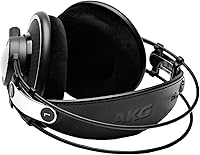

Overview

The AKG K702 Open-Back Studio Headphones have been a reference point in professional audio circles for over two decades — that kind of longevity says something. The open-back design is the defining characteristic here: air moves freely through the ear cups, producing a wide, natural soundstage that closed-back headphones simply can't replicate. This also means sound leaks in both directions, so these aren't built for commuting. The K702 targets audio engineers, mixing professionals, and serious home listeners. Within AKG's own lineup, it sits between the entry-level K701 and the more consumer-friendly K712, occupying a clear middle ground focused on analytical accuracy.

Features & Benefits

What makes the K702 sound the way it does comes down to a few specific engineering choices. The Varimotion two-layer diaphragm handles the full frequency range — from deep bass to the very top of the audible spectrum — with notably clean separation between registers. The flat-wire voice coil increases sensitivity and sharpens how quickly the drivers respond to transient sounds, which matters when picking apart complex mixes. At 62 ohms, this AKG studio headphone won't reach its potential plugged directly into a phone or laptop — a dedicated headphone amplifier is not optional, it's necessary. The 3D-foam ear pads and adjustable headband keep things comfortable over long sessions, though fit does vary by head shape.

Best For

These open-back cans were built with a specific listener in mind, and it's not the casual commuter. Audio engineers and producers doing mixing or mastering work will get the most out of the K702's analytical tuning — it's honest about flaws in a recording in a way that bass-heavy consumer headphones simply aren't. Audiophiles who prefer accurate sound reproduction over colored, boosted bass will also find a lot to appreciate here. Because the open design offers zero noise isolation, they work best in a controlled home studio environment. Anyone who spends hours wearing headphones will value the lightweight build and low clamping pressure, assuming the fit suits their head shape.

User Feedback

Community reception for the K702 has been consistently positive among studio users and audiophile forums alike, with instrument separation and soundstage width drawing the most praise. Comfort during long sessions also comes up frequently as a genuine strength. That said, there are real complaints worth knowing. A number of buyers are caught off guard by how thin or bright the sound feels when these open-back cans are driven from a phone or computer — the amp requirement is real, not a suggestion. Others note that the stock cable is thick and unwieldy, and the lack of a detachable option frustrates some owners. No deal-breaker for the right buyer, but worth knowing upfront.

Pros

  • Wide soundstage makes it easy to place instruments accurately across the stereo field.
  • Highly accurate frequency response helps identify mix problems that colored headphones hide.
  • Lightweight at 235g, making extended studio sessions noticeably less tiring.
  • 3D-foam ear pads distribute pressure well for most users during long wear.
  • Covers an exceptionally wide frequency range, from 12 Hz to 39,500 Hz.
  • Strong long-term reputation in professional audio communities backs up the purchase.
  • Adjustable headband accommodates a broad range of head sizes without fuss.
  • Open-back design produces a natural, breathing quality to the sound that closed-back headphones rarely match.

Cons

  • A dedicated headphone amplifier is effectively required — budget for one before buying.
  • No noise isolation whatsoever; background sound bleeds in freely from all directions.
  • The stock cable is thick, stiff, and non-detachable, limiting desk setup flexibility.
  • Sound can feel bright or clinical to listeners accustomed to bass-boosted consumer headphones.
  • Not suitable for use with mobile devices or laptops without additional amplification equipment.
  • Fit comfort varies significantly depending on head shape — not universally comfortable for all users.
  • Sound leakage means anyone nearby will hear what you are listening to at moderate volumes.
  • No wireless option exists, which rules it out for users who prefer cable-free listening.

Ratings

The scores below for the AKG K702 Open-Back Studio Headphones were generated by our AI system after analyzing thousands of verified global user reviews, with spam, bot submissions, and incentivized feedback actively filtered out. Each category reflects a honest synthesis of what real buyers praised and what genuinely frustrated them — nothing is glossed over. Where the K702 excels for its intended audience and where it falls short for others is transparently reflected in every score.

Soundstage & Imaging
94%
The open-back design consistently earns high praise from engineers and audiophiles alike for producing a sense of space that feels genuinely three-dimensional. Mixing engineers frequently note how easy it is to place instruments precisely across the stereo field during long sessions.
That same expansive soundstage can feel disorienting to listeners coming from closed-back consumer headphones who expect a more intimate, in-your-head presentation. It is a characteristic of the design, but it surprises new owners more often than expected.
Sound Accuracy
91%
Across professional forums and verified buyer feedback, the K702 is repeatedly described as one of the most honest-sounding headphones at its price tier. Producers and mix engineers rely on it specifically because it does not flatter recordings — problems in a mix are clearly audible.
That same ruthless accuracy frustrates listeners who want an enjoyable, colored listening experience. Buyers expecting warm bass or scooped mids for casual music enjoyment often find the tuning too clinical and flat for recreational use.
Amplifier Requirement
52%
48%
For buyers who already own a headphone amplifier or audio interface, the 62-ohm impedance is a non-issue and the K702 rewards them with noticeably better dynamics and clarity compared to under-powered sources.
A significant number of buyers are caught off guard by how underwhelming these open-back cans sound straight from a phone or laptop — volume is low and the sound lacks body. The amp requirement adds real cost that many buyers did not budget for, making this a recurring pain point in user reviews.
Comfort & Fit
78%
22%
The lightweight 235g build and self-adjusting headband make the K702 genuinely comfortable for most users during multi-hour mixing sessions. The 3D-foam ear pads are consistently praised for distributing pressure evenly across the ear area without generating heat quickly.
Comfort is not universal — users with larger heads or those who wear glasses report noticeable pressure points after extended wear. The fit can also feel loose on smaller heads, which affects both comfort and how the headphone sits acoustically on the ear.
Build Quality
74%
26%
The K702 feels solid and purposefully built for studio use rather than portability, and its longevity in the market since the early 2000s reflects that durability holds up under daily professional use over many years.
The headphone is not premium-feeling in hand — the plastics have a utilitarian quality that some buyers at this price point find underwhelming. Hinge and adjustment mechanisms can feel slightly loose after extended use, and the overall aesthetic is functional rather than refined.
Cable Design
41%
59%
The cable is long enough for desktop studio use, giving ample reach from an amplifier or interface to a seated listener without needing an extension in most setups.
The fixed, non-detachable cable is one of the most consistent complaints across user reviews. It is thick, stiff, and prone to tangling, and because it cannot be swapped out, a damaged cable means a repair or replacement rather than a simple fix — a real frustration for a studio-oriented headphone.
Noise Isolation
18%
82%
For users in controlled studio environments, the complete lack of isolation is intentional and welcome — the open design allows them to stay aware of their surroundings without removing the headphones.
Outside of a quiet studio, the zero isolation is a hard limitation. Sound bleeds in from the environment and out to anyone nearby, making the K702 entirely impractical for shared offices, public spaces, or any location where ambient noise is present.
Bass Response
63%
37%
Within the context of reference monitoring, the low-end is accurate and well-controlled — bass notes are tight and well-defined, which helps engineers hear exactly what is happening below 100Hz in a recording without exaggeration.
Casual listeners accustomed to consumer headphone tuning frequently describe the bass as thin or absent. This is a deliberate tuning decision, not a flaw, but it is a real mismatch for anyone who listens primarily to bass-driven genres and expects physical impact.
High-Frequency Clarity
88%
The flat-wire voice coil and Varimotion diaphragm combination delivers a treble range that is detailed and extended without crossing into harsh sibilance under normal use — a quality that audio engineers consistently highlight when analyzing vocals and cymbals.
Some listeners with sensitivity to bright treble find the upper frequencies fatiguing over very long sessions, particularly on poorly mastered recordings where harshness in the source material is fully exposed rather than softened.
Ear Pad Quality
71%
29%
The 3D-foam pads feel noticeably better than flat foam alternatives — the contouring around the ear reduces localized pressure and contributes meaningfully to the headphone being wearable for several consecutive hours.
The pads degrade with regular use over time, compressing and losing their shape, which affects both comfort and the acoustic seal around the ear. Official replacement options are limited, pushing users toward third-party alternatives that may subtly change the sound.
Value for Money
76%
24%
For home studio users and audiophiles who pair the K702 with an appropriate amplifier, the price-to-performance ratio is considered strong by the professional audio community — it punches at a level competitive with headphones costing considerably more.
The total cost of ownership rises once you factor in the required amplifier, which many buyers overlook. For a buyer who does not already own one, the effective entry cost is noticeably higher than the headphone price alone suggests.
Instrument Separation
92%
Across audiophile forums and studio user reviews, the ability to distinguish individual instruments in a dense mix is one of the most praised qualities of this AKG studio headphone. Strings, keys, and background vocals that blur together on other headphones remain distinctly audible here.
The separation is so precise that it can highlight recording or production weaknesses that a more forgiving headphone would obscure — which is a feature for engineers but can make casual listening to lower-quality recordings noticeably less enjoyable.
Long-Session Fatigue
81%
19%
The combination of low weight, an open acoustic design that does not trap heat, and light clamping force makes the K702 one of the more genuinely wearable over-ear headphones for four-to-six hour studio sessions, according to consistent user feedback.
Users who wear glasses or have atypical head shapes report cumulative discomfort that builds over sessions, which the general positive comfort narrative does not fully capture. Fatigue is not universal, but it is real for a meaningful subset of owners.
Compatibility
55%
45%
The 3.5mm connector with a screw-on 6.3mm adapter covers most amplifier and audio interface connections used in home and professional studio setups without needing additional accessories.
Compatibility with modern devices is genuinely limited by the impedance mismatch — smartphones, tablets, and laptops all struggle to drive these open-back cans properly, which narrows the practical use case more than buyers sometimes anticipate before purchasing.

Suitable for:

The AKG K702 Open-Back Studio Headphones are purpose-built for anyone who needs to hear a recording exactly as it is, without flattery or coloring. Audio engineers and mixing professionals will find the analytical sound signature invaluable for catching problems in a mix that warmer, bass-heavy headphones would mask. Serious audiophiles who prioritize accuracy over entertainment tuning will also feel right at home — these are headphones that reward attentive, critical listening. Home studio users working in a quiet space where sound bleed is not a concern get the full benefit of the open-back design: a wide, airy soundstage that makes long sessions less fatiguing. Anyone who spends hours wearing headphones will appreciate the lightweight build and relatively low clamping force, provided the fit works for their head shape.

Not suitable for:

The K702 is a poor fit for buyers expecting a plug-and-play experience with a phone, laptop, or gaming console. At 62 ohms, the headphones need a proper headphone amplifier to open up fully — without one, the sound can come across as thin and underwhelming, which has frustrated a number of buyers who skipped that step. The open-back design offers zero noise isolation, making these completely impractical for commuting, open offices, or any environment with background noise. Anyone expecting the kind of deep, punchy bass that consumer-oriented headphones deliver will be disappointed — the K702's tuning is deliberately flat and reference-grade, not exciting. The non-detachable, thick stock cable is also a practical annoyance for users who want flexibility in their setup.

Specifications

  • Driver Type: The K702 uses a dynamic driver design with AKG's patented Varimotion two-layer diaphragm for balanced performance across the full frequency range.
  • Frequency Response: Audio reproduction spans 12 Hz to 39,500 Hz, covering well beyond the standard limits of human hearing in both directions.
  • Impedance: Rated impedance is 62 ohms, which requires a dedicated headphone amplifier to drive properly at optimal volume and clarity.
  • Design Type: The open-back acoustic design allows air to pass freely through the ear cups, producing a natural, spacious soundstage at the cost of noise isolation.
  • Ear Pad Material: The ear pads are made from specially shaped 3D-foam designed to conform to the ear area and reduce pressure during extended wear.
  • Voice Coil: A flat-wire voice coil is used in place of a conventional round coil, improving sensitivity and sharpening the headphone's transient response.
  • Connector: The cable terminates in a 3.5mm jack, with a 6.3mm screw-on adapter typically included for use with professional amplifiers and audio interfaces.
  • Cable Type: The cable is non-detachable and fixed to the left ear cup, which limits replacement options if the cable is damaged over time.
  • Weight: The headphones weigh approximately 235g without the cable, keeping fatigue manageable during long listening or work sessions.
  • Headband: The headband is fully adjustable with a self-adjusting mechanism that distributes weight across the top of the head without manual sizing steps.
  • Noise Isolation: The open-back design provides zero passive noise isolation, meaning ambient sound enters freely and audio leaks outward to anyone nearby.
  • Wearing Style: The K702 uses a circumaural over-ear fit, with ear cups that surround the ear rather than resting on it.
  • Connectivity: The K702 is a wired-only headphone with no Bluetooth or wireless capability of any kind.
  • Intended Use: These headphones are designed for professional studio monitoring, critical listening, and reference mixing rather than casual or portable use.
  • Diaphragm: The Varimotion diaphragm uses two layers of different thicknesses to improve high-frequency accuracy while maintaining clean low-frequency performance.

Related Reviews

AKG K92 Closed-back Over-Ear Headphones
74%
84%
Sound Accuracy
91%
Value for Money
77%
Comfort & Fit
68%
Build Quality
72%
Passive Isolation
More
beyerdynamic DT 900 PRO X
81%
93%
Audio Clarity & Detail
88%
Build Quality & Durability
82%
Comfort & Ergonomics
96%
Device Versatility
89%
Soundstage & Imaging
More
AKG K361 Studio Headphones
85%
91%
Sound Quality
84%
Comfort & Fit
90%
Noise Isolation
88%
Build Quality
86%
Portability
More
AKG K553 MKII Closed-Back Studio Headphones

75%
88%
Sound Accuracy
83%
Soundstage Width
62%
Comfort & Fit
66%
Build Quality
71%
Passive Isolation
More
AKG K271 MKII Closed-Back Studio Headphones

79%
88%
Sound Accuracy
83%
Noise Isolation
86%
Wearing Comfort
81%
Build Quality
74%
Cable System
More
Shure SRH1840 Professional Open-Back Headphones
86%
94%
Sound Accuracy
88%
Comfort for Extended Use
90%
Open-Back Design (Soundstage)
87%
Bass Performance
91%
Build Quality
More
AKG K240 MKII
AKG K240 MKII
79%
93%
Long-Term Comfort
88%
Soundstage & Imaging
86%
Neutrality & Midrange
61%
Sub-Bass Response
82%
Build Quality & Durability
More
Neumann NDH 20
Neumann NDH 20
79%
94%
Sound Accuracy
88%
Build Quality
61%
Comfort & Wearability
83%
Noise Isolation
58%
Amp Compatibility
More
beyerdynamic DT 1990 Pro Open Studio Headphones

86%
96%
Sound Quality
93%
Build Quality
88%
Comfort for Long Sessions
72%
Noise Isolation
84%
Value for Money
More
Audio-Technica ATH-AD900X Open-Back Audiophile Headphones
85%
95%
Sound Quality
90%
Comfort for Long Listening Sessions
88%
Build Quality
92%
Sound Clarity and Detail
55%
Noise Isolation
More

FAQ

It is genuinely not overkill in this case. The K702 has a 62-ohm impedance, and while that is not extreme, it is enough that phones, laptops, and most basic soundcards will under-drive them. You will get sound, but it will be quieter, thinner, and less dynamic than the headphone is actually capable of. A modest dedicated amp or a USB audio interface makes a real, audible difference here.

You can, and some PC gamers actually love them for exactly that reason — the wide soundstage helps with positional audio in games where hearing direction matters. The trade-off is that they are open-back, so if you are gaming in a shared space, everyone around you will hear your audio. They also have no microphone built in, so you will need a separate mic.

The K701 is the older sibling and shares a similar sound profile, though many users feel the K702 has a slight edge in build refinement and a marginally different frequency tuning. The K712 sits above both and shifts the tuning slightly warmer with more bass presence, making it more forgiving for casual listening. The K702 is really the middle ground — more reference-grade than the K712 but more practical and widely available than the K701.

Third-party replacement pads are available and compatible, though AKG does not make it especially easy with official replacements. A number of users on audio forums have successfully replaced pads with aftermarket options, which can also change the sound signature slightly. It is worth knowing going in that the pads will eventually compress and wear down with heavy use.

Correct — the cable is fixed and non-removable, which is a common complaint among owners. It is a long, relatively stiff cable suited for desktop use, but if it gets damaged, you are looking at a repair rather than a simple swap. For a headphone in this category, it is a genuine design limitation that has not changed across revisions.

Yes, significantly. Open-back headphones by nature let sound travel both in and out freely. Anyone sitting nearby in a quiet room will clearly hear what you are listening to at moderate volumes. These are not suitable for shared workspaces, libraries, or anywhere you need to be considerate of others around you.

Results vary here. The 3D-foam ear pads are soft and the clamping force is relatively light, which helps. However, glasses frames can create pressure points where the pad meets the temple arm, which becomes noticeable over time. Some users with thinner frames report no issues at all, while others find it uncomfortable after an hour or more.

The K702 is tuned for accuracy rather than genre enjoyment, so they perform well across anything where detail and separation matter — classical, jazz, acoustic recordings, and well-produced studio tracks all shine. They are less exciting for genres that rely heavily on bass impact, like hip-hop or EDM, where listeners expecting a thumping low end may find the response too polite and controlled.

Technically yes, but the experience will be noticeably underwhelming compared to using a proper source. Volume will be lower than expected, and the low-end especially will feel flat. If your only source is a phone and you have no plans to add an amp, these open-back cans are genuinely not the right choice for that use case.

The K702 has been in production since the early 2000s and has a strong reputation for durability in studio environments. The main wear points are the ear pads, which compress and degrade over years of use, and the fixed cable, which can fray near connection points with heavy daily use. With reasonable care and eventual pad replacement, many users report getting a decade or more of reliable performance from them.

Where to Buy