Overview

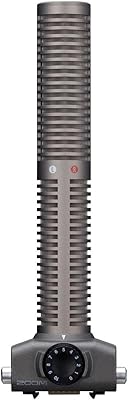
The Zoom XYH-5 X/Y Stereo Microphone Capsule is an interchangeable accessory built specifically for Zoom's modular recorder lineup — the H5, H6, and Q8. If you don't own one of those recorders, stop here; this capsule has no standalone use. For those who do, it slots into the recorder's capsule mount to replace or upgrade the default microphone configuration. An X/Y stereo setup works by pointing two matched cardioid elements toward each other at 90 degrees, capturing a coherent stereo image with solid mono compatibility. The shock-mounted housing sets it apart from bare capsule alternatives, absorbing physical vibrations before they reach the elements — a practical detail that matters the moment you're moving with the recorder in hand.
Features & Benefits

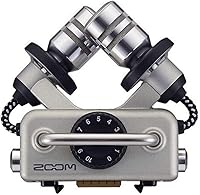
The 90-degree X/Y configuration gives you a focused stereo image — tighter than ORTF or spaced-pair setups, which is worth understanding before you buy. That narrower spread is actually an asset for on-axis recording: interviews, performances, or video work where the source is directly in front of you and a controlled stereo field is preferable to a wide, diffuse one. The capsule handles up to 140 dB SPL, so a loud drum kit or cranked guitar amp won't cause clipping or distortion. The signal-to-noise ratio keeps things clean in typical environments, though it's not optimized for studio-quiet sessions. At under 5 oz, swapping it mid-shoot takes seconds, and the locking XLR connection fits Zoom recorder bodies without any play or wobble.

Best For

Zoom's X/Y capsule makes the most sense for people already inside the Zoom recorder ecosystem. Journalists and podcasters running an H5 or H6 get a practical stereo option for two-person interviews without adding a second recorder or an external mic. Run-and-gun videographers will appreciate the on-axis focus — it captures what's in front of the camera while rejecting more of the room than a wider stereo format would. Musicians tracking live rehearsals or acoustic sets can get a usable stereo capture without a full mic locker. It also works as a straightforward replacement for a damaged or worn stock capsule. If your primary need is wide ambient capture or long-range directionality, a different capsule format will serve you better.

User Feedback

People who have put the XYH-5 through regular use tend to praise two things: the stereo imaging feels accurate and natural, and the build quality is noticeably solid — the capsule clicks onto H5 and H6 bodies consistently without wobble or alignment issues. The shock-mount does help with casual handling, though users note it won't fully absorb hard knocks or aggressive movement. On the critical side, some find the noise floor slightly noticeable during very quiet indoor recordings, and a handful of users have reported that older firmware on certain H6 units caused recognition problems, typically resolved by a firmware update. Complaints are otherwise infrequent, and most buyers describe this as a dependable, low-drama addition to their existing recorder setup.

Pros

  • Fits directly onto Zoom H5, H6, and Q8 bodies with a secure, wobble-free locking connection.
  • The shock-mounted housing meaningfully reduces handling and vibration noise during handheld use.
  • Handles extremely loud sources without distorting, making it reliable for live music and high-SPL environments.
  • Compact and light enough to swap in the field within seconds, no tools or extra accessories needed.
  • The 90-degree X/Y pattern produces a focused, phase-coherent stereo image that translates well to mono.
  • Build quality is consistently praised — the capsule feels durable and fits recorder bodies without alignment issues.
  • Recorder-powered operation means no batteries or external power source to manage in the field.
  • Works equally well for voice, video, and music recording without any adjustment or configuration.

Cons

  • Completely incompatible with any recorder outside the Zoom H5, H6, and Q8 lineup — no flexibility there.
  • The 90-degree X/Y stereo image is relatively narrow; it will disappoint anyone expecting a wide, expansive spread.
  • The noise floor becomes noticeable in very quiet indoor environments, which limits use in controlled acoustic settings.
  • Some H6 users have reported recognition issues tied to older firmware versions, requiring an update before it works correctly.
  • The shock-mount reduces casual handling vibration but will not compensate for hard knocks or aggressive movement.
  • No carrying case or protective pouch is included, so the capsule is exposed to scratches and dust when stored loosely.
  • Users who need both stereo width and directional reach will find a single X/Y capsule a compromise in either direction.
  • Long-term availability of replacement units is uncertain for a product first released in 2014.

Ratings

These scores for the Zoom XYH-5 X/Y Stereo Microphone Capsule were generated by AI after analyzing thousands of verified global user reviews, with spam, bot activity, and incentivized feedback actively filtered out. Each category reflects the genuine consensus of real-world users across journalism, videography, live music, and field recording contexts. Both consistent strengths and recurring frustrations are transparently represented in the scores below.
Audio Quality
83%
For field and video work, users consistently describe the captured audio as natural and well-balanced — not hyped or processed-sounding. Interviews, acoustic instrument recordings, and voice-over work all come back with a grounded, honest character that holds up well in the edit without heavy correction.
Against dedicated studio condenser microphones, the limitations of the capsule format become more apparent, particularly in the upper frequency detail. Users with critical listening environments or post-production workflows that demand a pristine noise floor tend to find the XYH-5 falls short of their threshold.
Stereo Imaging
74%
26%
The 90-degree X/Y configuration produces a phase-coherent stereo image that translates cleanly to mono — a genuine practical advantage for broadcast, YouTube, and podcast content where mono compatibility is non-negotiable. For on-axis sources like a single performer or interview subject, the imaging feels accurate and centered.
Users expecting a wide, enveloping stereo spread are regularly disappointed. The tight 90-degree angle simply cannot replicate the spatial breadth of ORTF or spaced-pair configurations, and recordings of choirs, orchestras, or large room ambience feel compressed and narrow compared to what wider stereo formats produce.
Handling Noise Rejection
79%
21%
The built-in shock-mount makes a noticeable real-world difference for journalists and videographers who are walking, repositioning, or holding the recorder during a take. Low-frequency rumble and incidental contact noise that would otherwise contaminate a recording are meaningfully attenuated without any active processing required.
The shock-mount has clear limits — abrupt movements, hard knocks, or tapping the recorder body will still introduce audible artifacts into the recording. Users who regularly operate in high-motion environments, such as documentary run-and-gun shoots, report that the protection is helpful but not comprehensive enough to replace careful technique.
SPL Handling
91%
Recording a live drum kit at close range, a cranked guitar amplifier, or a brass section at full volume without hearing any capsule distortion is one of the standout practical strengths here. Users from live music and rehearsal recording backgrounds specifically call out the headroom as a reason they trust this capsule in unpredictable acoustic environments.
At the absolute upper ceiling of the capsule's SPL range, a small number of users recording industrial or extreme live sound environments have noted marginal coloration. In typical real-world scenarios this is unlikely to surface, but it is worth acknowledging for niche applications involving sustained, extremely loud sources.
Compatibility & Fit
86%
The capsule clicks onto H5 and H6 recorder bodies cleanly and consistently, with no wobble, misalignment, or loose connector play reported by the majority of users. The physical fit feels engineered to a precise tolerance, and the XLR lock provides genuine confidence that the capsule is securely seated before recording begins.
A recurring minority complaint involves older H6 firmware versions failing to recognize the capsule on first attachment, requiring a firmware update before the recorder registers it correctly. While the fix is straightforward, discovering this issue mid-session in the field — with no internet access — is a frustrating experience that Zoom could address proactively.
Noise Floor
68%
32%
In the kinds of environments this capsule is actually designed for — outdoor interviews, live venue recordings, rehearsal spaces — the self-noise is sufficiently low that it never becomes a meaningful obstacle. Most users working in real-world conditions report clean, usable recordings without any noticeable hiss intruding on their content.
Move into a well-treated acoustic space or an exceptionally quiet indoor environment and the noise floor becomes more apparent on close listening. Users with critical ears who regularly record voiceover, audiobook narration, or studio-quality spoken word content find the self-noise sits just above where they would want it to be.
Build Quality
84%
The rubber housing feels solid and purposeful rather than hollow or cheap, and field users who have carried this capsule through regular outdoor sessions report that the construction holds up well over time. The fit on recorder bodies shows no sign of loosening even after repeated attachment and removal cycles.
The capsule elements themselves are the vulnerability — a direct drop onto a hard surface poses real risk of damage that the rubber housing alone cannot prevent. No protective carry case is included, which means users who store the capsule loose in a bag are relying entirely on luck to protect the microphone elements.
Ease of Use
93%
Swapping this capsule onto a compatible recorder takes roughly ten seconds with no tools, adapters, or technical know-how required. For journalists, videographers, and musicians who are switching between capsule configurations regularly, that frictionless swap-out process is a practical advantage that users consistently mention as one of the best aspects of Zoom's modular system.
The ease of use is entirely contingent on owning the right recorder. Users who purchase the capsule without first verifying compatibility face a frustrating dead end — there is no workaround or adapter path, and the capsule simply cannot be used with any other hardware.
Portability
89%
Weighing under 5 oz and compact enough to pocket alongside the recorder itself, the XYH-5 adds virtually no meaningful weight or volume to a field kit. Documentary crews and travelling journalists who are already managing camera gear, cables, and batteries appreciate not having to carry a separate stereo microphone.
The lack of any included storage solution — even a basic foam pouch — means portable users need to source their own protection for the capsule when it is not mounted on the recorder. This is a minor but consistent packaging complaint, particularly for a product at this price tier.
Value for Money
76%
24%
For users who are already invested in the Zoom H5 or H6 and want to extend the recorder's capabilities without buying an entirely separate microphone rig, this capsule represents a cost-effective and logical expansion. The build quality and audio performance are broadly in line with what buyers at this tier reasonably expect.
Users who compare the cost against third-party stereo microphone options that work across multiple recorders sometimes question the value of a capsule locked to a single hardware ecosystem. If your recording needs evolve beyond the Zoom platform, the investment in proprietary accessories does not transfer.
Mono Compatibility
88%
The coincident X/Y capsule geometry produces virtually zero phase difference between the two channels, which means summing the stereo track to mono results in a clean, coherent signal without comb filtering or hollow-sounding artifacts. For content creators distributing across mono playback channels, this is a dependable and practical characteristic.
While mono compatibility is strong, the flip side is that the stereo separation itself is inherently limited by the same coincident geometry. Users who want recordings that retain dramatic stereo width even after mono-summing will find that this format involves an unavoidable trade-off between phase coherence and channel separation.
Directionality
81%
19%
The cardioid polar pattern on both capsule elements does meaningful work at rejecting sound coming from behind and to the sides of the recorder, which is a real benefit when recording in noisy environments like street interviews, conference rooms, or live venues with significant ambient noise.
The rejection is not as pronounced as a dedicated shotgun capsule, and users who need tight long-range directionality — wildlife recording, film dialogue in reverberant spaces, or stage performances from a distance — report that ambient bleed is still noticeable and the capsule does not isolate the target source the way a hypercardioid or lobar pattern would.
Long-Term Reliability
82%
18%
Users who have owned and regularly used Zoom's X/Y capsule across multiple years of field work report that the physical connection stays firm and the audio quality remains consistent over time. The modular design also means that if the capsule does fail, replacing it does not require replacing the entire recorder.
As a product first released in 2014, long-term parts availability is a reasonable concern for users planning around a multi-year workflow. A small number of users have also noted that the rubber housing shows cosmetic wear — minor scuffing and discoloration — after extended outdoor use, though this appears to be superficial rather than functional.

Suitable for:

The Zoom XYH-5 X/Y Stereo Microphone Capsule is purpose-built for anyone already working within Zoom's modular recorder ecosystem who wants a reliable, no-fuss stereo option without adding bulk or extra gear to their kit. Journalists and podcasters using an H5 or H6 will find it a natural fit for capturing two-person conversations with a coherent, centered stereo image. Run-and-gun video producers benefit from its directional pickup pattern, which keeps the focus on what's in front of the camera and rejects a good portion of off-axis room noise. Musicians and live sound engineers recording rehearsals or acoustic performances in real-world environments get a practical stereo capture without needing a dedicated stereo microphone rig. It also serves as a straightforward, like-for-like replacement if the capsule on an existing Zoom recorder has worn out or been physically damaged.

Not suitable for:

Anyone who does not own a Zoom H5, H6, or Q8 recorder should stop reading now — the Zoom XYH-5 X/Y Stereo Microphone Capsule is an accessory, not a standalone microphone, and it has no use outside those specific bodies. Recordists who need a wide, immersive stereo image — for nature soundscapes, room ambience, or audience recording — will find the tight 90-degree X/Y pattern too narrow for the job; a mid-side or spaced-pair setup would serve those applications far better. Studio engineers working in acoustically treated spaces with demanding noise floor requirements may find the signal-to-noise ratio falls short of their standards. Those needing long-range directional reach, such as wildlife recordists or film location sound mixers, should look at a shotgun capsule option instead. If your recording scenarios vary widely and you need format flexibility, a single capsule format will always involve trade-offs.

Specifications

  • Compatible Recorders: Designed exclusively for use with the Zoom H5, H6, and Q8 Handy Recorders via the modular capsule mount system.
  • Stereo Pattern: Uses a 90-degree X/Y configuration, which captures a focused, phase-coherent stereo image with reliable mono compatibility.
  • Polar Pattern: Unidirectional (cardioid) on both capsule elements, providing directional pickup and passive rejection of off-axis sound.
  • Max SPL: Handles sound pressure levels up to 140 dB, making it capable of recording loud acoustic sources without introducing distortion.
  • Signal-to-Noise Ratio: Rated at 78 dB, delivering clean recordings in typical field and moderate-noise environments.
  • Connector Type: Uses an XLR interface that locks securely into compatible Zoom recorder bodies without any adapter required.
  • Power Source: Powered entirely by the host recorder — no batteries, phantom power switches, or external cables are needed.
  • Shock Mounting: The capsule housing incorporates a built-in shock-mount that passively absorbs handling vibrations and minor physical contact noise.
  • Weight: Weighs approximately 4.8 oz (136 g), making it a lightweight addition that does not meaningfully affect recorder balance.
  • Dimensions: Measures 3.74 x 3.35 x 3.94 inches, fitting compactly onto the top of compatible Zoom recorder bodies.
  • Housing Material: The outer shell is constructed from rubber, which provides a degree of grip and minor impact resistance during field use.
  • Number of Channels: Captures one stereo track (two matched cardioid elements summed to a single stereo channel) on the host recorder.
  • Model Number: Officially designated as the XYH-5 by Zoom, the Japanese manufacturer based in Tokyo.
  • Use Cases: Intended primarily for voice recording, video production, and live acoustic performance capture in real-world environments.
  • Release Date: First made available in December 2014 and remains an active, non-discontinued product in the Zoom accessory lineup.
  • Included Items: Comes with the shock-mounted stereo microphone capsule unit only — no carrying case, windscreen, or additional accessories are included.

Related Reviews
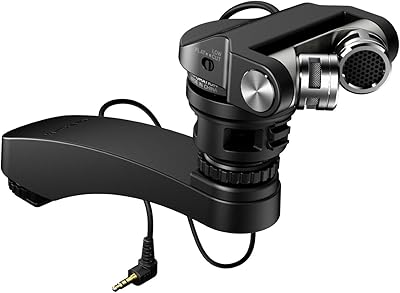
Tascam TM-2X
Tascam TM-2X
86%
92%
Stereo Image Width
88%
Audio Clarity
74%
Handling Noise Isolation
94%
Portability and Weight
86%
Loud Environment Performance
More
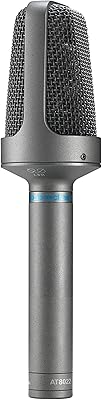
Audio-Technica AT8022 X/Y Stereo Microphone
79%
91%
Stereo Imaging Accuracy
86%
Build Quality
54%
Wind Sensitivity
88%
Compatibility & Flexibility
77%
Value for Money
More
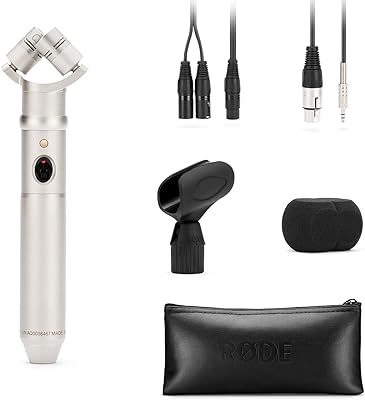
Rode NT4 Stereo Condenser Microphone
81%
91%
Sound Quality
89%
Stereo Imaging
87%
Build Quality
74%
Value for Money
88%
Ease of Use
More
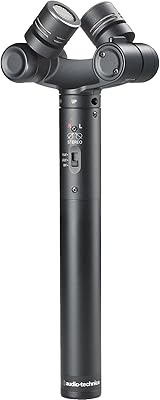
Audio-Technica AT2022 X/Y Stereo Condenser Microphone
68%
78%
Stereo Imaging Quality
86%
Portability & Setup Speed
54%
Build Quality
51%
Output Level & Preamp Compatibility
73%
Low-Frequency Roll-off Usefulness
More
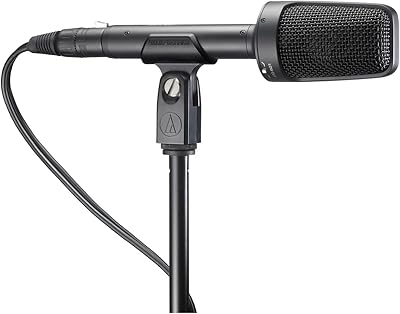
Audio-Technica BP4025 X/Y Stereo Field Recording Microphone
77%
91%
Stereo Image Accuracy
88%
Build Quality
84%
Self-Noise Floor
89%
SPL & Headroom
54%
Setup Complexity
More
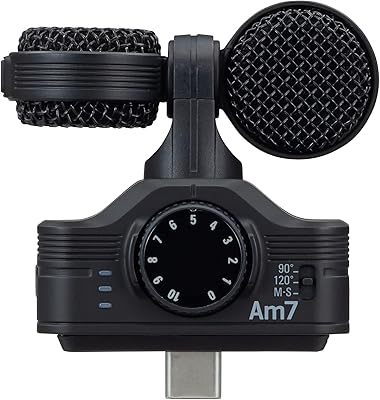
Zoom Am7
Zoom Am7
84%
91%
Audio Clarity
94%
Stereo Versatility
89%
Physical Controls
82%
Build & Portability
58%
Case Compatibility
More
Lineco 840-Slide Archival Storage Box
80%
92%
Build Quality
94%
Archival Material Quality
88%
Organizational System
83%
Drop-Front Accessibility
79%
Capacity Practicality
More
Betty Dain Folding Service Tray, Black, 14.5″ x 13.5″ x 35″
87%
94%
Ease of Use
91%
Portability
88%
Durability
85%
Storage Capacity
92%
Mobility of Wheels
More
Zoom SSH-6 Stereo Shotgun Mic Capsule
85%
92%
Dialogue Clarity
94%
Stereo Width Adjustment
88%
Ecosystem Compatibility
86%
Value for Money
91%
Phase Coherence
More
Lineco Archival Folio Storage Box 9.5 x 12.5 x 1.75 inches
86%
92%
Durability
88%
Ease of Use
94%
Archival Quality
89%
Construction Quality
83%
Size and Capacity
More

FAQ

No, it will not. The XYH-5 is only compatible with the Zoom H5, H6, and Q8 recorders, which share a specific modular capsule mount system. The H4n and H4n Pro use a fixed, non-interchangeable microphone configuration, so there is no physical way to attach this capsule to those bodies.

It does make a genuine difference for casual handheld use — you will hear less of the low-frequency rumble and contact noise that typically creeps in when holding a recorder while moving. That said, it is not a miracle fix; firm knocks or aggressive handling will still transfer noise to the recording. Think of it as a meaningful improvement, not a complete isolation solution.

The stereo image is relatively focused, not wide. A 90-degree X/Y configuration produces a tighter, more forward-facing stereo field compared to ORTF or spaced-pair setups. For capturing a wide choir spread or large room ambience, you would likely find the image too narrow and centered. A mid-side capsule or a dedicated spaced stereo setup would serve those use cases much better.

Yes, it handles high-SPL environments well. The capsule is rated to withstand up to 140 dB sound pressure levels before distorting, which is well above what most live band or drum kit scenarios will produce. Just make sure your recorder's input gain is set appropriately, as the capsule itself will hold up even when the room is loud.

It is strongly recommended. A small number of H6 users have reported that older firmware versions failed to recognize the capsule correctly on first attachment. Updating your recorder to the latest available firmware before attaching any new capsule is good practice and resolves virtually all reported recognition issues.

No windscreen is included in the box. For outdoor use in any noticeable breeze, you will want to pick up a foam or fur windscreen separately — wind noise is one of the most common complaints with unprotected capsules used outside. Zoom and several third-party manufacturers make compatible options sized for the XYH-5.

It takes about ten seconds. The capsule slides onto the top mount of the H5, clicks into the XLR connector, and locks in place without any tools or fiddly adjustments. Swapping back to the stock capsule is equally fast, which is one of the practical advantages of Zoom's modular system.

For most indoor podcast and interview scenarios, the noise floor is perfectly acceptable. Where some users notice it is in acoustically treated, very quiet rooms where the recording environment itself is nearly silent. In a typical untreated room — even a quiet office — the capsule's noise floor will not be a meaningful problem. If you are recording in a professional studio booth with very high standards, a dedicated condenser microphone would be the better choice.

Yes, and this is one of the practical strengths of the X/Y stereo format in general. Because both capsule elements are positioned at the same point in space at 90 degrees to each other, there is minimal phase discrepancy between the two channels. When the stereo track is summed to mono — which happens frequently in broadcast, YouTube, and podcast distribution — the result is clean and coherent without comb filtering or hollow-sounding artifacts.

The rubber housing feels solid and has a reassuring grip to it. Users who have been using this stereo capsule for years consistently report that the build quality holds up well under regular field use — the fit on H5 and H6 bodies stays consistent over time with no loosening of the connection. The main vulnerability is the capsule elements themselves if the unit is dropped directly onto a hard surface, so reasonable care is warranted.

Where to Buy