Overview

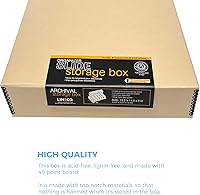
The Lineco 840-Slide Archival Storage Box is built for photographers and collectors who take long-term film preservation seriously. Lineco has been a respected name in conservation-grade materials for decades, and this box reflects that pedigree. Unlike a repurposed shoebox or a generic plastic bin, it's engineered specifically for 35mm slides — holding up to 840 in a single organized unit. That capacity is meaningful for anyone sitting on decades of family history or professional work. The price is noticeably higher than commodity storage, but that gap reflects the cost of genuine archival materials, not just branding.
Features & Benefits

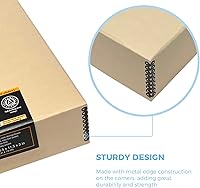
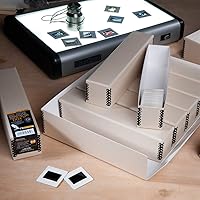
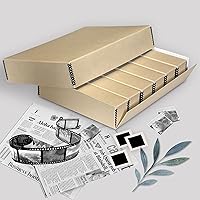
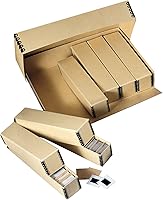
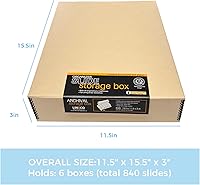
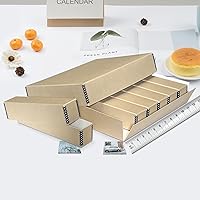
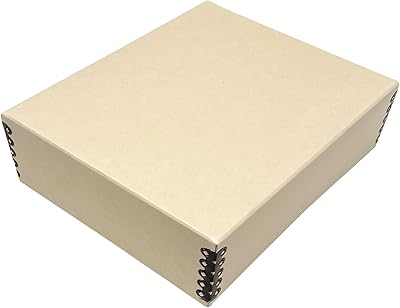
Six inner file cases slot neatly into the drop-front outer box, letting you subdivide a large collection into labeled, manageable groups using the included index dividers. The drop-front lid is a genuinely useful detail — you can pull slides without lifting the entire box off a shelf. Structural integrity comes from metal-reinforced corners, which matter if you're stacking boxes or moving them between locations. The 40-point boxboard is lignin-free and acid-free, meaning it won't off-gas chemicals that degrade film emulsion over decades. At 15.5″ x 11.5″ x 3″, it fits cleanly on standard archival shelving without wasted space.

Best For

This slide storage box earns its place in collections built to last. It's a natural fit for photographers transitioning from deteriorating envelopes or shoeboxes, and for institutions — libraries, museums, small archives — that need a credible, standards-compatible storage solution. Hobbyists working through a digitization project will appreciate the organized inner structure while that process plays out over months. That said, if you only have a small stack of slides or need temporary storage, the investment probably isn't justified. This is a tool for people who treat their film collection as something worth protecting properly for the long haul.

User Feedback

Buyers consistently praise the build quality — the box feels solid and purposeful rather than flimsy, and the inner cases fit snugly without rattling. The drop-front design gets positive marks for shelf usability in practice. Criticism centers almost entirely on cost: a recurring comment is that the per-slide price is steep compared to basic plastic alternatives. Professionals and institutional buyers tend to see that as a fair trade-off; casual hobbyists sometimes feel it needs more justification. A few users note the index dividers are thin and can curl over time with heavy use. Overall, the Lineco archival box earns high marks from those who understand what archival-grade storage actually demands.

Pros

  • Acid-free, lignin-free boxboard actively protects film emulsion from chemical degradation over decades.
  • Metal-reinforced corners hold up well to stacking and repeated handling without warping.
  • The drop-front outer box lets you access inner cases without lifting the whole unit off a shelf.
  • Six inner file cases with index dividers make organizing a large collection genuinely manageable.
  • Made in the USA from materials that meet recognized archival and conservation standards.
  • At roughly a pound, the box is light enough to move around without being a burden.
  • Ranked among the top archival photo storage boxes on Amazon, with consistent buyer satisfaction.
  • The compact 15.5″ x 11.5″ x 3″ footprint fits neatly on standard shelving without awkward overhang.
  • Inner cases fit snugly inside the outer box with no rattling or shifting during transport.

Cons

  • The per-slide cost is noticeably high compared to basic plastic or non-archival storage options.
  • Index dividers are thin and some buyers report they curl or soften with heavy repeated use.
  • Offers zero water or moisture resistance, which is a real gap for anyone storing in a basement or humid space.
  • The tan boxboard color, while standard for archival products, looks utilitarian and may not suit everyone.
  • Only one size is available, so collectors with non-standard or mixed-format slides may find it limiting.
  • No locking mechanism means the box can open if tipped or dropped during a move.
  • Buyers with very small collections may find the 840-slide capacity wasteful and the price hard to justify.
  • The outer box is not labeled or windowed, making it harder to identify contents without opening it.

Ratings

The scores below reflect an AI-driven analysis of verified global buyer reviews for the Lineco 840-Slide Archival Storage Box, with spam, incentivized, and bot-generated feedback actively filtered out before scoring. Each category captures both what users consistently praised and where real frustrations emerged — nothing has been smoothed over. The result is an honest, data-grounded snapshot of how this film preservation case performs across the dimensions that actually matter to buyers.

Build Quality
92%
Buyers across professional and hobbyist segments consistently describe the outer box as rigid and well-finished, with the metal-reinforced corners holding their shape even after years of shelf use. Several institutional buyers noted it withstands repeated stacking without warping — something generic photo boxes fail at quickly.
A small number of users received units where the drop-front panel felt slightly misaligned out of the box, requiring minor adjustment before the lid sat flush. This appears to be a minority quality-control issue rather than a systemic design flaw.
Archival Material Quality
94%
The acid-free, lignin-free boxboard is the core reason most serious collectors choose this over cheaper alternatives, and buyers with chemistry or conservation backgrounds specifically call out the material spec as legitimate and trustworthy. Slides stored in this case show no yellowing or off-gassing-related damage even after extended storage periods.
A few users pointed out that the inner cases, while also archival-grade, feel thinner than the outer box and wished the material weight was more consistent throughout the full system. This is a minor concern but worth noting for buyers prioritizing uniform construction.
Organizational System
88%
The six inner cases combined with index dividers give collectors a meaningful way to break down large collections — by decade, subject, or film stock — without needing supplementary organizers. Hobbyists mid-digitization particularly appreciate being able to separate scanned from unscanned slides at a glance.
The index dividers themselves are thin and prone to curling with frequent handling, which frustrates buyers who access their collection regularly rather than leaving it on a shelf. Some users resort to laminating or replacing them with stiffer card stock after the first year.
Drop-Front Accessibility
83%
Most buyers confirm the drop-front mechanism works exactly as intended — you can pull an inner case off a crowded shelf without clearing space above it, which matters in tight archival rooms or home offices. This is a detail that generic storage boxes simply don't offer, and it's consistently mentioned as a practical advantage.
The drop-front panel isn't secured when open, so on uneven surfaces it can swing further than expected. A couple of users also noted that the mechanism feels less smooth over time as the board slightly softens at the hinge point with repeated use.
Capacity Practicality
79%
21%
For photographers with large collections — think decades of family slides or a professional archive — the 840-slide capacity in a single, shelf-friendly footprint is genuinely useful and eliminates the need for multiple smaller boxes cluttering a storage area.
The 840-slide figure assumes standard thin cardboard-mounted slides, and buyers using thicker plastic or glass mounts report fitting significantly fewer, sometimes under 600. This gap between advertised and real-world capacity is a recurring point of mild frustration.
Value for Money
61%
39%
Buyers who understand archival material science consistently rate this as fairly priced given the certified acid-free construction, USA manufacturing, and the included six inner cases — they compare it to institutional-grade supplies rather than retail photo boxes.
Casual hobbyists and first-time buyers frequently express sticker shock, particularly when calculating cost per slide against budget plastic alternatives. For collections under 300 slides, it is genuinely difficult to justify the price gap on practical grounds alone.
Shelf Footprint & Storage Fit
86%
At 15.5″ x 11.5″ x 3″, the box aligns cleanly with standard archival shelving units and flat-file cabinet dimensions, and buyers setting up dedicated storage rooms note it stacks and rows predictably without wasted space.
For home users without dedicated archival shelving, the dimensions can feel awkward — it's too wide for most standard bookcase shelves and too shallow for deep utility shelves, which means some buyers end up storing it horizontally on a closet floor.
Durability Over Time
87%
Long-term owners — some reporting five or more years of use — describe the outer box maintaining its structural integrity without significant deformation, which speaks well to the 40-point board weight Lineco uses compared to lighter-gauge competitors.
The metal corner reinforcements on a small percentage of boxes show surface oxidation after extended storage in slightly humid environments, even without direct moisture exposure. It does not compromise structural function but is visually noticeable on the tan board.
Ease of Setup
91%
There is essentially no setup required — the inner cases drop straight into the outer box and the index dividers slot in without tools or assembly. Buyers mention being able to start loading slides within minutes of opening the package.
The index dividers have no pre-printed labels or template guide, so new users have to devise their own labeling system from scratch, which is a minor but real friction point for buyers who expected a more turnkey organizational experience.
Inner Case Fit & Security
84%
The inner cases fit the outer box snugly enough that they don't shift or rattle during transport, which buyers moving collections between storage locations or lending boxes to institutions particularly appreciate.
Some buyers note the fit is almost too snug when the outer box is new, requiring slight force to seat all six inner cases flush — this loosens with use, but the initial stiffness catches a few people off guard.
USA Manufacturing & Brand Trust
89%
Lineco's reputation in the conservation and fine art supply space is well established, and buyers — especially institutional ones — cite the domestic manufacturing as a trust signal when making purchasing decisions for long-term archival projects.
A small segment of international buyers note that USA manufacturing adds to shipping costs and lead times when ordering from outside North America, which slightly erodes the value proposition for that audience.
Weight & Portability
77%
23%
At 16 ounces empty, the box is light enough to carry comfortably when partially loaded, and buyers who bring it to scanning sessions or move it between rooms don't report it being burdensome.
Fully loaded with 840 slides and all six inner cases, the weight increases substantially, and the box has no handle or carrying grip, making transport across longer distances awkward — particularly for older users managing large collections.
Water & Environmental Resistance
31%
69%
The archival boxboard does provide a basic physical barrier against dust and incidental light exposure, which is meaningful for long-term shelf storage in controlled indoor environments.
The box offers zero water resistance — not even splash resistance — and buyers who discovered this after storing collections in basements or garages report real damage from minor flooding or condensation. This limitation is easy to overlook at purchase and carries serious consequences.

Suitable for:

The Lineco 840-Slide Archival Storage Box is the right choice for anyone who has accumulated a substantial 35mm slide collection and wants to store it properly for the long term. Photographers who shot on slide film throughout the 1960s through 1990s — whether professionally or as dedicated hobbyists — will find the 840-slide capacity genuinely useful rather than just a marketing figure. Institutions like small libraries, historical societies, and community archives will appreciate that the materials meet accepted conservation standards without requiring a custom solution. It also works well as an organized staging area for hobbyists working through a multi-month digitization project, since the six inner cases and index dividers make it easy to track which slides have been scanned and which haven't. Anyone moving on from deteriorating paper envelopes or old cardboard boxes will immediately notice the difference in structural quality and chemical safety.
Not suitable for:

The Lineco 840-Slide Archival Storage Box is not the right fit for every buyer, and it's worth being direct about that. If your slide collection fits in a single carousel tray or amounts to fewer than a few hundred slides, this box is more storage than you need and the cost won't feel justified. Budget-conscious buyers who simply want to keep slides off the floor and reasonably protected will find cheaper plastic alternatives that serve that limited purpose just fine. The box is also not water resistant in any meaningful way, so it won't protect against a basement flood or a leaky shelf — anyone storing materials in a damp environment needs to think carefully about that limitation. Finally, buyers hoping for a display or presentation solution should look elsewhere; this is strictly a shelf-storage and archival organization tool, not a viewing system.
Specifications

  • Dimensions: The outer box measures 15.5″ long by 11.5″ wide by 3″ high, fitting standard archival shelving without overhang.
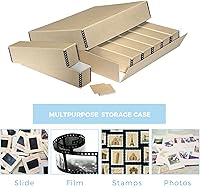
  • Capacity: Holds up to 840 mounted 35mm slides when all six inner file cases are fully loaded.
  • Inner Cases: Includes six individual slide file cases that nest snugly inside the drop-front outer box.
  • Dividers: Index dividers are included with each inner case to allow further subdivision and labeling of slide groups.
  • Material: Constructed from 40-point archival boxboard that is both lignin-free and acid-free to prevent chemical film damage.
  • Edge Reinforcement: All corners are reinforced with metal edges to maintain structural integrity under stacking pressure and regular handling.
  • Closure Type: The outer box uses a drop-front flip-top opening mechanism that allows one-handed shelf access without removing the box.
  • Weight: The complete unit weighs 16 ounces, making it light enough to reposition on shelves without difficulty.
  • Origin: Manufactured in the USA by Lineco, a brand specializing in archival and conservation-grade art and photography supplies.
  • Color: The exterior is finished in standard archival tan, consistent with conservation-grade boxboard products.
  • Water Resistance: The box offers no water or moisture resistance and should not be used in damp or flood-prone environments.
  • Max Load: The recommended maximum load capacity for the outer box is 6 pounds.
  • Item Count: The package contains one outer box unit with six inner file cases and associated index dividers included.
  • Acid-Free Rating: The boxboard meets acid-free standards, meaning it will not emit corrosive off-gases that degrade film emulsion over time.
  • Market Rank: Ranked #44 in the Archival Photo Storage Boxes category on Amazon at the time of publication.

Related Reviews
Lineco Archival Photo Storage Box 5x7
87%
94%
Durability and Build Quality
88%
Ease of Use (Removable Lid)
91%
Storage Capacity
95%
Archival Protection (Acid-Free Materials)
85%
Design and Organization
More
Lineco Museum Archival Drop Front Storage Box
79%
88%
Build Quality
91%
Archival Material Quality
86%
Drop-Front Usability
74%
Value for Money
62%
Closure & Security
More
Lineco Museum Archival Storage Box 8x10x3
88%
88%
Durability
91%
Ease of Use
85%
Storage Capacity
94%
Material Quality
90%
Design & Organization
More
Lineco Museum Archival Storage Box 17x22x3 in.
85%
92%
Build Quality
89%
Usability & Access
90%
Durability & Protection
85%
Size & Compatibility
88%
Design & Features
More
Lineco Archival Folio Storage Box 23.5x30.5x1.75 in
87%
93%
Storage Capacity
91%
Build Quality
88%
Ease of Use
90%
Durability
85%
Design & Functionality
More
Lineco Clamshell Folio Storage Box 11.5x17.5
80%
91%
Build Quality
93%
Archival Material Quality
88%
Size & Fit Accuracy
86%
Lid & Closure Design
84%
Dust & Light Protection
More
Lineco Archival Folio Storage Box 9.5 x 12.5 x 1.75 inches
86%
92%
Durability
88%
Ease of Use
94%
Archival Quality
89%
Construction Quality
83%
Size and Capacity
More
Lineco 12x15x10 Record Storage Box
71%
91%
Build Quality
94%
Archival Material Quality
88%
Stackability
61%
Value for Money
76%
Lid Fit & Closure
More
Lineco 13x19 Black Museum Storage Box
86%
94%
Build Quality
88%
Ease of Access
91%
Durability
85%
Storage Capacity
82%
Design and Aesthetics
More
Golden State Art Archival Folio Storage Box 16x20
87%
91%
Build Quality
89%
Ease of Use
94%
Material Quality
87%
Durability
84%
Design
More

FAQ

Yes, in terms of the box itself contributing to degradation — that risk is effectively eliminated. The acid-free, lignin-free boxboard won't off-gas chemicals that attack film emulsion, which is the main way that cheap cardboard storage causes yellowing. That said, the box won't reverse damage that's already happened, and environmental factors like heat and humidity still matter regardless of what you store slides in.

This film preservation case is designed and sized around standard mounted 35mm slides. Smaller formats like 110 or 126 would fit loosely and wouldn't be held securely by the inner cases, which could lead to shifting and scratching. For non-standard formats, you'd want to look for archival sleeves or enclosures designed specifically for those dimensions.

The front panel of the outer box folds down, which lets you slide out the inner cases without lifting the whole box off the shelf. It's a practical detail that sounds minor but makes a real difference if you're accessing your collection regularly. You don't have to clear space above the box or pull it fully out to get to what you need.

It's a reasonable working estimate based on standard mounted slides in cardboard mounts, which are the most common type. If your slides are in thicker plastic or glass mounts, you'll fit fewer — possibly noticeably fewer. Thin cardboard mounts will get you closer to the stated capacity.

Yes, the metal-reinforced corners are specifically there to handle stacking. The box is sturdy enough that a few units high on a shelf is fine under normal conditions. Just be sensible about weight — the recommended max load is 6 pounds, so don't pile heavy items directly on top.

The inner cases come with index dividers, but labeling is DIY. Most people use adhesive label tape or small index cards slipped into the divider slots. It's a straightforward system and flexible enough to accommodate however you want to organize your collection — by year, subject, film stock, or anything else.

Honestly, probably yes — at least from a capacity standpoint. You'd be paying for storage you won't use. For a smaller collection, individual archival slide pages in a binder or a single smaller file case might be a better fit economically. That said, if you plan to keep shooting or digitizing and expect your collection to grow, buying the right system now avoids the hassle of switching later.

New archival boxboard can have a faint papery smell initially, which is normal and harmless. It's nothing like the chemical smell of cheap cardboard. It typically fades within a few days of the box being open. If you're sensitive to any paper smells, airing it out before loading your slides is a reasonable precaution.

They're functional but not the most robust part of the system. With repeated handling they can develop soft folds or start to curl at the edges. They're not laminated or reinforced, so if you're accessing your collection very frequently, you may want to replace them after a year or two. For archival shelf storage where you're not pulling them out constantly, they hold up fine.

It's designed specifically for mounted 35mm slides, so the inner cases are proportioned for that format. Uncut negative strips or prints wouldn't sit properly in this system. For negatives, Lineco and other archival suppliers make dedicated negative storage pages and binders that are a better structural fit.