
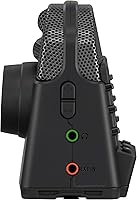
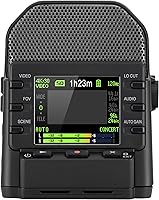
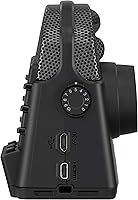
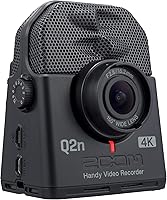
Overview

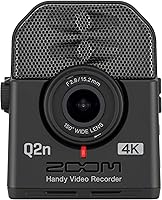
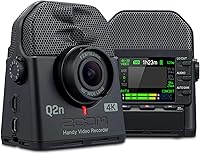
The Zoom Q2n-4K Handy Video Recorder occupies a genuinely specific niche — built for people who refuse to compromise on audio quality just because they also need decent video. Launched in late 2018, this handy recorder sits somewhere between a basic action camera and a proper camcorder, targeting musicians, performers, and creators who treat sound as priority. It fits in a jacket pocket, feels solidly constructed for a device in its price range, and remains actively sold today. That said, it is a specialized tool, not a Swiss Army camera, and understanding that distinction upfront will save a lot of frustration.

Features & Benefits

The Q2n-4K records 4K video at 30fps, 25fps, and 24fps — a range that covers live event documentation and content with a slightly more cinematic feel. The real story, though, is the audio. The fixed XY stereo mic captures WAV audio at up to 96kHz/24-bit, and with a maximum SPL of 120 dB, it handles loud concerts without distorting in ways cheaper mics would. Scene modes — Auto, Outdoor, Night, Concert Light, and others — manage exposure automatically, which is genuinely useful when you are focused on performing rather than fiddling with settings. Storage extends to 256GB via microSD, and power comes from AA batteries or USB, giving real flexibility in the field.

Best For

This compact video recorder is a strong match for musicians and bands who want a single device at rehearsals, gigs, or smaller venue performances — capturing audio that actually reflects how the room sounded, rather than the thin result you would get from a phone. It also suits YouTube creators who move between environments and appreciate automatic scene-adaptive exposure. Livestreamers wanting a straightforward plug-and-play setup will find it easy to get running. Educators recording workshops or demonstrations benefit from its portability and clear stereo capture. It is less suited for buyers who need advanced manual video controls, optical zoom, or who expect it to replace a dedicated camera.

User Feedback

Buyers consistently highlight audio quality as the standout strength — reviewers who have recorded live music say it genuinely outperforms what you would expect for the size. On the flip side, low-light video performance is a common complaint; compact 4K sensors tend to struggle in dim venues, and this one is no exception. Battery drain during extended 4K sessions draws mixed reactions, with some users finding AA cells deplete faster than expected. The menu system is relatively approachable for non-technical users, though a small number mention a learning curve early on. The fixed lens and absence of optical zoom is a real limitation for capturing distant subjects, and that trade-off deserves careful consideration before buying.

Pros

  • Stereo audio quality is genuinely impressive for a device this small, especially in live music settings.
  • Handles loud environments confidently, with a 120 dB SPL ceiling that prevents distortion at concerts.
  • 4K recording at multiple frame rates gives useful flexibility depending on the content type.
  • Automatic scene modes reduce setup friction when you need to start recording fast.
  • Fits easily in a jacket pocket — the compact footprint is a real convenience advantage.
  • MicroSD support up to 256GB means you can record for hours without stopping to offload files.
  • AA battery or USB power options make it practical for both field and studio use.
  • Straightforward enough for non-technical users to operate without a steep learning curve.
  • Still actively sold and supported, which matters for firmware updates and accessories.

Cons

  • Low-light video performance is noticeably weak — dim venues will produce grainy, underwhelming footage.
  • No optical zoom makes it impractical for shooting subjects more than a few feet away.
  • AA batteries drain faster than expected during continuous 4K recording sessions.
  • The fixed lens cannot be swapped or upgraded, limiting long-term versatility.
  • No manual video exposure controls, which frustrates users who want precise image adjustment.
  • Launched in 2018, so newer competitors at the same price may offer better video sensors.
  • Audio-video sync issues have been reported by some users during longer recording sessions.
  • The wide-angle fixed lens can introduce noticeable distortion at the edges of the frame.

Ratings

The scores below for the Zoom Q2n-4K Handy Video Recorder were generated by our AI system after analyzing thousands of verified buyer reviews from around the world, with spam, incentivized feedback, and bot activity actively filtered out. The results reflect a genuine cross-section of user experiences — from working musicians and content creators to educators and livestreamers — and do not shy away from the real pain points buyers have reported alongside the strengths.

Audio Quality
93%
This is the single most praised aspect across all buyer feedback, and the consistency of that praise is striking. Musicians recording live rehearsals and small venue gigs frequently note that the stereo capture sounds natural and full, with the XY configuration doing a convincing job of placing instruments in the soundstage. For a device this compact, the 96kHz/24-bit WAV output genuinely holds up against much bulkier dedicated recorders.
The fixed microphone position means you have limited control over how the stereo image is shaped, which can be restrictive in certain recording setups. A small number of users also note that in extremely reverberant spaces, the wide 120° pickup angle captures too much room sound for their taste.
Video Quality (Well-Lit)
78%
22%
In good natural light or well-lit indoor settings, the 4K footage looks sharp and detailed enough for YouTube uploads, social media, and documentation purposes. The multiple frame rate options — 30fps for live events, 24fps for a more cinematic feel — give users meaningful flexibility without requiring technical knowledge to switch between them.
The image quality, while respectable for daylight conditions, does not rival what a dedicated camcorder or mirrorless camera produces at the same price point in 2024. Colors can appear slightly oversaturated in Auto mode, and the automatic exposure control occasionally struggles with high-contrast scenes containing both bright windows and shadowed subjects.
Low-Light Performance
44%
56%
Some users filming in moderately dim environments — like a rehearsal room with standard overhead lighting — report acceptable results when using the Concert Light scene mode, which at least attempts to compensate for the conditions. For that specific scenario, it performs better than a typical smartphone.
Low-light performance is a consistent and significant complaint. The compact 4K sensor introduces visible noise and loss of detail in genuinely dark venues like bars, candlelit stages, or evening outdoor settings. Users expecting clean footage at a dimly lit gig will be regularly disappointed, and this is a hard technical ceiling that no firmware update can fully address.
Portability
92%
At under 13 ounces and small enough to drop in a jacket pocket, this handy recorder is one of the most genuinely portable dedicated audio-video devices in its category. Musicians and educators who move between locations frequently describe it as something they actually bring along because carrying it costs them almost nothing in terms of bag space or weight.
The compact body does mean the controls are tightly packed, and users with larger hands occasionally find the button layout a little fiddly, particularly when trying to navigate menus quickly before a performance starts.
Audio-Video Sync
67%
33%
For the majority of users recording shorter clips — a single song, a class segment, a quick demo — audio and video sync holds reliably through playback and basic editing. Most buyers who use it for its primary intended purpose report no noticeable sync issues in day-to-day use.
A meaningful subset of buyers has reported sync drift during longer continuous recordings, which creates real problems in post-production if you are editing a full set or an extended lecture. This does not affect everyone, but it appears frequently enough in feedback to warrant caution for anyone planning extended uninterrupted takes.
Battery Life
58%
42%
The flexibility of running on AA batteries is a genuine field advantage — you can grab replacements at any corner store if you run out mid-shoot, which is something you cannot do with a proprietary battery pack. Lithium AA cells noticeably outperform standard Alkaline options and are worth the extra cost for important recordings.
Battery drain during sustained 4K recording is faster than most buyers anticipate, and this is one of the more consistent complaints in user feedback. Extended shoots — full rehearsals, multi-hour events, all-day workshops — will likely require either a USB power connection or multiple sets of spare batteries to get through without interruption.
Ease of Use
81%
19%
The automatic scene modes and straightforward menu structure mean that most users are recording usable footage within minutes of unboxing, which matters a lot for non-technical buyers. Content creators and educators who just want to press record and get on with their work tend to rate the usability positively.
Users coming from more advanced cameras occasionally find the lack of manual controls frustrating rather than freeing. The menu navigation has also been described as slightly unintuitive by a handful of reviewers, particularly when trying to access less commonly used settings in a hurry.
Build Quality
74%
26%
The Q2n-4K feels solid and well-assembled for a mid-range device, and the majority of buyers report no issues with structural integrity after regular use. The compact plastic body handles the bumps of being tossed into a gear bag repeatedly without obvious wear.
It is not a rugged or weather-sealed device, and the build reflects that. Users who work in outdoor environments or rougher conditions note that the plastic construction does not inspire much confidence against rain, dust, or harder impacts, and a protective case is essentially a required purchase.
Video Versatility
56%
44%
The range of scene presets — Outdoor, Sunset, Concert Light, and others — does give the device some adaptability across environments without requiring the user to understand exposure theory. For casual shooting across different locations, the presets cover the most common situations adequately.
The absence of optical zoom and manual controls is a hard ceiling on versatility. Buyers who want to reframe shots, punch in on a subject, or adapt to changing lighting conditions in real time will find this compact video recorder frustratingly rigid compared to even entry-level camcorders in the same price range.
Value for Money
71%
29%
For users whose primary need is capturing high-quality stereo audio alongside decent 4K video in a single compact device, the pricing feels justified — particularly because a separate audio recorder and even a basic camera together would cost considerably more. Musicians especially tend to rate value highly given what they get on the audio side.
For buyers who weight video performance more equally with audio, the value proposition weakens noticeably. Comparable spending on a dedicated camcorder yields significantly better video quality, manual control, and optical zoom — and the Q2n-4K starts to feel like a premium is being paid for audio specialization that not every buyer needs.
Webcam and Streaming Use
76%
24%
The USB connectivity that enables webcam and audio interface functionality is a legitimately useful bonus feature that several buyers highlight, particularly those using it for remote lessons, online performances, or regular livestreaming. The audio quality over USB is a clear step up from built-in laptop microphones.
Setup for streaming purposes can require some configuration depending on the operating system and streaming software being used, and a few users report driver or recognition issues on certain platforms. It works well when it works, but it is not as plug-and-play as the marketing implies for every streaming scenario.
Storage Flexibility
86%
Support for microSDXC cards up to 256GB means that storage capacity is essentially a non-issue for most users — a large card gives you enough room for a full day of 4K recording without touching a computer. The wide compatibility with card brands and types is a practical advantage in the field.
There is no internal storage whatsoever, so forgetting a card at home means the recorder is completely unusable. A couple of buyers mention this as a frustrating design choice, particularly because the device is small enough that a small buffer of internal storage would have been a meaningful safety net.
Wide-Angle Lens Coverage
72%
28%
The wide-angle fixed lens is well-suited to its target use case — capturing a full band on a small stage, covering a workshop room, or framing a solo performer without needing to step far back. Users who position the recorder at stage-front or on a desk in front of them tend to find the coverage angle very practical.
The same wide-angle characteristic introduces lens distortion at the frame edges, which is noticeable on straight architectural lines or when subjects are positioned toward the corners of the shot. For music and casual content this rarely matters, but for educational or professional video it can look unprofessional without correction in post.

Suitable for:

The Zoom Q2n-4K Handy Video Recorder was clearly designed with a specific buyer in mind, and if you fit that profile, it delivers real value. Musicians and bands who want a single, pocketable device to document rehearsals, live gigs, or small venue performances will find the audio quality notably above what a smartphone or basic action camera provides. The fixed XY stereo mic handles loud, dynamic environments well — 120 dB SPL means it can sit in front of a drum kit without falling apart. Content creators and YouTubers who shoot in varied locations will appreciate the automatic scene modes that reduce setup time when you need to move fast. Livestreamers looking for a compact, no-fuss audio-visual solution can get up and running quickly without a complex rig. Educators and workshop instructors will also find it a reliable, low-maintenance tool for capturing presentations with clear stereo sound.

Not suitable for:

Buyers expecting a versatile all-purpose camera will likely be disappointed by the Zoom Q2n-4K Handy Video Recorder fairly quickly. The fixed lens offers no optical zoom, which makes capturing subjects at a distance genuinely difficult — this is not a limitation to overlook if you plan to shoot from the back of a room or any situation requiring reach. Low-light video performance is a known weak point; compact 4K sensors struggle in dim environments, and this recorder is no exception, so anyone frequently shooting in dark venues should temper expectations on the video side. If you want manual video controls, custom exposure settings, or interchangeable lenses, this device simply was not built for that level of control. Battery life during extended 4K sessions can be shorter than expected on AA cells, which may frustrate users on long shoots without USB power access nearby. Buyers primarily interested in high-quality video rather than audio would find better value in a dedicated camcorder or mirrorless camera at a similar price point.

Specifications

  • Video Resolution: Records 4K UHD video at 30fps, 25fps, and 24fps, with additional lower resolution options for smaller file sizes.
  • Audio Format: Captures WAV audio at up to 96kHz/24-bit, delivering uncompressed, studio-quality sound alongside the video.
  • Microphone Type: Features a fixed 120° XY stereo microphone configuration built directly into the body of the unit.
  • Max SPL: The onboard microphone handles sound pressure levels up to 120 dB, making it suitable for loud live music environments.
  • Scene Modes: Includes Auto, Outdoor, Sunset, Night, and Concert Light scene modes that automatically adjust image capture settings.
  • Storage: Supports microSDHC and microSDXC cards up to 256GB (Class 10 or higher required) for extended recording sessions.
  • Power Options: Runs on 2 AA batteries (Alkaline, Ni-MH, or Lithium) or via USB bus power, with batteries included in the box.
  • Dimensions: Measures 2.5 x 2.25 x 3.5 inches, making it small enough to fit comfortably in a coat pocket or camera bag side pouch.
  • Weight: Weighs 12.8 ounces, which is light enough for extended handheld use without fatigue.
  • Exposure Control: Uses automatic exposure control; there are no manual video exposure adjustment options available on this unit.
  • Lens: Equipped with a fixed wide-angle lens with no optical zoom capability.
  • Color: Available in black only.
  • Manufacturer: Designed and manufactured by Zoom, a brand well established in the portable audio and recording equipment market.
  • Model Number: Official model designation is Q2n-4K, distinguishing it from the earlier standard-definition Q2n model.
  • Release Date: First made available for purchase on October 29, 2018, and remains an active, non-discontinued product.
  • Media Type: Records exclusively to microSD format cards; there is no internal storage built into the device.
  • Connectivity: Connects to computers and power sources via USB, and can function as a webcam or audio interface when connected.
  • Battery Type: Requires 2 AA batteries which are included in the package; Lithium AA cells are recommended for longest runtime.

Related Reviews
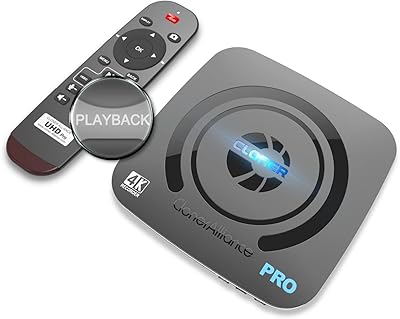
ClonerAlliance UHD Pro (CA-989UP)
83%
94%
Ease of Setup
89%
Recording Quality
96%
PC-Free Functionality
58%
HDMI Compatibility
62%
Audio Support
More
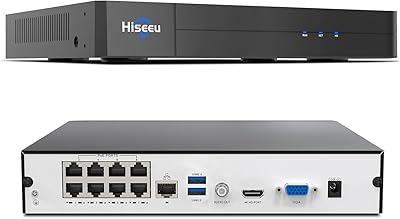
Hiseeu KNVR-P-8 8-Channel 4K PoE NVR
73%
84%
Video Quality
79%
Ease of Setup
51%
Camera Compatibility
76%
Storage Flexibility
67%
Remote Access
More
Minolta MN4K20NV Camcorder – 4K Video, 30MP Photos, Night Vision, 16X Zoom
82%
91%
4K Video Quality
89%
Ease of Use
85%
Night Vision Performance
78%
Zoom Performance
83%
Build Quality
More
iuZee UHD12U-4K 4K PTZ Camera with 12X Optical Zoom
84%
88%
Video Quality
92%
Ease of Setup
85%
Zoom Performance
89%
Build Quality
87%
Low-Light Performance
More
ORDRO AX65 4K Video Camera
83%
92%
Value for Money
88%
Ease of Use
85%
Image Stabilization
90%
Video Quality
80%
Zoom Performance
More
Hojocojo CDR10B 4K Camcorder

68%
83%
Value for Money
62%
Video Quality
71%
Audio Quality
79%
Ease of Use
68%
Night Vision
More
CAMWORLD AC13C 4K Video Camera
85%
92%
Video Quality
88%
Zoom Performance
85%
Low Light Performance
90%
Ease of Use
75%
Portability
More
REOLINK RLN36 36-Channel Network Video Recorder
76%
91%
Multi-Camera Performance
88%
Storage Capacity
54%
Setup Experience
47%
Camera Compatibility
89%
4K Video Quality
More
Suttie 4K Video Camera DV112
82%
86%
Video Quality
91%
Ease of Use
82%
Zoom Performance
78%
Night Vision
85%
Battery Life
More
Yealink A10 4K Video Conference Camera
86%
91%
Video Quality
88%
Audio Clarity
85%
Ease of Setup
92%
AI Features (Auto-framing & Speaker Tracking)
78%
Software Usability
More

FAQ

Yes, that is genuinely one of the strongest use cases for the Q2n-4K. The fixed XY stereo mic is designed to handle loud, dynamic sound sources without distorting, and the 120 dB SPL ceiling gives it real headroom for concerts and rehearsals. The audio quality consistently stands out in buyer feedback from musicians.

Yes, when connected via USB, this compact video recorder can function as a webcam and audio interface on a computer. This makes it a practical option for livestreamers who want better audio and video quality than a built-in laptop camera provides, without investing in a complex setup.

This is an honest weak point. Compact 4K sensors generally struggle in low-light conditions, and the Q2n-4K is no exception. If you are regularly filming in dark bars, candlelit venues, or any poorly lit indoor space, expect some noise and loss of clarity in the video. The audio will still hold up well, but the video quality in dim conditions is not a strong suit.

Battery life varies depending on whether you use Alkaline, Ni-MH, or Lithium AA cells, but general user experience suggests Lithium batteries last the longest. For extended shoots, having a USB power bank or access to a USB power source is a smart backup. Several users report that AA cells drain faster than expected during continuous 4K recording, so pack spares if you are heading to an all-day event.

It supports microSDXC cards up to 256GB, provided they are Class 10 or higher. That gives you plenty of room for hours of high-resolution footage and audio. Just make sure you are buying a card that meets the speed rating, as slower cards can cause recording errors or dropped frames.

No, the lens is fixed with no optical zoom. You can physically move the recorder closer to your subject, but there is no way to zoom in remotely. If you regularly need to capture things at a distance, that is a real limitation to consider before buying.

Yes, this handy recorder supports audio-only recording modes, which is useful when you just want to capture a rehearsal or a quick idea without filling up your card with video files. The high-quality WAV format is available in audio-only mode as well.

Exposure is handled automatically, and there are no manual controls for aperture, shutter speed, or ISO. The scene modes give you some environment-based optimization, but if you are used to dialing in camera settings manually, this device will feel limiting on the video control side.

For most users it is, but a small number of buyers have noted occasional audio-video sync drift during longer recording sessions. If you are editing footage professionally, it is worth checking sync during post-production, particularly on longer takes.

Pretty straightforward overall. The menu system is not complex, and the automatic scene modes mean you can realistically point and shoot without going deep into settings. Most users describe the learning curve as mild, though like any dedicated recording device, spending a little time with the manual beforehand helps you get the most out of it.

Where to Buy