Overview

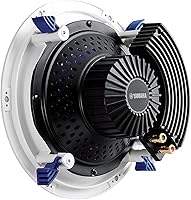
The Yamaha NS-IC800 8-Inch In-Ceiling Speakers sit in a comfortable middle ground — capable enough for serious home theater use, practical enough for whole-home audio, and priced where most enthusiasts won't need to wince. The 8-inch woofer and 2-way crossover design give you a genuinely broad frequency response without the bulk of floor-standing alternatives. What makes these particularly attractive is the slim flush-mount profile: once installed and painted, they essentially disappear into the ceiling. That's not just an aesthetic bonus — it's often the whole reason someone goes the in-ceiling route in the first place. The sealed back cover adds a layer of real-world practicality that sets them apart from cheaper alternatives.
Features & Benefits

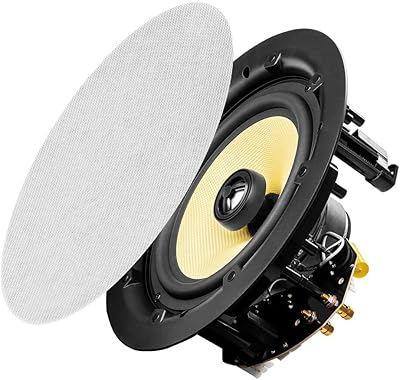
The polypropylene mica cone woofer is the workhorse here, keeping distortion in check across the mid and low range where most listening actually happens. A dome tweeter takes over at 3.5 kHz, extending response cleanly up to 28 kHz — enough headroom that high-frequency detail doesn't feel rolled off or congested. The acoustic baffle uses a spiral grain pattern to help scatter sound more evenly across a room, which makes a noticeable difference in open-plan spaces. For installation, the large mounting clamps handle varying ceiling thicknesses without fuss, and the 8-ohm impedance means the NS-IC800s will work with virtually any standard AV receiver or amplifier without compatibility headaches.

Best For

These in-ceiling speakers make the most sense for homeowners who want audio spread across multiple rooms — kitchens, bedrooms, living rooms — without wires or enclosures cluttering the space. They're also a natural fit for home theater builds where rear or height channels are needed but visible speakers aren't an option. That said, ceiling work is real work: cutting holes, fishing wire, and securing speakers above your head isn't a casual weekend DIY project for everyone. If you're comfortable with the basics, the install is manageable. The sealed back and mild moisture resistance also make these Yamaha ceiling speakers viable for covered patios or well-ventilated bathrooms.

User Feedback

Buyers who've put these Yamaha ceiling speakers through their paces tend to agree on a few things. Sound clarity at everyday listening levels draws consistent praise — voices and instruments come through cleanly without harshness. Installation gets positive marks too, particularly the mounting clamps, which reportedly make getting the speaker seated and secured less of a struggle than expected. Where opinions divide is on bass. At higher volumes or for music with heavy low-end content, the NS-IC800s benefit considerably from a dedicated subwoofer — something buyers who expected wall-shaking bass without one discovered the hard way. Long-term durability feedback leans positive, and most feel the Yamaha name holds up at this price point.

Pros

  • Sound clarity at moderate listening volumes is genuinely impressive for an in-ceiling design.
  • The sealed back cavity keeps dust and light moisture out, adding meaningful longevity in real-world installs.
  • Large mounting clamps make securing the speakers into varied ceiling thicknesses far less frustrating than competing designs.
  • The paintable grille lets these blend invisibly into virtually any ceiling color or finish.
  • At 8 ohms nominal impedance, these in-ceiling speakers are compatible with almost any standard AV receiver out of the box.
  • The polypropylene mica cone woofer keeps mid and low frequencies clean without the muddiness cheaper drivers often produce.
  • Frequency response extends cleanly up to 28 kHz, meaning high-end detail is present and uncompressed.
  • The slim 4.3-inch mounting depth makes installation practical even in ceilings with limited clearance.
  • Sold as a pair, the NS-IC800s represent solid value for a two-channel or surround sound build.
  • Yamaha's build quality reputation holds up here — buyers consistently report no rattles, no distortion creep over time.

Cons

  • Without a dedicated subwoofer, bass at higher volumes falls noticeably short for bass-heavy music or action movie soundtracks.
  • Ceiling installation is a committed, time-consuming project — not a casual plug-and-play setup for most buyers.
  • No included speaker wire or hardware beyond the clamps means additional sourcing before you can even begin.
  • The 10.9-inch diameter cutout requirement rules out ceilings with closely spaced joists or limited clearance zones.
  • These in-ceiling speakers offer no wireless connectivity — running physical wire through finished ceilings can be a significant undertaking.
  • Sound dispersion from a ceiling-mounted position can feel diffuse in rooms with very high ceilings or unusual geometry.
  • The warranty coverage is listed as limited, with no clear extended protection for long-term peace of mind.
  • Resale or removal is impractical — patching ceiling holes if you move or upgrade adds hidden long-term cost.

Ratings

Our scores for the Yamaha NS-IC800 8-Inch In-Ceiling Speakers were built by AI after analyzing thousands of verified buyer reviews from global markets, with spam, bot-generated feedback, and incentivized reviews actively filtered out before scoring. Each category reflects the honest consensus of real long-term owners — including the frustrations and limitations that balanced feedback consistently surfaces alongside the genuine strengths.
Sound Clarity
84%
At everyday listening volumes — background music flowing through a kitchen, dialogue during a living room surround session — these in-ceiling speakers deliver genuinely clean, articulate audio. The 2-way crossover keeps the midrange from feeling congested, and voices in particular come through with a clarity that owners consistently call out in their feedback.
Push the volume into the upper range and overall coherence softens noticeably, particularly on complex orchestral passages or dense mixes. Buyers expecting hi-fi-grade precision at loud levels often find the sound slightly diffuse compared to quality bookshelf speakers at a comparable price point.
Bass Performance
61%
39%
At moderate volumes and for ambient or vocal-heavy music, the 8-inch woofer produces a reasonably satisfying low end. Owners who paired these with a dedicated subwoofer in their home theater consistently report that the combination fills the room well, with the NS-IC800s handling the upper bass range cleanly.
Without a subwoofer, bass at higher listening volumes is where buyers express the most disappointment. Movie soundtracks with heavy low-frequency effects and bass-forward music genres like electronic or hip-hop genuinely expose the physical limits of an in-ceiling driver, and this is the most frequently cited complaint in long-term user reviews.
Build Quality
88%
The combination of a polypropylene mica cone, a sealed back enclosure, and solid physical construction gives owners genuine confidence in long-term reliability. Several buyers report these Yamaha ceiling speakers functioning flawlessly years after installation, even in attic-adjacent ceiling cavities where temperature swings are more demanding.
A small number of buyers note that the plastic housing components feel slightly less premium than the Yamaha brand name might suggest when held in-hand before install. The grille, while functional and paintable, has attracted occasional complaints about susceptibility to minor warping if exposed to extended direct humidity.
Ease of Installation
71%
29%
The large spring-loaded mounting clamps are one of the most praised aspects of the install experience — they grip ceiling panels of varying thicknesses without requiring additional hardware or excessive force. Buyers with prior DIY experience consistently describe the physical speaker-mounting step as smooth and well-engineered.
The broader installation process — cutting the ceiling, running wire, and locating the right cavity — is where many buyers underestimate the time and skill involved. Several reviewers who attempted the install without prior ceiling work experience reported significant frustration, particularly in homes with insulated or obstructed ceiling cavities.
Value for Money
82%
18%
Most buyers feel the price is justified given Yamaha's reliability and the speakers' consistent real-world performance over time. For homeowners who want a clean, invisible audio setup without commissioning a full custom install at several times the cost, these in-ceiling speakers represent a sensible mid-range investment.
A segment of buyers notes that competing in-ceiling speakers from other brands come in noticeably cheaper with comparable specs on paper, making the Yamaha premium harder to justify purely on numbers. Those who need a subwoofer to get the full experience often feel the total system cost climbs beyond what they initially anticipated.
High-Frequency Response
86%
The dome tweeter extending response cleanly up to 28 kHz gives these speakers noticeably more high-end air than cheaper in-ceiling alternatives. Owners who listen to acoustic music, classical, or vocal-centric genres particularly appreciate the detail retrieval in the upper registers without any harshness or sibilance.
In rooms with hard, reflective surfaces — bare floors, large windows, or high ceilings — the high frequencies can occasionally come across as slightly bright or fatiguing during longer listening sessions. This is more a room acoustics challenge than a speaker flaw, but it affects enough buyers to be worth flagging before purchase.
Receiver Compatibility
93%
The 8-ohm impedance rating is accepted by virtually every home AV receiver on the market, and buyers across a wide range of setups — from entry-level units to more premium Denon or Marantz amplifiers — report clean, trouble-free pairing right out of the box. There are almost no compatibility complaints in the broader owner feedback pool.
A very small number of owners running older or lower-powered receivers note the speakers can sound slightly underpowered in larger rooms, which reflects the receiver's limitations more than any flaw in the speakers themselves. No significant compatibility failures have been widely reported across the review base.
Aesthetic Integration
91%
The paintable grille is one of the most practically useful features in real-world installs — once ceiling-matched and flush-mounted, these speakers are genuinely invisible to guests and family members alike. Multiple buyers in home renovation projects specifically chose this model because the grille disappears completely behind a fresh coat of ceiling paint.
White is the only factory grille color available, so buyers with textured or strongly tinted ceilings need to take the extra step of painting before the aesthetic fully comes together. A handful of owners report that achieving a truly even paint finish on the grille texture requires more surface preparation than expected.
Moisture & Dust Resistance
74%
26%
The sealed back enclosure meaningfully extends where these Yamaha ceiling speakers can realistically be deployed — well-ventilated bathrooms, covered patios, and attic-adjacent ceilings where open-back designs would accumulate debris quickly. Long-term owners in mildly humid environments consistently report no degradation in sound quality over extended periods.
The moisture protection has clear limits, and buyers who install these in genuinely wet or steam-heavy environments report premature grille discoloration and component stress over time. Yamaha does not certify these for outdoor or fully humid use, and warranty coverage for moisture-related damage in such conditions is unlikely to apply.
Sound Dispersion
78%
22%
The grain-finished acoustic baffle with its spiral pattern spreads audio more evenly than a flat baffle would, which buyers in open-plan kitchens and living rooms genuinely appreciate — the listening sweet spot feels broader and less dependent on standing in one fixed position directly beneath the speaker.
In large rooms or spaces with very high ceilings, the dispersion pattern cannot fully compensate for the inherent physics of ceiling-mounted audio, and buyers seated far from directly below the speakers report the sound feeling more distant and diffuse. Room geometry has a significant influence on real-world performance here.
Long-term Durability
86%
Sealed back construction genuinely shields internal components from the dust accumulation that plagues open-back ceiling speakers over multi-year timeframes. Multiple owners with three to five years of continuous use report no deterioration in sound output, driver performance, or physical condition — reassuring evidence that Yamaha's enclosure choice pays off in practice.
The grille attachment mechanism has attracted some durability feedback — specifically, occasional clips losing tension over time in high-humidity rooms, causing the grille to fit less securely than it did at install. This is a minor issue but worth checking periodically, especially in bathroom or covered patio installations.
Mid-Range Accuracy
83%
Dialogue and vocal reproduction are where the NS-IC800s consistently win buyer praise, particularly in home theater setups where surround channel clarity matters for following on-screen speech. The polypropylene mica cone contributes to a clean, low-coloration midrange that avoids muddying instrument separation in complex music passages.
In direct comparison with dedicated bookshelf speakers, a few experienced listeners note the midrange can feel slightly recessed during critical listening — not objectionably so, but enough that audiophiles in small, near-field listening environments might find it less forward than they prefer at the same price tier.
Included Accessories
52%
48%
The speakers arrive well-packaged and the mounting clamps come pre-attached, which means you won't be hunting for small hardware components mid-install. No assembly of the speaker units themselves is required before they're ready to go into the ceiling.
There is no speaker wire, no ceiling cutout template for marking the installation hole, and no substantive quick-start guide included in the box. Buyers new to ceiling speaker projects are occasionally caught off guard by how much separate sourcing and preparation is required before producing a single note of sound.
Ceiling Clearance Fit
69%
31%
For the vast majority of standard residential ceiling constructions, the 4.3-inch mounting depth and 10.9-inch cutout diameter fall well within normal parameters. Buyers in newer homes with standard drywall and accessible attic space consistently report the physical fit as a straightforward, non-issue step in the install.
In older homes with shallow ceiling cavities, plaster construction, or areas densely packed with insulation, the 4.3-inch depth requirement creates real installation headaches that some buyers discover only after the hole is already cut. A minority of reviewers had to abort installations mid-project because of clearance conflicts — a costly and disruptive situation to undo.

Suitable for:

The Yamaha NS-IC800 8-Inch In-Ceiling Speakers are a strong match for homeowners who want clean, capable audio without sacrificing the look of their living space. If you're building a multi-room audio setup — think background music flowing from the kitchen through the hallway and into the bedroom — these deliver the sound quality and weather-resistance to handle it. Home theater enthusiasts who need rear surround or height channels but refuse to live with speaker stands cluttering the room will find these a practical solution. They pair well with most standard AV receivers thanks to their 8-ohm impedance, so you're unlikely to run into compatibility headaches mid-project. DIYers with some experience running wire through walls and ceilings will get the most out of them, as will anyone hiring a custom installer who wants a reliable mid-range option that won't embarrass the rest of the system.

Not suitable for:

The Yamaha NS-IC800 8-Inch In-Ceiling Speakers are not the right call if you're expecting thunderous bass without adding a subwoofer to the mix — the physics of an 8-inch in-ceiling driver have real limits at high volumes, and buyers who overlook that tend to be disappointed. Anyone renting their home or unwilling to cut holes in ceilings should look elsewhere entirely, since this is a permanent installation that requires real commitment. Pure audiophiles chasing the last word in imaging and soundstage may find that ceiling-mounted speakers, by nature, can't compete with a well-placed pair of bookshelf or floor-standing speakers at similar price points. If your ceiling has no attic access and is packed with insulation or obstructions, the install can get genuinely difficult even for experienced DIYers. And if you need speakers that can handle prolonged direct moisture exposure — a steam room or outdoor setup without overhead cover — the moisture resistance here is not rated for those conditions.

Specifications

  • Speaker Type: In-ceiling, flush-mount design intended for permanent installation in ceilings or compatible wall surfaces.
  • Woofer Size: Each speaker features an 8-inch polypropylene mica cone woofer optimized for mid and low-frequency reproduction with reduced distortion.
  • Tweeter Type: A dome tweeter handles high-frequency reproduction, taking over from the crossover point and extending response up to 28 kHz.
  • Crossover Design: 2-way passive crossover splits the audio signal at 3.5 kHz between the woofer and dome tweeter.
  • Power Handling: Each speaker accepts a nominal input of 50W and a maximum peak input of 140W.
  • Impedance: Rated at 8 ohms, making these speakers compatible with virtually all standard home AV receivers and amplifiers.
  • Frequency Response: Rated frequency response spans from 50 Hz to 28 kHz, covering the full audible range with some headroom above it.
  • Mounting Depth: Requires a minimum of 4.3 inches of clearance behind the ceiling or wall surface to accommodate the speaker body.
  • Cutout Diameter: Installation requires a circular ceiling cutout of approximately 10.9 inches in diameter.
  • Dimensions: Each speaker measures 10.75″ in diameter and 4.5″ in total depth including the grille frame.
  • Weight: Each speaker weighs 4.2 pounds, keeping overhead installation manageable during solo or assisted mounting.
  • Grille Finish: The grille is white and paintable, allowing it to blend into virtually any ceiling color after installation.
  • Back Enclosure: A sealed back cavity protects internal components from dust and light moisture, useful in attic-mounted or mildly humid environments.
  • Acoustic Baffle: The grain-finished baffle uses a spiral pattern to reduce standing waves and promote more even sound dispersion across the room.
  • Mounting System: Large spring-loaded mounting clamps secure the speaker to ceiling panels of varying thickness without additional hardware.
  • Connectivity: Wired only; the speaker connects via standard spring-clip terminals compatible with most common speaker wire gauges.
  • Configuration: Sold as a pair, with one purchase including two speakers suitable for stereo or multi-channel surround setups.
  • Warranty: Covered by Yamaha's limited warranty; buyers should confirm specific duration and registration requirements for their region.

Related Reviews
JBL Professional CSS8018 8-Inch Ceiling Speaker
86%
88%
Sound Quality
91%
Ease of Installation
89%
Background Music Performance
84%
Volume Output
85%
Build Quality
More
Yamaha NS-SW050 8-Inch Powered Subwoofer
78%
86%
Bass Quality
71%
Room Size Suitability
83%
Value for Money
91%
Setup & Integration
88%
Speaker Blending
More
VEVOR 8-Inch 2-Pack Ceiling Speakers
73%
91%
Value for Money
78%
Sound Clarity
61%
Bass Performance
93%
Ease of Installation
66%
Build Quality
More
Yamaha NS-IW480CWH 3-way In-ceiling Speaker System
88%
93%
Sound Quality
88%
Ease of Installation
91%
Value for Money
90%
Compatibility with Home Theater Systems
85%
Build Quality
More
Pyle PDIC81RDBK 8-Inch Ceiling In-Wall Speakers
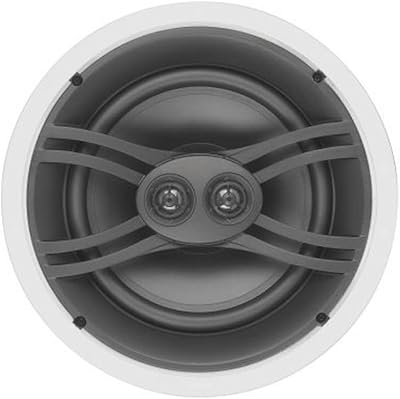
72%
88%
Ease of Installation
74%
Sound Clarity
58%
Bass Response
67%
Build Quality
83%
Value for Money
More
OSD Audio ACE850 8″ In-Ceiling Speakers
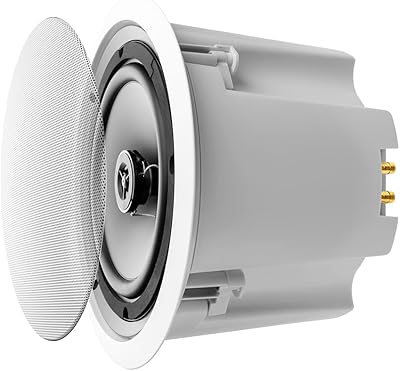
79%
83%
Sound Quality
91%
Aesthetic Design
74%
Ease of Installation
82%
Value for Money
78%
Build Quality
More
OSD Audio ICE830ST 8-Inch 70V Ceiling Speaker
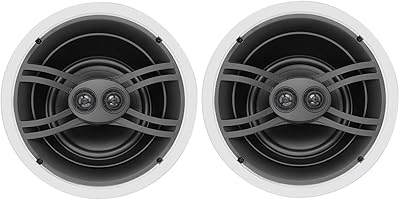
82%
86%
Audio Clarity
79%
Bass Performance
91%
70V System Compatibility
88%
Ease of Installation
83%
Build Quality
More
Yamaha NS-IW280CWH 6.5″ In-Ceiling Speakers
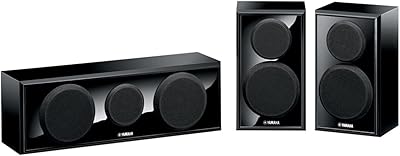
77%
83%
Sound Clarity
61%
Bass Performance
88%
Tweeter Performance
86%
Installation Ease
79%
Build Quality
More
Yamaha NS-P150 Speaker Package
84%
85%
Sound Quality
90%
Ease of Setup
88%
Design & Build Quality
92%
Value for Money
87%
Dialogue Clarity
More
Yamaha NS-F210BL Floorstanding Speaker
78%
83%
Sound Quality
67%
Bass Performance
81%
Value for Money
78%
Build Quality
86%
Dialogue Clarity
More

FAQ

These are passive speakers, so yes, you'll need an external amplifier or AV receiver to drive them. The good news is that their 8-ohm impedance and 50W nominal rating make them compatible with essentially any standard home theater receiver on the market — no special matching required.

The sealed back cavity gives them a meaningful edge over open-back designs when it comes to dust and light moisture. A well-ventilated bathroom or a covered patio with good drainage should be fine. What they're not built for is direct rain exposure or heavy steam — if moisture levels are consistently high, you'd be better served by speakers specifically rated for outdoor or wet environments.

You'll need a circular cutout of approximately 10.9 inches in diameter. Before you cut, also confirm there's at least 4.3 inches of clearance behind the ceiling surface, and check carefully for joists, wiring, or plumbing in that area — hitting any of those mid-cut is a bad day.

Yes, the grille is designed to be paintable, and this is one of the more practical features of these Yamaha ceiling speakers once installed. A thin, even coat of ceiling paint is all you need. Just avoid heavy coats that could clog the grille material, which can subtly affect high-frequency response over time.

For background music at moderate volumes, the 8-inch woofer does a respectable job. But if you're watching movies or listening to music with real low-end content at higher volumes, a dedicated subwoofer makes a significant difference. In-ceiling speakers have physical limits when it comes to deep bass reproduction, and these are no exception to that rule.

They're a solid pick for surround or height channels in a home theater build. The 2-way crossover design and clean upper-frequency extension mean dialogue, ambient effects, and overhead cues come through clearly — which is exactly what rear surrounds and Atmos height channels demand. Just pair them with a capable receiver and a subwoofer for the low end.

It depends heavily on your ceiling. If you have attic access and can fish wire relatively easily, a patient DIYer can manage it. If your ceiling is fully finished with no attic access, the wire-running process gets significantly more involved. The mounting clamps themselves are user-friendly, but cutting holes in ceilings without knowing exactly what is behind them is where things can go sideways — if in doubt, hiring an installer for a few hours is money well spent.

For runs up to about 50 feet, 16-gauge wire is the standard recommendation and works well. For longer runs, stepping up to 14-gauge reduces resistance and is a worthwhile upgrade. These in-ceiling speakers use standard spring-clip terminals, so no adapters or specialized connectors are needed.

Technically, the sealed back design offers more protection than a standard open-back speaker, but Yamaha does not rate these for true outdoor installation. A protected soffit with minimal direct moisture exposure is borderline — some buyers do it, but it voids any warranty coverage. For anything exposed to weather, purpose-built outdoor speakers are the more reliable long-term choice.

Bookshelf speakers at the same price will generally edge out the NS-IC800s in terms of imaging precision and bass extension — that is simply a consequence of placement physics, not a flaw in the speaker itself. Where these in-ceiling speakers win decisively is aesthetics and placement flexibility. If keeping speakers completely out of sight is the goal, the sound quality trade-off is entirely reasonable for most buyers.

Where to Buy