Overview

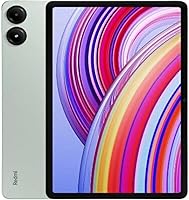
The Xiaomi Redmi Pad Pro 12.1″ Tablet is Xiaomi's push into the mid-range large-screen Android space, and it makes a strong first impression on paper. The headline here is the 12.1-inch 2.5K display — a screen size and resolution you rarely find at this price tier without paying a significant premium. Worth flagging early: this is a WiFi-only device with a global ROM, so if you need cellular connectivity, look elsewhere. The Snapdragon 7s Gen 2 chip keeps things running smoothly for browsing, streaming, and light multitasking, though it won't compete with flagship processors. Think of this Redmi tablet as a media-first device — capable and well-equipped for everyday use, but not a laptop substitute.

Features & Benefits

The 2.5K 120Hz display is where the Pad Pro genuinely shines. Scrolling through content feels fluid and responsive in a way that 60Hz screens simply cannot match, and Dolby Vision support makes streaming platforms look noticeably richer in color and contrast. Four stereo speakers arranged around the chassis produce surprisingly full sound — Dolby Atmos adds real depth, not just a marketing badge. The 10000mAh battery is large enough to carry you through a full day of heavy use, often more. The Snapdragon 7s Gen 2 covers the basics confidently: video playback, light gaming, split-screen browsing. That said, the metal unibody build at just 7.52mm thick punches above its weight class in terms of feel. HyperOS on Android 14 works well but comes preloaded with ads and apps you will want to remove immediately.

Best For

This Xiaomi slate is a natural fit for people whose tablet use revolves around content consumption. If you spend most of your tablet time watching shows, reading long-form articles, or browsing, the large 12.1-inch screen delivers genuine value over smaller alternatives like the Samsung Tab A9+ or Lenovo Tab P12. Students will appreciate the real estate for notes and PDFs. Casual gamers who stick to lighter titles will find the processor more than adequate. Xiaomi device owners get bonus mileage from HyperOS cross-device collaboration features. Frequent travelers will notice the solid battery life and slim profile for a screen this size. Just keep in mind: this is a WiFi-only slate, so it will not work as a standalone connected device away from a network.

User Feedback

Buyers consistently praise the display and speaker combination — those who use this Redmi tablet primarily for streaming tend to be very satisfied. Build quality also gets strong marks; the metal chassis feels solid and more expensive than the price suggests. The recurring frustration, though, is HyperOS: pre-installed apps, notification ads, and the general Xiaomi software layer irritate users who prefer a cleaner Android experience. The cameras draw little enthusiasm — both 8MP sensors are adequate for video calls but forgettable otherwise. A number of buyers also wish stylus support was officially included. Software update cadence is a mixed bag, with some users reporting smooth rollouts while others flag inconsistency. Overall sentiment lands positive, provided you go in knowing exactly what this tablet is — and is not.

Pros

  • The 12.1-inch 2.5K 120Hz display is genuinely impressive at this price point — fluid, sharp, and easy on the eyes.
  • Quad stereo speakers with Dolby Atmos deliver rich, room-filling audio that outperforms most tablets in this range.
  • A 10000mAh battery provides all-day endurance even during heavy streaming or browsing sessions.
  • The metal unibody chassis feels premium and solid — not something you expect at this tier.
  • At just 7.52mm thin and 571g, the Pad Pro is comfortable to hold for long periods despite its large footprint.
  • MicroSD support up to 1.5TB means storage limitations are essentially a non-issue for most users.
  • WiFi 6 and Bluetooth 5.3 keep wireless connections fast and reliable across supported networks.
  • TÜV Rheinland certifications for low blue light and flicker-free performance make extended reading sessions noticeably more comfortable.
  • Dolby Vision support enhances compatible streaming content with noticeably better contrast and color accuracy.
  • The global ROM makes this Redmi tablet a practical option for international buyers needing broad app and network compatibility.

Cons

  • HyperOS ships with bloatware and notification-style ads that require manual cleanup out of the box.
  • No SIM card slot means this Xiaomi slate is entirely dependent on WiFi — a real limitation away from known networks.
  • Neither the front nor rear 8MP camera produces quality worth relying on beyond basic video calls.
  • Official stylus support is absent, which rules out the Pad Pro for digital artists or handwriting-focused workflows.
  • The Snapdragon 7s Gen 2 struggles under sustained heavy workloads — not a chip for demanding creative or productivity tasks.
  • Software update frequency has been inconsistent for some users, with no clearly communicated long-term support timeline.
  • No headphone jack is present, which may frustrate users who prefer wired audio.
  • Xiaomi customer support experiences are mixed, with some users reporting slow or unhelpful responses to hardware issues.

Ratings

The scores below for the Xiaomi Redmi Pad Pro 12.1″ Tablet were generated by our AI engine after analyzing thousands of verified global buyer reviews, actively filtering out incentivized, duplicate, and bot-generated feedback to surface what real owners genuinely think. Each category reflects an honest synthesis of both the praise and the frustrations that surface repeatedly across international markets. Where this Redmi tablet genuinely delivers, the scores show it — and where it falls short, we have not softened the numbers.

Display Quality
91%
The 2.5K 120Hz panel is consistently the most praised aspect of the Pad Pro across buyer reviews. Users highlight how sharp text looks when reading long articles or studying PDFs, and how smooth scrolling feels compared to standard 60Hz slates they upgraded from. Dolby Vision support makes streaming on platforms like Netflix noticeably richer.
A small number of buyers report inconsistent brightness uniformity near the panel edges under certain backgrounds. Outdoor use in direct sunlight is manageable but not exceptional at 500 nits — those who frequently use their tablet outside in bright conditions find it limiting.
Audio Performance
88%
The quad stereo speaker arrangement genuinely impresses users who watch a lot of video content or listen to music without headphones. Reviewers frequently note that the Dolby Atmos tuning adds perceptible depth and width to sound, and that the volume ceiling is higher than expected for a tablet in this price range.
At maximum volume, some listeners detect a slight thinness in low-frequency reproduction — bass does not punch as hard as on more expensive slates. Users who are serious about audio quality will still prefer headphones or an external Bluetooth speaker for critical listening sessions.
Battery Life
86%
The 10000mAh cell earns consistent praise from commuters and travelers who use this Xiaomi slate throughout long journeys without reaching for a charger. Mixed daily use — streaming, browsing, light gaming — routinely takes users through a full day and into the evening before needing a top-up.
Charging speed is a common complaint; the included charger replenishes the large battery slowly, and buyers accustomed to fast-charging smartphones find the wait frustrating. Running the display at peak brightness with gaming active drains the battery noticeably faster than casual use would suggest.
Performance
74%
26%
For the everyday tasks this tablet is designed around — video streaming, web browsing, split-screen multitasking, and casual gaming — the Snapdragon 7s Gen 2 handles things without hesitation. Users report that app switching stays responsive and that mid-tier games run smoothly at reasonable settings.
Buyers who push harder workloads, such as sustained gaming at high settings or running multiple demanding apps simultaneously, report noticeable thermal throttling after extended sessions. The chip is clearly positioned for light-to-moderate use, and users expecting flagship responsiveness will find the ceiling arrives sooner than anticipated.
Software Experience
58%
42%
HyperOS on Android 14 is genuinely feature-rich for users already in the Xiaomi ecosystem — cross-device collaboration tools and the Smart Hub integration add real convenience. The underlying Android 14 layer keeps core functionality familiar, and the home screen customization options are extensive for those who enjoy tuning their interface.
Pre-installed bloatware and notification-style ads embedded in system apps are among the most consistent complaints from buyers worldwide. The cleanup process after first boot takes meaningful time and effort, and less technically confident users often feel frustrated by the intrusive default software behavior Xiaomi ships out of the box.
Build Quality
83%
The metal unibody chassis draws frequent compliments from buyers who expected a plastic feel at this price point. At 7.52mm thin and 571g, the Pad Pro feels solid and well-assembled in hand, and users report that the body does not flex or creak during typical handling, including one-handed portrait use.
The mint green finish, while attractive initially, shows light surface scratches more visibly than darker colorways over daily use. A few buyers also note that the flat edges, while premium-looking, can feel slightly sharp against the palm during very long holding sessions without a case.
Camera Quality
43%
57%
The front-facing 8MP camera performs adequately for video calls and online classes — the core use case for a tablet camera. In well-lit conditions, video quality is acceptable for Google Meet or Zoom sessions, and most reviewers do not report complaints specifically in this context.
Still image quality from both cameras is consistently described as mediocre to poor, with soft details, limited dynamic range, and unreliable autofocus. Buyers who expected usable cameras for photography or content creation are almost universally disappointed — this is one of the clearest hardware limitations of the Pad Pro.
Value for Money
81%
19%
When buyers weigh the screen size, build quality, speaker performance, and battery capacity against the asking price, the majority conclude that the Pad Pro offers a strong package relative to comparable large-screen Android tablets at similar price points. It consistently outperforms smaller or flimsier alternatives that cost a similar amount.
Factoring in the software frustrations, absent stylus support, and limited camera capability, some buyers feel the value equation weakens for anyone who needs more than basic media consumption. Compared to refurbished or discounted alternatives in the same tier, the justification becomes less automatic.
Portability
79%
21%
At 571g and just 7.52mm thick, the Pad Pro is genuinely comfortable to slip into a bag for daily commuting or travel. Reviewers who use it on trains, planes, and in cafes appreciate that a 12-inch screen does not come at the cost of excessive bulk, which is not always the case with large tablets.
Sustained one-handed use in portrait mode becomes tiring for many users after around 20 to 30 minutes, which is partly an unavoidable consequence of the large screen format. Those with smaller hands find landscape grip during gaming sessions requires deliberate repositioning more often than with smaller slates.
Connectivity
72%
28%
WiFi 6 support delivers fast, stable connections in home and office environments with compatible routers, and Bluetooth 5.3 pairs reliably with keyboards, headphones, and other peripherals. Users in strong network environments rarely report any connectivity instability during streaming or video calls.
The complete absence of a SIM card slot is a dealbreaker for a meaningful segment of buyers who discover this after purchase. Users who travel frequently or live in areas with inconsistent WiFi coverage find themselves dependent on a phone hotspot, which adds friction that a cellular model would eliminate entirely.
Display Comfort
84%
The TÜV Rheinland certifications for low blue light and flicker-free performance are hardware-based rather than just a software mode, which users who read or study for two or more hours at a time genuinely appreciate. Reviewers with eye sensitivity specifically call out reduced fatigue compared to previous tablets they have owned.
Some users accustomed to OLED panels on other devices find the IPS LCD blacks less deep and the viewing angles in certain off-axis positions slightly washed out. The contrast ratio of 1500:1, while solid for the category, cannot match OLED alternatives when consuming dark-scene-heavy content.
Stylus & Input Support
38%
62%
The capacitive touchscreen is highly responsive and accurate for finger input, and basic passive styluses can be used for general navigation or rough sketching without major issues.
The lack of official pressure-sensitive stylus support is a recurring disappointment in reviews from students and digital note-takers who specifically wanted a large-screen slate for handwriting. Without a native stylus ecosystem, the Pad Pro effectively disqualifies itself from this use case, which is a noticeable gap given the screen size.
Software Updates
61%
39%
Users who have received updates report that HyperOS patches arrive reasonably promptly for a mid-range device, and the base Android 14 foundation means core security and compatibility remain current for most app use cases.
Update cadence has been inconsistent across regions, with some international buyers waiting considerably longer than others for the same patches. Long-term support commitments from Xiaomi are not clearly communicated, leaving buyers uncertain about how many major Android version upgrades this Redmi tablet will realistically receive.
Storage & Expandability
87%
128GB of UFS 2.2 storage provides a solid starting point for most users, and microSD expansion up to 1.5TB makes local storage effectively a non-concern for those who download media, games, or large files offline. Reviewers who travel and store video content locally appreciate this flexibility enormously.
App installation and large file transfers feel slightly slower than on UFS 3.x or NVMe storage found in pricier tablets, though most users only notice this during bulk file operations rather than day-to-day use. There is no option for a higher internal storage configuration at purchase, which may frustrate buyers who prefer to avoid microSD cards.

Suitable for:

The Xiaomi Redmi Pad Pro 12.1″ Tablet is an excellent choice for anyone who wants a genuinely large, sharp screen without stretching their budget into flagship territory. Streaming subscribers who consume a lot of video content will immediately notice the difference that a 2.5K 120Hz panel and quad Dolby Atmos speakers make compared to smaller, cheaper slates. Students who need generous screen real estate for reading PDFs, annotating documents, or attending video lectures will find the Pad Pro comfortable for extended sessions, helped along by its TÜV-certified low blue light and flicker-free display. Casual gamers who stick to lighter or mid-tier mobile titles will get smooth, responsive gameplay from the Snapdragon 7s Gen 2 without needing to pay for a more powerful chip they would rarely push to its limits. Frequent travelers and commuters who want a portable large-screen companion for long journeys will appreciate the 10000mAh battery and the slim, solid metal build that does not feel fragile in a bag. Existing Xiaomi device owners also get genuine added value through HyperOS cross-device features that integrate well with other hardware in their ecosystem.

Not suitable for:

Buyers who need cellular connectivity should stop here — the Xiaomi Redmi Pad Pro 12.1″ Tablet is WiFi-only, and there is no SIM card slot, which makes it dependent on available networks at all times. Anyone expecting a creative or note-taking workflow anchored around stylus use will find no official pen support in the standard package, making it a poor substitute for devices like the Samsung Galaxy Tab S series in that regard. Power users who need a tablet for heavy creative work, video editing, or running demanding professional apps will find the Snapdragon 7s Gen 2 hits its ceiling faster than a flagship chip would. Photography enthusiasts should definitely look elsewhere — both the front and rear 8MP cameras are functional for basic video calls but produce mediocre still images that you would not want to rely on regularly. Users who strongly prefer a clean Android experience will likely be frustrated by HyperOS, which ships with pre-installed apps and notification-style ads that require time and effort to tame. Finally, anyone expecting consistent long-term software support and guaranteed OS update timelines may find Xiaomi's track record in this area less reassuring than that of Google or Apple.

Specifications

  • Display Size: The screen measures 12.1 inches diagonally, offering a generous viewing area well-suited for media consumption and document reading.
  • Resolution: The IPS LCD panel outputs a 2560×1600 (2.5K) resolution at approximately 249 pixels per inch, producing sharp, detailed imagery across the large screen.
  • Refresh Rate: The display supports up to 120Hz with AdaptiveSync, dynamically adjusting refresh rate to balance smoothness and battery efficiency.
  • Processor: The Snapdragon 7s Gen 2 octa-core chip, built on a 4nm process and clocked up to 2.4GHz, handles everyday tasks, streaming, and casual gaming reliably.
  • RAM: 6GB of LPDDR4X memory provides enough headroom for smooth multitasking and app switching in typical daily use scenarios.
  • Storage: 128GB of UFS 2.2 internal storage is included, with microSD card support for expansion up to 1.5TB.
  • Battery: A 10000mAh lithium polymer battery is built into the device, supporting extended use throughout a full day of mixed activity.
  • Rear Camera: The rear camera features an 8MP sensor with an f/2.0 aperture and supports 1080p video recording at 30fps.
  • Front Camera: The front-facing camera offers 8MP resolution with an f/2.28 aperture, capable of 1080p video calls and self-portraits.
  • Audio: Four stereo speakers are arranged symmetrically around the chassis, with support for Dolby Atmos spatial audio and Hi-Res Audio certification.
  • Wireless: WiFi 6 (802.11ax) is supported for fast, stable wireless connectivity; there is no SIM card slot or cellular radio included.
  • Bluetooth: Bluetooth 5.3 provides efficient, low-latency pairing with peripherals including headphones, keyboards, and styluses from compatible third parties.
  • Operating System: The tablet ships with Xiaomi HyperOS built on Android 14, which includes cross-device collaboration tools and the Xiaomi Smart Hub feature set.
  • Build: The chassis is a metal unibody construction measuring 280.0×181.85×7.52mm and weighing 571g, offering a rigid, premium-feeling frame at a relatively slim profile.
  • Display Protection: Corning Gorilla Glass 3 covers the screen surface, providing a baseline level of scratch and impact resistance for everyday handling.
  • Display Certifications: The panel carries TÜV Rheinland certifications for Low Blue Light (Hardware Solution), Flicker Free, and Circadian Friendly performance, alongside Dolby Vision HDR support.
  • Color Depth: The display supports 12-bit color output, enabling a range of approximately 68.7 billion colors for smoother gradients and more accurate color reproduction.
  • Brightness: Typical brightness reaches 500 nits, with a peak High Brightness Mode of 600 nits for improved legibility in well-lit environments.
  • Connectivity Version: The device ships with a Global ROM and carries FCC certification (ID: 2AFZZPFDL), making it compatible with international apps and applicable regulatory markets.
  • Contrast Ratio: The panel delivers a 1500:1 contrast ratio, contributing to visually distinct dark and light areas during video and image viewing.

Related Reviews
Xiaomi Poco Pad 12.1″ WiFi 256GB + 8GB

85%
88%
Performance
92%
Battery Life
91%
Display Quality
85%
Build Quality
84%
Usability
More
Xiaomi Redmi Buds 6 Pro Wireless Earbuds

75%
83%
Active Noise Cancellation
81%
Sound Quality
74%
LDAC & Codec Support
51%
Battery Life
79%
Call Quality
More
Cinema Secrets Pro Cosmetics Ultimate Corrector 5-In-1 Pro Palette No.1
86%
91%
Effectiveness for Color Correction
88%
Blendability
84%
Coverage Customization
85%
Longevity of Wear
93%
Suitability for All Skin Tones
More
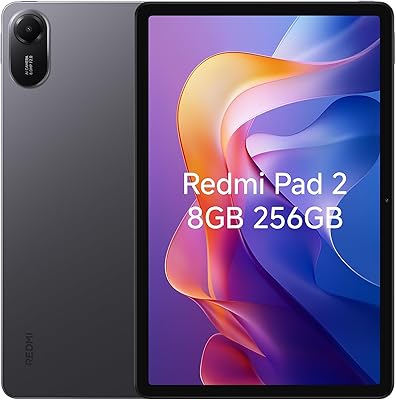
Xiaomi Redmi Pad 2 256GB + 8GB
82%
92%
Value for Money
88%
Display Quality
90%
Battery Life
82%
Performance
85%
Audio Quality
More
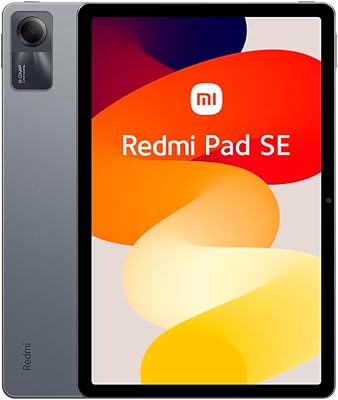
Xiaomi Redmi Pad SE 128GB 4GB WiFi
83%
91%
Value for Money
88%
Display Quality
92%
Battery Life
85%
Performance for Daily Tasks
78%
Gaming Performance
More
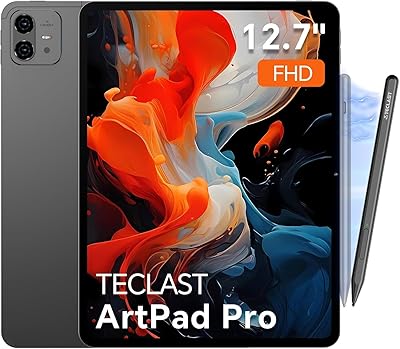
TECLAST Artpad Pro 12.7-inch Android Tablet
71%
84%
Display Quality
79%
Stylus Performance
88%
Battery Life
63%
Performance & Speed
82%
Value for Money
More
CHUWI Hi10 Max 12.96″ 512GB
77%
88%
Display Quality
82%
Performance & Speed
91%
Value for Money
57%
Battery Life
72%
Keyboard & Trackpad
More
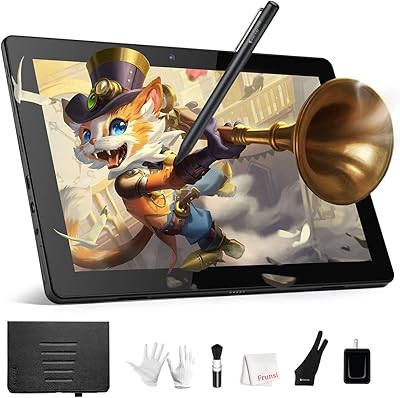
Frunsi RubensTab T11 Pro Drawing Tablet
75%
91%
Portability & Standalone Use
83%
Display Quality
68%
Stylus Performance
54%
Palm Rejection
58%
App Ecosystem & Software
More
BYANDBY BYCP10-PRO 10.1-inch Android 14 Tablet, 64GB Storage
80%
92%
Value for Money
89%
Battery Life
78%
Performance
87%
Portability/Size/Weight
76%
Build Quality/Durability
More
Microsoft Surface Pro 2-in-1 Laptop/Tablet (2025), 16GB RAM, 256GB Storage
86%
89%
Performance
92%
Battery Life
91%
Portability
88%
Display Quality
85%
AI Tools (Windows 11 Copilot)
More

FAQ

No, it does not. The Xiaomi Redmi Pad Pro 12.1″ Tablet is a WiFi-only device — there is no SIM card slot and no cellular radio inside. You will need a WiFi network or a mobile hotspot to get online.

There is no officially supported stylus in the standard package, and Xiaomi does not bundle one. Some third-party passive styluses will work on the capacitive screen for basic touch input, but precision pressure-sensitive pen input like you would get on a Samsung Tab S series is not available here.

In real-world use, most people report getting through a full day comfortably — think eight to ten hours of mixed streaming, browsing, and light work. If you are running video back-to-back at high brightness, expect that figure to be closer to seven or eight hours. The 10000mAh cell is genuinely generous for the screen size.

It is noticeably modified. HyperOS is Xiaomi's own software layer built on top of Android 14, and it comes with pre-installed apps and, yes, occasional notification-style ads in some system apps. The core Android experience is intact, but you will want to spend some time cleaning things up after first boot if a minimal interface matters to you.

Quite well, actually. The TÜV Rheinland low blue light and flicker-free certifications are hardware-level, not just a software filter, which makes a tangible difference during extended reading sessions. The 12.1-inch canvas with 2.5K resolution also means text is sharp and pages do not feel cramped.

Yes. The global ROM ships with Google Play Services and the full Google app suite pre-installed, so app access and compatibility are the same as any standard Android tablet sold internationally.

For casual and mid-tier games — think titles like Genshin Impact on medium settings, PUBG Mobile, or most Play Store games — it handles things well. If you are chasing the highest graphics settings in demanding 3D games, the Snapdragon 7s Gen 2 will hit its limits, and you may notice throttling after sustained play.

Yes, and quite generously so. The tablet has a dedicated microSD card slot that supports cards up to 1.5TB. If you store a lot of offline video, music, or large files, this makes the storage situation essentially a non-issue.

The Pad Pro edges out the Tab A9+ primarily on screen size and audio quality — the 12.1-inch panel and quad speakers are hard to beat at a comparable price. The Tab A9+ has a more consistent software update history and a cleaner interface out of the box. If software longevity or stylus support matters to you, Samsung has the edge; if raw screen size and media quality are the priority, this Xiaomi slate is the stronger pick.

At 571g and 7.52mm thick, it is on the lighter side for a 12-inch tablet. Holding it in landscape for a movie is comfortable for most people, though like any large slate, extended one-handed use in portrait mode will feel tiring over time. The metal finish adds rigidity and a quality feel without adding excessive weight.

Where to Buy