Overview

The QODOSEN DX-286 Portable Shortwave Radio arrived in mid-2024 as a genuinely interesting option for hobbyists and travelers who want real multiband coverage without hauling around a bulky desktop unit. It runs on the TEF6686 DSP chip, which represents a meaningful step up from the older chip sets typically found at this price point — you get noticeably better sensitivity and station selectivity as a result. The radio covers FM, AM, LW, and SW bands, handling everything from local news to international shortwave broadcasts. It ships with a rechargeable battery, USB charging cable, fleece bag, and a carrying case — practical inclusions that feel considered rather than thrown in.
Features & Benefits

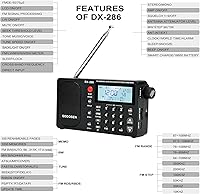
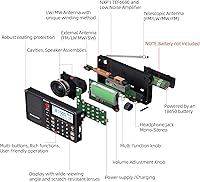
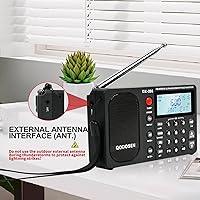
The TEF6686 chip is really the core reason this receiver stands out. In practical terms, it means you can pull in weak or distant stations that cheaper radios would miss entirely, especially on shortwave where signal strength varies wildly. The antenna rotates a full 360 degrees, and an external antenna port lets you push reception further when needed. Auto tuning scans all bands and stores up to 1,000 stations, which sounds excessive until you start scanning shortwave and realize how many signals are actually out there. The backlit LCD display is comfortable at night, and built-in features like an alarm clock and sleep timer make this portable receiver genuinely useful as a bedside device too.

Best For

This shortwave radio makes the most sense for shortwave enthusiasts who want a capable portable without committing to a full desktop setup. It travels well — at just over 7 ounces and smaller than most paperbacks, it slips into a bag without a second thought. Frequent travelers who want to catch local AM and FM in new cities, or tune into international SW broadcasts, will find it practical. It is also a sensible addition to an emergency preparedness kit, since LW and SW bands can reach international stations when local infrastructure is disrupted. Older listeners upgrading from analog portables will likely appreciate the improved tuning precision and noticeably cleaner audio output.

User Feedback

Buyers using the DX-286 in low-interference environments — rural areas, quiet suburbs — tend to be genuinely satisfied with shortwave reception quality, reporting that it captures stations other portables simply cannot reach. The accessory bundle earns mostly positive remarks; the carrying case is considered solid, though the fleece bag feels more like a basic pouch than a proper protective sleeve. On the downside, some users find the buttons slightly stiff, and a handful note the user manual lacks clarity for first-time shortwave listeners. Battery life draws mixed reactions — adequate for casual listening sessions, but heavier users report recharging more frequently than they had hoped.

Pros

  • The TEF6686 chip pulls in weak and distant shortwave stations that cheaper portables cannot reliably lock onto.
  • Full four-band coverage — FM, AM, LW, and SW — in a single device smaller than a paperback book.
  • External antenna port gives experienced listeners a clear path to significantly improved signal reception at home.
  • 1,000-station memory with auto scan means you spend time listening, not endlessly re-tuning.
  • Rechargeable battery and USB cable included — no scrambling for disposable cells before a trip.
  • Backlit LCD makes nighttime tuning comfortable without needing an additional light source nearby.
  • At just over 7 ounces, the DX-286 fits in a jacket pocket without bulk or inconvenience.
  • Built-in alarm clock and sleep timer add genuine everyday utility beyond just band reception.
  • The carry case is solid enough to protect the radio during travel without adding meaningful weight.
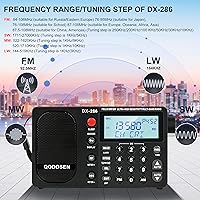
  • Wide FM range starting at 64 MHz ensures usability in regions where lower FM bands are actively broadcast.

Cons

  • The user manual is poorly translated and leaves first-time shortwave listeners largely on their own.
  • Button feel is stiff and slightly cheap, inconsistent with the radio's overall performance level.
  • Battery life under continuous or backlit use falls short of what the price tier might suggest.
  • Display washes out in direct sunlight, making outdoor daytime tuning noticeably harder than it should be.
  • Urban interference can significantly reduce the chip's sensitivity advantage in dense living environments.
  • The fleece bag offers minimal scratch protection and feels like a low-effort inclusion.
  • Speaker audio thins out at higher volumes, making music playback less satisfying than voice content.
  • Backlight timeout is fixed and cannot be adjusted, which interrupts active tuning sessions repeatedly.
  • The antenna base can loosen over time with frequent rotation, raising minor long-term durability questions.
  • Casual AM and FM listeners may find it hard to justify the price compared to simpler single-band alternatives.

Ratings

The QODOSEN DX-286 Portable Shortwave Radio has been evaluated by our AI system after analyzing verified buyer reviews from global markets, with spam, bot-generated, and incentivized feedback actively filtered out. Scores reflect the honest distribution of real user experiences — strengths and frustrations alike — so you get a clear picture of where this portable receiver genuinely delivers and where it falls short.
Reception & Sensitivity
88%
The TEF6686 chip gives this receiver a clear edge in pulling in weak shortwave signals that comparably priced portables simply cannot lock onto. Users in rural areas and low-interference zones consistently report capturing distant international stations with surprising reliability, even without an external antenna attached.
In urban environments with high electrical interference, the sensitivity advantage shrinks noticeably, and some stations that come in cleanly outdoors become harder to hold indoors. A few users note that FM performance, while solid, does not quite match the standout shortwave reception quality.
Shortwave Band Performance
91%
Coverage across the full 1711–27000 kHz SW range is where the DX-286 genuinely earns its reputation. Hobbyists tuning into international broadcasters and utility stations report consistent, stable reception across most of the band, which is not a given at this price tier.
At the very high end of the shortwave range, signal stability can drift slightly, requiring occasional manual fine-tuning. This is a known limitation of portable SW receivers generally, but it is worth flagging for buyers expecting desktop-level band-edge performance.
AM & FM Everyday Usability
79%
21%
For everyday local listening — morning news on AM, music on FM — the DX-286 handles itself well. Station lock is quick, audio is clean, and the wide FM range of 64–108 MHz makes it useful in regions where lower FM bands are active.
AM selectivity in dense urban areas with closely spaced stations can be uneven, with some bleed-through between adjacent channels. FM stereo separation, while acceptable through headphones, does not stand out compared to dedicated FM-only portables in a similar price range.
Build Quality & Materials
67%
33%
The chassis feels reasonably solid for a compact portable, and the overall assembly does not rattle or flex under normal handling. For casual everyday use and travel, the construction holds up without obvious concern.
Several buyers describe the plastic finish as feeling lightweight relative to the price point, and the buttons have a stiff, slightly cheap tactile response that feels inconsistent with the radio's otherwise capable internals. It does not feel fragile, but it does not feel premium either.
Battery Life
62%
38%
The included rechargeable battery is a genuine convenience — you are not hunting for AA cells at an airport. Light to moderate listeners report getting through a full day of intermittent use on a single charge without issue.
Heavier users, particularly those running the backlight consistently or doing extended shortwave scanning sessions, find themselves recharging more often than expected. Battery capacity feels adequate rather than generous, and this is one of the more common recurring complaints in verified reviews.
Antenna Design & Flexibility
83%
The 360-degree rotatable built-in antenna is a practical feature — being able to orient it precisely for a specific signal without repositioning the whole radio makes a real difference in marginal reception conditions. The external antenna port adds meaningful flexibility for home use.
The antenna itself feels somewhat thin and light, and a few users report it becoming slightly loose at the base after extended use with repeated rotation. An external antenna is strongly recommended for serious shortwave listening, which means an added cost the price does not include.
Display & Readability
74%
26%
The backlit LCD is clear and functional in dim or dark environments, which makes it genuinely useful as a bedside radio. Frequency, band, and time information are all readable at a glance once you are familiar with the layout.
In bright daylight or direct sunlight, the display washes out considerably and becomes difficult to read without shielding it. A handful of users also mention that the backlight timeout is short and cannot be adjusted, which becomes mildly frustrating during active tuning sessions.
Tuning & Navigation
77%
23%
Auto Tuning Search scans and stores stations quickly, and having 1,000 memory slots means you can organize AM, FM, and shortwave presets without constantly rescanning. For travelers moving between countries and time zones, this is a genuinely useful capability.
Manual fine-tuning takes some getting used to, and the button layout is not immediately intuitive for new users. Some buyers note a learning curve before the tuning controls feel natural, and the user manual does not help much in bridging that gap.
User Manual & Setup Experience
51%
49%
The radio does eventually make sense once you spend time with it, and the basic functions like band switching and memory storage are straightforward enough to figure out through trial and error.
The included manual draws consistent criticism for being poorly translated and lacking clear step-by-step guidance for shortwave scanning or clock setup. First-time shortwave listeners in particular report frustration, and several buyers recommend seeking out community guides online instead.
Portability & Form Factor
89%
At just over 7 ounces and smaller than a standard paperback, the DX-286 genuinely fits in a jacket pocket or the front pouch of a daypack. Travelers and commuters specifically mention appreciating how little space it occupies relative to what it can receive.
The slim profile means there is limited space for speaker volume, and at maximum output the audio can feel slightly thin in large or noisy rooms. It is best suited for personal listening or quiet environments rather than filling a room with sound.
Sound Quality
72%
28%
For a pocket-sized radio, audio clarity on voice-based programming — news, talk radio, shortwave broadcasts — is genuinely good. Listeners tuning into speech content report clear, fatigue-free audio that holds up during long sessions.
Music reproduction is where the small speaker shows its limits most clearly. Bass is thin and high frequencies can feel slightly harsh at louder volumes. Headphone output is noticeably better, and buyers who prioritize music listening should factor this into their expectations.
Alarm & Sleep Timer Functions
78%
22%
Having a functional alarm clock and sleep timer built into a shortwave radio is a practical bonus for anyone using it as a bedside device. The universal time display is a small but thoughtful touch for travelers tracking multiple time zones.
The alarm setup process is unintuitive and the manual does not clarify it well, leading some users to give up on the feature entirely. It works reliably once configured, but getting there can be more effort than it should be for what is ostensibly a convenience feature.
Accessory & Packaging Value
76%
24%
The carry case is sturdy and holds the radio securely during travel, and having the USB charging cable and rechargeable battery included means you are ready to use it out of the box without extra purchases. Most buyers consider the bundle a fair inclusion at this price tier.
The fleece bag is functional as a dust cover but thin enough that it provides minimal scratch protection on its own. Some users feel the overall unboxing experience does not quite match the price expectation — the packaging is adequate but unremarkable.
Value for Money
73%
27%
For a radio built around the TEF6686 chip with full four-band coverage, a 1,000-station memory, and a useful accessory bundle, the price sits in a range that serious hobbyists generally consider fair. The reception performance alone justifies the cost for shortwave-focused buyers.
Casual listeners who mainly want FM and AM may find the price harder to justify given the build quality and battery life. The value proposition is strongest for buyers who will actively use the shortwave and LW bands — for everyone else, cheaper options might serve just as well.

Suitable for:

The QODOSEN DX-286 Portable Shortwave Radio is a strong match for shortwave hobbyists who want meaningful reception capability in a pocketable form factor — not a toy radio, but not a bulky desktop unit either. It travels exceptionally well, making it a practical companion for frequent flyers, backpackers, or anyone who wants to stay connected to international broadcasts without checking an extra bag. Listeners in rural or suburban areas who regularly deal with weak local signals will find the TEF6686 chip makes a real, audible difference compared to older portable receivers they may have used before. It also doubles as a capable bedside device for people who want an alarm clock, sleep timer, and reliable AM reception all in one compact unit. Anyone building out an emergency preparedness kit should consider it seriously — the LW and SW band coverage means you can reach international broadcasters even if local infrastructure goes dark.
Not suitable for:

The QODOSEN DX-286 Portable Shortwave Radio is not the right choice for buyers whose primary use is casual FM music listening in an urban environment — there are simpler, cheaper radios better suited for that single purpose. If you live or commute in a dense city with high electrical interference, the chip's sensitivity advantage is partly offset by the noise floor, and you may not get the reception leap you were expecting. Listeners hoping for rich, room-filling sound will also be disappointed; this is a personal listening device, and the small speaker reflects that constraint honestly. The included manual is a genuine weak point, so if you are completely new to shortwave and want guided, intuitive setup out of the box, the learning curve may feel steeper than it should. Battery life under heavy use is adequate rather than impressive, so users who run it for long uninterrupted sessions may find themselves tethered to a charging cable more often than they prefer.
Specifications

  • Brand & Model: Manufactured by QODOSEN under the model designation DX-286, released to market in mid-2024.
  • Chip: Powered by a TEF6686 DSP chip, which provides enhanced sensitivity and selectivity across all supported bands.
  • Band Coverage: Receives four bands: FM (64–108 MHz), AM (520–1710 kHz), SW (1711–27000 kHz), and LW (144–519 kHz).
  • Dimensions: The unit measures 5.28″ long by 2.99″ high by 1.18″ deep, making it genuinely pocketable for daily carry.
  • Weight: The radio weighs 7.1 ounces, light enough to carry in a jacket pocket or small bag without noticeable bulk.
  • Display: Features a backlit LCD screen that shows frequency, band, time, and function status, suitable for low-light use.
  • Memory: Stores up to 1,000 stations across all bands, managed via a built-in Auto Tuning Search (ATS) function.
  • Antenna: Includes a built-in 360-degree rotatable antenna and a dedicated external antenna port for expanded reception range.
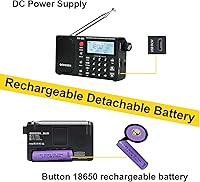
  • Power Source: Powered by a rechargeable battery (included in the box), charged via the included USB cable.
  • Connectivity: Charges via USB and supports connection of an external antenna through a standard antenna interface port.
  • Extra Functions: Built-in features include an alarm clock, sleep timer, and universal time display for multi-timezone awareness.
  • Color: Available in black with a classic portable radio form factor and style.
  • Included Accessories: Ships with one rechargeable battery, a USB charging cable, a soft fleece bag, a carry case, and a user manual.
  • Tuning Technology: Uses DSP-based digital tuning for precise frequency locking across AM, FM, LW, and SW bands.
  • Style: Classic portable radio design intended for desktop, bedside, travel, and outdoor use scenarios.

Related Reviews
Retekess TR629 Portable Shortwave Radio
83%
88%
Reception & Signal Quality
83%
Ease of Use
91%
Portability & Design
85%
Recording Function
80%
Battery Life
More
XHDATA D368 Portable Shortwave Radio
74%
84%
FM Reception Quality
71%
Shortwave Reception
58%
AM Reception Quality
66%
Build Quality & Durability
78%
Battery Life
More
Retekess TR110 Portable Shortwave Radio
83%
88%
Reception Quality
91%
Portability
85%
Battery Life
83%
Ease of Use
89%
Weather Alert Functionality
More
Raddy RF75A Portable Shortwave Radio
84%
91%
Reception Quality
70%
Battery Life
95%
Portability
88%
Bluetooth Connectivity
84%
App Control Experience
More
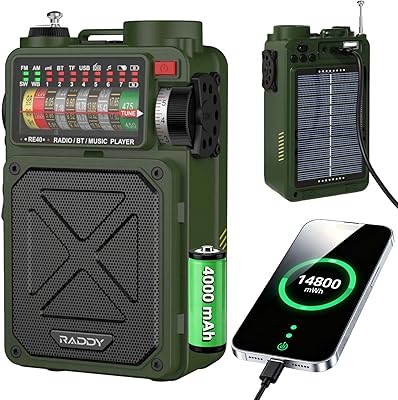
Raddy RE40 Portable Shortwave Radio
83%
88%
Battery Life
91%
Portability
85%
Charging Options
94%
Weather Alerts
62%
Bluetooth Performance
More
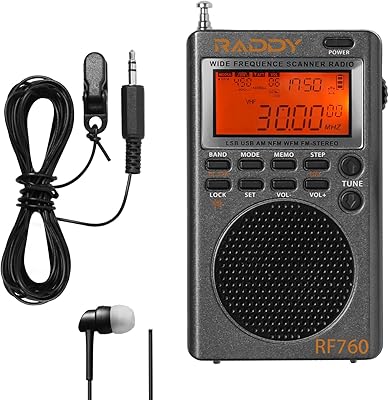
Raddy RF760 Portable Shortwave Radio Receiver
76%
83%
SSB Reception Quality
91%
Band Coverage Breadth
88%
NOAA Weather Alert
89%
Portability & Form Factor
52%
Audio & Speaker Quality
More
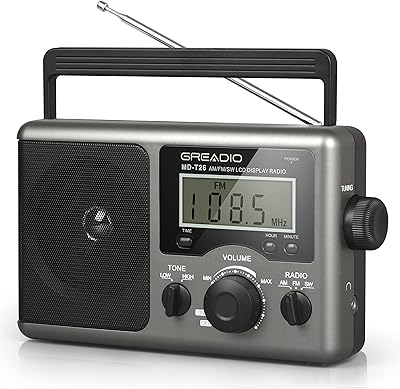
Greadio GR-T26 Portable AM FM Shortwave Radio
77%
93%
Ease of Use
88%
FM Reception
61%
Shortwave Reception
79%
AM Reception
72%
Speaker Quality
More
GPX R633B Portable Shortwave AM/FM Clock Radio
71%
83%
Value for Money
61%
Shortwave Reception
77%
AM/FM Performance
86%
Ease of Use
58%
Build Quality
More
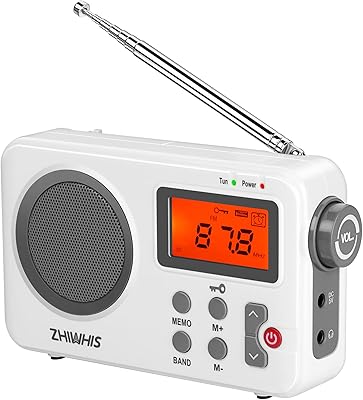
ZHIWHIS ZWS-8801 Portable AM/FM/Shortwave Radio
83%
88%
Reception Performance
90%
Portability & Size
85%
Ease of Use
75%
Sound Quality
82%
Battery Life
More
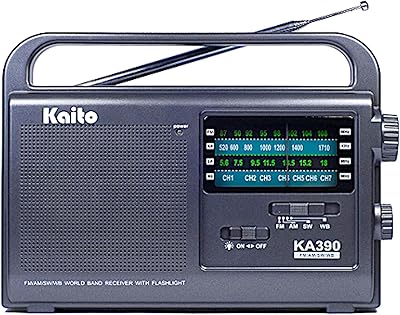
Kaito KA390 Portable Weather Radio
76%
88%
Value for Money
86%
NOAA Weather Reception
81%
FM Reception
67%
Shortwave Reception
78%
Speaker Quality
More

FAQ

It genuinely handles international shortwave well. The TEF6686 chip gives it strong sensitivity across the SW band from 1711 to 27000 kHz, which covers most major international broadcasters. Local FM and AM work fine too, but shortwave reception is honestly where the DX-286 earns its price.

It comes with a rechargeable battery already included, and you charge it using the USB cable that is also in the box. You do not need to buy or source AA cells separately, which is a genuine convenience for travel.

Yes, there is a dedicated external antenna port on the unit. If you are using it at home and want to pull in weaker or more distant stations, connecting a simple wire antenna through that port makes a noticeable difference, especially on shortwave and LW bands.

The auto scan function finds and stores stations without much effort, so building out your memory presets is fairly straightforward. The alarm clock is a different story — the manual does not explain the setup process clearly, and several users report needing to experiment a bit before it works reliably. Online community guides are worth looking up if you get stuck.

It can work for beginners, but there is a learning curve. Shortwave itself takes some getting used to — signals shift, frequencies change by time of day, and the band is less intuitive than FM. The radio's controls are manageable once you spend time with them, but the manual is not a great teaching tool, so expect to consult external resources.

Urban environments do reduce the chip's sensitivity advantage. The TEF6686 still performs better than older chip-based portables in the same conditions, but if you are surrounded by dense electrical noise, some stations that would come in clearly outdoors will be harder to hold indoors. An external antenna helps in these situations.

The hard carry case is solid and keeps the radio secure during travel — most users consider it a genuinely useful inclusion rather than packaging filler. The fleece bag is a softer story; it is really just a dust cover and does not offer much scratch protection on its own.

The backlight times out automatically, and the timeout duration is fixed — you cannot adjust it in the settings. For casual listening it is fine, but if you are actively scanning or tuning, the backlight turning off repeatedly can become a minor irritation.

The radio covers LW and SW bands, which are commonly used for international emergency and government broadcasts, and AM covers standard domestic emergency alert broadcasts in most countries. It does not have a dedicated NOAA weather band channel, so if specific weather radio reception is your primary goal, you may want to verify your regional frequencies fall within the supported AM or SW ranges.

For voice content — news, talk stations, shortwave broadcasts — the audio is clear and easy to listen to for extended periods. Music is where the small speaker shows its limits; bass is thin and higher volumes can sound slightly harsh. Headphone output is noticeably better for music, so if sound quality matters to you, plan to use earphones rather than the built-in speaker.