Overview

Imagine standing at the side of a stage, monitors screaming, crowd noise bleeding through everything — and still hearing your mix with pinpoint clarity. That's the problem the Westone Audio Pro X30 In-Ear Monitor was built to solve. Westone has been shaping products for the human ear for over six decades, and that accumulated expertise shows in the compact, low-profile shell that disappears once seated. This is a three-driver balanced-armature design aimed squarely at working musicians and studio professionals — not casual listeners hunting for wireless convenience. The Pro X30 competes directly with custom-molded monitors, offering a universal fit and a detachable Linum Bax T2 cable that most rivals at this tier simply can't match.
Features & Benefits

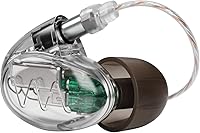
Each of the three balanced-armature drivers handles a dedicated frequency range, which is why the stereo image feels so organized — you can pick out a bass guitar beneath a lead vocal without the two fighting for space. The passive isolation blocks enough ambient sound that you won't need to crank your mix dangerously loud just to stay focused. Westone matches left and right earpieces to a remarkably tight acoustic tolerance, so what you hear in your left ear genuinely mirrors your right — critical for stereo mixing. The Linum Bax T2 cable uses aramid fiber, making it tough enough to handle nightly touring without fraying at stress points. Ten tip pairs — foam and silicone — give you a real shot at a professional-grade seal straight out of the box.

Best For

The Pro X30 is a natural fit for vocalists who need to hear themselves clearly above a thundering band, or guitarists who want to dial in their amp tone without relying on a wedge monitor. Drummers and keyboard players benefit most from the isolation — sitting in the middle of a loud kit or stage stack, these Westone monitors can cut the chaos down to a focused, workable mix. Sound engineers will appreciate the consistent, neutral tuning that makes A/B comparisons trustworthy across long sessions. Traveling musicians will value the rugged vault case and compact build. That said, this isn't the pick for someone wanting wireless freedom or a bass-heavy sound signature — it's a wired, reference-tuned tool for professionals.

User Feedback

Many buyers who perform live describe the comfort during a full set as a genuine advantage — the low-profile shells don't dig into the ear after an hour on stage. The included tips get consistent praise too; many users find the foam selection provides enough passive seal without needing to go aftermarket. However, fit variability is a recurring concern: a handful of reviewers with unusually small or narrow ear canals report struggling to get a stable seal with the stock tips, which directly affects isolation and bass response. Opinions on the sound signature split between those who love the neutral, accurate tuning and others who find it clinical for casual listening. Compared to rival three-driver IEMs, most buyers feel these Westone monitors justify the investment, though a few note the cable length could be better for certain stage setups.

Pros

  • Three balanced-armature drivers produce clear frequency separation that holds up reliably during loud live performances.
  • Passive isolation cuts stage bleed effectively without relying on batteries or active electronics.
  • The Linum Bax T2 cable is noticeably more durable than the stock cables bundled with most competing IEMs.
  • Left and right earpieces are acoustically matched to a tight tolerance, giving you a trustworthy stereo image on stage.
  • Ten included eartip pairs — foam and silicone — give most users a solid seal straight out of the box.
  • At just 6 grams per earpiece, these Westone monitors cause virtually no fatigue during long sets or sessions.
  • The MMCX connector allows quick cable swaps, useful when a cable fails right before a show.
  • The impact-resistant vault case is genuinely road-worthy, not the flimsy zip pouches common at lower price points.
  • Sweatproof construction means you can perform under hot stage lighting without worrying about moisture damage.
  • Westone's six decades of ear-device design translate into an ergonomic shell shape that most users find stays put without constant adjustment.

Cons

  • No Bluetooth or wireless capability makes the Pro X30 incompatible with modern wireless IEM transmitter systems without an adapter.
  • The neutral, reference-tuned sound signature can feel clinical and unexciting for casual everyday listening.
  • Buyers with narrow or irregular ear canals may need to invest in aftermarket eartips to achieve a reliable seal.
  • A 3.5mm wired connection limits compatibility with newer smartphones and laptops that have dropped the headphone jack.
  • The premium price puts these monitors out of reach for hobbyists or beginners who perform infrequently.
  • No in-line microphone or remote means you cannot use these for phone calls or media control without a separate adapter.
  • The high impedance rating means some consumer audio interfaces and budget stage packs may not drive these monitors to adequate volume.
  • Cable length may not suit all stage setups, and some users report needing an extension for certain rack or floor monitor configurations.
  • Universal fit, while very good, still cannot replicate the custom-molded seal that true custom IEMs provide for maximum isolation.
  • There is no active noise cancellation, so in extremely loud environments the passive isolation alone may not be sufficient for every user.

Ratings

The ratings below for the Westone Audio Pro X30 In-Ear Monitor were generated by our AI after analyzing verified purchase reviews from buyers worldwide, with spam, bot activity, and incentivized feedback actively filtered out before scoring. Each category reflects both the genuine strengths that professional musicians praise and the real friction points that frustrated buyers flagged — nothing has been glossed over. The result is a transparent, balanced snapshot of how this three-driver IEM actually performs across the range of people who bought and used it.
Sound Accuracy
93%
Performers and engineers consistently praise the neutral, reference-grade tuning that lets them hear their mix without flattering coloration. The three-driver configuration produces a genuinely layered soundstage — vocalists report being able to hear pitch nuances in their own voice that wedge monitors simply cannot resolve.
The same neutrality that engineers love can feel dry or uninvolving to listeners accustomed to consumer-tuned earphones with boosted bass. A handful of buyers who purchased these for casual listening returned them specifically because the sound felt too analytical for everyday music enjoyment.
Noise Isolation
88%
Drummers and guitarists performing on loud stages note that the passive isolation is strong enough to keep their monitor mix at a safe, controlled volume without cranking it dangerously high. When seated properly, the seal blocks a substantial portion of stage bleed, crowd noise, and drum kit ambience.
Isolation quality is entirely dependent on achieving a proper seal, and users who struggle with tip fit report a significant drop in isolation performance. A few drummers note that in extremely loud environments — festival-scale stages or drum booths — the passive approach still lets through more low-frequency rumble than they would like.
Comfort & Fit
81%
19%
The lightweight shells — barely perceptible once seated — get consistent praise from vocalists and sound engineers who wear these monitors through multi-hour sets or long studio sessions without discomfort. Many users specifically call out that the low-profile housing does not catch on headwear or shift during active performance.
Fit is subjective, and a recurring concern among buyers is that the stock tips do not work reliably for everyone. Users with narrower or irregularly shaped ear canals report spending considerable time tip-rolling before finding a combination that seals properly, and some ultimately resort to aftermarket options.
Cable Quality
91%
The Linum Bax T2 cable draws frequent comparisons to cables costing significantly more when purchased separately, and touring musicians appreciate the aramid fiber reinforcement that resists the kind of stretch and kink damage that ruins cheaper cables after a few months on the road. The MMCX connection feels secure without being difficult to detach.
Some users find the cable slightly microphonic when it rubs against clothing or a transmitter pack, which can introduce faint noise into the signal during movement. A smaller group of buyers also note that the cable length is not ideal for every stage setup, particularly when the wireless bodypack sits in an unusual position.
Eartip Selection
78%
22%
Shipping with ten pairs across two materials is genuinely more generous than most competitors in this bracket, and many buyers find the foam tips in particular create a reliable, comfortable seal within a few minutes of experimentation. Having both foam and silicone options lets users tune their comfort preference without an immediate aftermarket purchase.
The size range, while decent, does not accommodate every ear anatomy, and some buyers note that the silicone tips feel slightly firm compared to softer third-party alternatives. Foam tips also degrade with regular use and need periodic replacement, which adds a small but ongoing maintenance cost.
Build Quality
89%
The earpiece shells feel robust and purposeful — not plasticky or hollow — and the sweatproof construction gives performing musicians confidence that moisture from a vigorous show will not degrade the drivers over time. The MMCX connector housing on the earpiece itself feels well-reinforced compared to cheaper implementations that loosen with repeated cable swaps.
A small number of long-term users report that the connector on the earpiece side can develop a slight wobble after an extended period of frequent cable changes, which is worth monitoring. The finish on the shells, while attractive, can show minor scuffs after heavy touring use.
Carrying Case
84%
The impact-resistant vault case is compact enough to slip into a gig bag pocket while still providing meaningful protection against drops and compression. Touring musicians note it is far more trustworthy than the zip pouches common at lower price points, and the lid mechanism feels solid rather than flimsy.
The case is sized snugly for the monitors and cable, which means fitting a second cable or any accessories requires some creative packing. A few buyers mention that the latch mechanism, while secure, can feel stiff initially and requires a firm press to open cleanly.
Stereo Imaging
92%
Sound engineers and keyboard players in particular single out the stereo imaging as one of the most compelling reasons to choose these Westone monitors over rivals. The precise left-right acoustic matching means the spatial placement of instruments in a monitor mix is consistent and trustworthy rather than subtly skewed, which matters enormously for mixing decisions on stage.
The imaging excellence is most apparent through a quality source and a proper seal — buyers who use these from underpowered outputs or with a poor-fitting tip report that the soundstage collapses noticeably. The benefit is also less perceptible for mono monitoring setups, which some live sound engineers still use.
Value for Money
74%
26%
For professional musicians who perform regularly, the combination of the cable quality, acoustic matching, and driver configuration represents a genuinely strong value proposition compared to similarly priced competitors that bundle weaker cables and fewer tips. Many buyers also point out that avoiding the cost and wait time of custom molds makes the Pro X30 a pragmatic choice.
Casual listeners and occasional performers consistently question whether the investment is justified for infrequent use, and the wired-only design limits versatility in modern wireless-first workflows. A number of buyers who compared these head-to-head with rivals note that some competing three-driver IEMs offer a more musically engaging tuning at a lower price, making the value case less clear-cut for non-professional users.
Driver Separation
90%
Guitarists and vocalists appreciate the ability to clearly distinguish each instrument layer in a dense live mix without the muddiness that single or dual-driver alternatives can introduce at high volumes. The dedicated per-frequency-band architecture keeps bass from bleeding into the midrange, which is exactly what a performer needs to make quick mix adjustments mid-song.
The multi-driver crossover implementation, while well-executed, occasionally results in a very slight tonal discontinuity in the mid-bass transition that a small number of analytical listeners notice under close comparison. This is unlikely to be audible in a live monitoring context but is worth acknowledging for studio reference use.
Ease of Use
76%
24%
The over-ear cable routing becomes intuitive quickly, and the MMCX detach mechanism simplifies cable management before and after a show compared to fixed-cable designs. Most buyers report that getting the monitors seated correctly becomes a fast, repeatable process after a few practice runs.
First-time IEM users often find the learning curve for proper insertion and tip selection steeper than expected, and a few note that re-seating the monitors mid-performance is inconvenient if a tip shifts. The higher impedance also catches some new buyers off guard when they plug these into a consumer device and wonder why the volume feels low.
Durability Over Time
86%
Buyers who have owned the Pro X30 for a year or more on the touring circuit generally report that the shells and drivers hold up well, with the sweatproof build doing its job through high-output performances in warm venues. The detachable cable design means that the most failure-prone component — the cable — can be replaced without retiring the earphones.
Long-term durability data is limited given the product has been available for a few years, and a small cohort of heavy users report that the foam tips require more frequent replacement than expected. Any driver failure in balanced-armature units typically requires returning the earpieces for service rather than a user-serviceable repair.
Stage Practicality
87%
The low-profile shells stay put during energetic performances without catching on mic stands, headwear, or instrument straps — something drummers and active vocalists specifically call out as a genuine advantage over bulkier IEM housings. The sweatproof design and robust case make the monitors genuinely ready for back-to-back show nights.
The wired connection is the central practical limitation on stage, as it requires a bodypack receiver and cable management that wireless IEM systems eliminate entirely. A few buyers note that the 3.5mm jack adds a potential vulnerability at the bodypack connection point if the cable is tugged sharply during movement.

Suitable for:

The Westone Audio Pro X30 In-Ear Monitor is built for working musicians who treat their gear as professional tools rather than accessories. Vocalists who need to hear their pitch and tone clearly above a loud band, guitarists dialing in a precise amp reference, and drummers sitting inside a wall of stage noise will all find the isolation and driver separation genuinely useful night after night. Sound engineers who need a consistent, neutral monitoring platform for mixing decisions — without waiting weeks for a custom mold — get a lot of practical value here. The sweatproof construction and impact-resistant case make these Westone monitors a realistic touring companion rather than a fragile studio piece you protect in a drawer. Audiophiles who prefer wired listening and want a cable-upgradeable platform with reference-level accuracy will also feel right at home with this three-driver IEM.
Not suitable for:

If you are primarily a casual listener who streams music on the go and wants wireless freedom, the Westone Audio Pro X30 In-Ear Monitor is simply not designed with you in mind — there is no Bluetooth, no adaptive noise cancellation, and no integrated microphone for calls. Buyers who prefer a warm, bass-forward sound signature common in consumer headphones will likely find the neutral, analytical tuning unflattering for pop or hip-hop listening. The investment is also harder to justify if you only perform occasionally or are still building your live performance setup, since more affordable single or dual-driver options can cover basic stage monitoring needs. People with unusually narrow or irregular ear canals may struggle to achieve a reliable seal with the stock tips, which undermines the isolation these monitors depend on. And if your setup demands wireless in-ear monitoring — common in larger productions with RF systems — this wired-only option requires additional hardware to bridge that gap.
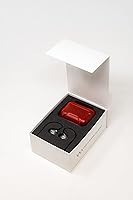
Specifications

  • Driver Type: Each earpiece houses three balanced-armature drivers, each dedicated to a specific frequency band for clean separation across the full audible range.
  • Driver Count: Three balanced-armature drivers per earpiece work together to cover lows, mids, and highs without a single driver being overextended.
  • Impedance: The earphones measure at 56 ohms, which means they benefit from a dedicated headphone amplifier or a quality audio interface rather than a phone's headphone output alone.
  • Frequency Range: The drivers reproduce audio from 20 Hz upward, covering the full range a musician or engineer needs to evaluate a live or recorded mix.
  • Acoustic Matching: Left and right earpieces are factory-matched to within plus or minus 2dB of each other, ensuring the stereo image is consistent and reliable rather than skewed to one side.
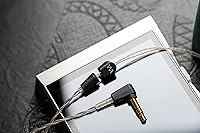
  • Cable: The included Linum Bax T2 cable is reinforced with aramid fiber tensile wiring, a material known for high strength and resistance to stretching under repeated stress.
  • Connector Type: The cable attaches via an MMCX detachable connector, allowing the cable to be swapped quickly without tools if it becomes damaged or if the user prefers an aftermarket option.
  • Jack: The cable terminates in a 3.5mm stereo jack, compatible with standard audio interfaces, mixing consoles, and wireless IEM bodypack receivers that use this common connector.
  • Noise Control: Isolation is achieved entirely through passive means — a proper physical seal between the eartip and the ear canal — with no active electronics or batteries required.
  • Earpiece Weight: Each earpiece weighs approximately 6 grams, keeping the total in-ear load minimal enough to remain comfortable throughout a full performance or extended studio session.
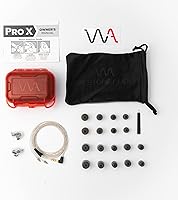
  • Included Tips: The package contains five pairs of foam eartips and five pairs of silicone eartips in varying sizes, giving users a strong chance of finding a comfortable, sealing fit straight out of the box.
  • Carrying Case: The included monitor vault is an impact-resistant hard case weighing around 5 grams, designed to protect the earphones and cable during transport and touring.
  • Connectivity: The Pro X30 is a wired-only device with no Bluetooth module, making it dependent on a physical cable connection to a source device or bodypack transmitter.
  • Water Resistance: The earpieces are built to be sweatproof, offering meaningful protection against moisture from perspiration during active stage performances.
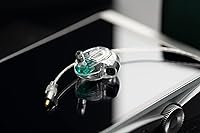
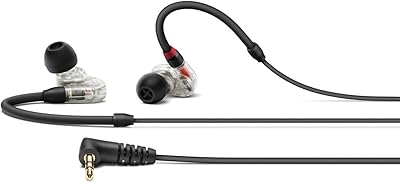
  • Earpiece Shape: The shells feature a low-profile, rounded ergonomic form designed to sit flush against the ear without protruding, reducing the risk of being dislodged by headwear or movement.
  • Brand Heritage: Westone has been designing products specifically shaped for the human ear for over six decades, with roots in custom hearing protection and professional audio monitoring.
  • Ideal Users: These monitors are primarily designed for performing musicians including vocalists, guitarists, drummers, and keyboard players, as well as sound engineers who require accurate monitoring tools.
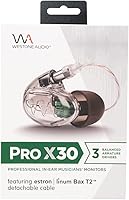
  • In-Box Contents: The package includes the earphones, the Linum Bax T2 detachable cable, ten pairs of eartips across two materials, and the impact-resistant monitor vault case.

Related Reviews

Sennheiser IE 100 PRO
86%
92%
Build Quality
88%
Passive Noise Isolation
91%
Wearing Comfort
87%
Upper-Midrange Clarity
84%
Low-End Precision
More
MEE Audio M6 PRO Gen 2
78%
78%
Sound Quality
82%
Build Quality
84%
Fit & Comfort
81%
Noise Isolation
76%
Cable System & Replaceability
More
MEE audio MX3 PRO In-Ear Monitor
76%
78%
Sound Quality
84%
Midrange Clarity
71%
Build Quality
58%
Cable Quality
74%
Comfort & Fit
More
BASN Bsinger PRO
BASN Bsinger PRO
86%
91%
Acoustic Isolation
94%
Value for Money
88%
Mid-Range Clarity
86%
Cable Versatility
83%
Long-Term Comfort
More
KZ ZSN Pro Hybrid IEM Earphones
74%
83%
Sound Quality
86%
Bass Performance
88%
Build Quality
41%
Cable Quality
71%
Comfort & Fit
More
CCA KZ AS16 PRO IEM Earphones
78%
91%
Sound Detail & Clarity
54%
Bass Performance
86%
Midrange Reproduction
83%
Treble Extension
79%
Soundstage & Imaging
More
Audio-Technica ATH-E70 In-Ear Monitor Headphones
78%
93%
Sound Accuracy
91%
Midrange Clarity
82%
Isolation Performance
67%
Fit & Comfort
86%
Cable System
More
Linsoul TIN Audio T2 HiFi In-Ear Monitors
85%
88%
Sound Quality
90%
Comfort for Long Listening Sessions
85%
Build Quality
82%
Noise Isolation
75%
Bass Performance
More
Audio-Technica ATH-E40 In-Ear Monitor
81%
88%
Sound Accuracy
74%
Comfort & Fit
81%
Passive Isolation
79%
Cable Quality
84%
Value for Money
More
KZ ZS10 Pro Hybrid IEM Earphones
76%
88%
Sound Clarity
63%
Bass Performance
82%
Soundstage & Imaging
86%
Build Quality
54%
Cable Quality
More

FAQ

Technically they will produce sound from a phone, but the higher impedance means you may not get the volume or dynamic range these monitors are capable of. For the best results — especially on stage — plugging them into a dedicated IEM bodypack receiver, a headphone amp, or a quality audio interface will make a noticeable difference. A phone is fine for casual listening at home, but it undersells what the Pro X30 can actually do.

Custom molds offer the most precise seal you can get since they are shaped specifically to your ear canal, which maximizes both isolation and comfort. The Westone Audio Pro X30 In-Ear Monitor closes that gap considerably with its tight left-right acoustic matching and a wide selection of included tips, but it still relies on a universal fit. For most working musicians the difference is negligible in practice, and the Pro X30 has the clear advantage of being immediately available, replaceable, and cable-upgradeable without a return visit to an audiologist.
It means the cable is detachable and swappable without any tools. If your cable gets yanked during a show or starts to fail after a year of touring, you replace just the cable rather than the entire earphone. It also opens the door to aftermarket cable upgrades, which many engineers and audiophiles take advantage of to fine-tune the sound or improve ergonomics.

Most users with typical ear canal shapes find one of the ten included pairs works well enough to create a proper seal. The foam tips in particular tend to conform reliably for a wide range of ear sizes. That said, people with unusually narrow or irregular canals sometimes struggle with the stock options and find that third-party tips — such as those from Comply or Spinfit — solve the fit issue entirely.

Yes, as long as your bodypack receiver has a 3.5mm output, these Westone monitors will connect to it directly. That is by far the most common setup for live performance. Just verify that your bodypack can drive a higher impedance load at sufficient volume, since some budget wireless systems are optimized for lower impedance earphones.

A properly sealed pair of these monitors can significantly reduce stage volume and crowd noise, enough that most performers can keep their monitor mix at a safe level rather than compensating with extra volume. The key word is sealed — if the eartips are not sitting firmly in your ear canal, you lose a large portion of that isolation benefit. Getting the right tip size and learning to insert them correctly makes a huge practical difference.

Most performers report that they forget they are wearing them after the first song. The earpieces are very light and shaped to sit flush against the ear without any outward protrusion that might catch or shift during movement. Some users find foam tips more comfortable for long sets while others prefer silicone, so it is worth experimenting with both types during rehearsal before a long performance.

The MMCX connector standard means a wide range of replacement cables are available from Westone directly and from third-party manufacturers on most major audio retailers. You are not locked into a proprietary cable that requires a factory order. That said, the Linum Bax T2 cable included with these Westone monitors is notably more robust than typical bundled cables, so breakage in normal touring use is not a common complaint.

These monitors lean toward a neutral, reference-oriented tuning, which is deliberate — they are designed to let you hear your mix as it actually is rather than flattering it with boosted bass or brightened highs. Performing musicians and sound engineers tend to value this quality highly. If you are buying them primarily for casual music enjoyment and you prefer a more lively, colored sound, the tuning may feel dry or analytical compared to consumer-oriented earphones.

After each use, wipe the earpieces down with a soft, slightly damp cloth to remove sweat and debris — the sweatproof build handles routine moisture well but is not designed for submersion. Eartips should be removed periodically and cleaned separately; foam tips have a shorter lifespan and should be replaced when they lose their expansion and no longer seal properly. Store them in the included vault case rather than loose in a bag to protect both the shells and the cable connection points.