Overview

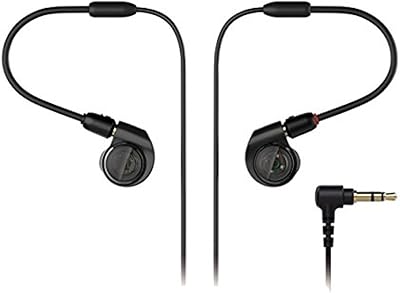
The Audio-Technica ATH-E70 In-Ear Monitor Headphones sit at the top of Audio-Technica's E-series lineup, built specifically for working musicians, live sound engineers, and studio professionals who need accuracy over flattery. The defining architectural choice is a triple balanced armature driver configuration — three separate drivers handling distinct frequency ranges rather than a single unit doing all the work. That pays off in tighter transient response and cleaner separation. Competing at a similar price point against the Shure SE535 and Westone Audio offerings, the ATH-E70 holds its own. Out of the box, the build feels solid, the hard case is a welcome inclusion, and the over-ear memory cable hints at the comfort-focused engineering underneath.

Features & Benefits

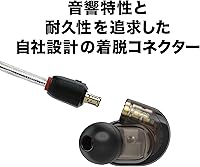
The three balanced armature drivers divide frequency duties cleanly — one for lows, one for mids, one for highs — which is how the ATH-E70 achieves extended, accurate response without a single driver being stretched beyond its strengths. The detachable cable is a practical win for anyone who has snapped a fixed cable mid-tour; replacing it costs far less than replacing the monitors themselves. The memory hook takes a few days to fully conform to your ear shape — early on it can feel rigid — but once broken in, it stays put through active sets. At 39 ohms, no external amplifier is needed to drive these from a standard stage rig or portable source.

Best For

These professional in-ear monitors were built for one job: giving performers and engineers an honest, uncolored read on a mix. If you're a vocalist or instrumentalist running in-ears on stage, the flat response means what you hear reflects what's actually in the mix — no artificial bass bloom clouding your pitch awareness. Studio musicians tracking overdubs will appreciate that same transparency. For audio engineers who need a compact reference tool that fits in a gear bag, these make a compelling case. That said, if your daily listening skews toward bass-heavy consumer audio, the sound signature will feel dry by comparison. Upgrade-minded buyers moving from single-driver IEMs will immediately notice the jump in clarity and soundstage.

User Feedback

Across nearly 800 ratings, Audio-Technica's triple-driver IEMs hold a 4.2-star average — a solid result for a monitor that makes no attempt to flatter the listener. Vocalists and guitarists consistently highlight mid-range clarity as the standout quality, and the high-frequency extension is frequently described as natural rather than harsh. Long-term durability of the detachable connector earns positive mentions from touring users specifically. Where the criticism lands: the memory cable hook can feel uncomfortably stiff out of the box, requiring a real break-in period. Fit is another variable — buyers with smaller ear canals report difficulty achieving a proper seal, and without that seal, isolation drops sharply. Tip selection genuinely matters; plan to experiment before your first show.

Pros

  • Three balanced armature drivers deliver accurate, extended frequency response across the full range without driver strain.
  • The detachable cable is a practical touring feature — replacing a worn cable costs a fraction of replacing the monitors.
  • Passive isolation via the shaped housing effectively blocks stage bleed, letting performers concentrate on their monitor mix.
  • Bundled Comply foam tips and multiple silicone sizes give buyers real options for dialing in a secure fit.
  • At 39 ohms, these run cleanly from standard stage packs and portable sources without needing an external amp.
  • The hard-shell carrying case is genuinely road-worthy, protecting the monitors during transit without adding bulk.
  • Long-term cable connector durability earns consistent praise from touring users who put these through regular heavy use.
  • Mid-range clarity is the ATH-E70's most celebrated trait — vocalists and guitarists single it out repeatedly in feedback.
  • Lightweight build at under half an ounce makes extended wear during long studio sessions or multi-set nights genuinely comfortable.

Cons

  • The memory cable hook feels noticeably stiff out of the box and requires several days of use before it shapes properly.
  • Buyers with narrower ear canals may spend real time experimenting with tip sizes before finding one that seals consistently.
  • The analytical sound signature, while accurate, will feel flat and lifeless to listeners used to consumer-tuned headphones.
  • Wired-only connectivity rules these out entirely for any use case that benefits from Bluetooth or cable-free freedom.
  • No water or sweat resistance rating is a genuine limitation for humid stage environments or physically demanding sets.
  • The premium price demands clear professional justification — occasional or casual listeners will struggle to extract equivalent value.
  • Fit quality directly determines isolation quality; a poor seal collapses the bass response and lets in significantly more noise.
  • The over-ear hook orientation, though stable on stage, can feel awkward during seated casual listening or desk use.

Ratings

The Audio-Technica ATH-E70 In-Ear Monitor Headphones earned scores based on AI analysis of hundreds of verified global buyer reviews, with spam, bot-generated, and incentivized feedback actively filtered out before any scoring was applied. These results reflect a genuine cross-section of real user experience — the strengths that distinguish these monitors in professional settings, alongside the ergonomic and sonic trade-offs that matter to specific buyers. From touring musicians and studio engineers to first-time upgraders, both praise and pain points are represented transparently in every category below.

Sound Accuracy
93%
The triple balanced armature configuration earns consistent praise for delivering a flat, reference-grade response that working musicians can actually trust. Vocalists in particular report that pitch monitoring is noticeably more reliable than with consumer-tuned alternatives — you hear what the mix contains, not a filtered or embellished version of it.
The analytical tuning that professionals value is precisely what frustrates casual listeners who pick these up expecting a dynamic, entertaining listen. A meaningful minority of verified buyers — typically those coming from consumer headphones — describe the sound as thin or sterile, particularly in the low end.
Midrange Clarity
91%
Guitarists, vocalists, and keyboardists repeatedly single out the midrange as the ATH-E70's most celebrated quality. Instrument separation in dense live mixes — where multiple sources compete in the same frequency range — comes through with a level of definition that single-driver IEMs simply cannot match.
The elevated midrange focus can occasionally make upper-mid frequencies feel slightly forward in mixes that are already bright. A handful of users note this becomes more apparent during extended studio sessions with densely layered recordings, prompting short listening breaks to reset their ears.
Isolation Performance
82%
18%
When the ear tips seal correctly, these professional in-ear monitors provide passive isolation that is genuinely effective for live stage use. Drummers and bassists performing on loud stages report being able to focus clearly on their monitor mix without ambient bleed overwhelming the signal.
Isolation is almost entirely seal-dependent, and buyers who cannot find a tip that fits properly report a significant drop in effectiveness. Users with narrower or irregularly shaped ear canals note that even the Comply foam tips do not fully resolve the problem, leaving stage noise audibly present throughout a set.
Fit & Comfort
67%
33%
Once the memory cable hook is properly broken in — which takes consistent daily wear over several days — most users find it secure and comfortable enough for full live sets without significant adjustment. The lightweight housing contributes to genuine long-wear comfort once the ergonomics are dialed in for each individual ear.
The memory cable hook is notably stiff out of the box, and multiple verified buyers describe early-use discomfort that takes a real break-in period to resolve. Buyers with smaller ears report the most frustration, with the hook requiring significant reshaping and manipulation before it conforms comfortably.
Cable System
86%
The detachable cable is one of the most practically praised features among touring musicians, who regularly face cable damage from physical wear, sweat exposure, and gear friction on the road. Being able to swap a cable without retiring the entire monitor unit is a meaningful cost-saving advantage over fixed-cable competitors.
A small number of users report that the locking connector at the housing can feel slightly finicky during fast cable swaps in live backstage environments. The memory wire section, while functional, occasionally shows signs of fatigue or kinking after months of repeated daily reshaping on the road.
Build Quality
84%
The housing feels solid and well-finished for a monitor in this tier — most buyers describe an immediate sense of build integrity when handling these professional in-ear monitors for the first time. The included hard-shell case reinforces the impression of a product genuinely engineered for field durability.
A few buyers note that the housing material, while durable in practice, does not feel quite as premium as competing monitors at similar price points from brands like Westone. Some users also wish the detachable connector locking mechanism felt more robust under the stress of frequent daily cycling.
High-Frequency Response
88%
The high-frequency extension is consistently described as natural and articulate without veering into harshness — a difficult balance to achieve with balanced armature drivers. Acoustic guitar players in particular note that string detail and pick attack come through with satisfying definition during live monitoring and studio tracking sessions.
A minority of users find the treble can feel slightly forward in mixes that are already well-saturated in upper frequencies, occasionally leading to listening fatigue during extended critical studio sessions. This is an infrequent complaint rather than a dominant pattern across the broader verified feedback pool.
Bass & Low-End
61%
39%
Bass response is accurate and controlled — professionals who need to hear kick drum and bass guitar as they actually sit in the mix, without exaggeration or bloom, will find the low end honest and practically useful. Studio engineers tracking bass-heavy sessions particularly appreciate the absence of artificial low-end coloration.
Casual listeners and bass-forward music fans consistently flag the low end as underwhelming — the ATH-E70 does not deliver the visceral, physical bass impact that consumer headphones at lower price points routinely provide. For recreational or casual listening purposes, this shortfall is significant and frequently mentioned in user feedback.
Soundstage & Imaging
83%
The three-driver configuration produces a noticeably wider and more defined soundstage than single-driver alternatives, with instrument placement coming across as clearly separated rather than compressed or smeared together. Producers and engineers doing mix checks find the imaging detailed enough for practical monitoring decisions in both studio and live contexts.
The soundstage, while strong for an IEM, still trails behind open-back studio headphones in width and perceived depth — a fundamental limitation of the in-ear format rather than a specific shortfall of this model. Users expecting a full over-ear monitoring experience in a compact in-ear form factor will always encounter this boundary.
Accessories
81%
19%
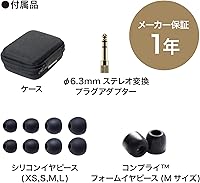
The bundled accessory package is genuinely practical — the hard-shell case travels well in a gear bag, the 6.3mm adapter handles direct console connections cleanly, and having both silicone and Comply foam tips included means buyers can begin optimizing their fit without an additional accessory purchase on day one.
Some buyers note that extra-extra-small silicone tip sizes would improve the package for users with smaller ear canals who fall outside the included size range. The stock cable, while functional, is also considered basic by users who prefer upgrading to third-party cables with more refined connectors and materials.
Value for Money
74%
26%
For professional musicians who depend on accurate monitoring to do their jobs effectively, these professional in-ear monitors justify the premium through three-driver accuracy, a replaceable cable system, and a service life that long-term verified users consistently report across multiple touring and recording seasons.
The narrow professional use case — analytical monitoring only, no wireless, no moisture protection — makes justification difficult for anyone outside a working stage or studio context. Buyers who discover post-purchase that the flat tuning does not suit their listening habits frequently note the investment feels misaligned with their actual needs.
Long-Term Durability
87%
Touring musicians who have put the ATH-E70 through multiple performance seasons report strong durability on the core components — particularly the monitor housing and detachable cable connector, which holds up well under the repeated cycling that live performance regularly demands over time.
A number of users report that the memory wire section of the cable begins to kink or lose shape retention after a year or more of daily reshaping. The absence of any moisture protection also raises genuine concerns about long-term hardware reliability in high-perspiration performance environments across multi-year use.
Ease of Setup
63%
37%
For experienced IEM users, the setup process — attaching the cable, selecting ear tips, and shaping the ear hook — is intuitive and takes only a few minutes per session. Musicians who have used over-ear IEM rigs before will adapt quickly and find the workflow familiar from the very first use.
First-time in-ear monitor users consistently report a steeper-than-expected learning curve — tip fitting, hook shaping, and achieving a consistent acoustic seal all require deliberate experimentation that can be stressful when attempted for the first time before a show. Several buyers strongly recommend practicing the full setup at home before any live deployment.
Versatility
48%
52%
Within its intended professional monitoring context, the ATH-E70 covers studio tracking, live stage monitoring, and mix reference work across a wide range of musical genres, making it a credible dedicated tool for musicians who routinely move between studio sessions and live performance environments.
These monitors are a poor fit for any scenario outside professional monitoring — the wired-only design eliminates commuting, gym, and casual listening use cases entirely, while the flat tuning further reduces their appeal as an everyday audio companion. Buyers hoping for a single IEM to handle both professional work and recreational listening will find these fall short.
Stage Performance
89%
Live musicians deploying these monitors through professional IEM systems consistently rate on-stage performance as highly reliable — accurate mix feedback, stable fit once broken in, and solid passive isolation allow performers to monitor confidently on loud stages without pushing transmitter output to uncomfortable levels.
The initial setup awkwardness — particularly the stiff memory hook and the tip-fitting process — can be stressful if attempted for the first time at a venue without prior practice at home. A handful of users also note that multi-set outdoor festival days in humid conditions introduce real uncertainty about moisture exposure and its long-term effects.

Suitable for:

The Audio-Technica ATH-E70 In-Ear Monitor Headphones are purpose-built for working musicians, live sound engineers, and studio professionals who treat their monitoring gear as essential equipment rather than a lifestyle purchase. Gigging vocalists, guitarists, and bassists running in-ear monitor systems on stage will find the flat, reference-grade sound signature gives them an honest read of their mix without the coloring that consumer headphones introduce. Studio tracking musicians benefit equally, using these professional in-ear monitors to catch mix details and frequency conflicts that warmer, colored headphones tend to mask. Audio engineers who need a reliable secondary reference that travels compactly in a gear bag will appreciate the thoughtful included accessories and road-ready hard case. Buyers stepping up from single-driver IEMs will also notice a real and immediate improvement in clarity, soundstage, and high-frequency articulation — especially in dense arrangements where instruments crowd the same sonic space.
Not suitable for:

The Audio-Technica ATH-E70 In-Ear Monitor Headphones are a poor match for anyone who approaches in-ears as a casual everyday listening device. If your frame of reference is a consumer-tuned headphone with boosted bass and a warm midrange, the flat response here will feel clinical and underwhelming — that quality is the whole point for professionals, but it is a genuine dealbreaker for recreational listening enjoyment. There is no wireless option whatsoever, which rules them out entirely for commuting, workouts, or any scenario where a cable is impractical. Buyers with particularly narrow ear canals may also struggle to find a tip configuration that creates a proper seal; without that seal, the passive isolation loses much of its effectiveness and the low end thins out noticeably. These carry no water or sweat resistance rating, so high-activity environments or damp stage conditions introduce real long-term risk. Anyone who simply wants a durable, versatile everyday IEM without a professional monitoring focus should look at more affordable and flexible alternatives.

Specifications

  • Driver Type: Three individual balanced armature drivers are configured to handle dedicated frequency bands, with separate units assigned to low, mid, and high frequencies for accurate, full-range reproduction.
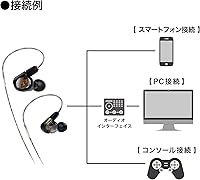
  • Impedance: At 39 ohms, these monitors can be driven to usable performance levels directly from standard IEM bodypack receivers, stage monitor packs, and most portable audio sources without a dedicated headphone amplifier.
  • Sensitivity: Rated at 109 dB SPL, the sensitivity level means the monitors produce ample listening volume at moderate output levels from connected sources.
  • Frequency Response: The rated frequency response spans 20 Hz to 19,000 Hz, covering the full audible range with particular strength in the midrange and upper frequencies.
  • Cable Design: The detachable cable features a flexible memory wire section that loops over each ear, allowing the hook to be shaped to individual ear contours for a more secure, fatigue-reducing fit during extended wear.
  • Connectors: The cable terminates in a 3.5mm stereo mini-plug, and a screw-on 6.3mm (1/4″) plug adapter is included for direct connection to professional mixing consoles and stage amplifiers.
  • Sound Isolation: Isolation is achieved passively through the shaped monitor housing, which creates a physical barrier between the ear canal and ambient noise without any active noise-cancelling circuitry.
  • Ear Tips: The package includes silicone ear tips in multiple sizes and Comply foam tips, which compress for insertion and then expand to fill the ear canal for improved acoustic seal and isolation.
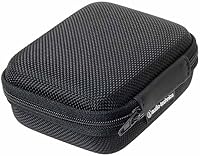
  • Carrying Case: A rigid hard-shell carrying case is included, providing structured protection for the monitor housings, cables, and accessories during transport and storage.
  • Weight: The monitor housings weigh 0.352 oz (approximately 10 g) without the cable attached, keeping ear fatigue low during multi-hour studio sessions or live sets.
  • Wireless: These are wired-only monitors with no Bluetooth or wireless transmission capability of any kind.
  • Water Resistance: No water or sweat resistance rating is specified by the manufacturer, making these unsuitable for use in wet conditions or particularly high-perspiration environments.
  • Cable Swap: The cable detaches cleanly at the monitor housing via a locking connector, allowing a damaged or worn cable to be replaced independently without replacing the entire monitor unit.
  • Color: Available in black across the housing, cable, and included accessories.
  • Model Number: The official model designation is ATH-E70, the flagship model in Audio-Technica's professional E-series wired in-ear monitor lineup.

Related Reviews
Audio-Technica ATH-E40 In-Ear Monitor
81%
88%
Sound Accuracy
74%
Comfort & Fit
81%
Passive Isolation
79%
Cable Quality
84%
Value for Money
More
Audio-Technica ATH-CLR100iS In-Ear Headphones
74%
83%
Sound Quality
91%
Value for Money
77%
Comfort & Fit
61%
Build Quality
68%
Microphone Quality
More
Audio-Technica ATH-AVC200
74%
88%
Value for Money
84%
Comfort & Fit
76%
Sound Quality
61%
Build Quality
73%
Passive Noise Isolation
More
Audio-Technica ATH-MSR7b Over-Ear Headphones
80%
89%
Sound Quality
64%
Bass Response
93%
Midrange Clarity
87%
Treble & Detail
86%
Soundstage & Imaging
More
Audio-Technica ATH-MSR7BK Over-Ear Headphones
79%
88%
Sound Quality
91%
Build Quality
74%
Comfort & Fit
93%
Cable System
67%
Passive Isolation
More
Audio-Technica ATH-A990Z Closed-Back Over-Ear Headphones
72%
88%
Sound Quality
74%
Bass Performance
83%
Soundstage & Imaging
91%
Comfort & Fit
82%
Build Quality
More
Audio-Technica ATH-S200BT Bluetooth On-Ear Headphones
73%
93%
Battery Life
88%
Value for Money
67%
Sound Quality
61%
Comfort
58%
Build Quality
More
Audio-Technica ATH-M20xBT Wireless Over-Ear Headphones
75%
94%
Battery Life
78%
Sound Quality
86%
Value for Money
47%
Wireless Range
68%
Noise Isolation
More
Audio-Technica ATH-AVC400 Over-Ear Headphones
75%
74%
Sound Quality
81%
Comfort & Fit
62%
Build Quality
83%
Value for Money
69%
Passive Noise Isolation
More
Audio-Technica ATH-EQ300M Ear-Fit Headphones
71%
91%
Wearing Comfort
74%
Sound Clarity
31%
Noise Isolation
63%
Build Quality
78%
Value for Money
More

FAQ

Yes, the ATH-E70 is compatible with most standard IEM bodypack receivers that output via a 3.5mm connection. The 39-ohm impedance and 109 dB sensitivity sit well within the output range of common systems like the Shure PSM 300 or Sennheiser EW-IEM G4. Just confirm your receiver has a 3.5mm output jack, and you should be good to go.

Both are triple balanced armature monitors competing in the same professional tier, but they take noticeably different tuning approaches. The SE535 leans slightly warmer and more musical, while Audio-Technica's triple-driver IEMs are tuned flatter and more analytically. If accurate, uncolored mix monitoring is the goal, the ATH-E70 has the edge. If you want something that also sounds enjoyable for casual listening, the SE535 may suit you better.

Absolutely — the cable detaches at the monitor housing, so a damaged cable can be swapped out without any tools or sending the unit in for service. This is one of the most practical features for touring musicians who put gear through real daily stress. Audio-Technica and several third-party suppliers offer compatible replacement cables.

No, you do not. At 39 ohms and 109 dB sensitivity, these run cleanly from standard bodypack receivers, audio interfaces, and even most smartphones. A dedicated headphone amp is only necessary if you are using an unusually low-output source.

Most users report it takes anywhere from a few days to about a week of regular use before the hook fully conforms to the shape of the ear. Out of the box it can feel stiff, especially for those with smaller ears. Once the break-in period is done, the hook holds its shape well and stays securely in place during active performances.

Start with the medium silicone tips since they fit the widest range of ear canals, then adjust from there. Tip fit genuinely matters here more than with many consumer headphones — a poor seal weakens the bass response and significantly reduces the passive isolation the housing is designed to provide. If silicone does not seal well for you anatomically, try the included Comply foam tips, which expand inside the canal and often solve fit problems that silicone cannot.

Yes, the flat response makes these a solid studio tracking tool, as you are hearing the mix without any coloration that might affect pitch perception or intonation decisions. Just be aware that the same analytical tuning that makes them accurate can feel fatiguing during very long critical listening sessions if you are accustomed to a warmer sound signature.

The passive isolation is genuinely effective when you achieve a proper seal with your chosen ear tips. In real stage environments, you can expect these professional in-ear monitors to block a meaningful amount of ambient bleed — enough to focus on your monitor mix without significant distraction. Isolation performance drops considerably if the seal is not solid, so tip selection remains a critical first step.

There is no official moisture or sweat resistance rating on these monitors, so prolonged exposure to heavy perspiration does carry some risk over time. Many working musicians use them through active performances by wiping down the housings after shows and keeping the cable connectors dry. It is a real long-term consideration if you play physically demanding sets in hot venues.

The E50 uses a single balanced armature driver, while these professional in-ear monitors use three, and the improvement in frequency separation and soundstage imaging is noticeable rather than subtle. For casual or semi-professional use, the E50 is genuinely capable, but if your work demands accurate mix monitoring in dense arrangements — where instruments overlap in the same frequency space — the additional clarity and detail retrieval from the E70 makes the price difference justifiable for most working musicians.

Where to Buy