Overview

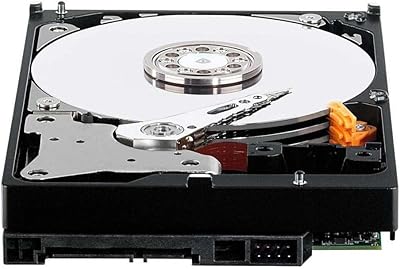
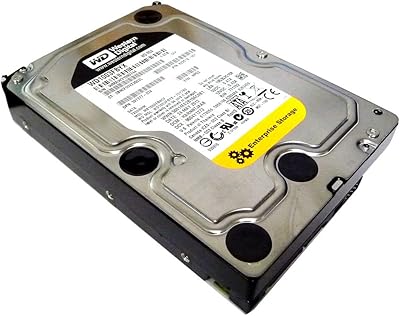
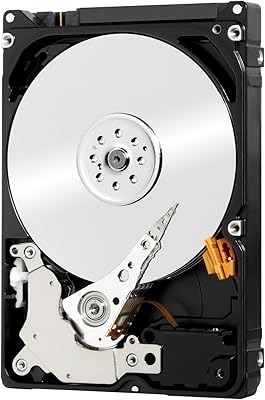
The Western Digital RE4 WD5003ABYX 500GB Internal Hard Drive is an enterprise-class spinning disk built for always-on workloads — think NAS enclosures, RAID arrays, and small server racks that never sleep. The WD RE4 line earned a strong reputation for outlasting standard desktop drives, and that legacy holds up. You'll still find this enterprise hard drive surfacing in refurbished IT builds for good reason. The 500GB capacity won't impress anyone shopping for bulk storage, but for archival vaults, secondary backup roles, or spare server bays, it fills the need cleanly. The SATA2 interface connects without hassle to both legacy and current motherboards.
Features & Benefits

At 7200 RPM, this WD RE4 unit spins fast enough to handle sustained read/write demands that would expose a budget desktop drive quickly. The 64MB cache buffer helps absorb traffic spikes in multi-user environments, keeping transfers smooth when multiple processes compete for access. What genuinely sets this drive apart from consumer alternatives is Time-Limited Error Recovery — TLER for short. This enterprise firmware feature prevents the drive from hanging too long on a bad sector, which in a RAID config keeps the entire array from dropping the disk unexpectedly. Add a higher-than-average annual workload rating and a standard 3.5-inch frame that fits almost any enclosure, and the value picture becomes clear.

Best For

This enterprise hard drive makes most sense for anyone working with refurbished server hardware or building a budget-conscious RAID array where enterprise-grade reliability matters. Home lab builders who want the peace of mind that comes with TLER support — without paying premium prices for new drives — will find the WD RE4 500GB a smart pick. IT admins repurposing older infrastructure for backup or cold-storage duties also have a solid candidate here. It's probably not the right choice for someone needing large-capacity primary storage; the 500GB ceiling means you're filling a specific niche. But in that niche, few drives bring the same enterprise pedigree at this price tier.

User Feedback

Across reviews, buyers consistently highlight how well the WD RE4 500GB holds up over extended use, particularly in RAID setups and NAS enclosures where most consumer drives tap out early. That 4-star average feels earned rather than inflated. On the flip side, a recurring complaint is the drive running noticeably warm under continuous load — proper case airflow isn't optional here, it's essential. Buyers picking up used units also flag the usual risk: no way to know the drive's prior workload history without running diagnostics first. And while no one disputes the reliability credentials, the modest 500GB capacity does draw some pushback from users hoping for more storage density.

Pros

  • TLER firmware actively prevents drive dropout in RAID arrays, a critical advantage over consumer HDDs.
  • The 7200 RPM spindle speed delivers strong sustained throughput for server and NAS workloads.
  • A 64MB cache buffer keeps data transfers smooth even under multi-user access conditions.
  • The WD RE4 500GB is rated for higher annual workload hours than standard desktop drives.
  • Standard 3.5-inch form factor means it drops into most towers and NAS bays without adapters.
  • SATA interface ensures broad compatibility across both older and current motherboard generations.
  • The WD RE4 line has a well-documented track record of longevity in enterprise environments.
  • Ideal for budget-conscious RAID builds where enterprise firmware matters but new drive pricing does not fit the plan.
  • Well-suited for cold-storage or archival duties where reliability over time outweighs raw capacity needs.

Cons

  • 500GB capacity feels noticeably dated when multi-terabyte drives are available at similar price points.
  • This WD RE4 unit runs warmer than average under sustained load, requiring adequate case airflow to stay stable.
  • Buying used or refurbished units carries real risk since prior workload history cannot be verified without diagnostics.
  • SATA2 throughput ceiling may become a bottleneck in high-demand, modern storage configurations.
  • No built-in encryption or advanced security features, which limits use in compliance-sensitive environments.
  • Spare parts and warranty support for this aging drive series are increasingly difficult to source.
  • Not a practical choice for primary storage in any build where capacity growth is anticipated.
  • Noise levels from a 7200 RPM spinning disk may be a nuisance in quiet home office or living space setups.

Ratings

Our AI rating system analyzed verified global buyer reviews for the Western Digital RE4 WD5003ABYX 500GB Internal Hard Drive, actively filtering out incentivized, duplicate, and bot-generated submissions to surface what real users actually experienced. The scores below reflect a balanced synthesis of genuine praise and honest frustration across every meaningful performance dimension. Both the strengths that keep this drive relevant in refurbished IT builds and the limitations that make it a poor fit for certain buyers are transparently represented.

Reliability & Longevity
91%
This is the category where the WD RE4 500GB earns its reputation most decisively. Buyers running it continuously in NAS enclosures and RAID arrays report multi-year operation without failure, which is exactly what enterprise-grade workload ratings promise. For always-on environments, the drive consistently outperforms consumer alternatives.
The reliability picture changes significantly for used or refurbished units with unknown prior usage hours. A drive that survived five years in a data center may have little usable life remaining, and buyers have no way to verify that without running diagnostics themselves before trusting it with important data.
RAID Compatibility
93%
TLER firmware is the standout feature for RAID users, and buyers who understand it rate this aspect extremely highly. The drive caps sector error recovery time precisely to avoid RAID controller timeouts, preventing the dreaded array dropout that plagues consumer drives used in similar configs. Home lab builders specifically call this out as a reason they chose the WD RE4 line.
TLER is genuinely valuable, but it is not a magic shield against array issues. Buyers mixing this drive with mismatched models in a RAID set occasionally report inconsistent behavior, and TLER alone cannot compensate for a drive that is already degraded from heavy prior use.
Sustained Throughput
78%
22%
At 7200 RPM with a 64MB cache, this enterprise hard drive handles sequential file transfers and backup write streams solidly. Users transferring large archives or running continuous NAS backup jobs report stable, predictable throughput without the speed drops that plague lower-cache consumer drives under sustained load.
Random I/O performance is where spinning disk physics become an unavoidable bottleneck. Buyers who attempted to use this drive for database workloads or as virtual machine storage found the latency disappointing compared to what even a budget SSD delivers in those scenarios.
Thermal Performance
61%
39%
For buyers running this drive in well-ventilated server racks or NAS units with active cooling fans, operating temperatures stay within acceptable enterprise ranges during extended workloads. The drive was designed with airflow-rich server environments in mind, and it performs as expected in those conditions.
In tighter desktop cases or compact NAS enclosures with minimal airflow, multiple buyers report the drive running noticeably warm under sustained load. This is not dangerous by itself, but over months of continuous operation in a poorly ventilated bay, elevated heat meaningfully accelerates long-term wear.
Value for Money
74%
26%
When evaluated specifically as a source of enterprise firmware features — particularly TLER — at a price point well below new enterprise drives, the WD RE4 500GB delivers genuine value. For home lab users and small IT shops that need RAID-safe drives on a tight budget, the cost-to-reliability ratio is hard to argue with.
Evaluated purely on a cost-per-gigabyte basis against modern consumer drives, the math does not favor this drive at all. Buyers focused on storage density rather than enterprise features will find that newer drives offer several times the capacity for comparable or lower cost.
Storage Capacity
44%
56%
For highly specific secondary roles — a dedicated OS drive, a parity disk in a RAID array, or a cold-archive volume that gets written to infrequently — 500GB is functionally adequate. Buyers using it for these defined, limited purposes rarely report feeling constrained by the capacity.
By current storage standards, 500GB is genuinely limiting for almost any primary use case. Users who hoped to consolidate media libraries, virtual machine storage, or large backup sets onto this drive consistently reported running out of space far sooner than expected, which is the most common single complaint across reviews.
Compatibility
88%
The 3.5-inch SATA form factor is about as universally compatible as a hard drive gets. Buyers dropped this drive into decade-old server chassis, current desktop motherboards, and a range of NAS enclosures from Synology, QNAP, and others without encountering physical or interface compatibility issues.
The SATA2 interface specification occasionally raises questions for buyers running modern SATA3 platforms who worry about bandwidth limitations. While real-world throughput impact is negligible for a spinning disk, the spec mismatch creates unnecessary confusion and doubt during purchase decisions.
NAS Suitability
86%
Buyers running this WD RE4 unit inside Synology and QNAP NAS devices praise its stability in multi-drive configurations. The enterprise firmware interacts predictably with NAS operating systems, and the drive handles the always-on duty cycle that consumer-class drives often struggle to sustain over extended periods.
The 500GB limit does reduce the usefulness of this drive in NAS builds aimed at substantial media or document storage pools. Users building capacity-focused NAS arrays often find themselves constrained by the ceiling and end up replacing these drives sooner than they anticipated.
Noise Level
58%
42%
In server rooms, utility closets, or any dedicated equipment space where ambient noise is already present, the drive's operational hum is completely unremarkable. Buyers using it in those contexts rarely mention noise as a factor at all.
In quiet home office or living space environments, the mechanical seek noise and platter hum are noticeable enough that several buyers flagged it directly. At 7200 RPM in a desktop case sitting on a desk, this drive is audibly busier than a modern consumer drive or any SSD alternative.
Ease of Installation
89%
The installation experience is exactly what experienced buyers expect from a standard 3.5-inch internal drive — screw it into a bay, connect the SATA data and power cables, and the system recognizes it. No drivers, no configuration utilities, and no compatibility gymnastics required.
Buyers who are less experienced with internal drive installation sometimes find the lack of any bundled documentation or mounting hardware frustrating. Bare-drive listings in particular ship with nothing extra, so buyers need to source their own screws or trays if their enclosure requires them.
Workload Endurance
84%
The RE4 series was engineered for workloads that would burn through consumer drives in months. Buyers running continuous backup jobs, surveillance storage, or multi-user file server traffic report that the drive handles the sustained duty cycle without the performance degradation or early failure common on desktop alternatives.
The endurance advantage is most meaningful for genuinely heavy, continuous workloads. Light home users who might have been fine with a cheaper desktop drive sometimes feel they paid an enterprise premium for a use case that would not have stressed a consumer drive noticeably.
Resale & Legacy Value
52%
48%
Within the refurbished IT market, the WD RE4 name carries enough brand trust that these drives retain a base level of demand. IT professionals sourcing spare parts for existing server deployments actively seek out known-good RE4 units, giving the drive a clearer secondary market than many aging consumer HDDs.
Outside of that specific refurbished IT niche, the drive's age and modest capacity significantly limit its appeal to new buyers. Anyone unfamiliar with the enterprise HDD segment may struggle to understand the price premium over a higher-capacity consumer drive when shopping without context.
Brand Trust
83%
Western Digital's enterprise storage reputation is well-established, and buyers consistently cite the WD RE4 brand lineage as a primary reason for their purchase confidence. The RE4 series specifically has been deployed in commercial environments long enough that its failure characteristics and reliability curve are well-documented in the IT community.
Brand trust only goes so far when buying an aging product through third-party sellers. Buyers who received units that showed early SMART warning signs felt that the WD name provided less protection than they expected when the seller was not an authorized distributor offering verified warranty terms.

Suitable for:

The Western Digital RE4 WD5003ABYX 500GB Internal Hard Drive is a smart pick for anyone operating in the refurbished or legacy IT space who needs proven enterprise reliability without paying for new hardware. Home lab enthusiasts building budget RAID arrays will genuinely appreciate the TLER firmware, which prevents a single bad sector from knocking a drive out of an array — something a standard desktop drive simply cannot guarantee. IT professionals setting up secondary backup servers or cold-storage NAS systems will find the WD RE4 500GB a dependable workhorse that handles always-on duty cycles far better than consumer-grade alternatives. Small businesses repurposing older server chassis for archival storage also have a strong candidate here, since the 3.5-inch SATA form factor drops in without compatibility headaches. If your use case is modest in scale and long on uptime requirements, this enterprise hard drive punches well above its weight class.
Not suitable for:

Buyers expecting primary storage capacity for modern workloads should look elsewhere — the Western Digital RE4 WD5003ABYX 500GB Internal Hard Drive's 500GB ceiling feels limiting when multi-terabyte drives are readily available at comparable or lower price points. Content creators, gamers, or anyone building a high-capacity media server will find the storage ceiling a genuine obstacle rather than an acceptable trade-off. This WD RE4 unit is also a risky proposition if purchased as a used or refurbished item without verifying drive health first — previous workload history is unknown, and enterprise drives pulled from decommissioned servers may have significant hours already logged. Users who need silent, low-heat operation in a compact or poorly ventilated setup should also be cautious, since this drive runs warmer than typical under sustained load. And if SATA2 compatibility with a cutting-edge platform is uncertain in your specific build, it is worth confirming before committing.

Specifications

  • Storage Capacity: This drive provides 500GB of formatted storage space, suited for archival, backup, or secondary storage roles.
  • Spindle Speed: The platters rotate at 7200 RPM, delivering consistent read/write throughput for sustained enterprise workloads.
  • Cache Buffer: A 64MB cache buffer helps manage data queuing and smooths transfer performance under concurrent access conditions.
  • Interface: Uses a Serial ATA (SATA2) interface, broadly compatible with desktop motherboards, server backplanes, and most NAS enclosures.
  • Form Factor: Standard 3.5-inch internal form factor fits directly into desktop towers, rackmount servers, and compatible NAS bays without adapters.
  • Drive Series: Part of the WD RE4 enterprise line, designed specifically for high-endurance, always-on operating environments.
  • Model Number: The official Western Digital model identifier is WD5003ABYX, used for warranty lookup and compatibility verification.
  • Manufacturer: Designed and manufactured by Western Digital Corporation, a longstanding producer of enterprise and consumer storage solutions.
  • Error Recovery: Equipped with Time-Limited Error Recovery (TLER) firmware, which caps sector recovery time to prevent RAID array dropout events.
  • Workload Rating: Rated for significantly higher annual workload hours than consumer desktop drives, supporting continuous server and NAS operation.
  • Compatible Devices: Compatible with desktop PCs, internal server bays, and NAS enclosures that accept standard 3.5-inch SATA drives.
  • Installation Type: Designed exclusively for internal installation; not intended for use as a portable or external storage device.
  • Dimensions: Physical dimensions measure 7.09 x 4.72 x 1.97 inches, consistent with standard full-height 3.5-inch drive bay requirements.
  • Color & Finish: The drive casing is finished in silver, typical of Western Digital enterprise-series hardware.
  • First Available: This model was first introduced to the market in November 2010, reflecting its status as a mature, legacy-generation drive.
  • Market Rank: Holds a ranking of approximately #1,129 in the Internal Hard Drives category on Amazon, indicating continued buyer interest.
  • Drive Technology: Uses traditional spinning magnetic platter technology (HDD), not solid-state, making it well-suited for high-capacity sequential workloads.
  • Average Rating: Carries a 4.0 out of 5 star average across 62 ratings, reflecting solid user satisfaction for its intended enterprise use case.

Related Reviews

Western Digital RE4 1TB Internal Hard Drive
76%
91%
Reliability & Longevity
89%
RAID Compatibility
88%
TLER Firmware
71%
Value for Money
53%
Capacity Relevance
More
Western Digital WD5000AAKX 500GB SATA Hard Drive
84%
82%
Performance
89%
Value for Money
85%
Reliability
91%
Ease of Installation
76%
Speed (7200 RPM)
More
Western Digital Caviar Green 500GB Hard Drive
73%
78%
Value for Money
47%
Read/Write Speed
88%
Noise Level
86%
Heat Output
61%
Long-Term Reliability
More
WD Black 6TB Internal Hard Drive
79%
83%
Read & Write Performance
88%
Storage Capacity Value
81%
Build & Reliability
63%
Thermal Performance
71%
Noise Level
More
Western Digital WD Black 500GB Performance Mobile Hard Drive
88%
91%
Performance Speed
88%
Build Quality
86%
Reliability/Long-Term Use
89%
Ease of Installation
92%
Compatibility (PC/Mac)
More
Western Digital WD Blue 2TB Hard Drive
81%
88%
Long-Term Reliability
91%
Value for Money
74%
Read/Write Performance
83%
Noise & Vibration
92%
Installation Ease
More
WD Blue 3TB Internal Hard Drive
80%
91%
Value for Money
86%
Reliability & Longevity
93%
Installation Ease
62%
Read & Write Speed
84%
Noise & Vibration
More
WD Black 2TB 3.5″ Internal Hard Drive
79%
78%
Read & Write Performance
82%
Reliability & Longevity
74%
Noise & Vibration
76%
Value for Money
89%
Installation & Compatibility
More
Western Digital 4TB WD Red Plus NAS Internal Hard Drive
89%
91%
Performance
94%
Reliability
88%
Energy Efficiency
85%
Noise Levels
89%
Workload Handling
More
Western Digital WD Black 8TB Hard Drive
79%
83%
Sequential Read Speed
58%
Random Access Performance
88%
Build Quality
81%
Noise & Vibration
63%
Thermal Management
More

FAQ

It is genuinely well-suited for RAID, even in a home lab. The key feature here is TLER — Time-Limited Error Recovery — which tells the drive to cap the time it spends attempting to recover a bad sector. Without TLER, a consumer drive can stall long enough that the RAID controller assumes it has failed and drops it from the array. This drive handles that gracefully, which is exactly what you want in a multi-drive config.

In practical terms, probably not for this capacity class. SATA2 tops out at 3 Gb/s, while SATA3 doubles that to 6 Gb/s — but a spinning 7200 RPM hard drive's mechanical read/write speed never comes close to saturating even the SATA2 ceiling. The real-world throughput difference between running this drive on SATA2 versus SATA3 ports is negligible.

The WD RE4 500GB is rated for a much higher annual workload than typical desktop drives, which are generally designed for light daily use. Enterprise drives like this one are built to run continuously without the thermal and mechanical stress that would degrade a consumer drive over time. If you are planning to leave a drive spinning 24/7 in a NAS or server, the difference in longevity can be substantial.

It is a legitimate concern. Enterprise drives pulled from decommissioned servers may have thousands of hours already on them, and sellers do not always disclose that. Before trusting a used unit with important data, run a health check using a tool like CrystalDiskInfo on Windows or smartmontools on Linux. Look at the reallocated sector count and total power-on hours — those two stats will tell you most of what you need to know.

This is something multiple owners have flagged, and it is worth taking seriously. The Western Digital RE4 WD5003ABYX 500GB Internal Hard Drive does run warmer than a typical desktop HDD under sustained load, which is common for enterprise drives built to operate in ventilated server racks. If your case airflow is limited, consider adding a fan directed at your drive bay or leaving some space between drives to allow heat to dissipate.
Yes, and it is actually a solid fit for that use case. Most NAS enclosures accept standard 3.5-inch SATA drives, and the WD RE4 line's enterprise firmware plays nicely with NAS operating systems. The TLER support is a genuine plus in this context since many NAS devices run software RAID internally and benefit from drives that handle error recovery predictably.

It depends entirely on what you need it for. For primary storage on a modern PC or a media server, 500GB will feel tight quickly. But for a dedicated backup target, an archival cold-storage bay, or a spare drive in a RAID parity setup, the capacity is perfectly functional. The value proposition here is the enterprise firmware and durability, not raw gigabytes.

Anything that demands high random I/O performance — like running a database or a busy virtual machine host — is better served by an SSD. This WD RE4 unit excels at sustained sequential workloads like file serving, backup writes, and archiving, but spinning disk latency will be a limiting factor in latency-sensitive applications.

Western Digital originally shipped the RE4 series with a five-year limited warranty, which was one of the standout perks of the enterprise line. However, for drives purchased today — especially through third-party sellers — the original warranty has almost certainly expired given the drive's release date. Always check with the specific seller about any warranty or return coverage they offer independently.

It is noticeable. At 7200 RPM, this WD RE4 unit produces audible seek noise and a low hum during operation — on par with what you would expect from any enterprise spinning disk. In a server closet or a dedicated NAS cabinet, this is a non-issue. If the drive will sit inside a quiet home office setup or a living room media center, the noise may be more disruptive than anticipated.