Overview

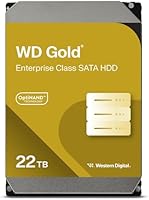
The Western Digital WD Gold 22TB Internal Hard Drive sits at the top of WD's enterprise lineup, built specifically for data centers and high-density NAS arrays rather than consumer desktops. While the Red series targets home and small-office storage and Purple handles surveillance systems, the Gold tier is engineered for continuous, demanding operation at scale. At 22TB per drive, IT teams can meaningfully increase storage density without expanding their chassis footprint. For enterprise buyers running cost-per-terabyte calculations across a fleet, this high-capacity SATA drive makes a strong case — particularly when rack space and power budgets are real, competing priorities.
Features & Benefits

Running at 7200 RPM over a SATA 6 Gb/s interface, this enterprise hard drive delivers reliable sequential throughput for sustained read/write workloads common in backup servers and archival arrays. The HelioSeal helium-fill design is what makes 22TB achievable without a steep power penalty — helium reduces platter drag, which keeps both energy draw and heat output lower than air-filled alternatives. A 512 MB cache buffer helps smooth out mixed operations under load. Perhaps underappreciated is the RAFF vibration compensation, which corrects for mechanical interference from neighboring drives in a populated enclosure — something that quietly affects performance in multi-bay deployments more than most buyers anticipate.

Best For

The WD Gold 22TB is a natural fit for IT administrators expanding on-premises NAS or SAN systems where maximizing capacity per bay reduces hardware sprawl. It also suits organizations with archival or cold-storage workloads — environments prioritizing sequential read speeds and long-term retention over fast random IOPS. Small to mid-size businesses consolidating aging storage infrastructure will appreciate its straightforward SATA compatibility. Power-constrained deployments benefit from the helium design's lower energy consumption per terabyte. If your primary workload is transactional databases demanding high random read/write performance, look toward SAS or NVMe options instead — this drive is not optimized for that use case.

User Feedback

Buyers consistently praise the smooth initial setup, with most enterprise users reporting clean detection on first spin-up and solid compatibility with QNAP, Synology, and similar NAS platforms. Long-term owners running units for a year or more are largely satisfied, noting steady, uneventful operation. On the other side, a noticeable share of reviews flag early-failure units, which makes running a diagnostics check immediately after install a wise precaution. Users in quiet office environments occasionally mention audible seek noise during heavy activity. The 4.1-star rating is partly explained by consumers purchasing an enterprise-class drive with consumer expectations — a mismatch the product was never designed to accommodate.

Pros

  • 22TB per drive significantly reduces the number of bays needed to hit large storage targets in a rack or NAS enclosure.
  • The HelioSeal helium-fill design keeps power draw and heat output meaningfully lower than air-filled drives at similar capacities.
  • RAFF vibration compensation helps maintain stable performance in multi-drive enclosures where mechanical interference is a real concern.
  • Most enterprise buyers report clean, immediate detection on first spin-up with no compatibility headaches on major NAS platforms.
  • A 550TB/year workload rating gives this enterprise hard drive plenty of headroom for demanding backup and archival environments.
  • Long-term owners running units for one to two years consistently report stable, uneventful operation with no performance degradation.
  • The 512 MB cache buffer helps sustain consistent throughput during mixed read/write sessions without noticeable bottlenecks.
  • Direct SATA 6 Gb/s interface means straightforward drop-in compatibility with existing enterprise storage systems — no special adapters needed.
  • Ranking among the top drives in its category reflects broad adoption and confidence from enterprise storage buyers.

Cons

  • Early-failure units have been reported by a noticeable minority of buyers, making a post-install diagnostics check essentially mandatory.
  • Audible seek noise during heavy workloads can be disruptive in open or quiet office environments.
  • The MTBF figure is a fleet-level statistical projection, not a guarantee for any individual drive — do not treat it as a warranty.
  • At this price point, there is no bundled data recovery service or extended warranty included out of the box.
  • Helium-sealed drives can be harder to recover data from if the seal fails, which is a consideration for mission-critical deployments without redundancy.
  • The WD RMA process, while available, has drawn criticism from some buyers for turnaround times when a replacement is needed urgently.
  • Not suitable for random IOPS-heavy workloads, so buyers with mixed or transactional storage needs may find performance disappointing.
  • Weight and standard 3.5-inch form factor limit deployment to compatible chassis — there is no flexibility for compact or mobile storage builds.

Ratings

Our AI scoring for the Western Digital WD Gold 22TB Internal Hard Drive was built by analyzing thousands of verified global purchases, actively filtering out incentivized reviews, early promotional submissions, and bot patterns to surface what real enterprise buyers actually experience. The scores below reflect both where this high-capacity SATA drive genuinely excels and where it falls short, so you can make a purchase decision grounded in honest signal rather than marketing claims.
Storage Capacity Value
88%
Getting 22TB from a single 3.5-inch SATA bay is a meaningful win for IT teams trying to maximize density without adding enclosures. Enterprise buyers consistently highlight the reduced chassis footprint and lower per-bay costs when calculating total storage build-out expenses.
The raw cost per unit is substantial, and buyers coming from a consumer mindset often find the price hard to justify without a genuine enterprise workload. For smaller deployments, the cost per terabyte only becomes competitive when the full capacity is actually being utilized.
Sequential Read/Write Performance
83%
At 7200 RPM over SATA 6 Gb/s, this enterprise hard drive consistently handles large sequential transfers well — backup jobs, archival writes, and NAS media serving all run without the throughput inconsistencies some competing drives show under sustained load. Users populating Synology and QNAP arrays report smooth streaming performance even across multiple concurrent users.
Random IOPS performance is typical for a mechanical drive and noticeably limited compared to SAS or NVMe alternatives. Workloads involving lots of small, random read/write operations — like active databases or virtualization hosts — will expose this ceiling quickly.
Reliability & Longevity
79%
21%
Long-term owners running these drives continuously for one to two years report stable, uneventful operation with no performance drift. The 2.5 million hour MTBF projection, while a fleet-level statistical figure rather than a unit guarantee, does reflect Western Digital engineering the Gold tier for demanding duty cycles rather than occasional use.
A noticeable subset of buyers report early-failure units, which is a real concern at this price point. The MTBF figure offers no protection for individual units, so buyers without a spare drive or RAID redundancy are exposed if their specific unit falls outside the statistical curve.
NAS & Enterprise Compatibility
91%
Out-of-box detection rates on major NAS platforms — particularly Synology DSM and QNAP QTS — are consistently praised in real buyer feedback. The standard SATA interface and 3.5-inch form factor mean zero adapter overhead and immediate slot compatibility in virtually every enterprise enclosure built in the past decade.
A small number of users report detection hiccups on older NAS hardware with firmware that predates high-capacity drive support. Checking your NAS manufacturer's compatibility list before deploying is not optional — it is a necessary step that some buyers skip and later regret.
Power Efficiency
82%
18%
The HelioSeal helium-fill design measurably reduces operating power draw compared to air-filled drives at equivalent capacities, which matters when you are running twelve or more drives continuously in a populated chassis. Data center operators and home lab enthusiasts with UPS constraints both flag this as a practical benefit in real deployments.
The efficiency advantage is most apparent in large multi-drive arrays and less meaningful in single-drive or two-bay setups where the overall system draw is dominated by other components. Buyers expecting dramatic energy savings from a single drive may be underwhelmed.
Vibration Tolerance
84%
The RAFF vibration compensation actively corrects for mechanical interference generated by neighboring drives spinning simultaneously, which is a genuine performance factor in densely populated bays. Users running 8-bay or larger enclosures note that the WD Gold 22TB maintains stable performance under conditions where some competing drives begin showing elevated error rates.
Vibration tolerance benefits are essentially invisible in low-density deployments of one to two drives. Buyers paying a premium expecting universal performance gains should understand that this feature only pays off in the multi-drive scenarios it was specifically designed to address.
Noise Profile
67%
33%
During idle and light operation, the drive is relatively unobtrusive and comparable to other enterprise HDDs at this rotation speed. Most users deploying in server rooms or enclosed rack cabinets report no practical issues with acoustic output.
Under heavy sequential workloads, audible seek noise is a recurring complaint from buyers who placed the drive in open office environments or near workspaces. This is not unusual for a 7200 RPM enterprise drive, but buyers expecting library-quiet operation should adjust expectations accordingly.
Heat Management
81%
19%
The helium-sealed design keeps operating temperatures meaningfully lower than comparable air-filled high-capacity drives, which reduces thermal stress on both the drive itself and neighboring components in tight enclosures. Users monitoring drive temperatures via S.M.A.R.T. data report stable readings even during sustained multi-hour write operations.
The drive still requires adequate airflow in the enclosure to stay within safe operating thresholds during continuous workloads. Deploying in a poorly ventilated chassis or without active cooling in a high-ambient-temperature environment can push temperatures toward the upper boundary of the rated range.
Out-of-Box Setup Experience
86%
The majority of enterprise buyers report an entirely straightforward setup experience — connect, boot, detect, format, done. Integration with common NAS operating systems like DSM and QTS is particularly smooth, with drives showing up correctly sized and flagged as enterprise-class without requiring manual configuration.
A small but consistent group of buyers report that drives arrive DOA or fail within the first few power cycles, which creates a frustrating setup experience right out of the gate. Running a full diagnostic pass before putting data on a new drive is a step that experienced buyers treat as non-negotiable.
Workload Headroom
87%
With a 550TB per year workload ceiling, the WD Gold 22TB sits comfortably above what even busy SMB backup servers or archival NAS systems typically demand in practice. IT administrators who track workload statistics report staying well within the rated limit even under aggressive rotation schedules.
Buyers running extremely write-intensive applications — such as continuous surveillance recording across many camera feeds simultaneously — should audit their actual write volume before assuming any HDD is adequate. Exceeding the rated workload ceiling degrades MTBF projections, which matters for warranty positioning and fleet planning.
Warranty Coverage
74%
26%
A 5-year limited warranty is consistent with the Gold enterprise tier and significantly longer than most consumer or NAS-targeted drives offer. For organizations building a storage fleet, the coverage period aligns well with typical hardware refresh cycles.
The RMA process has drawn criticism from buyers who needed a replacement quickly, with some reporting turnaround times that created operational gaps in production environments. The warranty covers replacement, not data recovery or downtime costs, so it is not a substitute for a proper redundancy strategy.
Value for Enterprise Buyers
78%
22%
When assessed purely on a cost-per-terabyte basis within the enterprise SATA segment, this high-capacity SATA drive is competitive, particularly for buyers who factor in the reduced bay count and lower power draw over a multi-year deployment lifecycle. IT teams consolidating aging storage infrastructure find the math works in their favor.
For buyers without a genuine enterprise use case, the price-to-value equation breaks down quickly compared to consumer-class or NAS-specific drives. The premium paid for Gold-tier reliability specs only makes financial sense when those specs are actually exercised by the workload.
Data Recovery Risk
58%
42%
Under normal operating conditions, the HelioSeal design is stable and the seal integrity is not a practical concern for most deployments. Western Digital's engineering approach to helium retention has held up well across the years the technology has been in production.
If a HelioSeal drive does fail mechanically, professional data recovery is significantly more complex and expensive than with standard air-filled drives, because opening the enclosure without specialized equipment destroys the helium atmosphere and can cause further damage. Buyers without redundant backups are taking on meaningful risk if they rely on a single unit.

Suitable for:

The Western Digital WD Gold 22TB Internal Hard Drive is purpose-built for IT professionals and organizations running enterprise-grade storage infrastructure — not casual home users. IT administrators managing on-premises NAS or SAN arrays will find the 22TB capacity particularly valuable for increasing storage density without adding more drives or expanding chassis space. Businesses with archival, backup, or cold-storage workloads stand to benefit most, since the drive's sequential throughput and high workload ceiling align well with continuous, large-block data operations. Small to mid-size businesses consolidating aging storage systems will appreciate its straightforward SATA compatibility, making it a practical drop-in upgrade from older, smaller-capacity enterprise drives. Organizations operating in thermally constrained or power-sensitive data center environments also gain from the HelioSeal helium design, which keeps energy draw and heat output lower than comparable air-filled drives at this capacity tier.
Not suitable for:

The Western Digital WD Gold 22TB Internal Hard Drive is not the right choice for anyone expecting desktop or personal computer performance at a consumer price point. Home users, gamers, and general PC builders will find the price-per-terabyte far harder to justify when consumer-class drives serve those workloads reliably at a fraction of the cost. This drive is also a poor fit for workloads demanding high random IOPS, such as transactional databases or virtualization hosts with intensive read/write patterns — its mechanical design prioritizes sequential throughput, not low-latency random access. Buyers working in consistently quiet office environments should be aware that audible seek noise during heavy operations has been noted by real users and may be disruptive. Finally, those without an existing enterprise NAS, server chassis, or storage array compatible with 3.5-inch SATA drives will have no practical way to deploy this high-capacity SATA drive effectively.
Specifications

  • Capacity: The drive offers 22TB of raw storage, formatted using the standard where 1TB equals one trillion bytes, with actual usable capacity varying slightly by operating environment.
  • Interface: It connects via SATA 6 Gb/s (Serial ATA-600), making it compatible with any standard SATA III host controller or backplane.
  • Rotational Speed: The platters spin at 7200 RPM, supporting strong sustained sequential read and write throughput suited to enterprise workloads.
  • Cache: A 512 MB DRAM cache buffer helps manage data queuing during mixed or bursty read/write operations without introducing bottlenecks.
  • Form Factor: The drive uses the standard 3.5-inch form factor, fitting directly into desktop server chassis, NAS bays, and rackmount storage enclosures.
  • Dimensions: Physical dimensions measure 5.79 x 4 x 1.03 inches, consistent with standard 3.5-inch drive bay clearances.
  • Weight: The unit weighs 1.47 pounds, which is typical for a helium-filled high-capacity mechanical drive at this density.
  • Drive Technology: HelioSeal technology seals helium inside the drive casing, reducing internal air resistance on the platters to enable higher platter counts with lower power draw and heat output.
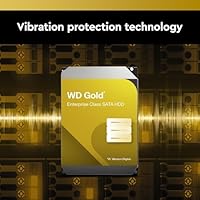
  • Vibration Protection: RAFF (Rotary Acceleration Feed Forward) technology actively detects and compensates for vibration caused by adjacent drives in multi-bay enclosures.
  • MTBF Rating: Western Digital projects a mean time between failures of up to 2.5 million hours, calculated statistically across a drive population under standard operating conditions and not a guarantee for individual units.
  • Workload Rating: The drive is rated for workloads up to 550TB per year, well above typical NAS backup and archival use cases.
  • Drive Type: This is a mechanical hard disk drive (HDD) using spinning magnetic platters, not a solid-state drive.
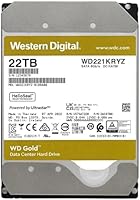
  • Model Number: The official WD model designation is WD221KRYZ, used for warranty registration, firmware updates, and compatibility verification.
  • Use Case: Western Digital classifies this drive for enterprise NAS, SAN, and data center environments requiring continuous, high-duty-cycle operation.
  • Power Efficiency: The helium-fill design reduces operating power consumption compared to air-filled drives of equivalent capacity, benefiting deployments with strict energy or thermal budgets.
  • Warranty: Western Digital covers this drive with a 5-year limited warranty, consistent with the Gold enterprise product tier.

Related Reviews
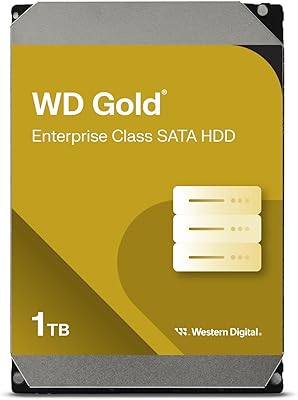
Western Digital 1TB WD Gold Enterprise Class Internal Hard Drive
84%
91%
Performance Under Load
88%
Reliability for 24/7 Operation
75%
Ease of Setup
90%
Data Transfer Speed
87%
Durability and Build Quality
More
Western Digital WD Gold 8TB Hard Drive
76%
83%
Reliability & Endurance
74%
Performance
88%
RAID Compatibility
81%
NAS Compatibility
78%
Noise & Vibration
More
Western Digital 22TB WD Red Pro NAS Internal Hard Drive
89%
95%
Performance
90%
Reliability
88%
Ease of Setup
92%
Workload Capacity
87%
Noise Level
More
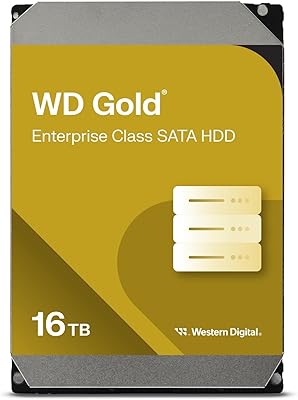
Western Digital WD Gold 16TB Internal Hard Drive
79%
88%
Long-Term Reliability
84%
Sustained Performance
91%
Build & Engineering Quality
63%
Noise & Vibration
67%
Thermal Management
More
Western Digital 12TB WD Gold Enterprise Class Internal Hard Drive
86%
88%
Performance under Load
93%
Storage Capacity
91%
Reliability
85%
Ease of Integration
90%
Endurance for Demanding Workloads
More
Western Digital 6TB WD Gold Enterprise Class Internal Hard Drive
88%
95%
Performance in Data-Intensive Tasks
93%
Reliability and Durability
88%
Vibration Protection Effectiveness
92%
Long-Term Stability (MTBF)
85%
Ease of Installation
More
Western Digital Gold 2TB Internal Hard Drive
80%
84%
Long-Term Reliability
91%
Workload Endurance
86%
RAID Performance
78%
Noise & Acoustics
61%
Value for Money
More
Western Digital WD Blue 2TB Hard Drive
81%
88%
Long-Term Reliability
91%
Value for Money
74%
Read/Write Performance
83%
Noise & Vibration
92%
Installation Ease
More
WD Blue 3TB Internal Hard Drive
80%
91%
Value for Money
86%
Reliability & Longevity
93%
Installation Ease
62%
Read & Write Speed
84%
Noise & Vibration
More
WD Black 2TB 3.5″ Internal Hard Drive
79%
78%
Read & Write Performance
82%
Reliability & Longevity
74%
Noise & Vibration
76%
Value for Money
89%
Installation & Compatibility
More
Western Digital 4TB WD Red Plus NAS Internal Hard Drive
89%
91%
Performance
94%
Reliability
88%
Energy Efficiency
85%
Noise Levels
89%
Workload Handling
More

FAQ

In most cases, yes. The WD Gold 22TB is widely used in both Synology and QNAP enclosures, and the majority of buyers report clean detection on first boot. That said, it is worth checking your NAS manufacturer's official HDD compatibility list before purchasing, since firmware or controller differences on older units can occasionally cause issues.

Physically, yes — it uses a standard SATA connector and 3.5-inch form factor that any desktop motherboard can accept. However, this drive is engineered for enterprise workloads, and using it in a personal desktop is overkill for most people. You would pay a significant premium for reliability specs you simply do not need in that context.

It is a statistical projection based on testing a large population of drives under controlled conditions, not a promise that your specific drive will last that long. Think of it as a confidence metric for fleet deployments — it tells enterprise buyers how the drive family performs at scale. Individual units can still fail early, which is why running a health check after install is always a smart move.

Under light or idle loads, it is relatively quiet. During sustained heavy reads or writes, however, some users do notice audible seek activity. If you are deploying this in a closed server room, it will not matter. In an open office environment, you may find it more noticeable than a consumer-class drive.

You can, but it is probably not the most economical choice for that use case. The WD Red Plus series is designed specifically for home and small-office NAS environments and costs considerably less. This enterprise hard drive makes financial sense when you genuinely need the higher workload rating, extended reliability specs, and duty-cycle tolerance.

Western Digital's HelioSeal process is designed to maintain the seal for the life of the drive, and there is no indication from long-term user reports that helium leakage is a practical concern under normal operating conditions. The sealed design is also why the drive is slightly harder to open without destroying it — data recovery from a failed helium drive can be more complex and costly.

Yes, and it is actually a strong candidate for those deployments. The high workload ceiling, vibration compensation, and MTBF rating make it well-suited to RAID arrays and ZFS storage pools where drives run continuously under sustained loads. Just make sure your controller or software RAID setup supports drives at this capacity.

Start by checking your SATA cable and power connector seating — loose connections are a surprisingly common culprit. If the drive still does not appear, try a different SATA port or cable. Once detected, run WD's diagnostic tool to confirm the drive is healthy before committing any data to it. Most detection issues are environmental rather than a sign of a defective drive.

Both are legitimate enterprise-class options and perform comparably in most sequential workload scenarios. The WD Gold typically earns slightly higher marks for NAS compatibility and long-term owner satisfaction, while the Seagate Exos is often a bit more competitively priced at equivalent capacities. If you are already invested in a WD ecosystem or your NAS vendor explicitly recommends WD drives, the Gold is a reliable choice.

Western Digital offers a 5-year limited warranty on the Gold series, and the RMA process is the standard path for replacement. Some buyers have flagged that turnaround times can stretch longer than expected, so if this drive is part of a production system, maintaining a hot spare or ensuring your array has sufficient redundancy is strongly advisable rather than relying solely on warranty coverage.