
Overview

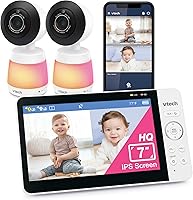
The VTech Smart HQ Max Twin Baby Monitor is built for households managing two sleeping spaces at once — think twins in the same nursery, or a toddler and a newborn in separate rooms. What sets this WiFi baby monitor system apart from single-camera alternatives at a similar price is its hybrid monitoring approach: a 7-inch dedicated parent unit for phone-free viewing alongside a full smartphone app for remote access. The feature set is genuinely strong, but worth flagging upfront is the real-world reliance on stable home WiFi. Households with patchy connectivity may run into occasional hiccups that a frequency-hopping-only monitor would simply avoid.

Features & Benefits

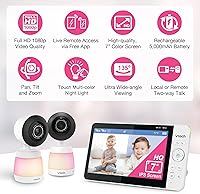
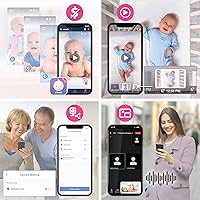
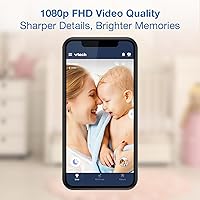
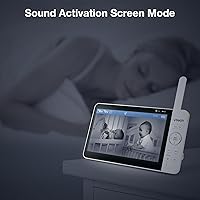
Both cameras capture 1080p FHD video with a 135-degree wide-angle view and automatic infrared night vision, giving you a clear, broad look at the crib even in a pitch-dark room. The pan-tilt-zoom is useful, though worth knowing the zoom is digital rather than optical — at maximum magnification, fine detail softens noticeably. That said, 24x local zoom is more than enough to check whether your baby's eyes are actually shut. The parent unit's IPS screen handles split-screen viewing natively, no phone required, while the companion app layers on motion-triggered clip storage, temperature alerts, and sound notifications. Battery life is rated at 12 hours of continuous video, though real-world mixed-use patterns tend to land somewhere below that ceiling.

Best For

This dual-camera monitor makes the most sense for parents juggling coverage of two rooms at once — twins, siblings of different ages, or a nursery paired with a living room play area. It also suits households where multiple caregivers need simultaneous access; one parent can keep an eye on the dedicated screen while another checks in via the app from elsewhere in the house. Parents who prefer a dedicated parent unit over relying entirely on a smartphone will find having the 7-inch screen genuinely reassuring. Families looking to consolidate gear will also appreciate the built-in night light and sound machine, which removes the need for separate nursery gadgets.

User Feedback

Parents who use the VTech twin monitor regularly tend to praise the sharpness of the IPS display and how consistently the app delivers alerts — most report notifications arriving within seconds of a detected event. Initial WiFi setup is a sticking point for some users; the pairing process can take a few attempts, and the app interface has a steeper learning curve than typical plug-and-play monitors. Camera mounting draws mixed impressions: units feel solid on a flat surface, but positioning the wall brackets precisely takes patience. Battery performance through the night generally satisfies, and customer support response times are viewed positively, though some users note that post-update connectivity can occasionally need a reset.

Pros

  • Two wide-angle cameras cover separate rooms simultaneously, eliminating the need for a second monitor system.
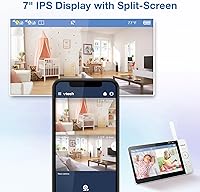
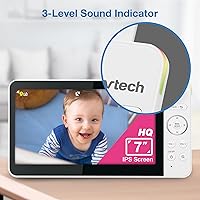
  • The 7-inch IPS display delivers crisp, clear split-screen viewing without touching a smartphone.
  • App notifications for sound, motion, and temperature changes arrive quickly and reliably for most users.
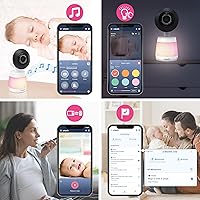
  • Motion-triggered video clips are saved and reviewable in the app, so you never miss an important moment.
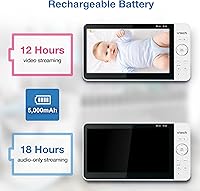
  • The 5,000mAh battery comfortably carries the parent unit through most nights on a single charge.
  • Pan-tilt-zoom lets you reposition the camera view remotely without walking into the room.
  • Dual connectivity protocol — WiFi plus FHSS — provides a fallback for local viewing even when internet access drops.
  • The built-in dimmable night light and sound machine remove the need for separate nursery accessories.
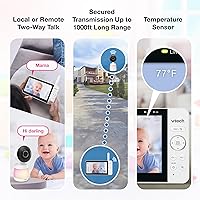
  • Two-way audio lets parents speak directly to a restless baby without physically entering the room.
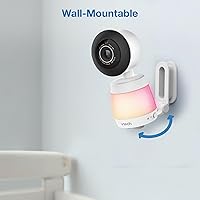
  • Wall mount brackets are included, giving flexible placement options right out of the box.

Cons

  • Initial WiFi setup and app pairing can take multiple attempts and frustrate less tech-savvy users.
  • The zoom is digital, not optical — image quality degrades noticeably when pushed to maximum magnification.
  • Real-world battery life under mixed video and audio use often falls short of the 12-hour rated figure.
  • The app interface has a steeper learning curve than simpler dedicated-frequency monitors on the market.
  • Precise wall bracket installation requires patience; misalignment is a common complaint in user feedback.
  • Homes with weak or congested WiFi signals may experience delayed alerts or intermittent connection drops.
  • Firmware updates have occasionally been linked to temporary connectivity issues that require a manual reset.
  • The system is bulkier than compact single-camera alternatives, which may matter in smaller nursery spaces.
  • Remote zoom via the app tops out at 30x digital, which can produce blurry results on smaller smartphone screens.
  • Parents who prefer to keep smartphones entirely out of their bedtime routine will not benefit from several key features.

Ratings

The scores below reflect an AI-driven analysis of verified global user reviews for the VTech Smart HQ Max Twin Baby Monitor, with spam, bot-submitted, and incentivized feedback actively filtered out before scoring. Each category is weighted against real parenting scenarios reported by buyers across multiple markets, giving equal weight to praise and recurring frustrations. The result is a transparent, balanced picture of where this dual-camera monitor genuinely delivers and where it falls short.

Video Clarity
88%
Parents consistently describe the image on the 7-inch IPS screen as sharp and detailed enough to check breathing patterns without walking into the room. Night vision performance draws particular praise — the automatic infrared switch is smooth and the resulting footage is clear, not grainy, even in fully darkened nurseries.
Remote viewing via the app at 1080p is noticeably softer than what the parent unit displays locally, which can be frustrating when checking in from another floor. Maximum digital zoom at 24x or 30x introduces visible pixelation, limiting its usefulness for fine-detail checks.
Split-Screen Experience
84%
The ability to watch two rooms at once on a single screen — without touching a phone — is consistently cited as the standout feature for parents of siblings in separate rooms. Setup is straightforward, and most users report the screen refreshes both feeds fluidly without noticeable lag under stable network conditions.
On smaller smartphone screens, the app split-screen view compresses each feed considerably, making it harder to read fine details. A small number of users report that the feeds occasionally fall out of sync during extended viewing sessions, requiring an app restart to re-align.
App Performance
74%
26%
Alert delivery is frequently praised — sound and motion notifications reach phones within a few seconds of a trigger event, which matters enormously when a parent is in another part of the house. Motion video clip storage is a genuine differentiator; being able to review exactly what woke the baby is something parents find unexpectedly useful.
The app's initial setup process is the single most commonly cited frustration across user reviews, with pairing occasionally requiring multiple attempts. Some users also report that after firmware updates, the app needs a full reinstall or device reboot to restore stable connectivity, which is a disruptive experience.
WiFi Reliability
67%
33%
In homes with modern routers and strong 2.4G coverage, the connection holds steady through the night and remote viewing from outside the home works reliably. The dual-protocol design — WiFi plus FHSS — means the parent unit keeps displaying video locally even when internet access drops, which is a meaningful safety net.
Households with congested networks, older routers, or thick-walled construction report intermittent disconnections that disrupt both live viewing and alert delivery. Because the system exclusively uses 2.4G WiFi for app features, it competes with other smart home devices on the same band, which amplifies instability in busier households.
Battery Life
76%
24%
For parents who need an untethered parent unit — carrying it from kitchen to bedroom without hunting for an outlet — the 5,000mAh battery holds up well through a standard 8 to 9 hour night on mixed use. Audio-only mode extends runtime significantly, which is useful once a baby is sleeping soundly and visual checks become less frequent.
The rated 12-hour figure applies to continuous video streaming under controlled conditions; real-world overnight use with screen brightness at mid-level typically lands closer to 10 hours. Running both cameras simultaneously at higher brightness settings shortens that further, and a handful of users report the battery degrading noticeably after six to eight months of nightly use.
Pan-Tilt-Zoom Control
79%
21%
Remote camera repositioning is responsive and smooth at moderate speeds, allowing parents to shift the view from one side of a crib to the other without any noticeable delay. Being able to tilt vertically to check the floor or zoom in on a sleeping face without entering the room is a feature parents rely on far more than they expect to.
PTZ control via the app introduces a slight lag compared to controlling it directly from the parent unit, which can make precise repositioning from a smartphone feel slightly clunky. The zoom, being fully digital, trades off image sharpness at higher magnification levels, which limits the practical usefulness of the upper zoom range.
Build Quality
78%
22%
The camera units feel solid and well-weighted for their size, resisting accidental tip-overs on flat surfaces better than lighter budget alternatives. The parent unit has a quality feel in hand, with a screen surround that does not flex or creak during regular daily handling.
A subset of users note that the wall bracket system, while functional, requires careful measurement to achieve the intended camera angle — minor misalignment means the field of view misses key areas of the crib. The camera base pivot also shows some looseness for a few users after extended repositioning.
Setup & Installation
63%
37%
Parents with some experience setting up smart home devices generally complete the full setup — including app pairing and camera positioning — within 20 to 30 minutes. The included quick start guide covers the essential steps clearly, and VTech's customer support is available if pairing stalls.
For less tech-comfortable users, the multi-step WiFi pairing process is a recurring pain point, with some needing two or three attempts before both cameras connect stably. Wall mounting adds another layer of complexity, and the screw placement instructions are described by several buyers as insufficiently detailed for first-time installers.
Alert Accuracy
81%
19%
Sound and motion detection sensitivity is well-calibrated at default settings, triggering alerts on genuine events — a cry, a kick, a roll — without flooding parents with false positives during quiet sleep. Temperature alerts are appreciated as a passive safety layer, particularly in homes with less consistent climate control.
At maximum sensitivity settings, some users report occasional false motion triggers from shadows or light changes in the nursery, especially near windows. There is no granular control over which alert types generate push notifications versus silent logs, which some parents find limiting when trying to reduce overnight phone interruptions.
Night Light & Sounds
83%
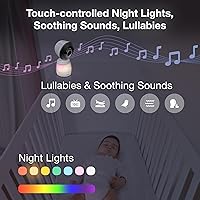
The 7-color dimmable night light draws consistent praise for replacing a separate nursery gadget entirely — parents appreciate controlling both light color and brightness from the parent unit without entering the room. The touch-adaptive brightness feature works reliably in practice, dimming automatically as the baby falls asleep.
The lullaby and ambient sound selection is limited to five of each, which some parents find becomes repetitive after a few weeks of nightly use. Volume range at the lower end could be softer — a few users report that even the quietest setting is louder than ideal for light-sleeping infants.
Two-Way Audio
80%
20%
Voice pickup on both ends is clear enough that a parent can speak naturally from across a room and the baby unit projects the sound at a comfortable level without distortion. Many parents note that hearing a familiar voice through the monitor is genuinely effective at settling a mildly fussy baby before it escalates.
There is a slight echo effect reported by some users when the parent unit and camera unit are in close proximity, which can be distracting. Audio latency via the app is marginally higher than over the FHSS connection, making real-time soothing feel slightly less natural when monitoring remotely.
Value for Money
72%
28%
For families who genuinely need dual-room coverage, the cost per camera and the inclusion of a dedicated 7-inch screen plus a free app with real features represents strong overall value compared to buying two separate monitor systems. The bundled night light and sound machine add functional value that reduces the need for additional nursery purchases.
Parents who only need one room monitored will find the price hard to justify relative to capable single-camera alternatives at a lower price point. The full value of the system is also conditional on having reliable home WiFi — households that run into connectivity issues are effectively paying a premium for app features they cannot use consistently.
Remote Access
77%
23%
Checking in on the nursery from a workplace or a different floor of the house via the app works reliably for the majority of users with stable home networks. The ability to receive a motion-triggered video clip while away from home — and actually watch what happened — is a differentiator that parents value highly.
Remote access is entirely dependent on the home network staying online, and there is no cellular fallback if the router goes down. A small number of users also report that remote PTZ control via the app occasionally disconnects mid-adjustment, requiring the view to be manually re-centered.
Multi-User Sharing
71%
29%
The ability for both parents — or a caregiver — to access live feeds simultaneously from separate devices is a practical feature that works as intended in most households. Shared access setup is handled within the app without requiring the second user to own any additional hardware.
Account sharing configuration is not as intuitive as it could be, and several users report confusion during the initial sharing invite process. Permission levels between the primary account holder and shared users are limited, meaning there is no way to give a caregiver viewing access without also granting some control over camera settings.

Suitable for:

The VTech Smart HQ Max Twin Baby Monitor was clearly designed with multi-room parenting in mind, and that focus shows. It makes the most practical sense for parents of twins or two children of different ages sleeping in separate rooms, where a single camera simply cannot cover the ground. The hybrid setup — a 7-inch dedicated screen plus a fully capable smartphone app — is a genuine advantage for households with two caregivers who prefer different monitoring styles: one parent can carry the screen around the house while the other checks in remotely from work or another room. Tech-comfortable parents who want more than a passive live feed will appreciate the motion-triggered video clip storage and real-time alerts, which add a layer of accountability that basic monitors lack. Families looking to simplify the nursery will also find value in the built-in night light and sound machine, consolidating gear that would otherwise require separate purchases.

Not suitable for:

The VTech Smart HQ Max Twin Baby Monitor is a harder sell for anyone with an unreliable or congested home WiFi network. The system uses WiFi as its primary connection for remote viewing and app features, so households with spotty coverage, older routers, or heavily shared bandwidth may find the experience frustrating — dropped connections and delayed alerts are real possibilities, not just theoretical ones. Parents who are not particularly comfortable with app-based technology should also pause before purchasing; the initial pairing process and app interface have a learning curve that more plug-and-play monitors simply do not. If you only need to monitor one room and have no plans to expand, this WiFi baby monitor system is likely more hardware than your situation demands, and a simpler single-camera unit would save money without meaningful sacrifice. Budget-focused buyers should also factor in that the full feature set only unlocks with consistent app use, meaning those who prefer to keep smartphones out of the parenting routine will not get full value from what they are paying for.

Specifications

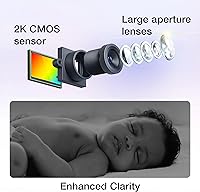
  • Video Resolution: Each baby unit captures video at 1080p FHD for remote viewing via the app, with higher local quality delivered through a 2K CMOS sensor on the parent unit display.
  • Parent Display: The parent unit features a 7-inch color IPS screen with split-screen capability, allowing both camera feeds to be monitored simultaneously without a smartphone.
  • Cameras Included: The package includes two baby camera units, each with a 135-degree ultra wide-angle lens and automatic infrared night vision for low-light environments.
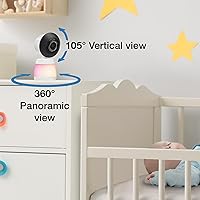
  • Viewing Angle: Each camera provides a 135-degree horizontal wide-angle view and up to 105 degrees of vertical coverage for broad nursery visibility.
  • Pan-Tilt-Zoom: Cameras support full pan-tilt-zoom control, with up to 24x digital zoom locally on the parent unit and up to 30x digital zoom remotely through the companion app.
  • Night Vision: Infrared night vision activates automatically in low-light conditions, providing clear black-and-white video footage without disturbing the baby with visible light.
  • Battery Capacity: The parent unit houses a 5,000mAh rechargeable battery rated for up to 12 hours of continuous video streaming or up to 18 hours of audio-only monitoring on a single charge.
  • Connectivity: The system operates on dual wireless protocols — 2.4G WiFi for remote app access and 2.4G FHSS (Frequency Hopping Spread Spectrum) for local dedicated-screen viewing.
  • App Compatibility: The free MyVTech Baby Plus app is compatible with iOS and Android smartphones and tablets, supporting remote live viewing, motion clip playback, and alert management.
  • Alert Types: The app sends real-time push notifications for detected sound, motion, and nursery temperature changes, with motion events captured as reviewable MPEG-4 video clips.
  • Night Light: A touch-adaptive dimmable night light is built into each camera unit, offering 7 selectable colors with brightness that adjusts to ambient nursery light levels.
  • Audio Features: The system includes two-way intercom functionality, five built-in lullabies, and five ambient sound options controllable from both the parent unit and the mobile app.
  • Mounting Options: Each camera unit supports freestanding tabletop placement or wall mounting using the included brackets, screws, and anchors.
  • Power Source: The baby camera units operate on corded electric power at 5 volts, while the parent unit uses a built-in rechargeable battery with corded charging support.
  • Unit Dimensions: The parent unit measures 9.65 x 4.33 x 5.91 inches and weighs approximately 2.97 pounds, making it portable for carrying between rooms.
  • Video Format: Motion-triggered video clips are recorded and stored in MPEG-4 format, accessible for playback directly within the MyVTech Baby Plus app.
  • Box Contents: The box includes one parent unit, two baby camera units, two wall mount brackets, a quick start guide, and the necessary screws and anchors for wall installation.
  • Wattage: The system operates at 7.5 watts total power consumption, with a battery capacity of 18.5 watt-hours on the parent unit.

Related Reviews
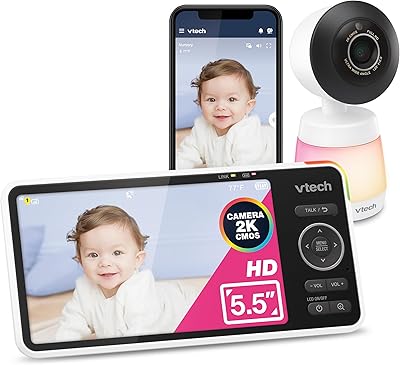
VTech Smart HD Plus WiFi Baby Monitor
78%
83%
Video & Image Quality
86%
Night Vision Performance
88%
Battery Life
67%
App Performance & Connectivity
91%
Parent Unit Screen
More
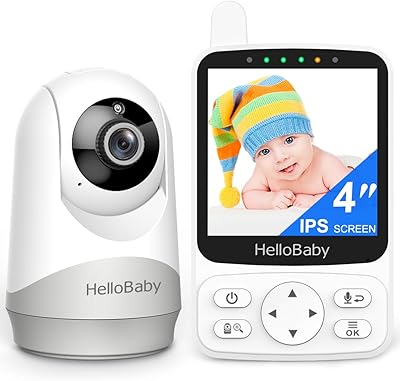
HelloBaby HB6240 4″ No-WiFi Baby Monitor
80%
93%
Ease of Setup
88%
Night Vision Quality
74%
Battery Life
71%
Wireless Range
62%
Video Clarity
More
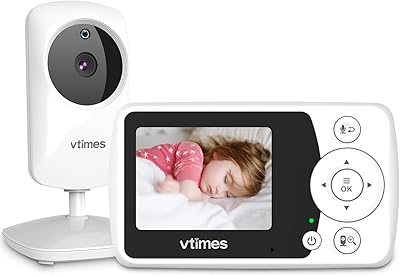
VTimes VT31 Non-WiFi Baby Monitor
77%
93%
Ease of Setup
84%
Range & Signal Reliability
91%
Privacy & Security
76%
Night Vision Quality
58%
Display Quality
More
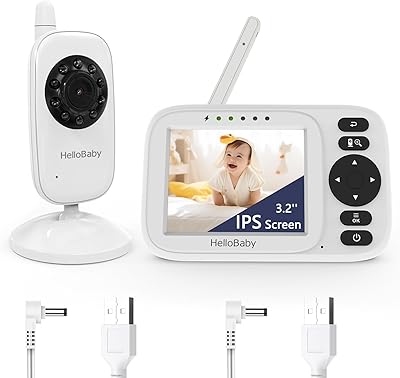
HelloBaby HB2438 No WiFi Baby Monitor
80%
94%
Ease of Setup
71%
Night Vision Quality
88%
Range & Signal Stability
96%
Privacy & Security
74%
Battery Life
More
VTimes VT601 6-Inch Baby Monitor
80%
91%
Display Quality
88%
Battery Life
93%
Privacy & Security
84%
Pan-Tilt-Zoom
82%
Night Vision
More
Samsung M70B 43″ 4K Smart Monitor
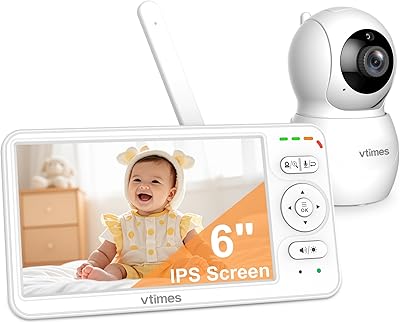
69%
83%
Picture Quality
67%
Smart Platform & App Selection
88%
USB-C Connectivity
71%
PC-Free Productivity
54%
Gaming Performance
More
Samsung M50D 27-inch Smart Monitor
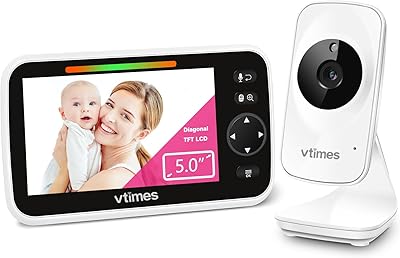
71%
88%
Smart Platform Depth
82%
Value for Money
61%
Display Quality
67%
Cloud Gaming Experience
74%
Built-in Audio
More
VTimes VT50 Baby Monitor with 5″ LCD Screen
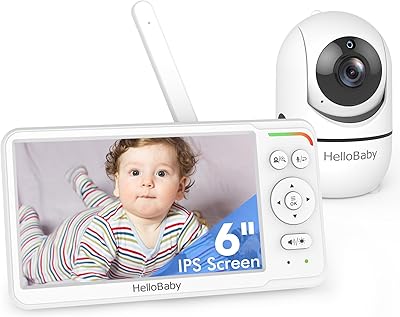
85%
88%
Video Quality
85%
Night Vision
91%
Ease of Use
92%
Value for Money
70%
Audio Clarity
More
LG 34SR60QC-W 34-inch Curved Smart Monitor
79%
86%
Picture Quality
91%
Smart Platform (webOS)
84%
Wireless Connectivity
88%
Ultrawide Screen Experience
82%
Value for Money
More
HelloBaby HB6560 6-inch Video Baby Monitor
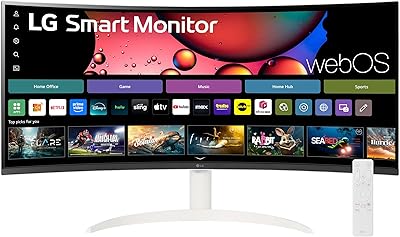
82%
91%
Display Quality
88%
Battery Life
67%
Range & Signal Reliability
83%
Night Vision Performance
94%
Ease of Setup
More

FAQ

Yes, absolutely. The 7-inch parent unit works as a fully standalone monitor using its FHSS radio connection to the cameras, no phone required. You only need the app if you want remote viewing outside the home, motion clip storage, or temperature alerts.

Yes — the parent unit supports split-screen mode, showing both camera feeds side by side on the 7-inch display. You can also switch to a single full-screen view for either camera whenever you want a closer look.

The zoom on the VTech Smart HQ Max Twin Baby Monitor is digital, not optical. At moderate zoom levels — say, checking whether your baby's eyes are open — it performs well. At the maximum 24x or 30x settings, image quality does soften, so treat the upper zoom range as useful for quick checks rather than sharp detail.

VTech rates it at up to 12 hours of continuous video streaming. In practice, if you're running both cameras with the screen at moderate brightness all night, most parents find it comfortably covers a 10 to 11 hour stretch. Switching to audio-only mode when you don't need the video extends battery life noticeably.

This is one of the smarter aspects of the design. The system uses both WiFi and a separate 2.4G FHSS radio connection. If your WiFi drops, you lose remote app access and cloud features, but the parent unit continues displaying live video from both cameras over the FHSS link without interruption.

Yes, the MyVTech Baby Plus app allows you to share camera access with family members, so both parents or a caregiver can view the live feed simultaneously from separate devices. It's worth checking the app's current sharing settings, as specific account setup steps may vary with software updates.

Honest answer: it takes more effort than a traditional dedicated-frequency monitor. The WiFi pairing process occasionally requires a few attempts, and the app has more screens and settings than simpler alternatives. Most parents get there within 20 to 30 minutes, but if technology tends to frustrate you, factor that into your decision.

Both mounting options are supported. Each camera can sit freestanding on a flat surface, like a dresser or shelf, or be mounted on the wall using the included brackets, screws, and anchors. Wall mounting takes a bit more precision to get the angle right, but the hardware you need is all in the box.

The night light is fully controllable — you can turn it on or off from either the parent unit or the app, and you can adjust both the color and brightness. The touch-adaptive feature means it can also respond to the ambient light level in the room, dimming automatically when the nursery is already dark.

The companion app is free to download and use, and motion-triggered clips are accessible within the app at no extra charge. VTech has not required a subscription for the core recording and alert features, but it is worth checking the current app terms, as cloud storage policies can change with software updates over time.