Overview

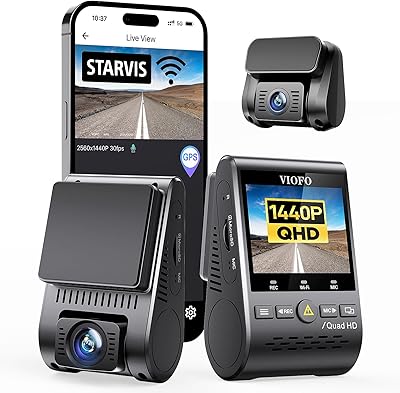
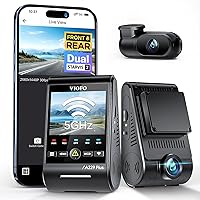
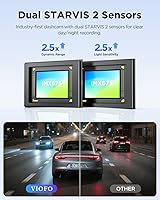
The VIOFO A229 Plus 2CH entered a crowded dash cam market in late 2023 and quickly carved out a reputation among drivers who take their footage seriously. VIOFO has built credibility in the enthusiast community for years, and this dual-channel dash cam feels like a natural step forward — not a rushed spec bump. It runs dual STARVIS 2 sensors, which is a meaningful hardware distinction from the first-gen chips found in many competitors at similar price points. The windshield mount is compact, the Type-C connector is a welcome modern touch, and over 1,400 ratings with a top-five category rank suggest this isn't just hype from early adopters.

Features & Benefits

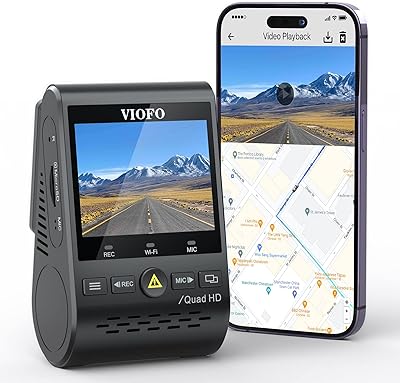
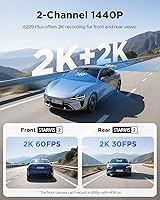
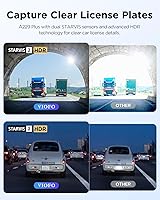
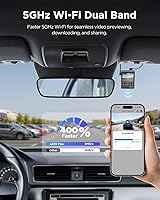
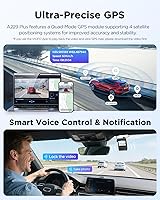
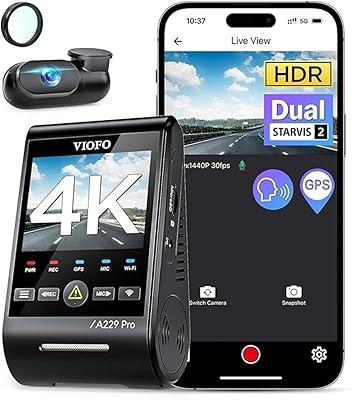
Where this VIOFO camera genuinely stands out is night recording. The STARVIS 2 sensors pull in noticeably more light than older chips — footage from dark parking lots and unlit roads shows real detail instead of grainy smudges. Both channels record at 1440P, and the HDR mode handles tricky lighting like tunnel exits or early-morning glare well, though enabling HDR drops the front camera from 60fps. The 5GHz Wi-Fi makes transferring clips to your phone fast enough to actually use regularly. Quad-mode GPS tracks speed and location precisely during playback, and voice commands let you lock a clip or snap a photo without taking your hands off the wheel.

Best For

The A229 Plus makes the most sense for drivers who spend real time on the road after dark — rideshare drivers, early-morning commuters, or anyone who has ended up with blurry footage when they needed it most. It is also a smart pick for long-haul and RV drivers who want continuous parking surveillance without babysitting their setup. Tech-forward users will appreciate the GPS data overlays and app-based management, while anyone upgrading from an older single-channel or first-gen STARVIS camera will likely notice an immediate jump in quality. If your goal is solid front and rear documentation, this dual-channel dash cam delivers without compromise.

User Feedback

Buyers consistently highlight night footage clarity as the standout strength, with many comparing it favorably against previous cameras they have owned. Installation gets mostly positive marks — the rear cable runs long enough for most vehicles and the mount holds firm. The most common frustration is parking mode: the hardwire cable it requires is not included, which catches people off guard at checkout. Some users note that the app connection occasionally needs a re-pair after being dormant, and a handful mention the HDR-versus-60fps trade-off took some adjustment. That said, the majority of buyers seem to agree the dual STARVIS 2 upgrade justifies the premium.

Pros

  • Dual STARVIS 2 sensors deliver night footage that clearly outperforms older-generation dash cams in real conditions.
  • Both front and rear channels record at 1440P, giving you usable detail for identifying plates and reconstructing incidents.
  • Quad-mode GPS locks quickly and provides reliable speed and location data during playback.
  • 5GHz Wi-Fi makes downloading clips to your phone fast enough to be practical after an accident.
  • Voice commands work reliably in normal cabin noise levels, keeping your hands on the wheel.
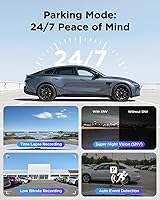
  • Three parking mode options give genuine flexibility for short stops, overnight parking, and extended surveillance.
  • The 6-meter rear cable is long enough for SUVs and most larger vehicles without extensions.
  • A top-five category rank and strong buyer volume suggest consistent real-world satisfaction, not just spec-sheet appeal.
  • The A229 Plus uses Type-C connectivity, a practical modern upgrade over the Micro-USB ports on older VIOFO models.
  • HDR mode meaningfully improves footage in high-contrast lighting scenarios like tunnel exits and dawn driving.

Cons

  • The hardwire cable for parking mode is sold separately, adding unexpected cost and installation work after purchase.
  • No memory card is included in the box, which adds to the real out-of-pocket cost at setup.
  • HDR mode disables 60fps on the front camera — you cannot have both active at the same time.
  • The VIOFO app feels functional but dated, and Wi-Fi re-pairing after phone sleep is a recurring annoyance.
  • Android users report noticeably more frequent app disconnects than iPhone users.
  • Firmware updates require manual installation rather than pushing automatically through the app.
  • First-time installers should budget one to two hours for a clean hidden-wire setup.
  • In very loud cabin environments — heavy HVAC, music, road noise — voice command recognition becomes unreliable.
  • The rear camera housing edges can be awkward to fit neatly against headliners in some vehicles.
  • Budget microSD cards can cause write errors at high bitrates; only higher-endurance cards are reliably stable long-term.

Ratings

The VIOFO A229 Plus 2CH scores here reflect AI-driven analysis of verified global buyer reviews, with spam, incentivized, and bot-generated feedback actively filtered out before any scoring was applied. This dual-channel dash cam earns strong marks in several key areas — particularly night recording and GPS accuracy — but the data also surfaces a few recurring frustrations that prospective buyers deserve to know about upfront. Both the highs and the friction points are factored into every score below.

Night & Low-Light Recording
93%
This is the category where buyers consistently report being genuinely surprised. The STARVIS 2 sensors capture license plates and road markings in poorly lit conditions where older STARVIS cameras — or anything in the budget tier — produce noise-heavy blur. Night commuters and rideshare drivers cite this as the main reason they chose this camera over alternatives.
A small number of users note that in extreme low light, like unlit rural roads at high speed, motion blur still creeps in on the rear channel. It is better than most, but not infallible. HDR mode, while helpful in mixed lighting, cannot be used simultaneously with the 60fps front setting.
Video Clarity (Daytime)
88%
Dual 1440P channels produce sharp, color-accurate footage that holds up well when you need to read a plate or reconstruct a scene. The front camera running at 60fps gives smooth motion rendering during highway driving, making incident footage substantially easier to review compared to 30fps cameras.
Some buyers feel the jump from 1080P to 1440P is noticeable but not dramatic in bright daylight — the sensor quality matters more than the resolution bump alone. Wide dynamic range performance is good but not class-leading when compared to higher-end Blackvue models at a steeper price.
GPS Accuracy
91%
Quad-mode GPS locking onto four satellite systems simultaneously means faster position acquisition and more stable speed data than single-system GPS modules. Long-haul drivers and those who use footage for insurance or legal purposes find the location overlays detailed and trustworthy during playback in the VIOFO app.
A handful of users report the GPS module taking slightly longer to acquire a signal on cold starts in dense urban environments. The GPS data is reliable once locked, but the occasional delayed lock during short trips means speed data for the first minute or two can be missing.
HDR Performance
74%
26%
HDR mode genuinely helps in tricky transitional lighting — pulling out of a dim parking garage into bright sun, or approaching a tunnel exit — where single-exposure cameras typically either blow out highlights or crush shadows. Most drivers who leave HDR enabled report cleaner plate reads at intersections.
The unavoidable trade-off is that HDR disables 60fps on the front camera, locking it to a lower frame rate. This frustrates buyers who want both simultaneously, and some feel VIOFO should have been clearer about this limitation before purchase rather than burying it in the fine print.
Wi-Fi & App Connectivity
71%
29%
The 5GHz upgrade makes a real difference for anyone who has wrestled with 2.4GHz dash cam Wi-Fi before. Clip downloads to a smartphone are fast enough to be practical after an incident, and live preview is smooth when the connection holds. Setup via the VIOFO app is straightforward for most users.
App stability is the most frequently cited software complaint. Several buyers report that the Wi-Fi connection drops after the phone screen sleeps and needs to be manually re-paired. A notable subset of Android users mention more frequent disconnects than iOS users, and the app interface feels functional but dated.
Parking Mode
66%
34%
Three distinct parking mode options give drivers genuine flexibility: buffered event detection is the most useful for incident capture, while time lapse and low-bitrate continuous modes suit longer surveillance windows without eating through card space. The 15-second pre-event buffer in detection mode has helped multiple buyers recover footage they would otherwise have missed.
The hardwire cable required for reliable parking mode is not included in the box, which catches a meaningful number of buyers off guard — it is an additional purchase that adds cost and installation effort. Without it, parking mode depends on USB power, which cuts off when the car is turned off.
Voice Control
79%
21%
Twelve voice commands cover the most practical in-motion needs: locking a clip after an incident, taking a photo, toggling Wi-Fi, and switching camera views without touching the unit. Drivers who tested it in real traffic report the recognition is reliable at conversational volume without needing to shout.
Voice recognition accuracy drops noticeably in vehicles with loud road noise, music playing, or HVAC running at higher settings. A few users note that commands in non-English languages or with regional accents occasionally fail to register, requiring a tap on the unit instead.
Build Quality & Form Factor
84%
The camera body feels dense and well-assembled for its size. The windshield mount is stable under vibration, and the Type-C connector is a practical upgrade over the Micro-USB ports found on older VIOFO models. Most buyers report no rattling or loosening after extended daily use.
The unit is slightly heavier than some competing dual-channel cameras, which a few users note affects placement options on smaller windshields. The rear camera housing, while compact, has edges that some installers find slightly awkward to tuck neatly against headliners.
Installation & Cable Management
78%
22%
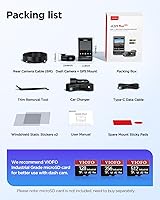
The 6-meter rear cable is long enough for most sedans, SUVs, and even some smaller vans without splicing or extensions. The included trim removal tool is a thoughtful addition that simplifies tucking the cable along the headliner and A-pillar for a tidy finish.
Full hidden-wire installation still requires patience and some experience — first-time installers report it taking one to two hours. The front and rear mounts use different attachment systems, which creates a slight learning curve, and the power cable routing can feel tight in vehicles with thick A-pillar trim.
Storage & File Management
83%
Support for up to 512GB cards means even demanding dual-channel recording at 1440P gives drivers several hours of continuous footage before overwriting begins. The file structure is clean and compatible with the VIOFO desktop player, making it easy to pull clips by timestamp after an event.
High-bitrate 1440P dual-channel recording eats through storage faster than some buyers expect, and budget microSD cards can cause stuttering or write errors. VIOFO recommends specific card ratings but does not include a card in the box, which adds another item to the shopping list.
Value for Money
81%
19%
For buyers who specifically want dual STARVIS 2 sensors in a front-and-rear configuration, there are very few alternatives at this price tier. Most owners feel the jump in night recording quality alone justifies the premium over mid-range dual-channel competitors running older sensor generations.
For buyers who rarely drive at night or in challenging lighting, the key differentiator becomes less compelling, and the price starts to feel steep relative to capable 1080P dual-channel options. The missing hardwire cable and no included memory card mean the real out-of-pocket cost is higher than the listed price suggests.
App Features & Playback
68%
32%
The VIOFO app allows resolution adjustments, real-time preview, and GPS-overlaid video playback without needing a desktop. For drivers who want to quickly verify footage or share a clip from their phone, it covers the essentials without requiring a laptop.
The app lacks the polish of more consumer-focused competitors — navigation is functional but not intuitive, and some settings require multiple taps to locate. Desktop playback software for GPS data review is better than the mobile experience, but still trails dedicated platforms in usability.
Reliability Over Time
77%
23%
The majority of buyers who leave long-term updates report consistent performance over six to twelve months of daily use without hardware failures. The camera handles summer heat in parked vehicles reasonably well, which is a common failure point for dash cams generally.
A smaller but non-trivial portion of users report firmware-related quirks appearing over time, including occasional spontaneous reboots and settings resetting after power cycles. VIOFO does release firmware updates, but the process requires manual installation rather than an over-the-air push.

Suitable for:

The VIOFO A229 Plus 2CH is built for drivers who treat their dash cam as a serious piece of safety equipment rather than a casual add-on. It makes the most sense if you regularly drive at night, in low-light urban environments, or in conditions where capturing a clear license plate in a split second could matter — rideshare and delivery drivers fit squarely into this category. Long-haul truckers, RV travelers, and anyone who parks in unsupervised lots overnight will appreciate the flexible parking mode options, even though setting those up properly requires a separately purchased hardwire kit. Tech-comfortable drivers who want to pull GPS-stamped footage to their phone quickly after an incident, or who simply want app-based control without fumbling with the unit itself, will find the 5GHz Wi-Fi and voice commands genuinely useful day-to-day. It also rewards anyone upgrading from an older single-channel or first-generation STARVIS camera — the jump in night clarity is tangible enough to feel like a meaningful improvement rather than incremental progress.

Not suitable for:

If your driving is mostly daytime, well-lit suburban routes, and you have no strong need for rear coverage, the VIOFO A229 Plus 2CH asks you to pay a premium for capabilities you will rarely use. Budget-focused buyers should also think carefully: the listed price does not include a memory card or the hardwire cable needed for parking mode, so the true setup cost is higher than it first appears. Drivers who want a truly plug-and-play experience with minimal configuration may find the app's learning curve and occasional Wi-Fi re-pairing frustrating compared to simpler, more consumer-friendly alternatives. Anyone expecting 60fps front recording and HDR simultaneously will be disappointed — that combination is not supported, and if smooth high-frame-rate footage in all lighting conditions is your priority, this camera forces a choice. Finally, buyers who prefer over-the-air firmware updates and a polished mobile app experience may find the VIOFO ecosystem feels more enthusiast-grade than consumer-grade in its software refinement.

Specifications

  • Front Resolution: The front camera records at 2K 1440P with a maximum frame rate of 60fps when HDR mode is disabled.
  • Rear Resolution: The rear camera records at 2K 1440P, matching the front channel for consistent dual-channel footage quality.
  • Image Sensors: Both channels use Sony STARVIS 2 IMX675 sensors, offering significantly improved dynamic range and light sensitivity over first-generation STARVIS sensors.
  • HDR Mode: Dual-channel HDR is available on both front and rear cameras, though enabling it on the front channel limits recording to below 60fps.
  • Field of View: The front camera covers a 140-degree field of view, capturing multiple lanes and roadside details in a single frame.
  • Wi-Fi: Built-in 5GHz Wi-Fi enables fast wireless video preview, download, and settings adjustment via the VIOFO mobile app.
  • GPS Module: A quad-mode GPS module supports four satellite systems — GPS, BEIDOU, GALILEO, and GLONASS — for precise speed and location data overlays.
  • Voice Control: Twelve built-in voice commands allow hands-free operation including clip locking, photo capture, Wi-Fi toggling, and camera view switching.
  • Parking Modes: Three parking surveillance options are available: buffered auto event detection, time lapse, and low-bitrate continuous recording.
  • Max Storage: The camera supports microSD cards up to 512GB; a card is not included and must be purchased separately.
  • Connectivity: Power and data connection uses a Type-C port, a more modern and durable interface than the Micro-USB found on older VIOFO models.
  • Mount Type: The unit attaches to the windshield via an adhesive static sticker mount, with 3M sticker mounts also included for the rear camera.
  • Rear Cable: A 6-meter rear camera cable is included in the box, sufficient for routing along the headliner in most sedans, SUVs, and vans.
  • Dimensions: The front unit measures 2.36 x 3.86 x 1.77 inches, making it a compact footprint on the windshield with minimal driver obstruction.
  • Weight: The combined system weighs 1.83 pounds including cables and mounts as shipped.
  • Power Input: The included car charger cable measures 3.5 meters; a separately purchased HK4 hardwire kit is required for 24-hour parking mode operation.
  • App Compatibility: The VIOFO app is available for both iOS and Android and supports real-time preview, footage download, GPS playback, and remote settings changes.
  • In-Box Contents: Package includes front and rear cameras, one 3.5-meter car charger, one 6-meter rear cable, windshield mounts, 3M and static stickers, GPS module, and a trim removal tool.

Related Reviews
VIOFO A229 Pro 2CH Dash Cam
85%
91%
Video Quality
88%
Night Vision Performance
85%
Ease of Use
65%
Installation Process
87%
Voice Control Accuracy
More
VIOFO A129 Plus Duo Dash Cam
86%
91%
Video Quality
94%
Night Vision Performance
87%
GPS Functionality
79%
Wi-Fi Connectivity
88%
Ease of Setup
More
VIOFO A129 Plus Dash Cam 2K 1440P 60FPS

87%
96%
Video Quality
94%
Night Recording Performance
89%
GPS Accuracy
87%
Wi-Fi Connectivity
85%
Parking Mode Reliability
More
TourBox Elite Plus
TourBox Elite Plus
87%
94%
Ergonomics & Comfort
91%
Workflow Efficiency
88%
Software Integration
90%
Programmability & Customization
85%
Build Quality
More
BuddyPhones Explore Plus
90%
94%
Comfort & Fit
91%
Build Quality
88%
Sound Clarity
97%
Volume Limiting Safety
90%
Portability
More
Glyph BlackBox Plus 5TB
89%
88%
Performance
90%
Build Quality
85%
Portability
89%
Ease of Use
91%
USB-C Connectivity
More
Sennheiser AMBEO Soundbar Plus
86%
94%
Sound Quality
91%
Bass Performance
88%
Ease of Setup
90%
Streaming & Connectivity
93%
Build Quality
More
Garmin Edge 1030 Plus
85%
91%
Battery Life
88%
Navigation Accuracy
85%
Touchscreen Clarity
90%
Build Quality
87%
Training Features
More
Bellroy Toiletry Kit Plus
87%
91%
Spacious Design
93%
Magnetic Toothbrush Shelf
88%
Water Resistance
94%
Eco-Friendliness
85%
Ease of Access
More
Garmin Striker Plus 9SV
86%
94%
Sonar Performance
88%
Display Quality
91%
GPS Functionality
89%
Ease of Setup
84%
Wi-Fi and App Integration
More

FAQ

Parking mode does work without extras if your car keeps USB power on after the engine shuts off, but that is rare in most modern vehicles. For reliable 24-hour parking surveillance, you will need to purchase the HK4 hardwire kit separately — it is not included in the box, which is probably the most common surprise buyers mention after receiving the camera.

No, those two modes are mutually exclusive on the front channel. When HDR is enabled, the front camera drops below 60fps. Most drivers who do a lot of night or mixed-lighting driving prefer to leave HDR on and accept the lower frame rate, while those who mainly drive in daylight tend to switch HDR off and enjoy the smoother 60fps footage.

The difference is noticeable enough that most upgraders are pleasantly surprised. The STARVIS 2 sensors pull in considerably more light than first-generation STARVIS chips, which means license plates and road details at night are sharper and less grainy. It is not magic — extremely dark rural roads at speed will still challenge any camera — but in typical urban and suburban night driving, the improvement over budget or older mid-range cameras is clear.

Both channels record at 1440P, which is one of the things that sets this camera apart from dual-channel competitors that often pair a 1440P front with a 1080P rear. Having matched resolution on both ends means your rear footage holds up just as well when you need to read a plate or review an incident from behind.

The 5GHz connection is fast enough to make clip transfers genuinely practical — noticeably quicker than 2.4GHz cameras where downloading even a short clip feels tedious. The main caveat is that some users find the Wi-Fi connection needs to be manually re-established after their phone screen has been idle for a while, particularly on Android.

VIOFO recommends high-endurance microSD cards rated for dash cam use — budget cards can cause write errors at the higher bitrates this camera records at. On a 256GB card with dual 1440P channels running, you can typically expect somewhere between three and five hours of footage before the loop recording begins overwriting the oldest files, though this varies depending on your resolution and bitrate settings.

The basic plug-in installation — mount, run the cable, plug into the 12V socket — is straightforward and manageable for most people in under 30 minutes. A clean hidden-wire install, where you tuck cables inside the trim for a tidy look, is more involved and realistically takes one to two hours if you are doing it for the first time. The included trim removal tool helps, and there are good installation guides available online for most common vehicle types.

The GPS data is embedded in the video file but displayed as an overlay during playback in the VIOFO app or the desktop player software — it does not burn the speed and location visibly into the video footage itself. That means your clips look clean on their own, but you can pull up the full GPS data whenever you need it for review or evidence purposes.

There are 12 supported voice commands covering the most practical needs: locking a clip, taking a photo, switching camera views, toggling Wi-Fi, and a few others. They work reliably in a normally quiet cabin, but if you drive with music, heavy HVAC, or significant road noise, recognition becomes less consistent and you may find yourself tapping the unit instead.

Yes, the VIOFO app supports both iOS and Android. iPhone users generally report a slightly more stable app experience, while a portion of Android users mention occasional connection drops. Both platforms support the full feature set including live preview, footage download, GPS playback, and remote settings adjustment.