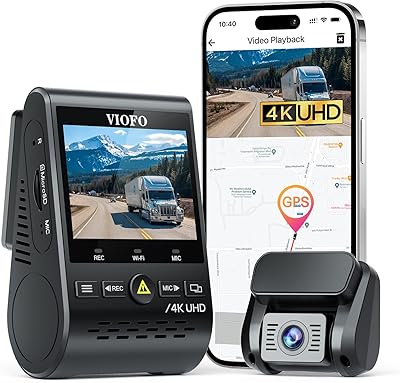
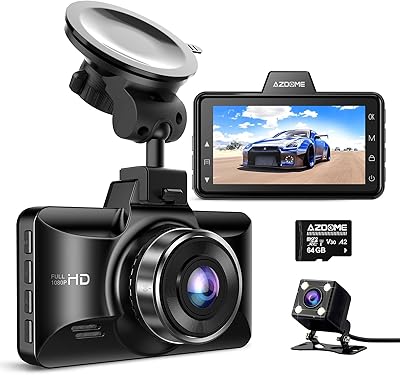
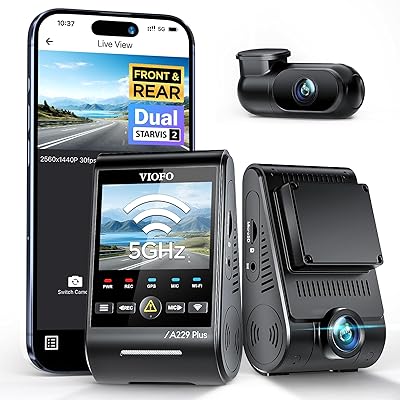
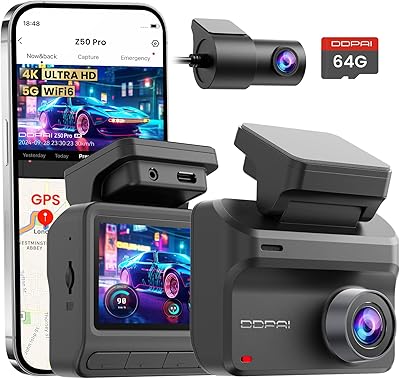
Overview

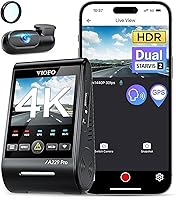
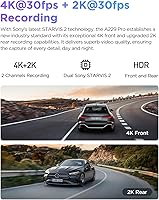
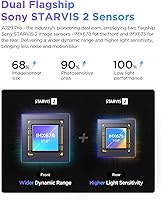
The VIOFO A229 Pro Dual-Channel Dash Cam sits at the serious end of the market — not the casual plug-and-go tier, but the category where drivers actually care about what their footage shows when it counts. The real differentiator is the pairing of two Sony STARVIS 2 sensors: the IMX678 up front shooting 4K, and the IMX675 handling the rear at 2K. That puts it in direct competition with top-tier options from Blackvue and Thinkware, and it holds its own. Commuters, rideshare drivers, and road-trippers are the natural audience — people who want evidence-quality footage, not just a camera sticker. Just go in knowing this VIOFO setup is not a five-minute windshield job.
Features & Benefits

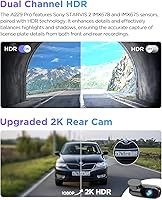
What separates the A229 Pro from older budget cams is not just resolution numbers — it is how those Sony sensors handle difficult light. The front sensor's HDR processing reconciles blown-out headlights and dark road shoulders in the same frame, and the rear camera keeps pace rather than becoming an afterthought. The 5GHz Wi-Fi is a genuine upgrade; pulling clips to your phone is quick, though the VIOFO app has some rough edges, particularly on older Android devices. GPS locks fast across four satellite systems, with speed and location data overlaying cleanly on playback. The three parking modes offer real flexibility — just know that using them requires the HK4 Acc hardwire kit, sold separately, and a high-endurance SD card is strongly recommended over standard options.

Best For

This dual-channel dash cam makes the most sense for drivers who need footage that holds up under real scrutiny — think insurance disputes, hit-and-run documentation, or rideshare incidents where plate clarity matters. The 135-degree field of view and 4K front resolution mean license plates are actually readable, not a blurry smear. Rideshare and delivery drivers who park frequently will appreciate the parking surveillance options, though again, budget for the hardwire kit. Owners of trucks, RVs, or minivans benefit from having a capable rear camera that does not compromise on quality. If you are upgrading from a basic single-channel cam, the jump in capability here is substantial and immediately obvious.

User Feedback

Sitting at 4.4 stars across over a thousand ratings, the A229 Pro earns its score through video quality that regularly impresses buyers after an incident or close call. The common praise centers on how sharp the front footage is, especially at night. On the downside, some users report heat-related restarts during hot summers when the camera sits in direct sun for extended periods. App reliability surfaces as another friction point, with a handful of Android users noting connection drops. Installation draws mixed feedback — routing the 6-meter rear cable is manageable but time-consuming. The hardwire kit omission also catches buyers off guard; it is a real added cost that should factor into your decision before checkout.

Pros

  • 4K front footage is sharp enough to read license plates clearly, even at night or in rain.
  • The dual Sony STARVIS 2 sensors handle low-light and high-contrast scenes far better than single-sensor setups.
  • HDR processing runs on both channels, so the rear camera is not a weak link in difficult lighting.
  • 5GHz Wi-Fi makes pulling video clips to your phone noticeably faster than older 2.4GHz dash cams.
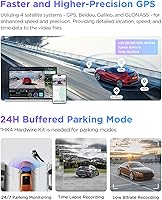
  • Quad-mode GPS locks quickly and embeds reliable speed and location data into every recording.
  • Three distinct parking modes give genuine flexibility depending on how long you park and how much storage you want to preserve.
  • The G-sensor emergency lock protects incident footage from being overwritten during loop recording automatically.
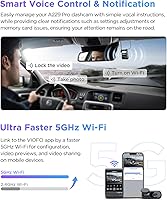
  • Voice control handles the most useful in-car commands — locking a clip, toggling Wi-Fi — without requiring you to look away from the road.
  • Supports SD cards up to 512GB, giving long-haul drivers or rideshare workers substantial continuous recording capacity.
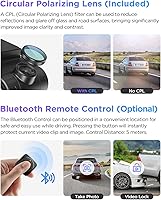
  • The included CPL filter and trim removal tool are practical additions that show attention to the full installation experience.

Cons

  • The hardwire kit required for parking mode is sold separately, adding an unannounced cost at setup.
  • Some Android users report inconsistent app connectivity, which makes wireless clip transfers less reliable than they should be.
  • Prolonged exposure to direct sunlight in hot climates has triggered heat-related restarts for a portion of users.
  • Routing the 6-meter rear cable neatly is time-consuming and may frustrate buyers expecting a quick install.
  • Standard SD cards are not recommended — only high-endurance cards handle the constant write cycles reliably, adding to total cost.
  • The VIOFO app interface feels less polished than the hardware itself, with a learning curve for less tech-savvy users.
  • At its price point, some competing brands offer a more refined companion app experience out of the box.
  • Voice command recognition can be inconsistent in noisy cabin environments like trucks or vehicles with loud HVAC systems.

Ratings

The scores below for the VIOFO A229 Pro Dual-Channel Dash Cam were generated by our AI engine after analyzing thousands of verified global user reviews, with spam, incentivized feedback, and bot activity actively filtered out. Each category reflects an honest synthesis of what real drivers experienced — the genuine strengths and the friction points that showed up repeatedly across markets and vehicle types.
Video Quality (Front)
93%
The 4K front footage consistently earns the highest praise from buyers — license plates are readable at highway speeds and in wet conditions, which is exactly what drivers need when filing an insurance claim. Night footage shows real improvement over previous-gen sensors, with HDR keeping street signs legible even against oncoming headlights.
A small number of users noted minor barrel distortion at the edges of the wide-angle frame, which is typical of 135-degree lenses. In extremely low ambient light — unlit rural highways for example — detail does soften, though it remains competitive at this price tier.
Video Quality (Rear)
86%
The rear camera is not an afterthought here, which sets this VIOFO setup apart from many dual-channel competitors. The 2K resolution handles tailgating documentation and parking lot captures well, and the HDR processing means the rear image does not blow out in bright tunnel exits the way cheaper rear modules often do.
There is a noticeable quality gap between front and rear channels when comparing footage side by side — the rear at 2K is good, but it does not match the crispness of the front 4K recording. In heavy rain, rear plate reads at distance become less reliable.
Night Vision Performance
88%
Night Vision 2.0 with STARVIS 2 sensors genuinely outperforms what most drivers are used to from previous dash cams. Urban night driving — with mixed streetlight, neon signage, and headlight glare — is handled confidently, and plate reads on parked or slow-moving vehicles in dimly lit lots are achievable.
Heat and prolonged summer parking can occasionally trigger restarts that interrupt continuous night parking recording. In truly dark environments with zero ambient light, performance drops noticeably and falls closer to mid-range camera territory.
GPS Accuracy
89%
The quad-mode satellite system delivers fast initial lock and maintains positioning stability in urban canyons where single-system GPS modules regularly struggle. Drivers who reviewed footage after incidents praised how accurately speed data matched their recollection, adding real credibility to insurance submissions.
A handful of users reported a short delay in GPS lock after cold starts in winter, adding a minute or two before location data starts embedding correctly. The GPS module is also a separate physical attachment rather than built directly into the unit, which adds one more step to installation.
Parking Mode Effectiveness
74%
26%
When properly set up with the hardwire kit, the three parking modes offer genuine flexibility — Auto Event Detection is responsive to movement, and Time Lapse conserves card space effectively during long airport or workday parking sessions. Several buyers documented successful theft attempts and vandalism catches using this feature.
The core issue is that parking mode requires the HK4 Acc hardwire kit, which is not included and costs extra — buyers who did not read the fine print feel this is misleading. Even when connected, extended parking surveillance in hot weather has caused heat-related recording interruptions for a notable subset of users.
Installation Experience
67%
33%
The included trim removal tool is a thoughtful addition that makes cable routing less frustrating, and the 6-meter rear cable is long enough for most vehicles without needing an extension. Buyers with prior dash cam experience typically complete the full install within 60 to 90 minutes.
For first-time installers, routing the rear cable cleanly through the headliner and down the pillar trim is genuinely challenging and can take several hours. The lack of a built-in hardwire kit means parking mode users face a second installation task entirely.
Wi-Fi & App Performance
71%
29%
The 5GHz connection is a meaningful upgrade — pulling a 4K clip to a phone takes seconds rather than the drawn-out transfer times common with 2.4GHz cameras. Drivers who regularly review footage after shifts or trips find the wireless workflow genuinely faster than removing an SD card.
The VIOFO app has a reputation for inconsistency on older Android devices, with connection drops reported often enough to be a pattern rather than an outlier. The app interface itself is functional but not refined, and occasional firmware-related quirks require a camera restart to resolve.
Voice Control
69%
31%
A few voice commands are legitimately useful in motion — locking a clip immediately after a near-miss without taking your hands off the wheel is the standout example. Drivers with phone mounts and busy morning commutes appreciated not needing to physically interact with the camera.
Recognition accuracy drops in noisy cabins — trucks, vehicles with loud HVAC, or open windows can reduce reliability significantly. Several commands feel like features added for the spec sheet rather than practical daily driving, and the system occasionally mishears shorter commands.
Build Quality & Design
82%
18%
The unit feels solid and well-constructed compared to budget alternatives — the housing does not rattle on rough roads, and the mount holds its position reliably over months of daily use. The compact footprint at under 4 inches keeps the windshield obstruction minimal.
The matte black plastic finish attracts fingerprints and dust visibly, and a few buyers noted the lens cap on the rear camera feels less robust than the front unit. The aesthetic is functional rather than premium, which may matter to buyers in upscale vehicles.
Heat & Thermal Management
63%
37%
In temperate climates and for drivers who park in garages or shaded areas, thermal performance is a non-issue for the vast majority of users. Most buyers in moderate weather climates report zero heat-related problems across months of continuous use.
Hot-climate users — particularly in southern US states, Middle East markets, and Australia — report heat-triggered restarts during long parking sessions in direct sun. This is not a manufacturing defect but a real-world limitation that affects a meaningful subset of buyers and warrants honest disclosure.
Value for Money
78%
22%
For buyers who actually use the GPS playback, dual-channel coverage, and parking modes, the A229 Pro delivers a feature set that would cost considerably more with premium competitors like Blackvue or Thinkware. The dual Sony STARVIS 2 sensor spec alone is a genuine differentiator that justifies the investment for evidence-focused drivers.
The total ownership cost is higher than the sticker suggests once you add a high-endurance SD card and the hardwire kit for parking mode — that is a real consideration. Buyers who primarily want a simple plug-in loop recorder will find the value proposition weaker, since they pay for features they will not use.
Loop Recording Reliability
84%
Loop recording functions consistently in everyday use, and the G-sensor emergency lock works reliably — multiple buyers confirmed that collision footage was preserved and not overwritten after incidents. The 15-second pre-event buffer adds real value when documenting what led up to a collision.
Using a non-endurance SD card can cause loop recording to stutter or corrupt files over time, which is a user error but one that the product documentation does not warn against prominently enough. A few buyers reported that the G-sensor sensitivity required calibration to avoid locking clips unnecessarily on rough roads.
Compatibility & Vehicle Fit
87%
The broad compatibility across cars, trucks, minivans, and RVs makes this dual-channel dash cam a practical choice for multi-vehicle households or commercial fleet operators. The 6-meter rear cable accommodates most SUVs and trucks without needing an extension.
Very long vehicles such as full-size RVs or extended-cab work trucks may find the rear cable length marginal for a truly tidy install. The windshield adhesive mount is not ideal for vehicles with heavily curved or treated windshields, where adhesion can weaken in cold weather.
Setup & User Experience
72%
28%
The on-device menu system is logical and relatively easy to navigate without consulting the manual for basic configuration. Voice notification feedback — such as alerts for SD card errors — is a practical touch that helps non-technical users catch issues without needing to pull out a phone.
The initial setup process involves multiple components — GPS module, rear camera, CPL filter, Wi-Fi pairing — and the manual does not always sequence these steps clearly for first-time dash cam buyers. App pairing, in particular, has a steeper learning curve than the hardware itself suggests.

Suitable for:

The VIOFO A229 Pro Dual-Channel Dash Cam is built for drivers who treat their camera as genuine protection, not just an accessory. Rideshare and delivery drivers will find real value here — the combination of sharp front and rear footage means that if something happens while you are parked or moving, the recording can actually hold up when it matters. Commuters who regularly navigate busy urban roads or highways at night will notice the difference that dual Sony STARVIS 2 sensors make: license plates stay readable, and the HDR processing handles the kind of mixed lighting that cheaper cameras completely fumble. Owners of trucks, RVs, or larger vehicles also benefit disproportionately from having a rear camera that matches the front in seriousness rather than serving as an afterthought. If you are the type of driver who will actually use GPS playback, pull clips via the app, and configure parking surveillance properly, this VIOFO setup rewards that engagement fully.
Not suitable for:

Buyers looking for a straightforward, low-effort dash cam installation should think carefully before committing to the A229 Pro. Routing a 6-meter rear cable cleanly through headliner trim and down the door pillar takes patience and ideally some familiarity with interior panel removal — it is not impossible, but it is not a lunchtime job either. Drivers who specifically want 24/7 parking protection should also know upfront that the hardwire kit is not included in the box; the HK4 Acc is a separate purchase, and forgetting to budget for it is a frustratingly common experience. Smartphone users on older Android devices may encounter app instability, which undercuts the otherwise capable Wi-Fi transfer experience. Anyone parking in consistently hot climates should be aware that prolonged direct sun exposure has caused heat-related restarts for some users. And if your priority is simply the cheapest dual-channel option that records and loops, the A229 Pro is overbuilt for that use case — there are simpler, less expensive options that will serve a set-and-forget driver just fine.

Specifications

  • Front Sensor: The front camera uses a Sony IMX678 STARVIS 2 image sensor capable of recording at 4K 2160P resolution.
  • Rear Sensor: The rear camera is equipped with a Sony IMX675 STARVIS 2 sensor recording at 2K 1440P resolution.
  • HDR Support: HDR (High Dynamic Range) processing is active on both the front and rear channels simultaneously.
  • Field of View: The front camera captures a 135-degree wide-angle field of view to maximize road coverage.
  • Wi-Fi: Dual-band 5GHz Wi-Fi allows faster video transfer and app connectivity compared to standard 2.4GHz dash cams.
  • GPS System: A quad-mode GPS module supports four satellite networks — GPS, GLONASS, BEIDOU, and GALILEO — for precise positioning.
  • Parking Modes: Three parking surveillance modes are available: Auto Event Detection, Low Bitrate continuous recording, and Time Lapse.
  • Voice Commands: The camera supports 12 built-in voice commands for hands-free control of core functions including photo capture and Wi-Fi toggling.
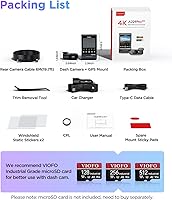
  • Storage Support: The camera accepts microSD cards up to 512GB maximum; a high-endurance card is strongly recommended for reliable long-term use.
  • Connectivity: The unit connects via USB Type-C for both power input and data transfer.
  • Mounting Type: Installation uses a windshield adhesive mount with static stickers and spare mounts included in the box.
  • Rear Cable: The included rear camera cable measures 6 meters, providing sufficient length to route cleanly through most vehicle headliners.
  • Power Cable: A 4-meter car charger cable is included for standard 12V socket-based power delivery.
  • Dimensions: The main unit measures 1.7 x 2.3 x 3.9 inches, keeping the windshield footprint compact and unobtrusive.
  • Weight: The complete unit weighs 1.85 pounds including the mount and GPS module.
  • Loop Recording: Continuous loop recording automatically overwrites the oldest footage when the SD card is full, with G-sensor collision lock protecting incident files.
  • In-Box Accessories: The package includes a CPL filter, GPS module with sticker, trim removal tool, front and rear cameras, and multiple spare adhesive stickers.
  • Hardwire Kit: The HK4 Acc hardwire kit required for permanent parking mode power is not included and must be purchased separately (ASIN: B09MRVP2PX).
  • Vehicle Compatibility: The camera is compatible with cars, minivans, RVs, and trucks via standard windshield mounting.
  • App Platform: The VIOFO companion app is available for both iOS and Android and supports video preview, configuration, and clip sharing over Wi-Fi.

Related Reviews

VIOFO A129 Pro Duo 4K Dual Dash Cam
85%
94%
Video Quality (4K Front, 1080p Rear)
88%
Parking Mode Performance
81%
Wi-Fi Connectivity
89%
Night Vision and Low-Light Footage
91%
GPS Accuracy and Data Logging
More
VIOFO A229 Plus 2CH
VIOFO A229 Plus 2CH
79%
93%
Night & Low-Light Recording
88%
Video Clarity (Daytime)
91%
GPS Accuracy
74%
HDR Performance
71%
Wi-Fi & App Connectivity
More
AZDOME M01 Pro Dual Dash Cam
64%
76%
Video Quality (Front)
54%
Video Quality (Rear)
67%
Night Vision
88%
Ease of Installation
58%
ADAS Performance
More
Faninso H200 Pro 4K Dual Dash Cam
84%
93%
Video Quality
88%
Night Vision Performance
75%
Wi-Fi Connectivity
90%
Wide Angle Coverage
86%
Ease of Installation
More
AZDOME GS63H Pro 4K Dual Dash Cam
86%
96%
Video Quality Front Camera
88%
Video Quality Rear Camera
91%
Night Vision Performance
89%
GPS Accuracy
84%
App & Wi-Fi Connectivity
More
Kingslim D1 Pro 4K Dual Dash Cam
70%
83%
Front Video Quality
67%
Cabin Recording Quality
81%
Night Vision Performance
61%
GPS Accuracy & Usability
58%
WiFi & App Experience
More
Vantrue S1 Pro Dual Dash Cam
77%
88%
Night Vision & Low-Light Performance
84%
Video Clarity & Resolution
67%
App & Wi-Fi Connectivity
71%
Parking Mode Reliability
82%
GPS Accuracy & Usefulness
More
DDPAI Z50 Pro Dual Dash Cam
81%
91%
Video Quality – Front Camera
88%
Night Vision Performance
74%
Parking Mode
77%
App & Wireless Transfer
86%
GPS Accuracy & Data Logging
More
LECTRUS K02 Pro 3-Channel Dash Cam
75%
88%
Front Camera Clarity
67%
Interior Camera Performance
54%
Parking Mode Usability
62%
App & WiFi Experience
71%
Night Vision
More
Vantrue S1 Pro Max 4K+2.5K Dual Dash Cam
87%
93%
Video Quality
88%
AI Safety Features (ADAS/BSD)
90%
Night Vision Performance
85%
Installation Ease
91%
Parking Mode Reliability
More

FAQ

Yes, and this catches a lot of buyers off guard. The parking surveillance modes require a constant power source, which means you need the HK4 Acc hardwire kit — it is not included in the box. You will need to wire it into a fused, always-on circuit in your vehicle's fuse box. Factor that into your budget before purchasing.

You want a high-endurance microSD card, not a standard one. Regular cards are designed for occasional writes, not the non-stop overwrite cycles a dash cam puts them through. Cards from Samsung Endurance, SanDisk High Endurance, or Kingston Canvas Go Plus are well-regarded choices. The camera supports up to 512GB, but a 128GB or 256GB high-endurance card hits a practical sweet spot for most drivers.

For a dash cam at this level, yes — it is genuinely one of the stronger performers in low-light plate capture. The Sony STARVIS 2 sensors combined with HDR processing handle mixed lighting scenes much better than entry-level cameras. You should expect readable plates on well-lit streets and at moderate highway speeds in the dark, though extremely dark rural roads with no ambient light remain challenging for any dash cam.

The rear camera itself is straightforward to mount, but routing the 6-meter cable neatly is the part that takes time. You will need to tuck it along the headliner, down the A or B pillar, and under door trim to keep things tidy. The included trim removal tool helps, but budget at least an hour if you want a clean install. Drivers who have done it before find it manageable; first-timers might want a YouTube walkthrough for their specific vehicle.

Mostly, but it is not the most polished app on the market. On newer Android phones it performs reliably for connecting, previewing footage, and pulling clips over 5GHz Wi-Fi. Older Android devices and some budget phones have reported connection drops or slower response. It is functional rather than refined — it gets the job done, but do not expect the experience to be as smooth as the hardware itself.

This is a real concern flagged by a portion of users. When the camera is parked in direct sunlight in hot climates — think a black dashboard under an Arizona summer sky — some units have experienced heat-triggered restarts. Parking in shaded areas or using a sunshade helps significantly. For most drivers in moderate climates, heat is not a recurring issue.

The VIOFO A229 Pro Dual-Channel Dash Cam is explicitly compatible with cars, minivans, RVs, and trucks. Larger vehicles arguably benefit the most from the rear camera, since blind spots and rear visibility are a bigger concern. The 6-meter rear cable is long enough to reach the back of most standard vehicles, though very long RVs might require an extension cable.
The GPS module connects via the accessory port and locks onto up to four satellite systems simultaneously, which gives it solid positioning accuracy even in urban areas with tall buildings. When you review footage through the VIOFO app or desktop software, your speed, location, and a map track overlay on the video timeline. It is a genuinely useful feature for documenting exactly where and how fast you were traveling during an incident.

A few of them are legitimately handy — saying a command to lock the current clip after a close call, or toggling audio recording without fumbling with buttons, are practical while driving. Others, like navigating menus verbally, feel more like demonstration features. The recognition accuracy is reasonable in a quiet cabin but struggles in noisy environments. Think of voice control as a useful bonus for two or three key actions, not a replacement for the app or physical controls.

The built-in G-sensor detects sudden impact or sharp braking and automatically locks the current video file so it cannot be overwritten by loop recording. The system also buffers 15 seconds before and 30 seconds after the detected event, so you capture the lead-up and aftermath — not just the moment of impact. Those locked files stay protected until you manually delete them or format the card, giving you time to transfer the footage you need.

Where to Buy