Overview

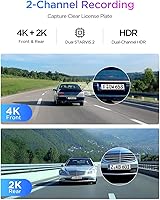
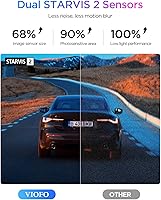
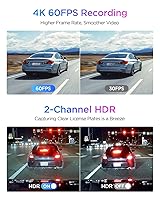
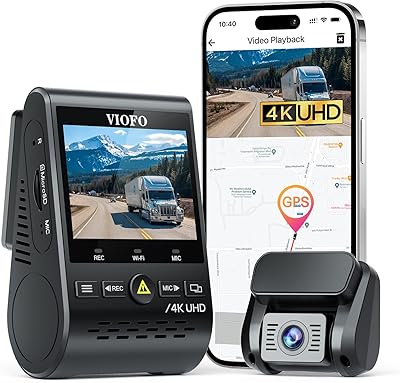
The VIOFO A329S 4K Dual Dash Cam enters a crowded premium tier with a genuinely compelling argument: 4K at 60fps up front, paired with a 2K rear camera, both running on dual STARVIS 2 sensors — a combination that is rare even among Blackvue and Thinkware flagships at this price. The 60fps front recording is a real step up from typical 4K 30fps competitors; smoother motion means cleaner freeze-frames when you need to read a plate fast. Add SSD support up to 4TB — practically unheard of in this category — and VIOFO is clearly targeting drivers who want serious, long-term recording capability without constant card management headaches.

Features & Benefits

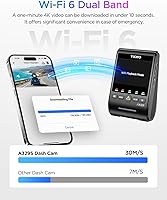
The IMX678 front sensor is doing real work at 60fps — when a car cuts you off and you need that license plate, the extra frames mean less blur and a usable still from the footage. The rear IMX675 STARVIS 2 sensor handles tricky lighting transitions well; driving into a tunnel and back into sunlight no longer means a few seconds of blown-out white. Wi-Fi 6 connectivity is a meaningful upgrade over older systems — pulling a full minute of 4K footage to your phone in under ten seconds is practical, not theoretical. One thing worth flagging upfront: parking mode requires the hardwire kit, which is sold separately and adds to the total cost.

Best For

This 4K front-and-rear camera is a strong match for rideshare and delivery drivers who accumulate hours of footage daily and need it to hold up as actual evidence — not just grainy clips. Long-haul drivers will appreciate the extended storage headroom; with a large SSD connected, you can go weeks without worrying about overwriting anything critical. It also suits anyone who has been burned by poor night footage before, since the dual STARVIS 2 setup handles low light noticeably better than entry-level sensors. That said, buyers should be prepared for a more involved installation — this is not a plug-and-drive unit if you want the full feature set.

User Feedback

With around 240 ratings and a 4.2-out-of-5 average on a listing that only launched in mid-2025, the feedback pool is still growing — so treat current patterns as early signals rather than settled consensus. Reviewers consistently highlight night footage clarity and note a visible step up from older VIOFO generations like the A229 Pro. The fast Wi-Fi file transfers also draw genuine praise. On the other side, several buyers were caught off guard by the hardwire kit not being included, and a few found the app less intuitive than expected. The slim coaxial cable earns credit for tidy routing, though threading it through tight trim panels takes patience.

Pros

  • Front camera records at 4K 60fps, producing smooth, detail-rich footage that holds up well when freezing a frame to read a license plate.
  • Both cameras use STARVIS 2 sensors, delivering a clear low-light performance improvement over the previous VIOFO generation.
  • Wi-Fi 6 connectivity transfers a full minute of 4K footage to your phone in under ten seconds — no more waiting around.
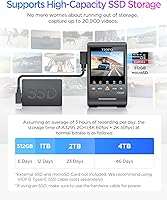
  • SSD support up to 4TB is exceptionally rare in this category, enabling weeks of uninterrupted recording on a single drive.
  • The slim 2.8mm coaxial rear cable routes cleanly behind trim panels and resists radio-frequency interference that can disrupt in-car electronics.
  • A CPL filter and GPS module are both included in the box, which comparable rivals often sell as paid add-ons.
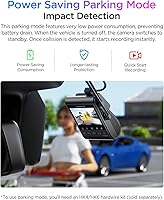
  • Ultra-low-power parking mode keeps the camera active without meaningful battery drain when the car is left unattended.
  • The rear IMX675 sensor handles tunnel and bright-sun transitions noticeably better than standard dynamic range sensors at this tier.

Cons

  • The hardwire kit needed for parking mode is sold separately, adding unexpected cost that buyers should factor in before purchasing.
  • You cannot run 4K 60fps and HDR simultaneously on the front camera — you have to pick one, which is a real trade-off in mixed lighting conditions.
  • Neither a microSD card nor an SSD is included, meaning additional storage purchases are required before the camera is fully operational.
  • The app has a learning curve that early reviewers flag, and it is not as polished as the companion apps offered by Blackvue or Thinkware.
  • With only around 240 reviews on a mid-2025 listing, long-term reliability data is still thin — early adopters are taking some risk.
  • Routing the rear coaxial cable through a vehicle interior takes time and patience, which may frustrate drivers expecting a straightforward DIY install.
  • The optional VIOFO Type-C SSD cable required for external drive support is an additional purchase on top of the already premium price.
  • At 14.1 ounces combined, the system is not the lightest dual-channel setup available, which may be a consideration for minimalist dashboard setups.

Ratings

Our AI-powered scoring for the VIOFO A329S 4K Dual Dash Cam was built by analyzing verified global buyer reviews, actively filtering out incentivized submissions, repetitive bot patterns, and unverified one-liners to surface what real drivers actually experience. Scores reflect a balanced synthesis of genuine praise and recurring frustrations — nothing is smoothed over. Both the standout strengths and the honest pain points are reflected transparently in each category below.

Front Video Quality
93%
Drivers consistently report that 4K at 60fps produces footage where fast-moving license plates are actually legible — not just theoretically possible. The IMX678 sensor handles motion blur noticeably better than 30fps competitors, and reviewers upgrading from the A229 Pro call the jump in clarity immediately visible.
A meaningful limitation surfaces when HDR is enabled: the front camera drops to 30fps, which creates confusion for buyers who expected both modes to run simultaneously. In very high-contrast scenes like midday sun, some users feel the HDR trade-off is necessary but frustrating to navigate in the settings.
Rear Camera Performance
86%
The IMX675 STARVIS 2 sensor in the rear handles the kind of lighting transitions that expose cheap cameras — driving out of a tunnel into bright sunlight no longer produces a few seconds of blown-out white. Night highway footage from the rear is sharp enough to read trailing plates, which earlier VIOFO rear cameras struggled with.
At 2K 30fps, the rear camera is a step below the front in raw resolution, and some buyers expect parity at this price point. In very dark rural conditions with no ambient lighting, the rear footage loses detail faster than the front, which is worth knowing if unlit roads are your primary concern.
Low Light Performance
88%
Both STARVIS 2 sensors genuinely outperform the standard STARVIS generation in dim conditions — city night driving, underground parking structures, and poorly lit intersections all show a real improvement in noise levels and color accuracy. Reviewers who previously ran older VIOFO models consistently flag this as the most noticeable upgrade.
In near-total darkness — think unlit rural highway stretches with no streetlights — the system still struggles to produce actionable footage without additional ambient light. This is a sensor physics limitation rather than a product flaw, but buyers expecting miracles in complete darkness will be disappointed.
Wi-Fi & App Experience
74%
26%
Wi-Fi 6 transfer speeds are genuinely fast in practice — pulling a one-minute 4K clip to a phone takes under 10 seconds when both devices support the standard, which makes grabbing evidence footage after an incident actually convenient rather than a test of patience.
The companion app draws consistent criticism for its interface — several reviewers describe it as functional but unintuitive, especially for first-time VIOFO users. Connecting to the camera via Wi-Fi occasionally requires a retry or two, and the app lacks the polished UX that Blackvue and Thinkware have refined over multiple generations.
Storage Flexibility
91%
Supporting SSDs up to 4TB is genuinely rare in this product category and matters enormously for rideshare drivers or anyone who cannot afford to overwrite footage. Even at the microSD level, 512GB support means weeks of dual-channel recording without manual intervention — a meaningful practical advantage over competitors capped at 256GB.
Neither the SSD nor the microSD card is included, and the optional Type-C SSD cable needed for external drive support is also a separate purchase. Buyers who see the 4TB headline and assume it is plug-and-play will be surprised by the additional cost and setup steps involved.
Parking Mode
67%
33%
The ultra-low-power standby approach means the camera does not drain a parked car battery the way always-on systems can. Impact detection wakes the camera instantly when a collision is sensed, which covers the most critical parking lot scenarios without requiring constant recording.
The hardwire kit required to enable parking mode is not included, which surprises a significant number of buyers who only discover this after unboxing. At the price point of this camera, including the hardwire kit — or at minimum flagging its absence prominently — would prevent a recurring source of post-purchase frustration.
Installation Experience
71%
29%
The 2.8mm coaxial rear cable is noticeably slimmer than flat ribbon alternatives, making it easier to tuck cleanly along door seals and headliner edges without visible bulging. The included trim removal tool is a thoughtful addition that most competitors omit from the box entirely.
Running a 6-meter cable cleanly through a vehicle interior still demands patience and time — this is not a quick self-install for most drivers. A handful of reviewers mention that the rear camera mount feels less secure than the front mount over long-term use, particularly on vehicles with significant road vibration.
Build Quality
82%
18%
The front unit feels solid and well-assembled in hand, with a finish that reads as premium compared to budget-tier dash cams. The coaxial cable construction earns specific praise for its resistance to interference, which matters in modern vehicles packed with electronics that can cause GPS drift or audio interference in lesser cables.
At 14.1 ounces for the full system, it is not the most discreet setup on the market, and the front unit is visible enough that some drivers in urban areas flag it as a potential theft concern. Longevity data is still limited given the mid-2025 launch date, so long-term durability cannot yet be fully assessed.
Value for Money
76%
24%
For buyers who will actually use SSD storage, Wi-Fi 6 speeds, and 4K 60fps simultaneously, the A329S offers a specification set that rivals or exceeds Blackvue and Thinkware flagships at a comparable or lower price. The inclusion of a CPL filter and GPS module adds meaningful out-of-box value that competitors charge extra for.
For anyone who will not use the SSD capability or who drives short daily commutes where the storage headroom is irrelevant, the price is harder to justify against well-established competitors. The additional cost of the hardwire kit and SSD cable chips away at the value equation for buyers who need the full feature set.
GPS Accuracy
83%
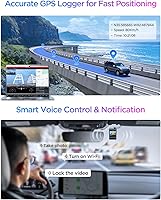
The included GPS module locks on reliably in open driving conditions and embeds speed and coordinate data cleanly into footage metadata, which holds up well for insurance documentation and incident reporting. Reviewers note it performs consistently on highway driving and urban routes without significant lag.
In dense urban canyons with tall buildings, GPS lock can take slightly longer than expected, and a small number of users report occasional speed data inaccuracies in areas with poor satellite visibility. The GPS module connects via an external attachment rather than being fully integrated, which adds one more cable to manage during installation.
Ease of Use
69%
31%
Voice control support means drivers can start recording, take a snapshot, or lock a clip without touching the unit, which is a genuinely useful safety feature on busy roads. The 2.4-inch screen is sufficient for basic menu navigation and quick playback without needing the app for every interaction.
The overall user experience has a learning curve that catches some buyers off guard — menu structure is not immediately intuitive, and the interplay between HDR, resolution, and frame rate settings requires some reading before it clicks. Newcomers to the VIOFO ecosystem may spend more time in the manual than they expected.
Day Recording Clarity
89%
In daylight conditions with the CPL filter attached, footage quality is among the best in this category — glare from windshields is substantially reduced, colors are accurate, and fine details like road signage and distant plates resolve cleanly. Reviewers driving in sunny climates particularly appreciate how well the CPL filter integrates with the overall image pipeline.
At 4K 60fps, file sizes accumulate quickly under continuous daylight recording, which fills cards faster than some buyers anticipate. Drivers who have not used a CPL filter before may also find the initial rotation and alignment process fiddly until they get the hang of it.
Wireless Transfer Speed
87%
For drivers who regularly need to pull clips — rideshare operators documenting incidents, or commuters wanting to share dashcam moments — the real-world transfer speed is a genuine step up over anything using older Wi-Fi standards. Most reviewers with Wi-Fi 6 phones report the experience as noticeably faster than any previous dash cam they have used.
The speed advantage is largely limited to users whose phones already support Wi-Fi 6 — on older handsets, transfers are faster than Wi-Fi 4 cameras but not dramatically so. A small subset of reviewers also note that the Wi-Fi connection occasionally drops mid-transfer and requires reconnecting through the app.

Suitable for:

The VIOFO A329S 4K Dual Dash Cam is built for drivers who treat dash cam footage as genuine evidence, not just a novelty. Rideshare and delivery drivers running long daily shifts will get the most value here — the combination of massive SSD storage support and high-resolution front recording means footage stays usable and accessible without constant card swaps or manual deletions. Long-haul travelers and road trippers also benefit significantly; weeks of continuous recording on a large SSD removes the anxiety of overwriting something critical mid-trip. If you have struggled with washed-out rear footage in harsh sunlight or murky night clips from a previous camera, the dual STARVIS 2 sensor pairing addresses both complaints in a meaningful way. Tech-savvy drivers who already pull clips on the go will find the Wi-Fi 6 transfer speeds genuinely practical rather than a spec-sheet footnote.

Not suitable for:

Buyers hoping for a simple, budget-friendly dash cam should look elsewhere — the VIOFO A329S 4K Dual Dash Cam sits firmly in the premium tier, and its full feature set assumes a degree of installation effort and additional spending that casual users may not expect. Parking mode, one of the headline features, requires a hardwire kit that is not included in the box, adding both cost and complexity from the outset. The HDR and 4K 60fps modes are also mutually exclusive on the front camera, which can frustrate buyers expecting to run both simultaneously without compromise. Drivers who want a quick, mount-and-go setup with minimal configuration will find the app learning curve and cable routing demands more involved than they bargained for. If your priority is simply basic trip recording on a tight budget, competing options at a lower price point will serve that need without the overhead.

Specifications

  • Front Resolution: The front camera records at 4K (3840x2160) resolution at 60 frames per second using a Sony IMX678 STARVIS 2 image sensor.
  • Rear Resolution: The rear camera records at 2K (2560x1440) at 30fps using a Sony IMX675 STARVIS 2 sensor with 2.5x wider dynamic range than standard STARVIS pixels.
  • HDR Mode: Dual-channel HDR is supported, but enabling HDR on the front camera disables the 4K 60fps mode, limiting front recording to 4K 30fps while HDR is active.
  • Wi-Fi Standard: The unit uses Wi-Fi 6 on the 5GHz band, delivering wireless transfer speeds up to 30MB/s for fast clip preview and download via the companion app.
  • Storage Support: The camera accepts microSD cards up to 512GB or an external SSD up to 4TB capacity via an optional VIOFO Type-C SSD cable, sold separately.
  • Rear Cable: The included rear camera cable is a 2.8mm super-slim coaxial type, 6 meters in length, designed to minimize electromagnetic and radio-frequency interference.
  • GPS: A GPS module is included in the box and records location, speed, and route data directly into the footage metadata.
  • Parking Mode: An ultra-low-power parking mode with impact detection is supported, but requires the VIOFO HK4 or HK6 hardwire kit, which is not included and must be purchased separately.
  • Screen Size: The built-in display measures 2.4 inches and is used for live preview, menu navigation, and basic playback without needing the app.
  • Dimensions: The front camera unit measures 1.7 x 2.3 x 3.9 inches and weighs 14.1 ounces as a complete two-channel system.
  • Voice Control: The camera supports voice commands for hands-free control of key functions, reducing the need to interact with the unit physically while driving.
  • CPL Filter: A circular polarizing lens filter is included in the box to reduce windshield glare and improve daytime footage clarity.
  • App Control: The companion app connects via Wi-Fi 6 and allows users to preview, download, and manage footage as well as adjust camera settings remotely from a smartphone.
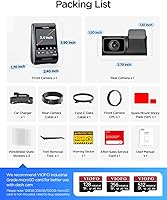
  • Included Accessories: The box contains the front and rear cameras, a 3.5-meter car charger, a 6-meter rear cable, rear mount, GPS module, CPL filter, trim removal tool, windshield stickers, and 3M adhesive stickers.
  • Not Included: The hardwire kit, microSD card, SSD storage, and the optional Type-C SSD cable are all sold separately and are not bundled with the standard package.

Related Reviews
VIOFO A129 Pro Duo 4K Dual Dash Cam
85%
94%
Video Quality (4K Front, 1080p Rear)
88%
Parking Mode Performance
81%
Wi-Fi Connectivity
89%
Night Vision and Low-Light Footage
91%
GPS Accuracy and Data Logging
More
YEECORE D22 4K Dual Dash Cam
85%
91%
4K Video Quality
88%
Night Vision Performance
85%
Ease of Installation
80%
App Control & Wi-Fi Connectivity
87%
Camera Field of View
More
SUVCON M02 4K/1080P Dual Dash Cam
77%
88%
Video Clarity (Daytime)
71%
Night & Low-Light Performance
74%
Rear Camera Quality
66%
App Experience (Viidure)
91%
Ease of Installation
More
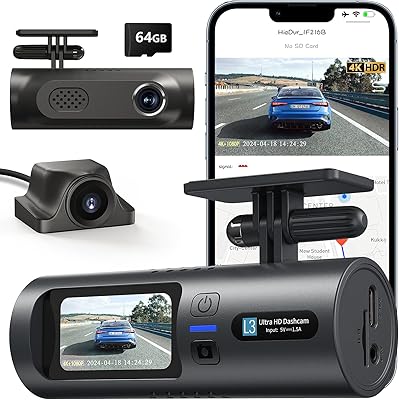
Kolvt L3 4K Dual Dash Cam
85%
91%
Video Quality
87%
Ease of Setup
83%
Parking Mode Performance
89%
Wi-Fi and App Control
85%
Low-Light Performance
More
Thinkware U3000 4K Dual Dash Cam
86%
93%
Video Quality (4K Performance)
90%
Night Vision Performance
88%
Ease of Installation
85%
Radar Parking Mode
70%
App Connectivity & Control
More
ROVE R2-4K Dual Dash Cam
80%
91%
Video Clarity (Front)
88%
Night Vision Performance
74%
Rear Camera Quality
78%
Wi-Fi & App Experience
86%
GPS Accuracy & Logging
More
Kingslim D4 Dual Dash Cam
75%
88%
Daytime Video Quality
71%
Night Vision Performance
84%
GPS Accuracy
57%
App & WiFi Connectivity
76%
Ease of Installation
More
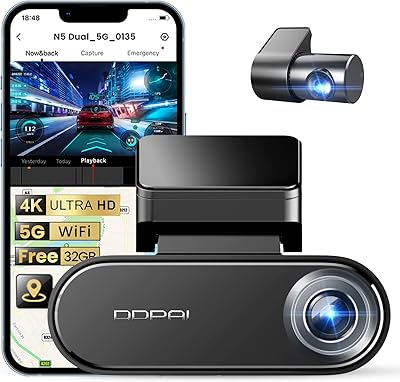
DDPAI N5 Dual Front and Rear Dash Cam
77%
88%
Video Quality (Front)
71%
Video Quality (Rear)
74%
Parking Mode & Surveillance
82%
Wi-Fi Speed & App Experience
83%
GPS Accuracy & Logging
More
Kingslim D6 4K Dual Dash Cam
84%
91%
4K Video Quality
88%
Night Vision Performance
84%
Ease of Setup
89%
WiFi & GPS Functionality
82%
Build Quality & Durability
More
70mai 4K Omni X800 Dual Dash Cam
80%
91%
Night Vision Quality
93%
Video Clarity (Daytime)
88%
Rotating Camera Design
79%
4G LTE Remote Monitoring
67%
Parking Mode Usability
More

FAQ

You will need a storage card to start recording — neither a microSD card nor an SSD is included. The camera ships with a car charger, so you can plug in and start recording as soon as you have a card. If you want parking mode, you will also need to purchase the VIOFO HK4 or HK6 hardwire kit separately.

No, these two modes are mutually exclusive on the front camera. When HDR is enabled, the front camera drops to 4K at 30fps. You will need to decide based on your driving conditions — 60fps is better for capturing fast motion and plate reads, while HDR helps in high-contrast lighting situations.

A 256GB microSD card holds roughly 4 to 5 hours of 4K dual-channel footage before it starts overwriting older files. Stepping up to a 512GB card roughly doubles that. If you connect a compatible SSD — the camera supports up to 4TB — you are looking at several weeks of continuous recording, which is ideal for rideshare drivers or long road trips.

The parking mode uses an ultra-low-power state that keeps the camera on standby without drawing much current. When the impact sensor detects a collision or bump, it wakes up and records automatically. To use it, you need to wire the camera directly to your car's fuse box using the VIOFO hardwire kit — this lets the camera monitor your voltage and cut power before the battery drains too low.

Yes, noticeably so compared to older dash cams with Wi-Fi 4. At up to 30MB/s over the 5GHz band, a one-minute 4K clip transfers to your phone in roughly 10 seconds. That said, your phone needs to support Wi-Fi 6 to get the full speed — older phones will connect, just potentially a bit slower.

The 2.8mm coaxial rear cable is slimmer than the flat ribbon cables used on older dual-camera systems, which makes it easier to tuck behind door seals and headliner trim. The box includes a trim removal tool to help with this. That said, running a 6-meter cable cleanly through a vehicle still takes an hour or two and some patience — it is not something you clip on in five minutes.

It is compatible with standard USB-C SSDs, but VIOFO recommends using their own Type-C SSD cable for best compatibility and reliability. Not all generic SSDs are guaranteed to work correctly, so checking the VIOFO compatibility list before buying a drive is worth doing.

The rear IMX675 STARVIS 2 sensor performs meaningfully better than the standard STARVIS sensors found in the previous generation. In low-light highway conditions, rear plates and road markings are legible in a way that cheaper sensors struggle with. It is not miraculously clear in complete darkness, but for urban and suburban night driving it holds up well.

The GPS module included in the box records speed and coordinates as metadata tied to the footage, and you can optionally display that data as an overlay on the video. Accuracy is solid for dash cam use — good enough for insurance claims and incident reports. It is not a navigation GPS, just a logging one.

At this price tier, the main rivals are units like the Blackvue DR970X and Thinkware U3000. The A329S stands out with its 4K 60fps front recording and native SSD support, which neither of those offers by default. Blackvue and Thinkware have more polished companion apps and longer track records for reliability, but VIOFO wins on raw sensor specs and storage flexibility for the price.

Where to Buy

TikTok Shop
In stock $372.38
4x4 Shop Canada
In stock $380.00
DashcameraSA
In stock $386.32
The Dashcam Store
In stock $399.99
BlackboxMyCar
In stock $399.99
EzDashcam
In stock $399.99