

Overview

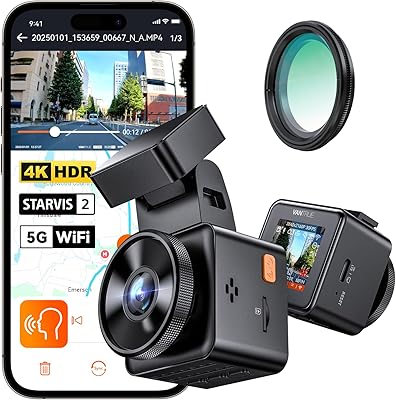
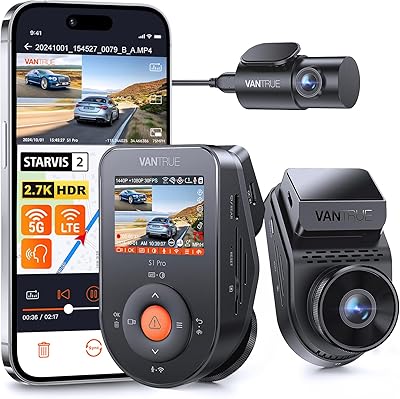
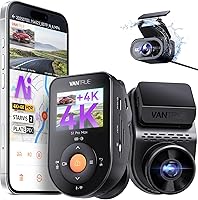
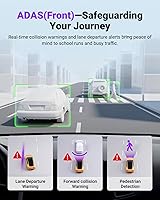
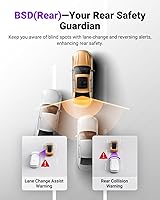
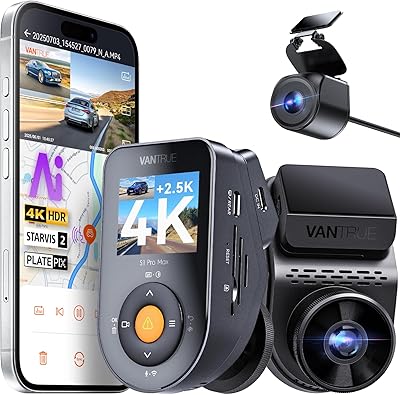
The Vantrue S1 Pro Max 4K+4K enters 2025 as one of the more serious dual-channel dash cams you can buy without crossing into professional fleet territory. What sets it apart isn't just the dual 4K resolution — plenty of cams claim that now — but the combination of Sony STARVIS 2 sensors on both channels, a supercapacitor design instead of a battery, and AI-driven safety alerts baked into the hardware. Those alerts — ADAS up front, blind-spot detection at the rear — are genuinely useful, but they're driver aids, not substitutes for attention. For the price, the feature depth here is hard to match.

Features & Benefits

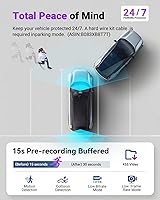
The dual STARVIS 2 sensors are the backbone of this cam's appeal. In real terms, that means license plates stay legible at night — even at a distance, even while the car is moving — thanks to PlatePix processing that sharpens detail rather than letting plates blur into smears. The 155° front and 160° rear lenses cover an unusually wide field, cutting the blind spots a single-lens setup inevitably leaves. ADAS collision warnings up front and blind-spot alerts at the rear add genuine situational awareness on fast-moving roads or in cramped parking lots. A 15-second pre-event buffer in parking mode captures what happened before impact, not just after. 5G WiFi and GPS let you pull footage fast and attach route data to any incident worth documenting.

Best For

This dual 4K dash cam makes the most sense for drivers who genuinely need the evidence. Parents doing school runs, rideshare drivers logging night hours, or anyone who parks regularly in unattended lots will get real value from the low-light clarity and parking surveillance here. The wide rear field and IP67-rated rear camera also make it a natural fit for trucks, vans, or RVs where the back end is harder to monitor. Casual drivers who just want basic recording may find the feature set more than they need — and the total cost higher than expected once you factor in a hardwire kit and high-capacity memory card, both sold separately.

User Feedback

The S1 Pro Max launched in May 2025, so the review pool is still relatively small — worth keeping in mind when weighing the 4.1-star average. Buyers who've put miles on it tend to praise nighttime footage quality and the build, noting the rear camera holds up well through rain and car washes. The AI safety alerts get mixed marks: some drivers find the ADAS warnings well-timed on highways, while others report frequent false positives on urban roads with tight sight lines. The companion app draws complaints about stability in early builds. More than a few buyers also flag the surprise of needing a hardwire kit and a large-capacity memory card — neither included — to unlock the full experience.

Pros

  • Dual STARVIS 2 sensors deliver genuinely sharp night footage — license plates stay legible in real low-light conditions.
  • The 15-second pre-event parking buffer captures what led to a collision, not just the damage left behind.
  • At 4K resolution on both channels, footage holds up as credible evidence in insurance and legal contexts.
  • Supercapacitor design eliminates battery degradation, making long-term reliability far stronger than battery-based competitors.
  • IP67 rear camera survives car washes, heavy rain, and road spray without any special maintenance.
  • Built-in GPS logs speed and route automatically, adding essential context to any incident recording.
  • 5G WiFi transfers large 4K clips to your phone in seconds, not minutes.
  • Wide 155° front and 160° rear lenses significantly reduce blind spots on both channels.
  • Support for up to 1TB storage means long-haul and rideshare drivers rarely need to manage cards manually.
  • ADAS and blind-spot alerts provide a useful safety layer on highways and during reversals in crowded lots.

Cons

  • ADAS false positives in urban driving are common out of the box — calibration takes several days of adjustment.
  • The hardwire kit required for 24-hour parking mode is sold separately, adding cost and installation effort.
  • No memory card is included; a quality high-endurance card large enough to justify this cam adds meaningful expense.
  • The companion app has reported stability issues, including crashes during footage review and unreliable connection drops.
  • Physical size is noticeable on the windshield and may partially obstruct sightlines in compact or small vehicles.
  • Rear camera cable routing in larger or complex-trim vehicles can be genuinely difficult for non-technical installers.
  • The review pool is still small given the May 2025 launch date, so long-term reliability data is limited.
  • Voice recognition accuracy drops significantly with road noise, music, or fan noise at higher volumes.
  • Default ADAS sensitivity is too aggressive for city driving and requires manual tuning before daily use.
  • Night vision in truly unlit rural environments shows more noise than the product imagery implies.

Ratings

The Vantrue S1 Pro Max 4K+4K earned its scores through AI-assisted analysis of verified buyer reviews sourced globally, with spam, bot-generated, and incentivized feedback actively filtered out before scoring. Across categories ranging from night vision performance to app reliability, the results reflect what real drivers experience behind the wheel — the strengths that make this flagship dash cam stand out and the friction points that prevent a perfect score. Nothing has been softened or padded here.

Video Quality
93%
Drivers consistently describe footage that holds up under scrutiny — plates readable at highway speeds, road signs legible in motion, and enough detail to distinguish vehicle colors and faces at intersections. The dual 4K resolution at 30FPS delivers what the spec sheet promises in real conditions.
A small share of users note occasional compression artifacts on high-contrast scenes, particularly when direct sunlight hits the lens during golden-hour driving. This is rare but worth knowing if forensic-grade clarity is non-negotiable for you.
Night Vision Performance
91%
Low-light footage is where the S1 Pro Max genuinely separates itself from most competitors. Rideshare drivers and those doing late-night commutes report that license plates remain legible even on unlit residential streets, and the HDR processing handles tunnel exits and streetlight transitions better than most cams at this tier.
In near-total darkness — think rural roads without any ambient lighting — some users find the footage usable but noticeably noisier than what the marketing imagery suggests. PlatePix helps, but it is not magic when there is truly nothing for the sensor to work with.
AI Safety Alerts (ADAS & BSD)
74%
26%
On open highways and well-marked suburban roads, the front ADAS collision warnings and rear blind-spot detection land at the right moment — genuinely useful when merging or when a car stops suddenly ahead. Several drivers say the BSD alert has caught them during reversals in busy lots.
Urban environments expose the system's calibration limits. Dense city driving triggers false positives with frustrating regularity — alerts firing for stationary objects, tight lane markings, or shadows. Drivers who commute through congested downtown areas find themselves tuning the sensitivity down or ignoring alerts altogether.
Parking Mode
82%
18%
The 15-second pre-event buffer is a meaningful upgrade over cams that only capture post-impact footage. Drivers who have dealt with hit-and-run incidents in parking garages specifically praise this feature — the buffer consistently captures the vehicle that caused the damage rather than just the aftermath.
Full 24-hour parking surveillance requires a hardwire kit that is not included in the box, which surprises buyers who assumed it was part of the package at this price point. Budget an additional cost and some installation effort if uninterrupted monitoring is your primary reason for buying.
Build Quality & Durability
88%
The front unit feels substantial in hand — not plasticky or cheap — and the adhesive mount holds firm through hot summers and rough roads without the creaking or vibration rattle that plagues lighter dash cams. The supercapacitor design also removes the slow-death problem that kills battery-based cams after a few years.
A handful of users report that the adhesive mount, while strong, leaves a noticeable residue if repositioned, making precise first-time placement important. The unit is also on the larger side physically, which may partially obstruct sightlines in smaller vehicles.
Rear Camera
87%
The IP67 waterproof rating on the rear camera is not just a spec checkbox — truck and RV owners specifically call out that it survives road spray, car washes, and extended rain without issue. The 4K rear resolution is rare at this tier and makes a real difference when rear footage is needed as evidence.
The 6-meter cable covers most vehicles but has been reported as just barely sufficient for longer RVs or sprinter vans, occasionally requiring careful routing to avoid tension. A small number of users also note the rear camera mount requires more care to angle correctly than the front.
App & Connectivity
63%
37%
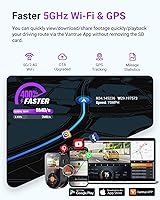
When the app works, the 5G WiFi transfer speed is noticeably faster than older 2.4GHz-only cams — pulling a multi-minute 4K clip to a phone in seconds rather than waiting minutes is a real convenience, especially when you need footage quickly for an incident report.
App stability is the most consistently cited frustration in lower-rated reviews. Crashes during footage browsing, intermittent connection drops, and a UI that feels unpolished compared to the hardware underneath it all drag this category down considerably. Early firmware builds have been buggy for some users.
GPS Accuracy
84%
Speed and route logging are accurate enough that several users have used the GPS data successfully during insurance disputes to corroborate their version of events. Lock-on time is quick, and the overlay on footage lines up consistently with actual road positions.
GPS signal can take slightly longer to acquire in underground garages or on first boot in dense urban canyon environments. A minor issue in practice, but worth noting for drivers who frequently start trips in covered structures.
Installation Experience
71%
29%
For a dual-channel system with a 6-meter rear cable run, most users report getting everything mounted and functional within a couple of hours. The included installation tool helps tuck wiring neatly behind trim panels, and the adhesive mount is genuinely strong from day one.
Non-technical users find the rear camera cable routing genuinely challenging, particularly in vehicles with complex interior trim. Several reviewers suggest watching installation videos before starting rather than relying solely on the quick-start guide, which skips over some tricky routing steps.
Storage & Memory
69%
31%
Support for up to 1TB microSD cards is a legitimate differentiator — the ability to store up to 86 hours of 4K footage without swapping cards is something long-haul drivers and rideshare operators genuinely value. Loop recording handles card management automatically once configured.
No memory card is included, and the cam really needs a high-endurance card to perform reliably — budget cards have caused recording errors for some users. Buying a quality high-capacity card adds meaningfully to the total cost, which is not always clear at the point of purchase.
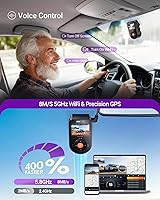
Voice Control
67%
33%
Hands-free photo and recording commands work reliably enough in quiet driving conditions. Drivers who use it to snap a photo at a scene without fumbling for a button genuinely appreciate having the option, particularly for parking lot documentation.
Road noise, music, or HVAC at higher volumes reduces recognition accuracy noticeably. The command set is also fairly limited — it handles basic functions but cannot replace the app for more detailed settings changes, making it a convenience feature rather than a core interaction method.
Value for Money
78%
22%
Compared to similarly specced dual 4K systems with AI safety features and dual premium sensors, the S1 Pro Max sits at a competitive price point. Buyers who factor in the supercapacitor longevity — no battery replacement costs — and the IP67 rear camera tend to view the investment as justified over a 3-to-5 year horizon.
The true out-of-pocket cost is higher than the sticker price once you add a quality high-capacity memory card and the hardwire kit for full parking mode. For buyers on a tighter budget who assumed those were included, the total spend can feel like a bait-and-switch.
Setup & Configuration
72%
28%
The on-screen menu system is logically organized and most core settings — sensitivity, recording length, loop behavior — are accessible without digging through buried sub-menus. Tech-comfortable drivers report being up and configured in under 30 minutes once mounting is done.
ADAS calibration is not particularly guided for first-time users, and getting the alerts tuned to a reasonable sensitivity for your specific driving environment takes trial and error over several drives. The default sensitivity is too aggressive for most urban drivers right out of the box.
Reliability Over Time
80%
20%
The supercapacitor power source is a genuine reliability advantage over time — it handles heat far better than lithium cells and does not degrade with charge cycles the way batteries do. Early adopters from prior Vantrue models report the brand has a solid track record of firmware updates addressing bugs post-launch.
Because this model launched in May 2025, long-term reliability data is still thin. The 18-month warranty is reassuring, but buyers hoping for multi-year field performance data will simply need to wait — the review base is too fresh to draw firm conclusions about durability beyond the first year.

Suitable for:

The Vantrue S1 Pro Max 4K+4K is built for drivers who treat a dash cam as genuine protection rather than an afterthought. Rideshare drivers clocking night hours will get the most out of the dual STARVIS 2 sensors — low-light footage that can actually hold up in a dispute is worth a lot when your livelihood depends on it. Parents doing school runs and highway commuters will appreciate the ADAS collision alerts and blind-spot detection, which provide a useful second layer of awareness without requiring any manual input. Drivers who frequently park in unsupervised lots or street-park overnight will find real comfort in the buffered parking mode, since it captures the moment of impact rather than just the aftermath. Truck, van, and RV owners benefit particularly from the IP67 rear camera and the wide 160° rear field, both of which are harder to find at this level of quality. Anyone who has been through an insurance dispute and lost because their footage was too dark or too narrow to be conclusive will understand exactly why this camera exists.

Not suitable for:

The Vantrue S1 Pro Max 4K+4K is not the right call for drivers who want a simple, plug-and-play dash cam with no learning curve. If you commute primarily in dense urban environments with tight lane markings and constant stop-and-go traffic, the ADAS alerts are likely to frustrate you more than help — false positives in city conditions are a recurring complaint, and tuning the sensitivity takes real patience. Budget-conscious buyers should also pause: the sticker price does not include a memory card or the hardwire kit needed for full 24-hour parking mode, and adding both quality versions of those pushes the total investment considerably higher. Buyers in smaller vehicles may also find the physical footprint of this flagship dash cam noticeable on the windshield, and the companion app — while functional — is not polished enough for people who expect a premium software experience to match the premium hardware. If your driving is mostly low-stakes daytime use in familiar surroundings, there are simpler, less expensive options that will serve you just as well.

Specifications

  • Resolution: Records simultaneously at 4K (2160p) on both front and rear channels at 30 frames per second.
  • Image Sensors: Both cameras use Sony STARVIS 2 sensors, optimized for high sensitivity in low-light and nighttime conditions.
  • Front FOV: The front lens covers a 155° wide-angle field of view to reduce blind spots on either side of the vehicle.
  • Rear FOV: The rear camera captures a 160° field of view, providing broad coverage behind the vehicle.
  • Night Vision: PlatePix technology and Dual HDR processing work together to sharpen license plate detail and balance extreme lighting contrasts.
  • AI Features: ADAS collision warning system monitors the front view, while BSD (Blind Spot Detection) alerts the driver to hazards at the rear.
  • Connectivity: 5G dual-band Wi-Fi enables fast wireless footage transfers to a smartphone; USB provides wired connection as an alternative.
  • GPS: Built-in GPS module logs vehicle speed, coordinates, and route data, which is embedded directly into recorded footage.
  • Power Source: A supercapacitor replaces the conventional lithium battery, eliminating heat-related degradation and explosion risk over the product lifespan.
  • Parking Mode: A 15-second pre-event buffer captures footage from before a detected collision or impact, not only after the trigger point.
  • Rear Camera Rating: The rear camera carries an IP67 waterproof certification, protecting it against dust ingress and sustained immersion in water up to 1 meter.
  • Rear Cable Length: A 6-meter cable connects the rear camera to the front unit, sufficient for most standard-length passenger vehicles and light trucks.
  • Max Storage: Supports microSD cards up to 1TB capacity (card sold separately); high-endurance cards are strongly recommended for continuous recording use.
  • Loop Recording: Clip lengths are configurable at 1, 2, or 3 minutes; when the card fills, the oldest clips are automatically overwritten.
  • Voice Control: Responds to spoken commands for functions such as taking a photo, allowing hands-free operation while driving.
  • Mount Type: Uses a premium adhesive windshield mount rated to withstand temperature extremes and road vibration without loosening over time.
  • Dimensions: The front unit measures 5.91 x 3.5 x 4.72 inches and weighs 1.32 pounds including the mount assembly.
  • Compatibility: Designed for installation in cars, trucks, minivans, buses, and RVs; the 6-meter rear cable accommodates most standard vehicle lengths.
  • Warranty: Covered by an 18-month manufacturer warranty, with Vantrue offering 24-hour customer support and ongoing firmware update releases.
  • Included Items: The box contains the front dash cam unit, IP67 waterproof 4K rear camera, car charger, installation tool, and a quick-start guide.

Related Reviews
Vantrue S1 Pro Max 4K+2.5K Dual Dash Cam
87%
93%
Video Quality
88%
AI Safety Features (ADAS/BSD)
90%
Night Vision Performance
85%
Installation Ease
91%
Parking Mode Reliability
More
Vantrue E1 Pro 4K Dash Cam
84%
92%
Video Quality (4K Resolution)
89%
Night Vision Performance
90%
Ease of Installation
75%
Voice Control Functionality
87%
Parking Mode Effectiveness
More
Vantrue S1 Pro Dual 1440P Dash Cam
86%
93%
Video Quality
94%
Night Vision Performance
78%
Wi-Fi Connectivity
88%
Installation Ease
91%
Parking Mode
More
Dragon Touch S1 Pro 15.6-Inch 4K Portable Monitor

87%
94%
Display Quality
91%
Portability
88%
Gaming Performance
86%
Build Quality
62%
Audio Quality
More
Formuler Z11 Pro Max
79%
93%
IPTV Streaming Performance
91%
Network Connectivity
88%
Hardware Specifications
86%
4K & Video Quality
83%
Build Quality & Design
More
Miofive S1 Ultra 4K+4K Dash Cam
85%
92%
Video Quality (Daytime)
89%
Night Vision Performance
84%
Ease of Setup
88%
App & Connectivity
91%
GPS Accuracy
More
Choiz S1 Pro Smartwatch
86%
94%
Display Quality
88%
Battery Life
91%
Health Tracking Accuracy
89%
GPS Reliability
85%
Sports Mode Variety
More
Blackmagic Design Intensity Pro 4K
83%
94%
Video Capture Quality
68%
Setup & Installation
82%
Software Performance
89%
System Compatibility
90%
Reliability & Durability
More
XGIMI Horizon Pro 4K Projector
84%
91%
Image Quality
88%
Sound Quality
94%
Ease of Setup
85%
Software and Smart Features
72%
Connectivity
More
Lisowod L61 Pro 4K Projector
83%
87%
Performance
91%
Portability
84%
Image Quality
90%
Setup and Ease of Use
77%
Audio Quality
More

FAQ

Yes, but you will need the hardwire kit to do it properly — and that is sold separately, which catches a lot of buyers off guard. The hardwire kit connects the cam directly to your vehicle's fuse box, allowing it to draw a trickle of power while parked. Without it, the cam only records when the car is running.

For a dual 4K system recording continuously, you will want at least a 256GB card at minimum, though a 512GB or 1TB high-endurance microSD will give you much longer recording windows before loop-overwriting kicks in. Critically, use a card rated for dashcam or surveillance use — standard consumer cards tend to fail early under the constant read-write cycle this camera runs.

On open roads and highways, most drivers find the alerts reasonably well-timed. In dense urban environments, however, false positives are common — tight lane markings, parked cars, and pedestrian activity can all trigger warnings that are not actionable. Plan to spend a few days adjusting the sensitivity setting before you settle into a daily routine with it.

Mounting the front unit is straightforward — the adhesive mount is strong and the unit clips in cleanly. The more involved part is routing the 6-meter rear camera cable neatly through your vehicle's trim panels. Most people with basic DIY comfort finish the full install in one to two hours, but watching a vehicle-specific installation video beforehand makes a real difference.

Yes — the IP67 rating means the rear camera handles outdoor exposure without issue, including road spray and rain. The 6-meter cable is sufficient for most SUVs and standard-cab trucks. For crew-cab pickups or longer vans, measure your routing path first, since some users with longer vehicles report the cable is just barely adequate.

The supercapacitor design is a real advantage here. Unlike battery-powered dash cams, which can swell, fail, or even pose a fire risk when baked in a hot car, the supercapacitor is far more tolerant of temperature extremes. The adhesive mount is also rated for high-heat environments, so you should not see it peeling away mid-summer.

With 5G Wi-Fi active, transferring a few minutes of 4K footage takes seconds rather than the minutes you might wait with an older 2.4GHz-only system. You connect through the companion app, navigate to the clip you want, and download directly. The app itself has some stability quirks in early builds, but the transfer speed when it works is noticeably faster than most competing cameras.

Generally, yes. The GPS overlay logs your speed, coordinates, and route in real time, and that data is embedded into the footage file. Several users have specifically mentioned using this data successfully during insurance disputes. The GPS acquires a signal quickly under open sky; underground garages or dense urban canyons may cause a brief delay on startup.

Yes — both channels record simultaneously at 4K 30FPS, which is one of the things that sets this cam apart from many dual-channel systems that drop the rear channel to 1080p or 1440p to reduce processing load. That said, running dual 4K continuously is why storage capacity matters so much; footage files are large.

It is genuinely useful in specific situations — snapping a photo at a scene without touching the unit, for example, is a nice hands-free capability. That said, it is fairly limited in scope and sensitive to road noise. At highway speeds with music playing, recognition becomes unreliable. Think of it as a handy bonus for quiet driving rather than a primary way to interact with the camera.