Overview

The Miofive S1 Ultra 4K+4K Dual Dash Cam launched in April 2024 as the brand's flagship dual-camera model, and it arrives at a mid-range price point that few competitors match with true 4K resolution on both channels. Miofive isn't a household name yet, but this front-and-rear camera system comes with a 64GB SD card already in the box and uses a supercapacitor instead of a lithium battery — two choices that signal genuine engineering priorities rather than cost-cutting. It's a strong option for drivers who want capable dual coverage without paying premium-brand prices, though buyers expecting plug-and-play simplicity may find the setup process takes some patience.

Features & Benefits

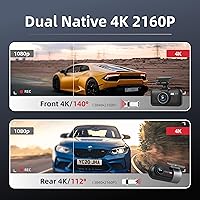
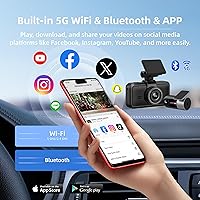
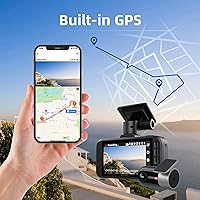
The front camera shoots at 3840x2160 resolution with a 140-degree field of view — wide enough to capture adjacent lanes clearly during a highway merge. The rear runs at the same 4K resolution with a 112-degree angle, which covers following vehicles without distorting the image too aggressively. HDR helps in tricky lighting situations like tunnel exits or backlit intersections, though it's not a substitute for a top-tier sensor in pitch-dark conditions. Built-in GPS tags every clip with speed and route data, which is genuinely useful if you ever need to dispute a traffic incident. The dual-band Wi-Fi lets you pull clips to your phone via the Miofive app without hunting for cables.

Best For

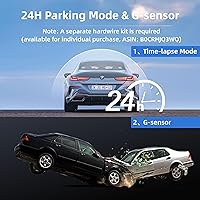
This dual dash cam is a natural fit for daily commuters, rideshare drivers, and anyone who logs enough highway miles to make documented evidence worthwhile. If you live somewhere that gets brutally hot summers or hard winters, the supercapacitor design is more than a spec on a sheet — lithium batteries degrade and can fail in extreme heat, so the absence of one here is a real reliability advantage. Drivers who want parking monitoring should know upfront that a separate wiring kit is required and not included. For tech-comfortable users who will actually engage with the app, the remote clip access and GPS-tagged playback add genuine day-to-day utility.

User Feedback

With around 150 ratings and a 4.0 average, the S1 Ultra has accumulated enough early feedback to identify clear patterns, though it's too soon to call anything definitive. Buyers who are satisfied tend to praise the front video quality and how well night footage holds up compared to cheaper single-cam setups. On the critical side, some users flag that the rear camera cable is tricky to route cleanly, and a handful mention the companion app occasionally disconnecting or requiring a manual reconnect. A recurring frustration is discovering that 24-hour parking monitoring needs a separately purchased wiring kit — something the brand could communicate more clearly. Customer support responses appear generally positive within the warranty terms.

Pros

  • True 4K resolution on both front and rear channels is rare at this price point.
  • Included 64GB SD card means you can mount and start recording out of the box.
  • Built-in GPS logs speed and route data, making footage genuinely useful for insurance disputes.
  • Supercapacitor design holds up in extreme heat and cold where lithium batteries commonly fail.
  • Dual-band Wi-Fi lets you pull and share clips from your phone without connecting a cable.
  • The 140-degree front field of view captures adjacent lanes clearly during merges and turns.
  • G-sensor automatically locks collision footage so critical clips are never overwritten.
  • An 18-month warranty with lifetime technical support is a reassuring commitment for a newer brand.
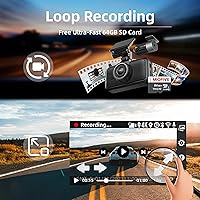
  • Loop recording manages storage automatically — no manual card maintenance needed.
  • HDR noticeably improves footage quality in high-contrast situations like tunnel exits.

Cons

  • 24-hour parking monitoring requires a separate hardwire kit sold independently — a significant omission that catches many buyers off guard.
  • The Miofive app has reported connectivity drops that require manual reconnection, disrupting the wireless workflow.
  • Routing the rear camera cable cleanly through a vehicle interior takes time and is rarely straightforward.
  • With roughly 150 ratings, the long-term reliability picture is still developing — not enough data yet for full confidence.
  • Night vision performs adequately but falls short of what premium-sensor cameras deliver on truly unlit roads.
  • The physical unit is relatively bulky at 7 inches, which may obstruct sightlines on smaller windshields.
  • Miofive lacks the established brand support ecosystem of longer-tenured competitors, including community forums and extensive third-party tutorials.
  • The companion app, while functional, feels less polished than those offered by more mature dash cam brands.
  • Buyers in regions with strict windshield obstruction laws should verify local compliance before mounting.

Ratings

The scores below were generated by our AI review engine after analyzing verified buyer feedback for the Miofive S1 Ultra 4K+4K Dual Dash Cam from across multiple global markets, with spam, bot-submitted, and incentivized reviews actively filtered out before any scoring took place. The result is an honest, balanced breakdown that reflects what real drivers consistently praise and where they genuinely run into friction. Both standout strengths and recurring pain points are weighted into every category score you see here.

Video Clarity
88%
Buyers consistently report that daytime footage from the front camera is sharp enough to clearly read license plates several car lengths ahead — a practical benchmark that matters most when filing an insurance claim. The 4K resolution on both channels is genuine, not upscaled, which puts this system well above average for its price tier.
A minority of users note that the rear camera footage, while technically 4K, looks slightly softer than the front in direct comparisons, likely due to the lens quality rather than the sensor resolution. Fine detail at the edges of the 140-degree frame also shows some distortion, which is common but worth knowing.
Night Vision
74%
26%
HDR processing does meaningful work in mixed urban lighting — intersections, lit highways, and parking garages all produce footage that holds usable detail in both bright and shadowed areas simultaneously. Drivers on suburban commutes report the night footage is more than adequate for documentation purposes.
On genuinely unlit rural roads, the limitations of the sensor become apparent, and footage can appear grainy or underexposed compared to cameras with physically larger sensors. Buyers expecting flagship-level low-light performance will likely be disappointed if that is their primary use case.
Build & Durability
83%
The supercapacitor design draws consistent praise from drivers in hot-climate states and cold-weather regions alike, who report the camera boots and functions reliably even after sitting in a parked car through temperature extremes that would degrade or kill a lithium battery unit. The housing feels solid rather than hollow for a camera in this price range.
Some users mention the plastic finish shows fingerprints and minor scratches more readily than expected, and a handful report that the rear camera housing feels slightly less premium than the main unit. Long-term durability data is still limited given the April 2024 launch date.
App & Connectivity
69%
31%
When the Wi-Fi connection holds, the Miofive app makes it genuinely convenient to pull a specific clip to your phone and forward it to an insurer or family member without removing the SD card. Dual-band support means the 5GHz connection transfers footage noticeably faster than older single-band systems.
Intermittent Wi-Fi disconnections are the most commonly cited frustration in app-related feedback, requiring users to manually restart the connection mid-session. The app interface is functional but lacks the refinement of more established brands, and a few Android users report occasional crashes on older OS versions.
GPS Accuracy
86%
Speed and route logging work reliably in open areas and highways, and buyers who have used the GPS data in insurance disputes report that the timestamped location data held up well as supporting evidence. The embedded GPS metadata in footage files is easy to access through the app without needing third-party software.
In dense urban canyons with tall buildings, a few users note occasional GPS lag or brief signal dropout at the start of a trip before the lock stabilizes. This is a common limitation of embedded dash cam GPS rather than a specific flaw with this unit.
Installation Ease
66%
34%
Mounting the front camera to the windshield is straightforward, and the included adhesive and static sticker options give flexibility depending on your preference. The car charger and cables are long enough to reach most vehicle configurations without purchasing extensions.
Routing the rear camera cable cleanly from the front unit through headliner trim and down the rear pillar is where most buyers lose significant time, with several reporting a two-hour install for a tidy result. The lack of detailed cable-routing guidance in the manual is a recurring complaint, particularly from first-time dash cam installers.
Parking Monitoring
58%
42%
Once the hardwire kit is properly installed, the time-lapse parking mode works as described and provides meaningful peace of mind for drivers who park in public lots or on city streets overnight. The G-sensor-triggered recording during parking is sensitive enough to capture nearby impacts.
The wiring kit is sold separately and is not mentioned prominently enough at the point of purchase, leading to genuine frustration from buyers who assumed parking monitoring was fully functional out of the box. Adding the hardwire kit cost and the installation effort changes the value equation considerably for this use case.
Value for Money
82%
18%
Getting true 4K on both cameras, a 64GB SD card in the box, built-in GPS, and a supercapacitor design at this price point is difficult to match from established brands. For buyers who primarily want daytime documentation coverage with GPS tagging, the per-dollar performance is genuinely strong.
The value calculation shifts once you factor in the separately sold parking kit and the app instability that some users experience, which can make the total cost of a fully configured setup feel less competitive. Buyers who want the full feature set working reliably from day one may find the real-world value closer to average.
Field of View Coverage
84%
The 140-degree front angle captures adjacent lanes clearly during highway driving, which is genuinely useful for documenting lane-change incidents rather than just straight-ahead collisions. The 112-degree rear angle covers following vehicles and rear-end scenarios without the fisheye distortion that wider angles can introduce.
A narrow blind spot remains at the extreme side angles, particularly relevant at slower urban speeds and intersections. Drivers who want true wide-angle side coverage typically pair this with mirror cameras, which adds cost and complexity.
Loop Recording Reliability
87%
Loop recording works quietly in the background without requiring any manual card management, and buyers who have been using the system for several months report no unexpected recording failures or card corruption issues. The G-sensor lockout for incident clips functions reliably based on early user reports.
With a 64GB card at 4K dual-channel recording, the loop overwrites older footage relatively quickly during long road trips, which some users did not anticipate. Upgrading to a larger card resolves this, but it is an additional cost and step that new buyers may not expect.
Display Usability
76%
24%
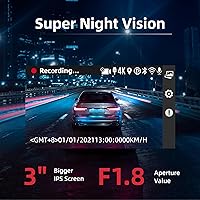
The 3-inch IPS screen is bright enough to be readable in direct sunlight for quick menu navigation and live view checks, which is better than the smaller screens on many competing units in this category. On-device playback works without needing a phone connection.
The touchscreen responsiveness has been described as sluggish by a handful of users, particularly when navigating deeper menu layers. The screen size, while adequate, makes reviewing detailed footage on the unit itself a secondary experience compared to pulling clips to a phone.
Customer Support
77%
23%
Early buyers report that Miofive support responds to warranty inquiries within a reasonable timeframe and has honored replacement requests for verified hardware defects. The 18-month coverage period is longer than the typical 12-month window from competing brands in this tier.
As a newer brand still building its support infrastructure, the depth of troubleshooting resources — online guides, community forums, and video tutorials — is noticeably thinner than what you would find around more established dash cam manufacturers. Complex technical issues may require more back-and-forth than buyers expect.
Companion App Features
71%
29%
The ability to view GPS-tagged route playback alongside synced video footage in the same app interface is genuinely useful and works reliably when the connection is stable. Clip sharing directly from the app to messaging or email platforms adds practical convenience for documentation scenarios.
The app lacks some quality-of-life features that competitors offer, such as automated cloud backup or in-app video trimming before sharing. Over-the-air firmware update support is advertised, but the update process through the app has been described as unintuitive by some users.
Package Contents
85%
Including a 64GB SD card, car charger, rear camera cable, crowbar tool for trim removal, and both 3M adhesive and static sticker mounting options in a single box means most buyers can complete a basic install without a hardware store run. The completeness of the accessory bundle compares favorably with competitors that charge extra for mounting hardware.
The crowbar trim tool included is basic and may not be rigid enough for tighter vehicle trim panels without risking surface marks. The user manual is functional but thin on detail for the rear camera installation steps, which is where most buyers need the most guidance.

Suitable for:

The Miofive S1 Ultra 4K+4K Dual Dash Cam is a strong match for drivers who want genuine front-and-rear 4K coverage without paying flagship prices for it. Rideshare drivers and high-mileage commuters will appreciate having GPS-tagged, timestamped footage ready to share with an insurance adjuster at a moment's notice — no fumbling for cables, just pull the clip through the app. If you park outdoors regularly in a climate that swings between scorching summers and freezing winters, the supercapacitor design is a meaningful advantage over battery-powered alternatives that degrade or fail in temperature extremes. Tech-comfortable drivers who will actively use the companion app for remote playback and clip management will get considerably more value from this system than those who just want to set it and forget it. It also suits anyone building an evidence-ready setup on a practical budget, where both angle coverage and route documentation matter.

Not suitable for:

The Miofive S1 Ultra 4K+4K Dual Dash Cam is not the right choice if your primary goal is 24-hour parking surveillance — that feature requires a separately purchased hardwire kit that does not come in the box, and overlooking that detail will lead to frustration. Buyers who want a truly hands-off installation experience may find the rear camera cable routing and mount setup more involved than expected. If you are comparing this against established brands with years of firmware polish and a deep community of user support resources, Miofive is still building that ecosystem, and the companion app reflects that early-stage reality with occasional connectivity hiccups. Night vision here is improved by HDR, but drivers who regularly travel unlit rural roads and need top-tier low-light sensor performance should consider stepping up to a camera with a larger sensor. Finally, if physical compactness matters — whether for a small windshield area or a preference for discreet mounting — the 7-inch footprint of this system may feel bulkier than expected.

Specifications

  • Front Resolution: The front camera records at 4K (3840x2160) at 30 frames per second for sharp, detailed footage of the road ahead.
  • Rear Resolution: The rear camera also captures 4K (3840x2160) footage, running at 25 frames per second for full-coverage rear recording.
  • Front Field of View: A 140-degree wide-angle lens on the front camera captures multiple lanes and roadside details simultaneously.
  • Rear Field of View: The rear lens covers 112 degrees, providing solid coverage of following vehicles and rear-end incidents without excessive image distortion.
  • Display: A built-in 3-inch IPS screen allows direct on-device playback and menu navigation without requiring a smartphone connection.
  • Wi-Fi: Dual-band Wi-Fi supporting both 2.4GHz and 5GHz networks enables fast wireless clip transfers to the companion app.
  • Bluetooth: Bluetooth 4.2 is included for device pairing and app connectivity alongside the Wi-Fi connection.
  • Included Storage: A 64GB microSD card is included in the box, providing immediate recording capacity without a separate purchase.
  • Max Storage: The system supports microSD cards up to 512GB for drivers who need extended recording capacity before loop overwrite.
  • Power Design: A supercapacitor replaces the conventional lithium battery, offering improved durability across a wide range of operating temperatures.
  • GPS: Built-in GPS continuously logs vehicle speed, location, and route, embedding this data directly into recorded footage files.
  • Parking Mode: Time-lapse parking monitoring is supported but requires the separately sold hardwire kit (Miofive ASIN B0CRHJQ3WQ), which is not included.
  • App Compatibility: The free Miofive app is available for both iOS and Android devices, enabling remote clip viewing, download, and sharing.
  • Mounting Type: The camera attaches to the windshield via a 3M adhesive mount and static sticker set, both of which are included in the package.
  • Dimensions: The unit measures 7 x 6 x 3 inches and weighs 1.5 pounds, making it a moderately sized system for a dual-camera setup.
  • HDR: High Dynamic Range processing is applied to footage to improve exposure balance in high-contrast lighting conditions like direct sunlight or tunnel exits.
  • G-Sensor: The built-in G-sensor detects sudden impacts or sharp braking and automatically locks the current clip to prevent it from being overwritten by loop recording.
  • Loop Recording: When the SD card reaches capacity, the oldest unlocked footage is automatically overwritten so recording continues without manual intervention.
  • Warranty: Miofive covers this unit with an 18-month limited warranty and offers lifetime technical support through their customer service team.
  • In the Box: Package includes the front dash cam unit, rear camera, 64GB microSD card, car charger, data cable, charging cable, rear cam cable, crowbar tool, static stickers, 3M adhesive mounts, and a user manual.

Related Reviews
Vantrue S1 Pro Max 4K Dash Cam
77%
91%
Night Vision Quality
88%
Daytime Video Clarity
72%
Parking Mode
78%
AI Safety Alerts
63%
App & Connectivity
More
Vantrue S1 Pro Max 4K+4K
79%
93%
Video Quality
91%
Night Vision Performance
74%
AI Safety Alerts (ADAS & BSD)
82%
Parking Mode
88%
Build Quality & Durability
More
Thinkware U3000 4K Dual Dash Cam
86%
93%
Video Quality (4K Performance)
90%
Night Vision Performance
88%
Ease of Installation
85%
Radar Parking Mode
70%
App Connectivity & Control
More
Kolvt L3 4K Dual Dash Cam
77%
86%
Front Video Quality
77%
Rear Video Quality
71%
Night Vision
74%
App and Wi-Fi
76%
Build Quality
More
Kingslim D6 4K Dual Dash Cam
84%
91%
4K Video Quality
88%
Night Vision Performance
84%
Ease of Setup
89%
WiFi & GPS Functionality
82%
Build Quality & Durability
More
YEECORE D22 Front and Rear Dash Cam
78%
91%
Front Video Quality
67%
Rear Camera Quality
78%
Night Vision
88%
GPS Accuracy
63%
Wi-Fi & App Performance
More
SUVCON M02 4K/1080P Dual Dash Cam
77%
88%
Video Clarity (Daytime)
71%
Night & Low-Light Performance
74%
Rear Camera Quality
66%
App Experience (Viidure)
91%
Ease of Installation
More
COOAU D20S Dual Dash Cam
76%
84%
Front Camera Quality
81%
Interior Night Vision
77%
App Experience
79%
GPS Accuracy
62%
Parking Mode
More
70mai 4K Omni X800 Dual Dash Cam
80%
91%
Night Vision Quality
93%
Video Clarity (Daytime)
88%
Rotating Camera Design
79%
4G LTE Remote Monitoring
67%
Parking Mode Usability
More
ROVE R2-4K Dual Dash Cam
80%
91%
Video Clarity (Front)
88%
Night Vision Performance
74%
Rear Camera Quality
78%
Wi-Fi & App Experience
86%
GPS Accuracy & Logging
More

FAQ

Both cameras genuinely record at 4K (3840x2160). The front runs at 30fps and the rear at 25fps — a minor difference that is essentially invisible in normal playback. This is one of the S1 Ultra's real selling points compared to competitors that offer 4K only on the front and drop the rear to 1080p.

The included 64GB card is a reasonable starting point for most drivers. At 4K on both channels, you will get roughly one to two hours of footage before loop recording kicks in and starts overwriting older clips. If you do longer trips or want more buffer before overwrite, upgrading to a higher-capacity card — the system supports up to 512GB — is worth considering.

No, and this is probably the most important thing to know before buying. Parking monitoring requires a hardwire kit that connects the camera directly to your vehicle's fuse box, and that kit is sold separately by Miofive. If parking surveillance is a primary reason you are buying this camera, factor in the added cost and installation complexity of the wiring kit before committing.

This is actually where the supercapacitor design stands out. Unlike cameras that use lithium batteries — which can swell, degrade, or even fail when left in a parked car in direct sun — the supercapacitor in this unit is built to handle a wide temperature range. Drivers in the American Southwest, Texas, or similarly hot climates have specifically noted this as a reason they chose it over battery-based alternatives.

The HDR processing helps considerably in mixed-light situations — think streetlit highways, parking lots, or urban intersections. On genuinely unlit rural roads, the footage is usable but not exceptional. If low-light performance on pitch-dark stretches is your top priority, cameras with physically larger sensors in a higher price bracket will outperform the Miofive S1 Ultra 4K+4K Dual Dash Cam in that specific scenario.

The Miofive app works on both platforms and handles the core tasks — connecting to the camera, browsing clips, and downloading footage — without too much friction. That said, some users have reported occasional Wi-Fi disconnections that require reopening the app or toggling the connection. It is a functional app, but it does not feel as polished as the software from brands that have been in this space longer.

The GPS data is embedded in the recorded video files and can be reviewed through the Miofive app, which displays a map overlay with your speed and route alongside the footage. This is particularly useful if you ever need to present evidence after an incident, since speed and location are logged directly alongside the video timestamp.

The front camera mounting itself is fairly simple — attach the windshield mount, plug into the car charger, and you are recording. The trickier part is routing the rear camera cable neatly through your vehicle's interior to avoid dangling wires. It is manageable as a DIY job, but budget an hour or so for a clean install, especially if you are particular about cable management.

The G-sensor is designed for exactly this scenario. When it detects a sudden jolt — a collision, hard braking, or sharp swerve — it automatically locks the current video clip so loop recording cannot overwrite it. The supercapacitor also provides a brief power buffer to ensure the file is written properly before the camera shuts down, which is an advantage over battery-based systems in sudden power-loss situations.

Miofive covers manufacturing defects and hardware failures for 18 months from purchase, and they advertise lifetime access to their technical support team for setup or software questions. Early buyer feedback suggests their support team is generally responsive to warranty claims, though as a relatively newer brand, the depth of their support infrastructure is still developing compared to more established names in the dash cam market.