Overview

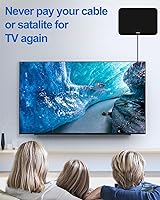
The Vansky VS-TX01 Indoor TV Antenna is one of those practical, no-fuss purchases that makes real sense if you're tired of paying for channels you barely watch. Vansky has been a fixture in the indoor antenna space since 2016, and with over 18,000 ratings on Amazon, this flat HDTV antenna has earned its standing. What sets it apart structurally is the detachable signal amplifier — a thoughtful choice that gives you options rather than locking you into one mode. That said, be clear-eyed going in: how well any indoor antenna performs depends almost entirely on where you live and how close you are to broadcast towers.

Features & Benefits

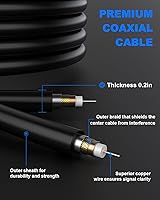
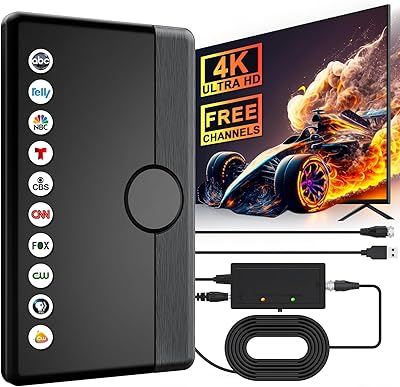
The most practical design decision here is the detachable amplifier. In strong-signal areas, the amplifier can actually cause overload and drop channels — being able to pull it off and run the antenna passively is a real advantage most flat antennas don't offer. The 16.5-foot coaxial cable is longer than average, which matters when your TV isn't anywhere near a window. The antenna itself sits at just 0.8 inches thick, so it tucks neatly behind a screen or lies flat against a wall without drawing attention. It handles 1080p, 1080i, and 720p via the ATSC standard, covering every major broadcast format, and includes built-in lightning protection — a small but worthwhile detail.

Best For

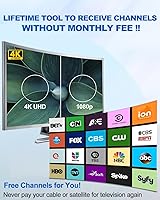
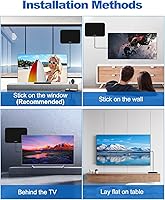
This indoor antenna makes the most sense for cord-cutters in suburban or semi-urban areas who live within a reasonable distance of broadcast towers. Renters are a natural fit too — there's no installation, no drilling, nothing that requires a landlord's approval. If you already subscribe to a streaming service and just want to pull in local news, live sports, or network TV without adding another monthly bill, this flat HDTV antenna does that job cleanly. It also works well as a secondary-room solution — guest bedrooms, home offices, or anywhere you want a functional TV without running cable. Plug it in, run a channel scan, and you're done.

User Feedback

Across thousands of reviews, a clear pattern emerges. Buyers in urban and suburban areas frequently report picking up 20 or more channels without any fuss, and the long coaxial cable gets consistent praise for placement flexibility. The 250-mile range figure, though, draws skepticism — most honest reviewers put real-world performance closer to 30 to 60 miles under typical conditions. The amplifier also divides opinion: people near strong towers often get better results after removing it, which is worth knowing upfront. Coaxial connector durability is a minor but recurring gripe. For anyone in a rural or fringe area, expectations should stay modest — a handful of buyers in those situations report little improvement regardless of where they position the Vansky antenna.

Pros

  • Free access to major networks like ABC, CBS, NBC, and Fox with no monthly fee whatsoever.
  • The detachable amplifier gives you a genuine choice between boosted and passive mode — uncommon at this price point.
  • A 16.5-foot coaxial cable means you are not forced to place the antenna right next to your TV or window.
  • Flat, low-profile build sits discreetly behind a screen or lies flat on a wall without looking out of place.
  • Supports every major HD broadcast format including 1080p and 720p via the ATSC standard.
  • Setup is about as simple as it gets — plug in, scan for channels, done.
  • Built-in lightning protection adds a small but meaningful layer of safety for an indoor device.
  • Over 18,000 ratings since 2016 gives you a deep, honest pool of real-world performance data to draw from.
  • Urban and suburban buyers frequently report pulling in 20 or more clear channels without any signal adjustments.

Cons

  • The 250-mile range claim is wildly optimistic — most buyers realistically get solid results within 30 to 60 miles of towers.
  • The amplifier can cause signal overload and actually drop channels if you are already in a strong-signal zone.
  • Rural buyers have consistently reported weak or unusable reception regardless of placement efforts.
  • The coaxial connector has drawn recurring complaints about durability after repeated plugging and unplugging.
  • Channel availability is entirely dependent on your local broadcast landscape — what works for one city may not work for another.
  • No wireless or smart-home integration; this is a strictly passive, plug-in-only device.
  • The flat design, while tidy, limits positioning options compared to adjustable or directional antenna models.
  • Interference from nearby electronics can degrade signal quality, and troubleshooting that is not always straightforward.

Ratings

The scores below were generated by AI after analyzing thousands of verified buyer reviews for the Vansky VS-TX01 Indoor TV Antenna worldwide, with spam, bot-generated, and incentivized feedback actively filtered out. Both the genuine strengths and the recurring pain points are reflected transparently — no inflated averages, no glossing over the complaints that real buyers keep raising. If something consistently frustrated users, you will see it in the numbers.

Signal Reception
73%
27%
In urban and suburban areas within 40 to 50 miles of broadcast towers, most buyers report picking up major networks cleanly without constant rescanning. Many users are genuinely surprised by how many channels come through without any subscription or monthly fee attached.
Reception drops off noticeably for anyone living more than 50 to 60 miles from towers, and rural buyers frequently report disappointing results regardless of how they position the antenna. Signal consistency can also vary by floor level, building materials, and nearby interference sources.
Amplifier Performance
67%
33%
The detachable amplifier adds real flexibility that most flat antennas at this price point do not offer. Buyers in weaker signal zones report measurable improvements in channel count after plugging it in, particularly for stations that were showing up as partial or unreliable without it.
In strong-signal areas — typically within 20 to 25 miles of towers — the amplifier frequently causes overloading, which paradoxically reduces channel count. Multiple reviewers only solved their reception problems after removing the amplifier entirely, which is a counterintuitive troubleshooting step that many buyers do not realize they need to try.
Ease of Setup
91%
Plug-and-play setup is genuinely one of this indoor antenna's clearest advantages. Most buyers report being up and scanning for channels within five to ten minutes, with no tools, drilling, or technical knowledge required — a genuine relief for renters or anyone setting up a secondary bedroom TV.
The channel scan process itself is TV-dependent, and some users find their set's menu system confusing rather than the antenna itself. A small number of buyers also struggled to understand when and why to use or remove the amplifier, which is not explained clearly in the included documentation.
Cable Length & Flexibility
88%
The 16.5-foot coaxial cable is a consistent bright spot in buyer feedback. It gives real placement flexibility — enough to reach a window on the far side of a room or run along a baseboard without the antenna being tethered awkwardly close to the TV.
The cable, while long, is not particularly robust. A subset of buyers note that the coaxial connector where it meets the antenna feels less solid than expected, and repeated repositioning or accidental yanking can loosen the connection over time. Extensions are available but add friction to what should be a simple setup.
Build Quality
61%
39%
The flat panel itself is lightweight and unobtrusive, and it holds up reasonably well in standard indoor use where it is positioned once and left in place. The included adhesive strips are functional for window or wall mounting during initial setup.
The overall construction feels appropriate for the price but not impressive — the plastic components and connector quality draw the most criticism in one-star reviews. Long-term durability is a concern, particularly around the coaxial connector, which several buyers report degrading after months of normal use.
Value for Money
84%
For cord-cutters who can pull in 15 to 30 channels of free over-the-air TV, this flat HDTV antenna pays for itself almost immediately. The combination of a long cable and detachable amplifier at this price point is genuinely hard to match among competing products in the same tier.
For buyers in fringe or rural areas who end up with three to five channels at best, the value calculation looks very different. The occasional need to buy a coaxial extension or splitter separately also adds to the real cost for some setups.
Channel Count
69%
31%
Buyers in well-covered metro areas frequently report channel counts well above 30, including subchannels for public broadcasting, Spanish-language networks, and local independents they did not know existed. The variety often exceeds what people expect from free over-the-air television.
The claimed 120-channel figure is aspirational and based on ideal conditions that do not exist in most homes. Actual channel counts vary dramatically by location, and buyers in mid-sized or rural markets sometimes receive fewer than 10 usable stations, which understandably leads to disappointment.
Picture Quality
86%
When signals come through cleanly, the picture quality is excellent — full 1080p and 1080i broadcasts look noticeably sharper than equivalent cable or satellite feeds compressed over those networks. Live sports and news in particular benefit from the uncompressed over-the-air signal.
Signal quality is all-or-nothing with digital broadcasts: channels either come in cleanly or they pixelate and drop out entirely, with no middle ground. Buyers on the edge of their reception range often experience intermittent freezing rather than a stable but softer picture.
Design & Aesthetics
79%
21%
The slim black panel is discreet enough that most buyers barely notice it once it is placed. It sits flat against a wall, tucks behind a monitor, or lies on a shelf without drawing attention the way older bulkier antennas did.
The adhesive strips included for mounting are functional but not particularly strong over time, and some buyers report the antenna sliding or falling from windows after a few weeks. There is no dedicated mounting bracket, which limits clean permanent installation options.
Durability
58%
42%
For buyers who place the antenna once and leave it undisturbed, the unit tends to hold up fine over months of continuous use. The panel material itself shows no obvious signs of wear under normal indoor conditions.
The weak link is consistently the coaxial connector and cable junction, which several long-term buyers report failing after repeated handling. The overall construction does not inspire confidence for anything beyond careful, stationary use — this is not an antenna you want to pack and travel with regularly.
Range Accuracy
41%
59%
In rare flat-terrain environments with minimal obstructions, some buyers do report pulling in distant stations beyond what cheaper antennas manage. The amplifier does extend the effective range compared to running the antenna passively in moderate-signal conditions.
The advertised 250-mile range is one of the most criticized aspects across the entire review pool. Real-world performance tops out well under 100 miles for nearly all buyers, and most reliable reception happens within 30 to 60 miles of towers. Overstating range this dramatically erodes trust significantly.
Documentation & Support
54%
46%
The basic setup instructions are clear enough for a standard installation, and Vansky does include a note directing buyers to dtv.gov to check local channel availability — a genuinely useful suggestion that helps set realistic expectations before setup.
Troubleshooting guidance is minimal. The amplifier-versus-passive decision — arguably the most important variable for new users — is barely addressed, leaving many buyers to figure out through trial and error what experienced users know instinctively. Vansky's customer support responsiveness also draws mixed feedback.
Compatibility
83%
Works with any ATSC-compatible TV, which covers virtually every HDTV sold in North America over the past 15-plus years. No adapters or converters are needed for standard modern setups, and the coaxial connection is universally familiar.
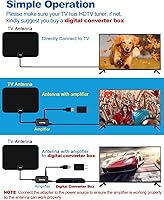
Older analog televisions require a separate digital converter box, which is an added cost and complication not mentioned prominently in the product listing. Buyers who attempt to use this indoor antenna with legacy equipment without a converter will get no signal at all.

Suitable for:

The Vansky VS-TX01 Indoor TV Antenna is a smart, practical pick for anyone living in a suburban or urban area who wants to stop paying for basic broadcast channels they can get for free over the air. Renters are probably the most natural fit — there is nothing to mount, no holes to drill, and setup takes about five minutes. If you already use a streaming service for on-demand content but want live local news, network sports, or primetime shows without tacking on another subscription, this flat HDTV antenna fills that gap cleanly and affordably. It also works well as a secondary-room solution: think a bedroom TV, a home office screen, or a guest room where running a full cable line would be overkill. Anyone who values plug-and-play simplicity over technical tinkering will feel right at home with it.

Not suitable for:

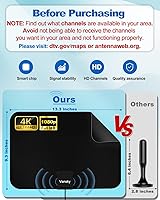
The Vansky VS-TX01 Indoor TV Antenna is simply not the right tool for households located in rural or fringe reception areas far from broadcast towers — no amount of repositioning or cable-extending will reliably overcome weak signal terrain. The advertised 250-mile range is a marketing ceiling, not a realistic expectation; buyers more than 50 to 60 miles from towers should look at outdoor or attic-mounted antennas instead. If you are hoping to replace a full cable package with dozens of specialty or premium channels, this indoor antenna will disappoint — it only captures what is freely broadcast in your area. People who need a truly permanent, heavy-duty setup, or who live in buildings with significant signal-blocking materials like concrete or metal, may find consistent performance hard to achieve. Before purchasing any indoor antenna, it is worth spending two minutes on dtv.gov to see exactly what channels broadcast in your zip code — that one step can save a lot of frustration.

Specifications

  • Brand: Manufactured by Vansky, a brand focused on consumer antenna and surveillance accessories since the mid-2010s.
  • Model Number: The model identifier for this antenna is VS-TX01.
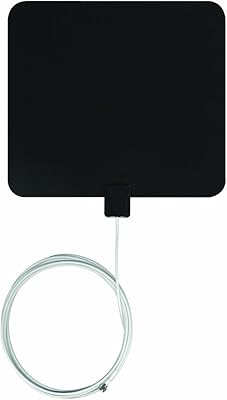
  • Dimensions: The antenna panel measures 13″ × 13″ × 0.8″, keeping it flat and unobtrusive in most placements.
  • Weight: The unit weighs 14.9 ounces, light enough to be positioned on a wall, window, or shelf without any mounting hardware.
  • Coax Cable Length: A 16.5-foot coaxial cable is included, providing meaningful placement flexibility between the antenna and the TV.
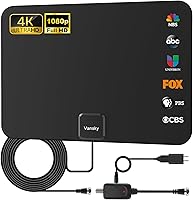
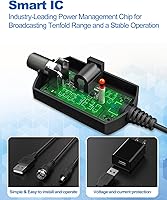
  • Signal Amplifier: A detachable powered signal amplifier is included, allowing users to switch between amplified and passive reception modes as needed.
  • Supported Formats: This antenna supports ATSC broadcast standards and receives signals in 720p, 1080i, and 1080p HD resolutions.
  • Advertised Range: Vansky rates the maximum reception range at up to 250 miles, though real-world performance typically falls within 30–60 miles under normal conditions.
  • Impedance: The antenna operates at 140 Ohm impedance, which is the standard specification for this class of indoor flat antenna.
  • Power Source: The signal amplifier is powered via a corded electric connection, requiring a nearby power outlet when amplification is in use.
  • Channel Count: Vansky claims reception of up to 120 channels, though actual channel availability depends entirely on local broadcast infrastructure.
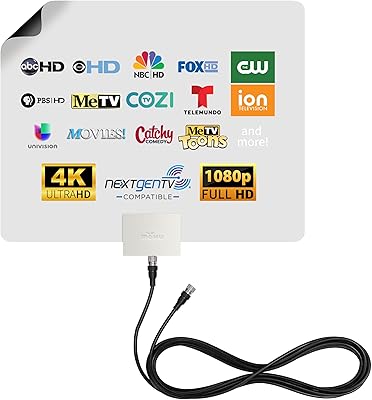
  • Network Coverage: When signals are available in your area, this indoor antenna can receive broadcasts from ABC, CBS, NBC, Fox, PBS, Univision, and other major networks.
  • Lightning Protection: The antenna includes built-in lightning protection and grounding, providing a basic layer of safety for indoor use during electrical storms.
  • Form Factor: The flat, papery panel design allows the antenna to be placed on a flat surface, taped to a window, or positioned behind a TV without visible bulk.
  • Color: Available in black, which blends with most TV setups and home entertainment furniture.
  • Compatibility: Works with any TV that has a built-in ATSC tuner, which includes virtually all HDTVs sold in North America since 2007.
  • Market Presence: First listed on Amazon in May 2016, giving this product a long track record with over 18,000 verified ratings.
  • Average Rating: Holds a 4.0 out of 5 star average rating based on more than 18,354 customer reviews as of the latest available data.
  • Best Sellers Rank: Ranked #19 in the TV Antennas category on Amazon, reflecting sustained popularity over a multi-year period.
  • Batteries: Two AAA batteries are listed as required, likely for the remote or amplifier control component included in some package variants.

Related Reviews
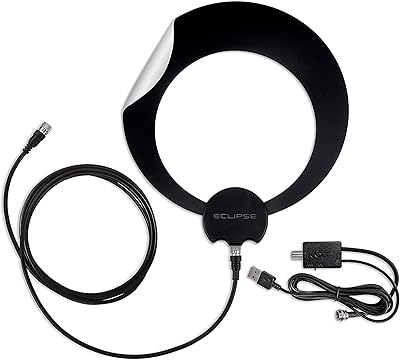
Antennas Direct ClearStream Eclipse Indoor TV Antenna
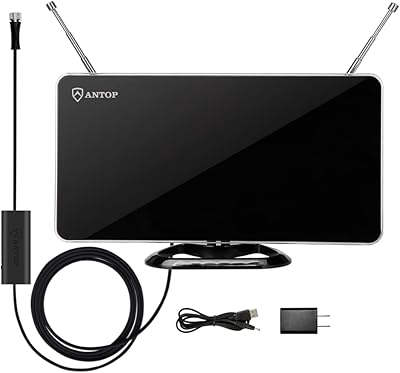
77%
74%
Signal Reception
67%
Amplifier Performance
93%
Design & Profile
91%
Ease of Setup
62%
Cable Length
More
ANTOP AT-211B Indoor TV Antenna
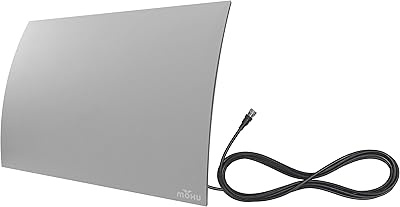
71%
72%
Signal Reception
67%
Amplifier Performance
91%
Ease of Setup
63%
Build Quality
58%
VHF Channel Support
More
Mohu Gateway Indoor TV Antenna
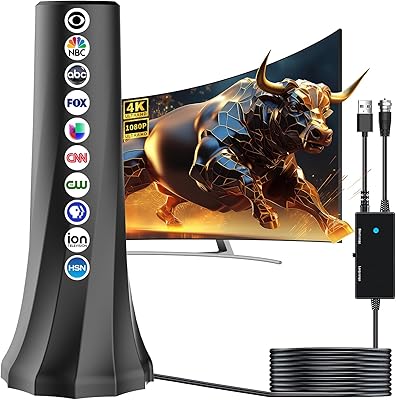
86%
87%
Signal Reception
92%
Setup and Installation
89%
Design and Aesthetics
90%
Value for Money
84%
Durability and Build Quality
More
iGENJUN ANT-CS8218 Amplified Indoor Outdoor TV Antenna
72%
73%
Signal Reception Quality
67%
Amplifier Performance
88%
Ease of Installation
48%
Range Accuracy vs. Claimed Specs
71%
Build Quality & Materials
More
YiziAifsion Indoor TV Antenna
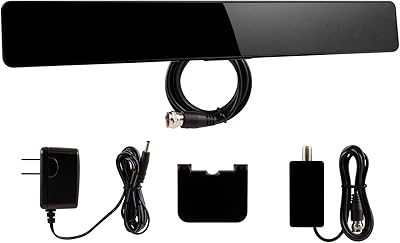
70%
67%
Signal Reception
91%
Ease of Setup
88%
Cable Length & Flexibility
41%
Channel Count Accuracy
53%
Build Quality
More
Winegard FlatWave FL-5000 Indoor TV Antenna
79%
78%
Reception Quality
93%
Ease of Setup
72%
Signal Stability
84%
Build Quality
88%
Design & Aesthetics
More
UltraPro 47331 Amplified Indoor TV Antenna
77%
74%
Signal Reception Quality
91%
Ease of Setup
88%
Design & Aesthetics
67%
Amplifier Performance
71%
Channel Count
More
GE Pro Bar Indoor TV Antenna 33683
83%
85%
Reception Performance
92%
Ease of Installation
88%
Value for Money
90%
Design & Aesthetics
87%
Mounting Options
More
Mohu Leaf Plus Amplified Indoor TV Antenna
75%
72%
Signal Reception
54%
Range Accuracy
68%
Amplifier Performance
89%
Design & Aesthetics
91%
Ease of Setup
More
Lyrwihn ZDK-Antenna-FY Indoor TV Antenna
73%
91%
Ease of Setup
67%
Signal Reception Quality
61%
Signal Booster Effectiveness
88%
Cable Length & Flexibility
82%
Magnetic Base & Mounting
More

FAQ

The most reliable way to check is to visit dtv.gov and enter your address — it will show you exactly which broadcast towers are nearby, what channels they carry, and what signal strength you can expect. If most towers are within 40 to 50 miles with no major obstructions, this indoor antenna has a solid chance of working well for you. Rural areas with towers beyond 60 miles are a tougher call.

It depends on where you live. If you are close to broadcast towers — say, within 20 to 30 miles in an urban or dense suburban area — try it without the amplifier first. Ironically, the booster can overload the tuner in strong-signal zones and cause channels to drop. If you are farther out and struggling to pick up channels, then plug the amplifier in and try again.

As long as your TV has a built-in ATSC tuner — which every HDTV sold in the U.S. since around 2007 does — you are good to go. If you have an older analog set, you would need a separate digital converter box, but that is a TV limitation, not an antenna one.

Honestly, no — not for most people. That figure represents an absolute best-case ceiling under ideal open-terrain conditions, and it rarely translates to everyday home use. Most buyers in typical suburban settings report reliable performance within 30 to 60 miles of broadcast towers. Think of the 250-mile number as a spec ceiling, not a promise.

Higher is almost always better — try positioning it near a window on a wall facing your nearest broadcast towers. Avoid placing it behind thick walls, inside cabinets, or near large metal objects, as those can significantly weaken the incoming signal. The 16.5-foot cable gives you enough room to experiment with a few different spots before committing.

Not directly out of the box. To split the signal to two or more TVs, you would need a coaxial splitter, and keep in mind that splitting the signal reduces its strength to each TV. If you go that route in a weak-signal area, you may need the amplifier to compensate for the loss.

It can, yes. Heavy rain, thick cloud cover, and atmospheric interference can cause temporary signal dips, especially if you are already near the edge of your reliable reception range. The antenna does have built-in lightning protection for safety indoors, but it does not eliminate weather-related signal fluctuation entirely.

Start by repositioning the flat HDTV antenna — even a foot or two in a different direction can make a noticeable difference. If you have the amplifier attached, try removing it and scanning again. After repositioning, always run a fresh channel scan rather than relying on a cached one. Also confirm on dtv.gov what channels are actually available in your zip code, since some areas simply have fewer broadcast signals to work with.

Setup is genuinely simple. You plug the coaxial cable into your TV, position the antenna near a window, power the amplifier if you choose to use it, and run a channel scan from your TV menu. The whole process typically takes under ten minutes and requires no tools, no drilling, and no technical knowledge.

A fair number of buyers have flagged the connector as a weak point over time, particularly if it gets bent or repeatedly disconnected and reconnected. The antenna itself tends to hold up fine, but treating the cable connection gently and avoiding stress on the connector — especially if the cable runs across the floor — will extend its lifespan noticeably.

Where to Buy