Overview

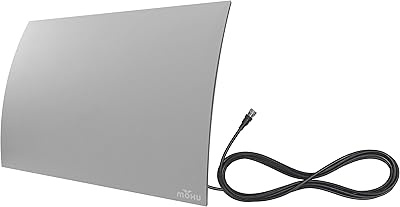
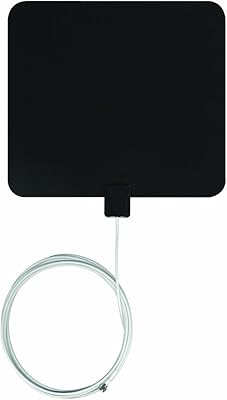
The Mohu Leaf Plus Amplified Indoor TV Antenna is one of the more credible options in the mid-range cord-cutting space, offering free over-the-air HD broadcasts from major networks without a cable or satellite bill. What sets it apart from the clunkier plastic antennas cluttering store shelves is its paper-thin flat design — barely a millimeter thick — that can hang on a wall or sit in a window without drawing attention. It claims a 60-mile reception range backed by onboard amplification, which sounds impressive, but real-world performance depends heavily on your location. Think of it as a strong choice for many households, not a guaranteed fix for every setup.

Features & Benefits

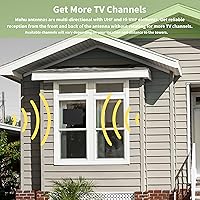
The standout engineering choice here is Mohu's FirstStage amplification, which places the amplifier at the antenna element itself rather than somewhere along the cable. That positioning matters: amplifying the signal before it travels through the coax reduces the noise pickup that typical inline amps can introduce. The antenna covers both UHF and Hi-VHF bands, so you're not sacrificing any part of the broadcast spectrum. The 16-foot detachable cable gives you enough reach to experiment with placement — higher on the wall or closer to a window often makes a meaningful difference. It's 4K-ready, reversible, and paintable, weighing just 9 oz., which means quick tool-free setup with the included mounting hardware.

Best For

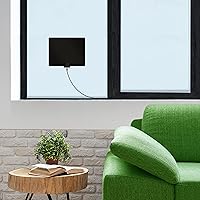
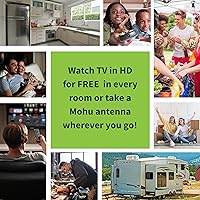
This amplified flat antenna is best suited for cord-cutters living in suburban or urban areas within 40–50 miles of broadcast towers. In a city apartment with a clear window line, it will likely pull in every major network — ABC, CBS, NBC, Fox, PBS — without much fuss. Renters and dorm residents especially appreciate that no permanent installation is required; push pins and loop tabs hold it in place without damaging walls. It also packs down small enough for RV trips or travel. And if an outdoor antenna isn't an option because of building rules or tight living quarters, this indoor antenna is a practical, low-profile alternative.

User Feedback

With a 3.9-star rating across nearly a thousand reviews, the Mohu Leaf Plus earns its reputation as a reliable performer — within certain conditions. People in suburbs and cities consistently praise how easy it is to get up and running, and many report locking in a dozen or more channels immediately. The gripes tend to cluster around two issues: the 60-mile range claim reads as optimistic to buyers more than 40 miles out or in hilly, densely-built areas; and the amplifier can actually work against you in strong-signal zones, occasionally overloading the tuner and causing pixelation. Placement sensitivity comes up often — moving the antenna a few inches can make or break reception, which takes some patience to dial in.

Pros

  • Paper-thin design blends into walls or windows far better than bulky plastic competitors.
  • The Mohu Leaf Plus locks in major network channels in suburban areas with minimal setup effort.
  • FirstStage amplification reduces cable-induced signal noise, improving picture stability in mid-range reception zones.
  • The 16-foot detachable cable gives real flexibility to find the sweet spot without rearranging your furniture.
  • Reversible black and white faces mean it can match almost any room without looking out of place.
  • Completely free broadcast TV once purchased — no subscription, no monthly fees, no app required.
  • Lightweight and packable enough to take along in an RV or to a second home.
  • Mounting hardware is included, and setup genuinely takes under 15 minutes for most people.
  • 4K-ready passthrough means the hardware will not become a bottleneck as televisions improve.
  • A solid option for apartment dwellers or renters where building rules make outdoor antennas impossible.

Cons

  • The advertised 60-mile range is optimistic — real-world reliability drops noticeably beyond 40 to 45 miles.
  • Reception quality is highly sensitive to placement; finding the right spot can take frustrating trial and error.
  • The built-in amplifier can cause pixelation or tuner overload for viewers already in a strong-signal area.
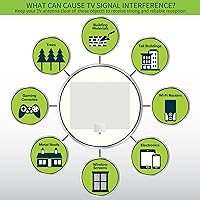
  • Thick walls, dense urban obstructions, and multi-story buildings can severely limit channel count indoors.
  • Occasional signal drops during bad weather are reported by users in already-marginal reception zones.
  • The detachable coax connection point can loosen over time with repeated repositioning of the antenna.
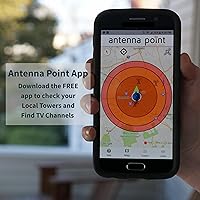
  • No signal strength indicator or app support makes initial placement a purely manual guessing process.
  • Rural buyers with high expectations based on the range claim are among the most consistently disappointed reviewers.

Ratings

The scores below reflect an AI-driven analysis of verified global buyer reviews for the Mohu Leaf Plus Amplified Indoor TV Antenna, with spam, bot activity, and incentivized feedback actively filtered out to ensure accuracy. Each category is scored based on real usage patterns and recurring sentiment across hundreds of independent reviews — both the strengths and the genuine frustrations are reflected here without sugarcoating.

Signal Reception
72%
28%
In well-positioned suburban and urban homes, this amplified flat antenna consistently locks in major network channels with a stable, clear picture. Buyers within 35 miles of broadcast towers regularly report picking up 20 or more channels after a single placement adjustment.
Reception drops off noticeably beyond 40 miles, and buildings with thick concrete or brick walls frequently produce inconsistent results. A meaningful share of reviewers in rural or semi-rural areas found the signal unreliable even after extensive repositioning.
Range Accuracy
54%
46%
For buyers who happen to live in flat, open terrain with clear line of sight toward towers, the antenna can occasionally pull in signals at distances close to the advertised figure. In those specific circumstances, it outperforms several comparably priced competitors.
The 60-mile claim is the most consistently contested aspect across all user reviews — most real-world users find reliable performance cuts out well before that distance. Buyers who purchased based on the range specification and live beyond 45 miles are disproportionately represented among the disappointed reviewers.
Amplifier Performance
68%
32%
The FirstStage amplifier design — placing gain right at the antenna element — genuinely helps in mid-range setups where coaxial cable run length would otherwise eat into signal quality. Buyers who swapped out an older passive antenna and live in the 25-to-45 mile range frequently note a visible improvement in channel stability.
A recurring and underreported issue is amplifier overload: viewers within 15 to 20 miles of towers sometimes experience worse reception with the amplifier connected than without it, because the tuner gets overwhelmed. The lack of a simple gain adjustment dial means users have to physically bypass the amplifier to troubleshoot this.
Design & Aesthetics
89%
The paper-thin profile genuinely distinguishes this indoor antenna from the bulkier plastic alternatives on the market — it lies almost perfectly flat against a wall or window and barely registers visually. The reversible black and white faces mean it suits a wide range of interiors without modification.
While the paintable surface is a thoughtful touch, a few users noted that even light paint application can slightly affect signal if applied too thickly. The panel dimensions, though slim, are still large enough that placement choices in small rooms can feel limited.
Ease of Setup
91%
Among the most consistently praised aspects, setup genuinely requires no tools and no technical knowledge — connect the coax, plug in the USB power, mount it with the included tabs or pins, and run a channel scan. Most reviewers describe having live TV within ten minutes of opening the box.
The ease of initial setup sometimes creates a false sense that placement does not matter, and buyers who just tuck it near the TV without experimenting are more likely to report disappointing results. The instructions could do more to guide users toward optimal mounting positions.
Placement Sensitivity
61%
39%
The 16-foot detachable cable is a practical asset here, giving enough reach to test window versus wall positions and higher versus lower mounting heights without needing a cable extension. Buyers who take the time to experiment almost universally report better outcomes.
The antenna's sensitivity to exact positioning is a genuine usability pain point — shifting it just a few inches can cause significant channel count changes, which is disorienting for non-technical users. Several reviewers expressed frustration that a channel present one day disappeared the next without any apparent reason.
Build Quality
74%
26%
The antenna panel itself feels durable and well-constructed for its price tier, and the detachable coaxial connector is a more thoughtful design choice than the hardwired cables found on cheaper alternatives. It holds up well to repeated repositioning over time.
The coaxial connection point on some units becomes loose after multiple reconnections, leading to intermittent signal loss that can be mistaken for reception problems. The mounting tabs and push pins feel like an afterthought in terms of material quality.
Cable Quality
69%
31%
The 16-foot length is generous enough for most room layouts and avoids the awkward compromises that come with the shorter cables bundled with budget antennas. The detachable design means the cable can be replaced independently if it becomes damaged.
The cable itself is on the thinner and more flexible end of the spectrum, which some users find feels cheap compared to the antenna panel. A small number of reviewers reported signal issues that were ultimately traced back to a poorly shielded cable rather than the antenna itself.
Value for Money
77%
23%
For buyers who get solid reception, the value proposition is hard to argue with — a one-time purchase that eliminates a recurring cable bill and delivers free HD broadcasts indefinitely. In favorable reception conditions, it competes well against antennas that cost considerably more.
For buyers in weaker reception areas, the price feels harder to justify when a less expensive passive antenna might perform just as well or when no indoor antenna can realistically solve the underlying signal challenge. The gap between expectation and result accounts for much of the negative sentiment.
Multi-Channel Performance
76%
24%
In good reception zones, the dual UHF and Hi-VHF band coverage does a solid job of pulling in the full available channel lineup — major networks, PBS subchannels, and local independent stations all come through cleanly. Buyers in metro areas routinely report 25 or more channels.
Channel count varies significantly by location and can shift seasonally with foliage changes or atmospheric conditions. Buyers expecting a consistent full lineup sometimes find that a handful of channels are borderline — present but prone to dropping during marginal signal conditions.
Portability
83%
At 9 oz. with a slim, flat form factor, this indoor antenna packs easily into a bag or suitcase for RV travel, vacations, or use across multiple rooms. RV owners and frequent travelers represent a notably satisfied subset of the user base.
The included mounting accessories are somewhat single-use — the adhesive tabs lose stickiness after a few peel-and-remount cycles, which matters more for users who regularly move the antenna between locations. Replacement tabs are inexpensive but not included.
4K & HD Compatibility
88%
The hardware imposes no ceiling on picture quality — it passes a clean signal to the TV's tuner and lets the television handle decoding, which means it is fully future-compatible with 4K broadcast standards as they roll out. On a good signal, 1080p output looks genuinely sharp.
4K over-the-air broadcasts remain limited in availability, so the 4K-ready designation is more of a forward-looking spec than an immediate benefit for most buyers today. Signal instability — not hardware limitations — is what actually degrades picture quality in practice.
Instructions & Documentation
63%
37%
The basic setup steps are clear and accessible enough that most buyers get the antenna running without needing to look anything up. The included visual guide covers the essential connection and mounting steps without unnecessary complexity.
The documentation says almost nothing about optimizing placement, managing the amplifier bypass for strong-signal environments, or troubleshooting pixelation — all of which are the most common real-world problems buyers encounter. A more informative quick-start card would prevent a significant portion of the negative reviews.
Compatibility
86%
The 75 Ohm impedance is universal across modern televisions, and the standard coaxial connector fits every current TV with an RF input without adapters. It also works with standalone digital tuner boxes for older televisions that lack built-in ATSC tuners.
Buyers using the antenna with a signal splitter to feed multiple TVs sometimes see a meaningful performance drop, particularly on weaker channels. The antenna is not designed for outdoor or attic use, which limits options for buyers whose indoor reception is genuinely insufficient.

Suitable for:

The Mohu Leaf Plus Amplified Indoor TV Antenna is a strong fit for anyone in a suburban or urban household who wants to stop paying for cable and still catch major network programming — ABC, CBS, NBC, Fox, PBS — in full HD without any monthly fees. If you live within roughly 40 miles of your city's broadcast towers, have a window with decent line of sight, or can mount the antenna high on an interior wall, the odds are genuinely good that this will deliver reliable, stable reception right out of the box. Renters are a natural audience here: no drilling, no permanent hardware, and the slim profile means it disappears against a wall or sits quietly in a window frame. It also makes sense for dorm rooms, guest spaces, or workshop TVs where a no-fuss setup and low footprint matter more than covering every possible channel. Travelers and RV users will appreciate how easily it packs away and adapts to new locations.
Not suitable for:

The Mohu Leaf Plus Amplified Indoor TV Antenna is unlikely to satisfy viewers in rural areas, heavily wooded regions, or locations more than 45 to 50 miles from the nearest broadcast towers — regardless of what the box says about 60-mile range. Concrete buildings, thick exterior walls, and neighboring structures all degrade signal in ways no indoor antenna can fully overcome, and if you are already in a marginal reception area, the amplifier can actually make things worse by overloading your TV tuner with noise rather than clean signal. Households expecting to replace a full cable package with dozens of channels will also be disappointed — this indoor antenna is purely for over-the-air broadcasts, which means no cable news, no sports packages, and no premium channels. Anyone who has the option to mount an outdoor or attic antenna and genuinely needs extended range should pursue that route instead; the gap in real-world performance is significant.
Specifications

  • Model Number: This antenna is manufactured under model number MH-110029.
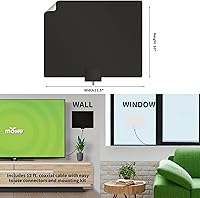
  • Dimensions: The antenna panel measures 11.5″ wide by 10″ tall and just 0.04″ deep, making it genuinely flat enough to slide behind a picture frame.
  • Weight: At 9 oz., the antenna is light enough to be held in place with push pins or loop tabs without stressing the wall surface.
  • Signal Bands: It receives both UHF and Hi-VHF frequencies, covering the full range of over-the-air broadcast channels available in the United States.
  • Amplifier Type: The FirstStage amplifier is positioned directly at the antenna element rather than inline along the cable, which minimizes noise introduction before the signal travels to the TV.
  • Amplifier Gain: The preamplifier provides 15dB of gain, intended to compensate for coaxial cable signal loss in mid-range reception environments.
  • Claimed Range: Mohu rates the maximum reception range at 60 miles from broadcast towers under ideal conditions.
  • Cable Length: The included detachable coaxial cable measures 16 feet, giving substantial flexibility to position the antenna away from the television set.
  • Impedance: The antenna operates at 75 Ohm impedance, which is the standard for all modern televisions and coaxial connections.
  • HD Compatibility: The antenna supports full 1080p HD reception and is rated 4K-ready, placing no hardware ceiling on picture quality.
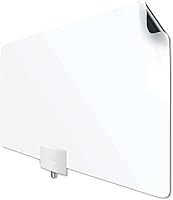
  • Design: The panel is reversible, with a white face on one side and black on the other, and its surface can be painted to match wall color.
  • Mounting Options: The package includes adhesive loop tabs, push pins, and hooks to support both wall and window mounting without tools or permanent hardware.
  • Installation Type: This is strictly an indoor antenna and is not designed or weatherproofed for outdoor or attic installation.
  • Power Source: The amplifier is USB-powered and draws power from a standard USB port on the television or a wall adapter, which is included in the box.
  • Channel Availability: Reception is limited to free over-the-air broadcast channels such as ABC, CBS, NBC, PBS, Fox, Univision, and local independent stations in your area.
  • First Available: This product has been available on the market since June 2018 and is confirmed as a currently active, non-discontinued product.

Related Reviews

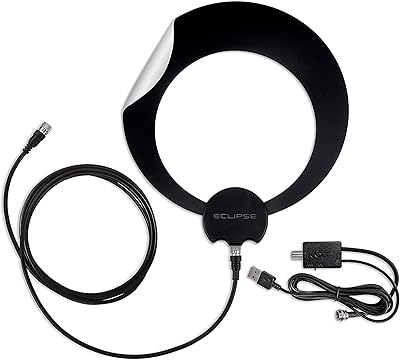
Antennas Direct ClearStream Eclipse Indoor TV Antenna
77%
74%
Signal Reception
67%
Amplifier Performance
93%
Design & Profile
91%
Ease of Setup
62%
Cable Length
More
Mohu Gateway Indoor TV Antenna
86%
87%
Signal Reception
92%
Setup and Installation
89%
Design and Aesthetics
90%
Value for Money
84%
Durability and Build Quality
More
UltraPro 47331 Amplified Indoor TV Antenna
77%
74%
Signal Reception Quality
91%
Ease of Setup
88%
Design & Aesthetics
67%
Amplifier Performance
71%
Channel Count
More
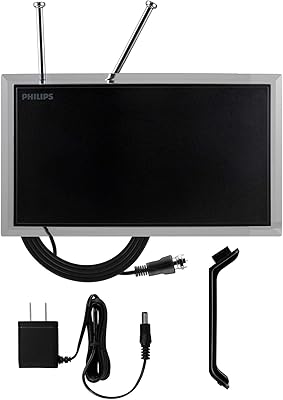
Philips Crystal Amplified Indoor TV Antenna SDV3237N/27
84%
85%
Signal Quality
91%
Setup Ease
82%
Range Performance
89%
Compatibility
84%
Design & Build
More
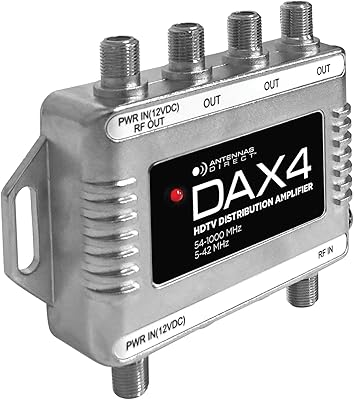
Antennas Direct DAX4 4-Output TV Antenna Distribution Amplifier
86%
87%
Signal Quality & Performance
91%
Ease of Installation
85%
Build Quality & Durability
92%
Value for Money
78%
Weather Resistance
More
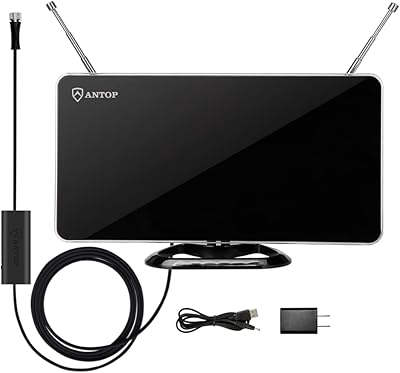
ANTOP AT-211B Indoor TV Antenna
71%
72%
Signal Reception
67%
Amplifier Performance
91%
Ease of Setup
63%
Build Quality
58%
VHF Channel Support
More
ARNOTTCASA Amplified HD Digital TV Antenna
74%
71%
Signal Reception
83%
Value for Money
88%
Ease of Setup
63%
Amplifier Performance
61%
Build Quality
More
YiziAifsion 2024 Upgraded Indoor TV Antenna
84%
88%
Signal Reception
85%
Picture Quality
91%
Setup & Installation
80%
Build Quality
87%
Range & Coverage
More
RCA ANT1360E Indoor HDTV Antenna
75%
76%
Signal Reception
91%
Ease of Setup
63%
Amplifier Performance
78%
Channel Count
71%
Build Quality
More
Winegard FlatWave FL-5000 Indoor TV Antenna
79%
78%
Reception Quality
93%
Ease of Setup
72%
Signal Stability
84%
Build Quality
88%
Design & Aesthetics
More

FAQ

The 60-mile figure represents ideal conditions — flat terrain, clear line of sight to towers, and no major obstructions. In practice, most buyers find the Mohu Leaf Plus Amplified Indoor TV Antenna performs reliably in the 30 to 45 mile range. Beyond that, results vary a lot depending on your local geography, building materials, and how high you can mount the antenna.
Concrete and reinforced walls are genuinely tough for any indoor antenna to work through. Your best bet is to position the antenna right in a window facing toward your local broadcast towers rather than relying on wall mounting. Even then, reception may be inconsistent. It is worth checking a free tool like AntennaWeb or TV Fool to see how strong the signals are at your specific address before buying.

Setup is straightforward. You connect the coaxial cable from the antenna to the RF input on your TV, plug the amplifier's USB power cable into a USB port, mount the panel where you want it, and run a channel scan from your TV's menu. Most people are up and running in under 15 minutes with no tools required.

This is a question worth taking seriously. If you are within 15 to 20 miles of your towers, the amplifier can actually cause problems by overdriving your TV's tuner, which leads to pixelation or dropped channels. The amplifier on this indoor antenna is detachable, so you can bypass it and run the cable directly to the TV if you suspect that is your issue.

Yes, the surface is designed to be painted. A thin coat of standard latex wall paint should not affect reception meaningfully, though heavy or metallic paint is best avoided. The reversible design also means you can flip it to whichever face — black or white — blends in better before reaching for a paintbrush.

Yes. The cable is detachable rather than hardwired into the antenna, so you can swap it out with any standard RG59 or RG6 coaxial cable if the original gets damaged or if you need a longer run. Just keep in mind that longer cable lengths do introduce more signal loss, which can reduce performance.

If your TV predates the 2009 digital broadcast transition and lacks a built-in ATSC tuner, you will need a separate digital converter box between the antenna and the TV. Most televisions sold in the last 15 years have a tuner built in, but it is worth checking your TV's manual or specs if you are unsure.

For viewers in the 25 to 50 mile range from towers, the amplifier can meaningfully improve signal stability and reduce pixelation on weaker channels. For anyone within 20 miles, a basic unamplified antenna often performs just as well or better. The amplifier earns its place in mid-range setups, but it is not a universal improvement for everyone.

Placement matters more than most people expect. Tucking the antenna behind or beside the TV is one of the worst spots — the TV itself can block or reflect signals. A high position on the wall or in a window facing the broadcast towers is reliably the best starting point. Even shifting the panel a few inches up or sideways can be the difference between a stable picture and a choppy one.

Technically yes, but each split reduces the signal strength reaching each TV, which can cause reception problems — especially on weaker channels or at greater distances from towers. If you go this route, a powered distribution amplifier designed for multi-TV setups is a better choice than a passive splitter, as it helps compensate for the signal loss introduced by splitting.

Where to Buy