Overview

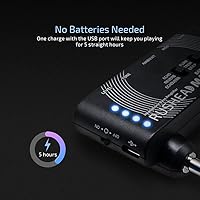
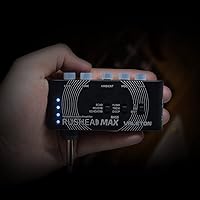
The Valeton Rushead Max Bass RH-101 is one of those rare little gadgets that actually does what it promises — plug it into your bass, connect your headphones, and you're playing silently within seconds. No amp, no cables snaking across the floor, no neighbors knocking. Valeton has quietly built a reputation for packing real functionality into affordable, no-frills gear, and this pocket bass amp fits that mold well. It charges via USB and holds enough juice for roughly five hours of playing, which covers most late-night practice sessions without hunting for an outlet.

Features & Benefits

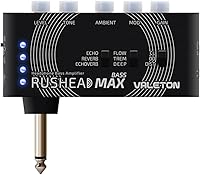
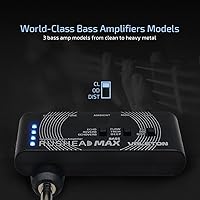
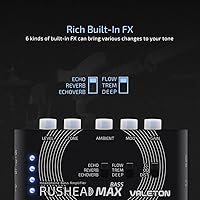
Three amp models — Clean, Overdrive, and Distortion — are tailored specifically for bass frequencies, which matters more than it sounds. A guitar-focused model tends to thin out the low end; these hold the bottom together reasonably well through headphones. The cabinet simulation does its job at this price point, though it obviously can't replicate a real cab in a room. A switchable MOD block adds Chorus, Tremolo, or Flanger when you want texture, and the Ambient block brings Reverb and Echo into the picture. Plug your phone into the aux input, queue up a backing track, and you have a fully functional practice rig sitting in your hand.

Best For

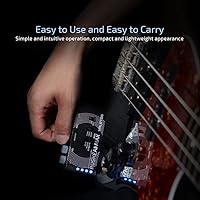
This plug-in headphone amp was built for a specific type of player, and it's worth being honest about that. If you're in an apartment with thin walls, practicing after midnight, or just tired of dragging out gear for a 20-minute session, it solves a real problem. Traveling bassists will appreciate that it weighs next to nothing and disappears into a gig bag pocket. Beginners get a surprisingly complete toolkit — effects and all — without spending much. Experienced players who rely on precise EQ shaping will likely find it limiting. Think of it as a daily practice companion, not a recording or performance tool.

User Feedback

Most buyers who picked up the Rushead Max Bass seem genuinely satisfied, particularly given what they paid. Common praise centers on how usable the amp models feel through headphones — players describe the Clean channel as tight and clear, while the Overdrive handles rock grooves well enough. Criticism tends to focus on the absence of any EQ control, which limits tonal shaping, and a few users note that the physical jack fit can feel slightly loose depending on the bass. Battery life claims appear to hold up in real use. Interestingly, some buyers mention using it as a quick line-out source for recording demos — a use case the listing barely acknowledges.

Pros

  • Plugs directly into your bass jack — zero extra cables, zero setup time required.
  • Built-in USB rechargeable battery means no AA batteries to swap mid-session.
  • Three bass-voiced amp models cover clean playing, mild grit, and heavier overdrive tones.
  • Chorus, Tremolo, Flanger, Reverb, and Echo effects are included at no extra cost.
  • Aux input lets you jam along to tracks from your phone without any additional gear.
  • The Rushead Max Bass fits in a jacket pocket, making it genuinely travel-friendly.
  • Battery life holds up well in real use, typically covering several nights of practice per charge.
  • Surprisingly strong value at this price tier compared to similar compact alternatives.
  • Quick play-along practice sessions become effortless with the aux and headphone combo.

Cons

  • No multi-band EQ makes it hard to balance tone across different basses or headphones.
  • The input jack can fit loosely in some bass output jacks, occasionally causing signal dropout.
  • Effects have no intensity or mix adjustment — it is a fixed sound or nothing.
  • No battery indicator means the device can cut out mid-session without any warning.
  • Background hiss becomes noticeable at higher volumes, especially with sensitive in-ear monitors.
  • Output level is too low to drive high-impedance studio headphones to a comfortable volume.
  • Cabinet simulation sounds processed and artificial when recorded directly into an interface.
  • Build feels adequate but the exposed plug offers no protection against bending in a packed bag.
  • Battery capacity reportedly degrades after extended months of regular daily use.

Ratings

The Valeton Rushead Max Bass RH-101 has been evaluated by our AI rating engine after processing verified buyer reviews from global marketplaces, with spam, bot-generated, and incentivized feedback actively filtered out. Scores reflect the genuine consensus of real-world bassists — apartment dwellers, students, and traveling players alike — and are calibrated to surface both what works well and where the device falls short. Nothing is glossed over.

Sound Quality
74%
26%
For something that plugs directly into a bass jack, the audio output through headphones is more convincing than most buyers expect. The Clean channel in particular draws consistent praise for preserving the natural low-end character of a bass without muddying the signal or adding unwanted hiss.
The cabinet simulation, while functional, has a noticeably digital quality that experienced bassists will detect right away. At this price tier that is understandable, but players used to tube amps or quality DI boxes will find the overall tone a bit processed and flat.
Amp Model Authenticity
71%
29%
Users report that the three amp models — Clean, Overdrive, and Distortion — each have a distinct character that feels intentional rather than interchangeable. The Overdrive gets specific praise from rock and punk players who want grit without a pedal chain.
The Distortion model divides opinion: some find it punchy, while others describe it as buzzy and artificial, especially when played through brighter headphones. None of the models respond dynamically to playing intensity the way a real amp head would.
Portability
94%
This is genuinely one of the smallest functional bass rigs available anywhere. Buyers repeatedly mention tossing it into a jacket pocket or gig bag side pouch and forgetting it is there until they need it — exactly the kind of frictionless portability it promises.
The tiny size means the controls are closely packed and can be fiddly to adjust mid-session, especially for players with larger hands. There is no protective case included, so the exposed plug is vulnerable to bending if it sits loosely in a bag.
Battery Life
76%
24%
The built-in rechargeable battery holds up reasonably well in real use, with many buyers confirming they get close to the advertised five hours before needing a charge. For a nightly 45-minute practice routine, a single charge can last most of a week.
A handful of users report that battery performance degrades noticeably after several months of regular use. The device also has no battery indicator, which means you can be mid-session and have it cut out without any warning.
USB Charging Convenience
88%
Charging via USB is genuinely appreciated by buyers who are already managing cables for phones and earbuds. The fact that a standard USB cable handles it means no proprietary chargers to lose or replace, and most players have one on their desk already.
Charge times are not specified clearly, and a few users mention it takes longer than expected to reach full capacity. There is no pass-through charging, so you cannot play while charging unless you have a very long USB setup.
Effects Quality
68%
32%
Having Chorus, Tremolo, Flanger, Reverb, and Echo available in a device this size genuinely impresses buyers who expected nothing beyond a basic amp tone. The Chorus in particular is described as smooth and usable for slap or fingerstyle playing.
The effects lack any depth adjustment — you get one preset version of each, with no way to dial in the intensity or mix. Players who want nuanced modulation will find the all-or-nothing approach limiting fairly quickly.
EQ Control
41%
59%
There is a basic tone knob that gives some degree of brightness control, which is better than nothing and appreciated by players who just want a quick adjustment between headphone brands or bass types.
The absence of a proper multi-band EQ is the most frequently cited frustration in user reviews. Bass frequencies vary enormously between instruments and headphones, and without separate low, mid, and high controls, getting a balanced tone requires a lot of compromise.
Build Quality
66%
34%
The housing feels solid enough for daily use and has a compact, grippy form factor that does not feel cheap in hand. Most buyers who use it carefully report no issues with the casing cracking or buttons losing responsiveness over time.
The input jack — the part that plugs into the bass — is a recurring concern. Several users mention it fits loosely in certain bass output jacks, creating intermittent signal drop or crackling. This is a hardware tolerance issue that Valeton has not fully resolved across all units.
Headphone Compatibility
72%
28%
The output works well with most standard headphones, and buyers using common consumer models like Sony or Audio-Technica dynamic headphones report a clean, adequately loud signal. The aux input and headphone output together make for a practical two-source monitoring setup.
High-impedance headphones will be underpowered by the 0.5-watt output, producing a noticeably quieter signal. Players using studio-grade cans may need to push the volume to an uncomfortable level just to hear the bass clearly over any background noise.
Aux Input Usability
81%
19%
The ability to plug in a phone and jam along to Spotify or YouTube is one of the most praised functional additions in user reviews. It turns a bare practice tool into a full play-along session without any extra equipment or app required.
The aux input blend is not adjustable — the music and bass signal sit at a fixed ratio, which means some tracks come through too loud or too quiet relative to the bass. Players who practice with dense mixes sometimes struggle to hear their own playing clearly.
Setup Speed
92%
Plug in, put on headphones, start playing. Buyers consistently highlight how fast it is to go from sitting down to actually practicing, with zero menu navigation or app pairing required. For players who want to squeeze in 15 minutes before work, that frictionless experience matters.
The simplicity is also a ceiling — there are no preset save slots, no tuner, and no way to chain effects in a custom order. Players who eventually want more control will outgrow the device quickly.
Value for Money
86%
At this price point, getting three amp models, five effects, an aux input, and USB charging in a pocketable device is genuinely hard to argue with. Buyers who compare it to competitors in the same range consistently rate it as one of the stronger options available.
The value proposition holds only if you accept its limitations upfront. Players who buy it expecting studio-grade tone or deep editing capability often feel let down — not because the device is bad, but because the expectations did not match the product tier.
Noise Floor
63%
37%
Under normal playing conditions with the volume at moderate levels, the background hiss is acceptable and does not detract meaningfully from a practice session. Most buyers using standard consumer headphones report a clean enough signal for everyday use.
At higher volumes or with sensitive in-ear monitors, a persistent background hiss becomes noticeable and distracting. This is a common limitation of compact solid-state headphone amps, but it is worth flagging for players who prefer IEMs or high-sensitivity earphones.
Line-Out Performance
67%
33%
Some buyers use the output as a quick DI into an audio interface for rough demos, and in that context it performs adequately for capturing basic bass ideas without setting up a full recording chain. A convenient workaround that the product listing undersells.
The line-out level is not hot enough for all interfaces without a preamp boost, and the cabinet simulation that sounds reasonable through headphones can feel artificial and thin when recorded directly. It is workable, but not a substitute for a proper DI box.

Suitable for:

The Valeton Rushead Max Bass RH-101 was built for a very specific kind of player, and if you fall into that category, it delivers real value. Apartment-dwelling bassists who need to practice without disturbing neighbors will find it genuinely practical — plug in, put on headphones, and you are playing silently in seconds. Students and beginners on a tight budget benefit enormously from having amp models and effects included in one tiny device, rather than spending separately on a practice amp and a pedal. Traveling musicians who play shows or sessions away from home will appreciate that this plug-in headphone amp weighs almost nothing and disappears into a gig bag pocket without a second thought. It also suits players who want to casually experiment with different amp textures — a bit of overdrive here, some chorus there — without assembling a pedalboard. If your goal is low-friction, low-volume daily practice, this pocket bass amp is purpose-built for that routine.

Not suitable for:

The Valeton Rushead Max Bass RH-101 is clearly not designed for players who need serious tonal control, and it is worth being direct about that before buying. If you rely on dialing in precise EQ curves — separating your low-mids from your highs, for instance — the lack of a multi-band EQ will frustrate you quickly. Gigging bassists looking for a performance-ready backup rig will find the output too modest and the effects too fixed to be stage-useful. Players who record bass at home with any regularity will likely find the cabinet simulation too processed to sit well in a mix, and the line-out level underpowered for most audio interfaces without additional gain. If you own high-impedance studio headphones, be prepared for a noticeably quiet signal that does not do justice to either the amp or your instrument. This plug-in headphone amp is a practice companion, not a production tool, and buyers who approach it otherwise tend to come away disappointed.

Specifications

  • Dimensions: The unit measures 1.57 x 3.15 x 0.79 inches, making it small enough to fit in a shirt pocket.
  • Weight: The device weighs 3.52 ounces, adding virtually no meaningful load to a gig bag or travel pack.
  • Output Wattage: Output power is rated at 0.5 watts, sufficient for headphone listening but not for driving a speaker cabinet.
  • Battery Type: Power comes from a built-in lithium polymer rechargeable cell that cannot be user-replaced.
  • Battery Life: Valeton rates the battery at up to 5 hours of continuous play on a full charge.
  • Charging Port: The device charges via a standard USB port, compatible with most common USB charging cables and adapters.
  • Amp Models: Three onboard amp models — Clean, Overdrive, and Distortion — are each voiced specifically for bass frequency response.
  • Cab Simulation: A built-in cabinet simulation is applied to the headphone and line output to emulate the response of a bass speaker enclosure.
  • MOD Effects: The switchable MOD block offers three modulation effects: Chorus (labeled FLOW), Tremolo (TREM), and Flanger (DEEP).
  • Ambient Effects: The Ambient block provides Reverb and Echo effects for adding spatial depth to the practice tone.
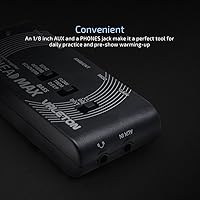
  • Aux Input: A 3.5mm auxiliary input allows connection of a smartphone, tablet, or audio player for play-along practice.
  • Headphone Output: A standard 3.5mm headphone output delivers the processed signal directly to any compatible headphones.
  • Input Connection: The device plugs directly into a standard 6.35mm (1/4-inch) bass guitar output jack with no additional cable required.
  • Model Number: The official model designation is RH-101, as listed by Valeton on the product and packaging.
  • Compatible Instruments: The unit is designed for bass guitar use and is voiced and cab-simulated specifically for low-frequency bass signals.
  • Manufacturer: The device is manufactured by Valeton, a brand known for producing compact, affordable multi-effects gear for guitarists and bassists.
  • Release Date: The product was first made available for purchase in October 2021.
  • Battery Requirement: One lithium polymer battery is required and comes pre-installed inside the unit.

Related Reviews
Sennheiser AMBEO Soundbar Max
77%
91%
Sound Quality
78%
Bass Performance
88%
Room Calibration
93%
Dolby Atmos & Format Support
84%
Build Quality & Materials
More
GoPro MAX 360 Camera
85%
94%
Image Quality
92%
Stabilization Performance
89%
Ease of Use
78%
Battery Life
96%
Waterproof Performance
More
Escort MAX 4 Radar Detector
86%
94%
Detection Range
89%
False Alert Reduction
91%
GPS and Bluetooth Integration
86%
User Interface and Display
88%
App Integration and Features
More
Bose SoundLink Max Portable Bluetooth Speaker
83%
93%
Sound Quality
91%
Bass Performance
88%
Battery Life
94%
Build Quality & Durability
71%
Portability & Handling
More
Roland RH-300 Monitor Headphones
87%
91%
Sound Quality
83%
Comfort for Long Sessions
90%
Noise Isolation
89%
Build Quality
85%
Ease of Use
More
Rokid Max 2 AR Glasses
84%
88%
Display Quality
90%
Comfort and Fit
85%
Portability
82%
Battery and Power
87%
Device Compatibility
More
Keep Connect MAX Router Rebooter
84%
91%
Ease of Setup
88%
Performance Reliability
87%
Value for Money
85%
Notification System
90%
Connectivity Stability
More
Hifonics BXIPRO3.0 Bass Enhancer
86%
88%
Bass Enhancement Quality
94%
Ease of Installation
85%
Remote Control Functionality
90%
Sound Clarity & Distortion Control
91%
Compatibility with Car Audio Systems
More
FEG Max Eyelash Serum 6mL
89%
94%
Visible Lash Growth
88%
Brow Enhancement Effectiveness
91%
Formula Gentleness
89%
Skin Sensitivity Compatibility
95%
Ease of Application
More
A+MAX UCB450-60 Voltage Stabilizer
89%
94%
Engine Performance Boost
88%
Cold Weather Performance
91%
Ease of Installation
85%
Audio System Enhancement
92%
Reliability & Durability
More

FAQ

It works with any bass guitar that has a standard 1/4-inch output jack, which covers the vast majority of electric basses on the market. Acoustic-electric basses with a preamp output will also work fine. The only exception would be instruments with non-standard output jacks, which are uncommon.

Standard consumer earbuds with a 3.5mm plug work perfectly well and are actually a popular choice since they tend to be efficient enough to get a good volume level from the 0.5-watt output. Studio headphones with higher impedance ratings will work but may sound noticeably quieter than you expect.

You charge it using a standard USB cable connected to any USB power source — a phone charger, laptop, or power bank all work. Valeton does not publish an official charge time, but most users report it takes around one to two hours to reach a full charge from empty.

It can be used as a quick line-out source into an audio interface for rough demo recordings, and some buyers do use it that way. That said, the cabinet simulation can sound processed in a recorded mix, and the output level may need a preamp boost depending on your interface. It is workable for capturing ideas, but not a substitute for a proper DI box if recording quality matters.

Yes. The amp model runs continuously as the base tone, and you can layer the MOD and Ambient effects on top of it independently. You can have, for example, the Overdrive amp model running with Chorus and Reverb active simultaneously.

Unfortunately, yes. There is no battery indicator light or low-battery warning on the device, so when the charge is depleted it simply stops outputting sound. Keeping a USB cable nearby to recharge between sessions is a practical habit to develop if you use it daily.

You can connect the headphone output to a full-range speaker or PA input using a 3.5mm to 6.35mm adapter, and the cabinet simulation is designed to work in that scenario. It will not produce high volume on its own given the 0.5-watt output, but feeding it into a powered speaker or PA channel is a reasonable use case for low-volume monitoring.

The plug itself is not likely to damage a properly functioning jack, but leaving any device plugged in will drain the bass battery if it is an active instrument. It is good practice to unplug when you are done playing, both to preserve battery life on active basses and to avoid unnecessary wear on the jack contacts.

The effects are essentially switched on or off with no mix or depth adjustment available. You get one preset character for each effect with no ability to dial in intensity, wet-dry balance, or modulation speed. It is a simple toggle system, which suits beginners but will feel limiting to players who are used to tweaking their modulation settings.

Valeton typically offers a limited manufacturer warranty on their products, though the specific terms can vary by region and retailer. It is worth checking with the seller at the point of purchase for the exact warranty coverage in your country, as warranty support for imported electronics can differ significantly depending on where you buy.

Where to Buy