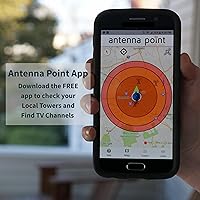


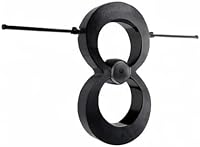
Overview

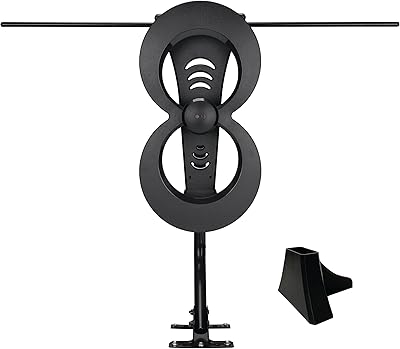
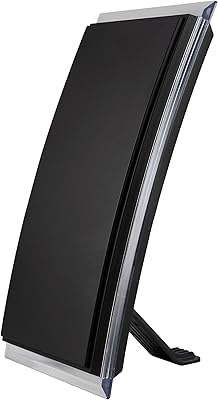
The Antennas Direct ClearStream MAX-V TV Antenna has been a steady presence in the mid-range over-the-air market since 2019, and its consistent bestseller ranking says something real about its staying power. It targets cord-cutters in suburban and rural households who want free broadcast TV — local news, network shows, sports — without a monthly bill. What sets it apart from basic flat panels is its double-loop design with dedicated UHF and Hi-VHF elements, plus a multi-directional reception pattern. The advertised 60+ mile range is a ceiling, not a guarantee; terrain, trees, and your home's construction materials all play a role in what you actually receive.

Features & Benefits

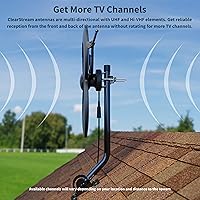
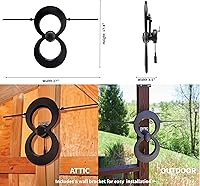
This outdoor antenna runs on both UHF and Hi-VHF bands, which matters because many local stations — especially those that have migrated frequencies — broadcast across both. Its 65-degree beam angle gives you broader coverage without having to physically aim the antenna every time you want a different station. Installation is genuinely flexible: mount it on a wall with the included steel bracket, drop it in an attic, or attach it to an existing outdoor mast. It handles NEXTGEN TV, 4K, and 8K UHD signals, so it won't become obsolete as broadcast standards evolve. No subscription, no internet connection, no ongoing cost.

Best For

This over-the-air antenna is built for people who live 30 to 60 miles from their nearest broadcast towers — far enough that a basic flat panel simply won't cut it. It's a natural fit for suburban and rural cord-cutters who want local news, live sports, and network programming without paying for cable or a streaming bundle. Attic installations are a particularly good use case: it outperforms flat indoor antennas in those spaces while avoiding the exposure of a rooftop setup. If you've been dealing with pixelation or missing channels on a smaller antenna, this is the logical step up. Those wanting a low-profile wall mount instead of a mast will appreciate the included bracket.

User Feedback

Buyers who upgrade from basic flat antennas tend to notice an immediate jump in channel count, and that's the most consistent praise the ClearStream MAX-V receives. Assembly gets positive marks too — most people find the wall bracket intuitive and the overall setup straightforward. On the flip side, reception variability is a real and recurring complaint. Users in hilly terrain or homes with metal roofing sometimes report inconsistent results despite being within the advertised range. A handful of buyers in truly rural or heavily obstructed areas found they needed to add a separate amplifier to get reliable performance. The overall sentiment is solid for this price tier, but it rewards buyers who go in with realistic expectations about what over-the-air TV can and cannot do.

Pros

  • Pulls in both UHF and Hi-VHF channels, catching more local stations than single-band antennas typically do.
  • The 65-degree beam angle means fewer manual adjustments when stations broadcast from different directions.
  • Works in multiple locations — attic, outdoor wall, or mast — so you can install it wherever your setup demands.
  • The included steel wall bracket is a genuinely useful accessory that saves you a separate hardware purchase.
  • Compatible with NEXTGEN TV and 4K signals, so it won't need replacing as broadcast formats continue to evolve.
  • Users consistently report a noticeable jump in channel count compared to basic flat indoor antennas.
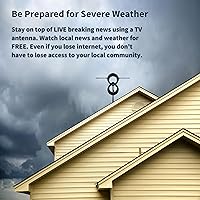
  • No monthly fees, no internet connection required — once it is up, the signal is completely free.
  • Assembly is straightforward, and most buyers complete the installation without needing professional help.
  • Durable construction holds up to outdoor weather over multiple seasons without performance degradation.

Cons

  • The 60-plus mile range claim represents ideal conditions; real-world results vary significantly based on terrain and local obstructions.
  • An amplifier is not included and may be necessary in fringe reception areas, adding to the total cost.
  • A coaxial cable is also sold separately, which means first-time buyers need to budget for that additional item.
  • Signal reliability can drop noticeably during heavy storms or in areas surrounded by dense tree coverage.
  • At 27 inches wide, this over-the-air antenna is physically large and may look obtrusive in smaller or tidier spaces.
  • Users in hilly or valley terrain sometimes report persistent dropout issues that repositioning alone does not fix.
  • The multi-directional design, while convenient, does not match the focused gain of a directional antenna aimed precisely at a tower cluster.

Ratings

Our AI-generated scores for the Antennas Direct ClearStream MAX-V TV Antenna are based on a deep analysis of verified buyer reviews collected worldwide, with spam, bot-generated, and incentivized feedback actively filtered out. Each category reflects the honest consensus of real users across a wide range of installation environments — from attic setups in the suburbs to exposed outdoor mounts in rural areas. Both the genuine strengths and the recurring frustrations are weighted transparently so you can make a confident buying decision.

Signal Reception
78%
22%
In suburban and semi-rural setups within 40 to 50 miles of broadcast towers, most users report a significant jump in the number of channels received compared to flat indoor antennas. The dual UHF and Hi-VHF coverage means stations that migrated frequencies after the repack are still reliably pulled in.
Reception performance drops noticeably beyond 50 miles or in areas with meaningful terrain interference like hills, valleys, or dense forest. Buyers in these edge-case environments often find results inconsistent, even after repositioning the antenna multiple times.
Range Accuracy
61%
39%
When conditions are favorable — flat terrain, clear line of sight to towers, and minimal building obstructions — the antenna delivers on its long-range promise and outperforms most competitors at this price point. Buyers in open rural areas with good tower proximity tend to be the happiest group.
The 60-plus mile claim sets expectations that the real world frequently fails to meet. A significant portion of buyers in hilly or heavily wooded regions report receiving far fewer channels than the range figure suggests, and some feel the marketing oversells what the antenna can realistically achieve in typical suburban conditions.
Installation Ease
84%
Assembly is genuinely straightforward for most people — the included hardware covers both wall and mast mounting scenarios, and the steel bracket in particular gets consistent praise for making a clean, low-profile exterior install possible without sourcing extra parts. Most buyers complete the job solo with basic household tools.
Routing the coaxial cable neatly through walls or attic spaces can be time-consuming and is not something the included hardware helps with. A small number of buyers also noted that the assembly instructions could be clearer for first-time antenna installers.
Build Quality
82%
18%
The materials feel durable and the construction holds up well to prolonged outdoor exposure across multiple seasons. Several long-term buyers report no visible degradation after years of use in rain, wind, and cold temperatures, which speaks well to the overall material quality for this price tier.
A few users have noted that some plastic components feel less premium up close than the overall design suggests. While nothing critical has been reported failing structurally, the finish and smaller fittings give the impression of a product that hits its price point rather than exceeding it.
Value for Money
79%
21%
Given that it eliminates any monthly bill for local broadcast channels, the antenna pays for itself quickly for households that watch network TV regularly. Most buyers in the target suburban and rural market feel the feature set and channel performance justify the mid-range asking price.
Buyers who also need a coaxial cable, an amplifier for fringe areas, or a splitter for multiple TVs face a noticeably higher total cost than the sticker price implies. Those who end up needing an amplifier to get reliable results sometimes question whether the base unit alone represents good value.
Multi-Directional Performance
74%
26%
The 65-degree beam angle genuinely reduces the trial-and-error of antenna positioning for most users, especially where two or three towers are clustered in a general direction. Compared to a tightly directional antenna, it tolerates some imprecision in mounting orientation without a dramatic signal drop.
In markets where broadcast towers are scattered across widely different compass directions — common in major metro fringes — the multi-directional design can still fall short. Some buyers find they are forced to choose between optimizing for one cluster of towers at the expense of another.
Attic Installation
81%
19%
The ClearStream MAX-V is one of the more practical choices for attic use, offering substantially better range than flat panels while avoiding the exposure of rooftop mounting. Buyers who installed it in standard insulated attics with wood or asphalt shingle roofing generally report clean, stable signal performance.
Attics with foil-backed insulation or metal roofing materials can significantly degrade signal before it even reaches the antenna elements, and this is a variable the product has no control over. Buyers in homes with these materials sometimes find the performance disappointing compared to a comparable outdoor mount.
Weather Resistance
83%
Years of outdoor use reports from buyers across varied climates suggest the antenna handles standard weather punishment well — rain, moderate cold, and sustained wind have not caused reported failures for the majority of long-term outdoor users. The materials are appropriate for permanent exterior installation.
Ice accumulation in colder climates and sustained high wind events are the conditions most likely to stress the mounting hardware rather than the antenna itself. A small number of buyers have had to resecure or reposition the antenna after severe winter weather, particularly where wall anchors were not set into solid structural backing.
Channel Count
77%
23%
Upgrading from a flat indoor antenna to this over-the-air antenna almost universally results in picking up more channels, both primary network broadcasts and subchannels that smaller antennas simply cannot reliably receive. In well-served suburban markets, double-digit channel gains are commonly reported.
The actual number of receivable channels depends entirely on local broadcast infrastructure, which varies enormously by market. Buyers in smaller or more rural markets sometimes feel underwhelmed by the channel count even when reception is technically solid, simply because fewer stations broadcast in their area.
Amplifier Necessity
58%
42%
For single-TV setups within a reasonable distance of towers and with short cable runs, many users find the antenna performs well without any amplification. In these straightforward scenarios, the absence of an included amplifier is not a practical problem.
A meaningful share of buyers — particularly those in fringe areas, those splitting signals to multiple TVs, or those running long coax cable lengths — find they need to purchase an amplifier separately to get reliable results. Not flagging this more clearly in the product positioning is a recurring source of frustration in user reviews.
Outdoor Mounting Hardware
76%
24%
The inclusion of both a steel wall bracket and mast mounting hardware in the box covers the two most common installation scenarios without requiring a separate hardware purchase. The wall bracket in particular is frequently praised for enabling a clean, flat installation on exterior siding.
The mast hardware assumes you already have a mast in place, and buyers starting from scratch outdoors will need to source a pole or mast separately. The wall bracket, while functional, requires secure anchoring into structural material — installation into soft siding alone has led to stability issues for some users.
Compatibility
91%
Support for NEXTGEN TV alongside 4K and 8K UHD signals means this over-the-air antenna is well-positioned for the current and next phase of broadcast television. Buyers investing in a new antenna today will not need to replace it purely because broadcast standards shift in the near future.
Compatibility with future formats is only useful if those signals are actually being broadcast in your area, and NEXTGEN TV rollout remains patchy across many markets as of now. The forward-compatibility is a genuine long-term benefit, but it does not add immediate practical value for most buyers today.
Setup Documentation
63%
37%
The included instructions cover the physical assembly steps adequately for buyers who have installed an outdoor antenna before. The process itself is not particularly complex, and most experienced DIY households find their way through it without difficulty.
First-time antenna buyers — a common demographic for cord-cutters — often find the instructions lack context around signal scanning, amplifier selection, or how to diagnose weak reception after mounting. The documentation feels written for people who already know what they are doing, which leaves a noticeable gap for new users.

Suitable for:

The Antennas Direct ClearStream MAX-V TV Antenna is a strong match for cord-cutters in suburban and rural areas who live roughly 30 to 60 miles from their local broadcast towers and want free over-the-air access to network TV, local news, and live sports. If a basic flat indoor antenna has been letting you down — dropping channels, pixelating during prime time, or missing stations entirely — this is the logical upgrade. It works especially well for attic installations, where you want better range than a flat panel can deliver but don't want to deal with a full rooftop or mast setup. The included steel wall bracket also makes it practical for anyone who wants a clean, low-profile exterior installation without heavy hardware. Since it pulls in both UHF and Hi-VHF signals with a wide beam angle, it suits households where broadcast towers are spread across different directions.

Not suitable for:

The Antennas Direct ClearStream MAX-V TV Antenna is not the right tool for anyone expecting to replace cable TV — it only receives free over-the-air broadcasts, which means no cable news networks, no premium channels, and nothing that requires a subscription or internet connection. Buyers who live in densely urban areas close to towers will likely find it overkill; a smaller, less expensive flat antenna usually handles those situations just fine. People in truly remote locations beyond 60 miles from broadcast infrastructure should also temper their expectations, and may find they still need a separate amplifier to get reliable results — an added cost that is not included in the box. If your home has significant obstructions like heavy tree coverage, metal roofing, or sits in a valley, reception may be inconsistent regardless of the antenna's rated range. Finally, anyone without an existing mast or a wall suitable for bracket mounting will need to factor in additional hardware for a clean installation.

Specifications

  • Antenna Type: Double-loop design with dedicated UHF and Hi-VHF elements for broad spectrum over-the-air reception.
  • Maximum Range: Rated at 60+ miles under ideal conditions; actual range varies based on terrain, obstructions, and local tower placement.
  • Beam Angle: 65-degree beam angle allows multi-directional reception without requiring precise manual aiming toward a single tower.
  • Dimensions: The antenna measures 27″ L x 3.5″ W x 17.4″ H when fully assembled.
  • Weight: Complete unit weighs 3.19 pounds, making it manageable for single-person wall or mast installation.
  • Impedance: 75 Ohm impedance, which is the standard for residential TV coaxial cable connections.
  • Signal Compatibility: Receives NEXTGEN TV, 4K UHD, 8K UHD, and Full HD 1080p broadcast signals over the air.
  • Frequency Bands: Covers both UHF and Hi-VHF frequency bands to capture the full range of locally broadcast network channels.
  • Install Locations: Designed for use indoors, in an attic, or outdoors on a wall or existing mast.
  • Included Mounting: Comes with a steel wall bracket for low-profile mounting and mast mounting hardware for pole installation.
  • Coaxial Cable: No coaxial cable is included in the box; one must be purchased separately to connect the antenna to a TV or tuner.
  • Amplifier: No amplifier is included; one may be purchased separately for use in fringe reception areas or longer cable runs.
  • Internet Required: No internet connection or subscription of any kind is required to receive over-the-air broadcast signals.
  • Color: Available in black with a matte finish suited for both exterior and interior installations.
  • Model Number: Manufacturer model number is C2MVB, produced by Antennas Direct Inc.
  • ASIN: Amazon product identifier is B081D7FSML for reference when sourcing compatible accessories.
  • UPC: Universal Product Code is 817848012016 as issued by the manufacturer.
  • Availability: This antenna has been continuously available since November 2019 and is not discontinued by the manufacturer.

Related Reviews
Antennas Direct ClearStream 2MAX TV Antenna
76%
83%
Signal Reception Quality
67%
Range Accuracy
88%
Ease of Installation
84%
Build Quality
79%
Multi-Directional Performance
More
Antennas Direct ClearStream 4MAX TV Antenna
86%
88%
Performance in Rural Areas
93%
Ease of Installation
85%
Signal Strength
91%
Build Quality
89%
Indoor/Outdoor Versatility
More
Antennas Direct ClearStream 2V TV Antenna
83%
88%
Signal Reception
91%
VHF Channel Coverage
84%
Build Quality
82%
Ease of Installation
79%
Value for Money
More
Antennas Direct ClearStream 4V TV Antenna
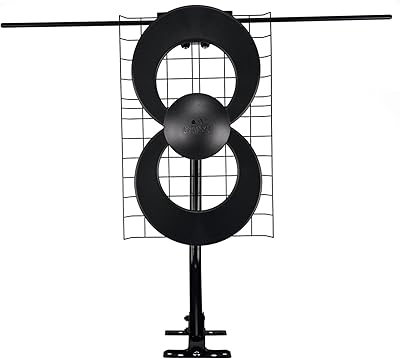
74%
88%
Signal Reception
84%
Build Quality
81%
Multi-Directional Performance
67%
Ease of Installation
74%
Value for Money
More
Antennas Direct ClearStream Eclipse Indoor TV Antenna
77%
74%
Signal Reception
67%
Amplifier Performance
93%
Design & Profile
91%
Ease of Setup
62%
Cable Length
More
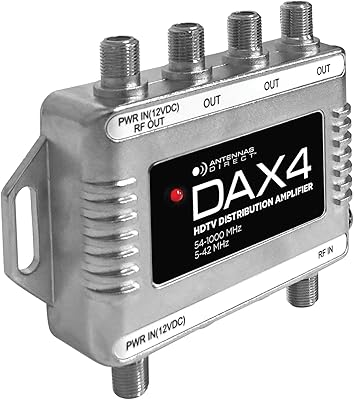
Antennas Direct DAX4 4-Output TV Antenna Distribution Amplifier
86%
87%
Signal Quality & Performance
91%
Ease of Installation
85%
Build Quality & Durability
92%
Value for Money
78%
Weather Resistance
More
1byone 360° Omni-Directional Outdoor TV Antenna
73%
74%
Signal Reception
91%
Ease of Installation
72%
Build Quality
68%
Amplifier Performance
63%
4G LTE Filtering
More
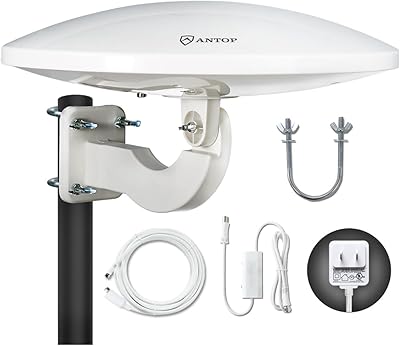
Antop AT-414BG Omni-Directional Outdoor TV Antenna
85%
90%
Reception Quality
88%
Ease of Installation
86%
Durability in Outdoor Conditions
92%
Value for Money
87%
Signal Range
More
Bahouloer Indoor Outdoor TV Antenna
71%
72%
Signal Reception Quality
41%
Range Accuracy
91%
Ease of Installation
88%
Cable Length & Flexibility
63%
Build Quality & Durability
More
GE 48732 Indoor HD TV Antenna
80%
78%
Signal Reception Quality
93%
Ease of Setup
74%
Amplifier Performance
76%
Build Quality & Durability
84%
Design & Aesthetics
More

FAQ

The 60-mile figure is a best-case ceiling, not a everyday promise. In practice, things like hills, dense tree cover, and the materials your home is built from all cut into that range. Most buyers in flat, open suburban areas within 40 to 50 miles report strong results, but if you are pushing the outer edge of that range or live somewhere with lots of obstructions, temper your expectations a little.

Yes, a coaxial cable is not included in the box. You will need a standard RG6 coaxial cable to connect the antenna to your TV or to a distribution splitter. Pick up a length that suits your specific installation distance — do not guess short on cable when mounting outdoors or in an attic.

Not always, but sometimes. If you are within a reasonable distance of your broadcast towers and have a direct cable run to one TV, you likely will not need one. Where amplifiers start to make sense is if you are splitting the signal to multiple TVs, running a very long coax cable, or sitting in a genuinely fringe reception area. The amplifier is sold separately and should be considered a situational add-on, not a requirement for everyone.

Absolutely — attic installation is one of the best use cases for this over-the-air antenna. It keeps the unit protected from weather while still providing far better range than a flat panel sitting near your TV. Just be aware that certain roofing materials, particularly metal or foil-backed insulation, can reduce signal strength even in an attic.

You can receive any free over-the-air broadcast channels available in your local market — typically the major networks like ABC, NBC, CBS, FOX, and PBS, along with their subchannels. What you get specifically depends entirely on which stations broadcast in your area and how close you are to their towers. A free tool like AntennaWeb or the FCC DTV coverage map can show you exactly what to expect at your address before you buy.

Yes, it is fully compatible with 4K and 8K UHD televisions. It also supports the NEXTGEN TV standard, which means it is prepared for the next generation of broadcast signals that are starting to roll out across the country. You will not need to upgrade the antenna again just because broadcast technology evolves.

Most people find the installation manageable without professional help. The included wall bracket and mast hardware cover the two most common mounting scenarios, and the assembly is straightforward enough that a basic toolkit — a drill, screwdriver, and level — is all you typically need. Routing the coaxial cable neatly is usually the most time-consuming part of the job.

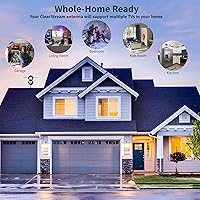
Yes, you can use a splitter to distribute the signal to more than one TV, but each split weakens the signal. For two TVs you are often fine, but for three or more you will almost certainly want to add a powered amplifier or distribution amplifier to compensate for the signal loss. Splitters are sold separately.

It is built for permanent outdoor installation, so standard weather conditions — rain, moderate wind, and cold temperatures — should not damage it. Extreme conditions like ice storms or very high sustained winds can stress any outdoor antenna, so make sure your mounting hardware is secured properly. Many users have reported years of reliable outdoor use without any weather-related issues.

Honestly, probably yes. This over-the-air antenna is engineered for longer distances and trickier reception environments. If you live in a dense urban area within 15 to 20 miles of your local broadcast towers, a smaller and less expensive flat indoor antenna will almost certainly do the job just as well. Save the bigger hardware for situations where range and signal strength are actually a challenge.

Where to Buy