Overview

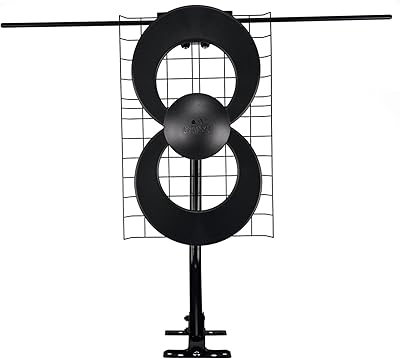
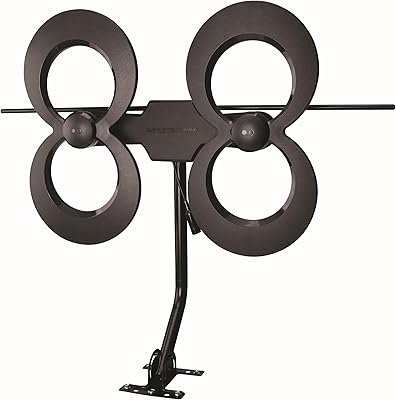
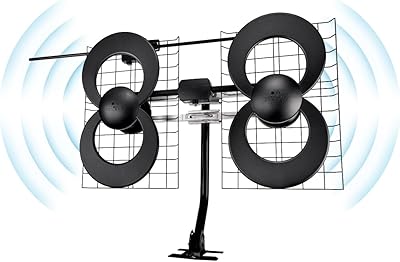
The Antennas Direct ClearStream 2MAX TV Antenna is a solid mid-range pick for cord-cutters who want reliable over-the-air reception without paying monthly fees. Its dual-loop design pulls in both UHF and Hi-VHF signals without needing a separate amplifier, which keeps the setup clean and straightforward. You can run it indoors on the included base stand, tuck it in an attic, or mount it outside on the 20-inch mast — real flexibility for different living situations. It supports NEXTGEN TV, 4K, and 8K UHD broadcasts. That advertised 60-plus-mile range is best treated as an upper ceiling; your actual results depend heavily on terrain, nearby obstructions, and tower proximity.
Features & Benefits

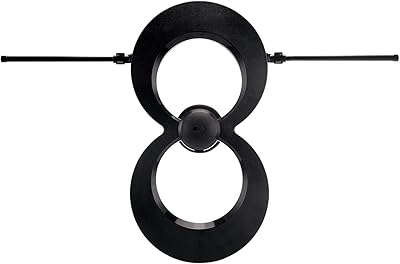
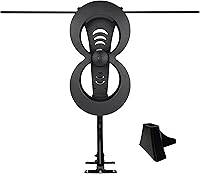
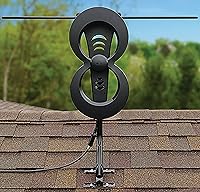
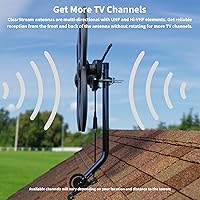
The ClearStream 2MAX uses separate dedicated elements for UHF and Hi-VHF bands — a meaningful engineering choice, since each band gets its own optimized loop rather than a compromised shared element. The result is cleaner signal capture across a wider range of channels. Because it picks up signals from multiple directions simultaneously, most households won't need to fiddle with aiming or repositioning. The included 20-inch mast features a pivoting base that mounts on horizontal or vertical roof surfaces, making rooftop installs far less frustrating than most DIY antenna jobs. At roughly 17 by 31 inches, it fits neatly in most attic spaces too. No amplifier needed for standard runs — fewer components means fewer things to troubleshoot.

Best For

This outdoor TV antenna makes the most sense for households sitting 30 to 60 miles from their local broadcast towers — especially in suburban or semi-rural areas where a thin flat panel just can't cut through the distance. If you've already tried an entry-level indoor antenna and keep seeing pixelation or missing channels, this is a logical next step. Attic mounting is a strong option here; the compact size fits comfortably in tight spaces, and keeping it out of the weather protects it while still outperforming a windowsill unit. It's also worth considering if you're a renter who wants a cleaner, hidden install. Just check a signal mapping tool first — it takes two minutes and can easily save you a return trip.

User Feedback

Buyers who switched from basic flat antennas tend to report a noticeable jump in channel count, with several noting they finally locked in network affiliates that had been out of reach. Installation feedback skews positive — the mast hardware and pivoting bracket are specifically called out as well-designed and easy to work with. On the critical side, users in dense urban canyons or heavily wooded lots report inconsistent results that the specs don't fully predict. A recurring pattern in lower-rated reviews involves long coax runs or multi-room splitter setups, where an outboard amplifier often becomes necessary. Occasional weather-related dropouts during storms also appear, though that limitation seems broadly common across antennas in this range category.

Pros

  • Dedicated UHF and Hi-VHF loops deliver noticeably cleaner reception than single-element budget antennas.
  • Multi-directional design means most households can skip the tedious tower-aiming process entirely.
  • The included 20-inch mast with a pivoting base makes rooftop installs genuinely straightforward.
  • Compact enough at roughly 17 by 31 inches to fit inside most residential attic spaces without modification.
  • Weatherproof construction holds up to outdoor exposure year-round without needing seasonal takedown.
  • Compatible with NEXTGEN TV, 4K, and 8K UHD broadcasts — ready for the next generation of free OTA content.
  • No amplifier required for average-distance runs, which keeps cable clutter and failure points to a minimum.
  • Buyers upgrading from flat panel antennas consistently report picking up additional channels after switching.
  • Flexible installation options — indoor stand, attic, or outdoor mast — cover a wide range of living situations.

Cons

  • The advertised 60-plus-mile range is a best-case figure; real-world results vary significantly based on terrain and obstructions.
  • No coaxial cable is included, which is an easy-to-overlook additional cost at checkout.
  • Users running coax longer than 30 feet or splitting to multiple TVs often need to purchase a separate amplifier.
  • Performance in dense urban environments with signal multipath issues can be inconsistent and hard to predict.
  • Heavily wooded properties see reception quality drop noticeably, even at shorter distances from towers.
  • Some buyers report occasional signal dropout during severe weather, which is not addressed by the passive design.
  • The size that helps attic performance can feel bulky for anyone hoping to use it as a discreet indoor unit.
  • No amplifier is bundled, so multi-room setups require an additional purchase that adds to the total cost.

Ratings

The scores below for the Antennas Direct ClearStream 2MAX TV Antenna were generated by our AI engine after analyzing thousands of verified buyer reviews from global markets, with spam, bot activity, and incentivized feedback actively filtered out. Each category reflects the real distribution of user sentiment — not a polished average — so both standout strengths and recurring frustrations are represented honestly. Where scores dip, there is a genuine pattern of buyer disappointment behind the number.
Signal Reception Quality
83%
Buyers in suburban areas consistently report a meaningful jump in receivable channels compared to their previous flat or budget antennas, often picking up network affiliates that had been unreachable for years. The dual-loop element design handles both UHF and Hi-VHF bands cleanly, and most users in moderate-signal zones describe the picture as rock-solid.
Reception quality drops noticeably in environments with heavy tree cover, dense urban multipath interference, or homes built with metal-laced insulation. Users in these situations report inconsistent channel lock-in that no amount of repositioning fully resolves, which pulls the overall score down from what the hardware is theoretically capable of.
Range Accuracy
67%
33%
For households sitting within a realistic 35 to 50 miles of their broadcast towers with reasonable line-of-sight, this dual-band antenna genuinely delivers on its range promise. Several buyers in semi-rural towns report receiving channels they had written off entirely, which represents a real win for the product's core use case.
The advertised 60-plus-mile ceiling creates expectations the antenna cannot meet for a meaningful segment of buyers. Users at the edge of that range — especially those with hills, tall structures, or dense foliage between them and the towers — frequently report disappointment, and this gap between marketing claims and lived experience is the most common thread in negative reviews.
Ease of Installation
88%
The included 20-inch mast with its pivoting base is singled out repeatedly in positive reviews as a genuinely well-designed piece of hardware. Buyers comfortable with basic DIY work describe the rooftop installation as a two-hour job at most, and the base's ability to mount on both horizontal and vertical surfaces removes one of the usual frustrations of antenna placement.
A portion of buyers find the overall setup more involved than the box implies, particularly when running coax through walls or into an attic space for a hidden install. Those without prior antenna experience occasionally report confusion around grounding requirements for outdoor mounting, which the included documentation does not address in enough depth.
Build Quality
84%
The materials feel substantial for the price tier, and buyers who have left this outdoor TV antenna installed through multiple seasons report no meaningful degradation in structural integrity. The weatherproof construction holds up to rain, wind, and temperature swings in a way that cheaper alternatives simply do not.
A small but notable group of buyers flag that certain plastic connector points and mounting brackets feel less robust than the main antenna elements, raising questions about long-term durability under sustained wind load. These concerns are not widespread, but they recur often enough to prevent a higher score.
Multi-Directional Performance
79%
21%
For most suburban households where broadcast towers are spread across a roughly 180-degree arc, the multi-directional design performs exactly as intended — no rotator, no guesswork, no compromising one channel cluster to receive another. This convenience factor is one of the most praised aspects among buyers who switched from directional antennas.
In markets where towers are tightly clustered in one direction, the multi-directional element actually works slightly against signal strength compared to a focused directional antenna of similar quality. Buyers in those markets sometimes feel they are paying a premium for a feature that does not benefit their specific situation.
Attic Installation Suitability
81%
19%
At roughly 17 by 31 inches, the antenna fits in most standard residential attic spaces without requiring structural modifications, which matters to renters and homeowners who want a clean, hidden setup. Attic-mounted buyers generally report performance significantly above what an indoor flat panel delivers, making this a popular middle-ground option.
Performance in attic installations is highly sensitive to roof material — metal roofing, foil-backed insulation, and clay tiles all attenuate the signal to varying degrees. Buyers who install in attics without accounting for these variables sometimes report results closer to a basic indoor antenna than an outdoor one.
Value for Money
74%
26%
For buyers who see a genuine channel count improvement and replace a recurring cable or streaming bill, the return on investment is strong and the math is straightforward. Users in the sweet spot of 30 to 50 miles from towers tend to feel the pricing is entirely justified given the durability and performance.
Buyers who purchase based on the 60-mile range claim and fall into the difficult-reception category often feel the value proposition does not hold up. Factor in a separately purchased coaxial cable, a possible amplifier, and potential professional installation, and the total cost of ownership creeps higher than the base price suggests.
Amplifier Independence
77%
23%
For single-TV setups with a coax run under 30 feet, the passive design works cleanly and removes a potential interference source — particularly useful in strong-signal suburban environments where an amplifier would actually degrade performance by overdriving the tuner.
The moment a buyer adds a splitter or runs cable through two floors, the absence of a bundled amplifier becomes a real limitation. Multiple reviewers describe needing to purchase a distribution amplifier as an afterthought, which feels like an incomplete out-of-box experience at this price point.
Channel Count Delivered
76%
24%
In markets with strong broadcast infrastructure, buyers report channel counts well into the double digits — local affiliates, subchannels, PBS variants, and independent broadcasters all come through reliably once the antenna is optimally placed. The dual-band coverage is directly responsible for this breadth.
Channel count is inherently market-dependent and not something the hardware can overcome, which leads to frustration when buyers in weaker broadcast markets receive far fewer channels than the spec sheet implies. Managing this expectation is difficult, and some buyers feel misled when their local market delivers only five or six usable stations.
Weather Resilience
71%
29%
The outdoor-rated construction survives physical weather conditions — rain, ice, and moderate wind — without showing structural wear, and permanent installation without seasonal removal is a realistic expectation for most climates based on long-term buyer feedback.
Signal dropout during heavy rain or thunderstorms is a recurring complaint that appears across a meaningful share of reviews. This is partly a physics limitation of how precipitation affects broadcast signal propagation, but buyers reasonably expect better in a product positioned at the upper end of the consumer antenna market.
Compatibility & Future-Proofing
91%
Support for NEXTGEN TV alongside 4K and 8K UHD broadcasts means this dual-band antenna will not become obsolete as broadcasters continue rolling out next-generation formats. Buyers who think long-term appreciate that this purchase does not need to be revisited as the broadcast standard evolves.
NEXTGEN TV availability is still limited to select markets, so the compatibility advantage is largely theoretical for most current buyers. The forward-looking specs are genuinely valuable, but framing them as immediate benefits can feel misleading when the infrastructure to use them is years away for many households.
Packaging & Included Accessories
58%
42%
The 20-inch mast and pivoting base hardware are the clear highlights of the included package, and buyers consistently describe the mast as a thoughtful inclusion that justifies part of the premium over bare-bones competitors. The indoor base stand is a useful bonus for those testing placement before committing to a permanent mount.
The absence of coaxial cable is a consistent frustration, particularly for first-time antenna buyers who may not realize the omission until the hardware is already mounted. At this price tier, including even a basic 10-foot coax run would significantly improve the out-of-box experience without a meaningful cost impact.
Documentation & Setup Guidance
61%
39%
Basic assembly steps are covered adequately for straightforward installs, and the pivoting mast hardware is intuitive enough that many buyers report getting it right without consulting the manual at all. The general setup flow is logical for anyone with prior DIY experience.
Buyers encountering signal problems after installation have little to fall back on in the included documentation — there is no meaningful troubleshooting guidance around amplifier pairing, coax length limits, grounding requirements, or how to use a signal mapping tool to optimize placement. This gap shows up repeatedly in frustrated reviews.

Suitable for:

The Antennas Direct ClearStream 2MAX TV Antenna is built for cord-cutters in suburban and semi-rural households who live roughly 30 to 60 miles from their nearest broadcast towers and have already hit the ceiling of what a flat indoor antenna can deliver. If you consistently miss channels or deal with pixelated signals despite trying repositioning tricks, this dual-band antenna addresses the root problem rather than papering over it. It's a strong fit for homeowners willing to invest a few hours in an attic or rooftop install — the payoff is a stable, passive signal that doesn't require ongoing maintenance or monthly fees. Renters who want a low-profile solution will appreciate the attic-mounting option, which keeps everything hidden while still outperforming a window-mounted unit. Anyone looking to get major broadcast networks in full HD — local news, sports, prime-time TV — without an internet dependency will find this outdoor TV antenna a practical and durable long-term solution.
Not suitable for:

The Antennas Direct ClearStream 2MAX TV Antenna is unlikely to satisfy buyers expecting guaranteed performance in genuinely difficult signal environments — think dense city blocks with tall buildings blocking line-of-sight, or heavily wooded rural lots where towers are far and obstructed from multiple directions. If your home has thick masonry or metal-laced walls and you're hoping an indoor placement will be enough, this antenna may still fall short regardless of its rated range. It's also not the right pick for anyone who needs to split the signal across four or more TVs without budgeting separately for a quality amplifier, since the passive design has real limits once you start dividing the signal. Buyers who want a fully turnkey kit — coaxial cable, amplifier, and all accessories included — will need to factor in additional purchases, since none of those are bundled. If you're already within 20 to 25 miles of your towers, a simpler and less expensive antenna will likely do the job just as well.

Specifications

  • Model Number: The antenna is sold under model number C2MVJ-5 by Antennas Direct Inc.
  • Dimensions: The antenna measures 17.4″ H x 31.3″ W x 4″ D when fully assembled.
  • Weight: The unit weighs 1.9 pounds without mounting hardware or cabling.
  • Antenna Design: Uses a double-loop configuration with dedicated elements for both the UHF and Hi-VHF frequency bands.
  • Signal Direction: Multi-directional pickup pattern allows reception from multiple tower directions without manual aiming.
  • Frequency Bands: Receives both UHF and Hi-VHF broadcast bands, covering the full range of standard over-the-air TV channels.
  • Impedance: Designed for standard 75 Ohm coaxial cable connections, matching virtually all modern TV tuner inputs.
  • Rated Range: Manufacturer-rated for 60-plus miles under line-of-sight conditions; actual range varies based on terrain and obstructions.
  • Included Mast: Ships with a 20-inch mast and a pivoting base compatible with both horizontal and vertical roof mounting surfaces.
  • Install Options: Supports three installation configurations: indoor with base stand, attic mounted, or outdoor on the included mast.
  • Compatibility: Works with NEXTGEN TV, 4K UHD, 8K UHD, and standard Full HD 1080p broadcast signals with no internet connection required.
  • Channel Count: Capable of receiving up to 15 over-the-air channels depending on the broadcast market and local tower availability.
  • Amplifier: No amplifier is included or required for typical single-TV installations with standard coax run lengths.
  • Coaxial Cable: No coaxial cable is included in the box; buyers need to supply their own based on the distance to their TV.
  • Weatherproofing: Constructed from outdoor-rated materials suitable for permanent exterior deployment across all seasons.
  • Color: Available in black, which blends discreetly against most rooflines, fascia, and attic environments.
  • Manufacturer: Designed and sold by Antennas Direct Inc., a U.S.-based company specializing in over-the-air reception products.

Related Reviews

Antennas Direct ClearStream 4V TV Antenna
74%
88%
Signal Reception
84%
Build Quality
81%
Multi-Directional Performance
67%
Ease of Installation
74%
Value for Money
More
Antennas Direct ClearStream 2V TV Antenna
83%
88%
Signal Reception
91%
VHF Channel Coverage
84%
Build Quality
82%
Ease of Installation
79%
Value for Money
More
Antennas Direct ClearStream 4MAX TV Antenna
86%
88%
Performance in Rural Areas
93%
Ease of Installation
85%
Signal Strength
91%
Build Quality
89%
Indoor/Outdoor Versatility
More
Antennas Direct ClearStream MAX-V TV Antenna
76%
78%
Signal Reception
61%
Range Accuracy
84%
Installation Ease
82%
Build Quality
79%
Value for Money
More
Antennas Direct ClearStream Eclipse Indoor TV Antenna
77%
74%
Signal Reception
67%
Amplifier Performance
93%
Design & Profile
91%
Ease of Setup
62%
Cable Length
More
Antennas Direct DAX4 4-Output TV Antenna Distribution Amplifier
86%
87%
Signal Quality & Performance
91%
Ease of Installation
85%
Build Quality & Durability
92%
Value for Money
78%
Weather Resistance
More
Antop AT-414BG Omni-Directional Outdoor TV Antenna
85%
90%
Reception Quality
88%
Ease of Installation
86%
Durability in Outdoor Conditions
92%
Value for Money
87%
Signal Range
More
1byone 360° Omni-Directional Outdoor TV Antenna
73%
74%
Signal Reception
91%
Ease of Installation
72%
Build Quality
68%
Amplifier Performance
63%
4G LTE Filtering
More
Bahouloer Indoor Outdoor TV Antenna
71%
72%
Signal Reception Quality
41%
Range Accuracy
91%
Ease of Installation
88%
Cable Length & Flexibility
63%
Build Quality & Durability
More
GE 48732 Indoor HD TV Antenna
80%
78%
Signal Reception Quality
93%
Ease of Setup
74%
Amplifier Performance
76%
Build Quality & Durability
84%
Design & Aesthetics
More

FAQ

The 60-plus-mile figure is the theoretical maximum under ideal, unobstructed conditions. In practice, factors like hills, dense tree cover, building materials, and tower direction all affect what you actually receive. A good starting point is checking a free signal mapping tool like RabbitEars or TVFool for your specific address before purchasing — that gives you a realistic picture of what to expect.

For most single-TV setups with a coax run under 30 feet, no amplifier is needed. The dual-band antenna is passive by design, which actually reduces interference risk in strong-signal areas. If you plan to split the signal to multiple TVs or run a longer cable through walls and attic space, a distribution amplifier is worth adding to your shopping list.

It can work indoors on the included base stand, but outdoor or attic placement almost always delivers meaningfully better results. The compact size — roughly 17 by 31 inches — fits neatly in most attic spaces, which is a great middle ground: protected from the weather while still performing closer to an outdoor install.

Yes. The Antennas Direct ClearStream 2MAX TV Antenna supports NEXTGEN TV, 4K UHD, 8K UHD, and standard 1080p HD broadcasts. As long as your TV has a built-in ATSC tuner — which virtually all TVs sold in the last decade do — you just connect the coax and run a channel scan.
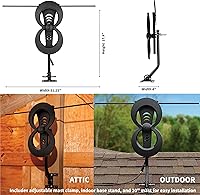
It is genuinely one of the easier outdoor antenna installs available at this size. The included 20-inch mast and pivoting base mount on both horizontal and vertical roof surfaces, and the hardware is straightforward enough that most people handle it without a professional. Factoring in running coax to your TV, plan for a couple of hours total for a rooftop job.

That depends entirely on your local broadcast market, not the antenna itself. Major networks like ABC, NBC, CBS, FOX, and PBS are typically available in most U.S. markets. Up to 15 channels are possible depending on your location. Again, a quick check on a signal mapping site for your address will tell you far more than any spec sheet.

That is one area where this dual-band antenna has a genuine practical advantage. Its multi-directional design picks up signals from a wide arc, so if your NBC affiliate is to the east and your CBS affiliate is to the north, you generally do not need to compromise by pointing it at only one of them.

Standard RG6 coaxial cable with F-connector ends is the right choice — it matches the 75 Ohm impedance and handles the signal well over longer distances. Measure the actual run from the antenna to your TV before buying, accounting for the path through walls or the attic, not just the straight-line distance. Keep the run as short as practical to minimize signal loss.

Technically yes, but you will need a splitter and almost certainly a distribution amplifier to compensate for the signal loss that splitting introduces. Each split roughly halves the signal strength, so two TVs might work fine with a good amp, but four or more becomes increasingly dependent on how strong your incoming signal is to begin with.

The materials are outdoor-rated and designed to stay installed year-round, so rain and wind on their own should not be a problem. That said, some users do report brief signal dropouts during heavy storms — this is a known behavior across most passive OTA antennas, not a defect specific to this outdoor TV antenna. Heavy precipitation can absorb or scatter the broadcast signal itself, which no antenna fully overcomes.

Where to Buy