Overview

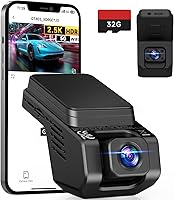
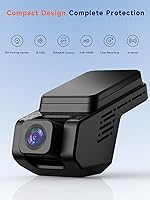
The TUIFAC GT803 Dual Dash Cam is a practical, no-fuss option for drivers who want front-and-cabin coverage without spending a lot. Unlike single-lens cameras, this dual dash cam watches both the road ahead and the interior simultaneously — a setup that makes particular sense for rideshare drivers or anyone regularly transporting passengers. The hardware is compact and mounts cleanly to the dash without dominating your line of sight. A 32GB card included means you can use it the moment it arrives. Just be clear-eyed: this is a solid mid-budget performer, not a rival to high-end recording systems.
Features & Benefits

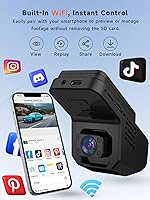
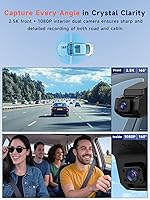
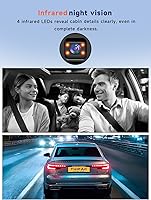
The front lens shoots at 2.5K QHD resolution across a 165-degree field, capturing enough detail to read license plates in decent light — handy if you ever need to dispute a fender-bender. The interior camera runs at 1080P and uses four infrared LEDs plus WDR processing to pick up cabin activity in the dark, which is genuinely impressive at this price point. Wi-Fi connectivity lets you pull footage directly to your phone through a dedicated app — no fumbling with SD cards. The G-sensor locks clips during hard braking or impacts, and parking mode keeps watch while you're away, though a hardwire kit is sold separately.

Best For

This front-and-interior camera was clearly designed with rideshare drivers in mind — Uber and Lyft operators who want a verifiable record of every trip for liability or dispute purposes. It works equally well for parents sharing a car with a teenager and wanting passive visibility into driving habits. The compact form factor and hands-free loop recording make it a reasonable pick for daily commuters who don't want to think about storage management. Since footage is accessible via a phone app, there's no need to eject an SD card roadside. Anyone willing to trade top-tier image quality for affordability and dual coverage will find this a practical fit.

User Feedback

Early buyers have responded positively, with the cabin night vision and Wi-Fi setup drawing consistent praise — people seem genuinely relieved to skip the SD card shuffle. The included memory card also gets mentioned as a welcome touch. On the critical side, some users flag occasional app hiccups and note that daytime color from the front camera isn't quite as vivid as pricier alternatives. The parking mode is a mild gotcha — it works, but the hardwire kit isn't in the box. With a 4.7-star average across 148 ratings, the GT803 earns its early reputation, though long-term durability remains an open question for a brand that only launched in mid-2025.

Pros

  • Dual-channel recording covers both road and cabin simultaneously — a rare feature at this price point.
  • The 32GB card is included in the box, so you can start recording immediately after installation.
  • Infrared cabin night vision is genuinely effective, clearly capturing passengers in complete darkness.
  • Wi-Fi connectivity lets you pull clips to your phone without ever touching the memory card.
  • The compact all-in-one design mounts cleanly without obstructing the driver's sightline.
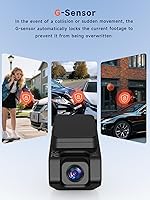
  • G-sensor collision detection automatically locks critical clips before they can be overwritten.
  • The 165-degree front lens captures wide enough coverage to include adjacent lanes comfortably.
  • App-based settings control means you rarely need to interact with the device directly while driving.
  • Supports cards up to 256GB, giving buyers plenty of room to upgrade storage as needed.

Cons

  • The hardwire kit needed for full parking mode functionality is sold separately — a meaningful hidden cost.
  • App stability is inconsistent, with dropped connections and failed downloads reported across both platforms.
  • Daytime front footage can appear washed out or flat in overcast or mixed lighting conditions.
  • The included 32GB card is not a high-endurance variant, which may cause reliability issues with continuous recording.
  • Long-term durability is unproven given the product only launched in mid-2025 with limited ownership data.
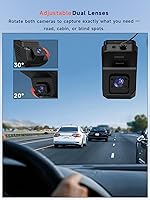
  • The interior and front lenses share a fixed housing, leaving little flexibility to independently angle the cabin camera.
  • The quick guide is too thin to help first-time dash cam owners through installation and configuration.
  • Mount adhesion has been flagged as a concern in high-heat environments where dashboards get very hot.

Ratings

The TUIFAC GT803 Dual Dash Cam scores below are generated by AI after analyzing verified buyer reviews from multiple global markets, with spam, bot-submitted, and incentivized feedback actively filtered out. This dual dash cam has built a notably positive early reputation, and these ratings reflect both what buyers genuinely love and the friction points that show up repeatedly in real-world use. No score has been inflated — strengths and shortcomings are weighted equally.
Video Clarity (Front Camera)
83%
Buyers consistently report that the 2.5K front footage holds up well in typical daytime driving — lane markings, road signs, and nearby license plates come through clearly enough to be useful in a minor collision dispute. For the price tier, the detail level pleasantly surprises most first-time owners.
Under harsh backlit conditions like driving into a low morning sun, some overexposure creeps into the frame. It also falls noticeably short compared to 4K units when buyers try to zoom in on distant plate numbers in post.
Interior Night Vision
88%
This is arguably where the GT803 earns the most goodwill. The four infrared LEDs illuminate the cabin evenly, and reviewers note that passenger faces are clearly identifiable even on unlit rural roads — a genuine comfort for rideshare drivers concerned about accountability.
The IR glow is visible to passengers, which some riders find a little uncomfortable or intrusive at night. A handful of users also report a slight greenish tint under mixed lighting conditions inside the vehicle.
Wi-Fi & App Usability
71%
29%
Connecting to the app is straightforward for most users, and the ability to pull clips directly to a phone without touching the SD card is genuinely convenient — especially after a minor incident when you want footage fast. Initial pairing tends to go smoothly.
App stability is a recurring concern. Some users report the connection dropping mid-download or settings reverting after the app is closed. The interface feels functional but unpolished, and there are occasional complaints about slow video transfer speeds over Wi-Fi.
Parking Mode
61%
39%
When it works, the motion-triggered parking mode gives drivers peace of mind in parking lots and on street-side spots. Users who invested in a hardwire kit report reliable activation on both motion and impact events, with clips properly locked for review.
The hardwire kit is not included in the box, which catches a meaningful number of buyers off guard. Without it, parking mode only runs until the battery drains, making this feature effectively limited out of the box for most users who plug into a standard port.
Value for Money
91%
The combination of dual-channel recording, Wi-Fi, a 32GB card in the box, and night vision capability at this price point is hard to argue with. Most buyers feel they got more than they paid for, particularly those coming from single-lens dash cams with fewer features.
The value perception does erode slightly if a buyer needs to purchase a hardwire kit separately to unlock parking mode fully. When that additional cost is factored in, the overall package becomes less of a standout deal compared to competitors at similar all-in prices.
Build Quality & Design
74%
26%
The compact all-in-one housing is genuinely tidy — it mounts flat against the windshield without a lot of dangling cables or awkward protrusions. Buyers appreciate that it does not block sightlines, which is a real practical advantage over bulkier two-piece systems.
The plastic housing feels adequate but not durable by any stretch. A few users flag that the mount adhesion weakens in hot climates where dashboards heat up significantly. Long-term structural reliability is still unknown given the product only launched in mid-2025.
Installation Ease
86%
Most users report getting the camera installed and recording within 20 minutes of opening the box. The included quick guide is minimal but adequate, and the single-unit design means there is no second camera to route cables for separately — a genuine time saver.
Cable management is left entirely to the buyer, and the power cord length may not reach neatly to the fuse box on larger vehicles without extensions. The quick guide lacks detail for first-time dash cam owners who want more step-by-step instruction.
G-Sensor Accuracy
77%
23%
The adjustable sensitivity is a practical touch — buyers can tune it to avoid false triggers on rough roads while still catching genuine hard-braking events. Multiple reviewers confirm that collision clips were properly locked after real incidents, which is the whole point.
At higher sensitivity settings, bumpy roads or speed bumps can trigger unnecessary clip locks, which slowly fill protected storage over time. Finding the right sensitivity balance takes some trial and error and is not well explained in the included documentation.
Loop Recording Reliability
84%
Auto-loop recording works as expected — the camera wipes the oldest unlocked footage cleanly when the card fills up, and users report no issues with gaps or missed recordings during multi-hour drives. It starts automatically with the ignition, which keeps things effortless.
A small number of users report occasional file corruption on the included 32GB card after extended use. Whether this is a card quality issue or a firmware behavior is unclear, but it is worth monitoring and potentially upgrading to a higher-endurance card.
Daytime Color Accuracy
68%
32%
Under neutral daylight conditions, the front camera produces footage with reasonably natural color rendering. Sky tones and road surfaces look balanced, and the wide-angle lens does not introduce excessive distortion at the edges for a 165-degree lens.
Color saturation can look washed out on overcast days, and some buyers find the footage looks slightly flat compared to reference clips from pricier cameras. White balance occasionally struggles when transitioning between shaded tunnels and bright open roads.
App Features & Controls
66%
34%
Being able to adjust sensitivity, loop clip length, and recording modes directly from a phone rather than navigating a tiny on-device menu is a meaningful quality-of-life improvement. Most core settings are accessible without any learning curve.
The app lacks some expected features — there is no timeline view for footage browsing, and clip organization is basic at best. Advanced users who want granular control over bitrate or exposure settings will find the app frustratingly limited.
Storage Flexibility
82%
18%
Supporting cards up to 256GB gives buyers room to grow, and the 32GB card included is enough for several hours of dual-channel footage before loop recording kicks in. For most daily commuters, this means days of retained footage without manual intervention.
The included card is not rated as a high-endurance variant, which matters for a device writing video continuously in a hot car. Buyers planning heavy use should budget for a proper dash cam-grade card to avoid potential write failures over time.
Companion App Stability
63%
37%
When the connection holds, the app does what it promises — live preview, clip download, and setting adjustment all function. For occasional use, most buyers manage to get footage off the camera without too much frustration.
Dropped connections, failed downloads, and the occasional app crash are mentioned frequently enough to be a real pattern rather than isolated incidents. Android and iOS users both report issues, suggesting this is a firmware or backend problem rather than a platform-specific bug.
Discreetness & Form Factor
79%
21%
The low-profile housing and dark finish mean the GT803 blends into most vehicle interiors without drawing attention. Rideshare drivers who prefer a less conspicuous setup — for passenger comfort or simply aesthetics — find the compact size genuinely appreciated.
The single-unit dual-lens design does mean both cameras are positioned near the same point on the windshield, which limits how much you can independently angle the interior lens. Some taller vehicles may find the interior coverage angle slightly compromised.

Suitable for:

The TUIFAC GT803 Dual Dash Cam is a strong match for rideshare drivers — Uber and Lyft operators especially — who need a reliable record of both road conditions and cabin activity without spending heavily on a professional-grade system. The interior night vision is good enough to clearly capture passenger behavior in the dark, which matters when disputes arise and written accounts alone won't cut it. Parents who share a vehicle with a teenage driver will also find this front-and-interior camera genuinely useful for passive monitoring without an intrusive conversation. Daily commuters who want a set-it-and-forget-it recording setup benefit from the automatic loop recording and app-based footage access — no SD card juggling after a fender-bender. Budget-conscious buyers who have been putting off a dual-channel setup because of price will find the feature-to-cost ratio here surprisingly reasonable.
Not suitable for:

The TUIFAC GT803 Dual Dash Cam is not the right choice for drivers who need the sharpest possible front footage — if reading distant license plates in low light or preserving fine detail when zooming into clips is a priority, a dedicated 4K front-facing camera will serve better. Anyone planning to rely heavily on parking mode should know upfront that the hardwire kit is not included, meaning this feature is effectively limited out of the box unless you budget for that extra purchase separately. Tech-savvy buyers who expect a polished, feature-rich companion app will likely find the current software underwhelming and occasionally frustrating. Since this is a newly launched product with limited long-term ownership data, drivers who put heavy daily mileage on their vehicles and need proven durability over years of continuous heat exposure should approach with some caution. Those who prefer a brand with an established firmware update history and responsive customer support infrastructure may also want to wait until the GT803 has a longer track record.
Specifications

  • Front Resolution: The front camera records at 2.5K QHD (2560×1440P), delivering sharper road detail than standard 1080P dash cams without reaching the file-size demands of 4K.
  • Interior Resolution: The interior-facing camera captures footage at 1080P Full HD, providing clear cabin coverage sufficient for identifying passengers and in-car activity.
  • Front Lens Angle: The front lens covers a 165-degree wide field of view, capturing multiple lanes of traffic and roadside details simultaneously.
  • Interior Lens Angle: The interior camera uses a 160-degree wide-angle lens to cover the full cabin, from the front seats to the rear passenger area.
  • Night Vision: Four infrared LEDs combined with WDR (Wide Dynamic Range) processing enable clear interior recording in total darkness without requiring any ambient cabin light.
  • Connectivity: The GT803 broadcasts a 2.4GHz Wi-Fi signal that pairs with a dedicated mobile app on iOS and Android for wireless footage access and settings control.
  • G-Sensor: An adjustable-sensitivity G-sensor detects sudden impact or hard braking events and immediately locks the active clip to prevent it from being overwritten by loop recording.
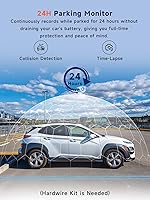
  • Parking Mode: Motion- and impact-triggered parking mode enables automatic recording while the vehicle is unattended, though continuous power via a hardwire kit (sold separately) is required for sustained operation.
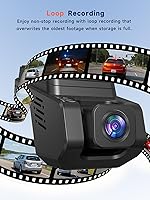
  • Loop Recording: The camera automatically overwrites the oldest unlocked footage once the memory card reaches capacity, ensuring continuous uninterrupted recording without manual card management.
  • Included Storage: A 32GB memory card is included in the box, providing enough capacity for several hours of dual-channel footage before loop recording activates.
  • Max Storage: The GT803 supports microSD cards up to 256GB, allowing buyers to extend recording retention significantly beyond the included card's capacity.
  • Mounting Type: The camera uses a dashboard adhesive mount that attaches directly to the windshield, keeping the unit low-profile and stable during normal driving.
  • Dimensions: The unit measures 5.6″ deep by 2.7″ wide by 5.5″ tall, housing both front and interior lenses in a single compact body.
  • Weight: At 9.9 ounces, the GT803 is light enough that the included adhesive mount holds it securely without risk of sagging over time under normal temperature conditions.
  • Power Input: The camera is powered via the vehicle's 12V cigarette lighter or USB port; hardwire kit connection to the fuse box is possible but requires a separately purchased kit.
  • App Control: All core settings — including sensitivity, clip length, loop intervals, and recording modes — can be configured directly through the companion smartphone app without accessing the device itself.
  • Color: The unit is finished in matte black, allowing it to blend discreetly into most vehicle interiors without drawing passenger attention.
  • Brand & Model: Manufactured by TUIFAC under the model designation GT803, first made available on the market in May 2025.

Related Reviews
70mai A410 Dual Dash Camera
78%
88%
Daytime Video Clarity
71%
Night Vision Performance
74%
Rear Camera Quality
67%
App & Wi-Fi Experience
84%
GPS Accuracy & Data Logging
More
Thinkware Q200 2-Channel Dash Cam
76%
84%
Front Camera Clarity
67%
Rear Camera Clarity
72%
Night Vision Performance
76%
Parking Mode
63%
GPS Alert Accuracy
More
ORSKEY S800 Dual Dash Cam
73%
88%
Value for Money
82%
Front Camera Video Quality
53%
Rear Camera Video Quality
61%
Night Vision Performance
91%
Ease of Installation
More
Ecomoment S70 Dual Dash Cam
83%
88%
Video Quality (Front & Rear)
91%
Night Vision Performance
85%
Ease of Installation
89%
Field of View (Wide Angle)
82%
Durability & Build Quality
More
TUIFAC GT820 Dual-Channel Dash Cam
79%
88%
Video Clarity (Front Camera)
83%
Cabin Night Vision
76%
Fisheye Cabin Coverage
81%
GPS Accuracy & Logging
67%
VEECAR App Experience
More
YEECORE D22 4K Dual Dash Cam
85%
91%
4K Video Quality
88%
Night Vision Performance
85%
Ease of Installation
80%
App Control & Wi-Fi Connectivity
87%
Camera Field of View
More
Kingslim D4 Dual Dash Cam
75%
88%
Daytime Video Quality
71%
Night Vision Performance
84%
GPS Accuracy
57%
App & WiFi Connectivity
76%
Ease of Installation
More
COOAU D20S 4K Dual Dash Cam
83%
91%
Video Quality (Daytime)
75%
Night Vision Performance
88%
Ease of Installation
82%
App Control and Software Experience
86%
GPS Accuracy and Tracking
More
Kolvt L3 4K Dual Dash Cam
85%
91%
Video Quality
87%
Ease of Setup
83%
Parking Mode Performance
89%
Wi-Fi and App Control
85%
Low-Light Performance
More
DDPAI N5 Dual Front and Rear Dash Cam
77%
88%
Video Quality (Front)
71%
Video Quality (Rear)
74%
Parking Mode & Surveillance
82%
Wi-Fi Speed & App Experience
83%
GPS Accuracy & Logging
More

FAQ

It records both simultaneously. The front lens handles the road ahead, while the second lens points into the cabin and records passengers and the interior. Both channels run at the same time, and footage from each is saved together so you can review either angle from the same clip.

No — a 32GB card comes included in the box, so you can start recording right after mounting it. That said, if you drive long hours daily, upgrading to a larger card (the GT803 supports up to 256GB) and ideally a high-endurance variant is worth considering for long-term reliability.

No data plan needed. The camera creates its own local Wi-Fi signal that your phone connects to directly, similar to how you'd connect to a router. From there, the companion app lets you view live footage, download clips, and change settings — all without touching the SD card or needing internet access.

Technically yes, but only for a limited time. Without a hardwire kit, the camera draws power from your car's battery through the cigarette lighter port, which means parking mode will drain your battery if left running for hours. For genuine 24-hour parking coverage, you need a hardwire kit that connects to the fuse box — that is sold separately and not included.

The infrared LEDs that power the night vision are visible as a faint red glow in the dark, so observant passengers may notice them at night. During daytime, the camera is fairly discreet given its compact size, but it is your responsibility to comply with local laws regarding in-car recording and passenger notification.

Yes, the companion app works on both iOS and Android. Pairing is done through the camera's built-in Wi-Fi, so it functions the same way regardless of which platform you use, though some users on both platforms have reported occasional connectivity hiccups with the current app version.

The front camera relies on the vehicle's headlights and available streetlighting rather than infrared — there are no front-facing IR LEDs. It performs adequately on well-lit roads at night, but in genuinely dark rural conditions, detail in the front footage will drop noticeably, as is typical for cameras in this resolution class.

The G-sensor locks clips when it detects a collision, so footage from an impact event is protected before power is cut. However, if power is lost mid-clip without a triggering event — say from a loose cable — the most recent few seconds of footage may not save cleanly. This is a common limitation across most dash cams, not specific to this one.

Not independently — both lenses are housed in the same unit, so adjusting the mount position affects both cameras together. The interior lens covers a wide 160-degree field, which compensates somewhat, but if your vehicle has an unusually long cabin or a steep windshield angle, you may find the interior coverage slightly compromised.

Most buyers report being up and running in under 30 minutes. You mount the unit on the windshield, route the power cable to the cigarette lighter port, insert the SD card, and connect to the app. The included guide is brief, so first-time dash cam owners may want to look up a general installation walkthrough online to feel more confident with cable routing.