Overview

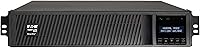
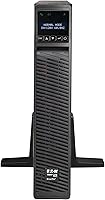
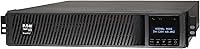
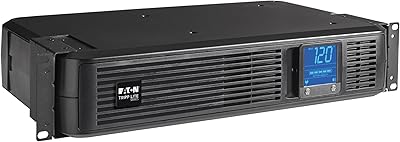
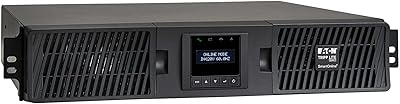
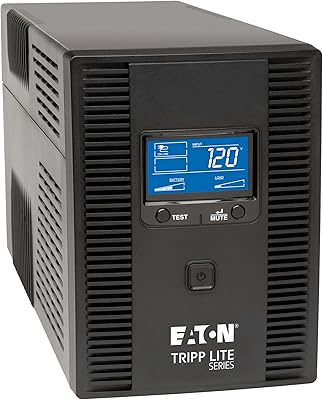
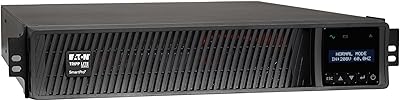
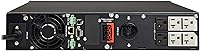
The Tripp Lite SMART2200RMXL2U 2200VA Rack Mount UPS is built for IT professionals who need dependable power protection in small-to-medium server rooms and network closets — not for casual home setups. With a 2200VA/1950W capacity and pure sine wave output, it delivers clean, stable power that sensitive networking and server hardware actually requires. The 2U rack form factor keeps things tidy in a standard cabinet, and the unit converts to tower orientation if needed. This line-interactive UPS has been on the market long enough to build a solid track record, and the price reflects a serious piece of infrastructure equipment.
Features & Benefits

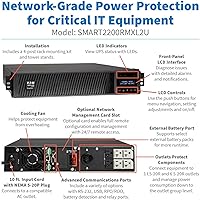
What sets this rack UPS apart from cheaper alternatives starts with the output waveform. Many UPS units produce simulated or stepped sine wave power — fine for basic desktop computers, but problematic for servers with active PFC power supplies. This unit outputs true sine wave power, which those components need to run cleanly. The line-interactive AVR is equally practical: instead of jumping to battery every time voltage dips or spikes, it corrects fluctuations between 83V and 145V in real time, extending battery life considerably. Eight outlets, an EPO port, USB and RS-232 connectivity, and a slot for an optional SNMP card round out a well-considered feature set.

Best For

The Tripp Lite 2200VA unit is a natural fit for IT admins managing a small server room or network closet who need a compact, rack-compatible solution they can trust under pressure. Environments that experience regular voltage instability — brownouts, minor surges — benefit significantly from the AVR functionality, since batteries stay in reserve for actual outages rather than wearing out on routine fluctuations. The ability to add external battery packs matters for anyone needing more than a few minutes of runtime without replacing the entire unit. If your monitoring stack uses SNMP, the optional network card slot makes integration straightforward.

User Feedback

Owners of this line-interactive UPS tend to stick with it for years — that alone says something. Common praise centers on transfer speed and clean power delivery during outages, with several long-term users reporting units running without issue well past the five-year mark. On the critical side, the 55-pound weight comes up often; installing it solo in a rack requires either a second set of hands or a lift. Battery replacement costs are worth factoring in upfront, since lead-acid packs are not cheap. The LCD display earns consistently positive remarks for readability, and the PowerAlert software is regarded as genuinely functional rather than just bundled filler.

Pros

  • True sine wave output protects sensitive servers and active PFC power supplies that cheaper UPS units can damage over time.
  • The AVR circuit handles brownouts and overvoltages without switching to battery, which meaningfully extends battery lifespan.
  • Eight outlets across two receptacle types offer real flexibility for mixed rack equipment.
  • Runtime is expandable via external battery packs, so you can scale protection without replacing the core unit.
  • The optional SNMP card slot makes integration into existing network monitoring tools straightforward.
  • An interactive LCD panel gives at-a-glance visibility into load, battery state, and input voltage without needing software.
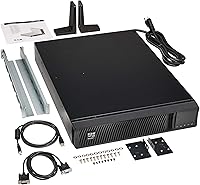
  • The 2U form factor fits standard racks cleanly, and tower conversion adds flexibility for non-rack deployments.
  • Long-term reliability is well-documented — many users report this line-interactive UPS running without issue for five or more years.
  • The EPO port is a practical safety feature for data center environments that require emergency power-off capability.
  • Holds a strong sales rank in its category, reflecting consistent buyer confidence across a long product lifespan.

Cons

  • At 55 pounds, rack installation is genuinely difficult solo and almost always requires a second person or a rack lift.
  • Runtime at full load is only around four minutes, which is tight if your goal is riding out anything beyond a momentary outage.
  • Replacement battery packs carry a notable cost that buyers should budget for upfront, not discover years later.
  • The NEMA 5-20P input plug requires a matching 20-amp circuit, which some older facilities or home offices simply do not have.
  • The optional SNMP card is sold separately, meaning remote monitoring capabilities come at an additional expense on top of an already significant purchase.
  • No built-in outlet-level load management or individual outlet switching, which more advanced rack PDUs typically offer.
  • The unit draws a fair amount of idle power, which adds to operating costs in always-on environments over a multi-year period.
  • Physical depth at 17 inches requires a rack with adequate clearance; shallow-depth cabinets may not accommodate it without modifications.

Ratings

The Tripp Lite SMART2200RMXL2U 2200VA Rack Mount UPS scores below reflect AI-synthesized analysis of verified global buyer reviews, with spam, bot activity, and incentivized submissions actively filtered out before scoring. This rack UPS earns strong marks in several critical areas while showing real, documented friction points that prospective buyers deserve to know about. Both the strengths that keep IT teams loyal to this unit for years and the trade-offs that frustrate first-time installers are transparently represented in every category.
Power Protection Reliability
93%
Owners managing small server rooms consistently report that this line-interactive UPS handles real-world outages, brownouts, and voltage swings without a hiccup. The transfer to battery is fast enough that connected servers never notice the switch, and the AVR functionality keeps input voltage stable through the minor fluctuations that occur dozens of times a day in many commercial buildings.
A small number of users in regions with extreme grid instability report more frequent battery cycling than expected, suggesting the AVR's correction range has limits in particularly volatile power environments. These cases are rare but worth noting for buyers in areas with severely degraded utility infrastructure.
Output Waveform Quality
96%
The pure sine wave output is the single most praised technical feature across long-term owner reviews. IT admins running servers with active PFC power supplies specifically call out how cleanly equipment transitions to battery power — no shutdowns, no fan surges, no POST failures on restart that plague cheaper UPS alternatives in the same environment.
There is essentially no meaningful criticism of the waveform quality itself. The only adjacent complaint is that buyers who do not have active PFC equipment may feel they paid a premium for a feature their specific hardware does not require, making this a spec that rewards informed buyers more than casual ones.
Build Quality
88%
The metal and ABS chassis feels purpose-built rather than cost-engineered, and owners who have run this rack UPS in 24/7 environments for five or more years consistently describe it as holding up without cosmetic or structural degradation. The front panel, LCD bezel, and outlet covers all feel solid relative to competing units in this class.
A handful of users note that the ABS plastic panels around the front face show scuff marks and minor warping over extended high-temperature rack deployments. The metal frame remains intact, but the aesthetic durability of the plastic components lags slightly behind the overall structural quality.
Battery Runtime
61%
39%
For graceful server shutdowns during brief outages, the internal battery runtime is adequate — roughly four minutes at full load gives automated shutdown software enough time to do its job cleanly. Users running loads well below the 1950W maximum report noticeably longer runtimes, sometimes pushing past 15 minutes in lightly loaded configurations.
At full draw, four minutes is tight, and buyers who expect to ride out extended outages on internal batteries alone will be disappointed. The expandable battery pack option addresses this, but it is an additional cost that some buyers discover only after purchase, making the base runtime a frequent source of post-purchase frustration.
AVR Performance
91%
IT admins in older office buildings and light industrial facilities consistently highlight how much the AVR extends battery life over time. By correcting voltage without switching to battery, the Tripp Lite 2200VA unit avoids the constant charge-discharge micro-cycling that wears out batteries prematurely in cheaper standby UPS designs running the same loads.
The AVR correction range tops out at 145V on the high end, which is sufficient for most North American environments but may fall short in facilities with occasional severe voltage spikes above that threshold. In those edge cases, the unit still switches to battery correctly, but the AVR benefit is partially negated.
Installation Experience
58%
42%
Once physically in the rack, the installation process is straightforward — cable connections are clearly labeled, the LCD walks through initial setup intuitively, and the PowerAlert software installs without issues on most operating systems. Users who had a second person assist with the physical lift report a fast, clean install overall.
At 55 pounds, solo installation into a rack is genuinely difficult and comes up repeatedly as a friction point in reviews. Buyers without a rack lift or a second technician available describe struggling with alignment and risking dropping the unit. This is not a design flaw per se, but it is a real logistical constraint that catches some buyers off guard.
Management Interface
82%
18%
The interactive LCD panel is consistently described as clear, readable, and actually informative — showing load percentage, battery charge, input voltage, and runtime estimates in a format that makes day-to-day monitoring quick and intuitive. The USB connectivity and PowerAlert software add useful automated shutdown and logging capabilities for connected servers.
Remote management requires purchasing the optional SNMP card separately, which feels like a missing piece given the unit's positioning as an enterprise-class product. Users expecting out-of-the-box network monitoring integration are regularly surprised to find that capability costs extra.
Outlet Configuration
79%
21%
Eight total outlets across two receptacle types gives genuine flexibility for mixed rack equipment, and the inclusion of NEMA 5-15/20R combo outlets is a practical touch for environments with varying device power requirements. Most small server room deployments report the outlet count as sufficient without needing a supplemental PDU.
There is no individual outlet switching or load management — all outlets are live simultaneously with no way to remotely power-cycle a specific device. For IT admins who want that level of granular control, this unit requires pairing with a managed PDU, which adds cost and complexity to the overall setup.
Noise Level
74%
26%
Under normal utility power with the AVR active, the unit operates quietly enough that users in small network closets adjacent to office space do not report complaints. The fan behavior is temperature-regulated, which keeps noise at a reasonable level during lighter loads and cooler ambient conditions.
During heavy load or active battery discharge, the fan ramps up audibly and becomes noticeable in quieter environments. Users who have deployed this in open office areas or small businesses without a dedicated server room mention the fan noise as a recurring mild annoyance during outage events.
Value for Money
77%
23%
For IT professionals who understand what they are buying, the combination of true sine wave output, AVR, expandable runtime, and long service life makes the price defensible against cheaper alternatives that require replacement sooner or cause equipment issues. Long-term owners frequently note that the unit more than paid for itself by protecting hardware through multiple outage events.
The upfront cost is significant, and when you factor in the separately purchased SNMP card and eventual battery replacement costs, the total ownership figure climbs considerably. Buyers who underestimate ongoing costs or who do not fully utilize the sine wave and AVR features may feel the price-to-value ratio does not hold up as well over time.
Battery Replacement
63%
37%
Replacement batteries are user-accessible without specialized tools, and Tripp Lite has maintained parts availability for this unit across its long product lifespan — a genuine advantage over competitors whose battery packs become difficult to source after a few years. The process itself is straightforward for anyone comfortable with basic hardware work.
Replacement battery packs carry a notable cost that buyers frequently describe as higher than expected when they first encounter it three to five years into ownership. The expense is unavoidable given the lead-acid chemistry, and some users who did not budget for it upfront describe it as a frustrating surprise.
Long-Term Durability
89%
Multi-year and even decade-long ownership reports are genuinely common in the review pool for this unit, which is unusual for any power protection product. IT admins who have run this line-interactive UPS through multiple battery replacement cycles describe the core electronics as remaining fully functional and reliable well beyond typical product expectations.
Longevity depends significantly on operating environment — units in hot, poorly ventilated racks show accelerated battery wear and occasional fan issues after extended use. The hardware itself holds up, but thermal management of the deployment space has an outsized impact on how long the unit performs at full specification.
Software & Monitoring
71%
29%
PowerAlert software handles automated graceful shutdowns reliably, which is its core job, and users running it on Windows Server environments report stable, low-maintenance operation once configured. The USB connection is recognized cleanly across modern operating systems without driver conflicts in most deployments.
The software interface itself is dated and lacks the polish of more modern UPS management platforms. Linux compatibility generates occasional complaints, and users who want deeper integration with virtualization platforms like VMware report needing workarounds or third-party tools to get the level of automation they want.
Form Factor Flexibility
83%
The ability to use this unit in either rack or tower orientation without modification is a practical feature that extends its usefulness across different deployment scenarios. Small businesses that start with a tower deployment and later move to a proper rack can reuse the same unit without any hardware changes.
At 23.7 inches deep and requiring at least 17 inches of usable rack depth, this unit does not fit shallow-depth wall-mount cabinets or compact rack enclosures that are common in small office deployments. Buyers who do not verify rack depth compatibility before purchasing occasionally find themselves with a unit that physically does not fit their existing cabinet.

Suitable for:

The Tripp Lite SMART2200RMXL2U 2200VA Rack Mount UPS is purpose-built for IT professionals who manage small-to-medium server rooms, network closets, or edge computing environments where power quality is non-negotiable. If your rack holds servers, managed switches, or storage arrays — particularly equipment with active PFC power supplies — the true sine wave output here is not optional, it is essential. Organizations in areas with unreliable utility power get an especially strong return from the built-in AVR, which quietly corrects voltage fluctuations without touching the battery, extending its useful life over years of daily use. The expandable runtime architecture is a real advantage for anyone who needs more than a few minutes of protection: rather than buying an entirely new unit, you add external battery packs as budget and requirements grow. IT teams that already operate SNMP-based monitoring infrastructure will also find the optional network card slot a practical fit for folding power status into existing dashboards.
Not suitable for:

If your goal is basic surge protection or keeping a home desktop and monitor alive during brief outages, the Tripp Lite SMART2200RMXL2U 2200VA Rack Mount UPS is substantially more than you need — and the price tag will reflect that immediately. Home users or small offices with a single workstation and no rack enclosure should be looking at a much simpler, less expensive standby UPS instead. The 55-pound weight and 2U rack form factor assume you have both a standard equipment rack and ideally a second person available during installation; anyone expecting to slide this in solo without a rack or lift tool is in for a frustrating experience. Budget-conscious buyers should also factor in the total cost of ownership: lead-acid battery packs require periodic replacement, and those replacement costs add up meaningfully over a five-to-seven year lifespan. Finally, if your devices draw well below the 1950W capacity and you have clean, stable utility power, the AVR and sine wave capabilities are features you are paying for but may rarely use.
Specifications

  • Capacity: The unit delivers 2200VA and 1950W of output power, suitable for protecting multiple servers and networking devices simultaneously.
  • Topology: Line-interactive design with automatic voltage regulation actively corrects input voltage fluctuations without drawing on battery reserves.
  • Output Waveform: Pure sine wave output ensures compatibility with active PFC power supplies found in modern servers and enterprise networking equipment.
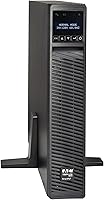
  • Form Factor: Fits a standard 2U rack bay and can also be oriented as a freestanding tower unit without additional hardware modifications.
  • Input Voltage Range: Accepts input voltage between 83V and 145V and corrects it to stable 120V output before power reaches connected equipment.
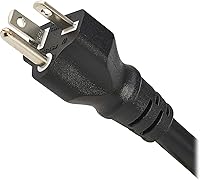
  • Input Plug: Uses a NEMA 5-20P input plug, which requires a dedicated 20-amp circuit for proper installation.
  • Outlets: Provides eight total protected outlets: four NEMA 5-15R and four NEMA 5-15/20R, accommodating a mix of standard and higher-draw devices.
  • Runtime: Delivers approximately 4 minutes of runtime at full 1950W load and around 12 minutes at half load (975W) on internal batteries alone.
  • Expandable Runtime: Compatible with Tripp Lite external battery packs, allowing extended runtime beyond internal battery limits without replacing the UPS unit itself.
  • Management Ports: Includes USB and RS-232 serial ports for local monitoring and software integration, plus an emergency power-off (EPO) port for safety compliance.
  • Network Card Slot: Features an internal expansion slot compatible with the WEBCARDLXE SNMP/Web management card for remote monitoring and control over a network.
  • Display: An onboard interactive LCD panel shows real-time load percentage, battery charge level, input voltage, and estimated runtime at a glance.
  • Battery Type: Uses sealed valve-regulated lead-acid (VRLA) batteries that are maintenance-free under normal operating conditions and replaceable without voiding warranty.
  • Dimensions: Measures 23.7 x 17 x 3.4 inches, occupying 2U of vertical rack space and requiring at least 17 inches of usable rack depth.
  • Weight: The unit weighs 55 pounds, which is typical for this capacity class but warrants two-person handling during rack installation.
  • Input Voltage: Designed for 120V AC electrical systems standard in North American commercial and light industrial environments.
  • Efficiency: Operates at 96% AC mode efficiency at full load, reducing energy waste compared to older or lower-quality UPS designs in the same class.
  • Construction: Chassis combines acrylonitrile butadiene styrene (ABS) panels with a metal frame, balancing structural rigidity with manageable overall weight.

Related Reviews

Tripp Lite SMART1500LCD 1500VA Rackmount UPS
77%
91%
Voltage Regulation (AVR)
93%
Battery Replaceability
54%
Waveform Compatibility
62%
Runtime Under Load
88%
Rack Installation
More
Tripp Lite RS1215-RA
83%
93%
Build Quality
91%
Outlet Layout & Accessibility
88%
Cable Management & Cord Design
84%
Power Capacity & Circuit Protection
41%
Surge & Spike Protection
More
APC Smart-UPS SRT3000RMXLA 3000VA Rack UPS
77%
94%
Reliability & Uptime Protection
92%
Power Quality & Output
76%
Battery Performance
51%
Battery Replacement Cost
91%
Build Quality & Construction
More
Tripp Lite SMART500RT1U 500VA UPS
83%
88%
Performance
91%
Surge Protection
85%
Build Quality
87%
Usability/Installation
62%
Runtime at Full Load
More
Tripp Lite OMNIVS1200LCD 1200VA UPS Battery Backup
77%
91%
Voltage Regulation (AVR)
93%
Noise Level
58%
Battery Runtime
89%
Ease of Setup
84%
Build Quality
More
Tripp Lite SU1000RTXLCD2U 1000VA Rackmount UPS
79%
94%
Power Protection Quality
92%
Output Waveform Purity
58%
Battery Runtime
89%
Display & Monitoring
61%
Network Management Readiness
More
Tripp Lite AVR750U UPS Battery Backup
85%
89%
Overall Performance
92%
Value for Money
85%
Ease of Installation
70%
Noise Level
90%
Reliability During Power Outages
More
Tripp Lite SU750RTXLCD2U 750VA Rack UPS
79%
94%
Power Protection Reliability
91%
Output Waveform Quality
88%
Build Quality
86%
LCD Interface & Monitoring
89%
Battery Serviceability
More
Tripp Lite SMX1500XLRT2U 1500VA Rack UPS
78%
88%
Build Quality
91%
Power Protection
67%
Battery Life & Runtime
52%
Battery Replacement
84%
Outlet Count & Layout
More
Tripp Lite OMNI1500LCDT UPS Battery Backup
83%
88%
Performance
91%
Reliability during Power Outages
85%
Surge Protection Effectiveness
90%
Ease of Use (LCD Display)
80%
Setup and Installation
More

FAQ

It outputs genuine pure sine wave power during both utility and battery modes, which is exactly what you need for servers and any equipment with active PFC power supplies. A simulated sine wave UPS can cause those devices to run hot, behave erratically, or fail to start cleanly after a transfer — this one avoids all of that.

No, a standard 15-amp outlet will not work. The input plug is a NEMA 5-20P, which requires a dedicated 20-amp circuit and a matching 20-amp receptacle. If your server room or closet does not already have one, you will need an electrician to add it before installation.

You can absolutely extend runtime by connecting compatible Tripp Lite external battery packs. This is one of the practical advantages of the Tripp Lite SMART2200RMXL2U 2200VA Rack Mount UPS over fixed-battery competitors — you can grow your runtime budget incrementally as needs change without replacing the entire unit.
At full load (1950W), expect roughly four minutes — enough time to execute a graceful shutdown of connected servers. At half load (around 975W), runtime extends to approximately 12 minutes. If your environment needs longer coverage, adding an external battery pack is the practical solution.

The SNMP/Web card is not included — the unit has a slot for it, but the card itself (the WEBCARDLXE) is sold separately. If remote monitoring and network integration are important to your setup, budget for that card in addition to the UPS itself.

Technically one person can do it, but at 55 pounds it is genuinely awkward and risks both injury and equipment damage. Two people or a rack lift makes the job safe and straightforward. Most experienced IT admins would not attempt a solo install with a unit this heavy.

The AVR circuit continuously monitors incoming voltage and uses an internal transformer to boost or trim it back to a stable 120V output — all without touching the battery. In buildings with inconsistent power, this keeps connected equipment running cleanly during brownouts and minor surges, and it significantly extends battery life since the battery only activates during true outages.

Under typical operating conditions, the internal batteries last three to five years before capacity degrades noticeably. Replacement is straightforward — the batteries are user-accessible without tools in most configurations — but the cost of replacement packs is not trivial, so it is worth budgeting for ahead of time.

Yes. The unit can be oriented vertically as a freestanding tower, which works well in smaller deployments where a rack is not available. No special conversion kit is required — it is designed to function in either position out of the box.

Owners consistently describe the display as genuinely useful. It shows real-time load percentage, battery charge status, input voltage, and estimated remaining runtime — all the information you actually need when something goes wrong. It is not a gimmick; it is a practical operational tool for anyone managing a small rack environment.