Overview

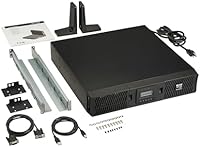
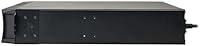
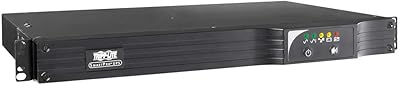
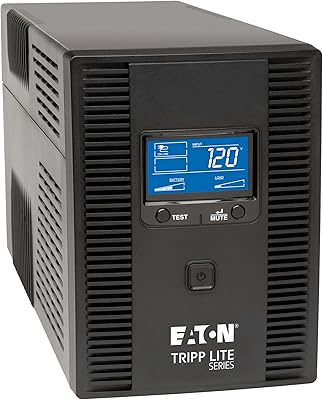
The Tripp Lite SU750RTXLCD2U 750VA Rack UPS is a double-conversion online UPS built for small server rooms, network closets, and anywhere clean, uninterrupted power genuinely matters. Unlike budget line-interactive units that expose your gear to brief transfer delays, this rack UPS runs in continuous double-conversion mode at all times, delivering pure sine wave output around the clock. Its 675W capacity comfortably covers a modest rack of switches, a NAS, and a firewall. The 2U chassis slides into a standard rack or stands upright as a tower, giving it real deployment flexibility. On the market since 2012 and still holding a top-250 Best Seller rank, it carries the kind of track record that matters when you are betting critical equipment on it.
Features & Benefits

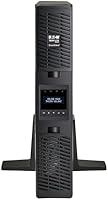
The architecture here is what separates the Tripp Lite SmartOnline unit from cheaper alternatives. Because it operates in continuous double-conversion mode, connected equipment never draws directly from utility power — the inverter is always in the loop, so there is zero transfer time when mains power drops. Eight 5-15R outlets split across two independently switchable load banks let you cut non-critical devices and extend runtime for what actually matters. Batteries are hot-swappable and user-replaceable, so a scheduled swap takes minutes without pulling gear offline. The LCD front panel cycles through ten data screens, while RS-232 and USB ports plus an optional network management card round out a solid connectivity package.

Best For

This double-conversion UPS is a strong fit for small-to-midsize businesses running network infrastructure — a rack holding a managed switch, a NAS array, and an edge firewall — where even a brief power hiccup could corrupt data or drop a VPN tunnel. IT teams managing unattended remote equipment will appreciate the optional network card, which enables full UPS management without anyone on-site. If your facility sees frequent voltage instability, a line-interactive unit will not cut it; the continuous online conversion here isolates gear completely. The ability to add up to four external battery modules also appeals to anyone planning to grow their rack without replacing the whole unit.

User Feedback

Long-term owners of this rack UPS consistently highlight two things: rock-solid transfer performance and build quality that holds up through years of continuous operation. The LCD readout draws specific praise for being genuinely useful rather than decorative, and most users report completing battery swaps without tools or outside help. On the downside, at over 40 pounds, sliding it into a rack solo is genuinely awkward — bring a second person. Fan noise under load is another recurring note; it is audible enough to be noticeable in a quiet office environment. The network card earns strong reviews from buyers who add it, but the extra cost is real and worth factoring into your budget from the start.

Pros

  • Double-conversion online topology delivers zero-transfer-time protection that line-interactive UPS units simply cannot match.
  • Pure sine wave output keeps sensitive electronics and active PFC power supplies running without stress or instability.
  • Two independently switchable outlet banks let you cut non-critical loads and extend runtime for what actually matters.
  • Hot-swappable, user-replaceable batteries mean scheduled maintenance happens in minutes without taking equipment offline.
  • The LCD front panel is genuinely informative, cycling through ten data screens covering load, runtime, and input voltage.
  • Chassis converts between 2U rack-mount and tower orientations, giving real flexibility across different deployment scenarios.
  • Compatible with up to four external battery modules for extended runtime as your infrastructure needs grow.
  • RS-232 and USB ports with included cables make software integration straightforward without hunting for extra accessories.
  • A two-year warranty backed by $250,000 connected equipment insurance adds a meaningful safety net for business deployments.
  • Sustained Best Seller ranking since 2012 reflects a long track record of reliability that newer models cannot yet claim.

Cons

  • At over 40 pounds, racking this double-conversion UPS solo is genuinely awkward and realistically a two-person job.
  • Fan noise under sustained load is noticeable enough to be disruptive in quiet office or shared workspace environments.
  • The WEBCARDLXE network management card — one of the most compelling features — costs extra and is not included by default.
  • External battery modules for extended runtime are sold separately, so the headline price understates the real cost of a full setup.
  • The 675W continuous load ceiling leaves limited headroom for denser racks, potentially requiring an upgrade sooner than expected.
  • Eight outlets are all standard 5-15R; users needing higher-amperage or internationally compatible receptacles will need adapters.
  • The physical footprint and weight make this rack UPS a poor fit for deployments where space or mobility is a priority.
  • EnviroSense2 environmental monitoring modules, while compatible, are additional purchases that add to total cost of ownership.

Ratings

The scores below reflect an AI-driven analysis of verified global buyer reviews for the Tripp Lite SU750RTXLCD2U 750VA Rack UPS, with spam, incentivized submissions, and bot activity actively filtered out before any scoring was applied. Ratings capture the full picture — from the aspects that genuinely impress long-term IT professionals to the friction points that surface repeatedly in real-world deployments. Both strengths and shortcomings are weighted transparently so you can make an informed call.

Power Protection Reliability
94%
This is where the double-conversion design earns its keep. Long-term owners in environments with frequent brownouts and voltage instability consistently report that connected servers and network equipment come through events without so much as a blip. The zero-transfer-time architecture is not a marketing claim here — users running sensitive NAS arrays and active PFC server PSUs validate it repeatedly.
A small number of users in regions with severely degraded utility power report that the internal batteries cycle more frequently than expected, accelerating wear over time. This is less a flaw in the unit and more a mismatch between the load environment and battery capacity, but it is worth flagging for high-stress deployments.
Output Waveform Quality
91%
The pure sine wave output draws consistent praise from IT administrators who previously dealt with fan noise, instability, or boot failures caused by modified sine wave UPS units. Running modern server hardware, storage controllers, and network switches on clean sine wave power makes a tangible difference that experienced users notice immediately.
For buyers powering only basic resistive loads like older desktop PCs or simple networking gear, the sine wave quality is technically overkill — a cheaper line-interactive unit would suffice. That said, this is really a use-case mismatch rather than a product deficiency, and most buyers in this category genuinely need what it delivers.
Build Quality
88%
The metal chassis feels solid and purpose-built for continuous rack duty, not a consumer-grade enclosure dressed up for business use. Users who have kept this double-conversion UPS running for three or more years in live server rooms describe it as holding up without mechanical surprises, loose panels, or connector degradation.
The sheer weight — over 40 pounds — is a recurring complaint that touches on build quality perception. Some users feel the chassis could have been engineered to be somewhat lighter without sacrificing structural integrity, particularly given the price tier. Rubber feet on the base also wear faster than expected in tower configuration.
LCD Interface & Monitoring
86%
The front panel LCD is one of the most consistently praised features among real-world users. Being able to cycle through ten screens of live data — load percentage, estimated runtime, input and output voltage — without needing software or a laptop connected is genuinely useful during installs, troubleshooting, and routine checks in a busy equipment room.
A handful of users note that the LCD backlight dims noticeably after extended periods, making it harder to read in lower-light rack environments without leaning in close. The menu navigation is also described as slightly unintuitive initially, requiring a read-through of the manual before the screen cycling logic clicks.
Battery Serviceability
89%
Hot-swappable, user-replaceable batteries are a standout feature that IT staff in small businesses genuinely appreciate — no service call, no downtime window to coordinate, no waiting for a technician. Users report that a battery swap on this rack UPS takes under fifteen minutes with basic familiarity, which translates directly to lower total cost of ownership over a multi-year deployment.
The replacement battery pack (model 744-A3960) carries a notable cost of its own, and sourcing it from third-party suppliers rather than Tripp Lite directly is a gray area some users navigate nervously. A few buyers also report that the battery compartment latch feels slightly flimsy compared to the otherwise sturdy chassis construction.
Noise Level
61%
39%
At idle or very light loads, the unit runs quietly enough that most users in dedicated server closets barely notice it. The fan speed control responds dynamically to load, so during overnight low-traffic periods the audible footprint is minimal and unlikely to disturb adjacent spaces.
Under sustained mid-to-heavy loads, the cooling fans spin up to a level that multiple reviewers describe as clearly audible from across a small room or through a thin wall. For deployments in open office areas, quiet co-working spaces, or anywhere acoustics matter, the fan noise under load is a legitimate problem that no amount of configuration can fully resolve.
Installation Experience
63%
37%
The chassis fits cleanly into standard 19-inch racks and the rotating control panel is a thoughtful design touch that makes the rack-to-tower conversion straightforward. Users with rack installation experience report the physical fit is accurate and the included documentation covers the basics adequately.
The 40-plus pound weight makes solo rack installation genuinely awkward and, depending on rack height, potentially unsafe without a second person or a proper lift. Several users flagged this as an underestimated challenge, particularly when the rack is already partially loaded and access is constrained. Rail kit compatibility also requires independent verification with Tripp Lite.
Remote Management Capability
74%
26%
Users who add the optional WEBCARDLXE network card consistently describe it as a worthwhile investment rather than an afterthought accessory. Full IP-based outlet control, load shedding configuration, and safe shutdown scripting from a browser interface are features that IT admins managing remote sites rely on heavily and report working reliably.
The network management card is sold separately at additional cost, which frustrates buyers who assume remote monitoring is included at this price tier. Out of the box, management is limited to RS-232 and USB connections, which requires a physically present device — a meaningful gap for unattended remote deployments that the base configuration does not solve.
Runtime Performance
71%
29%
At moderate loads — a firewall, a managed switch, and a small NAS — users report runtime in the 10-to-15-minute range on internal batteries, which is enough to handle brief outages and initiate graceful shutdowns. The compatibility with up to four external battery modules gives this rack UPS a clear upgrade path for users who need longer runtime windows.
At heavier loads approaching the 675W ceiling, internal battery runtime drops quickly to a range that many users describe as barely adequate for a clean shutdown sequence. The external battery modules that solve this are additional purchases, and the total cost of a fully extended runtime setup climbs steeply from the already premium base price.
Software & Connectivity
78%
22%
RS-232 and USB cables are included in the box, which is a small but appreciated detail that saves an immediate trip to find accessories. Compatibility with Network UPS Tools under Linux is confirmed by home lab users and SMB admins alike, and Tripp Lite's own PowerAlert software works reliably for Windows-based shutdown automation.
The software ecosystem lags slightly behind competitors in terms of modern web-based management without the optional network card. A few Linux users report that initial NUT configuration requires manual driver work that is not documented in Tripp Lite's own guides, adding friction for admins who expected plug-and-play integration.
Value for Money
67%
33%
For buyers who genuinely need double-conversion protection with pure sine wave output, the pricing is defensible — you are paying for a topology and a build standard that cheaper units do not offer. The included $250,000 equipment insurance and two-year warranty add real monetary value that partially offsets the premium entry cost.
The total cost of ownership climbs fast once you factor in the optional network card, external battery modules, and eventual battery replacement packs — all sold separately. Buyers comparing the base price to a fully equipped competitive unit sometimes find the effective cost gap less favorable than the headline price suggests.
Outlet Configuration
79%
21%
Eight outlets across two independently switchable banks gives meaningful flexibility for mixed-criticality loads in a single rack. Being able to shed non-critical devices — a KVM switch, a secondary monitor, a backup drive — during a battery event while keeping the primary server and firewall alive is a genuinely useful operational capability.
All eight receptacles are standard 5-15R, which limits compatibility with higher-draw devices that use 5-20R or C13/C19 connectors without adapters. Users running denser server hardware occasionally find the outlet types a constraint, particularly when mixing older and newer rack equipment with varying plug standards.
Warranty & Support
82%
18%
A two-year manufacturer warranty is competitive at this product tier, and Tripp Lite's technical support — available via phone, web, and email — draws generally positive feedback from users who have needed to engage it. The $250,000 connected equipment insurance is a concrete differentiator that resonates with business buyers managing risk formally.
Some users report that warranty claim processing can be slower than expected, with response times varying noticeably depending on the channel used. A small number of reviewers felt that front-line support needed escalation before reaching staff with deep technical knowledge of the unit's double-conversion architecture.
Physical Footprint & Flexibility
76%
24%
The rack-to-tower convertibility is a practical feature that gives this double-conversion UPS real deployment flexibility for operations that may not have a dedicated rack available at initial installation. The 2U profile is space-efficient for what the unit delivers technically, and the chassis dimensions are consistent with standard rack planning assumptions.
At 24 x 20 x 9.5 inches and over 40 pounds, this is not a unit you relocate casually or tuck into a cramped equipment closet without planning. Users in space-constrained environments occasionally find the depth catches them off guard, particularly in shallower rack enclosures where cable management behind the unit becomes difficult.

Suitable for:

The Tripp Lite SU750RTXLCD2U 750VA Rack UPS is purpose-built for IT professionals and small business operators who need genuinely reliable power protection for network-critical equipment — not just a basic surge strip with a battery attached. If you are running a rack that includes a managed switch, a NAS, a firewall, or an edge server, the continuous double-conversion topology means your gear is always drawing clean, regulated sine wave power regardless of what the utility line is doing. IT administrators who oversee remote or unattended installations will find real value in the optional network management card, which allows full UPS monitoring and control without anyone physically on-site. Organizations operating in areas with unstable utility power — frequent brownouts, sags, or surges — will benefit most from the online double-conversion design, since a line-interactive unit simply cannot isolate equipment from those conditions the same way. The expandable runtime via external battery modules also makes this rack UPS a sensible long-term investment for anyone expecting their infrastructure to grow without wanting to replace core power protection hardware every few years.
Not suitable for:

The Tripp Lite SU750RTXLCD2U 750VA Rack UPS is not the right tool for every situation, and being honest about that matters. At over 40 pounds and a premium price point, it is clearly overkill for someone who just wants to protect a single workstation or a home desktop from occasional outages — a basic line-interactive unit costs a fraction of the price and handles that job adequately. The 675W continuous load ceiling is also a real constraint; if your rack is already pulling close to that figure, you will need a larger UPS rather than stretching this one to its limits. Budget-conscious buyers should also factor in that key capabilities — specifically the network management card and extended battery modules — cost extra on top of the already significant base price, so the total investment can climb quickly. Anyone working in a noise-sensitive environment like a shared office or a recording studio should know upfront that the cooling fans become audible under sustained load. And if your operation does not require rack mounting at all, the physical footprint and weight make this a harder sell compared to tower-only alternatives at lower price tiers.
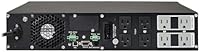
Specifications

  • Capacity: This rack UPS provides 750VA and 675W of continuous power output, suitable for modest server room and network closet loads.
  • Topology: Double-conversion online architecture keeps connected equipment permanently isolated from utility power, with the inverter always active in the power path.
  • Output Waveform: Pure sine wave AC output is delivered at all times, making it compatible with active PFC power supplies and other sensitive electronics.
  • Outlets: Eight 5-15R receptacles are divided into two independently switchable load banks of four outlets each, enabling selective load shedding during battery operation.
  • Form Factor: The chassis occupies 2U of standard rack space and includes a rotating control panel that also supports freestanding tower orientation.
  • Dimensions: Physical dimensions measure 24 x 20 x 9.5 inches, and the unit weighs 40.1 pounds fully assembled with internal batteries installed.
  • Battery Type: Two 12V sealed lead acid batteries are included and pre-installed, with no external charging equipment required before first use.
  • Battery Service: Internal batteries are hot-swappable and user-replaceable in the field using the designated model 744-A3960 replacement pack, requiring no service call.
  • Runtime Extension: Up to four optional BP36RT external battery modules can be connected to extend runtime beyond what the internal batteries alone can provide.
  • Display: A front-mounted LCD panel offers ten selectable information screens covering load percentage, estimated runtime, input voltage, output voltage, and active alarm status.
  • Connectivity: RS-232 serial and USB ports are included with cables in the box, enabling communication with shutdown software on connected servers and workstations.
  • Network Management: The optional WEBCARDLXE network interface card (sold separately) enables full remote UPS configuration, outlet control, and safe shutdown over IP.
  • Environmental Monitoring: The unit is compatible with EnviroSense2 accessory modules (E2MT, E2MTDO, E2MTHDI) for temperature, humidity, and dry contact monitoring at the rack level.
  • Emergency Control: An RPO/ROO port supports emergency remote power-off and remote restart of all connected outlets from an external control point.
  • Transfer Time: Because of its double-conversion design, there is zero transfer time to battery during a power outage — the inverter never switches off under normal operation.
  • Warranty: Tripp Lite covers this unit with a two-year manufacturer warranty and provides support via phone, web, and email throughout the coverage period.
  • Insurance: A $250,000 connected equipment protection policy is included, covering damage to properly connected gear caused by a verified UPS failure.
  • ASIN: The Amazon Standard Identification Number for this product is B009NE77UK, and the manufacturer model number is SU750RTXLCD2U.

Related Reviews
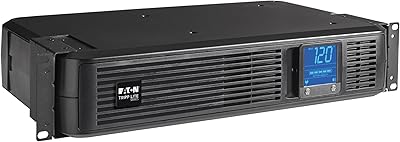
Tripp Lite SMART2200RMXL2U 2200VA Rack Mount UPS
79%
93%
Power Protection Reliability
96%
Output Waveform Quality
88%
Build Quality
61%
Battery Runtime
91%
AVR Performance
More
Tripp Lite SMART1500LCD 1500VA Rackmount UPS
77%
91%
Voltage Regulation (AVR)
93%
Battery Replaceability
54%
Waveform Compatibility
62%
Runtime Under Load
88%
Rack Installation
More
Tripp Lite SMART500RT1U 500VA UPS
83%
88%
Performance
91%
Surge Protection
85%
Build Quality
87%
Usability/Installation
62%
Runtime at Full Load
More
Tripp Lite SMART1500LCDT UPS Battery Backup
86%
88%
Value for Money
94%
Ease of Setup
86%
Surge Protection Performance
83%
Battery Backup Duration
90%
Voltage Regulation Reliability
More
Tripp Lite SU1000RTXLCD2U 1000VA Rackmount UPS
79%
94%
Power Protection Quality
92%
Output Waveform Purity
58%
Battery Runtime
89%
Display & Monitoring
61%
Network Management Readiness
More
Tripp Lite AVR750U UPS Battery Backup
85%
89%
Overall Performance
92%
Value for Money
85%
Ease of Installation
70%
Noise Level
90%
Reliability During Power Outages
More
Tripp Lite AVR700U 700VA UPS Battery Backup
76%
91%
Voltage Protection
93%
Ease of Setup
54%
Battery Runtime
74%
Build Quality
61%
Battery Longevity
More
Tripp Lite SMX1500XLRT2U 1500VA Rack UPS
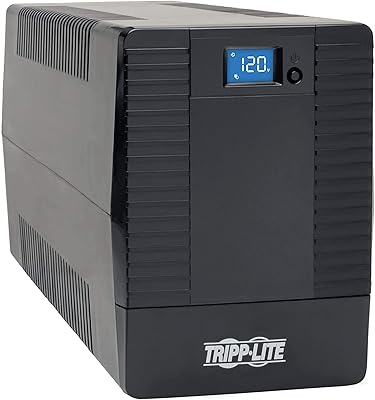
78%
88%
Build Quality
91%
Power Protection
67%
Battery Life & Runtime
52%
Battery Replacement
84%
Outlet Count & Layout
More
Tripp Lite OMNIVS1200LCD 1200VA UPS Battery Backup
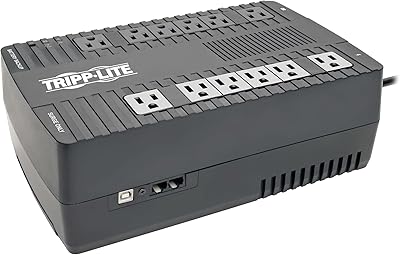
77%
91%
Voltage Regulation (AVR)
93%
Noise Level
58%
Battery Runtime
89%
Ease of Setup
84%
Build Quality
More
Tripp Lite OMNI1500LCDT UPS Battery Backup
83%
88%
Performance
91%
Reliability during Power Outages
85%
Surge Protection Effectiveness
90%
Ease of Use (LCD Display)
80%
Setup and Installation
More

FAQ

Yes, and this is one of the main reasons to choose a double-conversion unit over a cheaper line-interactive alternative. Because the output is always pure sine wave — not a simulated or stepped approximation — active PFC power supplies operate cleanly without the compatibility issues or buzzing fans you sometimes get with modified sine wave UPS units.

Runtime depends entirely on how much load is connected, so there is no single answer. At around half load (roughly 300-350W), you can typically expect somewhere in the range of 10 to 15 minutes on the internal batteries alone. Adding optional external battery modules extends that significantly. The LCD display gives you a live runtime estimate based on current draw, which is far more useful than any static spec sheet number.

You can absolutely do it yourself. The internal batteries are hot-swappable, meaning you can pull and replace them without shutting down connected equipment or even powering off the UPS. Tripp Lite sells the replacement pack (model 744-A3960) separately, and the process is straightforward enough that most IT staff handle it without issue.

It is sold separately. The base unit includes RS-232 and USB connectivity for local shutdown software integration, but the WEBCARDLXE network card — which enables full IP-based remote management — is an additional purchase. If remote monitoring matters to your deployment, factor that cost in from the start rather than treating it as a surprise later.

Yes, it is designed for standard 19-inch rack enclosures and occupies 2U of rack space. The control panel rotates to accommodate rack-mount orientation, and rail kit compatibility should be confirmed with Tripp Lite for your specific rack model since rail kits may be sold separately.

At idle or light load, the fans are relatively quiet. Under sustained heavier loads, the cooling fans spin up noticeably — multiple users describe it as audible from across a small room. It is not disruptive in a dedicated server room with background noise, but if you are placing it in a quiet shared office, that is worth knowing ahead of time.

The eight outlets are split into two groups of four, each switchable independently from the front panel or via software. This lets you cut power to non-essential devices — say, a monitor or a secondary switch — during a battery event, so the battery runtime is concentrated on your critical equipment like your firewall or primary server. It is a practical feature that adds real flexibility during extended outages.

Yes. The front control panel rotates to orient correctly in either rack-mount or freestanding tower position. Keep in mind it weighs over 40 pounds, so placing it on a desk or shelf requires a sturdy surface, and you will want to make sure ventilation is adequate regardless of orientation.

The RS-232 and USB ports on this double-conversion UPS work with a range of shutdown and monitoring software, and the unit is known to work with Network UPS Tools (NUT) under Linux, which is popular in home lab and SMB environments. Tripp Lite also offers its own PowerAlert software. For enterprise DCIM platforms, the optional network card typically offers broader integration options.

It is a protection policy that covers repair or replacement costs for equipment connected to the UPS if that equipment is damaged due to a verified failure of the UPS itself — things like a surge that the unit failed to suppress properly. It does not cover accidental damage, user error, or situations where the UPS was operating outside its rated specs. Keep your purchase documentation and product registration current to make a claim valid.