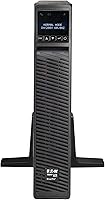
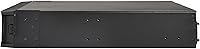
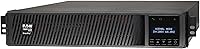
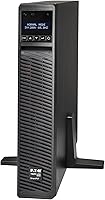
Overview

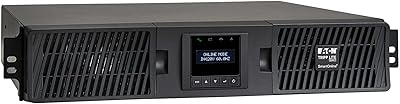
The Tripp Lite SMX1500XLRT2U 1500VA Rack UPS is a line-interactive unit built for 230V international environments, designed to protect servers, networking hardware, and workstations in professional settings. It ships in a 2U rack form factor but can also stand upright as a tower, giving smaller operations real flexibility in deployment. This unit has been on the market since 2004 — a long run that speaks to consistent adoption by IT teams worldwide. One important note upfront: it has been discontinued by the manufacturer, meaning battery replacement and spare parts require advance planning before committing to a purchase. The primary audience is IT administrators and small business owners running a modest server room or network closet on an international power grid.
Features & Benefits

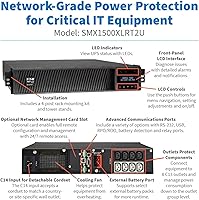
What makes this rack UPS worth considering — even with discontinued status — is its line-interactive topology. Unlike basic standby units that only kick in during a full outage, line-interactive designs continuously regulate voltage, smoothing out sags and surges without touching the battery. That matters considerably in environments where power quality is inconsistent. The eight outlets give you room to protect a server, a switch, a firewall, and still have ports to spare. A USB port and a DB9 serial connection let you tie the unit into management software for automated, graceful shutdowns. The sealed lead-acid battery is proven technology — not cutting-edge, but reliable and cost-effective for short-duration ride-through during outages.

Best For

This line-interactive UPS is squarely aimed at small server rooms and network closets running on 230V international power. If you are managing a handful of servers or critical networking gear — switches, routers, firewalls — and need a single unit to cover them all, the eight-outlet capacity fits that scenario well. IT administrators who need to configure automatic graceful shutdowns will appreciate the USB and serial management options. The 2U form factor makes it efficient for rack deployments where space is tight. It also handles environments with frequent voltage fluctuations better than a basic standby UPS would, since the AVR circuitry keeps output steady without burning through battery cycles unnecessarily.

User Feedback

Buyers who have used the Tripp Lite 1500VA unit over the years tend to praise its solid build quality and the rack-or-tower flexibility that suits different environments without extra hardware. Management software integration via USB and serial ports also earns positive marks, particularly from administrators who rely on automated shutdowns. On the downside, the most consistent concern among recent buyers is battery sourcing — since the unit is discontinued, finding compatible replacements takes considerably more effort than with actively-supported models. A few users note that runtime under heavier loads is modest, so it is best treated as a bridge during short outages rather than a long-duration backup. Noise levels during normal operation are generally described as acceptable for a rack environment.

Pros

  • Line-interactive topology with AVR keeps output voltage stable without drawing on the battery during minor fluctuations.
  • Eight outlets provide enough coverage for a small server, switch, firewall, and additional devices from one unit.
  • USB and DB9 serial ports make automated graceful shutdowns straightforward to configure with compatible software.
  • The 2U rack form factor is space-efficient and fits neatly into standard rack enclosures without wasting vertical space.
  • Optional tower orientation means it works in environments that do not yet have a full rack setup.
  • Sealed lead-acid battery is a proven, cost-effective choice for short-duration ride-through during outages.
  • Build quality is consistently praised by long-term users, with solid metal and plastic construction that holds up in professional environments.
  • A track record stretching back to 2004 reflects broad adoption and real-world reliability across many installations.
  • Mid-range pricing makes it accessible for small businesses that need professional-grade protection without enterprise-level spending.

Cons

  • Discontinued manufacturer status makes warranty support and official service channels essentially unavailable for new buyers.
  • Replacement battery sourcing requires research and often reliance on third-party suppliers, adding long-term ownership complexity.
  • Strictly 230V operation means it is entirely incompatible with North American 120V infrastructure.
  • At nearly 43 pounds, repositioning or solo installation in a rack can be physically awkward without a second person.
  • Runtime under heavier loads is limited — this unit is a short-duration bridge, not a substitute for extended backup power.
  • No modern network management card or remote monitoring capability is mentioned, which may frustrate administrators used to SNMP-based UPS management.
  • Being a legacy product means firmware updates, software compatibility, and vendor documentation may be harder to locate over time.
  • Used or refurbished units on the secondary market carry additional risk given the age of the product line and battery condition uncertainty.

Ratings

The scores below reflect an AI-driven analysis of verified global user reviews for the Tripp Lite SMX1500XLRT2U 1500VA Rack UPS, with spam, bot submissions, and incentivized feedback actively filtered out before scoring. Each category is evaluated on the full spectrum of real buyer experiences — from IT professionals managing small server rooms to first-time rack deployers — so both the strengths and the genuine frustrations are represented transparently.

Build Quality
88%
Users consistently describe the chassis as feeling solid and professional-grade, with the metal-reinforced housing holding up well even after years of continuous rack deployment. Several long-term owners note that the unit shows very little wear after extended use in closet or server room environments, which builds confidence in the physical durability of the design.
A small number of users find the plastic components on the front panel feel slightly less premium than the rest of the unit, particularly around the outlet covers. At nearly 43 pounds, the sheer weight can also complicate installation and repositioning, especially for solo administrators working in tight rack spaces.
Power Protection
91%
The line-interactive topology with AVR is where this rack UPS earns its strongest praise — users in regions with unstable grid power report that connected servers and networking gear run noticeably cleaner and more stably after installation. The ability to correct voltage sags and surges without switching to battery is especially valued by IT teams who have previously burned through batteries quickly on basic standby units.
A few users note that protection is optimized for short-duration outages and voltage events rather than extended blackouts, which can be a mismatch if buyers expect longer runtime. Those running close to the 1500VA ceiling under full load report that the unit offers only a brief window to trigger safe shutdowns before battery reserves are exhausted.
Battery Life & Runtime
67%
33%
Under modest loads — a single small server and a network switch, for example — users report runtime sufficient to execute graceful shutdowns and safely park systems before power is fully lost. The sealed lead-acid battery performs predictably and consistently within those reasonable expectations, particularly when the AVR circuitry reduces unnecessary battery cycling.
Runtime under heavier loads is a recurring complaint, with users protecting more demanding equipment finding the window uncomfortably short. As the unit ages and the original battery degrades, finding a direct replacement has become increasingly difficult given the discontinued status, and several buyers have reported extended downtime while sourcing compatible third-party cells.
Battery Replacement
52%
48%
The sealed lead-acid battery format is a well-established standard, meaning compatible replacement cells are available from third-party suppliers if you know where to look. Experienced IT administrators familiar with UPS maintenance tend to find the replacement process itself straightforward once the correct battery specifications are identified.
This is one of the most consistently raised pain points for current buyers — because the unit is discontinued, there is no official Tripp Lite replacement battery kit readily available through standard retail channels. Sourcing compatible alternatives requires research, adds cost uncertainty, and can mean meaningful downtime if a replacement is not lined up in advance before the original battery fails.
Outlet Count & Layout
84%
Eight outlets give small server room operators enough room to protect a server, managed switch, firewall, NAS, and a management workstation all from a single unit, which buyers in cost-conscious small business environments genuinely appreciate. The outlet layout is practical and accessible, with enough physical spacing to accommodate standard power cables without excessive crowding.
A handful of users note that the outlet positions make it slightly awkward to use all eight simultaneously when bulkier power adapters are involved, with wider blocks occasionally blocking an adjacent port. There is also no surge-only outlet grouping, so users who want to separate battery-backed and surge-protected circuits within the same unit will not find that option here.
Management & Connectivity
79%
21%
The combination of USB and DB9 serial ports is well-regarded by IT administrators who need to tie the UPS into automated shutdown scripts or monitoring platforms, and most users report reliable detection and communication with both Tripp Lite's PowerAlert software and several popular third-party tools. In server room deployments where graceful shutdowns are non-negotiable, this connectivity is treated as a meaningful practical feature rather than a checkbox spec.
There is no native network management card or SNMP interface included, which puts it behind some competing units for administrators who manage infrastructure remotely or across multiple sites. Users who want to monitor UPS status from a network management console without being physically present at the device will find the serial and USB options limiting in a modern remote-work context.
Noise Level
73%
27%
In dedicated server rooms and network closets — which is the intended deployment environment — the fan noise generated during normal operation is consistently described as unobtrusive and easy to ignore. Most users in those settings report that the unit blends into the background ambient noise of other equipment without drawing attention.
For the smaller subset of users deploying this line-interactive UPS in an office corner or near a workspace, the fan noise is noticeable enough to be mentioned as a mild irritation, particularly during quieter periods. It is not disruptively loud by any measure, but it is audible, which matters if the installation environment is not a dedicated equipment room.
Form Factor Flexibility
86%
The ability to deploy this unit as either a 2U rack appliance or a freestanding tower is a genuinely useful feature that buyers in transitional environments — small businesses building out their first rack, for example — find particularly valuable. Users who started with a tower deployment and later migrated to a full rack setup appreciate not needing to replace the UPS as part of that infrastructure evolution.
The unit is relatively deep at 17.4 inches, which can be a tight fit in shallower rack enclosures that are common in wall-mount or compact office rack setups. A small number of users also note that the tower orientation, while functional, does not come with a dedicated base stand, which makes it less stable than a purpose-built tower UPS on certain surfaces.
Installation Experience
77%
23%
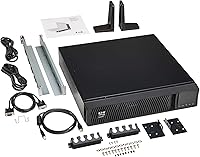
Most IT professionals describe the initial installation process as straightforward, with standard rack mounting hardware included and clear enough documentation to get the unit operational without extended troubleshooting. The dual rack-or-tower flexibility also means that setup does not require a fully equipped rack environment, lowering the barrier for smaller operations.
At close to 43 pounds, solo rack installation is awkward and carries a real risk of dropping or misaligning the unit, with multiple buyers recommending a two-person install as essentially mandatory. A few users also note that the included documentation, while functional, is not the most beginner-friendly for small business owners setting up a rack environment for the first time.
Software Integration
74%
26%
Compatibility with Tripp Lite's PowerAlert software for automated shutdown configuration is generally described as reliable and not overly technical to set up, with USB connection making detection largely plug-and-play on supported operating systems. Users managing Windows Server and Linux environments both report workable integration experiences without significant compatibility hurdles.
The software ecosystem around this unit has not kept pace with modern infrastructure tools, and users running newer virtualization platforms or cloud-managed environments sometimes report limited or incomplete integration support. Since the product is discontinued, software updates and expanded platform compatibility from the manufacturer are no longer expected, which is a real limitation for evolving IT environments.
Value for Money
71%
29%
For buyers who find this rack UPS at a reduced price on the secondary market, the combination of line-interactive protection, eight outlets, and dual deployment flexibility represents solid functional value relative to what a comparable new unit would cost. Long-tenured users who purchased the unit years ago consistently report satisfaction with the value delivered over the product's operational lifespan.
At its original retail price, the discontinued status now complicates the value calculation significantly — buyers are paying for hardware without manufacturer support, limited warranty recourse, and the added ongoing cost of third-party battery sourcing. Competing currently-manufactured units at similar price points offer comparable protection with the added benefit of active vendor support, which is a legitimate reason to look elsewhere for some buyers.
Long-Term Reliability
83%
The two-decade market history of this product family is not trivial — users who have run these units in production environments for five or more years report that the core hardware holds up well beyond what might be expected of a budget-class unit. The consistent adoption in enterprise-adjacent and government procurement contexts also points to a reliability track record that goes beyond typical consumer feedback.
Long-term reliability is increasingly complicated by the discontinued status, as aging units eventually need battery replacements, and in some cases capacitor or component service, with no official pathway for parts. Users who are five or more years into ownership are starting to weigh replacement more seriously, particularly as third-party battery options become harder to match precisely.
Voltage Regulation
89%
AVR performance is one of the most praised functional aspects of this line-interactive UPS among users in regions with variable grid quality — administrators in international deployments report that connected equipment runs significantly more stably after installation, with fewer unexplained reboots and hardware errors traceable to power quality issues. The ability to handle voltage fluctuations without battery intervention is particularly appreciated in older buildings with inconsistent electrical infrastructure.
AVR coverage has defined input voltage tolerance thresholds, and users in environments with extremely severe or frequent deep voltage drops report occasional instances where the AVR range is exceeded and the unit does fall back to battery more than expected. This is an edge case rather than a widespread complaint, but it is worth factoring in for deployments in regions with particularly degraded grid infrastructure.

Suitable for:

The Tripp Lite SMX1500XLRT2U 1500VA Rack UPS is a strong fit for IT administrators and small business operators running a modest server room or network closet on a 230V international power supply. If your setup includes a server or two, a managed switch, a firewall, and perhaps a NAS device, the eight-outlet capacity and 1500VA rating cover that kind of load comfortably. The line-interactive design with automatic voltage regulation is particularly valuable in regions or buildings where power quality is inconsistent — it actively stabilizes output without draining the battery on every minor fluctuation. Organizations that need to integrate UPS management into their monitoring or shutdown workflows will find the USB and DB9 serial ports genuinely useful for automated, graceful system shutdowns during extended outages. The 2U rack form factor makes it a space-efficient choice for anyone already running a standard rack enclosure, and the optional tower orientation gives smaller operations without a rack an equally viable deployment path.

Not suitable for:

Buyers who need long-term manufacturer support, straightforward warranty service, or easy battery replacements should think carefully before committing to this line-interactive UPS, as it has been officially discontinued. Sourcing compatible replacement batteries down the road will require extra research and may involve third-party suppliers, which adds friction and potential cost to long-term ownership. This unit also operates exclusively on 230V, so anyone in a standard North American 120V environment will find it completely incompatible with their infrastructure. At 42.8 pounds, it is not a lightweight unit, and anyone expecting to reposition it frequently or deploy it in a space with tight physical constraints may find the size and weight inconvenient. Finally, buyers protecting high-draw equipment or expecting extended runtime during prolonged outages should look at higher-capacity options — 1500VA provides a bridge during short interruptions, not a substitute for a generator or longer-duration power solution.

Specifications

  • Capacity: This rack UPS provides 1500VA of power capacity, suitable for protecting small server and networking equipment loads.
  • Voltage: Designed exclusively for 230V international power environments; it is not compatible with standard North American 120V infrastructure.
  • Topology: Line-interactive design with automatic voltage regulation (AVR) corrects minor power fluctuations without switching to battery power.
  • Outlets: Equipped with 8 total output outlets, allowing simultaneous protection of multiple connected devices from a single unit.
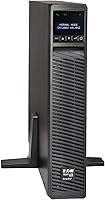
  • Form Factor: Fits in a standard 2U rack enclosure and can alternatively be deployed as a freestanding tower without additional hardware.
  • Dimensions: The unit measures 13.5 x 17.4 x 3.5 inches, occupying exactly 2U of vertical rack space.
  • Weight: The unit weighs 42.8 pounds, which should be factored into rack load calculations and installation planning.
  • Battery Type: Uses a sealed lead-acid battery, a proven chemistry that balances upfront cost with reliable short-duration backup performance.
  • Management Ports: Includes both a USB port and a DB9 serial port for connecting to UPS management and automated shutdown software.
  • Housing Material: Constructed from a combination of metal and plastic, providing structural rigidity while keeping weight within a manageable range for rack deployment.
  • Manufacturer: Made by Tripp Lite, a long-established manufacturer of power protection equipment with broad enterprise and SMB market presence.
  • Model Number: The official model designation is SMX1500XLRT2U, used for identifying compatible accessories, batteries, and documentation.
  • Product Status: This unit has been officially discontinued by the manufacturer, meaning it is no longer in active production or supported through standard vendor channels.
  • First Available: The product was first introduced to the market in June 2004, reflecting over two decades of real-world deployment history.
  • NSN: Carries National Stock Number 6130-01-585-3213, indicating prior use or qualification within government or military procurement systems.

Related Reviews
Tripp Lite SMART1500LCD 1500VA Rackmount UPS
77%
91%
Voltage Regulation (AVR)
93%
Battery Replaceability
54%
Waveform Compatibility
62%
Runtime Under Load
88%
Rack Installation
More
Tripp Lite SMART2200RMXL2U 2200VA Rack Mount UPS
79%
93%
Power Protection Reliability
96%
Output Waveform Quality
88%
Build Quality
61%
Battery Runtime
91%
AVR Performance
More
Tripp Lite SMART500RT1U 500VA UPS
83%
88%
Performance
91%
Surge Protection
85%
Build Quality
87%
Usability/Installation
62%
Runtime at Full Load
More
Tripp Lite AVR700U 700VA UPS Battery Backup
76%
91%
Voltage Protection
93%
Ease of Setup
54%
Battery Runtime
74%
Build Quality
61%
Battery Longevity
More
Tripp Lite OMNIVS1200LCD 1200VA UPS Battery Backup
77%
91%
Voltage Regulation (AVR)
93%
Noise Level
58%
Battery Runtime
89%
Ease of Setup
84%
Build Quality
More
Tripp Lite AVR750U UPS Battery Backup
85%
89%
Overall Performance
92%
Value for Money
85%
Ease of Installation
70%
Noise Level
90%
Reliability During Power Outages
More
Tripp Lite OMNI1500LCDT UPS Battery Backup
83%
88%
Performance
91%
Reliability during Power Outages
85%
Surge Protection Effectiveness
90%
Ease of Use (LCD Display)
80%
Setup and Installation
More
Tripp Lite SMART1500LCDT UPS Battery Backup
86%
88%
Value for Money
94%
Ease of Setup
86%
Surge Protection Performance
83%
Battery Backup Duration
90%
Voltage Regulation Reliability
More
Tripp Lite SU750RTXLCD2U 750VA Rack UPS
79%
94%
Power Protection Reliability
91%
Output Waveform Quality
88%
Build Quality
86%
LCD Interface & Monitoring
89%
Battery Serviceability
More
Tripp Lite SU1000RTXLCD2U 1000VA Rackmount UPS
79%
94%
Power Protection Quality
92%
Output Waveform Purity
58%
Battery Runtime
89%
Display & Monitoring
61%
Network Management Readiness
More

FAQ

No, it is not. This line-interactive UPS is built specifically for 230V international power systems. If your facility runs on the standard North American 120V supply, this unit will not work without a step-up transformer, and even then it is not the intended use case. You would need a different model designed for 120V environments.

Yes, but it takes more effort than with an actively supported product. Compatible sealed lead-acid batteries are available through third-party suppliers and specialty UPS battery retailers. The key is matching the voltage and amp-hour rating of the original battery. It is worth sourcing a replacement before you urgently need one, rather than scrambling when the existing battery finally degrades.

That depends heavily on how much load you have connected. At lighter loads — say, a single small server and a network switch — you can expect several minutes of runtime, which is typically enough to trigger an orderly shutdown via the management software. Under heavier loads approaching the full 1500VA rating, runtime will be shorter. This unit is best thought of as a bridge during brief outages, not a long-duration backup solution.

AVR is the ability of the UPS to correct incoming voltage that is too high or too low, without switching to battery power. In practical terms, it means that small fluctuations and sags in your power supply — which are common in many buildings and international environments — get smoothed out automatically. This keeps your equipment running cleanly and also extends battery life considerably, since the battery is not being cycled every time the voltage dips slightly.

Yes. The unit supports both rack-mount and tower orientations, so you can stand it upright on a shelf or floor if a rack enclosure is not part of your setup. The hardware needed to switch between the two configurations is typically minimal. It is one of the more practical aspects of this particular form factor for smaller operations.

The USB and DB9 serial ports are standard interfaces, so the unit is broadly compatible with popular UPS management platforms beyond Tripp Lite's own PowerAlert software. Many network monitoring and server management tools support serial or USB-connected UPS devices for status monitoring and graceful shutdown commands. Check your specific software's compatibility list to confirm support before purchasing.

The noise level is generally described as acceptable for a server room or network closet environment. The cooling fans run during operation, and like most rack UPS units of this size, it is not silent — but it is not disruptively loud either. Deploying it in an office where people are working directly next to it may be noticeable, but in a dedicated equipment room it is a non-issue for most users.

At just under 43 pounds, getting it into a rack solo is technically possible but not comfortable, especially if you are sliding it into a mid-height rack position. Two people makes the installation much safer and faster. Using a rack-mount shelf or lift tool is also worth considering if you are working alone or installing at an awkward height.

The outlet count gives you plenty of flexibility. A typical deployment might include a tower or 1U server, a managed switch, a firewall or router, a NAS device, and still have outlets left for a patch panel power feed or a management workstation. Just keep an eye on your total wattage draw across all connected devices — spreading the load across outlets does not change the overall 1500VA capacity ceiling.

It is a legitimate concern and worth thinking through before purchasing. The core hardware is proven and reliable, but official manufacturer support, firmware updates, and warranty service are no longer available through standard channels. The main practical issue most buyers face over time is battery replacement — plan for that from day one by identifying a compatible third-party battery source. If long-term vendor support is critical to your organization, a currently-manufactured alternative might be the safer choice.