Overview

The TravlFi JourneyGo LTE Mobile Hotspot is built for one specific kind of traveler: someone who spends real time on the road in an RV or camper and needs dependable internet that does not come with a carrier contract attached. It runs on LTE — 4G, not 5G — so set your expectations accordingly before buying. What separates it from standard carrier hotspots is the multi-network eSIM approach, which lets it pull from multiple nationwide networks without you ever touching a physical SIM card. The pay-as-you-go model is genuinely flexible: buy data when you need it, skip it when you do not. At its mid-range price, it targets travelers who prioritize coverage and simplicity over raw speed.
Features & Benefits

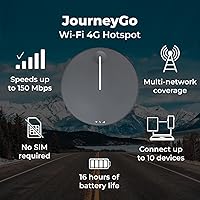
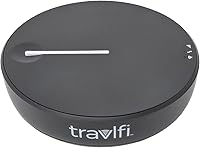
The eSIM setup is the standout feature here — the device connects to whichever supported LTE network has the strongest signal in your area, with automatic network switching and no SIM card to fumble with. Up to 10 devices can connect simultaneously, and while the theoretical ceiling is 150 Mbps, real-world speeds will vary based on location and signal conditions. The 16-hour battery life is a genuine highlight; the 4,700 mAh cell comfortably outpaces most competing hotspots. Charging is via USB-C, the unit is compact enough for a jacket pocket, and a small LED indicator lets you check connection status at a glance without unlocking your phone.

Best For

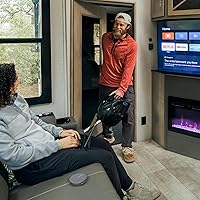
This RV hotspot makes the most sense for people who actually live this lifestyle — full-timers, snowbirds, and weekend campers who bounce between sites where campground Wi-Fi is unreliable or simply nonexistent. It is also a practical choice for remote workers traveling who need a private, secure connection rather than trusting a shared network at an RV park or rest stop. Families juggling phones, laptops, and tablets across a trip will appreciate the 10-device ceiling. Where the JourneyGo fits less well is with users who expect 5G throughput or want advanced router controls — it keeps things deliberately simple by design, which is exactly right for its intended audience.

User Feedback

Across roughly 163 ratings, this portable hotspot holds a 4.0-star average — not universally praised, but consistently solid where it matters most. Buyers frequently highlight how fast it gets up and running, how well it maintains a connection in rural areas where a single carrier would drop out, and that the battery genuinely delivers close to the advertised runtime. The recurring complaints center on two things: data plan costs that accumulate more quickly than some buyers expect, and LTE speeds that feel sluggish to anyone accustomed to a 5G device. A few users also report that handoffs between networks are not always clean. Those with more to spend sometimes point to the brand's 5G router sibling as the smarter long-term buy.

Pros

  • No carrier contract means you only pay for data when you actually need it.
  • The multi-network eSIM is a genuine advantage in rural and remote areas with patchy single-carrier coverage.
  • Setup is straightforward enough that non-technical travelers can be online within minutes.
  • A 16-hour battery life is well above average for portable hotspots in this category.
  • Supports up to 10 connected devices simultaneously, handling a whole family or travel group comfortably.
  • Compact dimensions make it easy to toss in a bag, a glove box, or a pocket.
  • USB-C charging means one less proprietary cable to carry on a long trip.
  • Data plans scale from light usage to unlimited, giving genuine flexibility depending on your travel pace.
  • The LED indicator gives a fast, at-a-glance read on connection status without unlocking a device.
  • Coverage spans nationwide U.S. networks, making it a practical choice for cross-country travel.

Cons

  • LTE-only connectivity feels limiting compared to 5G hotspots available at similar or slightly higher price points.
  • Ongoing data plan costs can add up fast for heavy users, making the total expense higher than it first appears.
  • Network handoffs between carriers are not always smooth, and some users report brief drops during transitions.
  • Single-band Wi-Fi limits performance when multiple devices are actively streaming or downloading at the same time.
  • 150 Mbps is a theoretical ceiling; real-world speeds in rural LTE areas are often significantly lower.
  • No advanced router features for users who need VPN passthrough, custom DNS, or network management tools.
  • Customer support experiences have been inconsistent according to a portion of longer-term owners.
  • The hardware cost is a notable upfront investment before you have even purchased a single data plan.
  • Buyers with existing carrier hotspot plans may see little reason to switch given the added per-month data expense.

Ratings

The scores below reflect an AI-driven analysis of verified buyer reviews for the TravlFi JourneyGo LTE Mobile Hotspot, with spam, bot submissions, and incentivized feedback actively filtered out before scoring. Each category is rated independently to give you an honest picture of where this portable hotspot genuinely delivers and where it falls short. Both the consistent praise and the recurring frustrations from real owners are transparently reflected in every score.

Coverage Reliability
78%
22%
Travelers moving through rural stretches of the U.S. report noticeably better connection consistency compared to single-carrier hotspots, largely because the multi-network eSIM can latch onto whichever supported LTE signal is strongest at a given location. For RV users crossing multiple states, that flexibility genuinely reduces dead-zone frustration.
Coverage is still bounded by LTE infrastructure, so extremely remote areas with no supported network signal will leave you offline regardless of eSIM flexibility. A handful of users also report that the handoff between networks is not always instant, causing brief drops during transitions.
Setup & Ease of Use
88%
The absence of a physical SIM card and the straightforward data plan activation through TravlFi's portal means most buyers are online within minutes of unboxing, even without technical background. The LED status indicator adds a layer of convenience, giving a quick read on connection health without needing to open an app or log into a dashboard.
A small portion of buyers found the data plan purchasing interface less intuitive than expected, particularly when trying to understand plan tiers or switch between options mid-trip. First-time hotspot users occasionally needed extra guidance through setup steps.
Battery Life
86%
The 4,700 mAh battery backing the rated 16-hour runtime is a real differentiator in this category — most competing portable hotspots tap out closer to 8 to 12 hours, so a full travel day without hunting for an outlet is a meaningful practical advantage. Road trippers and RV users consistently cite battery endurance as one of the strongest aspects of ownership.
Battery performance naturally degrades when many devices are connected simultaneously or when the unit is working harder to maintain a weaker LTE signal in fringe areas. A few longer-term owners note that capacity diminishes noticeably after extended months of daily use.
Data Plan Flexibility
74%
26%
The no-contract, prepaid structure is well-suited for seasonal or occasional travelers who resent paying for connectivity during months they are not on the road. The range from small starter plans up to unlimited gives buyers genuine control over their monthly spend based on actual usage patterns.
The cumulative cost of data plans on top of the hardware investment can grow steep for heavy users, and some buyers feel the per-gigabyte pricing is less competitive than what major carriers offer with hotspot add-ons. There is also limited visibility into plan cost projections before you commit to a purchase.
Wi-Fi Speed
61%
39%
For everyday road-trip tasks — browsing, streaming music, occasional video calls, and light cloud work — the real-world LTE speeds are adequate and rarely cause obvious problems for one or two users. The connection feels stable during moderate use, which suits the casual traveler this device is designed for.
The 150 Mbps theoretical ceiling is rarely approached in real-world conditions, and in areas with congested or weak LTE signals, speeds can drop to levels that make video conferencing or large file transfers frustrating. Users coming from home broadband or 5G devices will feel the gap immediately.
Build Quality & Portability
81%
19%
The compact footprint — roughly the size of a thick coaster — makes it easy to stash in a glove box, day bag, or jacket pocket without any real inconvenience. The unit feels solid enough for daily travel handling and does not have the cheap plastic impression common to budget hotspot hardware.
The device is not rated for water or dust resistance, which is worth noting for travelers who use it outdoors in variable weather conditions. The grey finish also shows smudges and light scratches fairly readily over extended use.
Multi-Device Performance
69%
31%
Supporting up to 10 simultaneous connections covers the typical needs of a family or small travel group without requiring anyone to disconnect. Light mixed usage — a few phones, a laptop, and a tablet — generally runs without noticeable slowdown for casual tasks.
When multiple users are actively streaming video or downloading content at the same time, the shared LTE bandwidth becomes a bottleneck and overall experience degrades for everyone. Single-band Wi-Fi further limits throughput compared to dual-band or Wi-Fi 5 capable hotspots.
Value for Money
66%
34%
For travelers who move frequently between coverage zones and want to avoid locking into a carrier contract, the hardware cost represents a reasonable one-time investment that pays off over multiple trips. The pay-as-you-go model prevents wasteful spending during off-season months.
The total cost of ownership — device plus recurring data plans — can exceed what a carrier hotspot plan costs annually if used frequently, making the value proposition less clear for heavy, year-round users. Buyers who only take one or two trips per year may find it harder to justify the upfront expense.
Network Switching
63%
37%
The multi-network eSIM concept works as advertised in most situations, and travelers crossing state lines or entering areas with mixed carrier coverage generally do not need to take any manual action to maintain connectivity. That automatic behavior is exactly what road-trip users need.
The execution of network handoffs is not always seamless — some users report noticeable gaps when the device transitions between networks, which can interrupt active video calls or streaming sessions. There is also limited transparency about which network is currently active and how strong the signal is.
Companion App & Management
57%
43%
For buyers who just want to connect and forget about configuration, the minimal software requirements are actually a positive — there is no mandatory app to install or maintain, and the LED provides basic status feedback on the hardware itself.
Users who want granular control over their connection — network selection, data usage monitoring, connected device management — will find the lack of a robust companion app a real limitation. Visibility into real-time data consumption requires logging into TravlFi's web portal, which is an extra step many find inconvenient while traveling.
Customer Support
59%
41%
Some buyers report prompt and helpful responses when dealing with straightforward questions about plan selection or initial device setup, and TravlFi does provide documentation to help buyers get started independently.
A recurring thread in negative reviews points to inconsistent support quality, particularly for technical issues like persistent network drops or billing questions about plan renewals. Response times appear to vary considerably, which frustrates users who encounter problems mid-trip.
Charging & Power Options
82%
18%
USB-C charging is a practical modern choice for travelers who are already carrying USB-C cables for phones and laptops, reducing the total number of cables needed on a trip. The ability to run the device while plugged in is useful for stationary setups in an RV or at a campsite with power hookups.
The 5V/2A input is not the fastest charging standard available, so recharging from a fully depleted battery takes longer than users of newer fast-charge devices might expect. There is no wireless charging option.
5G Readiness
31%
69%
For buyers who have researched the product and specifically need LTE coverage in areas where 5G infrastructure is still sparse — much of rural America — the LTE-only limitation is a non-issue and the device performs exactly as intended for that context.
The absence of 5G support is a meaningful hardware limitation that will age the device quickly as 5G networks expand across the U.S. Buyers in suburban or urban areas who are accustomed to 5G speeds on their phones will find the performance gap jarring and may regret not spending more on the XTR Pro 5G model.
Plan Transparency
62%
38%
The no-contract structure at least gives buyers full control over when and how much they spend, and the range of plan sizes means you are not forced into more data than you need for a short trip.
Several buyers express frustration that the true cost of data plans was not fully clear at the point of purchasing the hardware, leading to sticker shock when they went to activate service. Clearer upfront communication about ongoing costs would meaningfully improve buyer satisfaction.

Suitable for:

The TravlFi JourneyGo LTE Mobile Hotspot is a strong fit for RV travelers, camper van dwellers, and road trippers who spend meaningful time in areas where campground Wi-Fi is spotty or simply not trustworthy. If you move between locations regularly, the multi-network eSIM approach offers real practical value — instead of being stuck on one carrier's dead zone, the device can pull from whichever supported LTE network is strongest at your current location. Remote workers who travel frequently and need a private, secure connection for video calls and file transfers will find it far more reliable than shared park networks. It also suits families or small groups where several people need to connect phones, laptops, and tablets at the same time without fighting over bandwidth. Perhaps its best quality for occasional travelers is the pay-as-you-go structure: you only spend money on data during the months you actually hit the road, which makes the total cost of ownership much more manageable than a locked carrier plan.
Not suitable for:

The TravlFi JourneyGo LTE Mobile Hotspot will disappoint anyone expecting 5G speeds or the kind of throughput you get from a home broadband connection — this is a 4G LTE device, and real-world speeds will reflect that, especially in congested or rural areas. Power users who rely on heavy video streaming, large file uploads, or cloud backups throughout the day may find the data plans get expensive quickly, since those costs stack up on top of the hardware purchase itself. Anyone who wants advanced networking controls — static IPs, custom DNS, VPN passthrough, or detailed traffic monitoring — will find the feature set too basic for their needs. If you are already locked into a carrier plan with a hotspot add-on, or you rarely travel more than a few times per year, the value proposition here is hard to justify. Buyers in areas with consistently strong single-carrier coverage may also find that a standard carrier hotspot delivers better speeds at a lower ongoing cost.
Specifications

  • Connectivity: The device operates exclusively on LTE (4G) networks and does not support 5G connectivity.
  • Wi-Fi Standard: Wireless networking runs on 802.11 a/b/g/n across a single-band radio, meaning it does not support dual-band or Wi-Fi 5 connections.
  • Max Wi-Fi Speed: The theoretical maximum download speed is 150 Mbps, though real-world speeds will vary based on LTE signal strength and network congestion.
  • Device Connections: Up to 10 devices can connect to the hotspot simultaneously, including smartphones, tablets, laptops, and smart TVs.
  • SIM Type: The device uses an embedded eSIM, so no physical SIM card is required or supported.
  • Battery Capacity: A built-in 4,700 mAh lithium polymer battery powers the unit and is not user-replaceable.
  • Battery Life: TravlFi rates the battery at up to 16 hours of continuous use under typical conditions.
  • Charging Port: The device charges via a USB Type-C port with a 5V/2A power input requirement.
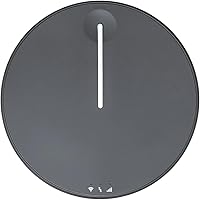
  • Dimensions: The unit measures 3.47 x 3.47 x 0.94 inches, making it compact enough to fit in a pocket or small bag.
  • Weight: The packaged unit weighs 9.9 ounces; the device itself is lighter without packaging materials.
  • Color: The JourneyGo is available in Grey as the standard color option.
  • Coverage: The eSIM connects to multiple nationwide LTE networks across the contiguous United States for broader coverage than a single-carrier device.
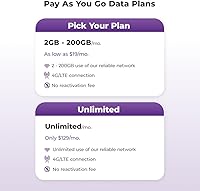
  • Data Plans: Prepaid data plans are available without a contract, starting from 2 GB and scaling up to unlimited monthly options.
  • Status Indicator: An onboard LED indicator displays connection and device status at a glance without requiring a companion app.
  • Compatible Devices: The hotspot is compatible with any Wi-Fi-enabled device, including personal computers, smartphones, tablets, and smart televisions.
  • Included Items: The package includes the hotspot unit and one USB cable for charging.
  • Model Number: The official model number is 700-023, manufactured by TravlFi.
  • First Available: This product was first listed for sale in April 2025, making it a relatively recent addition to TravlFi's lineup.

Related Reviews
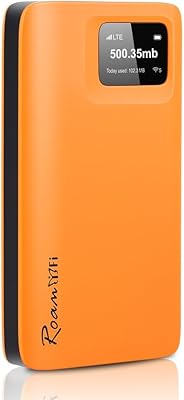
Firstnum M4 Portable 4G LTE Mobile Hotspot
73%
84%
Ease of Setup
61%
Battery Life
76%
Data Plan Value
69%
Signal & Coverage
73%
Value for Money
More
RoamFi RoamWiFi R10 Portable Mobile Hotspot
71%
92%
Ease of Setup
78%
International Coverage
61%
Data Value & Plan Inclusivity
69%
Connection Speed
71%
Battery Life
More
Karbor MF833-4G Portable 4G LTE WiFi Hotspot
71%
82%
Ease of Setup
71%
Network Coverage
63%
Connection Speed
58%
Data Plan Value
66%
Battery Life
More
KuWFi L100EU 4G LTE Mobile Hotspot
69%
83%
Band Compatibility
58%
Ease of Setup
61%
Wi-Fi Performance
63%
Battery Life
88%
Portability
More
TP-Link M7350 4G LTE Mobile Hotspot
76%
93%
Portability
88%
Ease of Setup
71%
Connection Speed
58%
Battery Life
74%
Signal Stability
More
Netgear Nighthawk MR1100 Mobile Hotspot Router
79%
93%
Carrier Flexibility
88%
Multi-Device Performance
86%
Signal Reception
61%
Battery Life
89%
Setup & Ease of Use
More
Verizon MiFi 6620L Jetpack 4G LTE Mobile Hotspot
84%
91%
Battery Life
87%
Connectivity Reliability
85%
Portability & Size
78%
Ease of Setup
88%
Performance for Multiple Devices
More
NETGEAR Nighthawk M1 4G LTE Mobile Hotspot
67%
58%
Carrier Compatibility
83%
Battery Life
76%
Signal Performance
81%
Multi-Device Capacity
78%
Ease of Setup
More
Netgear Unite Pro AC-781S Mobile Hotspot
68%
81%
Value for Money
74%
Connectivity Performance
67%
Carrier Compatibility
69%
Refurbished Condition
61%
Battery Life
More
Franklin T10 Mobile Hotspot
67%
74%
Value for Money
61%
Network Performance
54%
Battery Life
83%
Ease of Setup
88%
Portability
More

FAQ

No, and that is one of the more practical things about it. The device uses an embedded eSIM, so coverage is activated digitally through TravlFi's platform. You just purchase a data plan through their service and you are up and running — no trip to a carrier store required.

It does not. This is a 4G LTE device only, which means it will not connect to 5G towers even if you are in a 5G coverage area. For most RV travel and camping scenarios this is fine, but if you need 5G speeds, you would need to look at TravlFi's XTR Pro model instead.

Rather than being tied to a single carrier like AT&T or T-Mobile, the eSIM is provisioned to access multiple nationwide LTE networks. In practice, the device connects to whichever supported network has the strongest signal at your current location. It is particularly useful in rural areas where one carrier might be weak but another has solid coverage.

Yes, up to 10 devices can connect simultaneously. Whether that works smoothly for everyone depends on what each person is doing — light browsing across 10 devices is fine, but 10 people all streaming video at once will strain any LTE connection.

TravlFi offers several prepaid options starting from smaller plans and going up to unlimited monthly data. The exact plan pricing is set by TravlFi and can change, so it is worth checking their website for current rates before buying. Factor those ongoing costs into your budget alongside the hardware purchase — it is a real part of the total expense.

TravlFi rates it at up to 16 hours, which is genuinely strong for a portable hotspot. Real-world battery life will depend on how many devices are connected and signal conditions, but most users find it comfortably handles a full day without needing a charge.

You can use it while plugged in via the USB-C port, which is handy if you are parked at a campsite with shore power or using it at a desk. Running it plugged in continuously also avoids any concern about battery drain during long work sessions.

The device is designed for nationwide coverage within the contiguous U.S. and is not intended for international use. If you travel to Canada or Mexico, do not expect to have coverage — it is built specifically for domestic RV and road travel.

There is no contract at all. You prepay for a data plan for the month you need it and then stop when you do not. That flexibility is a genuine advantage for seasonal travelers who are only on the road for part of the year.

Setup is straightforward. Most buyers report getting connected within a few minutes of unboxing — you power the device on, purchase a data plan through TravlFi's portal, and connect your devices to the Wi-Fi network the hotspot creates. There is no complicated configuration required, which suits its target audience well.