Overview

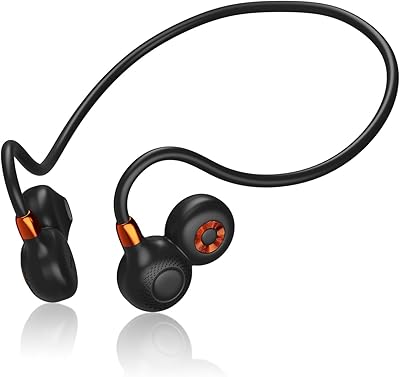
The TOZO OpenReal Open-Ear Headphones arrived in early 2025 as a genuinely interesting entry into the air conduction space — not bone conduction, which vibrates your skull, but a softer approach that directs sound toward the ear without plugging it. What sets this hair-band headset apart from typical wireless earbuds is the wraparound band that sits across the top of your head, holding the drivers just outside each ear canal. It's a design you don't see often at this price point. Expectations should be calibrated accordingly — this is a budget-tier device with some features that punch above its weight, but it's not trying to compete with premium open-ear brands.

Features & Benefits

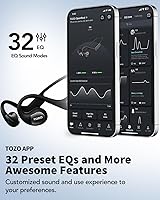
The drivers here push sound through the air rather than sealing it against your ear, which means what you get is airy and present but naturally lighter on low-end punch — that's just physics, not a design flaw. Bluetooth 5.3 keeps the connection locked in across a solid range, and the sub-50ms latency makes it workable for casual video and calls. Speaking of calls, the dual-mic noise reduction does a decent job in moderate environments. The 32 EQ presets via the companion app are a genuine surprise at this tier; most budget headphones skip this entirely. Battery stamina is strong — a quick charge tops you up enough for a few hours, and a full charge carries you through a long day.

Best For

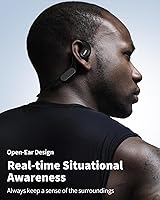
These open-ear headphones are a natural pick for cyclists, runners, and commuters who need to stay tuned into their surroundings without ditching audio entirely. When you're on a bike and need to hear traffic, or you're running a trail and want to catch sounds around you, keeping your ears unblocked matters. The hair-band form factor also works well at a desk — it doesn't press against your ears during long stretches, which is a real comfort advantage over in-ear options. People who have struggled with ear fatigue from regular earbuds will notice the difference quickly. Budget-conscious buyers exploring open-ear audio for the first time will find this a low-risk starting point.

User Feedback

Reviewers consistently highlight all-day comfort as the top takeaway — the band sits lightly on the head and doesn't create the pressure points that plague extended earbud use. Call quality in quieter settings also earns positive marks. On the downside, sound leakage at higher volumes is a recurring complaint, which is inherent to the open-ear format and not something an EQ tweak will fix. Some users with larger or smaller heads have noted fit inconsistency, and the app — while useful — has drawn occasional criticism for connectivity hiccups. Worth flagging: this is a relatively new product, so the review pool is still building and the overall sentiment picture may shift as more buyers share their experience.

Pros

  • Comfortable enough to wear for hours without ear fatigue or pressure buildup
  • Hair-band fit stays secure during cycling and running without constant readjustment
  • Open-ear design keeps you aware of traffic, voices, and surroundings while listening
  • Battery life easily covers a full day of mixed music and calls on a single charge
  • A quick top-up charge buys a couple more hours — genuinely useful for busy days
  • Dual-mic call quality holds up well in moderate noise environments
  • 32 EQ presets via the companion app is an unusually generous feature at this price
  • Waterproofing makes it viable for sweaty workouts and unexpected light rain
  • Bluetooth 5.3 connection is stable and pairs quickly across iOS and Android devices
  • Lightweight build means you barely notice it during extended wear

Cons

  • Sound leakage at higher volumes is noticeable and can disturb people nearby
  • Bass response is limited — open-ear physics, not a fixable flaw, but still a real trade-off
  • The companion app has reported connectivity hiccups that can disrupt EQ customization
  • Fit may not suit all head sizes uniformly — some users report the band sitting awkwardly
  • Audio isolation is essentially zero, which is a dealbreaker in loud environments
  • These open-ear headphones rely entirely on Bluetooth — no wired fallback option exists
  • Touch controls can be finicky and may require a learning curve to use reliably
  • As a newer product, long-term durability data is still limited and unproven
  • Microphone performance drops noticeably in windy or high-noise outdoor conditions
  • The hair-band form factor may not pair well with certain helmet or hat styles during sport

Ratings

The scores below for the TOZO OpenReal Open-Ear Headphones were generated by our AI after analyzing verified purchase reviews from buyers worldwide, with spam, bot activity, and incentivized feedback actively filtered out. The ratings reflect the full picture — what these open-ear headphones genuinely do well and where real users consistently ran into friction. Both the highs and the frustrations are represented transparently.

Wearing Comfort
88%
This is where the hair-band headset earns its strongest marks across the board. Users who had previously struggled with in-ear fatigue after an hour or two found they could wear these for a full workday or a long ride without that familiar aching pressure. The open-ear positioning removes the canal discomfort entirely.
A subset of buyers with larger or smaller-than-average heads reported that the band fit felt either too snug or slightly loose, causing the drivers to drift off-position over time. Hair type also plays a role — thick or voluminous hair can alter how the band sits and affect long-term stability.
Battery Performance
84%
All-day battery stamina is a genuine strength here. Most users running a mix of music and calls found the charge held up through a full workday without needing a top-up, which removes one of the common anxieties around wireless earbuds. The fast-charge feature was repeatedly praised as a practical lifesaver before morning commutes.
Battery life can drop noticeably at higher volume levels or during extended call sessions compared to the rated figure. A small number of users also reported that battery degradation became apparent within a few months of daily heavy use, which is worth monitoring given the product's relatively recent launch.
Sound Quality
67%
33%
For an air conduction design at this price tier, the sound is cleaner and more transparent than many buyers expected. Midrange clarity — vocals, podcasts, and acoustic tracks — comes through well, and the companion app's EQ options give users a genuine way to tune the listening experience to their preference.
Bass response is the consistent weak point, and no EQ adjustment fully closes that gap — it's a physical limitation of the open-ear format, not a software fix. Audiophiles and anyone used to a full, punchy sound profile from in-ear or over-ear headphones will likely find the overall presentation thin and underwhelming.
Situational Awareness
93%
This is the core reason most buyers chose these over traditional earbuds, and it delivers exactly what's promised. Cyclists, runners, and commuters consistently praised the ability to hear traffic, conversations, and ambient alerts without removing the headset or pausing audio. It's a functional advantage that sealed the purchase for a significant share of reviewers.
The same openness that enables awareness also means there is essentially no ability to focus on audio in a loud environment — busy transit, a noisy gym, or an open-plan office at capacity will compete directly with your audio. This is by design, but buyers expecting any passive noise reduction will be disappointed.
Call Quality
74%
26%
In quiet-to-moderate settings, call recipients consistently reported hearing the wearer clearly, which is a meaningful achievement for a sport-oriented headset at this price. The dual-mic setup does a credible job of isolating the speaker's voice during indoor calls and reasonably calm outdoor environments.
Wind noise is a real problem during outdoor calls — cyclists and runners making hands-free calls noted that ambient wind frequently overwhelmed the microphones. Performance also degraded noticeably in crowded, reverberant spaces like coffee shops, where the noise reduction struggled to keep up.
Build Quality
72%
28%
The metal-and-plastic frame feels more substantial than the price tag might suggest, and the construction holds together well through daily handling. Several users who had purchased cheaper open-ear alternatives commented that the TOZO OpenReal felt noticeably more solid by comparison, particularly around the hinge and driver housing.
The plastic sections — particularly around the adjustment points and cable routing — show some flex under pressure that raises questions about long-term durability. A handful of reviewers noted cosmetic wear appearing earlier than expected, and since the product only launched in early 2025, the durability track record is still limited.
Water Resistance
81%
19%
Buyers who wear these during outdoor runs or intense gym sessions reported no issues with sweat exposure over repeated use, and several noted wearing them through light rain without any degradation in performance. The waterproofing rating has held up consistently across the reviews available.
The rating covers sweat and splash scenarios, not submersion or heavy rain, and a few users pushed past that boundary with mixed results. It's a reliable feature for its intended purpose but not a reason to treat these as all-weather rugged gear.
Bluetooth Stability
79%
21%
Initial pairing is quick and the connection stays solid across a typical home, office, or outdoor range. Users switching between a phone and a laptop found the process manageable, and the Bluetooth 5.3 standard contributes to a more reliable link than older-generation audio devices in the same category.
Some users reported intermittent drops when moving through areas with heavy wireless interference, such as busy gyms or dense urban streets. Multipoint connectivity — connecting to two devices simultaneously — is not supported, which frustrated users who regularly switch between a phone and a computer.
App Experience
63%
37%
Having 32 EQ presets accessible through a companion app is a meaningful differentiator at this price point, and users who engaged with it found real value in tailoring the sound to different listening scenarios. The interface is straightforward enough for non-technical users to navigate without much of a learning curve.
The app's reliability was a recurring friction point — connectivity drops between the app and the headset, and occasional failures to save custom settings, were cited by a notable share of users. On certain Android versions, some features failed to load properly, and the overall polish feels behind what you would expect from a more established audio brand.
Touch Controls
66%
34%
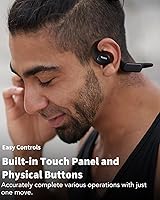
The touch interface handles basic functions — play, pause, skip, and call answering — without requiring you to dig out your phone, which is genuinely useful during a workout or ride. Response is generally quick enough that accidental activations are infrequent during normal activity.
Precision with the touch zones is inconsistent, particularly when wearing gloves or when the headset is wet from sweat. Several users reported triggering unintended commands, and the lack of tactile feedback makes it harder to confirm actions without checking your phone.
Fit During Sport
77%
23%
For running and cycling at moderate intensity, the hair-band frame keeps the drivers in place without the constant readjustment that plagues many earbud designs. Buyers who switched from behind-the-ear sport hooks specifically noted that the over-head band felt more predictable and secure during movement.
High-intensity activities — vigorous interval training, mountain biking on rough terrain — pushed the limits of the fit for some users, with the band shifting or one driver drifting out of position. Helmet compatibility is also a variable: some cycling helmet designs push the band forward or create pressure points over longer rides.
Value for Money
86%
Relative to what the open-ear category typically costs, the feature set here — long battery life, app-based EQ, dual mics, waterproofing, and a stable Bluetooth standard — represents a strong package for first-time buyers or those unwilling to invest heavily in a category they're still exploring.
The audio quality and app reliability trade-offs are real, and buyers who stretch their expectations beyond what the price tier can realistically deliver will feel shortchanged. It's honest value for the right buyer, but it's not a premium product at a discount — it's a budget product with above-average features.
Portability
82%
18%
At under 5 ounces, this hair-band headset is easy to carry in a bag or drape around the neck between listening sessions. The lightweight construction makes it a comfortable companion for travel days that blend transit, walking, and desk time.
The rigid band design means it cannot fold flat or collapse into a compact case the way some headphones can, which limits how easily it fits into a jacket pocket or small bag. There is no included carrying case, which is a minor but genuine omission for a sport-oriented product.

Suitable for:

The TOZO OpenReal Open-Ear Headphones are a strong match for active users who genuinely need to stay aware of their environment while listening — cyclists navigating traffic, runners on open trails, and commuters moving through busy stations all fall into this category. The hair-band design holds the headset steady during movement without creating the inner-ear pressure that plagues long earbud sessions, making it a smart option for people who wear audio gear for several hours at a stretch. Office workers who want background music without tuning out colleagues or phone alerts will also get real value here. If you've tried bone conduction headphones and found the vibration sensation uncomfortable, this air conduction approach is worth exploring as a gentler alternative. Budget-minded buyers who are simply curious about the open-ear category can try it without a significant financial commitment.

Not suitable for:

The TOZO OpenReal Open-Ear Headphones are not the right call for anyone who prioritizes rich, full-bodied audio — the open-ear format inherently sacrifices bass depth and isolation, and no EQ setting will fully compensate for that physical limitation. Commuters or travelers who want to block out ambient noise during flights or train rides will find these frustrating; sound leaks in and out by design. Audiophiles or even casual listeners coming from a decent pair of closed-back headphones may find the sound profile thin and underwhelming. The app-dependent EQ customization adds flexibility, but buyers who dislike installing companion apps or who've had mixed experiences with budget audio apps should factor that in. Finally, users with very small or very large head sizes have flagged fit inconsistency, so it's worth keeping return options open before committing.

Specifications

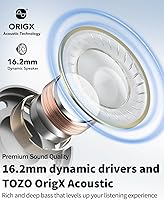
  • Driver Size: Each ear unit uses a 16.2mm dynamic driver, which is relatively large for an open-ear form factor and contributes to a more spacious sound presentation.
  • Bluetooth Version: The headset connects via Bluetooth 5.3, offering a more stable and energy-efficient wireless link compared to older Bluetooth generations.
  • Wireless Range: Effective wireless range reaches up to 15 meters in open conditions, making it practical for moving around a room or workspace without carrying your source device.
  • Audio Latency: Signal latency is rated at approximately 45 milliseconds, which is acceptable for casual video watching and calls, though perceptible to sensitive users in gaming contexts.
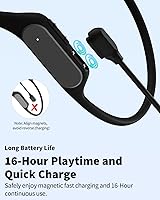
  • Battery Life: On a full charge, the headset delivers up to 16 hours of continuous audio playback or call time under standard usage conditions.
  • Fast Charging: A 10-minute charge via the included USB-C cable restores roughly 2 hours of playback, reducing downtime during busy days.
  • Battery Capacity: The built-in battery holds 120mAh, sized to balance the lightweight form factor with all-day stamina.
  • Microphones: Two built-in microphones work together with an environmental noise cancellation algorithm to isolate the speaker's voice during calls.
  • EQ Presets: The companion app unlocks 32 equalizer presets, allowing users to tune the sound profile to personal preference across music genres and call use.
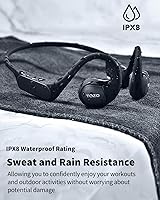
  • Water Resistance: The headset carries a waterproof rating suitable for sweat exposure during workouts and incidental contact with light rain.
  • Impedance: Electrical impedance is rated at 16 Ohm, meaning the drivers are easy to drive and do not require a dedicated amplifier to reach adequate listening volume.
  • Sensitivity: Sensitivity is rated at 100 dB, indicating the headset can produce clear, audible sound from standard smartphone output levels.
  • Frequency Response: The stated frequency response extends up to 20 kHz, covering the full range of human hearing, though bass reproduction is naturally limited by the open-ear design.
  • Form Factor: The headset uses a hair-band style frame that arches over the top of the head, positioning the drivers just outside the ear canal without inserting into it.
  • Weight: The total unit weighs approximately 4.6 ounces, which is light enough for extended wear without noticeable fatigue on the head or ears.
  • Controls: Playback, volume, and call functions can be managed via touch controls on the unit itself or through the companion smartphone app.
  • Compatibility: The headset pairs with any Bluetooth-enabled iOS or Android device, including smartphones, tablets, and laptops.
  • In the Box: Each unit ships with the headphones, a 20″ USB-C to USB-A charging cable, and a printed user manual.
  • Materials: The frame and driver housing are constructed from a combination of metal and plastic, balancing durability with lightweight construction.
  • Ear Placement: Audio is delivered via air conduction, meaning sound is directed toward the ear opening rather than transmitted through bone or inserted into the ear canal.

Related Reviews
Nothing Ear (Open) Open-Ear Earbuds
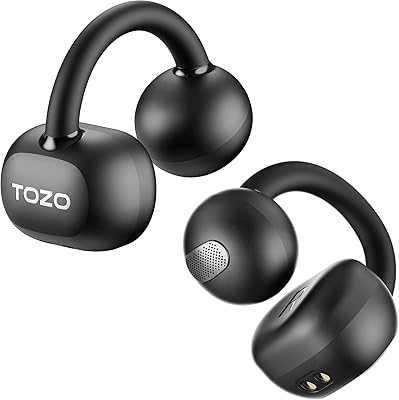
79%
91%
Wearing Comfort
83%
Workout Stability
74%
Sound Quality
77%
Call Quality
49%
Sound Leakage
More
TOZO OpenEarRing
TOZO OpenEarRing
85%
94%
Comfort & Long-Term Wear
97%
Situational Awareness
89%
Battery Performance
56%
Bass Response
91%
Value for Money
More
Monster AC100 Open-Ear Bluetooth Headphones
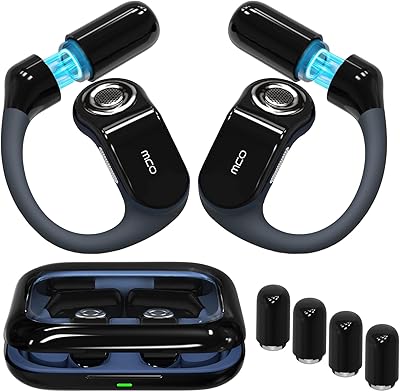
76%
88%
Battery Life
79%
Comfort & Fit
67%
Sound Quality
83%
Bluetooth Stability
71%
Call Quality
More
UGREEN 45785 Open Ear Wireless Headphones
79%
91%
Wearing Comfort
83%
Fit & Stability
74%
Sound Quality
89%
Battery Life
69%
Microphone & Call Quality
More
OJW Open Ear Wireless Sport Headphones
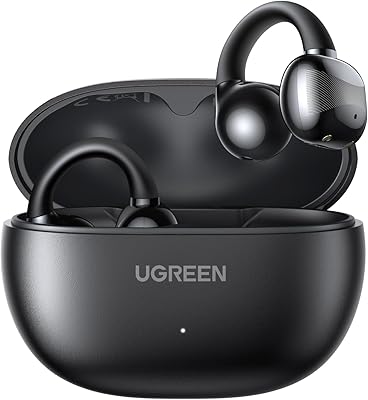
80%
93%
Battery Innovation
88%
Wearing Comfort
86%
Waterproofing
84%
Workout Stability
74%
Audio Clarity
More
Monster AC210 Open-Ear Wireless Earbuds
79%
91%
Wearing Comfort
78%
Fit Stability
74%
Sound Quality
83%
Battery Life
77%
Bluetooth Connectivity
More
TTQ CT26 Open-Ear Wireless Earbuds
81%
91%
Comfort & Wearability
88%
Fit Security During Activity
74%
Sound Quality
58%
Sound Leakage
87%
Battery Life
More
SANSUI W93 Open-Ear Wireless Earbuds
78%
91%
Wearing Comfort
88%
Stability During Exercise
67%
Sound Quality
94%
Situational Awareness
86%
Battery Life
More
Jzones CT11 Open Ear Headphones
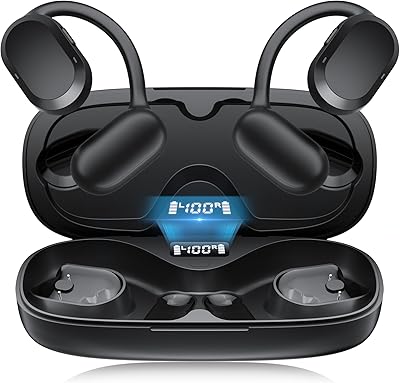
79%
88%
Wearing Comfort
91%
Battery Life
67%
Sound Quality
93%
Situational Awareness
79%
Secure Fit During Activity
More
Ortizan OpenCirclet I10 Open-Ear Headphones
76%
93%
Wearing Comfort
88%
Secure Fit During Activity
67%
Sound Quality
96%
Situational Awareness
21%
Noise Isolation
More

FAQ

The hair-band design holds up better than you might expect during movement. The band arches over the top of your head and keeps the drivers pressed gently against the outer ear, so there's no bouncing or slipping during a moderate run or ride. That said, if you wear a helmet that sits low on your head, it may interfere with the band's position, so it's worth testing your specific setup.

No, this is a different technology. Bone conduction transmits sound by vibrating your skull, which is what causes that buzzing sensation some people dislike. The TOZO OpenReal Open-Ear Headphones use air conduction instead, directing sound toward the ear opening through the air — much closer to how a small speaker near your ear would work. Most users find it far more comfortable and natural-feeling than bone conduction.

At moderate volumes, leakage is minimal and unlikely to bother people nearby. Crank it up to near-maximum and yes, people close to you will catch some of what you're listening to. Open-ear design inherently means sound travels in both directions, so if privacy in quiet public spaces is important to you, you'll need to keep the volume in check.

They handle calls reasonably well in a moderately noisy environment thanks to the dual-mic setup. In a quiet or semi-quiet office, call quality is solid. If your office is loud or you're frequently on calls from busy areas, performance will vary — the mics do their job but aren't on par with a dedicated headset designed specifically for professional calls.

You can use them straight out of the box — basic playback, call, and volume controls all work via the touch interface without any app. The companion app is only needed if you want to explore the 32 EQ presets. So if you're not a tinkerer, you can skip the app entirely.

Yes, the app is compatible with both iOS and Android devices. Keep in mind that companion apps for budget audio gear can occasionally have quirks — connectivity hiccups or limited functionality on certain OS versions have been noted by some users. It's not a dealbreaker for most people, but worth knowing going in.

A full charge typically takes around an hour to an hour and a half via the USB-C cable. The fast-charge feature is genuinely useful though — plug it in for about 10 minutes while you're getting ready and you'll have enough power for a couple of hours of listening.

Many open-ear users with glasses actually prefer this style over in-ear options because nothing is being pressed against the ear. The hair-band frame sits on top of the head rather than wrapping behind the ear, so it doesn't compete with glasses temples. That said, comfort will depend on your specific glasses frame — wider or thicker frames may shift the band's position slightly.

They're rated waterproof, which means they can handle sweat, splashing, and light rain without issue. They're not designed for submersion or heavy water exposure — don't wear them swimming or in a heavy downpour. For workouts and everyday outdoor use, the waterproofing is more than adequate.

Fit is one of the areas where user feedback has been mixed. Most people find the band accommodates a typical adult head size without issue, but some users on the larger end have noted the band feels snug or sits higher than expected. If you have the option, buying from a retailer with an easy return policy would be the smart move until you can confirm the fit works for you.

Where to Buy