Overview

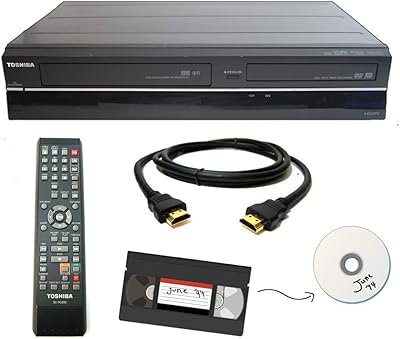
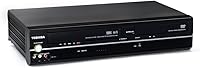
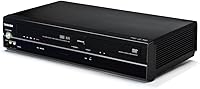
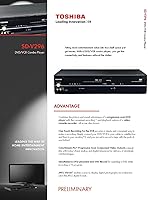
The Toshiba SD-V296 DVD VCR Combo Player occupies a specific but genuinely useful niche — it's the device that lets you keep one box on the shelf instead of two. For anyone sitting on a collection of old home recordings or taped movies, this dual-format machine doesn't ask you to choose between formats. It handles both without fuss. The progressive scan output is a real step up from older combo units, delivering noticeably cleaner images even on aging content. Just know going in that this is physical media hardware through and through — there's no Wi-Fi, no apps, no streaming. And for plenty of buyers, that's exactly the point.

Features & Benefits

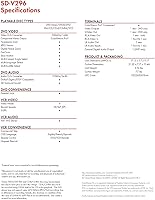
The combo player's standout on the video side is its ColorStream Pro component output, which pairs with a 108MHz/14-bit video DAC to push progressive scan images that look meaningfully sharper than interlaced output on a compatible display. Audio gets similar attention — a 192KHz/24-bit DAC with Dolby Digital and DTS decoding covers most home theater setups well, and the built-in 3D Surround Sound works without needing a separate receiver. Disc support is broad: DVD-Video, DVD-R, DVD-RW, CD, CD-R, CD-RW, and VCD all load without issue. The VHS recording feature is the practical cherry on top, letting you archive tapes before they degrade further. The on-screen menu runs in English, French, or Spanish.

Best For

This DVD-VCR unit makes the most sense for households that haven't fully let go of physical media — and honestly, there's no shame in that. If you have boxes of home recordings from the 80s and 90s, or a shelf of taped sports events and kids' shows, consolidating playback into one unit is a practical win. It also suits older adults who find streaming interfaces frustrating; this machine works like gear from an era people already know. It makes a thoughtful gift for relatives who need something simple to keep those memories alive. For anyone still buying DVDs or preserving VHS collections, this combo player delivers exactly what it promises — no more, no less.

User Feedback

Owners of this dual-format machine tend to praise the straightforward setup and the reassuring build quality — at nearly six pounds, it feels substantial rather than cheap. Most people find VHS tracking reliable, and DVD transitions are reported as smooth with no notable stuttering. Where opinions split is on the remote, which some find a bit cluttered and stiff after extended use. A fair number of buyers also note that RCA connectivity, while expected for this type of unit, shows its limits on larger modern flatscreens where the signal chain can't hide its age. That said, on a CRT or older display, the picture holds up respectably well.

Pros

  • Handles both DVD and VHS formats in one unit, freeing up shelf space and simplifying your setup.
  • Progressive scan output via ColorStream Pro delivers noticeably cleaner images than older interlaced combo players.
  • The 192KHz/24-bit audio DAC with Dolby Digital and DTS support holds its own in a basic home theater setup.
  • VHS recording capability means you can archive tapes to other media before they degrade further.
  • Wide disc compatibility covers DVD-Video, DVD-R, DVD-RW, CD, CD-R, CD-RW, and VCD without any fiddling.
  • Built-in 3D Surround Sound works without needing a separate receiver, keeping the setup lean.
  • On-screen menus in English, French, and Spanish make it accessible for multilingual households.
  • Solid build quality at nearly six pounds gives it a reassuringly sturdy feel compared to budget-tier alternatives.
  • Easy setup means most users are up and running without consulting a manual.
  • Reliable VHS tracking is consistently noted by owners, with smooth tape playback on well-preserved cassettes.

Cons

  • RCA-only connectivity limits picture quality on modern flatscreens and cannot be easily upgraded.
  • No HDMI output means this unit is fundamentally incompatible with contemporary display standards.
  • The remote control has been noted by some owners as cluttered and less responsive than expected.
  • As a combo unit with a mechanical tape transport, there are more moving parts that can fail over time.
  • No digital conversion or dubbing features built in, so archiving tapes requires additional external hardware.
  • Finding replacement parts or service support for an aging combo unit can be difficult and costly.
  • Performance on large modern TVs can look soft or washed out compared to even a modest upscaling DVD player.
  • Not a practical option for anyone building a forward-looking home entertainment setup.

Ratings

The ratings below for the Toshiba SD-V296 DVD VCR Combo Player were generated by our AI system after analyzing verified purchase reviews from buyers worldwide, with spam, incentivized, and bot-driven submissions actively filtered out before scoring. Each category reflects the real distribution of praise and frustration found across genuine user experiences, so both the strengths and the recurring pain points are represented honestly. No category has been inflated to flatter the product, and no legitimate criticism has been softened.

Build Quality
83%
Most owners comment on how solid this combo player feels straight out of the box — at nearly six pounds, it has a reassuring heft that budget units simply lack. The chassis holds up well under regular use, and the disc tray mechanism draws consistent praise for feeling deliberate rather than flimsy.
A subset of long-term owners report that the VHS transport mechanism shows wear after extended use, which is an inherent risk with any dual-mechanism device. Some users also note that the plastic fascia scratches more easily than expected for a unit in this price tier.
VHS Playback Performance
81%
19%
Tape tracking is reliably steady on well-preserved cassettes, and owners frequently mention that this unit breathes new life into recordings they had given up on. For family archiving purposes — home movies, taped holiday specials, old sports recordings — the playback is described as clean and consistent.
Heavily degraded or poorly stored tapes can still produce dropouts and wavering that the unit cannot compensate for, which disappoints buyers expecting a restoration effect. A few users note that manual tracking adjustment, while present, requires some trial and error to dial in on problem tapes.
DVD Playback Quality
78%
22%
Progressive scan via ColorStream Pro delivers a noticeably smoother picture compared to interlaced output, particularly during fast motion scenes on action films or sports discs. Owners pairing this unit with an older CRT or a modest flatscreen report solid, artifact-free playback across commercial and burned DVD-R titles.
On larger modern flatscreens, the RCA output becomes the limiting factor regardless of progressive scan, and the image can look soft or slightly washed out compared to even a basic HDMI-connected player. The unit also cannot upscale content, so buyers with high-end displays will notice the resolution ceiling quickly.
Audio Performance
76%
24%
The 192KHz/24-bit DAC handles Dolby Digital and DTS decoding capably, and users running the unit through a mid-range receiver report clean, well-separated audio on DVD titles. The built-in 3D Surround Sound mode is a genuine bonus for those without a dedicated receiver, adding some dimensionality to stereo TV setups.
Audiophiles and home theater enthusiasts will find the lack of an optical or coaxial digital audio output limiting, as RCA stereo is the only option for those without a Dolby Digital receiver. The surround simulation also has clear limits compared to discrete multichannel setups, which some buyers find underwhelming after the initial novelty.
Ease of Setup
88%
The setup process is straightforward enough that owners with no prior AV experience consistently describe being up and running within minutes. The multilingual OSD — covering English, French, and Spanish — removes one of the more common friction points for non-English-speaking households, and the initial configuration wizard is minimal and clear.
Users connecting to modern TVs without legacy inputs encounter an immediate compatibility wall, and the manual does not address workarounds for HDMI-only displays. A small number of buyers also report confusion around progressive scan mode activation, which requires navigating a non-obvious menu path.
Remote Control
61%
39%
The remote covers all core functions and allows full navigation of the OSD without touching the unit itself, which is useful when the player is inside a cabinet or at a distance. Button layout follows a logical grouping that most users find intuitive after a short learning period.
Responsiveness is the most common complaint — several owners describe needing to press buttons multiple times before the unit registers input, particularly from wider angles or greater distances. The button feel has also been described as stiff and undifferentiated, making it harder to operate by touch without looking at the remote.
Format Compatibility
86%
The range of supported formats — DVD-Video, DVD-R, DVD-RW, CD, CD-R, CD-RW, VCD, and VHS — covers virtually everything a legacy media household is likely to have on hand. Burned disc compatibility in particular draws praise, with most users reporting reliable playback of home-authored DVD-R discs from major brands.
Blu-ray, DVD-Audio, SACD, and any network-based format are entirely absent, which is expected but still a hard stop for anyone with a mixed modern-and-legacy media library. A handful of users also report occasional read failures with lower-quality or older burned discs, which is consistent with optical drive behavior across this product category.
VHS Recording
73%
27%
The ability to record onto VHS is a meaningful differentiator for this unit, and buyers specifically seeking tape archiving functionality cite it as the primary purchase reason. For recording broadcast content or dubbing from another source through RCA inputs, the function works reliably and produces watchable output.
The unit does not support direct DVD-to-VHS or VHS-to-DVD dubbing internally, which surprises some buyers who assume combo functionality implies cross-format recording. Recording quality is also inherently bounded by the VHS format itself, so high-motion content can exhibit the expected chroma noise and softness of analog tape.
Value for Money
67%
33%
For buyers who genuinely need both DVD and VHS in a single unit, this combo player avoids the cost and clutter of maintaining two separate devices, which many owners frame as the core value proposition. Toshiba's brand reliability is also cited as justification for the price premium over no-name alternatives.
At its current price point, the unit costs considerably more than a standalone DVD player, and buyers who only occasionally need VHS playback may find the premium hard to rationalize. The absence of HDMI output at this price tier is a recurring grievance, particularly as component inputs become harder to find on new TVs.
Connectivity
54%
46%
RCA connections are universally familiar and require no adapters or special cables for users with older televisions, making hookup genuinely simple in traditional AV setups. Component video support via ColorStream Pro is a step above composite-only units and provides a better signal path for compatible displays.
The complete absence of HDMI, optical audio, USB, or any digital output is a significant limitation that surfaces quickly in modern living rooms. Buyers who discover their TV lacks RCA inputs after purchase express strong frustration, and no digital audio passthrough means integration with contemporary soundbars is awkward or impossible.
Long-Term Durability
63%
37%
Units that have been used moderately and well-maintained tend to keep functioning for years, and several reviewers specifically mention units still in regular use many years after purchase. Toshiba's engineering reputation lends some confidence to buyers concerned about the longevity of a dual-mechanism device.
The mechanical complexity of combining a disc drive with a full VHS tape transport introduces more potential failure points than a single-format player, and replacement parts for this aging model are increasingly difficult to source. Owners who use the VHS transport heavily report head wear as the most common long-term issue.
Interface & Usability
79%
21%
Day-to-day operation is intuitive for anyone familiar with VCR-era electronics, and the OSD is clean enough that navigating settings does not require the manual. Older users and those new to AV equipment consistently describe the learning curve as minimal, which aligns with the product's core audience.
The interface does not offer any modern conveniences like last-position memory for VHS tapes or disc resume across power cycles, which frustrates buyers accustomed to current media player behavior. Menu depth for audio and video adjustment is also limited compared to dedicated DVD players in a similar price range.

Suitable for:

The Toshiba SD-V296 DVD VCR Combo Player is a practical choice for anyone who still has a meaningful collection of VHS tapes and doesn't want to maintain two separate devices just to watch them. Families with shelves of home recordings — birthday parties, school plays, holiday gatherings captured on tape decades ago — will find this combo player a low-effort way to keep that content accessible without specialized equipment. It also suits older adults who find modern streaming interfaces confusing or frustrating; the familiar operation of a VCR-style interface combined with DVD playback covers most of what they actually need. For households in areas with unreliable internet or those who simply prefer owning physical media, this dual-format machine handles a wide range of disc and tape formats without requiring any subscription or connectivity. It also makes a genuinely thoughtful gift for a relative who needs something dependable and simple to preserve aging tapes before they deteriorate beyond recovery.

Not suitable for:

The Toshiba SD-V296 DVD VCR Combo Player is not the right fit for buyers who expect a modern home theater centerpiece. If your primary screen is a large 4K or HD flatscreen, the RCA-only output will be a visible bottleneck — progressive scan helps, but it cannot compensate for an analog signal chain on a display designed for HDMI input. Anyone hoping to stream, access online content, or connect to smart home systems will find nothing here for them; this machine does exactly two things, and digital networking is not among them. Buyers who are sensitive to long-term reliability should also weigh the fact that combo units with mechanical VHS transports carry more potential failure points than a standalone DVD player. If your tape collection is small or you only occasionally need VHS playback, a standalone player and a one-time digitization service might be a more cost-effective path than investing in this unit.

Specifications

  • Brand: Manufactured by Toshiba, a well-established Japanese electronics brand with a long history in home entertainment hardware.
  • Model Number: The unit's official model designation is SD-V296, sometimes listed as SDV296 in documentation and part references.
  • Dimensions: The unit measures 9.17 x 17.13 x 3.7 inches (H x W x D), fitting comfortably in a standard AV cabinet shelf slot.
  • Weight: At 5.94 pounds, the unit has a solid, substantial feel without being difficult to reposition or install.
  • Color: Available in black, giving it a neutral appearance that blends with most home theater components.
  • Video Output: Features ColorStream Pro component video output with a 108MHz/14-bit video DAC for progressive scan image delivery.
  • Audio DAC: Equipped with a 192KHz/24-bit audio digital-to-analog converter for high-fidelity sound reproduction from disc sources.
  • Audio Decoding: Supports Dolby Digital and DTS decoding, with built-in 3D Surround Sound for enhanced audio without an external processor.
  • Connector Type: All audio and video connections use RCA interfaces; no HDMI or optical digital audio output is included.
  • Supported Formats: Compatible with DVD-Video, DVD-R, DVD-RW, CD, CD-R, CD-RW, VCD, and standard VHS tapes.
  • VHS Recording: Includes VHS recording functionality, allowing users to record broadcasts or transfer content onto VHS cassettes.
  • OSD Languages: The on-screen display menu is available in English, French, and Spanish for multilingual households.
  • Output Resolution: Maximum output resolution is 1280x720, suitable for HD-ready displays when used with component video connections.
  • Remote Control: Ships with a remote control powered by 2 AAA batteries, which are included in the box.
  • Power Requirements: Designed for standard household AC power; no external power adapter is required beyond the included power cord.
  • Manufacturer Status: As of the listed product data, Toshiba has not marked this model as discontinued, though it is an older production unit.
  • Release Date: This model was first made available for purchase on August 7, 2008, placing it in the late analog-transition era of consumer electronics.
  • Market Rank: Holds a Best Sellers Rank of approximately #65 in DVD Players on Amazon, reflecting sustained demand for legacy-format combo units.

Related Reviews
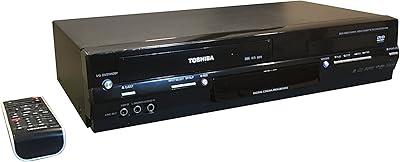
Toshiba SD-V295 DVD VCR Combo Player
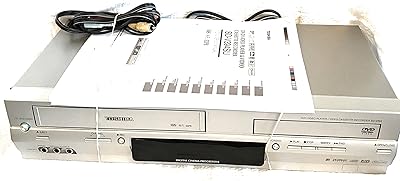
69%
83%
Build Quality
79%
DVD Playback Quality
67%
VHS Playback Quality
81%
One-Touch Recording
84%
Simultaneous Play and Record
More
Toshiba SD-V394 DVD/VCR Combo
85%
85%
Video Quality
91%
Ease of Setup
88%
VCR Performance
82%
Build Quality
83%
Audio Quality
More
Toshiba VHS to DVD Recorder VCR Combo
84%
88%
Ease of Use
85%
Setup & Installation
91%
Video Quality
80%
Audio Quality
84%
Build Quality
More
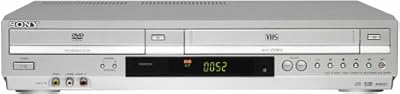
Sony SLVD370P DVD/VCR Progressive Scan Combo Player
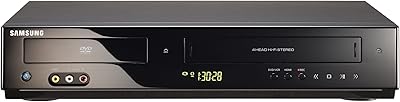
82%
85%
Ease of Use
89%
Picture Quality
82%
Sound Quality
70%
Build Quality
91%
Value for Money
More
Samsung DVD-V9800 DVD VCR Combo Player
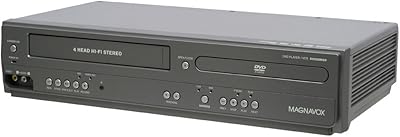
72%
82%
Build Quality
67%
VHS Playback Quality
78%
DVD Upconversion
88%
HDMI Connectivity
54%
Remote Control
More
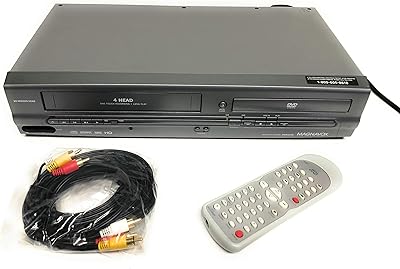
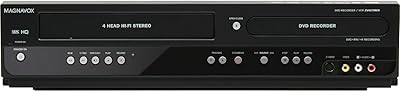
Magnavox DV225MG9 DVD VCR Combo Player
76%
88%
Ease of Setup
76%
VHS Playback Quality
81%
DVD Playback Quality
68%
Line-In Recording
83%
Remote Control Usability
More
Sanyo RFWZV475F DVD Recorder/VCR Combo
80%
91%
Dubbing Ease
78%
Video Upconversion
84%
Connectivity Options
93%
Space Efficiency
82%
Remote Control Utility
More
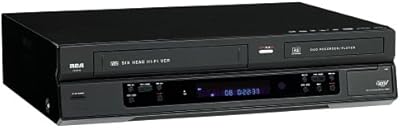
Magnavox MWD2205 DVD/VCR Combo Player
74%
88%
Ease of Setup
74%
VHS Playback Quality
82%
DVD Playback Quality
63%
Build Quality & Durability
71%
Remote Control Usability
More
Magnavox DV200MW8 DVD/VHS Combo Player
75%
88%
Value for Money
65%
Ease of Setup
75%
Playback Quality
81%
Design and Build Quality
70%
Sound Quality
More
Philips DVP3050V/37 DVD/VCR Combo
82%
91%
Value for Money
87%
Video Quality (Progressive Scan)
88%
Ease of Setup
83%
Build Quality
90%
Usability (Remote Control)
More

FAQ

It can, but with a caveat. The combo player only has RCA outputs, so you will need your TV to have composite or component video inputs. Many newer flatscreens have dropped those ports entirely, so check your TV's input panel before buying. If your TV only has HDMI, you would need a third-party RCA-to-HDMI adapter, which adds cost and can introduce minor quality loss.

Yes, it supports genuine VHS recording. You can record from a broadcast source connected through the unit, which makes it useful for archiving content onto tape. It is worth noting that this is a tape-to-tape or broadcast-to-tape function; it does not natively dub from DVD to VHS or vice versa.

Yes, the unit is compatible with DVD-R and DVD-RW discs in addition to commercial DVD-Video titles. CD-R and CD-RW audio discs also load without issue. That said, playback success with burned discs can sometimes depend on the disc brand and burn speed used, as with most consumer DVD players of this era.

Progressive scan means the image is drawn in one full pass rather than alternating lines, which reduces flicker and produces a smoother, sharper picture — particularly noticeable during motion. The improvement is real but depends on your display; on a CRT or an older screen, you may see a cleaner image than you are used to from a standard DVD player. On a very large modern flatscreen, the RCA connection itself becomes the bottleneck, so do not expect a dramatic transformation.

For the most part, yes. The setup process mirrors what most people remember from VCR-era electronics: connect the RCA cables to your TV, run the on-screen setup wizard, and you are ready. The menu is straightforward and available in English, French, or Spanish. Most users report being up and running within a few minutes of unboxing.

Reasonably well, assuming the tapes are not physically damaged or severely degraded. The unit includes standard VHS tracking adjustment, which helps with tapes that wobble or show static bands during playback. Tapes that have been stored poorly or have mold or moisture damage are beyond what any VCR can fully compensate for, so manage expectations with very old recordings.

Yes, both Dolby Digital and DTS decoding are supported when playing DVDs encoded with those audio tracks. If you have a surround sound receiver, you can pass the decoded signal through. The unit also has a built-in 3D Surround Sound mode for those using a standard stereo TV setup without a separate receiver.

Not directly. The DVD-VCR unit has no built-in USB port or digital capture output. To digitize tapes using this player, you would need to connect the RCA output to a separate video capture card or device attached to your computer. It is a workable setup but requires additional hardware that is not included.

The dual-format machine does not support Blu-ray, HD DVD, or any streaming format. It also does not play SACD or DVD-Audio discs. If you are primarily a Blu-ray user or have moved on entirely from standard-definition physical media, this unit has nothing to offer on the disc side beyond its existing format list.

Combo players that integrate both a disc mechanism and a tape transport naturally have more moving parts than standalone players, which means there are more things that can eventually wear out. The tape transport head and the disc laser are the two components most likely to need attention after extended use. For occasional or moderate use, owners generally report solid reliability, but heavy daily use over many years will test any mechanical device of this age and design.

Where to Buy