Overview

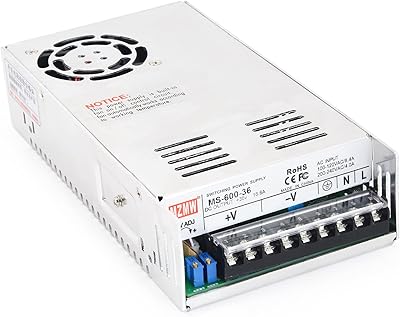
The Titoe AD-01 0-48V 10A Adjustable DC Power Supply sits in an interesting middle ground — capable enough for serious workshop use, yet sized and priced for hobbyists who don't need a full lab bench setup. The ability to dial output anywhere from zero to 48 volts covers a wide range of real-world tasks, and the 10A current ceiling gives meaningful headroom for most non-industrial loads. A dual-voltage input selector on the right side means it works on both 110V and 220V mains without adapters. The LED display is a genuine convenience — knowing your exact output at a glance beats fiddling with a multimeter each adjustment. Just go in with realistic expectations: this is a switching supply, not a precision regulated unit.
Features & Benefits

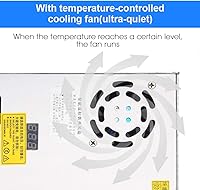
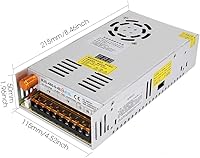
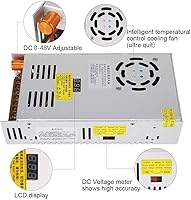
The adjustable 0–48V output is where this switching power supply earns its keep. Spin the dial and the LED readout updates in real time, which makes iterative testing far less tedious than stopping to probe with a meter. The built-in fan runs automatically based on temperature rather than spinning constantly, keeping noise down during lighter loads. When things heat up, an over-temperature shutdown kicks in before damage occurs. The protection suite — covering overload, overvoltage, and short-circuit scenarios — adds a layer of confidence when experimenting with unfamiliar loads. All of this fits inside a solid metal enclosure measuring roughly 8.5 by 4.5 inches, compact enough for most workbenches without dominating the space.

Best For

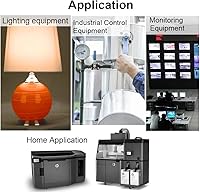
This adjustable DC supply makes the most sense for people who regularly work across a range of voltages — electronics hobbyists testing microcontroller circuits, ham radio enthusiasts powering transceivers, or anyone building LED lighting rigs and security camera setups. The wide voltage range means you're not locked into a single application. For small workshop or garage setups, it handles most DC loads comfortably without the cost or complexity of a full bench instrument. If you're outside North America and running on 220V mains, the built-in input selector saves you from buying a separate converter. Where it falls short: anyone needing tight millivolt accuracy for sensitive analog work should look at a dedicated lab supply instead.

User Feedback

Buyers consistently point to the clear LED readout and easy voltage adjustment as standout positives — being able to set and read voltage without reaching for a multimeter is genuinely appreciated. Build quality gets reasonable marks for the price tier, with the metal housing feeling solid rather than flimsy. That said, criticism tends to cluster around two areas. The cooling fan can be audible in a quiet workspace, particularly at higher loads. A few users also report minor voltage drift at the lower end of the range, which matters for precision-sensitive work. The input voltage selector catches some people off guard too — skipping that step before first power-on is a real risk, so always double-check it.

Pros

  • Wide 0–48V adjustable output covers an impressive range of real-world DC applications in one unit.
  • The LED voltage display gives you an instant, accurate readout without reaching for a separate multimeter.
  • Dual 110V and 220V input compatibility removes the need for a step-up or step-down converter in most countries.
  • Built-in overload, overvoltage, and short-circuit protection genuinely reduces the risk of damage during experimentation.
  • The all-metal enclosure feels solid and durable, not like a cheap plastic shell that flexes under hand pressure.
  • At under two pounds and roughly 8.5 inches long, this switching power supply fits comfortably on a crowded workbench.
  • Automatic fan control keeps noise reasonable during lighter loads, only spinning up when the unit actually needs cooling.
  • Over-temperature auto-shutdown adds a meaningful safety layer for users who run longer, unattended sessions.
  • The price point makes it accessible for hobbyists who need variable voltage but cannot justify a full bench instrument.
  • Setup is straightforward — adjust the selector switch, connect your load, and you are operational within minutes.

Cons

  • Voltage accuracy at the low end of the range can drift, making it unreliable for precision analog or sensor work.
  • The cooling fan produces noticeable noise under higher loads, which can be distracting in a quiet workspace.
  • The 110V/220V input selector is easy to overlook before first use, creating a real risk of damage if set incorrectly.
  • Output ripple may cause instability in noise-sensitive circuits like audio amplifiers or RF front-ends.
  • Inductive loads such as motors or fans can generate startup surges that exceed the 10A rating and stress the unit.
  • No current adjustment control is included, limiting fine-grained control compared to proper dual-knob bench supplies.
  • The digital display shows voltage but does not display output current, so a separate meter is needed to monitor amps.
  • Long-term reliability data for the Titoe brand is limited, making it a harder recommendation for critical or continuous-duty use.

Ratings

Our editorial AI has processed verified buyer reviews for the Titoe AD-01 0-48V 10A Adjustable DC Power Supply from global marketplaces, actively filtering out incentivized, bot-generated, and duplicate submissions to surface what real users actually experience. The scores below reflect both the genuine strengths that keep buyers satisfied and the recurring frustrations that show up consistently across independent feedback. Nothing here is averaged into oblivion — where this adjustable DC supply excels, the numbers show it, and where it falls short, that is reflected too.
Voltage Range Versatility
91%
The continuous 0–48V adjustment range is the single biggest reason buyers choose this unit over fixed-output alternatives. Hobbyists testing everything from 3.3V microcontrollers to 48V radio transceivers in the same session genuinely appreciate not having to swap supplies mid-project.
At the very low end of the dial — typically below 3V — some users report the output becomes less stable and harder to fine-tune precisely. For applications that live in the sub-5V range exclusively, a dedicated low-voltage supply might serve better.
Output Current Capacity
83%
A 10A ceiling covers the vast majority of hobbyist and light workshop loads comfortably, and users running LED rigs, security cameras, and radio gear rarely bump against the limit under normal conditions. The 480W total capacity gives real headroom for sustained use.
Users driving inductive loads like motors or large fans report that startup current surges can trip the protection circuit unexpectedly, interrupting operation mid-session. The unit provides no current adjustment knob, so managing loads near the limit requires external planning.
Display Clarity
88%
The LED voltage readout is bright, easy to read from across a workbench, and updates in real time as you turn the dial. Buyers who previously relied on fixed supplies and manual multimeter checks consistently mention how much time this saves during iterative testing.
Only voltage is displayed — there is no current readout on the panel, which means you need a separate meter to monitor amp draw. Several users found this omission frustrating once they started working with loads where current monitoring matters.
Build Quality
76%
24%
The all-metal enclosure feels noticeably more solid than plastic alternatives in the same price range, and most buyers report no rattles, flex, or obvious assembly defects out of the box. For a workshop tool that gets handled frequently, that rigidity matters.
Internal component quality is harder to verify without opening the unit, and a minority of long-term users report performance degradation after extended heavy-duty use. The Titoe brand does not have the established track record that gives buyers confidence in multi-year durability.
Value for Money
86%
For the output range, power capacity, and feature set on offer, most buyers feel this switching power supply punches well above its price bracket. Getting 0–48V adjustability, a digital display, and a protection suite at this cost point is genuinely difficult to match with comparable units.
The value calculus changes for buyers who need precision — if you end up needing a separate accurate multimeter to compensate for display drift, or a current meter to fill the panel gap, the effective cost of the setup climbs. Some feel those additions should have been included by default.
Ease of Setup
82%
18%
Most buyers have this running within minutes of unboxing — connect input, set the voltage selector switch, attach your load, and you are operational. The single-knob voltage adjustment is intuitive enough that no manual reading is required for basic use.
The input voltage selector switch on the side is easy to overlook, and several buyers powered up on the wrong setting before realizing their mistake — sometimes with damaging results. Better labeling or a more prominent physical indicator for this switch would prevent a recurring and avoidable problem.
Fan Noise
61%
39%
The automatic fan control is a thoughtful design choice — during light loads in cooler environments the fan may not spin at all, keeping the unit quiet during low-demand sessions. Buyers doing occasional, short-duration tasks rarely mention noise as an issue.
Under sustained medium-to-heavy loads the fan becomes clearly audible, and in a quiet workshop or home office setting it draws attention. A handful of users describe the fan tone as high-pitched rather than a low hum, making it more noticeable than the volume alone would suggest.
Voltage Accuracy
67%
33%
At mid to upper output voltages — roughly 12V and above — the LED display tracks closely enough with multimeter readings that most hobbyist work proceeds without issue. For powering radios, LED strips, and cameras in that range, the accuracy is practically adequate.
Below about 5V, discrepancies between the displayed voltage and actual output become more pronounced and inconsistent. Users doing precision analog work, sensor calibration, or anything requiring stable sub-5V output should verify every setting with a calibrated external meter rather than trusting the panel display.
Thermal Protection
84%
The over-temperature auto-shutdown works as advertised — buyers who have accidentally run the unit hard for extended periods report it cutting out safely rather than failing catastrophically. Knowing the unit will protect itself gives some peace of mind during longer, unattended sessions.
The unit does not give any audible or visual warning before shutdown occurs, so when it does cut out mid-session it can feel abrupt and confusing if you are not expecting it. A warning indicator before full shutdown would make the protection feel more user-friendly.
Inductive Load Handling
52%
48%
For purely resistive loads — LED drivers, passive electronics, static test circuits — the supply handles the job without complaint. Users in those use cases rarely encounter the inductive load limitation at all and rate their experience positively.
Running motors, solenoids, relays, or large cooling fans is where this supply consistently draws criticism. Startup current spikes from inductive loads regularly trip the protection circuit or cause erratic behavior, and without a soft-start circuit or current-limiting adjustment, there is no clean workaround built into the unit.
Regional Compatibility
89%
The physical 110V/220V selector makes this adjustable DC supply genuinely useful to international buyers and anyone who works across different mains environments. Users in Europe, Asia, and Australia appreciate not needing a separate step-down transformer to use a North American-listed unit.
The selector is a manual switch with no automatic detection, which places the burden of correct configuration entirely on the user. Given that getting it wrong can instantly damage the unit, a passive design element with such high stakes ideally warrants a more foolproof implementation.
Protection Suite Reliability
78%
22%
The triple protection system — overload, overvoltage, and short-circuit — gives buyers a reasonable safety net when experimenting with unfamiliar loads or prototype circuits. Most users who have triggered short-circuit protection report the unit recovering cleanly after the fault is cleared.
The protection thresholds are fixed and cannot be user-configured, which limits flexibility for advanced users who want to set custom current limits or voltage ceilings for specific load types. Compared to proper bench supplies with adjustable trip points, this is a meaningful capability gap.
Portability & Footprint
81%
19%
At 1.8 pounds and roughly the size of a thick hardback book, this switching power supply moves between workspaces easily and does not dominate a crowded bench. Buyers with limited bench space or who carry gear to different locations appreciate the compact form factor.
The depth of just under 2 inches means it needs to be positioned flat and stable rather than mounted vertically or stacked, which limits creative bench organization options. There are no mounting holes or rack-mount provisions, so permanent installation in a tidy workspace requires improvisation.

Suitable for:

The Titoe AD-01 0-48V 10A Adjustable DC Power Supply is a strong fit for hobbyists and semi-professional users who regularly work across a range of DC voltages and need one unit that can do it all without a large investment. Electronics tinkerers testing Arduino projects, Raspberry Pi setups, or custom PCBs will appreciate being able to dial in exactly the voltage they need rather than swapping fixed-output adapters. Ham radio operators and broadcast hobbyists powering transceivers or RF equipment up to 48V get real practical value from the wide output range. It also works well for LED strip installations, security camera systems, and other DC-powered infrastructure in a home or small workshop setting. The built-in input selector for both 110V and 220V mains makes it a smart choice for international users or anyone who travels between regions with different grid standards.
Not suitable for:

Buyers expecting lab-grade voltage precision should look elsewhere — this adjustable DC supply is a switching-mode unit, and like most in its class, it can exhibit minor voltage drift or output ripple, particularly at the lower end of the dial. Electrical engineers or analog circuit designers who need millivolt-level accuracy and near-zero ripple for sensitive measurements will find its tolerances frustrating. It is also not designed for heavy inductive loads like large motors or compressors; the startup current surge from such equipment can exceed the unit's 10A maximum and risk tripping protection or causing damage. Anyone running a production environment or mission-critical equipment should invest in a certified industrial-grade supply with tighter specs and formal safety certifications. Lastly, users who want a fully silent workspace should be aware that the cooling fan, while automatic, is audible under load.

Specifications

  • Brand: Manufactured and sold under the Titoe brand, model number AD-01.
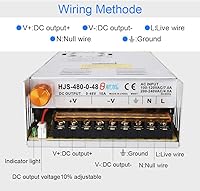
  • Input Voltage: Accepts AC 110V or 220V mains input, selectable via a physical switch on the right side of the unit.
  • Output Voltage: Delivers adjustable DC output ranging continuously from 0V to 48V.
  • Max Output Current: Rated for a maximum continuous output current of 10A.
  • Total Power: Peak power output capacity is 480W under full load conditions.
  • Display: An LED digital readout shows real-time output voltage during operation.
  • Cooling System: A built-in fan activates and deactivates automatically based on internal operating temperature.
  • Thermal Protection: An over-temperature auto-shutdown circuit cuts power to prevent heat-related internal damage.
  • Protection Suite: Includes three hardware protection modes: overload, overvoltage, and short-circuit protection.
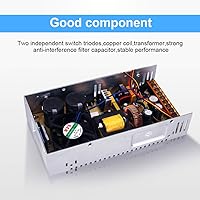
  • Enclosure: The outer housing is constructed from metal for rigidity and basic shielding.
  • Dimensions: Unit measures 8.46″ long by 4.52″ wide by 1.96″ tall.
  • Weight: Shipping and handling weight is approximately 1.8 pounds.
  • Input Type: Supports universal AC full-range input, compatible with standard wall outlets in most countries.
  • Output Type: Provides regulated DC output suitable for resistive loads; performance may vary with inductive loads.
  • Batteries Required: No batteries are required; the unit operates directly from an AC mains connection.

Related Reviews
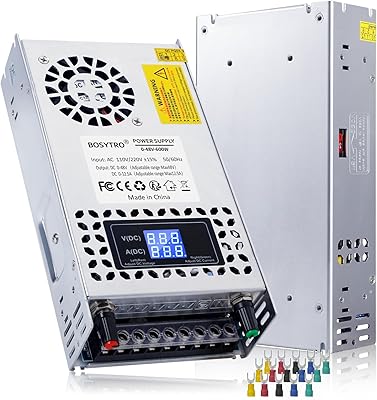
BOSYTRO TYTL-48V600W Adjustable DC Power Supply
76%
83%
Value for Money
79%
Build Quality
86%
Output Accuracy
62%
Ease of Use
91%
Voltage Range Versatility
More
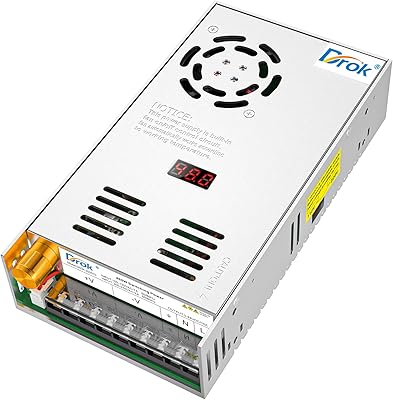
DROK 48V 480W Adjustable DC Power Supply
81%
86%
Voltage Accuracy
91%
Ease of Use
78%
Build Quality
83%
Thermal Management
67%
Fan Noise Level
More
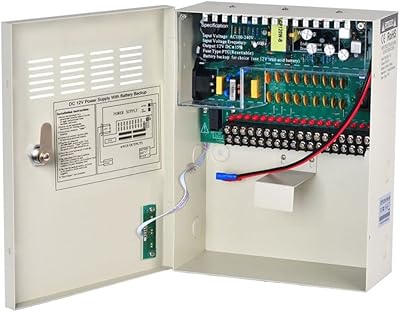
EVERSECU 18-Channel 10A UPS Power Supply
78%
91%
Channel Fault Isolation
87%
Ease of Installation
74%
UPS Battery Backup
62%
Load Capacity
71%
Build Quality
More
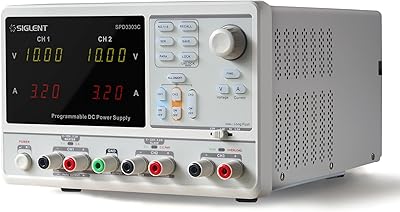
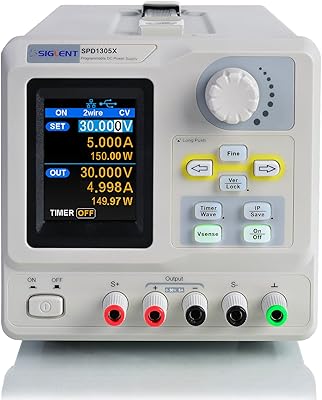
Siglent SPD3303C DC Power Supply
86%
95%
Output Accuracy
93%
Channel Stability
90%
Build Quality
88%
LED Display Clarity
78%
Multi-Channel Programming
More
TEPU HU460AM-01 460W Power Supply
86%
89%
Power Performance
91%
Cooling Efficiency
87%
Noise Level
85%
Installation Ease
79%
Compatibility
More
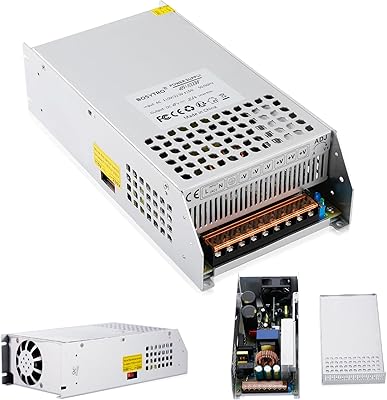
BOSYTRO 48V 1000W Switching Power Supply
74%
74%
Output Voltage Stability
78%
Build Quality
76%
Thermal Management
83%
Ease of Installation
47%
Documentation & Setup Guidance
More
UNI-T UTP1306 Variable Bench Power Supply
79%
88%
Voltage & Current Accuracy
91%
Display Clarity
79%
Build Quality
86%
Output Protection (OVP/OCP/OTP)
71%
Noise & Ripple Performance
More
Siglent SPD1305X Programmable DC Power Supply
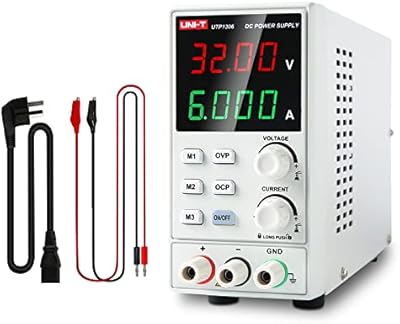
78%
91%
Output Accuracy & Stability
88%
Display Quality
86%
Build Quality & Construction
79%
Remote Control & Connectivity
63%
Fan Noise
More
CNCTOPBAOS 600W 36V DC Switching Power Supply
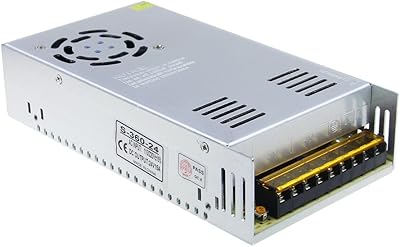
84%
95%
Power Output & Stability
88%
Ease of Use
90%
Cooling Performance
84%
Build Quality & Durability
87%
Size & Compact Design
More
SHNITPWR 144W Adjustable Universal DC Power Supply
83%
71%
Voltage Adjustment Accuracy
93%
LCD Display Usefulness
88%
Connector Tip Variety
91%
Safety Protections
67%
Thermal Performance
More

FAQ

Yes, and this step is genuinely important — check the input voltage selector switch on the right side of the unit before you connect it to mains power. If you are in North America, set it to 110V; if you are in Europe, Australia, or most of Asia, set it to 220V. Running it on the wrong setting can damage the unit instantly, and that kind of mistake is not covered by any warranty.

The spec says 0–48V, and in practice you can get very close to zero, but switching power supplies like this one typically have a small residual output at the lowest dial position rather than a true hard zero. For most hobby and workshop uses that is not an issue, but if you need a confirmed dead-zero output, verify with a multimeter before relying on it.

It can output up to 48V, but you need to be careful. Charging lithium battery packs requires a proper CC/CV charge profile with accurate voltage cutoff, and this adjustable DC supply does not have a built-in current-limiting knob or charge controller logic. Using it as a raw bench supply to experiment is fine, but you should not treat it as a dedicated battery charger without additional control circuitry.

The fan is automatic — it only spins up when the internal temperature rises above a certain threshold, so at light loads in a cool room it may barely run at all. Under heavier loads it does become audible, and some users find it noticeable in a quiet workspace. It is not silent, but it is not unusually loud for a unit in this class either.

Yes, that is one of the more practical features of this switching power supply — there is a physical selector switch that lets you choose between 110V and 220V input. Just set it to 220V before plugging in and you are good to go on European or UK mains. You will still need the appropriate plug adapter for the wall socket itself, but no voltage converter is needed.

You can, but with an important caveat. Motors and fans are inductive loads, and they draw a much higher current at startup than during normal running. If that startup surge exceeds 10A, the unit's overload protection will trip — or in a worst case, it could stress the supply. If you are driving inductive loads, check the motor's maximum starting current spec and make sure it stays well within the 10A ceiling.

Only voltage is shown on the LED display. If you need to monitor how many amps your load is drawing, you will need a separate inline ammeter or a multimeter set to current mode. This is a common limitation at this price point — dual voltage and current displays are usually found on more expensive bench supplies.

For most practical purposes the LED display is reasonably close, but do not expect laboratory accuracy. At mid to upper voltages it tends to track well, but at the lower end of the dial — say, under 5V — there can be a small discrepancy between what the display shows and what a quality multimeter reads. Always verify with a meter if precision matters for your application.

Yes, that is the same unit. It circulates in hobbyist and ham radio communities as a reasonably affordable option for variable bench power, and the forum discussions generally reflect what buyers experience: solid for general use, but not a substitute for a proper lab supply if you need tight regulation or current control.

The built-in short-circuit protection should cut the output before any serious damage occurs, either to your load or the supply itself. In practice, the unit typically shuts down or limits output automatically. Once you have cleared the fault and removed the short, you should be able to restore normal operation. That said, protection circuits are a safety net, not an invitation to be careless — always double-check your wiring before powering up.