Overview

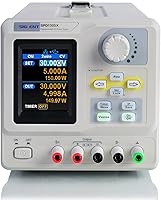
The Siglent SPD1305X Programmable DC Power Supply is a single-channel benchtop instrument built for electronics engineers, lab technicians, and serious hobbyists who need dependable, accurate DC power. With a 30V/5A output range and 150W maximum capacity, it covers the vast majority of bench work without breaking a sweat. Sitting in the mid-to-upper price bracket, it justifies the cost through genuine measurement accuracy and USB and LAN connectivity that cheaper units simply don't offer. This isn't a casual weekend toy, but it's also not trying to compete with fully industrial-grade equipment — it occupies a sweet spot for professionals and advanced enthusiasts who need real performance at a reasonable scale.
Features & Benefits

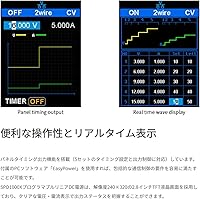
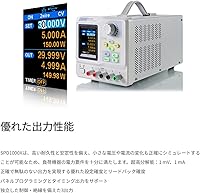
The 2.8-inch TFT-LCD color display is one of the first things you notice — it's bright, clear, and provides a 5-digit voltage readout alongside 4-digit current figures, which makes live monitoring genuinely useful rather than a formality. Resolution sits at 1mV and 1mA, giving you fine-grained control over output that cheaper supplies can't match. The voltage accuracy spec — ±0.03% of reading plus 10mV — is tight enough for sensitive analog and mixed-signal work. USB and LAN ports open up remote programming via SCPI commands, which is valuable in automated test setups. The single-channel layout keeps things clean, and air cooling handles thermal management efficiently without requiring an oversized enclosure.

Best For

This bench supply is a natural fit for electronics engineers and prototypers who need consistent, accurate voltage during circuit debugging — the kind of use where a supply that drifts under load creates real problems. Hobbyists who've grown frustrated with cheap unregulated wall warts will find the step up in accuracy immediately noticeable. Engineering students get a professional-grade tool that mirrors what they'll encounter in industry labs. Ham radio operators benefit from the stable, clean output needed for sensitive RF work. And in environments where test routines are automated, the SCPI-capable LAN and USB interfaces let you script entire test sequences, a real time-saver for anyone running repetitive validation workflows.

User Feedback

Across verified purchases, this programmable power supply holds a strong 4.5-star average, and the praise is consistent: buyers highlight the display clarity and output stability as standout qualities, with several noting that readback accuracy holds up well under sustained use. Build quality gets positive marks too, especially from users comparing it to lower-cost competitors. That said, not everything is universally loved — fan noise comes up fairly regularly as a minor annoyance in quiet workspaces, and a handful of reviewers found the initial software setup for remote control less intuitive than expected. The manual quality also draws occasional criticism. Overall, most buyers feel the price is well justified given the accuracy and connectivity on offer.

Pros

  • Output voltage holds steady under load, giving engineers confidence when debugging sensitive circuits.
  • 1mV voltage resolution allows precise fine-tuning that cheap bench supplies simply cannot match.
  • The bright TFT-LCD display makes live monitoring easy without squinting or leaning in.
  • USB and LAN connectivity open the door to automated test scripting via standard SCPI commands.
  • Current limiting transitions cleanly into CC mode without voltage spikes that could damage prototypes.
  • Build quality feels solid and durable, with binding posts and controls that hold up over extended daily use.
  • Single-channel layout keeps the front panel intuitive — most users are productive within minutes of setup.
  • Long-term owners report consistent accuracy without needing recalibration, a strong sign of reliable internal engineering.

Cons

  • Fan noise is a genuine nuisance in quiet home labs or shared office environments.
  • The included manual is thin and poorly translated, making advanced features harder to unlock independently.
  • Initial remote control setup via USB or LAN requires significant troubleshooting for users new to SCPI.
  • Proprietary PC software feels outdated and offers little advantage over direct scripting — most users abandon it quickly.
  • Accuracy at very low current settings is wider than the voltage spec, which matters for low-power microcontroller work.
  • The physical footprint is substantial — over 12 pounds and a large chassis — which can crowd a compact bench.
  • No multi-channel output means users needing simultaneous independent rails must purchase additional equipment.
  • Long-term reliability data from multi-year owners is still limited, making definitive durability conclusions difficult.

Ratings

The Siglent SPD1305X Programmable DC Power Supply has been scored by our AI system after analyzing verified purchase reviews from buyers worldwide, with spam, bot-submitted, and incentivized feedback actively filtered out. Scores reflect the honest consensus of engineers, hobbyists, and lab professionals who use this bench supply in real working environments. Both the standout strengths and the genuine frustrations are transparently captured in every category below.
Output Accuracy & Stability
91%
Users working on sensitive analog circuits consistently report that the voltage holds steady under load, with readback figures closely matching what a calibrated multimeter shows independently. For prototyping work where supply drift can mask real circuit faults, this level of stability is exactly what engineers pay the price premium for.
A small subset of buyers noted minor discrepancies at very low output voltages — below 1V — where the percentage-based accuracy spec becomes less favorable. This is a known characteristic of the architecture rather than a defect, but it can matter for certain low-voltage applications.
Display Quality
88%
The 2.8-inch TFT-LCD panel draws consistent praise for its brightness and color clarity, with the 5-digit voltage and 4-digit current readout making it easy to monitor output at a glance even from across a workbench. Buyers switching from older single-color LED displays describe the difference as immediately noticeable and genuinely useful.
A few users found the display somewhat small relative to the unit's physical footprint, and readability at steep off-angles is reduced. The font size, while adequate, leaves some buyers wishing for a slightly larger readout given how much bench real estate the unit occupies.
Build Quality & Construction
86%
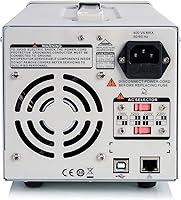
The chassis feels solid and well-assembled — not flimsy in the way budget supplies often are — and the front panel controls have a satisfying tactile quality that suggests durability over long-term daily use. Several reviewers specifically called out the binding posts as robust and easy to use with a variety of connector types.
Some buyers noticed that the enclosure finish, while functional, has a slightly utilitarian look that doesn't match the premium feel of top-tier lab instruments. A couple of long-term users reported minor cosmetic wear on control knobs after extended use, though no functional degradation was reported alongside it.
Remote Control & Connectivity
79%
21%
Having both USB and LAN interfaces with SCPI support is a real differentiator at this price point, and engineers running automated test benches appreciate being able to script voltage sweeps and current limit changes without touching the unit. The LAN interface in particular allows the supply to sit anywhere on a lab network and be addressed remotely.
The initial setup for remote control is where frustration accumulates — the documentation is sparse, and several buyers spent considerable time troubleshooting driver installation or network configuration before getting SCPI commands to work reliably. Users without prior experience in instrument control will face a steeper learning curve than the spec sheet implies.
Fan Noise
63%
37%
The cooling fan does its job effectively — thermal performance is solid, and the unit doesn't run hot even under sustained high-current loads. Users in louder lab environments or workshops rarely flag noise as an issue, and the fan rarely runs at full speed under typical bench use conditions.
In quiet home labs or shared office environments, the fan noise is a recurring complaint that surfaces across multiple reviews. At moderate loads it spins up audibly, which some buyers describe as distracting during focused work. It's not loud by industrial standards, but it's noticeable in a quiet room.
Value for Money
83%
Buyers who step up from entry-level supplies consistently feel the price is justified once they experience the accuracy, display quality, and connectivity together as a package. For professional use where measurement confidence matters, the cost-per-feature calculation holds up well against comparable instruments from other established brands.
For pure hobbyist use where remote control and tight accuracy specs are never exercised, the price can feel harder to justify when simpler supplies exist at a fraction of the cost. A handful of reviewers acknowledged they were paying for features they didn't fully use, which is worth considering before purchasing.
Ease of Use
81%
19%
The single-channel layout keeps the front panel intuitive — voltage and current limits are set quickly via the rotary encoder and numeric input, and most users report being productive within minutes of unboxing. The menu structure is logical enough that the manual rarely needs to be consulted for day-to-day operation.
Accessing less common settings, such as output sequencing or interface configuration, requires navigating several menu layers that aren't always intuitively labeled. New users occasionally report confusion distinguishing between set-point adjustment and direct numeric entry modes until the workflow becomes second nature.
Documentation & Manual Quality
54%
46%
The core operating procedures are covered adequately, and for straightforward bench use — setting voltage, adjusting current limits, monitoring output — the provided documentation gets the job done without requiring external resources.
The manual is widely criticized for being thin, poorly translated in places, and nearly useless for setting up remote programming. Users attempting SCPI integration almost universally report needing to supplement the manual with community forums, GitHub repositories, or third-party application notes to make meaningful progress.
Voltage Resolution & Control
89%
A 1mV resolution on voltage output is genuinely useful when fine-tuning supply rails for ADC reference testing, sensor calibration, or low-noise analog work. The encoder allows coarse and fine adjustment steps, and the snap between adjustment increments feels precise rather than mushy.
At very low output settings, some users find the encoder slightly oversensitive, leading to occasional overshoot when dialing in values below 500mV. It's a minor complaint, but for users regularly working in the sub-1V range it can slow down the setup process.
Current Limiting Accuracy
84%
The current limiting behavior is clean and responsive — when the circuit under test draws more than the set threshold, the supply transitions into constant-current mode smoothly without the voltage spike some cheaper supplies produce. This makes it noticeably safer for protecting sensitive prototype circuits.
The current accuracy spec of ±0.3% plus 10mA is wider than the voltage accuracy spec, which becomes relevant at very low current settings. Users measuring precise current consumption of low-power microcontroller designs sometimes supplement the bench supply with a dedicated precision ammeter for that reason.
Thermal Performance
85%
Even under sustained 5A continuous loads the unit maintains stable output without thermal throttling, which speaks well to the internal engineering of the power stage. Users running long burn-in tests on prototype hardware report consistent behavior over hours of operation.
The tradeoff for effective thermal management is the fan noise issue noted elsewhere. The enclosure does get warm to the touch at high load, which is normal, but a small number of buyers expressed concern about placing it in poorly ventilated enclosures or cabinets.
Long-Term Reliability
82%
18%
Buyers who have owned the unit for a year or more tend to report continued satisfaction, with output accuracy holding steady without recalibration. Siglent's reputation for standing behind their instruments gives additional confidence that this isn't a supply that degrades quickly with regular use.
The sample size for truly long-term reviews is limited given the product's availability window, so definitive multi-year reliability conclusions are harder to draw. A small number of users reported issues with the fan bearing over time, which can introduce noise or reduced airflow if the unit isn't periodically serviced.
Software & PC Integration
58%
42%
For users who get past the setup hurdles, the SCPI interface works reliably and integrates well with Python scripts and LabVIEW environments. Engineers familiar with instrument control frameworks generally report a positive experience once the connection layer is established.
Siglent's proprietary PC software receives consistently mediocre feedback — it feels dated, has limited functionality compared to scripting directly via SCPI, and the installation process on modern operating systems can require workarounds. Most technically capable users abandon it quickly in favor of direct SCPI scripting.
Size & Bench Footprint
72%
28%
The form factor is compact relative to older linear bench supplies of similar capability, and the physical dimensions are manageable on a standard workbench without dominating the available space. The weight feels solid and reassuring without being impractical to reposition.
At over 12 pounds and roughly 12.6 by 10.24 by 15.75 inches, it's not a small instrument, and users with compact home lab setups or shared benches note that it claims meaningful real estate. Those expecting something pocket-sized based on the single-channel spec may be surprised by the physical presence of the unit.

Suitable for:

The Siglent SPD1305X Programmable DC Power Supply is an excellent match for electronics engineers and lab technicians who need a dependable, accurate single-channel supply for daily prototyping, circuit debugging, and component testing. Hobbyists and makers who have hit the ceiling of cheap unregulated supplies will find the jump in accuracy and display quality immediately worthwhile — especially when chasing down noise-sensitive analog issues where supply quality directly affects results. Engineering students will appreciate having access to a professional-grade instrument that mirrors what they encounter in university or industry labs, without the full cost of top-tier equipment. Ham radio operators and RF enthusiasts who need clean, stable DC rails will find the tight voltage accuracy spec reassuring. And for anyone running automated test routines, the SCPI-compatible LAN and USB interfaces make this supply a practical building block in a scripted test environment, saving significant manual effort over time.
Not suitable for:

The Siglent SPD1305X Programmable DC Power Supply is not the right call for buyers who only need occasional, casual use and will never push beyond what a basic regulated supply can offer — the price premium simply won't pay off in those scenarios. Users who work primarily in very low-voltage ranges, consistently below 1V, may find that the percentage-based accuracy specification works against them at that end of the scale, making a more specialized low-voltage supply a better fit. Anyone hoping for a whisper-quiet instrument in a shared workspace or bedroom lab should be aware that the cooling fan generates audible noise under moderate to heavy loads, which is a real daily irritant in quiet environments. Buyers expecting polished PC software or a plug-and-play remote control experience will likely be frustrated — the proprietary application is dated, and getting SCPI commands running smoothly requires patience and some prior familiarity with instrument control. Those needing multiple independent output channels will also need to look elsewhere, as the single-channel design is a hard constraint that no amount of workaround can overcome.
Specifications

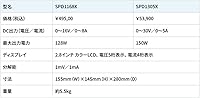
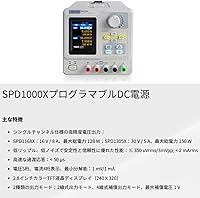
  • Output Voltage: The supply delivers a continuously adjustable DC output voltage from 0 to 30V.
  • Output Current: Output current is adjustable from 0 to 5A, supporting a wide range of bench loads.
  • Max Power: Total output power capacity is rated at 150W under combined voltage and current conditions.
  • Channels: This is a single-channel instrument with one independent regulated DC output.
  • Voltage Resolution: Voltage can be set and read back at 1mV resolution for fine-grained output control.
  • Current Resolution: Current resolution is 1mA, enabling precise current limiting for sensitive circuit protection.
  • Voltage Accuracy: Setting and readback voltage accuracy is rated at ±(0.03% of reading + 10mV).
  • Current Accuracy: Setting and readback current accuracy is rated at ±(0.3% of reading + 10mA).
  • Display: A 2.8″ TFT-LCD color panel provides a 5-digit voltage and 4-digit current readout simultaneously.
  • Connectivity: The unit includes both a USB device port and a LAN (Ethernet) port for remote SCPI control.
  • Form Factor: Designed as a benchtop instrument intended for fixed workbench or lab table use.
  • Cooling Method: Thermal management is handled by an internal fan that provides forced air cooling across the power stage.
  • Dimensions: The unit measures 12.6″ × 10.24″ × 15.75″ (length × width × height).
  • Weight: The supply weighs approximately 12.1 pounds, reflecting a robust internal linear or switching power stage.
  • Power Source: Operates from a standard corded AC mains supply; no battery or DC input operation is supported.
  • Operating Voltage: The unit is rated for 30V maximum output, with the AC input conforming to regional mains standards.
  • Color & Finish: The enclosure is finished in black with a utilitarian instrument-grade panel layout.
  • Remote Protocol: SCPI (Standard Commands for Programmable Instruments) is supported over both USB and LAN interfaces.
  • Date Available: This model was first made available for purchase in March 2019.
  • Manufacturer: Manufactured by Siglent Technologies, a test and measurement instrument company based in China.

Related Reviews

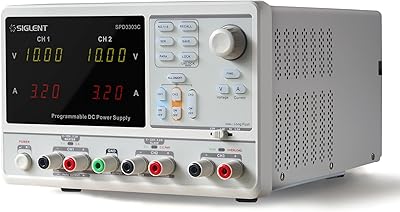
Siglent SPD3303C DC Power Supply
86%
95%
Output Accuracy
93%
Channel Stability
90%
Build Quality
88%
LED Display Clarity
78%
Multi-Channel Programming
More
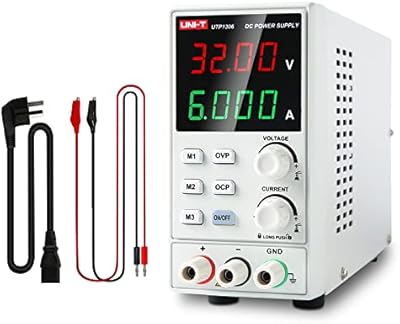
UNI-T UTP1306 Variable Bench Power Supply
79%
88%
Voltage & Current Accuracy
91%
Display Clarity
79%
Build Quality
86%
Output Protection (OVP/OCP/OTP)
71%
Noise & Ripple Performance
More
CNCTOPBAOS 600W 36V DC Switching Power Supply
84%
95%
Power Output & Stability
88%
Ease of Use
90%
Cooling Performance
84%
Build Quality & Durability
87%
Size & Compact Design
More
BOSYTRO 48V Adjustable DC Power Supply 600W
83%
88%
Performance
91%
Build Quality
84%
Ease of Use
85%
Safety Features
80%
Cooling Efficiency
More
ALITOVE 24V 15A 360W Regulated Switching Power Supply
77%
88%
Voltage Stability
74%
Build Quality
81%
Thermal Management
91%
Protection Features
86%
Value for Money
More
SHNITPWR 144W Adjustable Universal DC Power Supply
83%
71%
Voltage Adjustment Accuracy
93%
LCD Display Usefulness
88%
Connector Tip Variety
91%
Safety Protections
67%
Thermal Performance
More
DROK 48V 480W Adjustable DC Power Supply
81%
86%
Voltage Accuracy
91%
Ease of Use
78%
Build Quality
83%
Thermal Management
67%
Fan Noise Level
More
DROK 24V Power Supply 20A 480W DC Buck Converter
85%
88%
Voltage Accuracy
85%
Cooling Efficiency
90%
Ease of Use
86%
Build Quality
91%
Safety Features
More
Evertech 18-Channel 12V DC Power Supply Box
78%
88%
Ease of Installation
92%
Channel Protection
79%
Build Quality
86%
Value for Money
57%
Key Lock Security
More
Cllena DC2412-100 24V to 12V Buck Converter
75%
84%
Build Quality
81%
Power Output Reliability
67%
Thermal Management
88%
Waterproofing & Sealing
86%
Conversion Efficiency
More

FAQ

Yes, the Siglent SPD1305X Programmable DC Power Supply supports remote control over both USB and LAN using the SCPI command set. You can write scripts in Python, LabVIEW, or any environment that supports socket or VISA communication. Be aware that the initial setup — especially for LAN — can require some configuration effort if you haven't worked with instrument control before.
It operates in both constant-voltage and constant-current modes. When the load draws more current than your set limit, the supply automatically transitions into CC mode, holding the current steady and letting the voltage drop. This is standard behavior for a regulated bench supply and is useful for protecting sensitive components.

At light loads the fan is relatively quiet, but under moderate to heavy loads it spins up to a clearly audible level. In a noisy workshop it won't bother you, but in a quiet home lab or shared office it can become a minor annoyance over a long work session. It's worth factoring in if a silent workspace is important to you.

Any language or environment that can open a TCP socket or use a VISA library will work — Python with pyvisa is probably the most popular choice among hobbyists and engineers alike. Siglent also provides a proprietary PC application, but most experienced users find it limited and prefer to write their own scripts directly.

The output is floating and can be referenced to ground or to another potential within its rated common-mode range. For most bench use this is perfectly adequate, but if you need a fully isolated supply for high-voltage or safety-critical work, you should verify the isolation specifications in the full datasheet before relying on it.

Yes, it is rated for continuous operation at full load. The fan cooling is designed to handle sustained high-current output without thermal throttling. Multiple users have run it at or near 5A for hours during burn-in testing with no reported stability issues, though the enclosure will naturally get warm to the touch.

The unit typically ships with a power cord and basic output leads or terminals, but the accessory bundle can vary by region and reseller. Do not assume high-quality test leads are included; many buyers source separate leads or banana-plug cables to suit their specific bench setup.

The 2.8″ TFT-LCD color display is one of this supply's genuine strengths — it's noticeably brighter and more detailed than the single-color LED displays common on cheaper units. The 5-digit voltage readout gives you real precision at a glance, and buyers who switch from budget supplies consistently comment on how much more useful it is day-to-day.

It's a solid choice for ham radio use. The output is stable and clean enough for most transceiver and SDR work, and the 30V/5A range covers a wide variety of amateur radio equipment. Just confirm the specific current draw of your radio at transmit power before relying solely on this supply, as some high-power HF radios exceed 5A.

At very low current limits — particularly below 100mA — the ±(0.3% of reading + 10mA) accuracy specification means the 10mA fixed offset becomes the dominant error, which is proportionally larger than at higher settings. For most prototyping this is a non-issue, but engineers measuring precise current consumption of low-power microcontrollers or sensors often supplement the supply with a dedicated precision ammeter for those specific measurements.

Where to Buy