Overview

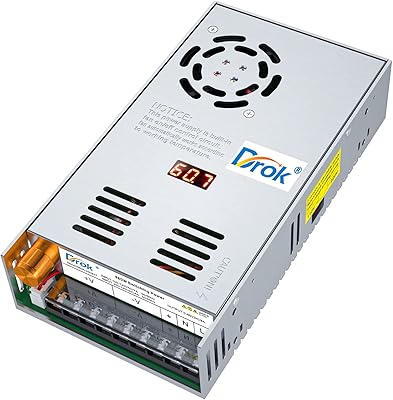
The DROK 48V 480W Adjustable DC Power Supply sits comfortably in the mid-range of the bench supply market — capable enough for serious hobby work, priced for those who aren't running a professional lab. It accepts both 110V and 220V AC input, so it works equally well whether you're in North America or Europe. The output spans a wide 0 to 48V DC range, covering virtually every standard voltage a maker or DIY enthusiast is likely to need. DROK has built a recognizable name in budget-to-mid-range power electronics, and this variable DC unit reflects that reputation: reliable and practical, without pretending to be more than it is.
Features & Benefits

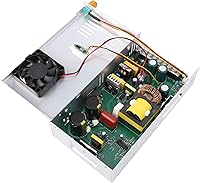
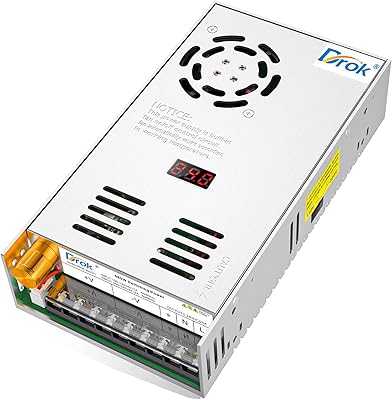
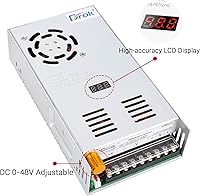
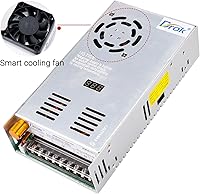
The front-mounted potentiometer gives you hands-on, tactile control over the output voltage — turn it and the LED display updates in real time, showing readings to 0.1V precision. That is useful when dialing in a specific rail for a circuit board or testing how a device behaves across a voltage range. The unit handles up to 10A continuously, which covers most hobbyist loads without issue. Built-in thermal management pairs an aluminum heat sink with a fan that only spins up when temperatures warrant it. On the protection side, this adjustable bench supply handles overload, overvoltage, and short-circuit events automatically — no manual fuse swapping required. Wire it in, flip the input voltage switch, and you are running.

Best For

This DROK converter is a natural fit for anyone who needs one box to cover multiple voltage standards — think 5V for logic circuits, 12V for fans and motors, 24V for automation gear, or 48V for PoE testing and e-bike projects. CCTV technicians will appreciate having a stable adjustable source on hand during camera installation without lugging multiple fixed supplies. It also suits makers charging lithium packs or driving small motors, as long as current demand stays under 10A. What it is not suited for is precision analog work requiring exact current limits — there is no constant-current mode here. Keep that expectation clear and this variable DC unit punches well above its price class.

User Feedback

With over 1,200 verified ratings averaging 4.4 stars, there is a clear pattern in what buyers actually say. Consistent praise centers on voltage accuracy and ease of use — most users find the LED readout trustworthy and the potentiometer satisfying to work with. Longer-term owners generally report stable performance without heat-related failures, which speaks well of the thermal design. The complaints worth noting: the fan produces a moderate hum that quiet-workspace users notice, and several buyers expected adjustable current limiting and were caught off guard. The CV-only design is the top source of disappointment, so knowing that going in matters. Overall, the feedback is genuinely positive for what this adjustable bench supply is designed to do.

Pros

  • Covers the full 0 to 48V DC output range, replacing multiple fixed-voltage adapters with a single bench unit.
  • Plug-and-play operation — no software, no menus, no installation steps before first use.
  • Switchable 110V/220V AC input makes this adjustable bench supply genuinely usable worldwide.
  • Built-in overload, overvoltage, and short-circuit protection adds a real safety net for wiring mistakes.
  • Auto-activating cooling fan stays completely silent during light loads, keeping the workspace quiet.
  • LED display provides clear, real-time voltage readout accurate to 0.1V under normal operating conditions.
  • Compact footprint fits comfortably on a crowded workbench without taking over the workspace.
  • Solid thermal management design — longer-term users report stable performance without heat-related failures.
  • Backed by a one-year warranty and supported by a brand with an established presence in hobbyist electronics.
  • Over 1,200 verified buyers and a 4.4-star average signal consistent, real-world satisfaction for intended use cases.

Cons

  • No adjustable current limiting whatsoever — the CV-only design is unsuitable for battery charging or LED driver work.
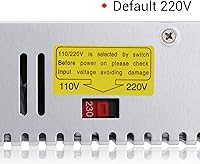
  • The factory default input voltage selector is set to 220V, a potentially damaging surprise for North American users who skip the manual.
  • Potentiometer control is too coarse for applications requiring precise voltage targeting, such as 13.8V for amateur radio gear.
  • The LED display shows voltage only — there is no current readout, so load monitoring requires a separate meter.
  • Fan noise under sustained high loads is audible enough to disrupt quiet home offices or recording environments.
  • Some units arrive with output voltage slightly out of calibration relative to an external reference meter, suggesting batch-level QC variance.
  • Recovery after a protection trip sometimes requires a full power cycle rather than an automatic self-reset.
  • Near the low end of the voltage range, below roughly 2V, output stability and ripple performance are noticeably weaker.
  • Binding post terminals are positioned so output cables project outward, eating into effective bench space more than the chassis dimensions suggest.
  • Early-failure reports, while proportionally small, appear consistently enough across the review base to suggest uneven manufacturing consistency.

Ratings

The DROK 48V 480W Adjustable DC Power Supply has been scored below using AI analysis of verified global buyer reviews, with spam, bot activity, and incentivized feedback actively filtered out. Scores reflect the honest consensus across thousands of real-world users — hobbyists, CCTV installers, makers, and small-lab engineers — weighted by verified purchase patterns. Both the genuine strengths and the recurring frustrations are captured here without softening either side.
Voltage Accuracy
86%
Most users find the output voltage tracks closely to the LED readout, with real-world deviation rarely exceeding the stated 0.1V tolerance under typical loads. For bench testing microcontrollers or setting a 12V rail for a camera system, that level of consistency is genuinely useful and repeatedly praised.
At higher current draws approaching the 10A ceiling, a handful of users noted slight voltage sag that the display did not immediately reflect. It is not a dealbreaker for most use cases, but anyone doing load-sensitive work should expect to verify with a separate multimeter.
Ease of Use
91%
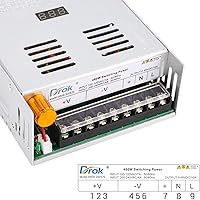
The rotary potentiometer is the entire interface, and buyers consistently describe it as refreshingly straightforward. Plug in the AC input, flip the voltage selector to match your local supply, connect your load, and rotate — there is genuinely nothing else to learn, which experienced and first-time users alike appreciate.
The potentiometer is sensitive enough that dialing in a very specific voltage, say 13.8V for a radio project, takes a steady hand and a bit of patience. Some users wished for a coarser and finer dual-control setup to make precise targeting less fiddly.
Build Quality
78%
22%
The aluminum heat sink gives the unit a reassuringly solid feel, and the overall chassis holds up well to regular bench use. Longer-term owners — those using it weekly for six months or more — generally report no structural degradation or connector loosening, which is a reasonable expectation at this price tier.
The enclosure is functional rather than refined. A few buyers noted that the potentiometer knob feels slightly loose out of the box, and the input voltage selector switch lacks the tactile click you would expect from a safety-critical component. Nothing dangerous, but it does undercut the premium feel slightly.
Thermal Management
83%
The auto-activating cooling fan is a smart design choice — it stays off during light loads, keeping the workspace quiet, and only spins up when sustained high-power operation demands it. Users running the unit at 80% capacity for extended sessions report no thermal shutdowns or worrying heat buildup.
When the fan does engage, it is audible. Most users accept this as normal, but those working in quiet home offices or recording spaces found the fan noise distracting. There is no way to adjust fan behavior, so if noise is a concern, plan accordingly.
Fan Noise Level
67%
33%
Under light loads the unit runs completely silent, which is a genuine advantage for users who only occasionally push toward maximum output. In a garage workshop or utility space, the fan noise when it does run is barely noticeable against ambient sound.
For desktop or bedroom lab setups, the fan is a recurring complaint. Several reviewers described it as louder than expected for a unit of this size, and a small number flagged an inconsistent whining pitch that suggests variable fan quality across production batches.
CV-Only Operation
54%
46%
For the target use cases — powering fixed-voltage devices, testing circuits, running CCTV gear — constant-voltage operation is often all that is needed. The 10A current ceiling is generous enough that most hobby loads never come close to tripping a limit anyway.
The absence of adjustable current limiting is the single most common source of buyer disappointment and returns. Users expecting a CC/CV bench supply — for battery charging or LED driver work, where current control is essential — find this variable DC unit fundamentally unsuitable, and the product listing does not make this limitation obvious enough upfront.
LED Display Clarity
79%
21%
The LED readout is bright and clearly visible from across a workbench, even in well-lit environments. Buyers appreciate having a real-time voltage reference without needing to probe with a separate meter during routine setup tasks like configuring a power rail for a router or access point.
The display shows voltage only — there is no current readout, which limits its utility when you actually need to monitor load behavior. A small number of users also reported that the displayed value drifts slightly from a calibrated external meter, suggesting unit-to-unit calibration variance.
Value for Money
84%
For a unit that covers the full 0 to 48V range with built-in protections, an LED display, and automatic thermal management, buyers consistently feel the price is fair to good. Hobbyists who previously juggled multiple fixed supplies find this DROK converter pays for itself quickly in convenience alone.
The value equation shifts if your workflow requires current limiting. Spending the same budget on a true CC/CV bench supply — even a basic one — would serve those users far better. The value here is real, but only if the CV-only design actually matches what you need.
Input Voltage Flexibility
88%
Supporting both 110V and 220V AC input via a physical selector switch makes this adjustable bench supply genuinely portable across countries and workshops. International buyers and travelers particularly value not needing a separate step-down transformer to run it in different regions.
The selector switch defaults to 220V from the factory, which catches North American users off guard. Plugging a 110V supply into a unit set to 220V without checking first is a real risk, and the warning in the manual is easy to overlook. A clearly printed reminder near the switch would be a sensible fix.
Output Voltage Range
92%
Few units at this price point span the full 0 to 48V range, and buyers who need to work across multiple standard voltages — 5V for logic, 12V for motors, 24V for industrial sensors, 48V for PoE or e-bike testing — find the coverage genuinely comprehensive. It replaces several single-voltage adapters in one compact box.
The low end of the range, near 0V, is less stable than mid-range settings, with some users noting slight ripple or instability when operating below 2V. For applications requiring a clean sub-2V output this is worth testing before committing to a design.
Protection Circuits
81%
19%
Overload, overvoltage, and short-circuit protection all activate automatically, and multiple buyers confirmed the unit survived accidental short-circuit events during testing without permanent damage. For hobby bench use where wiring mistakes happen, that resilience is a meaningful safety net.
Recovery from a protection trip is not always clean — some users reported needing to power cycle the unit fully before it would resume normal operation, rather than self-recovering. In time-sensitive situations that can be inconvenient, though it is far preferable to a unit that simply fails silently.
Setup & Installation
93%
There is no software, no driver, no configuration menu. Wire the output terminals, flip the input voltage switch, plug it in, and rotate the knob. First-time users report being fully operational within minutes, and that immediate accessibility is one of the most consistently praised aspects across the review base.
The included documentation is minimal and primarily geared toward users who already know what a buck converter is. Complete beginners may find themselves searching for guidance on safe wiring practices or understanding what the input voltage selector actually does before they feel confident using it.
Longevity & Reliability
76%
24%
A meaningful portion of reviewers report months to over a year of regular use without failures, which is encouraging for a mid-range unit. The thermal protection design appears to be doing its job — sustained-use failure reports are proportionally low given the volume of reviews.
There is a visible tail of early-failure reports — units that arrived with unstable output or failed within the first few weeks. Whether this reflects manufacturing variance or shipping damage is unclear, but it suggests quality control is not perfectly consistent across all batches.
Compact Footprint
85%
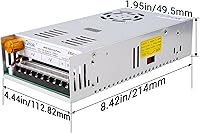
At under 8.5 inches long and roughly 4.5 inches wide, this variable DC unit fits comfortably on a crowded workbench without dominating the space. Users with small home labs or portable tool kits specifically mention the size-to-power ratio as a reason they chose it over bulkier alternatives.
The binding post terminals, while functional, are positioned in a way that output cables tend to project outward and add effective bench footprint. It is a minor ergonomic issue, but users with tight workspaces noted it affects how naturally the unit integrates into a compact setup.

Suitable for:

The DROK 48V 480W Adjustable DC Power Supply is a strong match for electronics hobbyists and makers who regularly work across multiple voltage standards and are tired of juggling a drawer full of fixed-output adapters. If your bench work involves testing microcontroller circuits at 5V, powering 12V fans or motors, running 24V automation components, or experimenting with 48V PoE setups, this single unit covers all of it without any complicated configuration. CCTV installers will find it particularly practical as a portable, adjustable DC source for on-site camera testing and setup, where having a stable variable supply on hand beats carrying multiple brick adapters. It also suits makers running small motors or powering LED strips, provided the current draw stays comfortably within the 10A ceiling. The plug-and-play nature — no software, no menus, just a knob — means it is equally approachable for someone just building their first home lab and for experienced tinkerers who simply want a dependable, no-fuss bench tool. Buyers who value global usability will appreciate the switchable 110V/220V input, making it a genuinely portable piece of equipment for international workshops or travel kits.
Not suitable for:

The DROK 48V 480W Adjustable DC Power Supply is not the right tool for anyone who needs adjustable current limiting — and that rules out more use cases than the listing suggests. Battery charging applications, particularly lithium-ion or LiFePO4 chemistry, almost always require constant-current control to charge safely; this unit is CV-only, meaning the current is fixed at a maximum of 10A with no way to dial it down, which creates a genuine safety and compatibility issue. LED driver testing and development similarly depends on CC mode to avoid overcurrent damage, so this variable DC unit should be ruled out there too. Professional engineers and technicians who need sub-0.1V precision or a clean, ripple-free output for sensitive analog or RF work will find the potentiometer control too coarse and the output not sufficiently filtered for those demands. Users who are sensitive to fan noise and work in quiet home offices, recording environments, or shared spaces should also think carefully, as the cooling fan is audible under load and cannot be adjusted or disabled. Finally, if your application requires monitoring both voltage and current simultaneously, the LED display here shows voltage only, which will likely send you reaching for a separate meter more often than is comfortable.
Specifications

  • Brand: Manufactured by DROK, a brand focused on budget-to-mid-range power electronics components for hobbyists and small-scale technical applications.
  • Input Voltage: Accepts AC 110V or 220V (±15%) via a physical selector switch, making it compatible with standard wall outlets in North America, Europe, and most other regions.
  • Output Voltage: Delivers a continuously adjustable DC output ranging from 0V to 48V, with a rated adjustment precision of 0.1V.
  • Max Current: Supplies a fixed maximum of 10A regardless of the output voltage setting; current output is not independently adjustable.
  • Max Power: Rated for a maximum continuous power output of 480W under full load conditions.
  • CC/CV Mode: Operates in constant-voltage (CV) mode only; there is no constant-current (CC) mode available on this unit.
  • Display: Equipped with an LED screen on the front panel that shows real-time DC output voltage during operation.
  • Control Method: Output voltage is adjusted manually via a front-mounted rotary potentiometer embedded into the enclosure.
  • Cooling System: Uses a combination of an aluminum heat sink and an automatically activated internal cooling fan that engages based on operating temperature.
  • Protections: Includes hardware-level overload protection, overvoltage protection, and short-circuit protection to help prevent damage to connected devices.
  • Compatible Voltages: Suitable for powering or testing devices rated at 5V, 9V, 12V, 24V, 30V, 36V, or 48V, as long as current draw does not exceed 10A.
  • USB Output: This unit does not include any USB output ports; all output is delivered through the DC binding post terminals.
  • Dimensions: Measures 8.46″ long by 4.45″ wide by 1.97″ deep, offering a relatively compact footprint for a 480W-rated supply.
  • Item Weight: Listed product weight is 0.01 ounces per the manufacturer specification, which appears to be a listing data error; actual unit weight is significantly higher based on its metal construction.
  • Power Source: Corded electric — requires a direct AC wall connection and does not operate on batteries or any internal power source.
  • Warranty: Covered by a one-year manufacturer warranty provided by DROK from the original date of purchase.
  • Model Number: Identified by manufacturer model number 200570 and Amazon ASIN B08GFQZFC1.
  • Availability Date: First made available for purchase on August 21, 2020, giving the product a multi-year track record in the market.

Related Reviews
BOSYTRO 48V Adjustable DC Power Supply 600W
83%
88%
Performance
91%
Build Quality
84%
Ease of Use
85%
Safety Features
80%
Cooling Efficiency
More
DROK 24V Power Supply 20A 480W DC Buck Converter
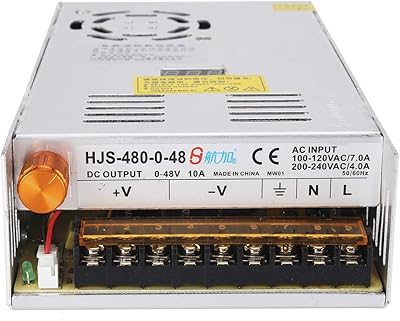
85%
88%
Voltage Accuracy
85%
Cooling Efficiency
90%
Ease of Use
86%
Build Quality
91%
Safety Features
More
Titoe AD-01 Adjustable DC Power Voltage Converter 0-48V 10A
82%
87%
Performance
90%
Build Quality
85%
Reliability
80%
Ease of Use
75%
Cooling Efficiency
More
DROK 60V Power Supply
84%
85%
Overall Performance
90%
Voltage Precision
88%
Cooling System Effectiveness
80%
Build Quality
91%
Ease of Use
More
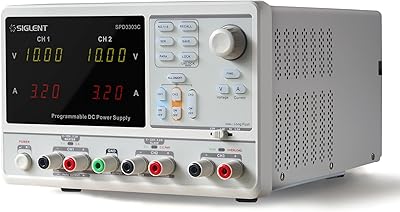
Siglent SPD3303C DC Power Supply
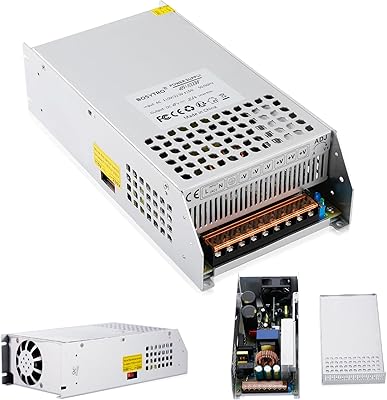
86%
95%
Output Accuracy
93%
Channel Stability
90%
Build Quality
88%
LED Display Clarity
78%
Multi-Channel Programming
More
BOSYTRO 48V 1000W Switching Power Supply
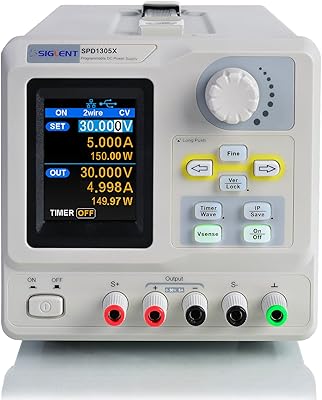
85%
91%
Power Output
88%
Reliability
85%
Ease of Installation
83%
Thermals/Cooling
92%
Safety Certifications
More
UNI-T UTP1306 Variable Bench Power Supply
79%
88%
Voltage & Current Accuracy
91%
Display Clarity
79%
Build Quality
86%
Output Protection (OVP/OCP/OTP)
71%
Noise & Ripple Performance
More
Siglent SPD1305X Programmable DC Power Supply
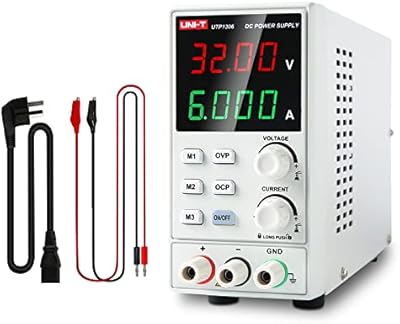
78%
91%
Output Accuracy & Stability
88%
Display Quality
86%
Build Quality & Construction
79%
Remote Control & Connectivity
63%
Fan Noise
More
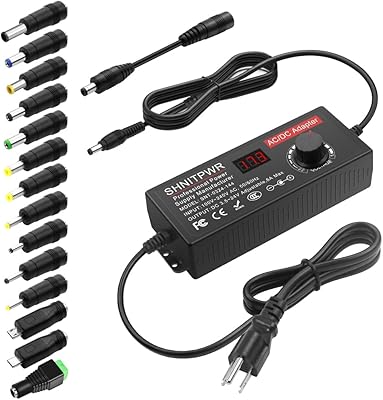
SHNITPWR 144W Adjustable Universal DC Power Supply
83%
71%
Voltage Adjustment Accuracy
93%
LCD Display Usefulness
88%
Connector Tip Variety
91%
Safety Protections
67%
Thermal Performance
More
CNCTOPBAOS 600W 36V DC Switching Power Supply
84%
95%
Power Output & Stability
88%
Ease of Use
90%
Cooling Performance
84%
Build Quality & Durability
87%
Size & Compact Design
More

FAQ

Yes — and this is the most important step. The unit ships from the factory with the input voltage selector set to 220V. If you are in North America and your outlet is 110V, you must flip that selector switch to 110V before connecting to power. Skipping this step can damage the unit immediately. Take ten seconds to check it before you do anything else.

The current is not adjustable. This DROK converter operates in constant-voltage mode only, meaning the maximum current available is always 10A regardless of the voltage you dial in. The actual current drawn depends entirely on your connected load — a device that only needs 2A will only pull 2A — but you cannot set a lower current ceiling. If you need to limit current for battery charging or LED work, this unit is not designed for that.

Not on its own, no. Lithium battery charging requires a constant-current phase where the charger limits current as the battery reaches capacity — this unit cannot do that. Connecting it directly to a lithium pack without an external current-limiting circuit or a proper battery management system is a safety risk. Use a purpose-built CC/CV charger for lithium chemistry batteries.

The fan is not always running — it activates automatically only when the internal temperature reaches a certain threshold, typically during sustained high-power operation. Under lighter loads it stays off completely, which most users appreciate. When it does kick in, the noise is noticeable but not overwhelming — comparable to a desktop PC under moderate load. If you work in a very quiet space, it is worth being aware of.

Under typical operating conditions the display is reliable to within the stated 0.1V precision, which is sufficient for most hobby and general bench work. That said, some users have found minor discrepancies when comparing the display against a calibrated external multimeter, so if your application genuinely requires tighter accuracy it is worth verifying with your own meter. Unit-to-unit calibration can vary slightly from batch to batch.

It can supply the 48V DC voltage that passive PoE systems use, yes. However, active 802.3af or 802.3at PoE requires negotiation between the injector and the powered device — this adjustable bench supply is not a PoE injector and cannot handle that negotiation. For passive PoE testing or powering devices that accept 48V directly through terminals, it works well within the 10A limit.

The unit has hardware protection circuits that activate automatically in response to short-circuit, overload, and overvoltage events. Multiple users have confirmed surviving accidental short circuits during bench testing without permanently damaging the supply. One thing to note: after a protection trip the unit may not self-reset — some users report needing to fully power cycle it before it resumes normal operation.

Yes, that is one of the more useful features of this variable DC unit. The input voltage selector supports both 110V and 220V, so as long as you verify the switch is set correctly for your local supply and use an appropriate AC plug adapter if needed, it works fine outside North America. Just double-check the switch position every time you move the unit between regions.

Honestly, it depends on how sensitive your work is. The rotary potentiometer gives you 0.1V resolution in principle, but in practice dialing in a very specific voltage — say 3.3V exactly — takes a careful hand because the knob is fairly sensitive across such a wide range. For general bench testing it is fine. For precision analog design work where you need to hold a rail to within millivolts, a dedicated lab supply with a multi-turn adjustment or digital control would serve you better.

The LED display shows output voltage only — there is no current readout built into this unit. If you need to monitor how much current your load is drawing, you will need to connect a separate ammeter or a multimeter in series with your output leads. It is a notable omission for a bench supply, and worth factoring into your setup if live current monitoring matters to your work.