Overview

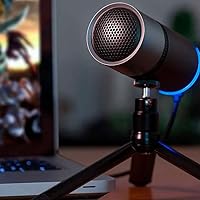
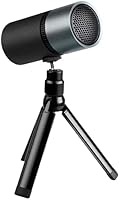
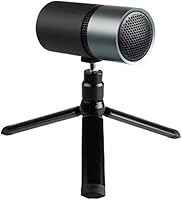
The Thronmax M8 Pulse USB Condenser Microphone is a compact, foldable desktop mic built for content creators who want better audio without spending a lot. In a market flooded with look-alike entry-level options, the foldable form factor genuinely stands out — fold it flat, toss it in a bag, and you're ready to record wherever you land. Plug it into any USB port and it works immediately; no drivers, no configuration menus. Thronmax isn't a household name, and that's worth acknowledging upfront. But this compact USB mic earns its keep through practical design choices rather than brand prestige. Think of it as a dependable starter tool, not a professional studio piece.
Features & Benefits

The M8 Pulse gives you two polar pattern options — cardioid and noise-cancelling — which is genuinely useful rather than just a spec-sheet checkbox. Cardioid mode captures your voice directly in front of the mic and works well in quieter rooms, while noise-cancelling mode tightens the pickup area to reduce ambient sound from behind. A 3.5mm headphone jack lets you monitor your audio in real time so you can catch issues before they hit a recording. The 96 kHz signal-to-noise ratio means the mic produces clean, low-hiss audio, and the 42 dB sensitivity picks up your voice clearly without requiring you to lean uncomfortably close. It runs on USB power alone — no adapters needed.

Best For

This foldable condenser mic is a strong match for new streamers and YouTubers who are ready to move past a headset mic but aren't willing to spend heavily on audio gear just yet. Gamers will appreciate the built-in PS4 compatibility — just plug in and your console or PC recognizes it instantly. Remote workers and students who spend their days on Zoom or Google Meet will also find it practical; it handles voice calls clearly without requiring any setup. And if you travel frequently or record in different spots, the foldable build makes it easy to pack. Anyone who values simplicity over complexity will feel right at home with this compact USB mic.

User Feedback

Buyers respond well to the M8 Pulse overall, with portability and easy setup coming up most often as genuine highlights. Many first-time mic users note how refreshing it is to unbox something and have it working in under a minute. The honest criticisms are worth knowing, though: cardioid mode can pick up more room noise than expected, especially in untreated spaces, and a few long-term users have flagged concerns about build quality holding up over time. The included stand has drawn mixed reactions — it works on flat desks but wobbles on messier surfaces. Headphone monitoring earns mostly positive marks, with most users reporting minimal latency. Against similarly priced rivals, the foldable design remains its clearest edge.

Pros

  • Folds flat for easy packing — genuinely one of the more portable desktop mics at this price tier.
  • Zero driver installation required; plug into USB and it works on Windows, Mac, Linux, and PS4 immediately.
  • Two polar patterns give you real flexibility depending on your room and recording situation.
  • The 3.5mm headphone jack lets you monitor your voice in real time, which is more useful than it sounds.
  • Clean, low-hiss audio output thanks to a solid signal-to-noise ratio for its class.
  • Works out of the box with Discord, OBS, Twitch, Skype, and most streaming or conferencing platforms.
  • Included stand means you're ready to record the moment you unbox it — no extra accessories needed.
  • Compact footprint takes up minimal desk space compared to larger condenser mics with bulky arm mounts.
  • USB-powered with no external adapter, keeping your cable management simple.

Cons

  • Cardioid mode picks up noticeable room noise in untreated or echoey spaces — not ideal for bare-walled rooms.
  • Build quality has raised concerns from some long-term users, particularly around the hinge and folding mechanism.
  • The included stand can wobble or tip on cluttered or uneven desk surfaces.
  • Single mono channel limits usefulness for any multi-source or instrument recording scenario.
  • Thronmax carries little brand recognition, which makes warranty support and long-term parts availability uncertain.
  • Headphone monitoring volume control is limited, and some users find the output level lower than expected.
  • Not a strong choice for professional podcasters or anyone needing broadcast-grade noise rejection.
  • No gain adjustment knob on the mic body itself, so volume control depends entirely on your software or OS settings.

Ratings

The scores below reflect an AI-driven analysis of verified global user reviews for the Thronmax M8 Pulse USB Condenser Microphone, with spam, bot-generated, and incentivized feedback actively filtered out before scoring. Each category is weighted against real-world usage patterns reported by streamers, gamers, remote workers, and everyday creators. Both the genuine strengths and the recurring frustrations are transparently reflected — nothing is smoothed over.

Audio Clarity
74%
26%
For a plug-and-play USB mic aimed at streamers and call-heavy remote workers, the M8 Pulse delivers noticeably cleaner voice reproduction than a typical gaming headset. Discord and Zoom users consistently report that their voice comes through crisp and intelligible without any post-processing.
In less controlled environments — a bedroom with hard floors, a home office near an HVAC vent — the mic struggles to maintain that clarity. Background noise bleeds in more than users expect, and there's no onboard gain control to compensate without digging into software settings.
Noise Rejection
61%
39%
Switching to the noise-cancelling polar pattern does make a measurable difference in open or shared spaces, reducing keyboard clatter and ambient room hum to more manageable levels. Streamers who game in louder rooms have found it the more practical of the two pattern options day-to-day.
Cardioid mode, which most users default to, picks up far more room noise than expected for a mic marketed partly on its noise-cancelling feature. Users in acoustically untreated rooms frequently report having to apply noise gates in OBS or Audacity just to keep the feed clean.
Build Quality
58%
42%
The mic feels reasonably solid in hand for its size, and the matte plastic finish resists fingerprints well. Out of the box, the hinge mechanism folds and unfolds smoothly, and the overall assembly doesn't rattle or feel loose when first set up.
Over time, the foldable hinge is the most commonly cited weak point — users who fold and unfold it regularly report it loosening after several months of use. The overall construction gives the impression of a product designed for light, occasional portability rather than daily packing and unpacking.
Portability
89%
This is where the M8 Pulse genuinely earns its place in the market. The foldable design collapses into a small, flat footprint that slips into a laptop bag without added bulk, making it the go-to choice for creators who record in multiple locations throughout the week.
The included stand doesn't fold as compactly as the mic itself, so some users leave it behind when traveling light, which means finding a substitute surface or stand on the go. A travel pouch or case is not included, leaving the mic unprotected in a bag.
Ease of Setup
93%
Plug it in and it works — that's genuinely the entire setup experience on Windows, Mac, Linux, and PS4. First-time mic users and non-technical buyers consistently highlight this as the deciding factor in their purchase, with many noting it was recognized instantly by their system without a single settings change.
The lack of any onboard controls means that once it's plugged in, adjustments like input gain or pattern switching require either physical buttons on the mic or a trip into software menus — and not all users find the pattern switch intuitive to locate at first.
Platform Compatibility
91%
Broad compatibility across Windows, macOS, Linux, and PS4 means this mic covers the vast majority of user setups without any friction. Streamers who switch between a gaming PC and a console found the transition effortless, with no re-pairing or reconfiguration needed.
A small number of Linux users have reported intermittent recognition issues depending on their distribution and kernel version, though this appears to be an edge case rather than a widespread problem. No official Xbox compatibility is confirmed, which frustrates some console gamers.
Headphone Monitoring
67%
33%
The 3.5mm headphone jack provides real-time voice monitoring that podcasters and streamers find useful for catching audio problems before they hit a recording or live feed. The hardware-level monitoring eliminates the software latency that plagues DAW-based monitoring setups.
The monitoring output volume is on the quieter side, and without a dedicated volume knob on the mic, users have to rely on their headphone amplifier or system volume to compensate. A handful of users also note the 3.5mm jack feels less robust than the rest of the unit.
Stand Stability
53%
47%
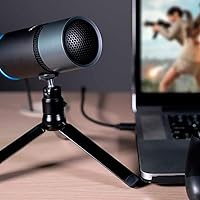
On a flat, uncluttered desk the included stand keeps the mic upright and at a reasonable recording angle without any issues. It's a functional starting point for users who don't yet own any other mounting hardware.
On a busy desk with cables, books, or uneven surfaces, the stand tips and wobbles with minimal provocation. Multiple users report the mic falling over when bumped, and the base footprint is too narrow to provide confident stability in most real-world desk setups.
Value for Money
78%
22%
As a first dedicated mic for someone stepping up from a headset, the M8 Pulse offers a meaningful audio improvement at an accessible price point, plus the foldable design adds genuine utility that similarly priced fixed-body mics don't offer. Most buyers feel the trade-off is fair.
Users who compare it directly to similarly priced fixed-body USB condensers from brands like Blue or FIFINE sometimes feel they gave up audio performance for portability. For buyers who never move their mic, the foldable design offers no value and the build durability trade-off becomes harder to justify.
Software Integration
83%
The M8 Pulse integrates cleanly with OBS Studio, Streamlabs, Discord, and Zoom without needing third-party audio drivers or companion apps. Streamers appreciate that it shows up reliably in OBS audio sources and doesn't require scene-by-scene reconfiguration after system restarts.
Because there's no dedicated software or companion app from Thronmax, users who want to apply EQ, compression, or noise gating have to set those up manually in third-party tools. This is fine for experienced users but adds a learning curve for complete beginners.
Aesthetic & Design
76%
24%
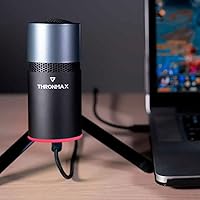
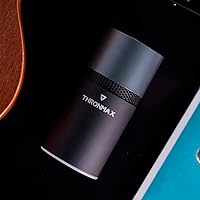
The black and grey matte colorway is clean and understated, fitting comfortably into gaming setups, professional home offices, and minimalist desk arrangements without looking out of place. The compact footprint keeps it from dominating the visual space on a desk.
The design is functional rather than distinctive — it won't stand out on camera or contribute to a polished streaming aesthetic the way some RGB-equipped or premium-looking mics do. A few users also note that the plastic finish picks up light scratches over time.
Polar Pattern Switching
69%
31%
Having two polar pattern options on a mic at this price is a practical advantage, and users who record in variable environments genuinely use both modes depending on the situation. The ability to switch without any software makes it accessible even to new users.
The difference between the two modes is less dramatic than some users expect from the product description, particularly in highly reverberant rooms where both patterns still pick up reflections. The switch itself is small and easy to accidentally nudge during setup.
Brand & Support
47%
53%
Thronmax products are available through major retail channels including Amazon, which provides a baseline level of buyer protection and return options independent of the brand itself. Some users have reported successful warranty resolutions when issues arose within the standard return window.
Thronmax carries minimal brand recognition, and customer support responsiveness is inconsistent based on user reports. Long-term parts availability and warranty support beyond the initial purchase window are genuine uncertainties that buyers should factor into their decision.
Cable & Connectivity
72%
28%
USB connectivity means there's nothing proprietary about the cable — if it's lost or damaged, any compatible USB cable works as a replacement. The connection is stable and doesn't drop out during extended streaming sessions, which is the baseline expectation most users care about.
The included USB cable is on the shorter side, which can create desk cable management challenges depending on where the user's USB ports are located. No USB-C variant is available, which is a minor but growing inconvenience as more laptops drop standard USB-A ports.
Long-term Durability
54%
46%
Users who handle the mic gently and leave it in a fixed position report no hardware degradation over a year or more of regular use. The internal components maintain consistent audio output quality over time in stable, low-stress setups.
The foldable hinge mechanism is the primary long-term failure point, with several users reporting looseness or stiffness after six to twelve months of regular folding. The overall plastics feel like they were engineered to a price point rather than for longevity.

Suitable for:

The Thronmax M8 Pulse USB Condenser Microphone is a practical choice for anyone stepping into content creation without wanting to wrestle with complicated audio setups. New streamers, casual podcasters, and gamers who are tired of their headset mic but aren't ready to invest in a full audio chain will find this mic hits a comfortable middle ground. It works particularly well for PS4 and PC gamers who just want a dedicated desktop mic that shows up and works the moment it's plugged in. Remote workers and students who spend hours on Zoom or Google Meet will also appreciate the noise-cancelling polar pattern, which helps keep background distractions from bleeding into calls. If you move between locations — a home desk, a dorm room, a friend's setup — the foldable build makes it genuinely easy to pack and carry without added bulk.
Not suitable for:

The Thronmax M8 Pulse USB Condenser Microphone is not the right tool for anyone who takes audio quality seriously at a professional level. Podcasters producing polished, broadcast-ready content will likely find cardioid mode picks up too much room noise in untreated spaces, which creates extra work in post-production. Musicians looking to record instruments or vocals for production purposes should look elsewhere — this is a voice-focused mic with a single mono channel, not a recording studio solution. If you're comparing it to similarly priced XLR condenser mics paired with a basic audio interface, the M8 Pulse gives up flexibility and long-term upgradeability. Buyers who tend to be hard on gear should also weigh in the durability concerns raised by longer-term users, as the build quality may not hold up to daily heavy use over several years.
Specifications

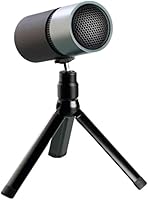
  • Form Factor: Compact table-array design with a foldable hinge that collapses the mic flat for easy storage and transport.
  • Dimensions: The mic measures 2.56 x 2.56 x 4.96 inches when unfolded and set in its upright recording position.
  • Weight: The unit weighs 305 g (10.8 oz), making it one of the lighter dedicated desktop condenser mics in its class.
  • Connectivity: Connects to host devices via a standard USB cable, drawing power directly from the port with no external supply needed.
  • Headphone Output: A 3.5mm jack on the mic body allows real-time zero-latency headphone monitoring of your live audio input.
  • Polar Patterns: Supports two selectable polar patterns — cardioid for focused front-facing capture and noise-cancelling for tighter pickup with reduced rear bleed.
  • Audio Sensitivity: Rated at 42 dB sensitivity, providing adequate pickup of close-range voice without requiring the speaker to lean uncomfortably close.
  • Signal-to-Noise Ratio: Delivers up to 96 kHz signal-to-noise performance, resulting in clean, low-hiss audio during voice recording and live streaming sessions.
  • Channels: Records in mono (single channel), which is standard and sufficient for voice-focused applications such as streaming, podcasting, and video calls.
  • Platform Support: Compatible with Windows, Linux, macOS, and PlayStation 4, covering the majority of consumer computing and gaming platforms without any driver installation.
  • Driver Requirement: Fully plug-and-play with no driver installation required — the operating system recognizes it as a standard USB audio device automatically.
  • Power Source: Powered entirely through the USB connection (corded electric), with no batteries or external power adapters required for operation.
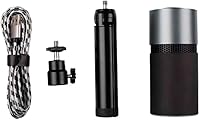
  • Included Accessories: The package includes the microphone unit and a compact desktop stand; no additional mounting hardware or cables are included in the box.
  • Color Options: Available in a Black and Grey colorway with a matte finish that keeps fingerprints and desk reflections reasonably minimal.
  • Compatible Apps: Works natively with widely used platforms including Discord, Skype, OBS Studio, Twitch, YouTube, SoundCloud, Zoom, and GoToMeeting.
  • Model Number: The official model identifier is TMAX-M8, which can be used when referencing the product for support, warranty, or parts inquiries.
  • Manufacturer: Designed and sold by Thronmax, a audio peripheral brand that focuses on entry-level to mid-range USB microphone products for creators.
  • Release Date: This model was first made available for purchase in November 2019, placing it in the earlier wave of compact USB streaming microphones.

Related Reviews
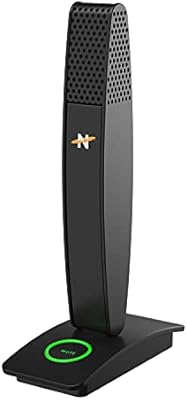
Neat Microphones Skyline USB Desktop Condenser Microphone
89%
94%
Audio Quality
91%
Ease of Use
89%
Build Quality
90%
Mute Button Functionality
92%
Value for Money
More
AMOOX BM-800
AMOOX BM-800
74%
88%
Value for Money
71%
Audio Quality
93%
Ease of Setup
74%
Build Quality
66%
Noise Isolation
More
HyperX QuadCast S
HyperX QuadCast S
87%
88%
Vocal Clarity
96%
Mute Functionality
91%
Build Quality
84%
Shock Absorption
89%
Gain Control Ease
More
JOBY Wavo POD USB Condenser Microphone
76%
78%
Audio Quality
94%
Ease of Setup
62%
Build Quality
74%
Value for Money
57%
Background Noise Rejection
More
Elgato Wave Neo
Elgato Wave Neo
80%
88%
Audio Quality
96%
Ease of Setup
91%
Mute Button & LED Indicator
67%
Build Quality & Materials
83%
Stand & Positioning Design
More
HyperX SoloCast
HyperX SoloCast
84%
89%
Audio Clarity
97%
Ease of Setup
93%
Mute Functionality
42%
Vibration Isolation
86%
Build Quality
More
Elgato Wave:3
Elgato Wave:3
86%
94%
Software Ecosystem
97%
Audio Distortion Prevention
68%
Build Quality & Materials
91%
Ease of Setup
88%
Voice Clarity & Sound Quality
More
Thronmax M2 Mdrill Ghost
79%
83%
Sound Clarity for Voice
78%
Polar Pattern Versatility
92%
Setup & Ease of Use
67%
Build Quality & Materials
81%
Value for Money
More
CAD Audio U37 USB Condenser Microphone
75%
78%
Audio Clarity
96%
Ease of Setup
67%
Noise Rejection
88%
Value for Money
61%
Build Quality
More
Samson Go Mic Portable USB Condenser Microphone
84%
92%
Value for Money
94%
Portability
78%
Sound Quality
90%
Ease of Use
85%
Build Quality
More

FAQ

Yes, it does. Plug the M8 Pulse into a USB port on your PS4 and the console recognizes it automatically as an audio input device. No adapters or configuration menus required — it just shows up and works.

Cardioid mode picks up sound directly in front of the mic in a wide arc, which is good for solo voice recording in a quiet room. Noise-cancelling mode tightens the pickup zone and rejects more sound from behind and the sides, making it more useful in noisier environments like shared spaces. If you're in a treated or quiet room, cardioid is fine. If there's ambient noise around you, switch to noise-cancelling.

It's primarily designed for voice capture — streaming, gaming, calls, and podcasting. While it will technically pick up an acoustic instrument placed close to it, the single mono channel and sensitivity tuning aren't optimized for music recording. If instruments are your goal, a dedicated recording mic with XLR connectivity will serve you much better.

Plugging headphones into the 3.5mm jack on the mic lets you hear your voice as it's being captured in real time. Most users report the monitoring feels essentially instant with no perceptible delay, which is the main advantage of hardware-level monitoring over listening back through your recording software.

Honestly, yes — the cardioid mode in particular can be sensitive to room reflections and ambient sound in untreated spaces. Switching to noise-cancelling mode helps reduce some of that bleed. That said, no mic at this price point will fully compensate for a live, echoey room. A simple desk mat or soft furnishings nearby can make a noticeable difference.

The hinge works well for occasional packing and moving between locations, but it has attracted some durability concerns from users who fold and unfold it frequently over months of use. If you travel with it regularly, handle the hinge with care rather than forcing it. It holds up fine for most people, but it's not built to the same standard as a premium road-ready piece of gear.

Yes, macOS recognizes it as a standard USB audio device the moment you plug it in. Go to System Settings, then Sound, and select it as your input source. No third-party drivers or software installs are needed.

The included stand is fine on a flat, uncluttered desk. On busier or slightly uneven surfaces, it can wobble, and a few users have had it tip if bumped. If you want more stability or flexibility in positioning, a basic desktop boom arm with a standard thread adapter is a worthwhile upgrade down the line, though it's not essential to get started.

There is no physical gain knob on the mic body. Volume and input gain adjustments need to be made through your operating system's sound settings or within your recording and streaming software. It's a limitation worth knowing about, especially if you're used to mics with onboard controls.

The main edge the M8 Pulse has over competitors in the same tier is its foldable form factor, which few rivals offer. On raw audio performance, it holds its own — clean output, decent noise rejection, and solid platform compatibility. Where it gives ground is in build durability and the lack of onboard gain control. If portability isn't a priority for you, some fixed-body competitors at a similar price offer slightly more robust construction.

Where to Buy